
A reflective text written in January 2021, based on my fieldwork and research experiences in rural Burkina Faso and northern Ghana 2014-2016.
* All plant names in this text are the local Moore names, with the scientific and/or English names in brackets.
I
During this winter season in quarantine, I’ve been thinking about traveling. What it has done with me. Six years ago, I returned home from my first visit to Burkina Faso in West Africa. I had been there for almost three months, doing fieldwork for my master’s thesis. Those months had a profound impact on my life, both to my subsequent career choices and on me as a person. Putting myself in those expected (and some very unexpected) challenging situations was like taking a crash course in what drives and limits me (and how to push those boundaries). The experiences reverberated in me for years to come. Even now, six years later, I can find traces of that journey laced into things I do.
I wanted to write something about that time, about some of the things I learned there. The people I met. And maybe, also, as a way to turn over a new leaf. Following 2020, the strangest year the world has seen during my lifetime. Our way of life has been shaken to the core, and I don’t think it will be possible to go back. We have to look for new ways of being. But in doing that, I’ve felt an even stronger need to remember. To connect the forward-looking with the past. Honoring old insights. My own, acquired during past journeys, and in a more general sense: the knowledge of others, from years of experience and practice, of generations past.
So. Remembering a past journey. In this text, I have gone back to old notes made during fieldwork in West Africa many years ago. Here, I will tell a story about a landscape and some of the people living there, through the lens of ethnobotany.
II
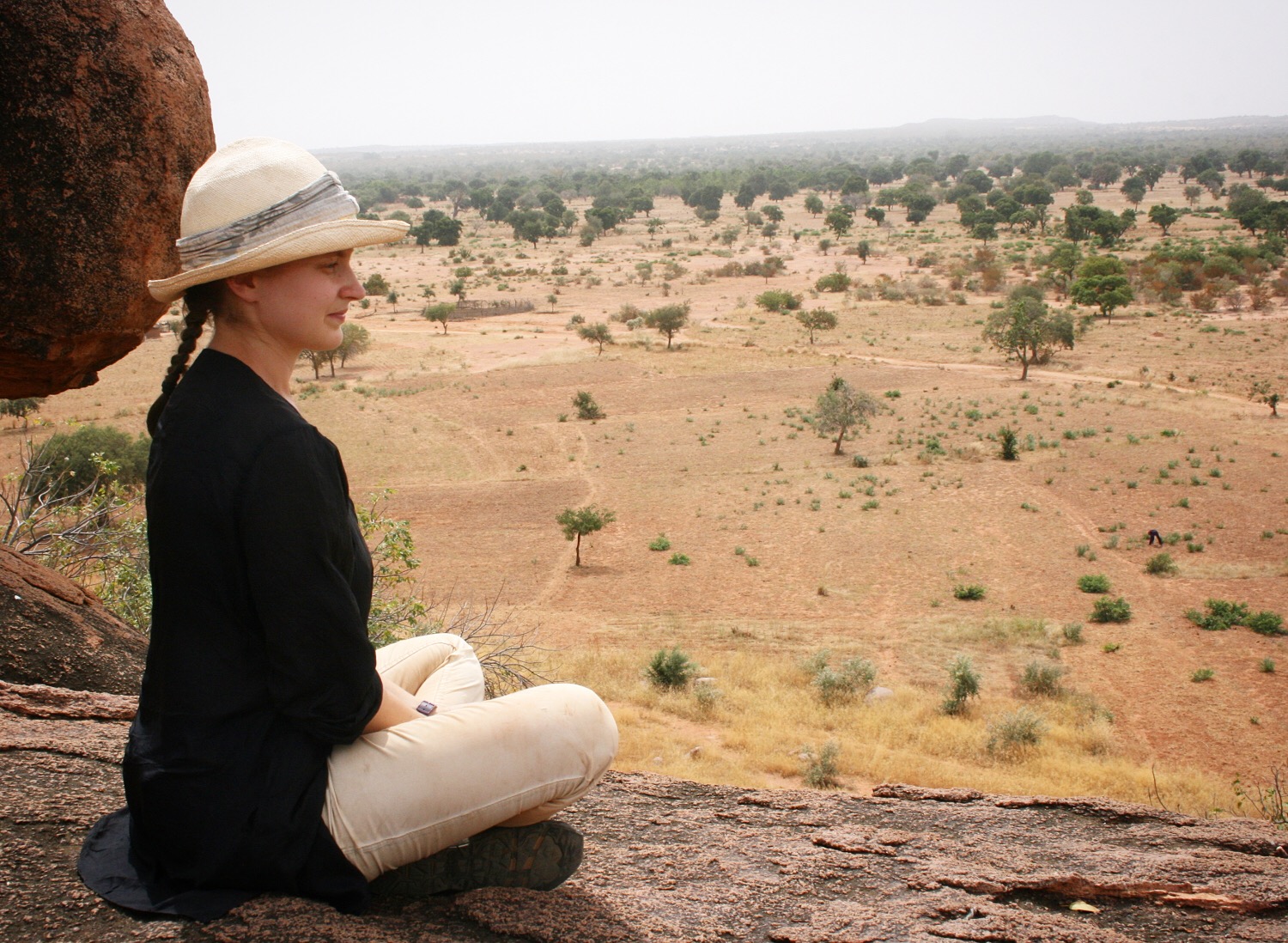
The village landscapes in the Sudano-Sahelian belt of Burkina Faso are used in many ways by the people living there. A majority of the population are subsistence farmers, and combine cultivating dryland crops with animal husbandry. As a master student, I joined a project about exploring the connection between ecosystem services and local livelihoods in northern Burkina Faso, led by my now SRC colleague Hanna Sinare. She had produced high-resolution village maps of landscape patches, ecosystem services and livelihood benefits, using participatory mapping methods and aerial photographs 1. I used these village maps, combining them with my own data collected in the field through transect walks and interviews, to produce up-scaled regional maps from satellite imagery 2.
My colleagues and my work in this research project, and the results from a couple of others that followed it, gives a nuanced picture of the landscape in Sudano-Sahelian West Africa. It shows how local livelihoods depend on a diversity of activities and resources that are being provided across the landscape, and also that people are managing the landscape to maintain this multifunctionality. To understand these places, therefore, one cannot focus on one thing at a time. It is in the hands-on, everyday interactions between human and non-human that this landscape takes shape.

III
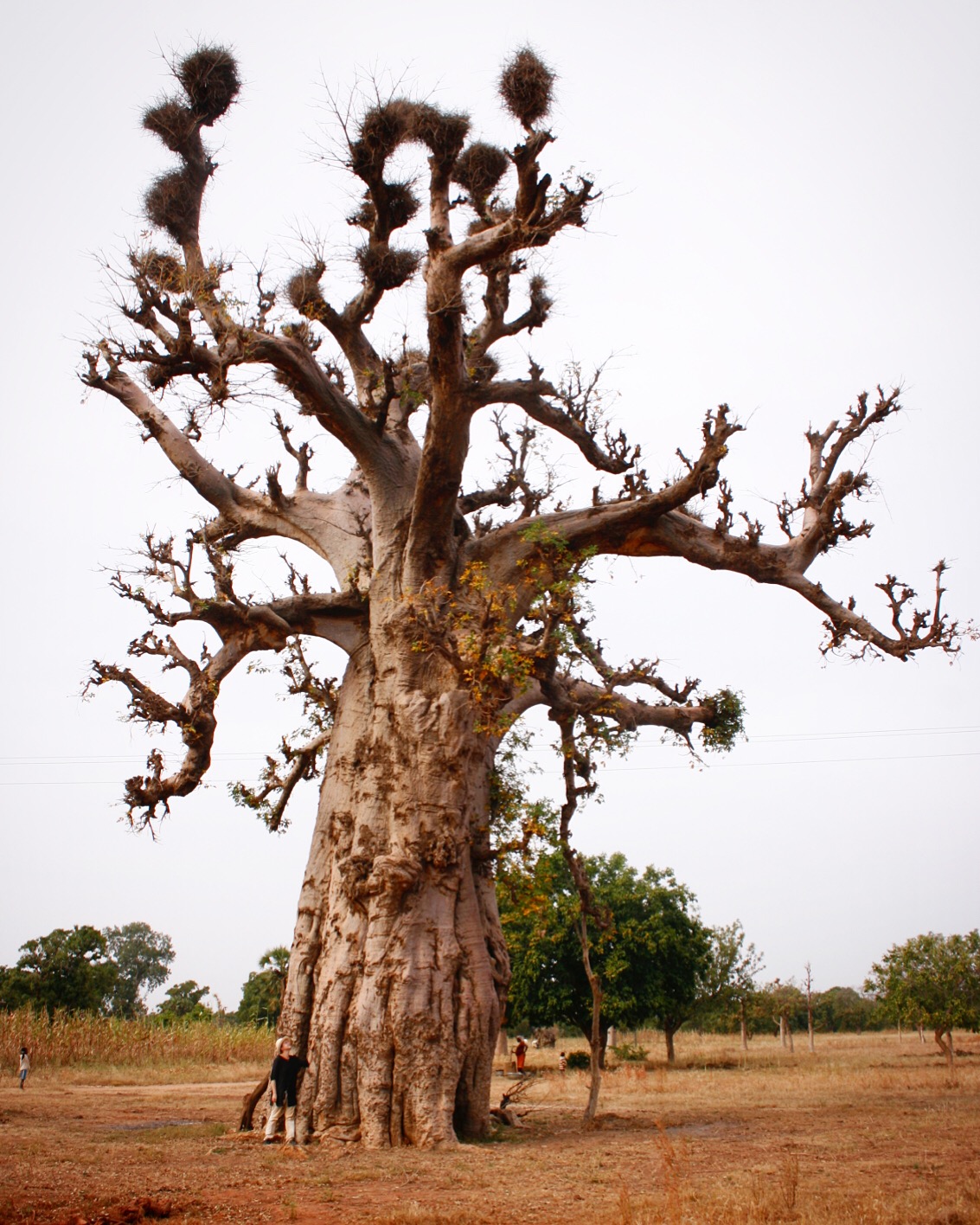
In rural northern Burkina Faso, certain wild trees, shrubs and herbs are actively being managed as integrated parts of the agricultural landscape 3. They are important for food, income, fodder, medicinal uses, crafts and construction, especially during years when cultivated crops fail. These pockets of wild vegetation therefore support the resilience of the communities, while at the same time having a positive impact on biodiversity in the landscape 1. Pictured is a baobab tree (Adansonia digitate)*.
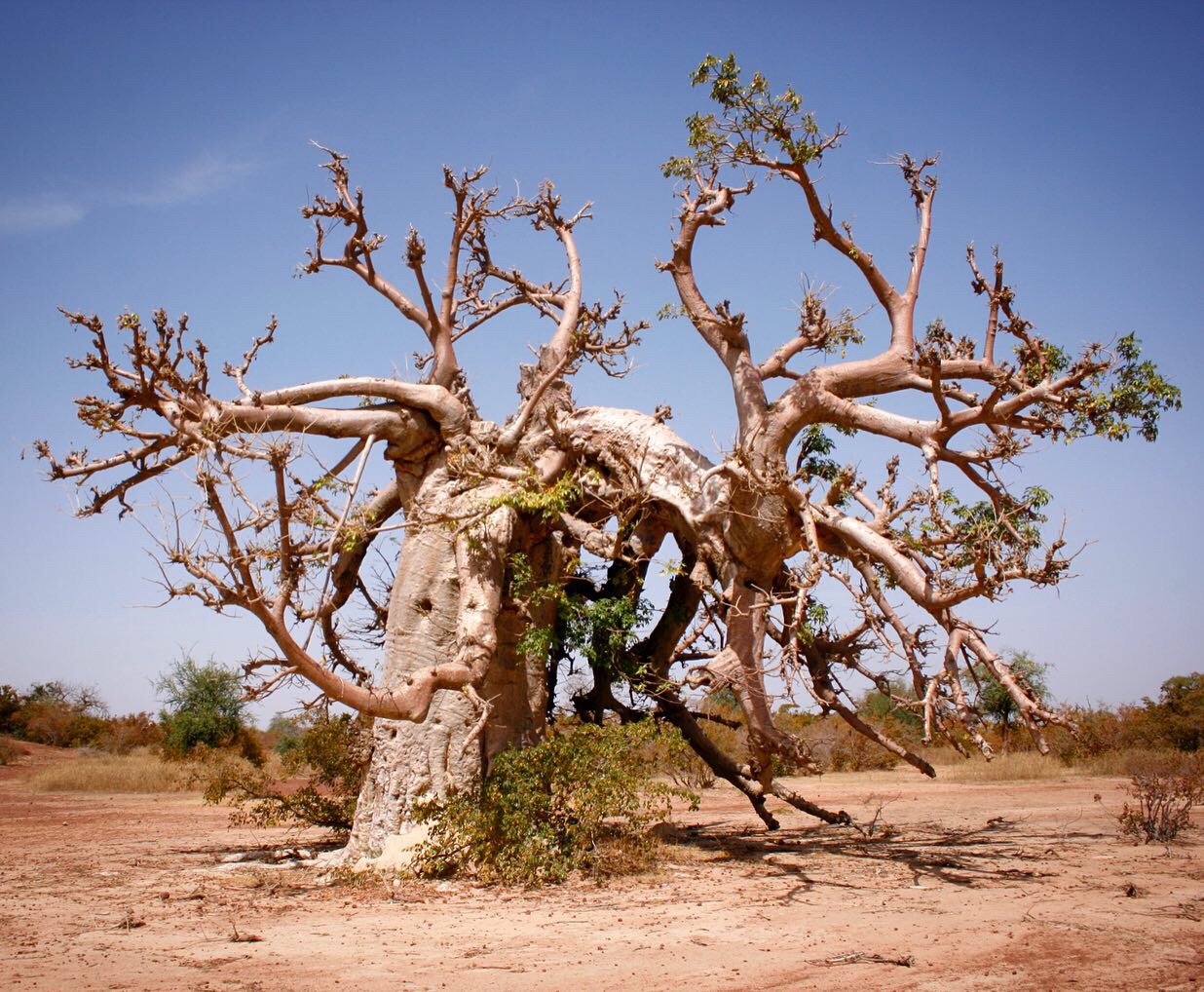
The baobab tree grows wild on the savannah, but is also planted by villagers close to their homesteads. Its nutritious leaves are dried and used as a condiment, and are both consumed by the farmers themselves and sold at the market. Children also love the baobab fruit as a treat. I got to try it myself, offered to me by some kids who had picked the fruits from a nearby tree. It was dry and sweet like candy, hard and powdery to the touch.

IV
The bangandré (Piliostigma reticulatum / Camel’s foot)* is a shrub that is used in many ways. Its leaves are added to sauces and stews as a leafy green and the pods are ground to a flour and used as a nutrient supplement for animals during the dry season. The bark and leaves have proven antiseptic and tranquilizing properties, and are used for medicinal purposes by the farmers.

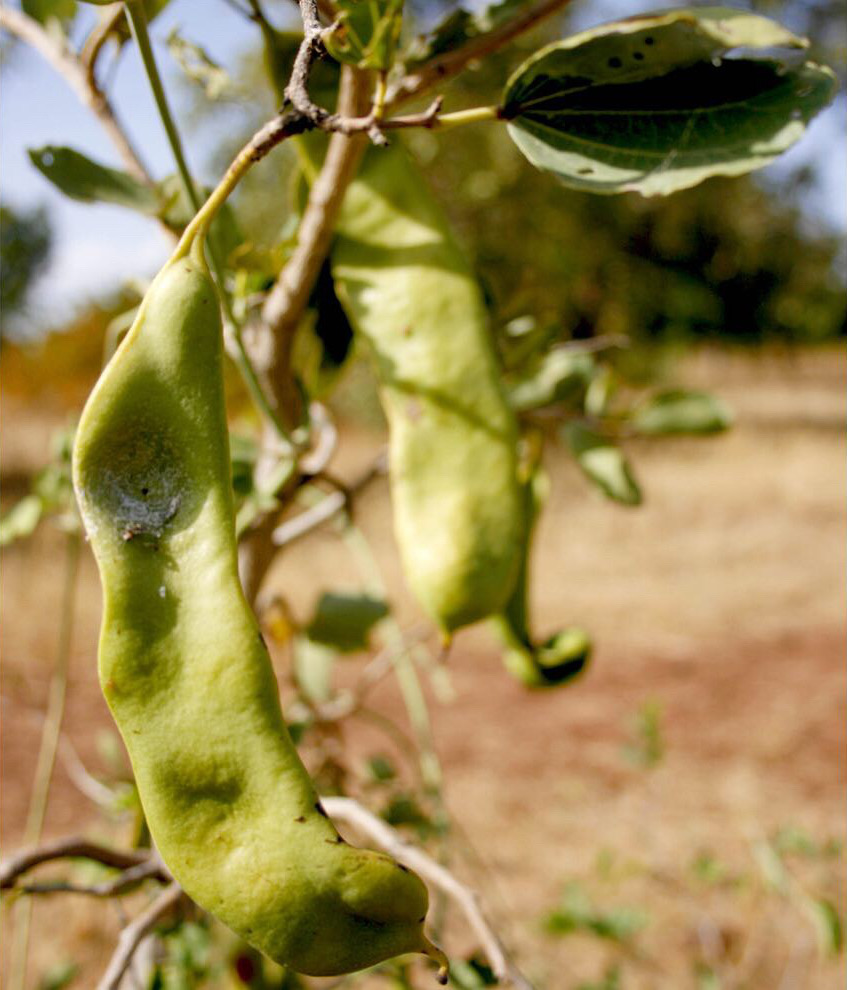
The bangandré is also used as an indicator for when a field in fallow is ready to be planted. The fallowing practice includes digging pits in the soil and filling them with organic material and manure. Since the animals have eaten bangandré seeds, the application of manure means that these shrubs are early succession plants in the fallows. When the shrubs have reached a mature size, the farmers know that the soil is ready and can be planted again.

V
The kanga tree (Acacia macrostachya)* is a plant of great cultural and spiritual importance in Burkina Faso. It often grows in sacred groves and cannot be harvested or cut down there. The groves are seen as the place where ancestors of people in a village reside and are therefore protected. Kanga trees growing outside sacred groves can be harvested. The seeds of these trees are collected and used in sauces and cooked like lentils.

For my master’s, I conducted fieldwork in thirteen villages. All of them had at least one sacred grove, so densely vegetated that walking through them would have been almost impossible, had we been allowed to do so. I didn’t try, of course. When coming across one during my transect walks, we went around. Later, when I worked on my satellite image maps, the sacred groves presented as outlier areas compared to the rest of the landscape in all analyses that measured proxies for biomass. Due to their protected status, the sacred groves host much more vegetation than any other patches in the landscape.
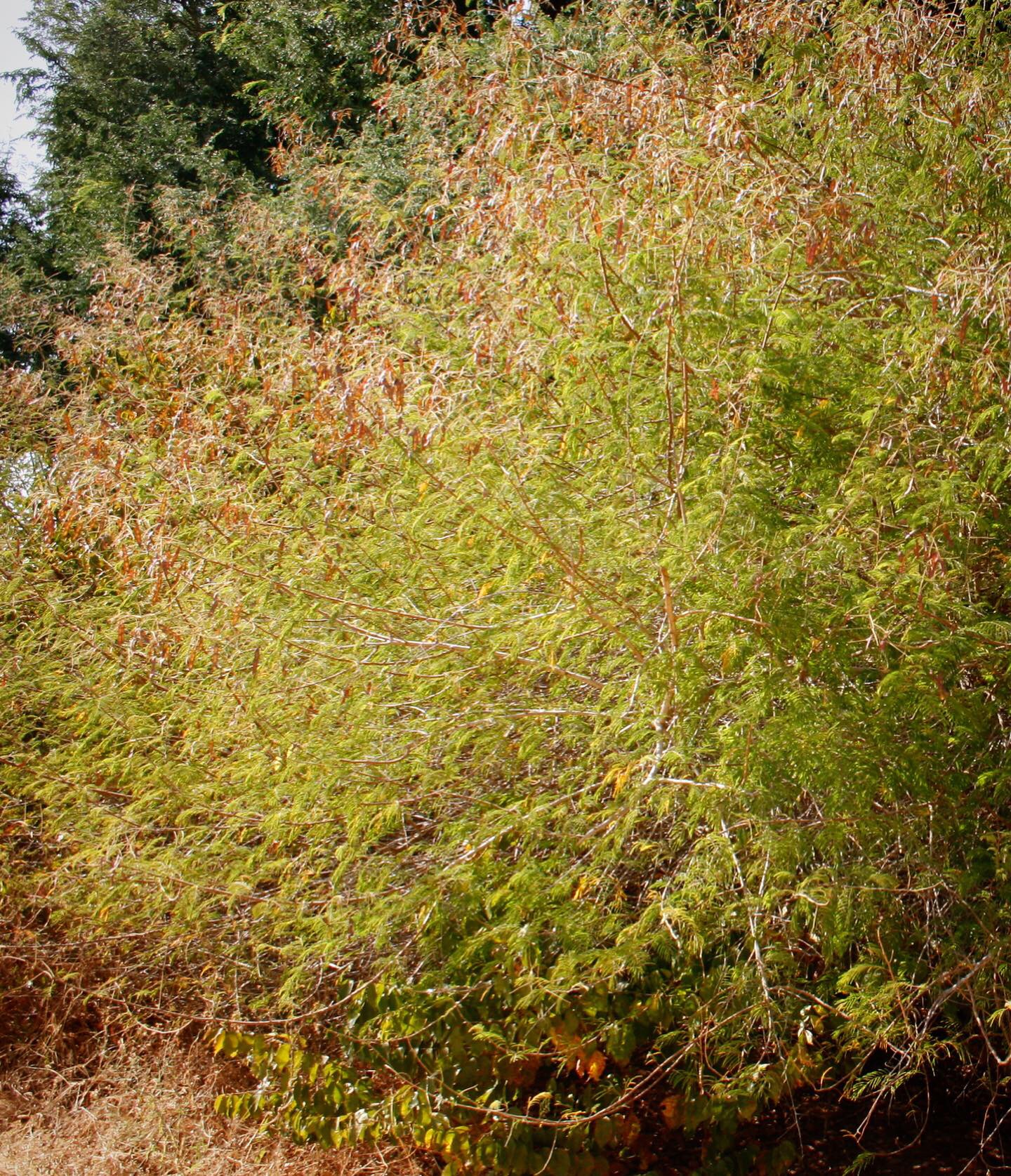
The groves are protected because they are sacred. I’m not an anthropologist and don’t know enough about local beliefs and traditions to be able to say anything about the origins of this practice, and what has kept it alive. So, I don’t know the full picture. But as an anecdote like this, for someone like me who studies sustainability in landscapes, the sacred groves in northern Burkina Faso are interesting. An example of how maintaining a traditional religious practice seems to also benefit biodiversity.
VI
The tanga tree (Vitellaria paradoxa / shea tree)* grows wild on the savannah. The fruits are eaten, but their main value lies in the nut. It is used to make shea butter, both for eating and for cosmetics like soap, ointments, and lotions.

Shea butter, made from the nut of the tanga tree, has found its way into international markets, and there are several initiatives across Burkina Faso where women collectives in villages harvest fruits, produce butter and sell for export.

VII
The keglega tree (Balanites aegyptiaca / Desert date)* is drought-tolerant and has a date-like fruit that tastes sweet and bitter. It can be eaten as it is, or the oil from its seeds can be used to make soap and ointments. The leaves are also used to feed animals during the dry season.

The keglega tree holds a special interest for research in sustainable landscape management in Sudano-Sahelian West Africa. It is a tree that is native to much of Africa and it is tolerant to both drought and irregularities in rainfall. Different parts of the tree also have many uses, as previously stated. During my fieldwork periods in Burkina Faso (and later, also Ghana), I witnessed many efforts to increase the tree cover in the village landscapes. Trees provide many benefits, from positively influencing the local water cycle to providing shade for animals and people. They can also be harvested or cut down for construction material and other products that the farmers need for themselves and to sell for a cash income. I saw many planted exotic species in the villages, from neem and mango trees to eucalyptus.

Introducing exotic tree species, however, can be problematic for many different reasons, both for the resilience of the trees themselves and for biodiversity in the landscape. The keglega on the other hand is a native species with many uses, and as such has the potential to be very valuable in reforestation efforts. I have colleagues who are involved in a large, long-term research project in Senegal. One of its goals is to better understand the opportunities, benefits and challenges of planting keglega in the agricultural landscape, considering aspects ranging from the purely biological to sociocultural 4. So, it might look unfriendly, but don’t let the thorns fool you.
VIII

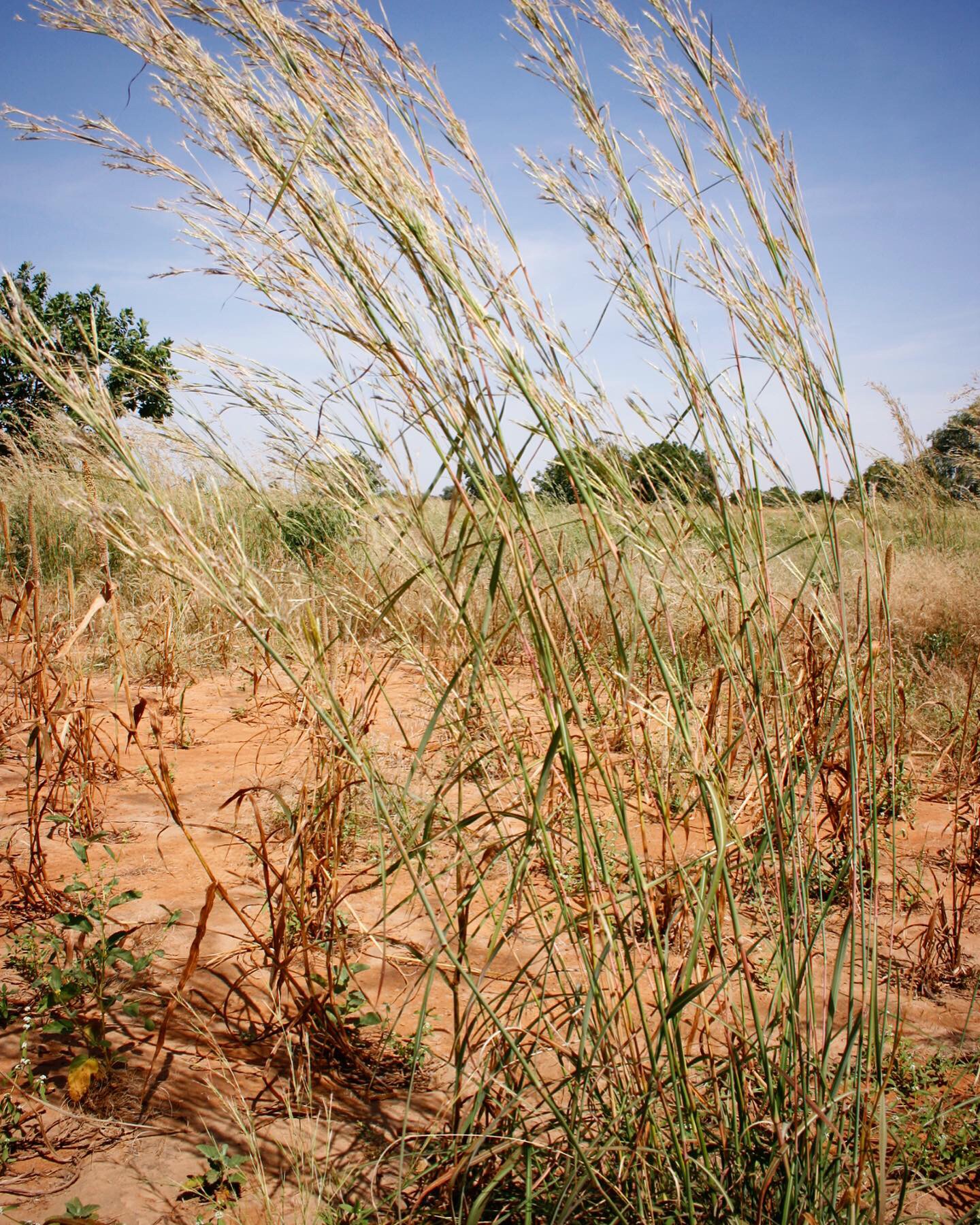
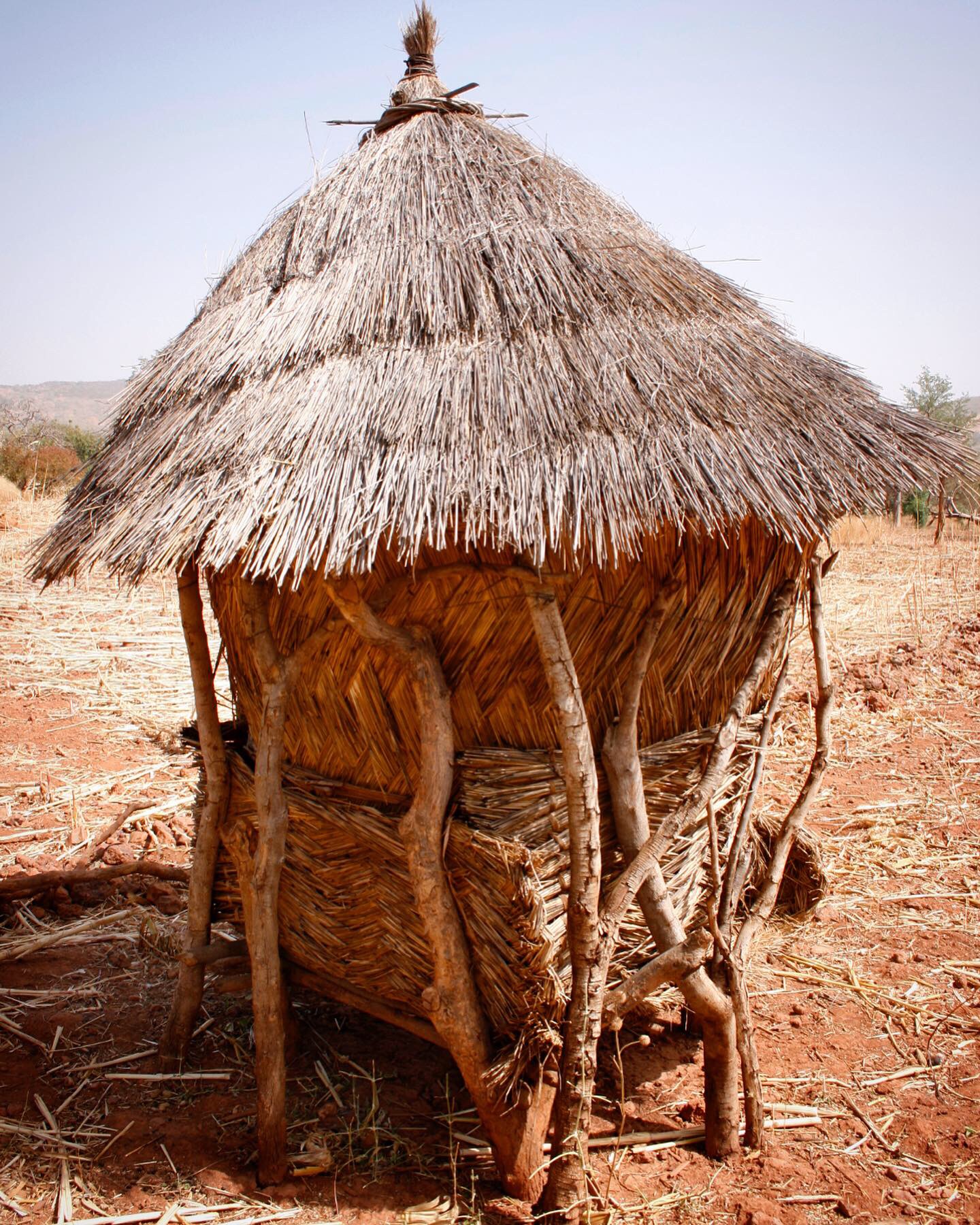
Boys weaving pitri grass (Andropogon gayanus / Gamba grass)*. Together with wood, the woven grass is used to construct granaries. The granaries are used to store sorghum, millet and other grains during the dry season. The pitri grass grows wild and could be considered a weed. However, if it takes root in the fields, it is often left to grow to mature size because of its value as construction material.
IX
In the cool evening breeze, a man is dyeing cotton fabrics indigo in a dyeing pit using the fermented leaves of the garga shrub (Indigofera tinctorial / true indigo)*. This technique of indigo dyeing is a centuries old tradition in West Africa, as is the cultivation and weaving of cotton. These dyed fabrics are sold at the market to earn a cash income.

Years later, I was given an indigo dyeing workshop as a gift from my colleagues to celebrate passing my PhD half-time seminar. So, one rainy day in late 2019, I joined a workshop at Second Sunrise, a clothing store in Stockholm. I loved it. It felt like weaving together several threads that had been running through my thoughts over the past years: the old geographer’s fascination for people and their connection to landscape, a budding ethnobotany nerdiness, and the ever-growing passion for textile-based crafts.
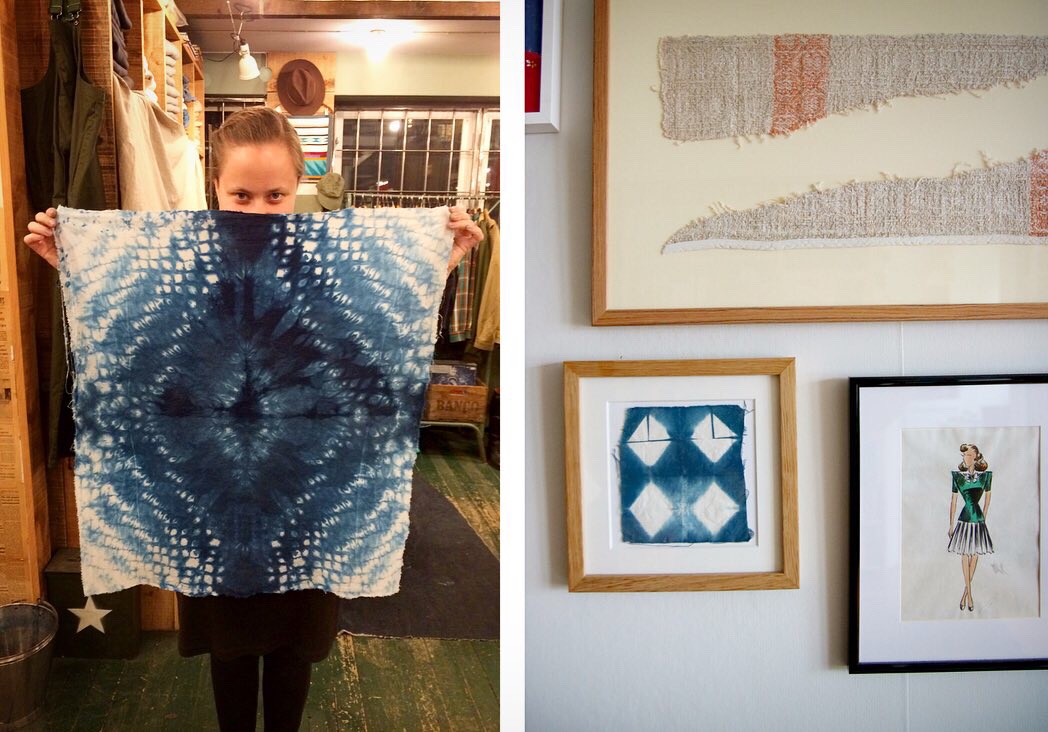
And even though my PhD research had shifted my focus from savannahs in West Africa to boreal forests in Sweden, it felt like a perfect celebration of my academic achievement. I remembered that old man, using a long pole to distribute the dye in the pit, rhythmically humming to himself. The sun had just set, turning everything pink and comfortably warm after my long hot day of walking back and forth across the village to collect groundtruthing data. There, somewhere, is where my life as a researcher began. Learning how to dye indigo felt like connecting back to that evening, those days of walking with my GPS device and camera, across newly harvested fields and over rocky hills. The sweat rash and exhaustion and thrill of learning through both mind and body.
X
It is hard, though. This thing about going to faraway places and claiming knowledge about them. Taking the right to tell those stories. It is walking a fine line between sharing an understanding, and turning it into something exotic, appropriating, taking advantage of my multiple layers of privilege to be in a place that isn’t mine.
Writing up these texts has reminded me of the struggle I felt during the years I worked in research projects in West Africa. The feeling, from two angles, of: how to not repeat the (sometimes well-intentioned) mistakes people like me have been making for centuries in this region, and the fact that I was still learning. I should be allowed to make mistakes, but is this really a place where me making those mistakes is fair? These doubts made me decide not to pursue a PhD project in West Africa. Instead, I applied for a project in Sweden, where allowing myself the student’s right to make mistakes didn’t feel like such a high-stakes gamble.
Last year, I circled back to a study, similar to the walking interviews from that first time in Burkina Faso. Now: How do private forest owners in southern Sweden relate to their forests? The places I was told about had so many meaning to the owners, often years of care, everyday uses far beyond the cubic meters of timber that the places could be valued by. Talking about the groves as of individuals that the participants had gotten to know. But often, also, how regulations and the market and management recommendations from industry-oriented experts has created structures and routines in which this intuitive sense of relating becomes really difficult to acknowledge and act on.
It reminded me of those walks across the savannah landscape of northern Burkina Faso. The regions may, at least in some sense, be at opposite ends of a development trajectory – but the meanings that the people I spoke to attached to the landscapes around them was surprisingly similar. This bond to landscape, like a weave with many threads, very much active in Burkina Faso and almost forgotten, but longed for, in Sweden. Maybe that can be a state of mind where we can meet?
Ethnobotany, as a practice, can be a tangible way for people to explore and care for that human bond to landscape. Sharing stories, like these, from places where the practice still is an active part of people’s everyday lives can inspire.
However, what we should not do is to romanticize how things are done in some of these places. Some people I interviewed in Burkina Faso said that they would not harvest the wild plants in the way I’ve described, if they could get a large enough yield to feed their family and sell the rest at a decent price at the market. And then again, others expressed pride and excitement in getting to share their knowledge about wild medicinal and edible plants with me, even asked me to pass these stories on to my people back home.
So, allowing space for these practices to be maintained or re-created as part of local culture and identity is important, but I don’t believe it should be anyone’s only option. Both have to exist in parallel. As exemplified in the little plant anecdotes I’ve shared, people and landscape are intricately woven together through practice, knowledge, culture and identity in northern Burkina Faso. Taking a step back from the individual plants, the research that I contributed to covers a range of scales, from the local participatory ecosystem service mappings 2 to the social-ecological system archetypes analysis that covers the entire Volta basin in Burkina and Ghana 5. Finding meaningful ways to capture these social-ecological nuances at scales that are appropriate for the intended use is key for sustainability, both in Burkina Faso, Sweden and for people and landscapes everywhere.


REFERENCES
- Sinare, Hanna, Line J. Gordon and Elin Enfors-Kautsky. 2016. Assessment of ecosystem services and benefits in village landscapes – a case study from Burkina Faso. Ecosystem Services 21:141-152. https://doi.org/10.1016/j.ecoser.2016.08.004
- Malmborg, Katja, Hanna Sinare, Elin Enfors-Kautsky, Issa Ouedraogo and Line J. Gordon. 2018. Mapping regional livelihood benefits from local ecosystem services assessments in rural Sahel. PLoS ONE 13(2): e0192019. https://doi.org/10.1371/journal.pone.0192019
- Sinare, Hanna and Line J. Gordon. 2015. Ecosystem services from woody vegetation on agricultural lands in Sudano-Sahelian West Africa. Agriculture, Ecosystems & Environment 200: 186–199. https://doi.org/10.1016/j.agee.2014.11.009
- Goffner, Deborah, Hanna Sinare and Line J. Gordon. 2019. The Great Green Wall for the Sahara and the Sahel Initiative as an opportunity to enhance resilience in Sahelian landscapes and livelihoods. Regional Environmental Change. https://doi.org/10.1007/s10113-019-01481-z
- Rocha, Juan C., Katja Malmborg, Line J. Gordon, Kate Brauman and Fabrice DeClerck. 2020. Mapping social-ecological systems archetypes. Environmental Research Letters 15: 034017. https://doi.org/10.1088/1748-9326/ab666e
 Katja Malmborg