Texts written while doing fieldwork for my master thesis in October to December 2014.
Farms in Reko

Arrival, before Reko:
We landed in Ouagadougou, Burkina Faso. It was hot. We got confused about which passport check-in line to stand in. It was hot. My backpack wouldn’t come. It was hot. Finally, it arrived. It was hot. My supervisor Line, who arrived yesterday, met us among all the people waiting for pilgrims returning from Mekka.
We got to the guesthouse, showered, had some Burkinabe beer, rested a bit, went for dinner at a local researcher’s house, felt confused about the French. Came back to the guesthouse, made the bed, exhausted – finally the chance for a good night’s sleep.
Still hot.
I’ll update you more tomorrow. Possibly. Now: oblivion.
Ps. I had the most delicious papaya for dessert after dinner today.

Heading north:
We packed ourselves into the pickup truck together with the backpacks and shovels and infiltriometers and kitchen equipment and started the journey northward. Elli and I, the translator Desiré, a soil science PhD student, Maurice, who was coming to help Elli get started, and the driver Theo. What felt like half the day was spent driving around Ouagadougou, though, looking for PVC pipes and gasoline for the gasoline cooker.
Once we got properly going, though, things went smoothly. Theo drove fast but safely, the national road was in excellent condition and outside the window the landscape slowly became slightly less green, the trees slightly farther apart and the outside temperature slightly higher.
When we arrived in Ouahigouya, the third largest city in Burkina Faso, we checked in at a guesthouse for governmental employees and researchers, and then left again to go visit Reko, the village where Elli will be doing all her fieldwork.
Hanna, the SRC PhD student whose work we’re both building our master projects on, worked a lot in Reko when she was here, and has continued to be in touch with them. It’s as if the village has adopted her, so when we arrived, both Elli and I were welcomed like family by Madi, the CVD (the president of the Comité Villageois de Dévelopment). He had been measuring rainfall for Hanna, and he was so happy to see the photographs that I’d brought of Hanna and her baby and husband. He gave us a bag of newly harvested groundnuts.
It was very nice, being welcomed like that. Here, we had a village where they already liked us, where they were used to our weird scientist ways and where they cared about us, because of our connection to Hanna. I think things will go well here. I will not be working in Reko at all, but still. Visiting Reko gave me a good feeling.

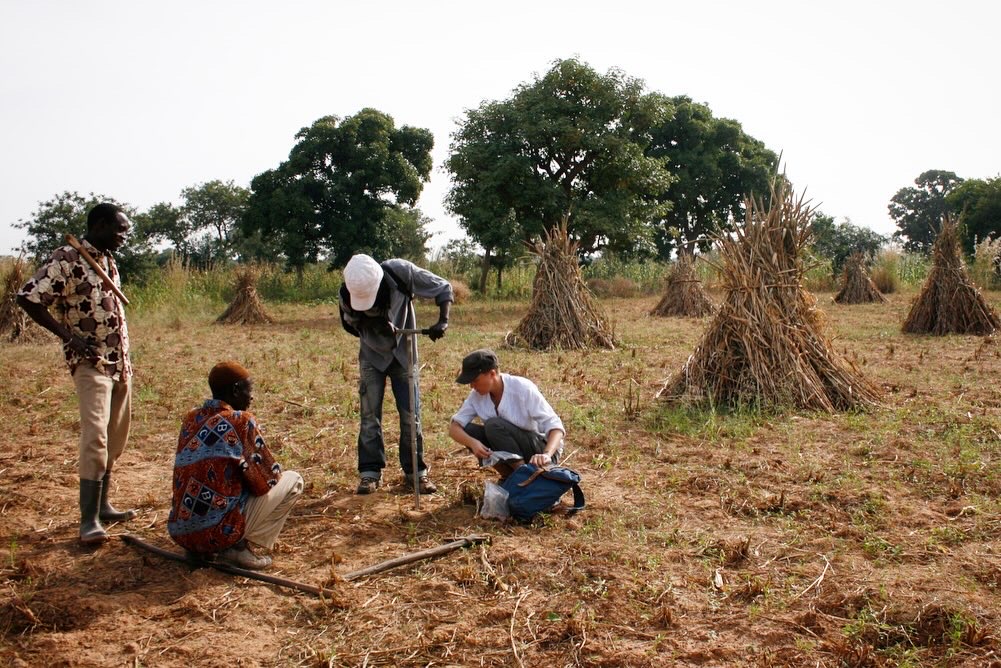
We were taken on a guided tour through Reko today with Madi, as an introduction to the landscape where we will be spending the coming seven weeks. It was hot, trying to handle the tablet with maps in, GPS device and camera at the same time was impossible, and there was so much variety in the landscape. I don’t know what I had expected, but it wasn’t what we saw. This is going to be so interesting.

Sometimes, I don’t recognize myself when I’m traveling. My moods go to the extremes, things are amazing, and then horrible, it is fast and I can’t keep track. At times, I just want to go home. At others, I feel I am exactly where I should be.
I think I recognize the signs, though. It’s the getting used to being away, out of my comfort zone, in something unknown. That’s when I need the small things that keep me grounded, the temporary safe zones in the middle of all the novelty.
My blue traveling silk sheets. I’ve had them ever since Bolivia in 2009. As long as I have them closest to my skin, sleeping feels okay.
Listening to podcasts in Swedish. This was something I started doing while in Canada in 2012, and it became such a comfort for me, hearing news from home when I lived in places where I had no one to speak Swedish to.
Writing. Writing always makes me find my way back to myself.

Today, after dropping Elli off in Reko, me, Desiré and Theo drove around all day visiting the three potential transect villages that I had picked out in the vicinity of Ouahigouya. There was a lot of time spent, sitting in the shadow under a tree, waiting for the right person to come back from a neighboring village or the fields. Other men somehow suddenly seemed to have nothing better to do but to also sit down to rest under the same tree, and the children gathered in clusters at a respectful distance but with curiosity shining through their eyes. Every new man that arrived wanted to greet us, and with Desiré there was a whole sequence of words and hand movements involved. For me though, being an ignorant white woman, they settled with just shaking my hand, saying some words in Mori that I didn’t understand and bowing slightly and then touching their chest with their right hand.
I quickly adopted the same gesture. I like the symbology of it. Shaking someone’s hand and then touching your chest. I imagine it means inviting someone into your heart.
I might be interpreting it completely wrong, but I think that’s my prerogative. I am an ignorant white woman, after all.
Be that as it may, if they invited me into their hearts or not, all three village leaders agreed to take me on guided tours in their villages during next week. People here are generous and I feel privileged to be allowed to work here.

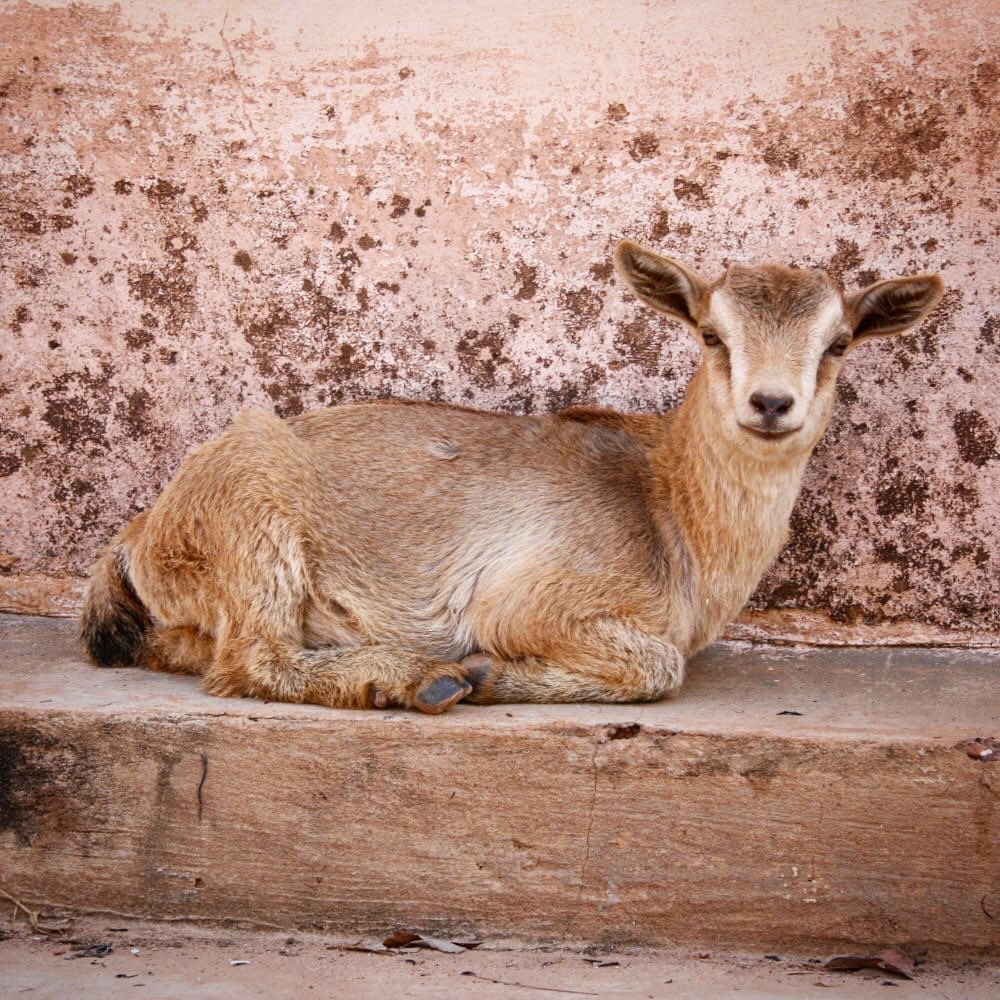
Sitting under a tree in one of the villages I hoped to work in, waiting for a man to arrive on a motorcycle, I watched a baby goat try to eat a dry leaf. First from the ground, then pushing it up on a wall, desperately trying to get a bite but not quite managing to.
And I thought: How on earth did I end up here?
And then I thought: No one who’s ever known me would be surprised, though.
Because, with the way I was raised, being somewhere else would actually be the surprising part. Me, sitting under a tree in the 36 degree heat watching a baby goat trying to eat, in a village of 600 people in northern Burkina Faso, waiting to get an answer for if I would be welcome to do research there, is more or less what every single part of my life has lead up to. One could say I didn’t have a choice. One could say I only do what I’ve been raised to do. Or one could also say I’ve always known what I wanted, at least on some level. Despite the doubts that I constantly carry around.
Be that as it may, sitting there, in that moment, watching the goat, I couldn’t imagine any other place where I’d rather be.
Later, in another village, waiting for another man, I watched the women coming back from the fields, making themselves comfortable under another tree and starting shelling newly dried beans. They put the pods in a big, high wooden bowl, quite like a butter tarn and then one of them used a long stick to kind of grind the beans in the bowl. Then, they emptied the wooden bowl into a basket, after which they poured the beans into a third basket, from a standing height to the ground. Using the wind to get rid of the dry and now peeled pods, while the heavier beans fell straight into the basket on the ground.
The ingenuity in using the wind and gravity to peel beans. And the beauty of the low-lying sun making the flying dry peels shine yellow, making the air around the women look like it glittered.
After having finished our business with the important man, we walked by the working women on our way to the car. They started shouting, and Desiré said they were disappointed that we were leaving, that they wanted me to stay, that they would take care of me. I asked them if I could take a photo of them, for my mother, and they laughed and I took it and when I showed it to them on the small camera display, they laughed even more and said ”Barka!” (which means ‘thankyou’ in Mori). I told them goodbye and said that I would be back in less than a week, and to that they laughed even more.
Oh, how I wanted to stay there.

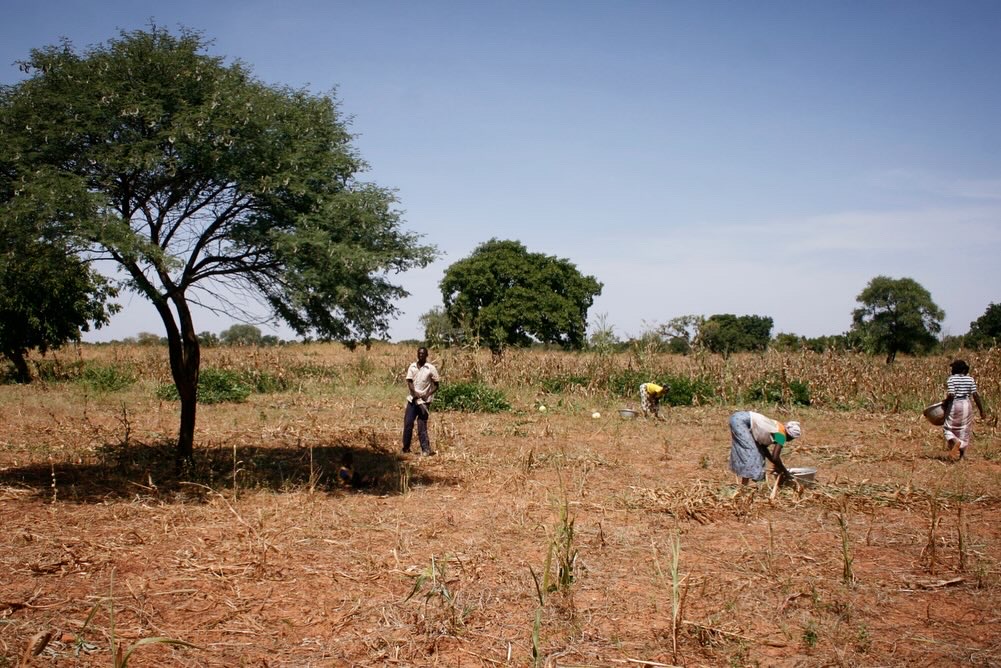
I’m sitting under a tree by a homestead in Reko, next to a well. Two women are washing clothes under another tree. I’ve been walking around, trying to get to know the relationship between my satellite image based landcover classification and the real world.
Mostly, my map is wrong. The good thing is, I can understand why. I’ve interpreted the satellite image right, I just didn’t know the landscape. Now, I need to figure out how to fix it. I only have vague ideas this far. But I also have all spring to come up with something brilliant. So, I still have hope.
There are so many sounds here. Birds singing different tunes, hens clucking, roosters cuckooing, goats braying and donkeys screaming like it was the end of the world. There is also a low rattling sound that I think are the lizards. Wind in the trees. Grasshoppers. Or in the afternoon: the call to prayer from the village mosque.
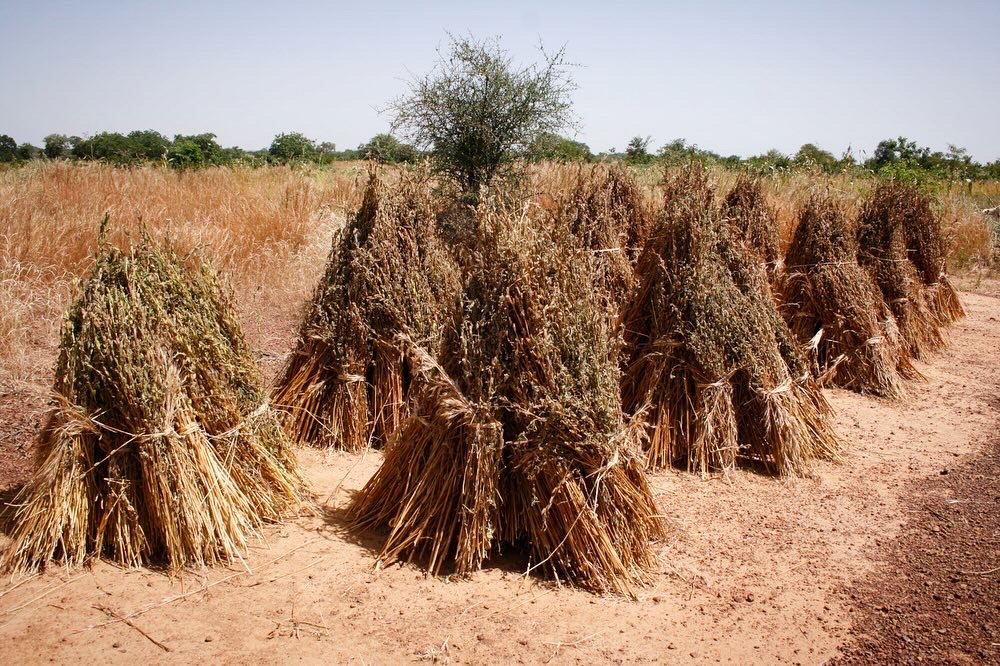
And smells. Dry soil, smoke, the slightly sweet smell of drying, newly harvested millet. And sometimes: a whiff of wild thyme, or something very similar.
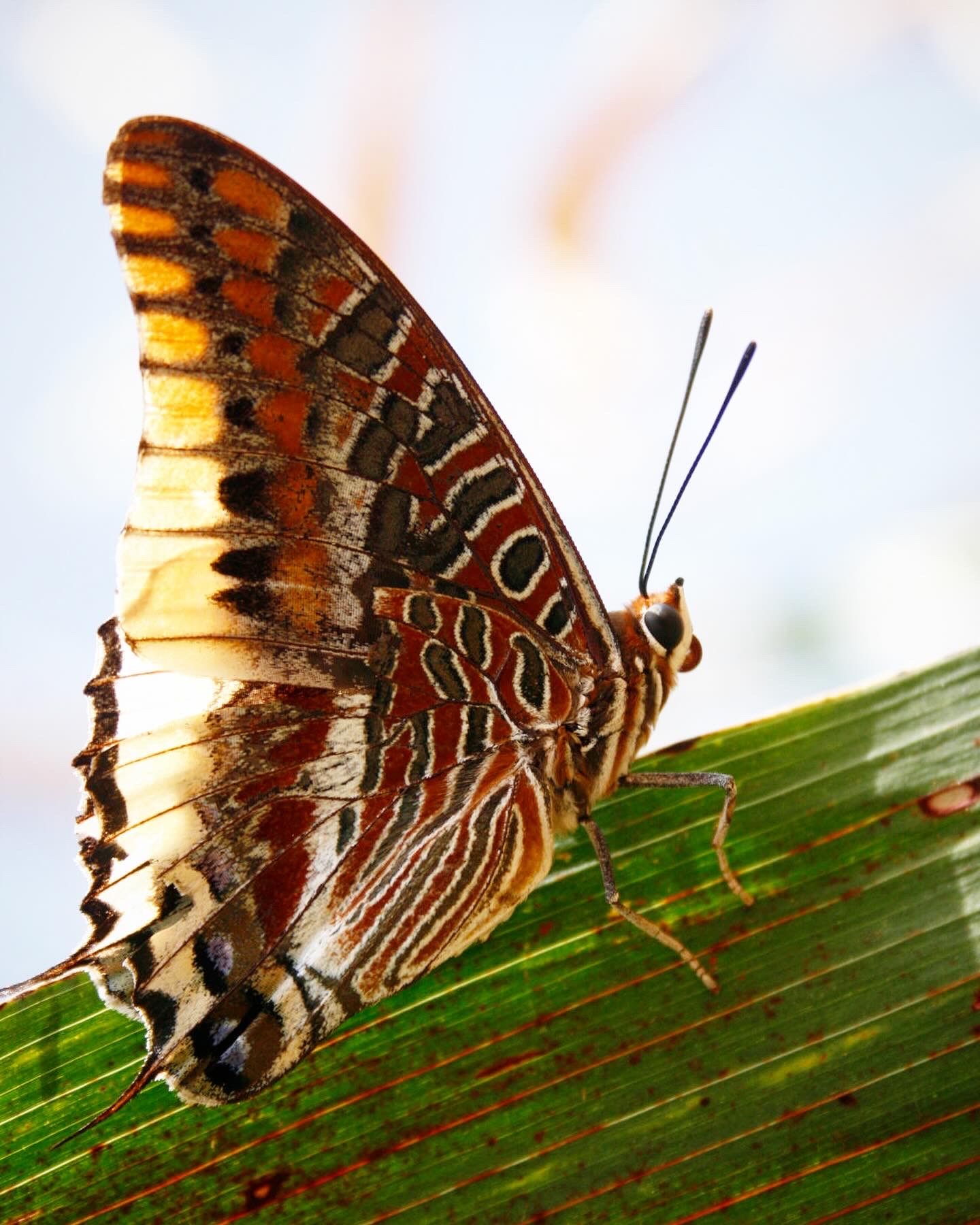
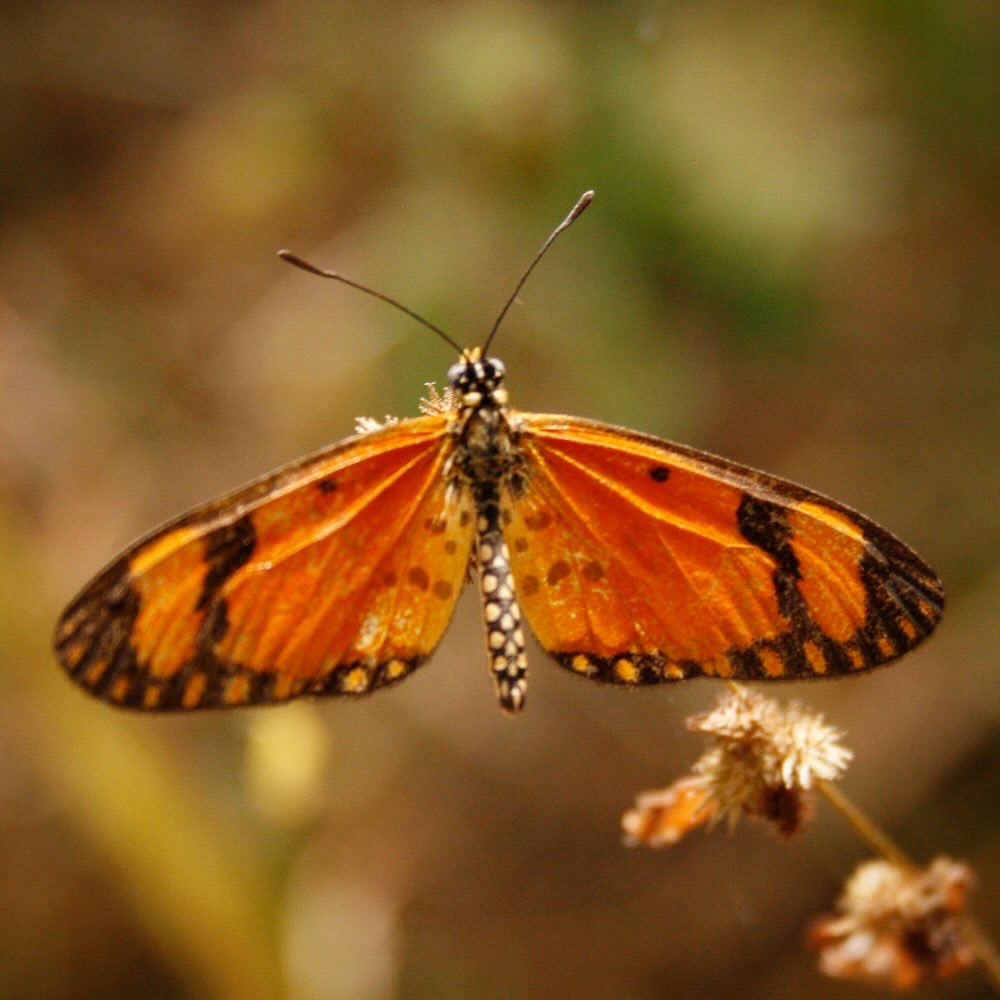
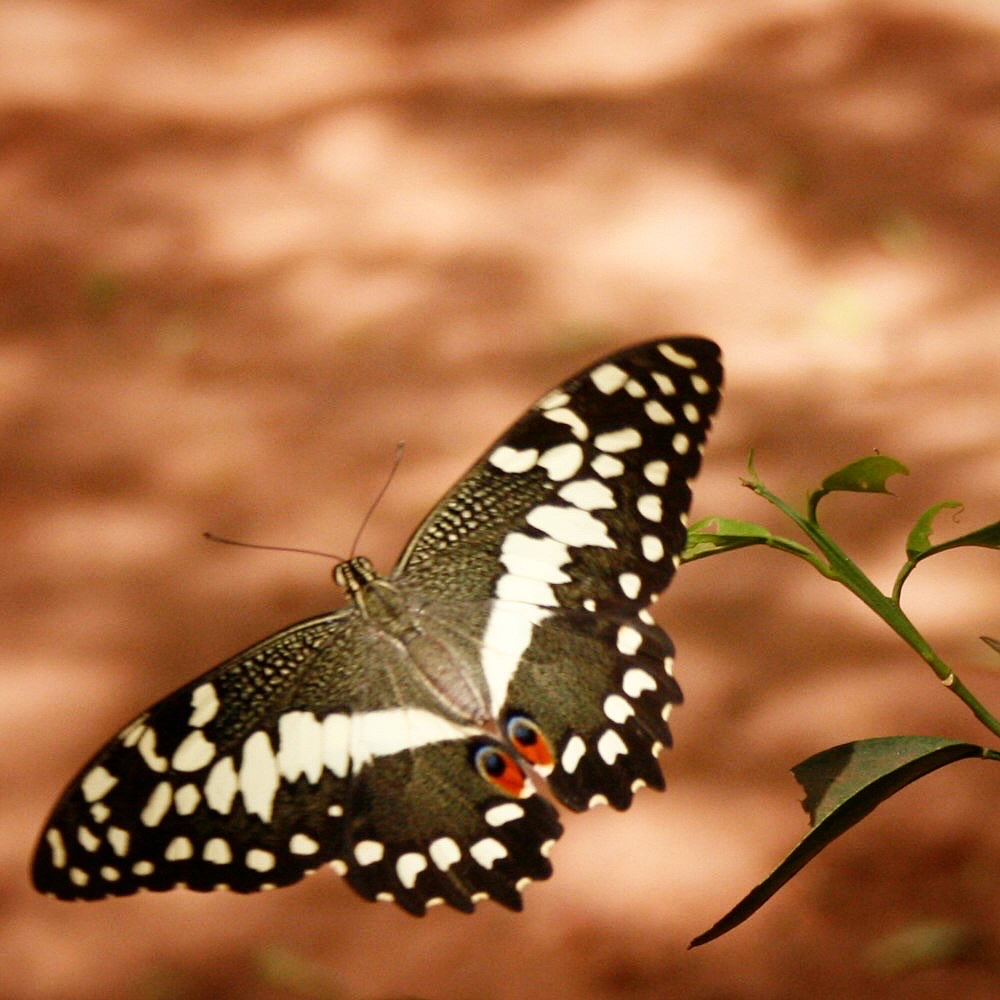
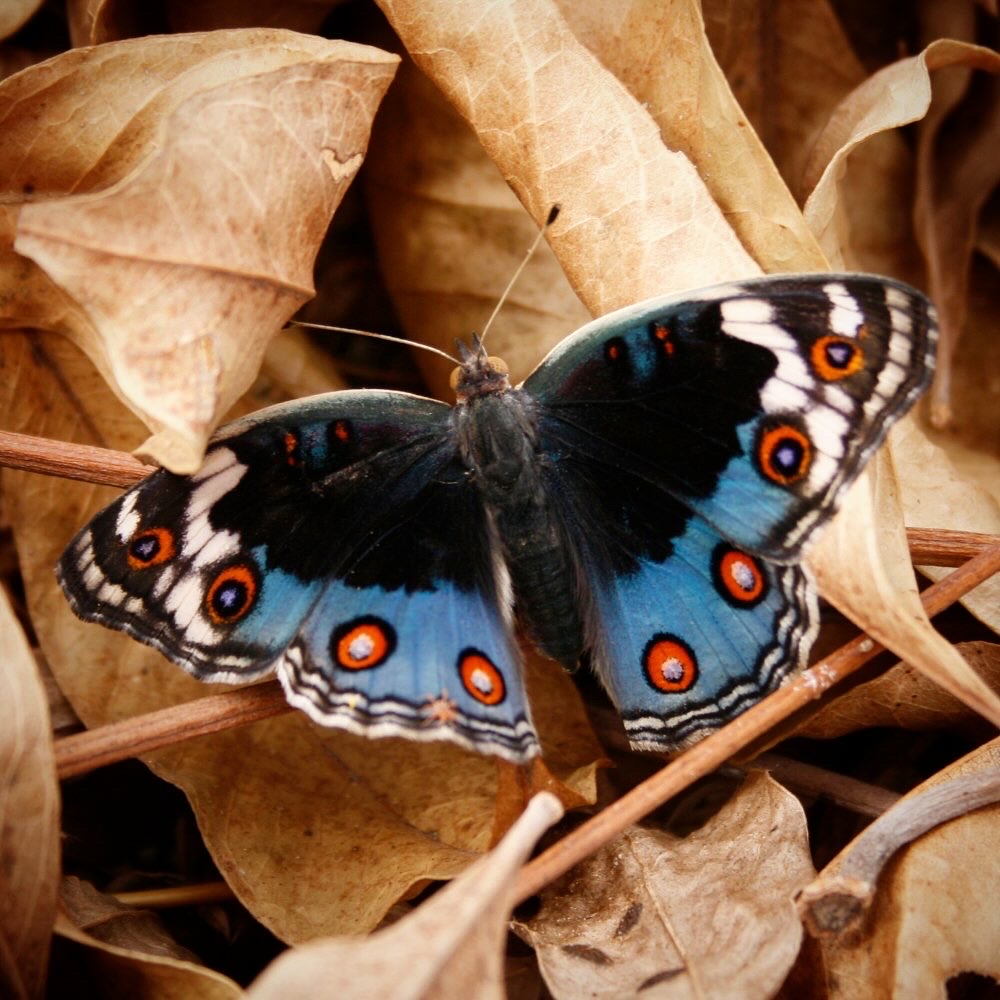
And the butterflies. Everywhere. Fluttering around the puddles by the well. The children, who have sat down to look at me in the shadow of the next tree, laughed at me when I chased the butterflies with my camera.
Things move slowly here. People are always doing something, but there doesn’t seem to be a rush. It’s an attitude, I think, but maybe even more, the heat.

After walking my first transect with the CVD and another man in a village called Filly, we all sat down under a tree and rested for a bit. I tried to make some last notes about what I had seen (land degradation due to a new road redirecting waterflows during the rainy season, man-dug fish ponds, stories about monkeys stealing water melons and mangoes). But it was hard to concentrate, because the group of children around me just grew, until they were at least twenty, standing there, staring. It felt awkward, sitting there, trying to write, with such a big audience.
Luckily, one of the bigger children soon arrived with a bowl and two cups. Me and Desiré were poured a cup each of the thick, white liquid. I didn’t drink it, knowing it was made from well water and I don’t have time to tend to my sensitive Swedish stomach more than absolutely necessary, but I took a sip. It was a drink called zoomkoom, and it is a drink that is traditionally given to guests as soon as they arrive, in a calabash cup. Our cups were plastic, but otherwise, this village seemed to still heed to old traditions.
It tasted sour, sweet and starchy all at the same time. I was told it’s made out of powder of small millet, sugar and water. Not the most tasty drink I’ve tried, but definitely interesting.
In the afternoon, we did another transect.
All in all, I think we walked more than ten kilometers today. In 38 degree heat. I drank four liters of water. But I did it, I managed to do all the GPS tracking and photographing and note-taking and question asking, all at once. I also think I managed to uncover some interesting things for my study, an actual potential result. Bodes well for my future walks.

The best part of the day here, is coming back to the room after a day of fieldwork, and stepping into the shower. Washing the sweat off my body, letting the cool water stop my blood from boiling.
Today, I noticed that I had burned my arms a little bit. Or, I’m not completely sure. The light both in the bathroom and in the main room is terribly bad, so I might just be imagining things. I am probably imagining things.
The black silk shirt that my aunt Kaarina gave me the day before I left Sweden, had white salt lines from sweat on the front and back. So did my black cotton sports bra.
I crave chips. And fries. And cheese. All fatty, salty things.
But a shower is amazing too.
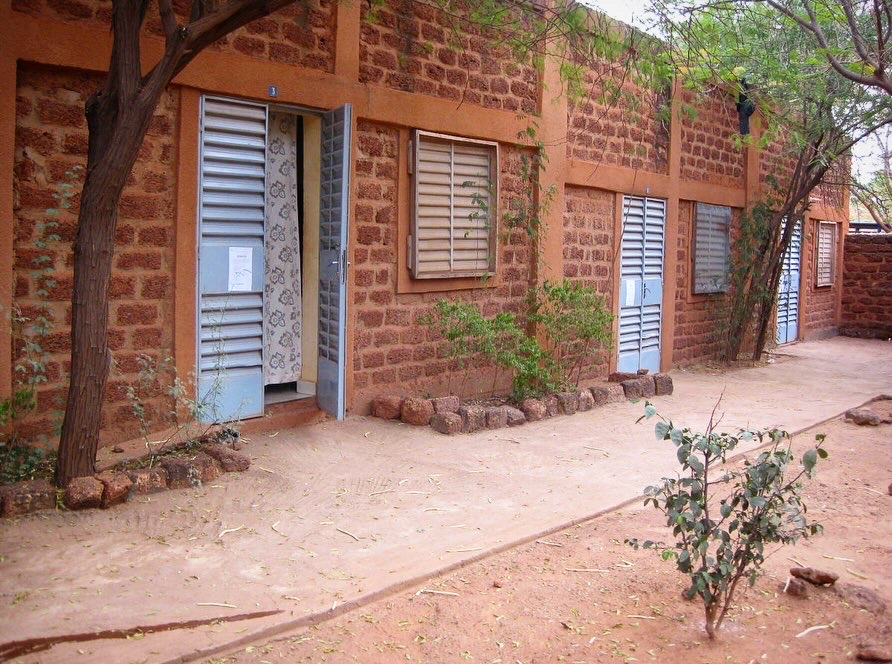
The guesthouse garden in Ouahigouya
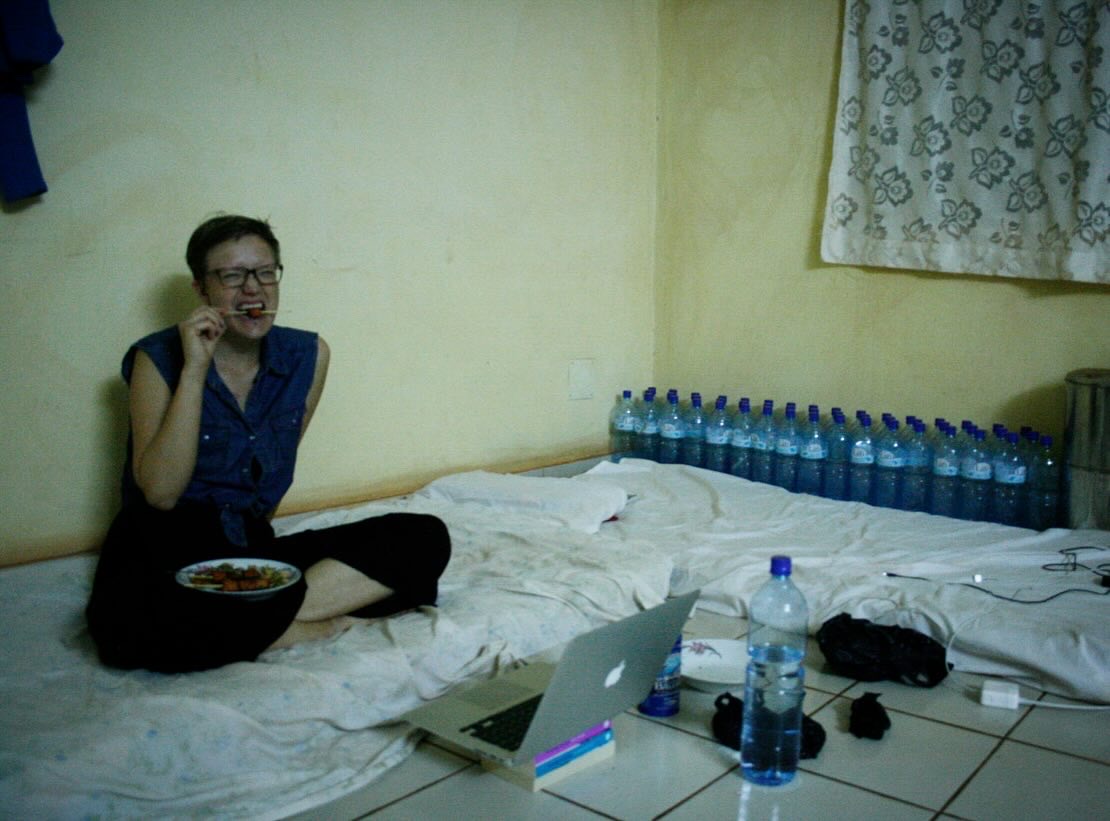
October 27
The political situation in Burkina Faso. There has been some confusion about the subject on my part, but now I’ve managed to get everything straight. The situation is this:
Burkina Faso has a president, Compaoré, who has been in power ever since a military coup in 1987. In 2000, after some heavy protests, it was decided that the constitution should be changed so that a president can only sit for two consecutive periods, that is, ten years. However, some time later, the constitutional court ruled that this law did not apply for the past, which meant that Compaoré has been in power for another two and a half presidential periods after the constitution was changed.
Next year, however, presidential elections are going to be held. According to the constitution, Compaoré cannot run again. But he doesn’t want to give up his power. He wants to change the constitution again. Now, just last week, the government decided that the parliament should vote on if a referendum is to be held early next year. The referendum would be on if the constitution should be changed, and what the opposition here believes is that if the decision to hold a referendum passes, Compaoré is sure to fix the ballot so that he wins and can run for president again.
People here are furious, especially young people. Ever since the decision by the government last Monday night, there have been small spontaneous demonstrations all over Ouagadougou, and we’ve heard stories of young people blocking the streets with barricades of burning tires, making it impossible for people to drive to work. The opposition has gone out with messages encouraging manifestations and civil disobediance. Europeans are being warned though our respective embassies by the consulate of France to be very cautious and avoid any large gatherings of people.
Here in Ouahigouya, though, we haven’t noticed a thing, except for the heated discussions on the radio that Theo and Desiré want to listen to in the car.
On Tuesday, the opposition has called for a nation-wide manifestation. We’ve been told to stay at our guesthouse that day, especially since we have a government registered car. On Wednesday afternoon, the parliament will vote. If the decision to hold the referendum passes, more protests are expected on Thursday.
Things seem to be in limbo here, and we don’t really know what to think. On the one hand, we’re on tight schedule, trying to squeeze in as much fieldwork as possible in the time that we are here. In the villages, everything seems so calm, like nothing could disturb their daily routine of harvesting their fields. On the other hand, we get these messages and warnings from all directions, telling us to be extra careful and to keep our phones charged and plenty of water at home.
Well, we’ll see how this pans out. At least, one can definitely say that we’re in the middle of where the action is.

Because of the nation-wide manifestations tomorrow, and therefore us being grounded the whole day) we decided to go for a beer together with Desiré and Theo after I finished my first day of transect-walking, to celebrate this (almost) first week of field work.
We ended up by a plastic table with a mended leg, standing on a big open space covered in dirt with a bottle each of Brakina. The moon was half-smiling, just like expected this close to the equator. In Tanzania, I told the others, the moon lies down completely.
We drank, and talked about politics and travels and laughed at mine and Elli’s bad French and by the time we got back to the guesthouse, I was quite drunk. We made dinner. I was starving. I ate tons.
Then I started peeling a papaya, which no one wanted to share with me, so I ate it all myself and started thinking about the monkeys in the park in Villa Tunari, Bolivia. They got papaya every day, there were enormous amounts of papaya in the food storage in the main building. And the monkeys’ favorite part of the papaya was the seeds, back and shiny and round.
These Burkinabe papayas don’t have seeds, for some reason. Poor monkeys, losing out on their favorite treat.

October 28
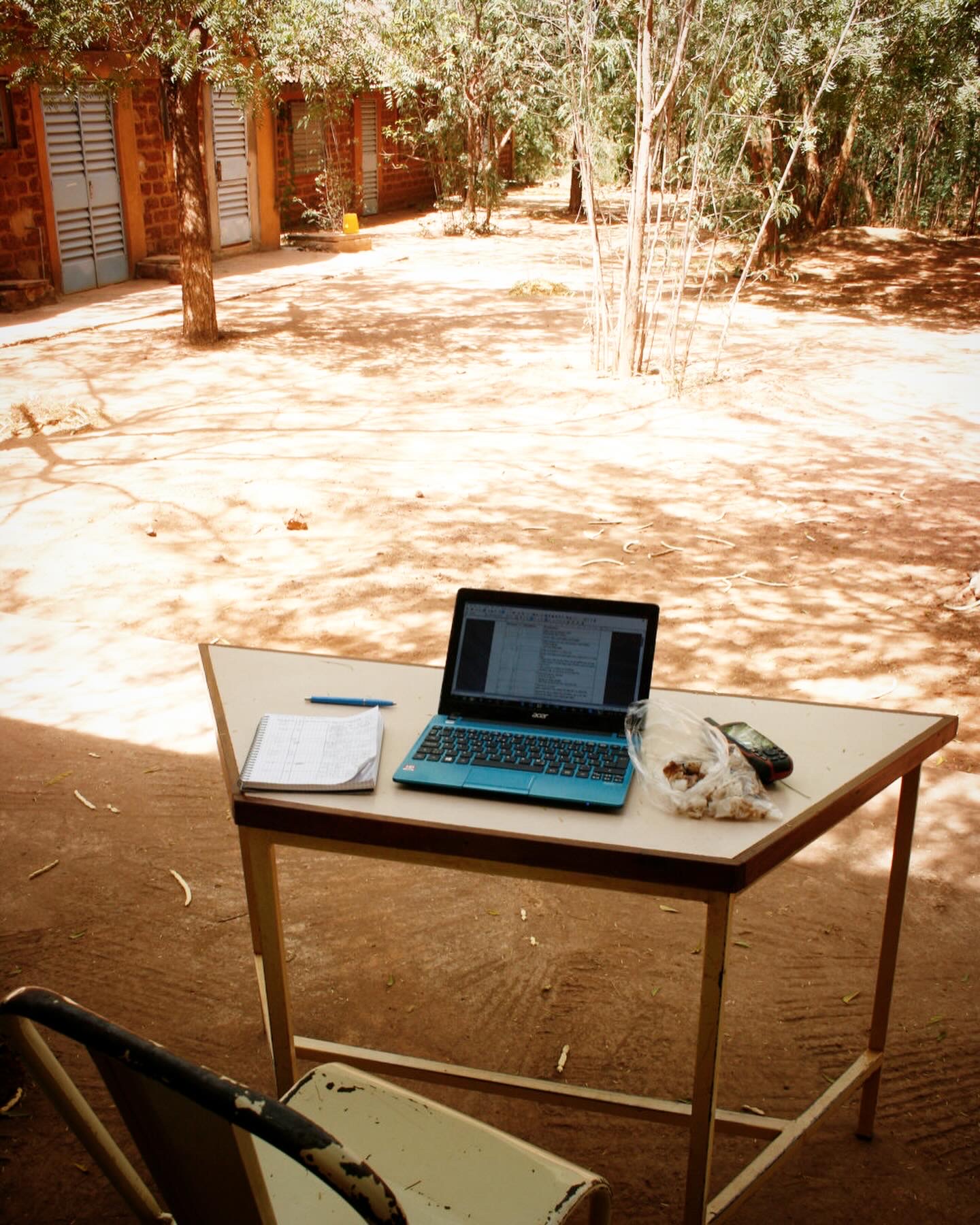
I’m sitting outside our room, in the shade, on a rock, while Elli and Desiré are still sleeping inside. Just now, moments ago, when I opened my laptop, I found a dead mosquito cushed against the edge of the screen. I must have unknowingly killed it when I used my computer last. I can’t remember when that was. Not yesterday. That was the most intensive day yet of my fieldwork here in Burkina.
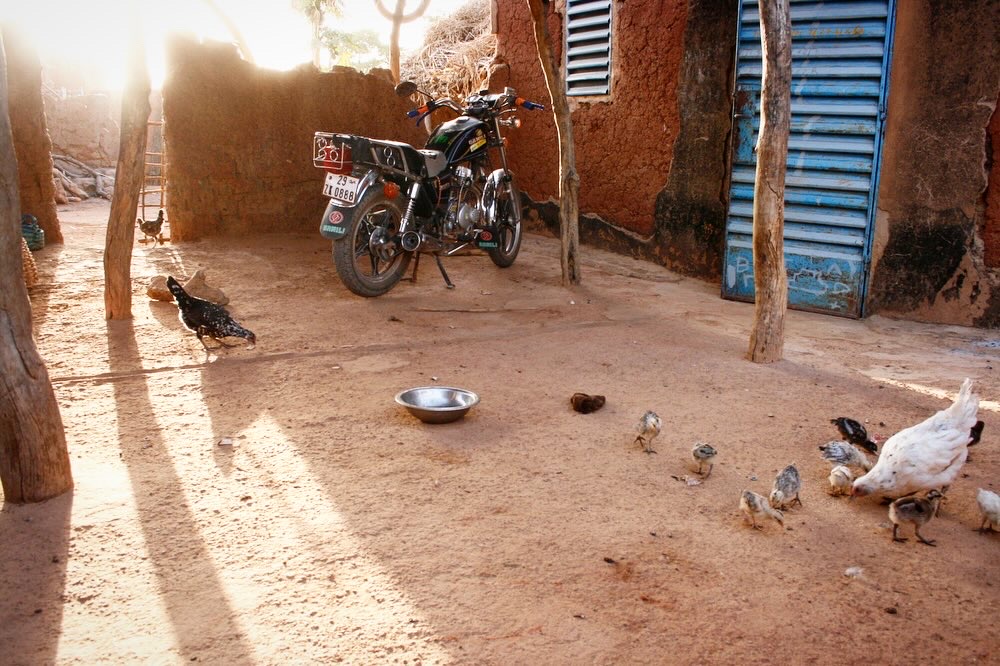
There are lizards running around on the walls. Somehow, they seem bigger than the ones they had at Chez Tess. I don’t understand how gravity allows them to just sit still on a wall, watching, not falling down. There are also two small white hens gallavanting around in the yard. A skinny kitten just walked past. That’s the kind of guesthouse that we’re living in.
I think I hear people shouting and honking horns and blowing in whistles and talking in megaphones and the sounds come in waves, like they would if they were screaming political slogans. I imagine it’s the sounds from the manifestations, but it could just as well be the general noises from the city. It’s hard to tell.
We might be grounded here for safety reasons, having been told by basically our entire network of contacts in Burkina that we shouldn’t leave our hotel today, but I must say that for me personally, it couldn’t have come at a better time. I need a day to gather my thoughts. I just wish I could have gotten it for less anti-democratic reasons.

Today, we had time to do some laundry, I took care of some correspondence and caught up with my writing. It feels good. There is a tangible satisfaction in writing for me. I feel content, physically.
The day has been quiet and except from the faint shouts from the demonstrations this morning, things seem to have been very calm in Ouahigouya today. We have heard, though, that in Ouagadougou, about a million took to the streets. We’re expecting to be able to go out into the field again tomorrow, and when Desiré called to confirm with the CVD of the village where we’re going, Rallo, he was told that they had prepared for our visit. People are so generous with their time and prayers here.
So. Work goes on.

October 29
I was wrong.
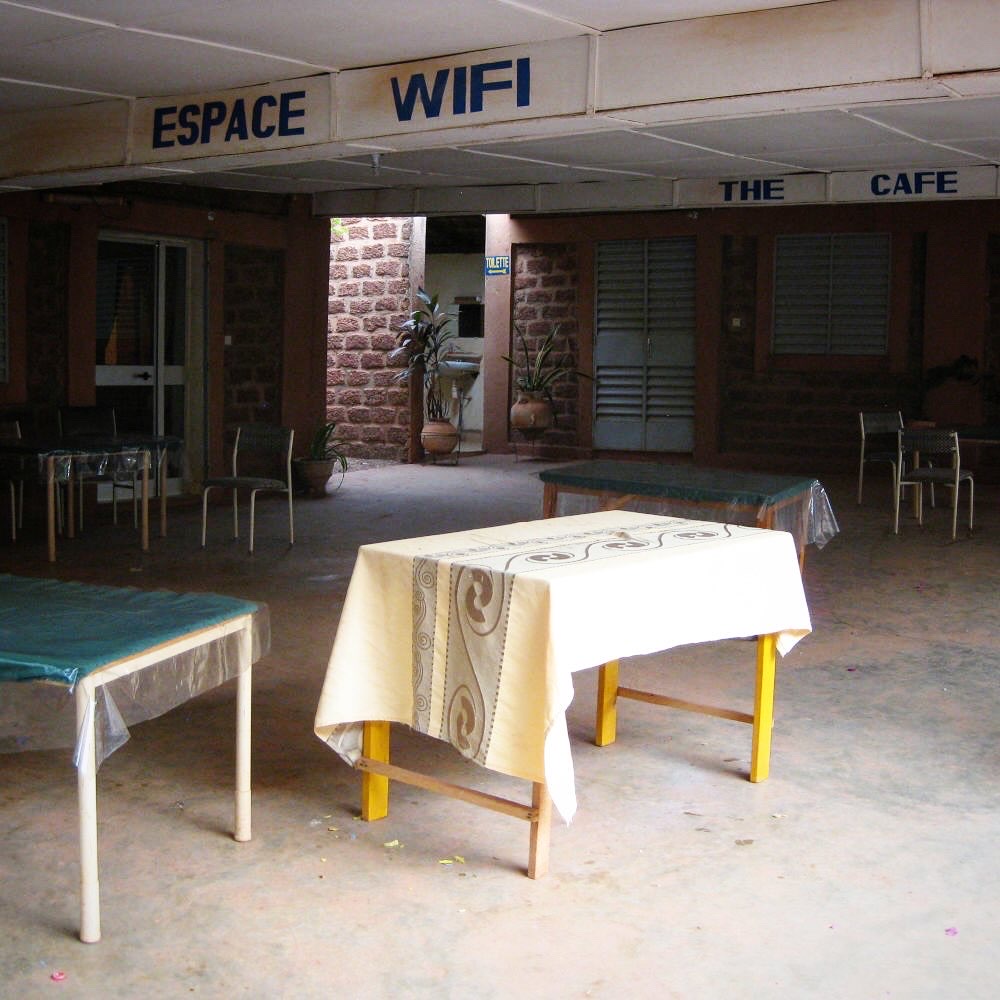
We’re grounded again. The governmental rental service won’t let us drive today either. I moved my office outside our room today, and I’m sitting in the shadow and light breeze, transcribing my field notes into neat tables on my computer. This place is better than the wi-fi area by the reception, because there is no breeze there. I’m eating the last of my homemade Swedish Christmas toffee to keep my spirits up, completely melted of course but still good.
In the morning, we still thought we would be able to go out to the villages. I had prepared for a whole day of transect walking. But then at seven, the driver called and said that we weren’t allowed to leave the hotel again, mostly due to the rental service not wanting to risk any damage on the car. Apparently, when people are angry at the government here, they attack government registered cars. So consequently, I guess, it’s a safety precaution for the people sitting in the car too, to stay put.
Now though, I’m feeling quite happy we didn’t leave. Since ten, the wind has carried faint shouts and megaphone speeches from town, and there has been sirens too. The protests are not happening anywhere near where we’re living, so here everything is calm, but to get out of here we would have had to go through a major traffic hub, and that’s where some of the noises are coming from.
Tonight, we will know if the proposal to hold a referendum passed in the parliament. If it does, there are more protests to be expected, and we don’t know when we will be able to get out of here. I’m not concerned for my own safety or health, but both Elli and I are starting to worry a little bit about our projects, about time and money. If this situation continues, we will have to make some major adjustments to our field working plans.
Oh, well. Maybe today I will finally have time to wash my hair. I haven’t washed it since we left Sweden. There’s so little water in the showers here, and my hair is so long, and our schedule so tight. I have prioritized sleep before trying to get the shampoo out of my hair. Now, though, there’s plenty of time. Always look on the bright side.

There is a certain kind of madness that comes with immobility and uncertainty. The knowledge that I really need and want to move, to get out, to work – but I can’t, because the license plate on our car is red. I have plenty to do, articles to read and whatnot, but it’s like something’s crawling all over my body. We’re stuck in a hotel. I feel stuck in my head too.
And watching people’s lives continue on my Facebook feed doesn’t make things better. I’ve only been gone two weeks, and nothing is different. (Not that anyone would write ”Katja wasn’t at uni today” as an update – but being in this bubble makes me completely lose perspective.) People don’t answer e-mails right away and I feel completely forgotten. Forgotten is also the fact that until yesterday, there were several e-mails from friends that I hadn’t answered for at least a week. I did say I’m losing a small piece of my mind.
But a butterfly came to visit me while I was working today.
And watching two episodes of Community with Elli, introducing this incredible piece of entertainment to her, while eating the Gott&Blandat candy that my supervisor left with us to give to someone as a gift, but that we now felt that we deserved to eat ourselves, made the crazy take a step down. It’s essential with these buoy of pop culture in the endless sea of obstacles.
We can’t leave the hotel tomorrow either.

October 30
The afternoon is uncommonly calm here. I can barely even hear any cars, only the sound of small birds and the odd scream of a donkey. There is no TV and no radio. I think everyone is waiting for an announcement.
This is what has happened:
The parliament was supposed to hold the vote on the referendum today. The protests in Ouagadougou turned even more dramatic than any of the days before. The parliament building was stormed and set ablaze, so were some other governmental buildings and a hotel. The national radio and TV building was attacked, and now nothing is being broadcast. People are rushing towards the presidential residence, but the president is not believed to be in the country. Instead, the younger brother of the president ordered the military that they may shoot at the demonstrators. Between five or ten people have been killed, different sources say different things. The younger brother of the president was arrested at the airport when he tried to flee the country, and now the airport is closed.
The parliament has suspended the vote on the referendum. We also hear that a former defense minister, a known critic of the current president, has claimed power over the military and has said that the military now runs the country. They are talking about a military coup.
Now, everyone is waiting for a press conference to end. After five, we should know what is actually happening here.
Here in Ouahigouya, though, things are relatively calm. There have been some protests, and it is rumored that some governmental buildings have been put on fire here too, but I wouldn’t know. We haven’t left our hotel for three days. The protests have not spread beyond the city center. I’ve read articles on participatory mapping and gone through our budget and expenses.
We’re all just waiting for what will happen next.

October 31
The news of the day have been:
The president went out and said that the government was dissolved, but not the parliament, and that the military wasn’t in power at all. Then he offered to lead a new interim government until November next year, when the elections should be held as previously planned.
This was not good news, and it was feared that more protests would follow.
Then, just after lunch, the president went out and declared that he would resign, and then he was seen driving south in a long caravan of 20 cars. The commander in chief of the military declared that he was the leader of the interim government instead, and that elections will be held in 90 days.
People went out on the streets and celebrated. Storage facilities for the only Burkinabe beer were looted here in Ouahigouya, and people were drinking beer and drove around town honking.
Burkina Faso’s president of 27 years is not the president anymore. What everyone was demonstrating for has finally happened. Hopefully, this means that things will go back to normal. Some people are saying, though, that the commander in chief is too close to Compaoré and that the opposition isn’t content yet. Having the military in power never feels quite right. We’ll see. This evening, though, everyone just seems happy.
I realize that I’ve just been part of a historic sequence of days here in Burkina Faso. That these, hopefully, are the first steps toward creating democracy in this country. And a part of me really thinks that it’s cool to be here. This could be history in the making, after all.
But then another part of me is slowly losing my mind from sitting here, cooped up in a hotel, without knowing when we will be able to get out of here. I have my work to worry about – all this time here has meant a lot of reading of scientific articles, which in turn has led to me realizing there are so many things that I still don’t know and won’t have time to consider for my thesis, and how will it ever be any good if I can’t even get out to do my fieldwork? And at the same time: having constant access to slow internet, seeing people’s lives continue on my Facebook feed while few seem to have time to answer to my whiny cries for attention. I know that people care, and that they are worried, and that I shouldn’t read anything into the emptiness of my inbox, but I can’t seem to help it.
This is what being cooped up turns me into. Needy and paranoid. My very selfish reflection is: I need this coup d’etat to end now, so that I can get back to the villages, to my sweaty transect walks and moments of rest on tree trunks in the shadow of a homestead mango tree.

November 1
This morning, we received the news that now it was OK to leave the hotel and use the car again. So, I went to two new villages to ask them if they were willing to help me and it felt amazing to be working again. In the car, we listened to the radio. I couldn’t always follow, but the latest news seemed to be that the commander in chief who had declared himself interim president last night, had been removed already early this morning and instead a younger colonel called Zita claimed to have the power. And later in the afternoon, the military declared that they supported Zita. The opposition seems to be warily fine with it too. So now, things seem to be calming down. Hopefully, they will stay this way, and elections will be held in 90 days, and then this country might actually be starting on its journey toward democracy.
Another thing that they said on the radio, was that the house of the president’s brother had been looted, and a big stash of artifacts of black magic had been found there. They said that maybe that was how the president had been able to stay in power for 27 years, and his family be so powerful in the country. Interesting theory, for sure.
I’ve witnessed a kind of revolution firsthand. I don’t think I’ve really understood the importance of these chain of events for Burkina Faso yet. I was just so happy to be allowed to go out working again today.

November 2
This afternoon, the streets in Ouagadougou became unsafe again. The opposition isn’t happy with the transition leader being a military man, and has called for more protests. Guns were shot at protesters outside the national TV station by soldiers. “The UN has condemned the military takeover and threatened sanctions”, says the BBC.
The Swedish embassy, that just this morning lifted the recommendation of staying at home, sent out messages this afternoon invoking the recommendation again. The Swedish Office of Foreign Affairs has issued a recommendation against any unnecessary travels to Burkina Faso for Swedish citizens.
It seems like everything is happening in Ouagadougou, though. Here, everything seems like it’s back to normal and we hope that we’ll be able to go out working tomorrow. Our schedule is tight now, if we are to finish here on time.
This is a really weird situation. Things are crazy in Ouagadougou, but here they seem calm and we don’t know what to think. I just have to go with my gut, and my gut tells me: In the villages, life goes on as usual. We’re in the middle of harvest season. If everything else is changing, you can at least rely upon that.
And they are always so happy to see us there. That is what I think.

November 19
I did a lot of writing about the events that weren’t quite a military coup, but that had too much military involvement to only be a public uprising, back when there was a lot of action going on and Elli and I were put under house arrest for safety reasons. It had quite a toll on my mental stability, being locked up like that, and as soon as we were allowed to get out of our room, we plunged into fieldwork and there was no time to follow the more peaceful, but very significant developments that took place after the demonstrations.
Now things are quite settled here, after a couple of weeks of negotiations, so I thought it might be nice to give you a summary of what’s happened. To get some closure, in a sense.
As I wrote, the military took power after former president Blaise Compaoré resigned and left the country. At first, it seemed like it might become problematic, since different officers declared themselves as heads of the country, but eventually everything settled on a man called Zida. According to the constitution, elections should be held a minimum of 90 days after the president resigned, but the military had declared a state of emergency and that the constitution didn’t apply anymore.
The presidents of Ghana, Côte d’Ivore and Nigeria came to the rescue and negotiations got started between the military and the opposition parties. The African Union set a dead-line of two weeks for electing a civil transition leader, but Zida said that that wouldn’t happen. This needed to take time, he said, and they wouldn’t stress things.
One thing that complicated matters was that all the most natural potential civil transition leaders are politically active, and will want to run for the presidency once the real elections are held. The transition leader cannot run for president, so, that ruled out most candidates.
However, a week or so ago, a transition plan was agreed upon, in which a one year transition period was settled. This in order to give the country and its politicians and people time to transition into a society where democratic elections can be held. In November 2015, the real president will be elected.
And on Sunday night, Michael Kafando was chosen as the transition leader of the country. Kafando is 72 years old and was the Burkinabe ambassador in the UN from the late 1990s to 2011. He has plenty of experience, and the people that I’ve spoken to seem to think he’s a good choice. A politician, but not too entwined in Compaorés net to be a new version of the president they just got rid of.
So, what could have turned really ugly at one point, ended up being a quite civil process after all, considering an African leader was ousted. Except for a couple of protesters, no one was killed, and a couple of buildings were burned in the capital, but now it actually looks like Burkina Faso has the potential to start turning into a democracy.
It is all quite exhilarating, really. Kind of like a late onset Arab spring in a small part of the Sahel. And I was here. Too busy working and with too low proficiency in French to completely follow all the developments in detail, but still. This was quite different from the disappointing elections we had in Sweden this year, I can say that at least.
Farms in Rallo, and Reko, again
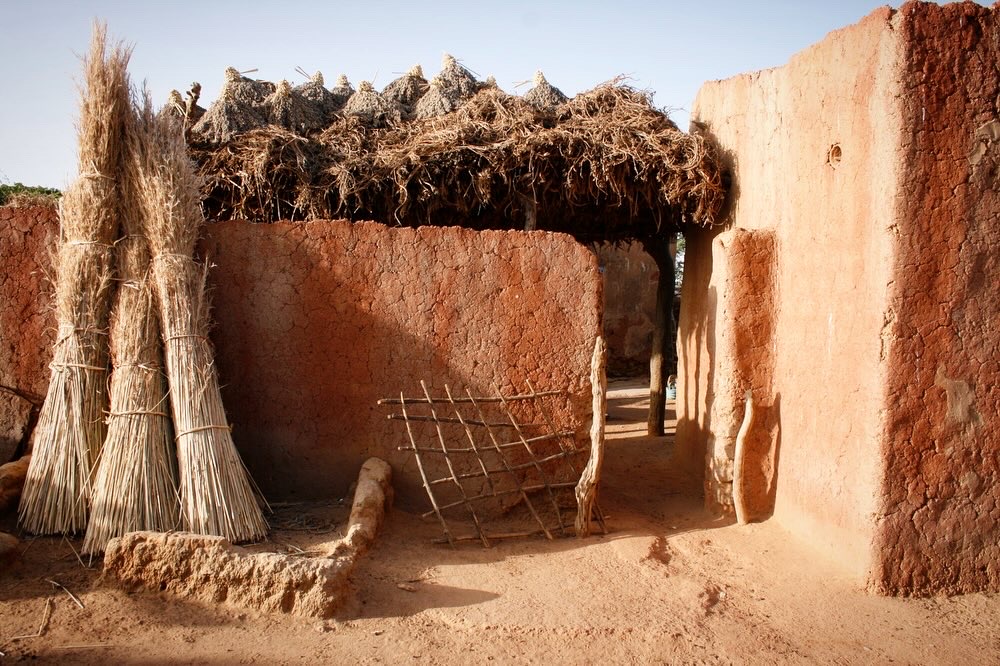

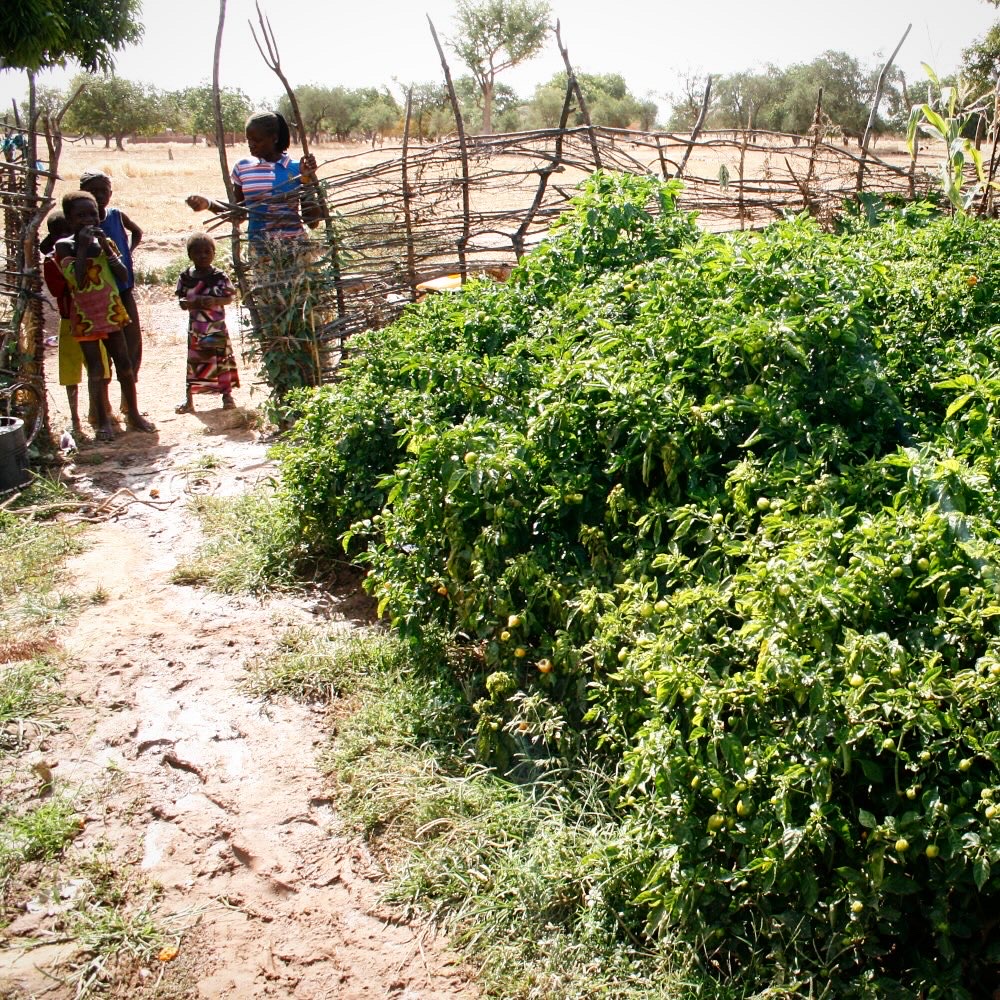
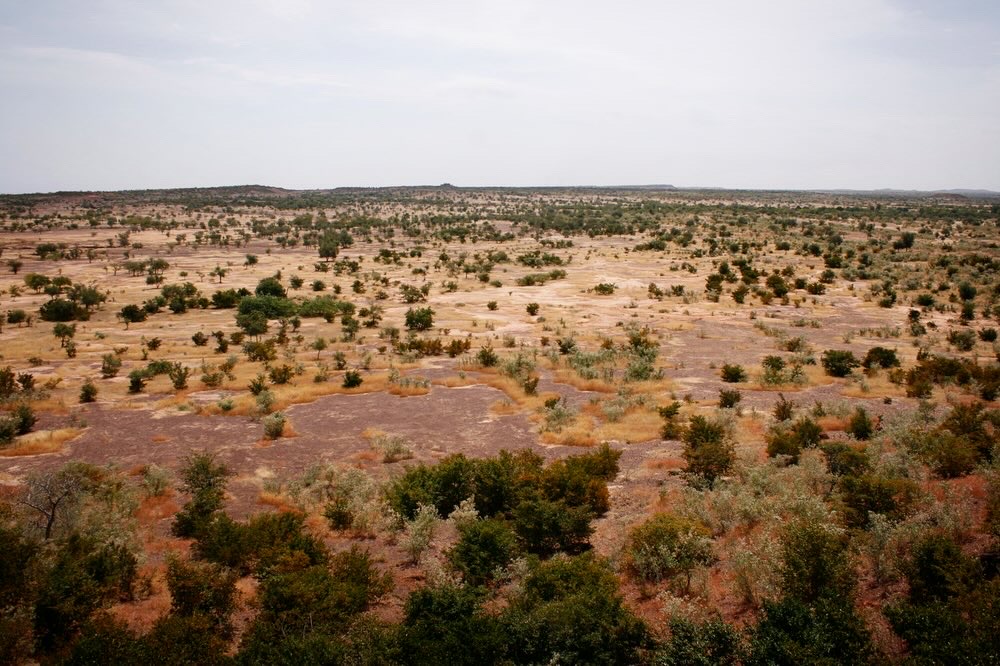
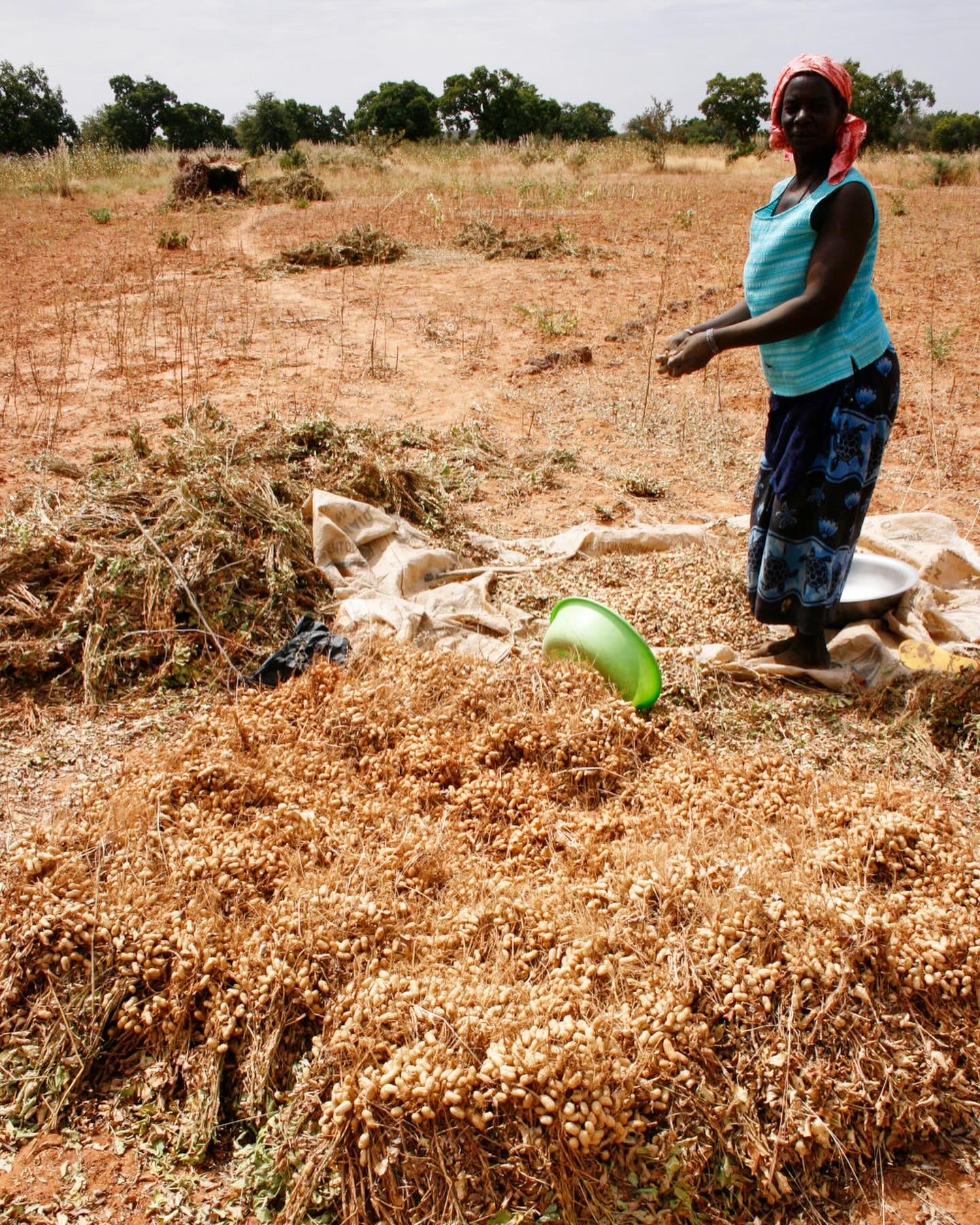
Today, I did transect walks in a village called Rallo. Things look kind of the same everywhere here, at first glance, and I’m starting to feel like I’m an old record player stuck on repeat, asking the same questions over and over. The answers rarely surprise me, because I’ve already asked someone else, in some other village, about the use of that tree or that bush. But I’ve got to ask the questions anyway. It’s the repetitive work of science
But then I have these moments of wonder and excitement. They still come quite often, and I honestly don’t think they will ever go away. I still manage to get excited over the view from the metro window in Stockholm, and I’ve been traveling the same way almost every day since I was seven. It’ll take a while before I’m sick of this place, too.
Mostly, it’s the landscape that excites me. Or aspects of the landscape that tells a story about the people that live there. Like this tree. It’s called something that sounds like ”sabnua”, and the roots can be used as medicine. Also, the resin can be burned and the smell and smoke will scare off bad spirits.
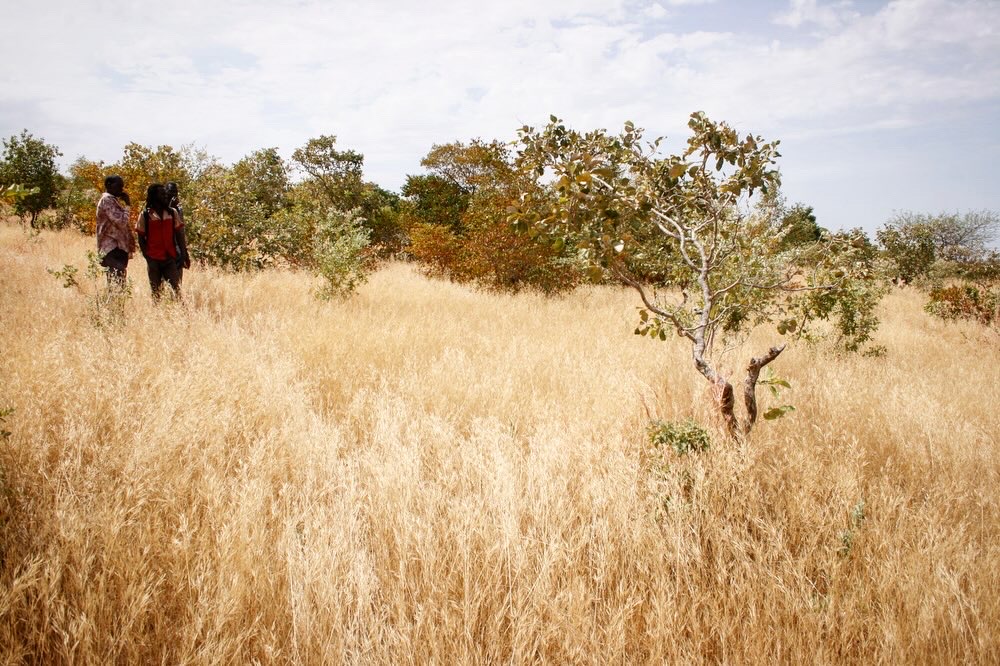
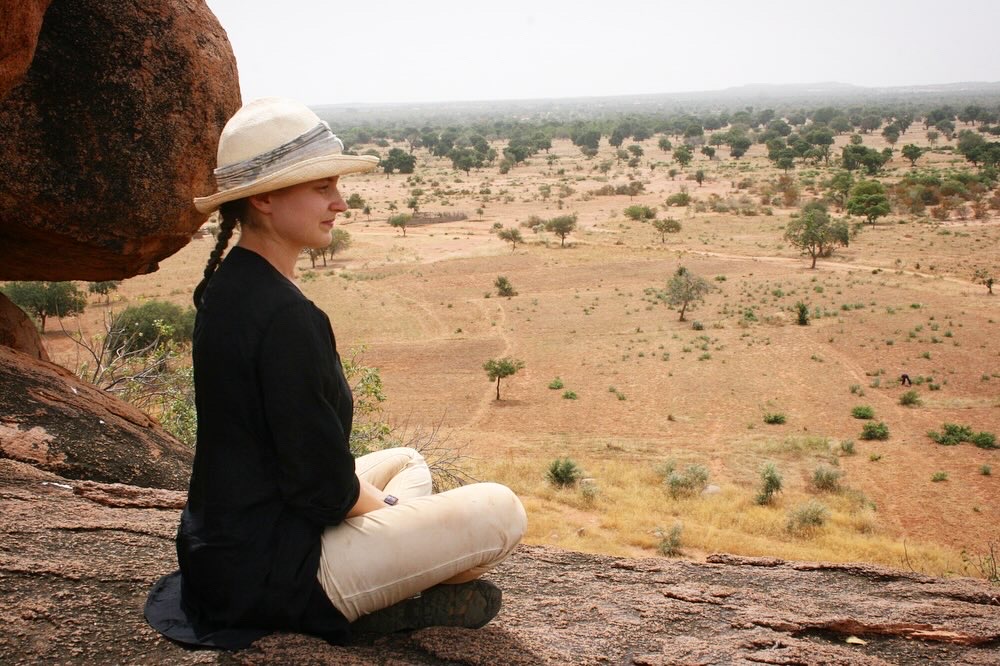
This village also had a mountain. A small one, for sure, but in this otherwise flat landscape, it definitely stood out. We climbed it. It was covered in golden grass, and the view was beautiful.
Or sitting down for a moment to help a woman clean groundnuts, making everyone laugh, most of all the woman. She did ask me to help her, but I think the people here don’t expect white girls to be able to do anything. People always seem surprised when I want to do things myself, and then actually pull it off.
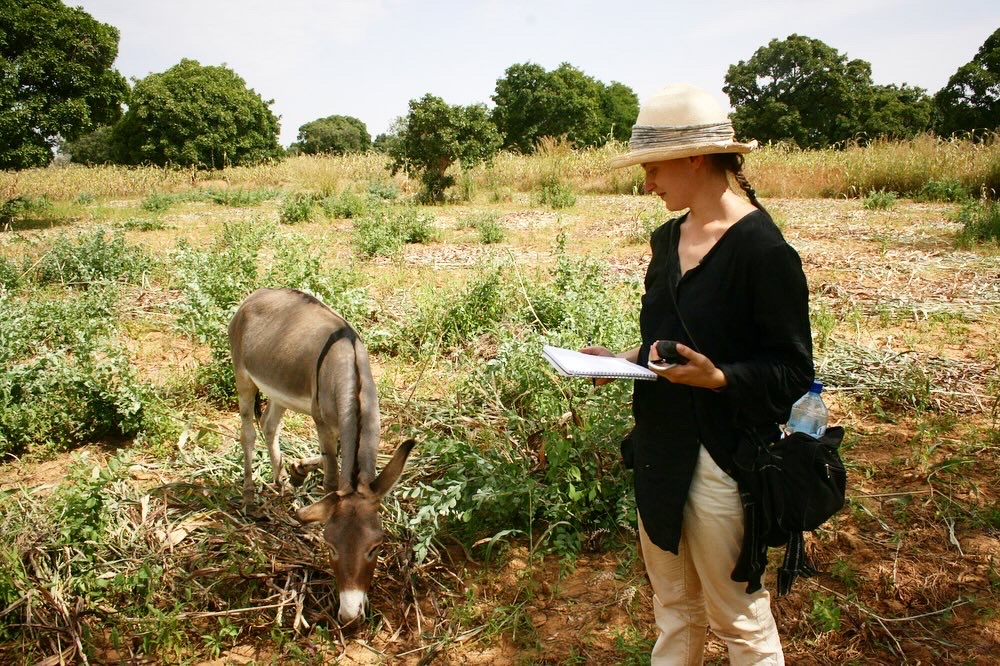
In the afternoon, I forced a depression. A depression here is a seasonal river, that during most part of the year is a densely vegetated sliver running through the fields and shrublands. This particular one also had high grass, and Desiré and the young man I was interviewing challenged me to walk through it. I think they think my behavior is weird, when I want to walk through fields and bushes just to get my groundtruthing points in the middle of things and not in between, on the roads. And I was too tired to argue with them, so I just walked on.
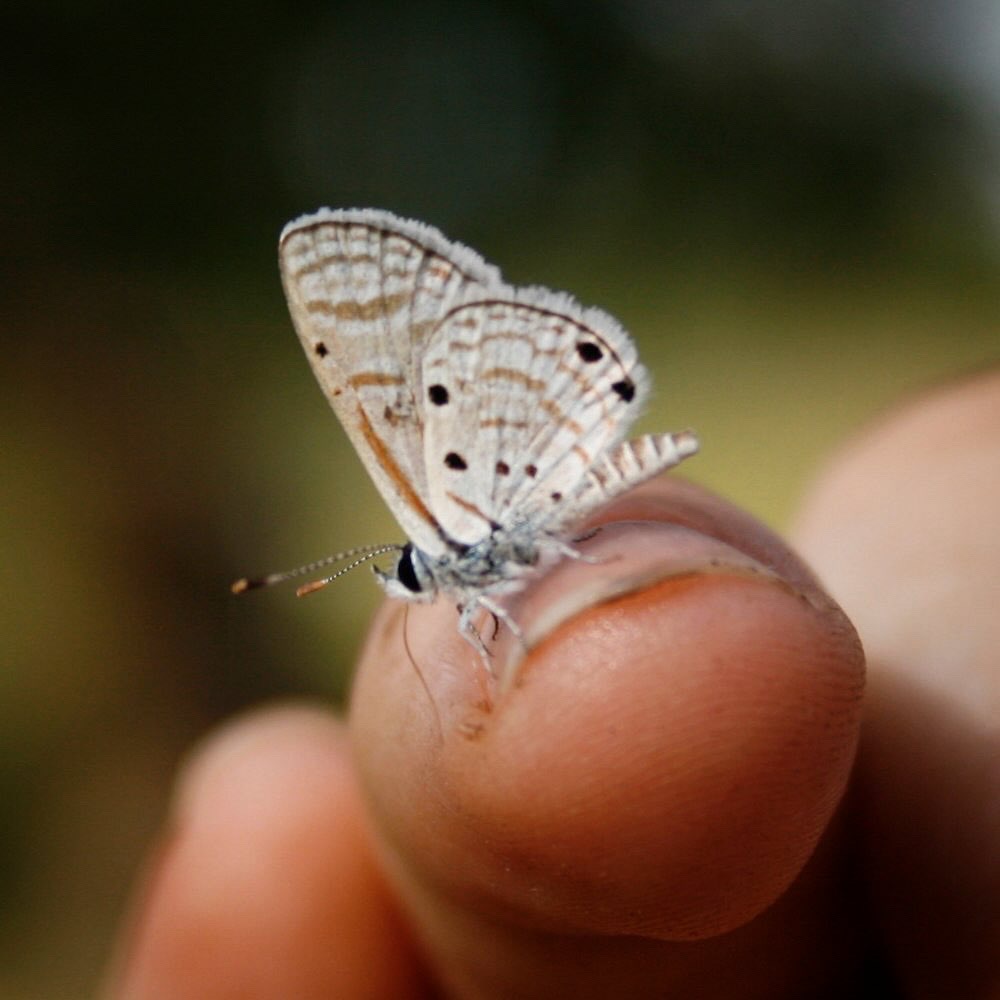
I don’t think they expected me to manage getting though this either, with my bags and machines. But I did, and on the other side, a tiny little white butterfly landed on my finger and found something delicious under my very dirty fingernail.
Another day of walking almost ten kilometers in the heat. I’m exhausted, I hate it, and I love it, all at once. I have something of a masochist in me. I like it when things are physically tough. To prove myself.
But soon, I think I need a break.
I’ve developed attachments. With three days left here, I’ve developed routines. Buying vegetables at the market. Cooking with Elli and watching Community. The sounds of prayer from the church next door, the screams of the neighborhood donkeys.
And the smells, out in the villages. In the morning, just when the sun is rising. The night leaving the dry shrubland soil. Something warm and soft, welcoming.
I might be a geographer, basing my professional expertise on my eyes. But my feelings are ruled by my nose.
There is a thin film of red dust on everything I own. All my clothes have gotten a slightly orange tint. No matter how often I dust the surfaces on my laptop, the dust never quite goes away. My straw hat looks like it has chickenpox.
In every village where I have been, doing transect walks and interviews, they have offered me zumkum during the lunch break under the tree in the middle of the village. It is a drink traditionally given to guests, and it is made of small millet flour, sugar, water and sometimes spiced with some wild herb or other. I’ve always taken a sip of it, out of politeness, but because of my potentially hyper-sensitive Swedish stomach, I haven’t dared to properly drink it. It doesn’t taste much, just sweet from the sugar and slightly sour from the small millet.
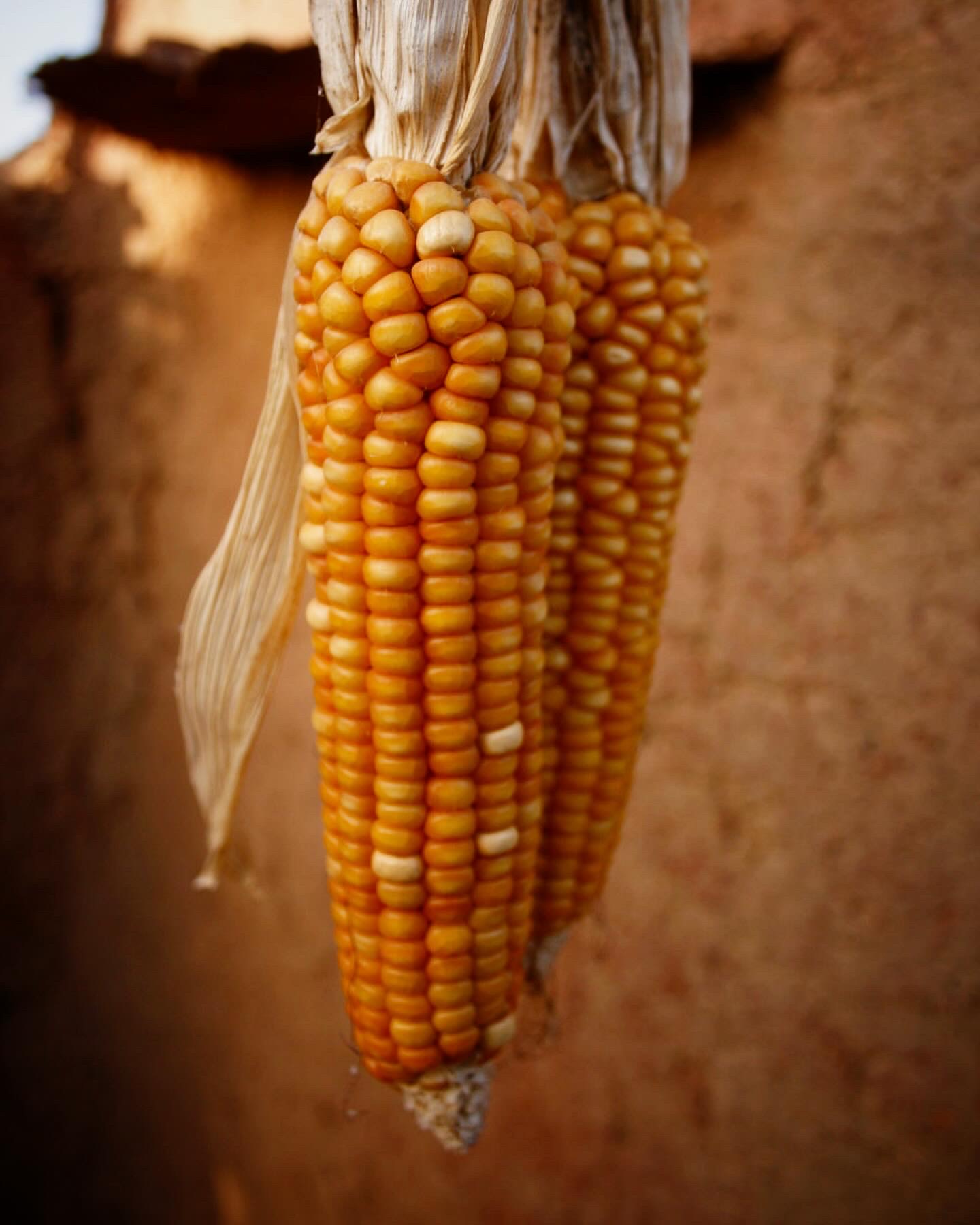
I have also been given bags of unpeeled groundnuts of varying sizes. It is one of their cash crops, and being in the middle of harvest season, they have plenty of it lying around. I think it’s lovely, the way they all want to give us gifts. We were told, before we came here, that this is a gift-giving culture, and that is true, but I’d like to think that them giving us groundnuts also shows that they’ve appreciated us visiting them. That they’ve liked having me, and that I must have made a good impression on them.
Every visit has always ended in a long exchange of blessings and good luck wishes. They’ve also said that they will pray for the success of my work. It is touching, really, how much effort they put into showing that they care. It’s a cultural thing, of course, but they are genuine in it too. It’s something you can feel.
Somehow, I feel like receiving that kind of sincerity from strangers would rarely happen in a place like Sweden. And in a sense, I feel like I don’t really deserve it. I’m only a student, after all. What can I really achieve? But now, with all these blessings and prayers for the success of my project, I would have to screw up really really badly for it to fail. If prayers are what makes a master thesis pass, my project can’t get anything less than an A.
Now we have bags and bags of unpeeled groundnuts. Me and Elli spend the evenings watching Community and peeling them, but the amount of nuts in the unpeeled bags never seem to decrease. The peeling makes our fingers hurt. I’m not sure if we’ll ever be able to peel them all.
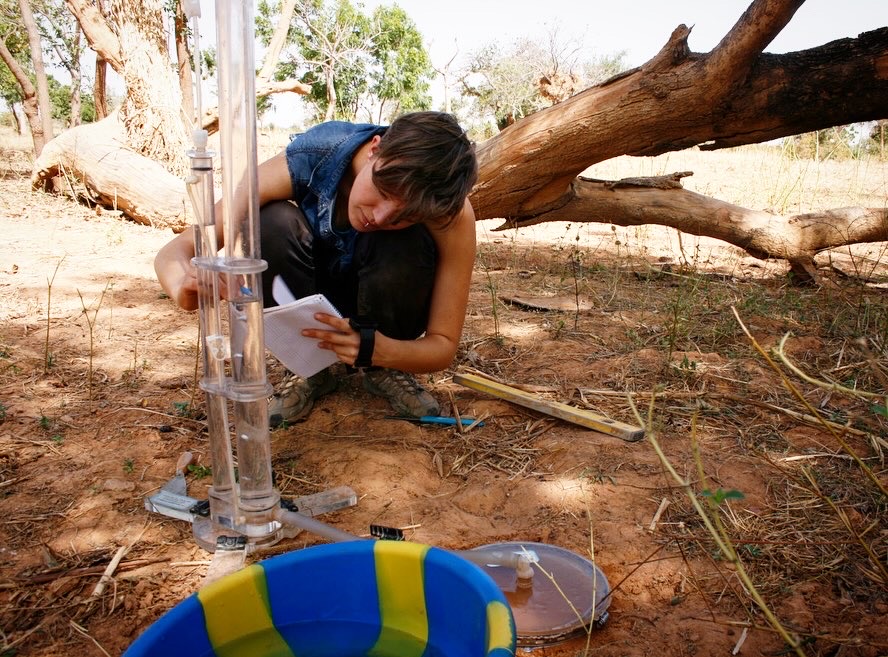
Today, our last day in Ouahigouya, I went with Elli to Reko to watch her make a last set of infiltration measurements.
Watching bubbles float to the surface in a see-through plastic tube filled with water is mesmerizing. My thoughts got all soft and contour-less, and after a while I couldn’t keep my eyes open.
So, I laid down under a tree and fell asleep among the thyme-and-mint-smelling herbs in the yellow afternoon sun. And it really was as nice as it sounds.
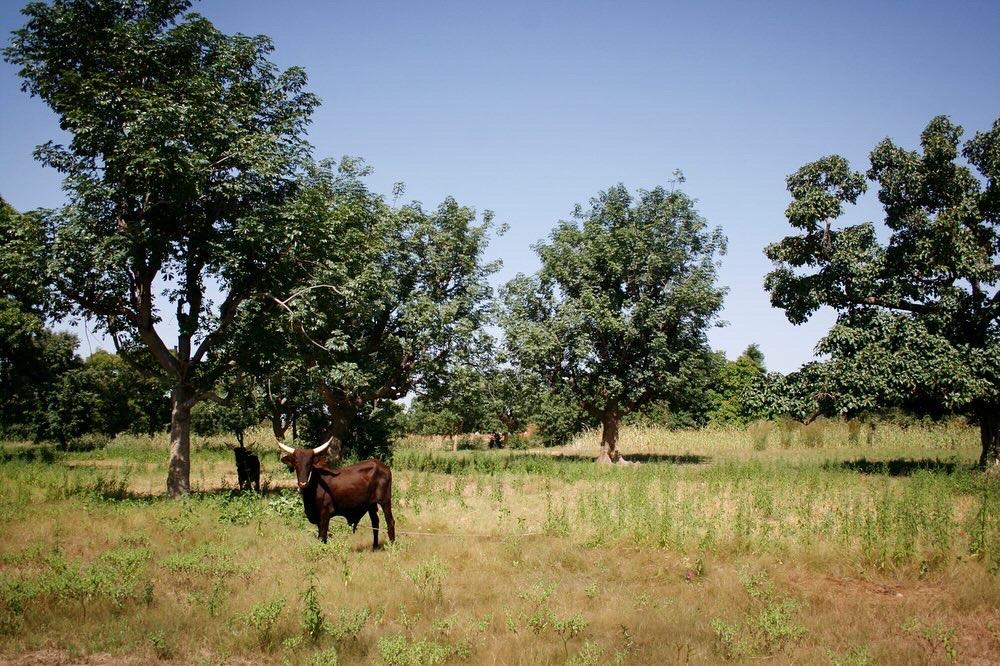
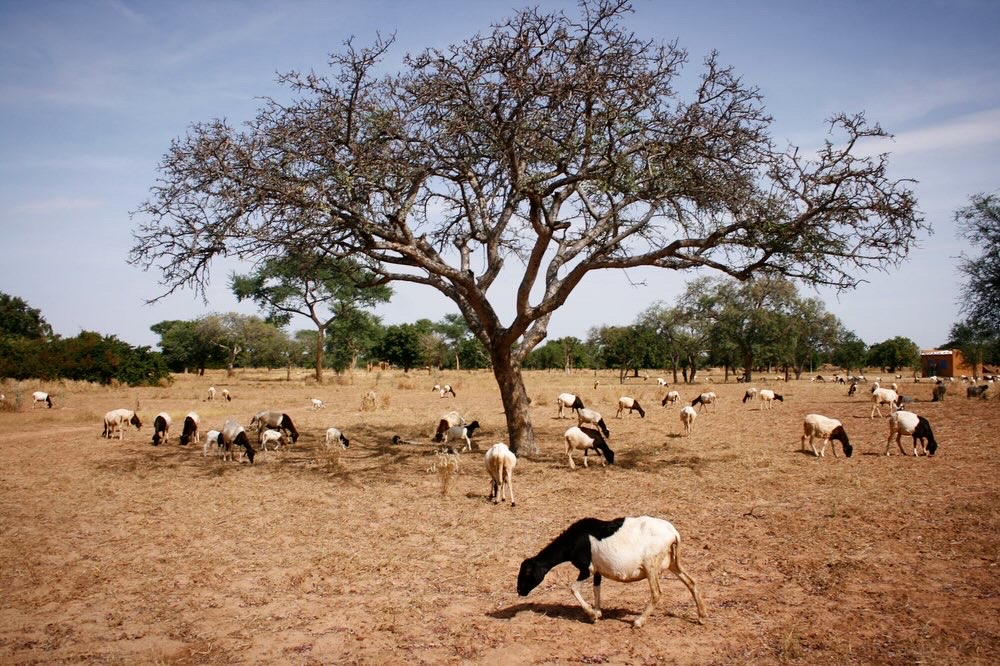
After a long goodbye with Madi and Kassoum, who had helped Elli a lot in her data collection, and the village children wanting to be photographed, we left Reko, the sun already having set. A boy was leading a huge black bull by a rope. Goats were being herded back to the village. A lonely donkey was screaming somewhere in the distance.
This was the last that we saw of Reko. It is very possible, even probable, that we’ll never see it or its people again. A remote village in northern Burkina Faso, when would we have a reason to just pass by? I’ve left many things behind in my life, as I’m sure everyone has, many last meetings with people. But rarely have I been as acutely aware of the finality of a meeting as I was now. A strange feeling, it was.
Reko is one of those truly friendly places on Earth, and we have been lucky to get the opportunity to spend this time there.
The next day, we left Ouahigouya for Gourcy, and three days of transect walking in villages there.
Farms in Tarba and Ridimbo
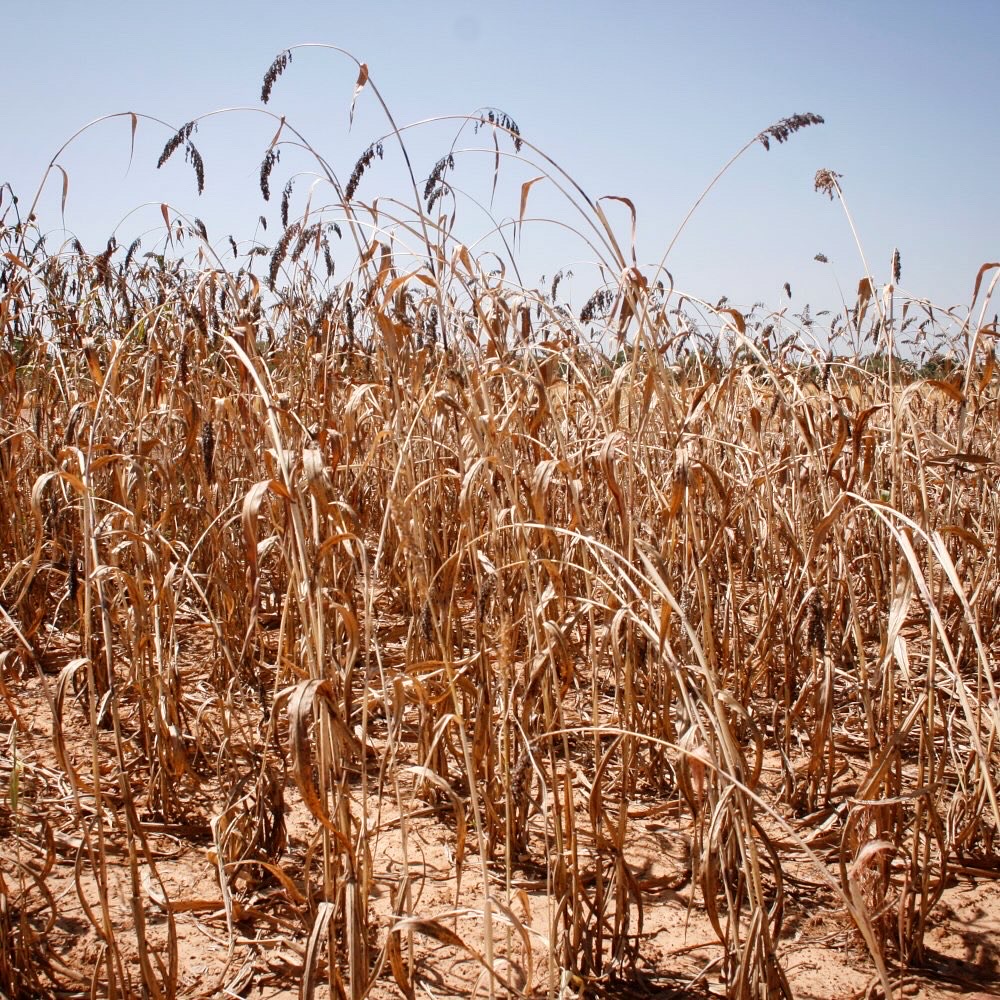
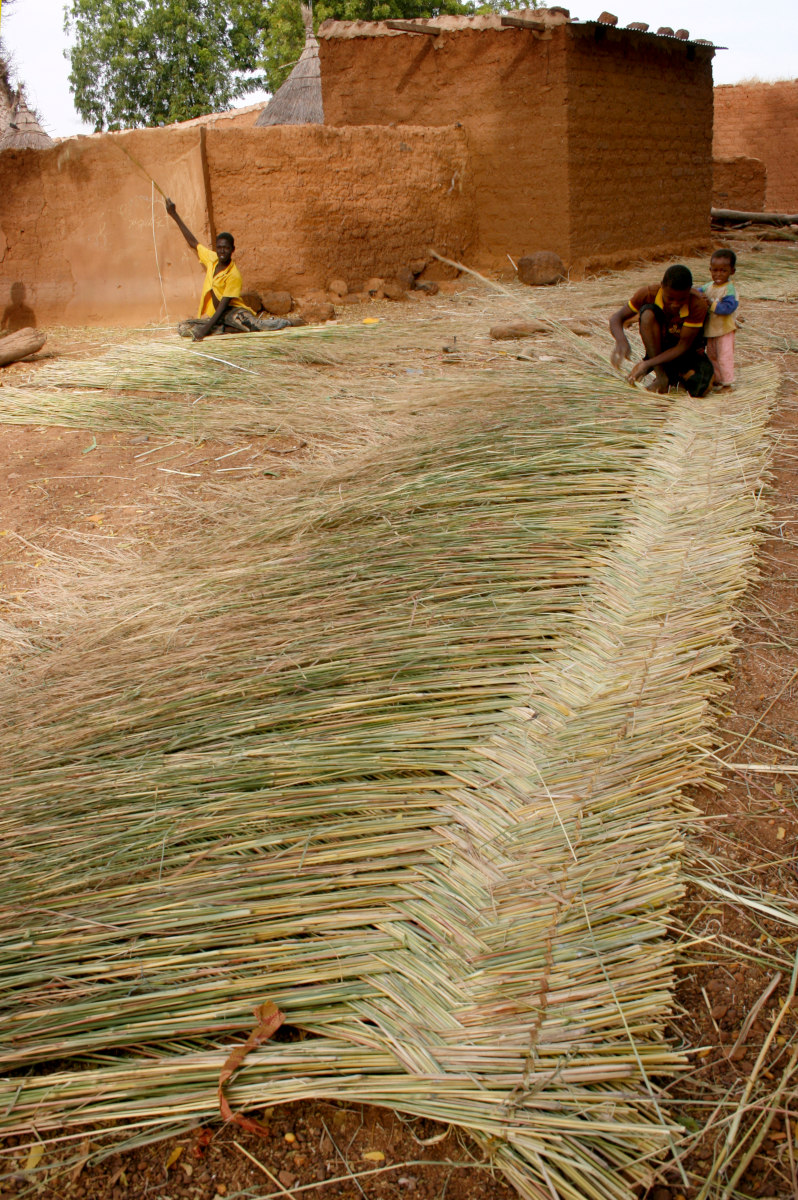
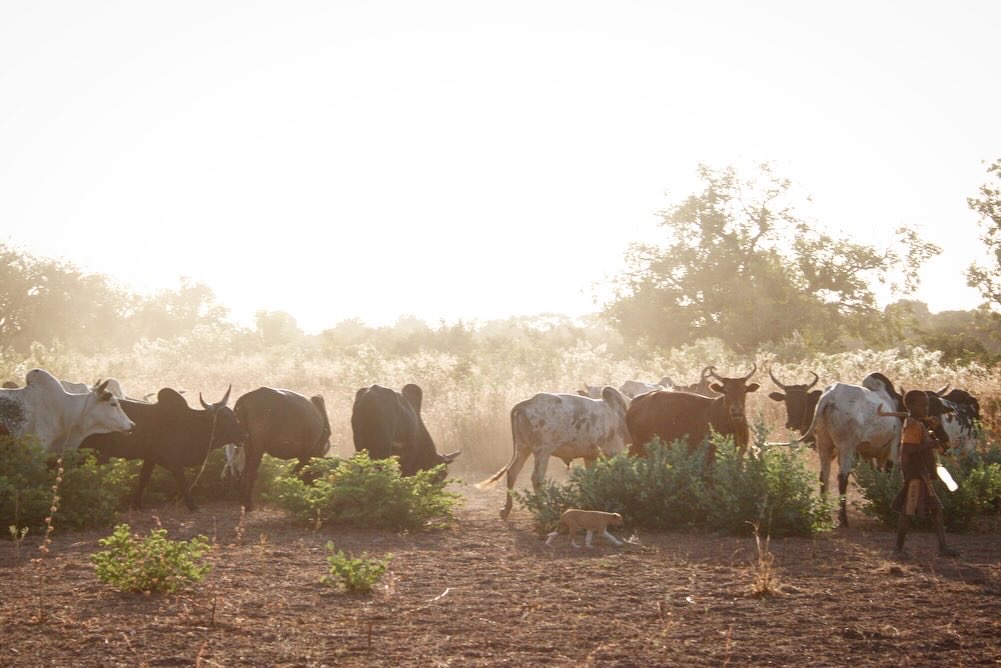
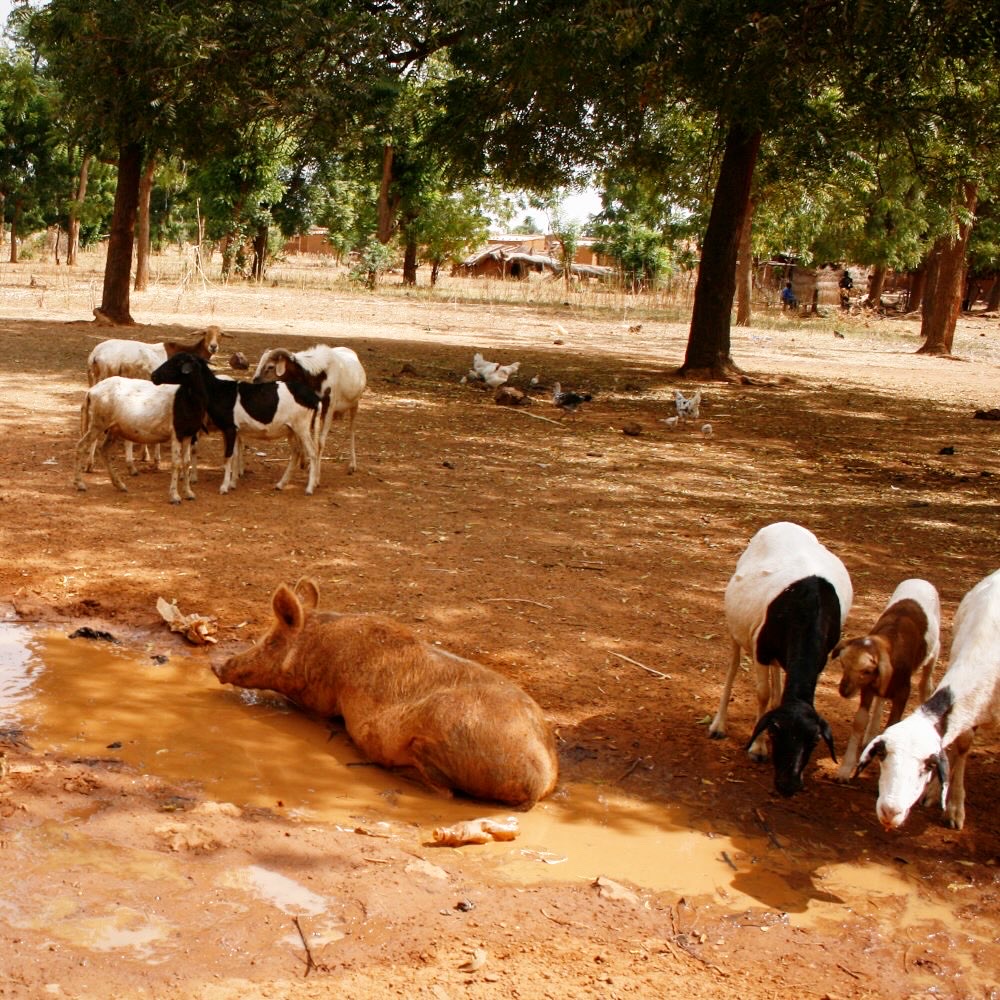
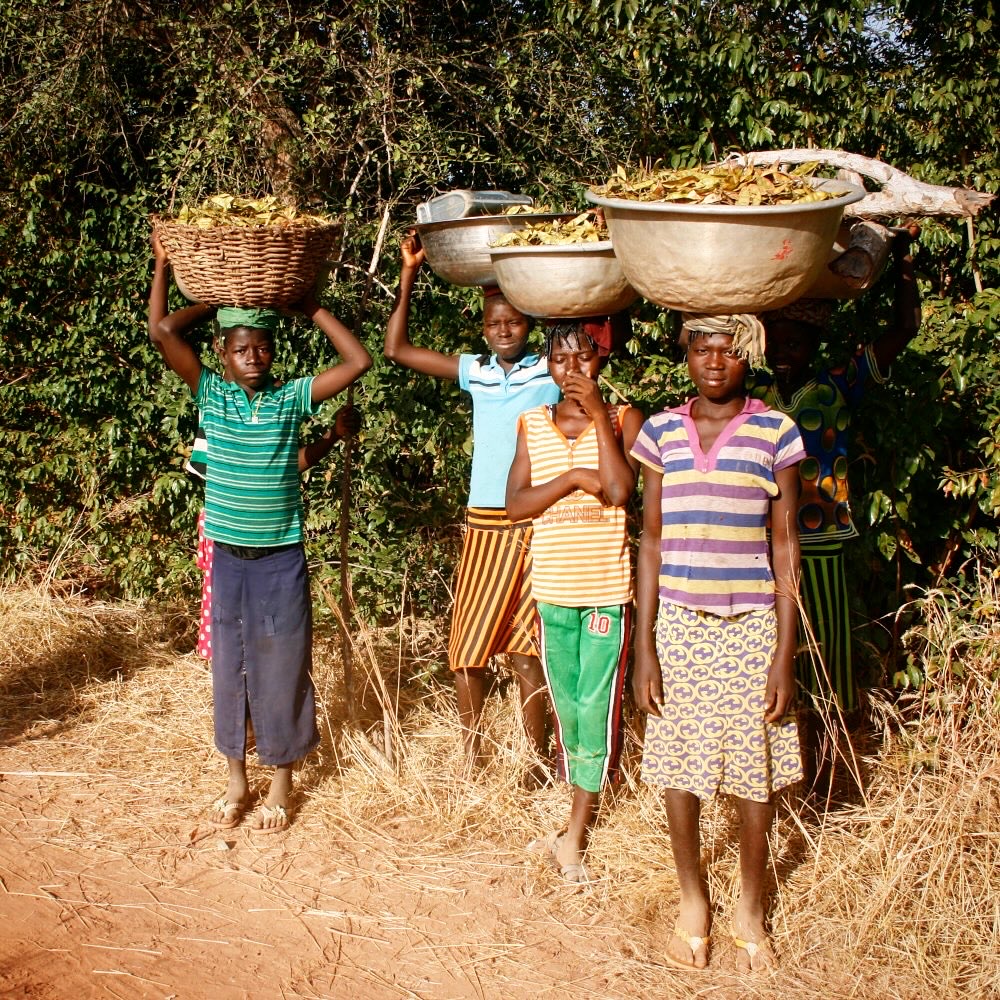
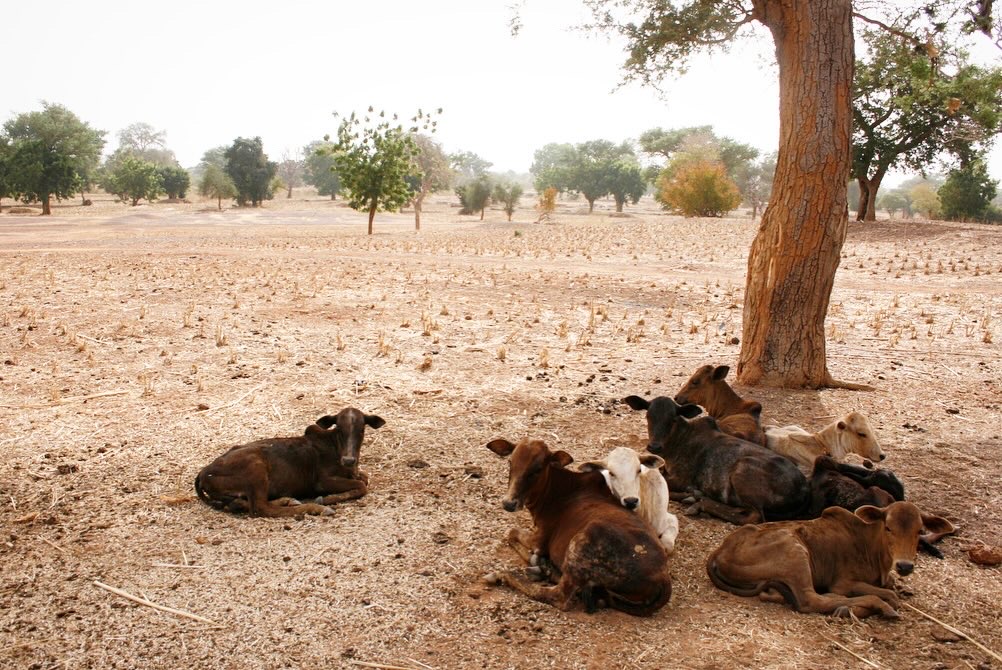
During the afternoon transect walk in a village called Tarba, we ran into a big herd of cows. They have them for selling, my transect walk companions told me, kind of as insurance. They do not eat the meat and they do not milk them.
The cows stirred up dust, making the air shimmer in the light of the setting sun. After a long hot day, the temperature was just perfect, and there was a slight breeze.
One of the boys who was herding the cows was walking with a little puppy by his side. He was singing, in a clear boy’s tenor, and the puppy was happily running back and forth between the boy and the cows. As if playing at being a shepherd dog.
One of those beautiful, perfect moments, walking through the fields and shrubby fallows together with a singing herder boy, his puppy and his cows, while the sun set in a shimmering golden mist.
I’ve learned something new about my memory here. I’ve always known that there are things that rarely stick, unless I put some effort in it, like names or phone numbers. Elli laughs at me for always having to ask her what my Burkinabe cellphone number is. It shouldn’t be too hard to memorize, eight digits, but I don’t know, I just constantly keep on mixing them up.
My memory is more of the bigger-picture-kind. I remember systems, things that logically fit together. In school, I was great at math and history and science, because those subjects are all about processes and chronologies and pieces that fit together to make a bigger whole. I guess my memory is associative, and based on understanding. A phone number can’t be understood, neither can a name. Photosynthesis, on the other hand, or the French revolution can.
What I’ve learned here, though, is that I have a great memory for places too. Maybe it’s something that I was born with. I’ve never been prone to get lost anywhere, and can usually find my way back if I’ve been someplace once. Before smartphones, I could even find my way to places I’ve never been to by memorizing a map before leaving home and knowing how I should walk based on that. It shouldn’t surprise me, then, that I have a memory that easily translates between real-world-features and representations of the same things as seen from the sky, such as in maps or satellite images. But I also think that my years as a geography student has fine-tuned this talent of mine. I’ve had plenty of practice trying to interpret maps and aerial photographs and other representations of the Earth’s surface.
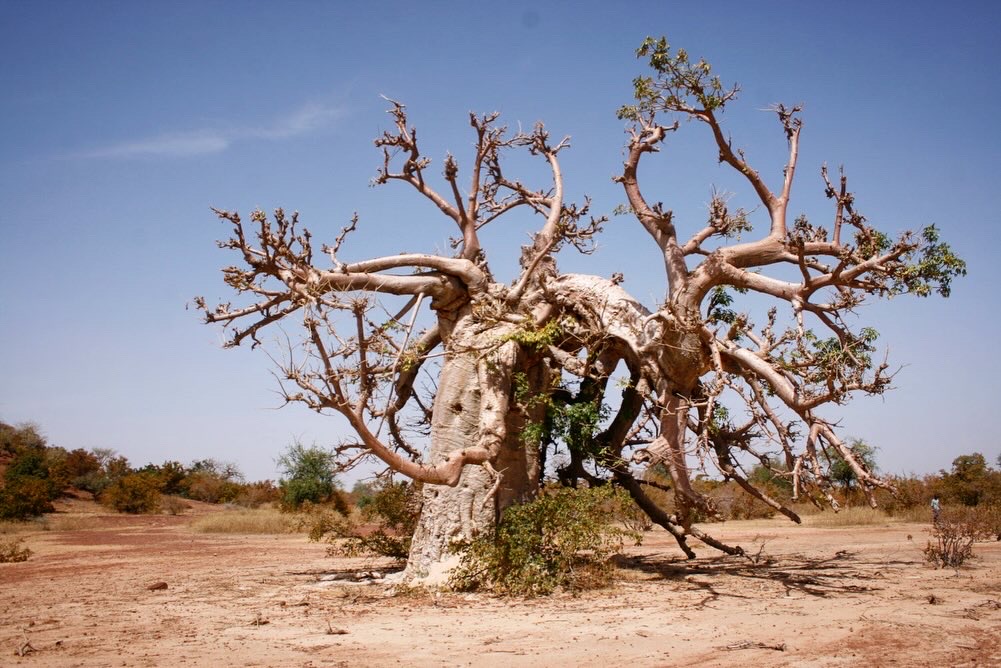
Here, I’ve walked through eight villages this far, for about ten kilometers each. I’ve logged GPS points every hundred meters or so, and I have taken notes. But when I sit down and go through the points, I barely have to look at my notes. I feed the coordinates into Google Maps, and based on the satellite image there, I remember exactly what it looked like and what I was thinking when we walked there. And when doing my re-visits to the villages, I have been able to recount the path that we walked with the help of the map sketches that I’ve made, clarifying for the villagers (who are not as acquainted with maps as I am) by explaining that this is the field by the big baobab tree, and here is the bare soil that they’ve tried to improve by digging down stone rows, and that is the little patch of holy forest where the big snake lives. Things that I haven’t even written down in my notes, but that I just remember anyway.
I guess the conclusion that can be drawn from this, is that I have a good memory for landscapes. I remember visually. I think that means that at least part of our memories, not surprisingly, are interest based. I remember landscapes, because they interest me, and I remember maps, because connecting them to landscapes comes naturally to me. And based on this, one could say that I’ve chosen just the right profession. Luckily for me.
In Tarba, one of the villages close to Gourcy, I wasn’t given a bag of groundnuts. The village was quite a bit bigger than the other villages that I had been in, and the CVD here even ran a little shop. They had also been incredibly accommodating, and one of the men that I had interviewed had been a traditional healer. It had been a good day.
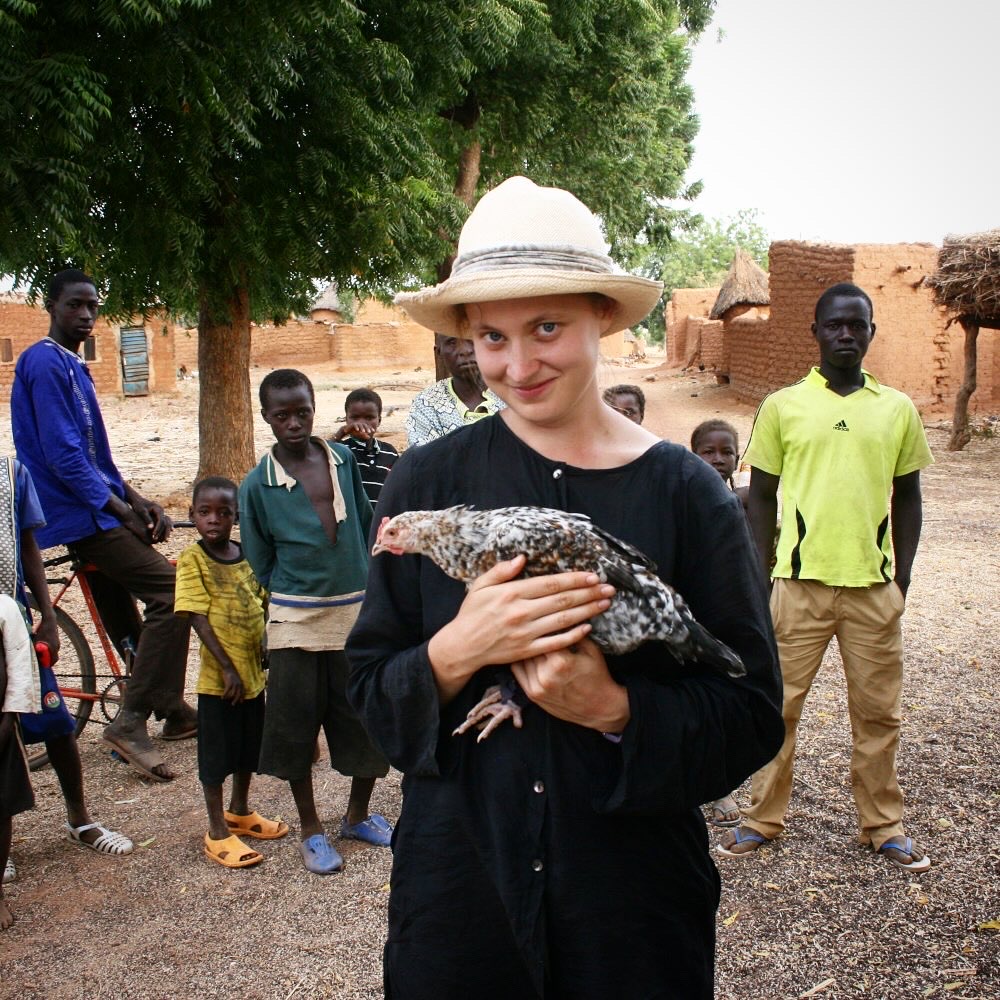
And then, when we were just about to leave, the CVD came walking toward the car from his house, carrying a white chicken. For me. As a gift.
I’m not sure how appropriate my first reaction was. Surprise and confusion, I guess. But then I collected myself, grabbed the chicken around the wings just like I learned to do while working at a chicken farm on Vancouver Island, and thanked the CVD a thousand times.
All the way on the potholed and twisty road back to Gourcy, I sat with the chicken on my lap, patting it. It was so soft and so calm, really a beautiful creature. And if you’ve read what I wrote here while working on the chicken farm on Vancouver Island, you know how fond I am of chicks, chickens, hens and roosters. Amazingly funny animals, they are.
But what was I to do with a live chicken? It was a gift, so I had to accept it, but without the proper facilities and tools, I could neither keep it nor kill it. Luckily, the cook at our Gourcy hotel did. He took the chicken and the day after, Theo, our driver, and I shared a chicken stew with bread. It was delicious.
The transect walks that I have enjoyed the most, are those that have been done together with traditional healers. I learned about so many species and the ways in which they are being used.
There is so much knowledge here, so much knowledge that I’m sure we had in the Nordic countries at one point too. So many uses of the things all around us that we’ve completely forgotten. It is sad.
I hope development is more accepting to old knowledge here than it has been in the far north.
In another Gourcy village called Ridimbo, the CVD was a youngish, joking, laughing man. He spoke mooré to me, and had a very expressive body language, managing to make jokes despite us not having any languages in common.
It was also a village where many other men did the same thing. It was a happy village, and the men seemed to enjoy our mere presence.
At lunchtime, the CVD half-jokingly asked me to join him for lunch, and when I said that I would, everyone seemed to think it was the best of jokes. Until I actually started eating. That was an even better joke. I have no idea where all that happiness can come from.
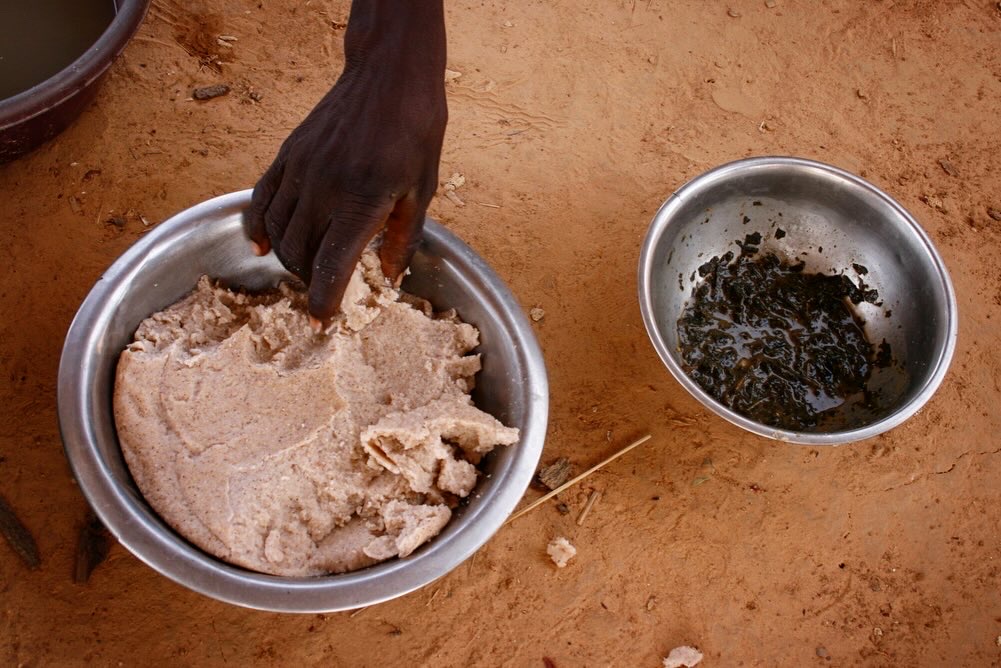
The meal consisted of tó, a kind of very hard millet porridge, eaten with sauce, and maize couscous with a sauce of aubergine leaves. We ate with our hands, and first I almost made the mistake of taking the food with my left hand. Luckily, Desiré was there to stop me before I did. Because, as I had already been told, here you eat with your right hand. The left is used for washing yourself after you’ve been to the bathroom. Using your left hand when being offered food is a grave insult, like saying ”the food you’re giving me is as good as shit”. Oh, it’s a maze, navigating foreign cultures.
To be honest, the tó was disgusting. A texture kind of like old oatmeal porridge, sour and starchy. I had to work on keeping a straight face while chewing it down, to the delight of the men around me. The maize couscous, though, had a very neutral taste, and the sauce was quite nice too, despite the aubergine leaves being very bitter.
In Ridimbo, they were also delighted with my and Elli’s fascination with animals. There were donkeys, cows and sheep, goats and chickens, as everywhere, but also pigs, horses with foals, guinea fowl, ducks, puppies and bunnies. A man even more or less dragged me with him to his ponies and wordlessly showed me very clearly that he wanted me to take a photograph of him sitting on the little thing.
And when it was time for us to leave, the CVD said we should take a photo together. When I took up the camera, he said no no, they wanted me in the picture too. Elli took on the role as photographer. And when we were setting it up, more and more men and children gathered around the car and I ended up with large group photo.
I felt like the event of the week here, and it wasn’t at all as unpleasant as it might sound. Actually, I didn’t want to leave.
And I was given another chicken, this time a small black-and-white one, nervously sitting in Elli’s lap all the way back to Gourcy.
(The driver gave it to a man with a BBQ stand close to our hotel in Gourcy, and the next day just before we left to go back to Ouaga, I was given a newspaper pack filled with barbequed chicken and onion pieces. It must have been marinated with herbs and pig grease, because it tasted like bacon. It, too, was delicious.)
Farms in the villages of Kaya


We had a couple of days in Ouagadougou between our fieldwork in Ouahigouya and my fieldwork in Kaya. It was supposed to give us some time to relax, but, Elli started feeling sick on the way back from Gourcy and by the time we arrived in Ouahigouya, she had developed a high fever, nausea and ache everywhere. She had caught malaria. So, our days in Ouaga turned into a long stretch of doctor’s appointments and me dealing with some administrative stuff around town, while Elli lay, moving as little as possible, on her bed at our Ouagadougou guesthouse.
When it was time for me to start my next block of fieldwork, I left Elli in Ouaga, mostly healed from her malaria but still not quite well, and went back to Gourcy to do the feedback sessions with the villages there. Three villages in a day meant the day became very long, and we ended up sitting in the dark, talking with the village elders in Tarba. The stars came out, with a brightness that they rarely have in Europe, and that gave me a chance to tell them that some of the stars actually were satellites – possibly even the satellite that had taken the pictures that I was showing them.
Sleeping alone in the uncomfortable bed in a mold-smelling room in Gourcy wasn’t easy, and at first I couldn’t fall asleep. And once I did, I dreamt nightmares and woke up in a cold sweat. And, of course it wasn’t just because of the absence of Elli, I was also feeling stressed about the intense days I had ahead of me, and other small bits and pieces that together didn’t give me a very collected state of mind. But NOT having Elli there made all those other things ten times worse. I did not get up with a smile that morning.
The next day, we drove from Gourcy to Kaya and visited three villages on the way, asking them if they would help me and give me guided tours of their villages. I managed to keep a straight and friendly face in the villages (it wasn’t hard, the people are mostly so lovely and sincere in the villages), but in between meetings I was deteriorating fast. The nightmare, lack of sleep, stress, the constant bumping into the car roof and window due to the new driver’s quite careless driving style, gave me a terrible headache. And I thought: What the hell am I doing here? I don’t want to be here! Let me just go home!
But that wasn’t an option. I put on my headphones and put on some Tallest Man on Earth. Found a painkiller and swallowed it down with some Burkinabe ripp-off Fanta. When I had listened to all my the Tallest Man, I went on to some Nina Ramsby and Martin Hederos, watching the mountains pass by outside the window. There are actual mountains here around Kaya, as opposed to the very flat landscape around Ouahigouya. Quite beautiful, once the wonders of paracetamol kicked in.
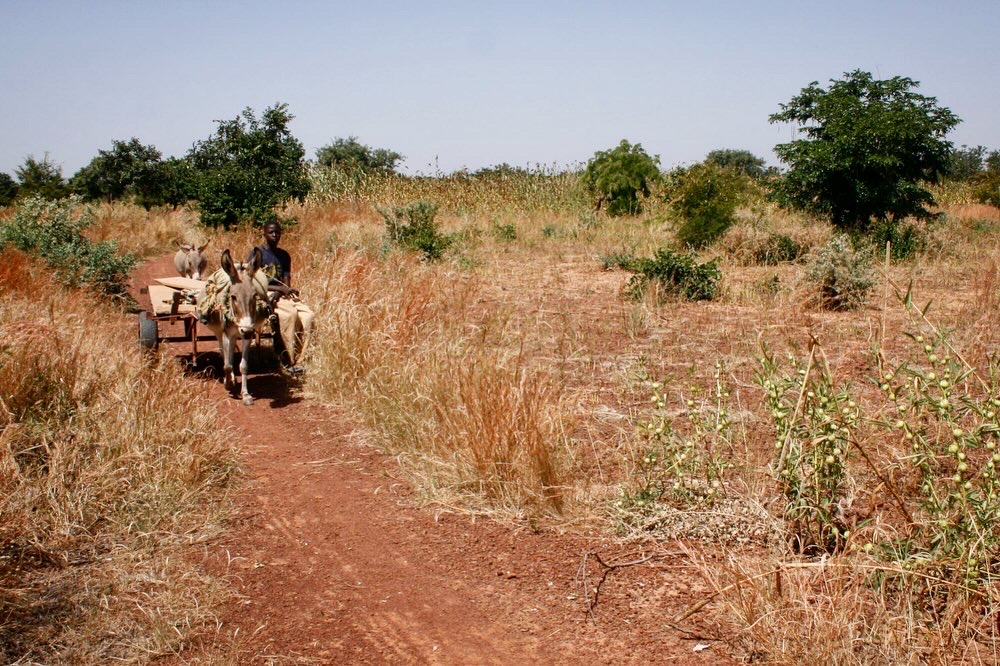
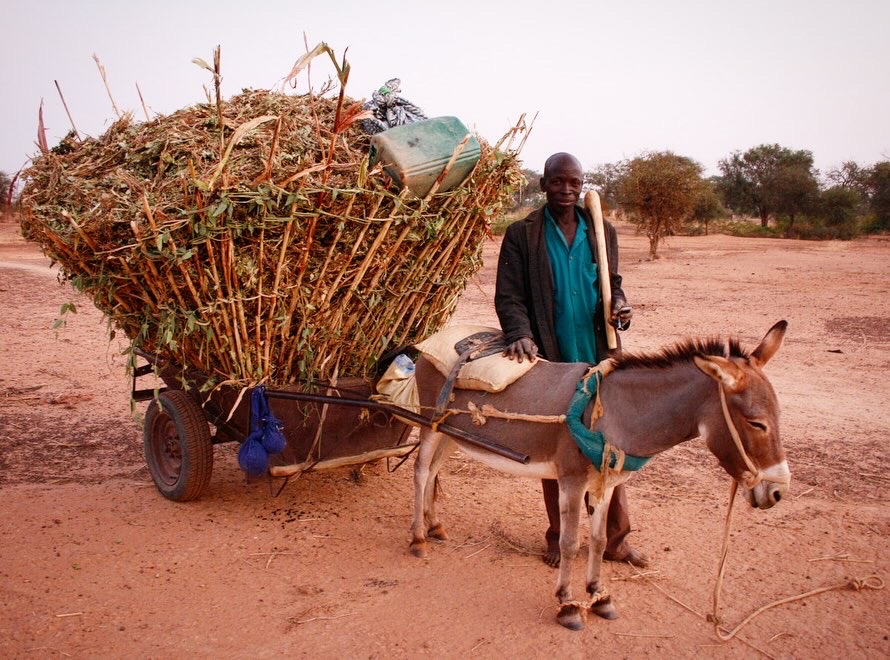
And in the last village, we met the CVD on his way back from the fields, transporting an incredible load of animal fodder in a wagon behind a tiny little donkey.
When I told my name in the village, Nakombogo, every man under the trees (and they were quite a few), started repeating it, almost like a mantra, chanting it like there was something magic about it. Katia Malbor. And they thanked me for choosing to come to their village, and blessed my work, and said that they would help me with whatever I wanted when I returned.
And I suddenly realized that things didn’t feel quite as bad anymore.
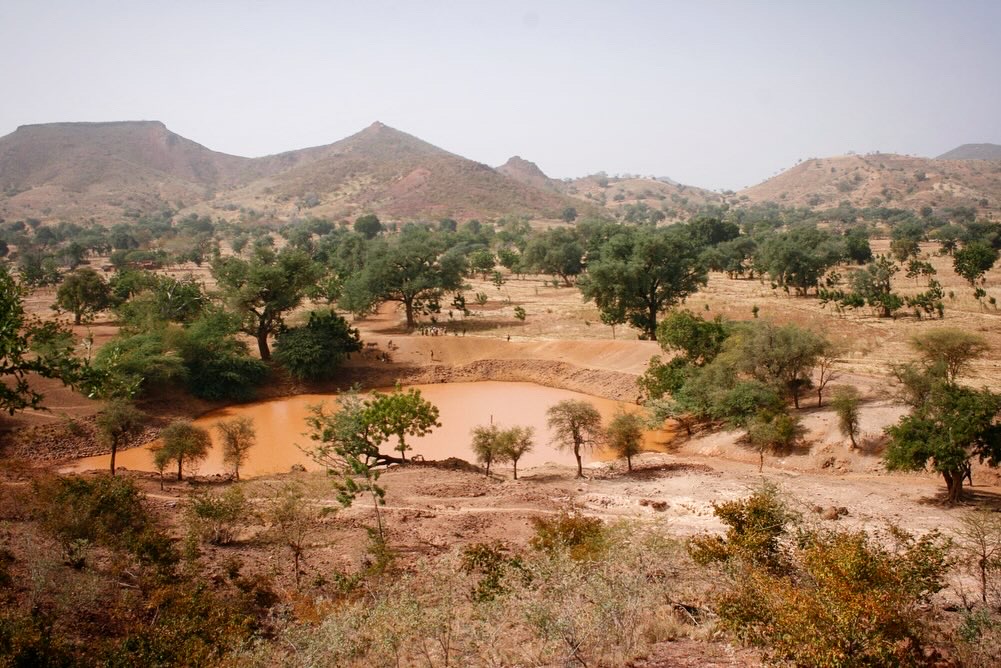
I did the first transect walks in the Kaya area in a village called Zanzi. It was a small village, situated in the valleys between a chain of small mountains that suddenly just appear in the otherwise quite flat landscape when driving along the Gourcy-Kaya road.
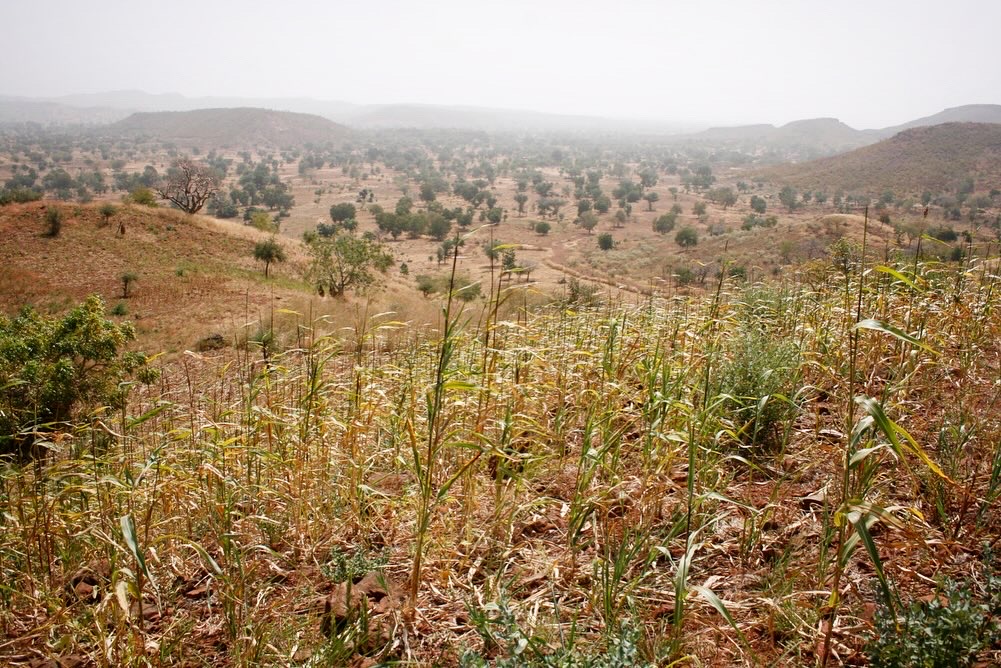
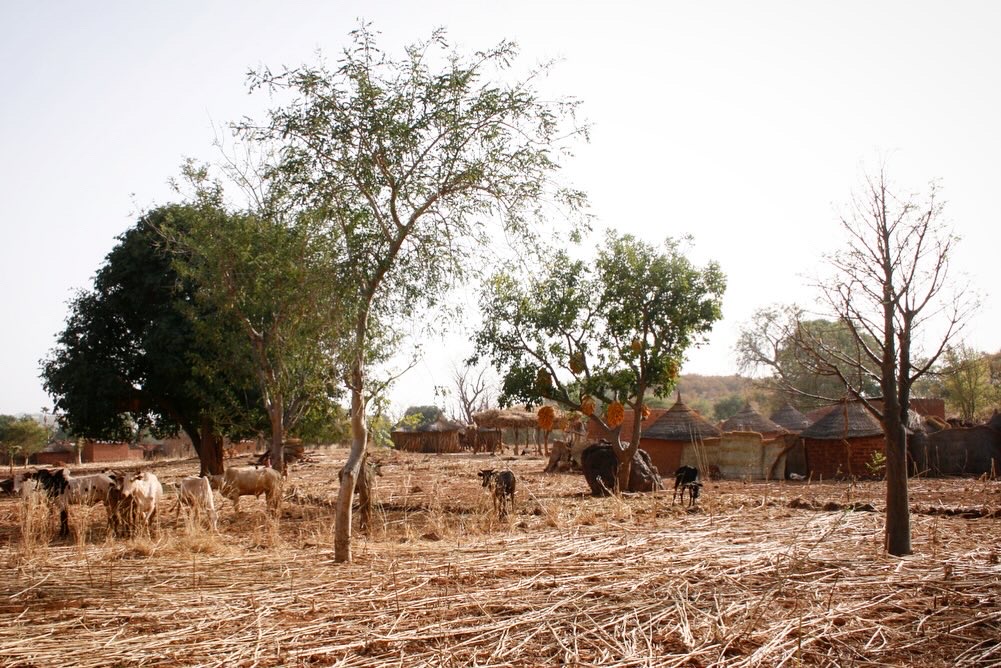
Due to the mountains, this place was something quite different to the other villages where I’ve been. They farmed millet on the mountainsides, and it the places where the mountain fields were in fallow, they were covered in golden grass that gave the hills such soft textures. It almost felt like something Mediterranean, climbing up and down those hillsides. The Harmattan has started blowing for real now, too, so there was a constant, dry breeze.
The afternoon walks are the best. When the heat has started to subside and the light has turned soft orange. The smells come out then too: the dry earth, the harvested fields, the mint-and-thyme-smelling weeds. And we walk past two bulls, standing in a field, one licking the other’s hump. Such a nice image, of care. It made me happy.
And then there was the old man of Zanzi. Delege Abouleh. A former CVD, but now just the man who knew stuff, whom everyone turned to when there were some issues regarding the farming. He welcomed us when we came to the village, he set up a meeting with all the men that mattered, he introduced us and he waited for us after both walks, wanting to hear if I had gotten everything I needed. An incredibly sincere, warm man, I just wanted to stick around to take part in this field of positive energy that he surrounded himself in.
That, the interesting landscapes, and the amazing people, is what I am here for. What makes all the sweating and dirtiness and bad sleep and bad food and exhaustion worth it in the end. That is what I will remember, when I leave here.
I’m observing my body, and the way that my work here has left its mark.
Of course, there are all the weird, itchy rash spots I get in places where I’ve sweated a lot.
I’m outside in the sun all day, but wearing a long-sleeved shirt and a hat has greatly limited the amount of skin that gets exposed to the elements. My neck has had to take most of it – except for the skin right on my spine. That is still quite pale, thanks to the braid that I make of my hair every morning.
And the other day in the shower, I noticed how my right wrist is a shade darker than my left. I couldn’t figure out why, until today. While walking, I noticed that I carry the GPS device in my left hand, in front of me. That means that the left wrist and hand are in the shade from my shoulder most of the time. The right hand doesn’t get that protection, hanging as it does by my hip.
Oh, how all these weird small details accumulate.
In Tanlargo, the watermelon village. This village is also small, and as it turns out, the people are not mossi. Instead, they belong to a people called Sonray who wandered in from Mali a long time ago and settled in a couple of villages in the Kaya area. They speak their own language, and had names that made Desiré laugh when he tried to spell them out for me. In the end, we had to look at their identity cards. Of course, they spoke mooré too. A bilingual village.
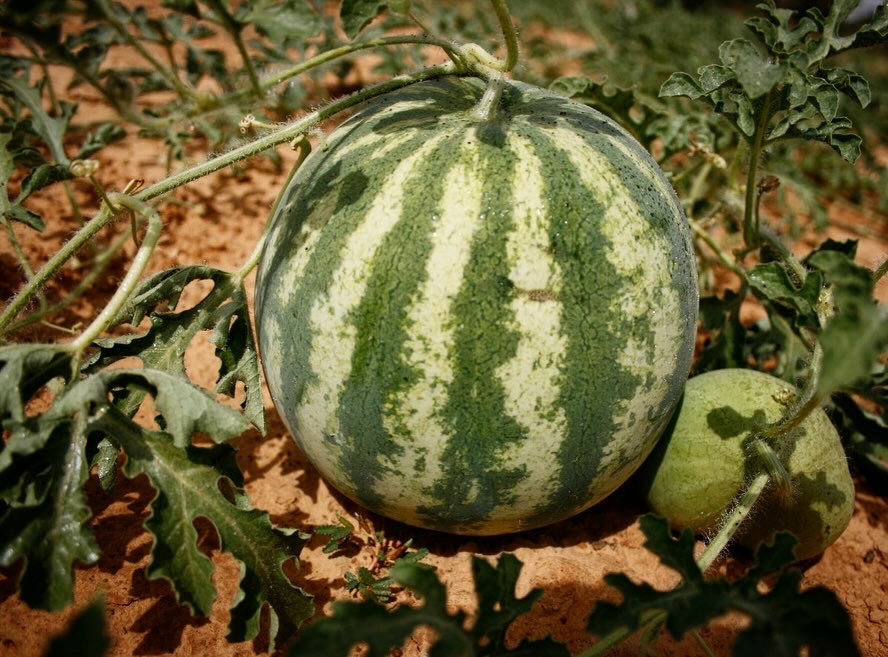
The most prominent thing in this village was the river that ran through it, and the big depression lying on both sides. There, they grew watermelons. One melon had accidentally been picked without being fully ripe, and they gave me a piece to try. It was like eating pink water, fresh, not tasting very much, but still refreshing, especially in the midday heat.
A recent development with the river, according to my guides, was that it had started to overflow more aggressively during the last ten years or so. The CVD said he thought it was because of the population increase, which had led to an increase in land converted into fields. Previously, there had used to be buffer zones with bushes and other natural vegetation next to the river, to slow the water down, but now, after a heavy rain, everything just flooded.
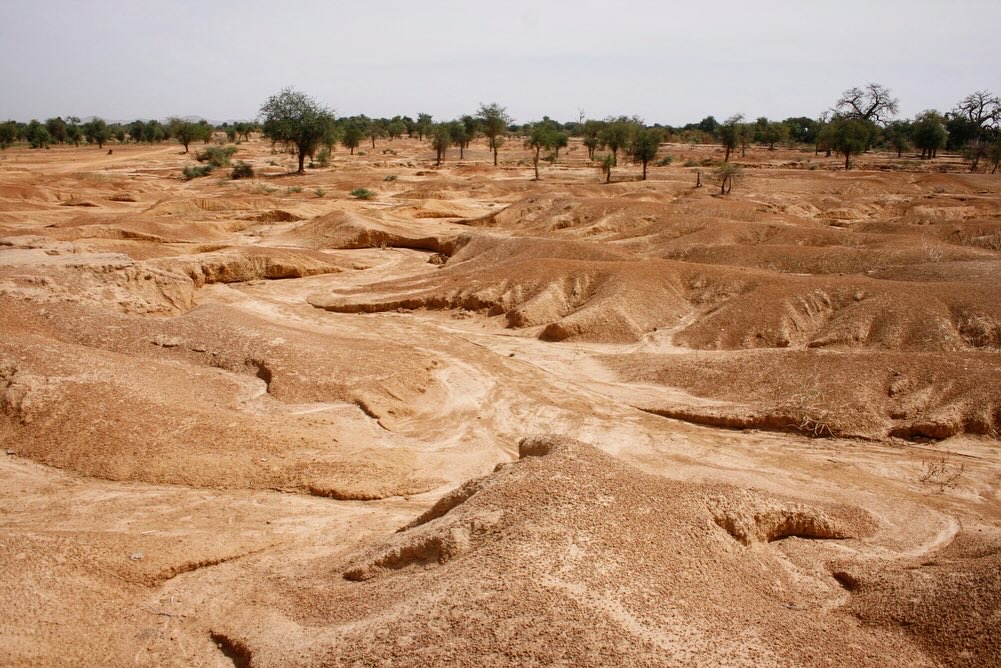
There was an area south of the river that had used to be fields, but now had turned into a huge expanse of barren soil, heavily eroded. Beautiful, in a way, how the water had carved its way down into the soil, creating a sort of badlands in miniature – but mostly tragic, of course, how drastically land can degrade.
When walking past a field where a group of people were working, we were asked to join them for lunch. It became the second time I got to try tô. This time, the taste was less disagreeable, possibly not spiced with that putrid thing, but it was still slightly sour and the consistency still like old porridge. For sauce, they had a salty thing made from the leaves of a weed that grew everywhere. The taste was okay, but it was slimy.
At the end of the first walk, when we returned to the school where we started, the village chief was waiting for us. He invited us to eat with him too, and this time it was spiced rice with small pieces of fish in it, more for the taste than for actual protein intake. That, I had no problems at all to eat. For dessert, they cracked open a watermelon, freshly harvested from the field. It might have been the heat and the situation, I don’t know, but right there, I felt like that was the tastiest watermelon I had ever eaten.
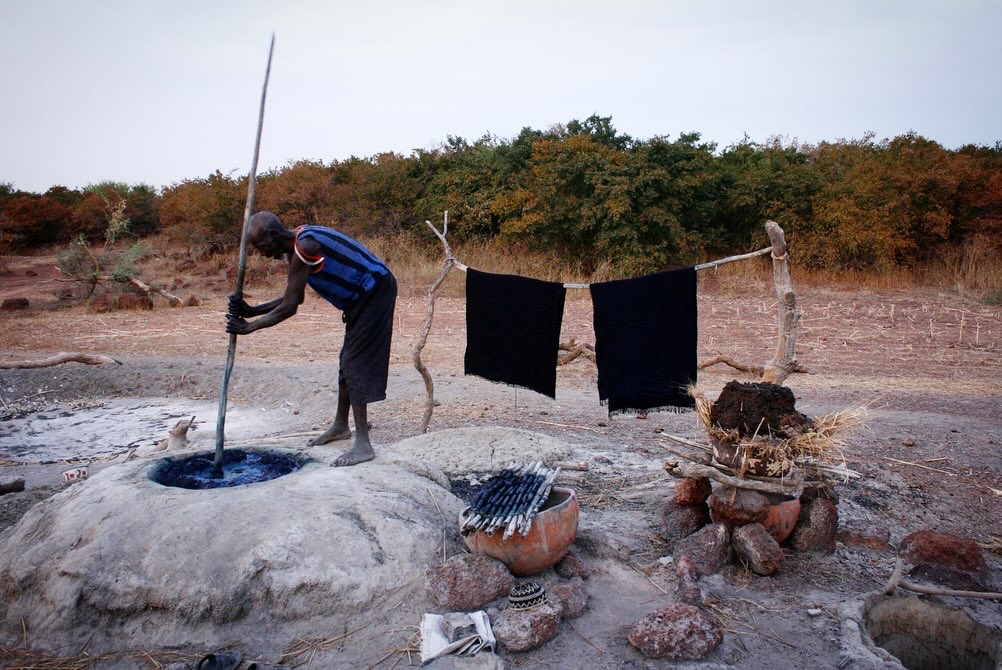
The afternoon walk ended up by a small hill behind the village, full of different sized, deep holes. The woman, one of the afternoon’s guides, told me that it was a traditional place for dyeing fabrics. A man was standing by one of the holes, pushing a pole up and down in a dark purple, viscous liquid. It smelled like rotten eggs, but next to him several pieces of cotton fabrics were hanging to dry, intensely dark-blue-almost-black in the setting sun.
The woman told me that the color comes from the leaves of a tree called gare, after several days of treatment. And then she showed me the tree, not fully grown, but still with the tiny, tiny leaves. Amazing, how something so little and green can turn into something so intensely dark. (Later, I learned that this plant gave a wild form of indigo dye.)
In the backseat on the way back to Kaya, the dark fast approaching outside the car windows, I sat caressing a new kind of gift in my lap. A huge watermelon. And, of course, with a bag of unpeeled groundnuts by my side. A good day, indeed.
Today was the toughest day I’ve had here. I simply didn’t want to walk. I was sick of waiting for people, sick of having to shake every single grown-up man’s hand, sick of introducing myself and my project, sick of all the millet fields and itchy pieces of dry vegetation that gets stuck in my socks. Sick of constantly sweating, of my dirty trousers, of not being able to communicate except through a translator. Sick of that translator, because he’s the only person I’ve been able to talk to for more than a week. Sick of the sweat rashes and always having to put on sunscreen. Sick of note-taking and photographing and the fucking GPS machine beeping.
Sick of walking.
Who thought I ever would get sick of walking?
There wasn’t anything wrong with Firka, the village, as such. They didn’t have any mountains, or amazing old men, or watermelons, but it was just fine. Friendly people, plenty of funny-sounding goats, like most places here. I just didn’t feel it.
But I made it through, walked my 10 kilometers, with one thought ringing in my mind: Once I’m done, when we get back to Kaya, I’ll go to the grocery store and buy chocolate. I DESERVE a piece of chocolate.
So, I did. Bought four tiny bars of Cho Cho milk chocolate. Got back to the hotel. Showered. And devoured a bar.
What an anti-climax.
It must be the least chocolate-tasting piece of chocolate that I’ve ever eaten.
Even the crappiest kinds of chocolate, the ones that are only sweet, always have at least an aftertaste of the real thing. But not this. This is only sweet, with an aftertaste of caramel or something thereabouts. Made in Indonesia. What do they know about chocolate? Not much, judging by the chocolate bar I just ate.
Tomorrow is my last day of proper fieldwork. In the afternoon, we’ll pick up Elli in the village where Helena is staying, and then head back to Ouagadougou. Hopefully things go smoothly tomorrow. Hopefully the grocery store by Chez Tess is still open when we get back. Hopefully they still have some of that German chocolate pudding left.
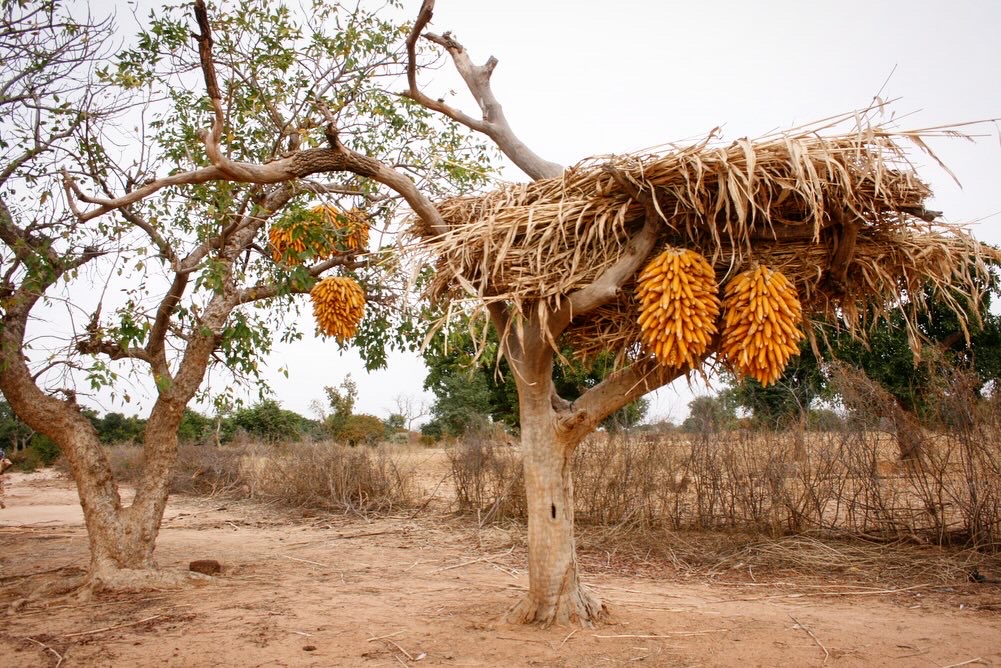
Finishing up the last transect walk in Sera. Meeting a flirting donkey foal, hanging out for a while with the animals and the boys and the men in the shade underneath the animal fodder storage sun shelter. Giving them rice and soap. Shaking everyone’s hand.
Picking up Elli. Arriving in Ouaga, at Chez Tess, where the internet works and the bathrooms are clean and there’s no smell of mold anywhere. Taking a shower, washing my hair, wearing a clean dress. Talking Swedish with Elli. Just airing things, with someone who won’t misinterpret.
It’s like there’s a mountain of weight off my shoulders. I feel like myself again. I don’t desperately want to go back home. I wouldn’t mind it, but the urgency I felt just yesterday is gone.
Eating some Swedish candy, the last of the stash that I bought on the airport when coming here. It had been waiting for us here in the fridge at Chez Tess, and now. Celebration. Now also I am basically done with my fieldwork.
There is definitely more to say about that, but tonight: only relief. And a beer and some Gott & Blandat, on the porch at Chez Tess. And wonderful, amazing Elli.
A day of picking up the pieces.
I’ve logged photographs and transcribed notes. We ate lunch. Shared a liter of sangría, because it tastes almost like glögg and it’s first advent today. First Sunday of Christmas.
I Skyped with Jessica for almost an hour. She’s trying to settle in on Iceland.
After, we talked about relationships for a long time, Elli and I.
I’m listening to The Cardigans, updating the travel journal, and I’m having one of those feelings. The kind of out-of-myself-musings of: it’s a weird thing, how we connect to people. Whom we end up loving. Not always the most deserving. Sometimes against our better judgement, yes, even our own will.
(And I’m not only talking about the romantic kind. That is a too narrow definition of love.)
How strong it is. Overwhelming. Breathtaking.
It’s time for me to go home. To the people that I love.
Not that they are all in Stockholm. I’ve ended up loving a flighty bunch. Yet another example of the irrationality of the whole concept.
A last morning of internet during this brief stay in Ouaga. At 11, we’ll (hopefully) be picked up, go to Kaya for my last feedback sessions – and then the fieldwork is done for real.
I’m sure I’ll have loads to say once all the impressions have had a chance to settle a little. For now, though, I just want to make sure everything gets done. Say what you may about Burkina Faso, it’s definitely not boring. The suspense is having me hold my breath until the last possible moment.
The day before I was set to go for my two last days of fieldwork, things just turned upside down with Elli’s laboratory things and our payments and everything worked out in the end, but not without me being half a day late to my first feedback session, and then it just kind of continued in the same manner from there. The feedback sessions went well enough, but I felt so stressed all the time that I couldn’t be properly present.
We spent the night at a moldy, overpriced hotel in Kaya, Elli and I playing around with fruit and laughing a bit in our exhaustion. But then, neither of us could settle down and it became a sleepless night for both of us.
So, next morning, possibly due to tiredness, we got behind schedule already in the first village and the feeling of stress took over again. Coming back to Zanzi was lovely, talking to the old man and his fellow villagers, and maybe I was about to find my way back to the ground, calming down despite still being behind schedule – but then, suddenly, there was a buzzing noise, and the women under the tree picked up their children and ran away.
And then they were over me. The wasps. An entire swarm. One in each ear, in my hair, on my face. I don’t know what came first, if the wasps were already there when I stood up and started running, or if my running attracted more of them. It was just so chaotic around me, people scattering everywhere, running, and I had a wasp in each ear, it was disorienting and I tried to get them out, panic, thinking: what if they sting and it turns me deaf. I couldn’t keep my balance, I fell and ripped up my knee and then a young man grabbed my hand and pulled me with him into a hut, where he started arguing with a woman who was sitting on the floor with a baby in her lap, while at the same time helping me to get wasps out of my hair. There were at least three.
He then quickly took me to the car and almost pushed me into it, slamming the door shut behind me. I wasn’t aware of what was happening, until we were already driving away from there. Without a proper goodbye, or my pen. I found a last wasp in my hair, though, at the base of my braid still crawling around. I killed it.
Luckily, Elli had managed to pick up my notebook, which I had dropped when I fell. The feedback session had also basically been done, and we were only sharing pleasantries when the wasps attacked, but still. I would have liked to shake their hands one last time, especially with the old man, and not leave in a rush of panic.
However, that was not something I thought about right then. My head was throbbing, and the adrenaline made everything seem jumbled up, incoherent. Elli said I was bleeding a little from my ear. I felt like my entire head would explode. Desiré turned around and said I shouldn’t have run, that when a wasp comes close one should just sit still and wait for it to leave, and that it probably was the perfume that I was wearing that had attracted them. I wanted to tell him to go fuck himself, but somehow, I managed to control myself enough to say that I wasn’t wearing any perfume, I hadn’t washed my hair for almost a week and it’s not that easy to sit still when there are wasps crawling around inside both of your ears.
Then I took a painkiller and fell asleep.
My father is very allergic to insect bites, so much so that he must carry around an epinephrine shot wherever he goes during the summer months. I, on the other hand, had only been stung once, just the summer before, and had therefore no idea of I was allergic too. That was running through my throbbing head when I was slipping in and out of a foggy slumber on the bumpy road to the last village.
As it turns out, though, I have not inherited that particular trait from my father. We arrived in Firka, without me looking like a balloon in the face, only with a headache like I’ve never had before. Somehow, I managed to do the feedback session, even though I don’t really have a clear memory of how it went, and then it was time to head back to Ouagadougou. It felt kind of anticlimactic, not feeling the finality, only being off from adrenaline withdrawal, numb from painkillers and still stressed about it being so late.
That was the end of my fieldwork.
Oh, I wish my fieldwork could have ended on a better note than this. I’ll just have to remember that the rest of my fieldwork, at least to the most part, was a nice and exciting experience. Even if the end turned into a disaster.
 Katja Malmborg