


Life, with the landscape, cows and seals
Location: Southern Öland, Sweden • • • Visit: August 2016
Summer, before Öland:
Today I made rhubarb jam and started to clean the gazebo. I’ve also gotten started with Vivi’s cardigan, finally. It’s been a good Saturday.
But I’m tired. It happens a lot now. I think, ever since I started the master’s program almost three years ago. Any time I’m not studying or working, I feel tired. I’m fine cooking while tired. And knitting. Knitting goes splendidly with being tired and watching a simple movie. But writing doesn’t. Writing requires the same parts of my mind as work does, and my work being so intense, there’s no energy left in there to write. And the journal stays un-updated.
It’s starting to become a problem, I think. I grew into this writing. Ever since I was 12, when I started working on my first (unfinished) novel, I’ve been writing. Any important thing that I’ve experienced, any powerful feeling that I’ve felt, I’ve written about it. I think that’s how I’ve learned to deal with life.
But now, when I’m not writing, it’s like the days pass without leaving a mark. As if, when I don’t write about what I’ve felt and experienced, it isn’t real. As if it’s the writing that ingrains my experiences in my memories, not the being in the middle of them when they happen.
I feel like time passes without me noticing.
But mostly, I miss it. I watch shows on TV about European cultural history, I listen to podcasts about books, and I miss feeling active in that part of the human experience. I’m not only a scientist. I also have a need to create.
Summer is here. Things will slow down. I will make myself the time to build words into sentences. This is a promise to myself.

In mid-August, I was invited to talk about my research at the yearly Burkina Faso day at Öland’s college. The day was organized by the local UN association and the Sweden-Burkina Faso friendship association, and consisted of a series of presentations about Burkina Faso by different professionals: a social anthropology professor who studies local democracy reform, a doctor who has built a hospital, a law student who wrote her thesis on female genital mutilation from a human rights perspective, a documentary maker who was filming a movie about young female mechanics in Ouagadougou, a representative from the Burkinabe consulate in Copenhagen, and me.
It was strange, trying to put together a presentation for an audience I didn’t know anything about. I expected many of them to have a connection to Burkina Faso, meaning that they would probably know a lot about the country already. On the other hand, the sustainability science proficiency would probably be limited, meaning that the particulars of my research and the concepts I’ve used would be more or less new to them. This meant that the expected profile of this audience was the complete opposite of the one I’ve been used to present in front of for the last couple of years: highly educated environmental scientists with (often) limited knowledge of my specific case study area.
I really didn’t know how to approach this new challenge. On the one hand, I wanted to make the talk interesting and not have too much of that scientific mumbo jumbo. But I also didn’t want to oversimplify things and seem like I thought that the audience was stupid. There’s a fine balance between the two. I was working up some serious nerves.
In the end, I chose to tell the story about the multifunctional landscape. How small-scale farmers in northern Burkina Faso actively manage their village landscapes to integrate several different uses in both fields and shrublands, forest patches and depressions. That focus isn’t only on maximizing the production of cultivated crops, but also on harvesting wild plants for food, medicine and spiritual uses, and managing vegetation so that there is enough of both fodder, fire wood and building material, while still protecting the sacred groves where ancestors reside. Many photographs, but very little about methodology and nothing about remote sensing or ecosystem services theory. I did include some maps, but mostly just to show what my actual research results looks like, I didn’t get into detail about what they actually meant. And all in Swedish! A lot harder than one might think.
I don’t know how well I did, in the end. I tend to forget presentations the moment they’re over. Nervousness playing games with my mind, I guess. Several people approached me afterwards, though, and told me that my talk had been interesting, so probably I didn’t embarrass myself. But I’ll really do have to practice all steps of popular science public speaking for the future, if I want my research to reach further than being stuck in rarely quoted scientific papers.

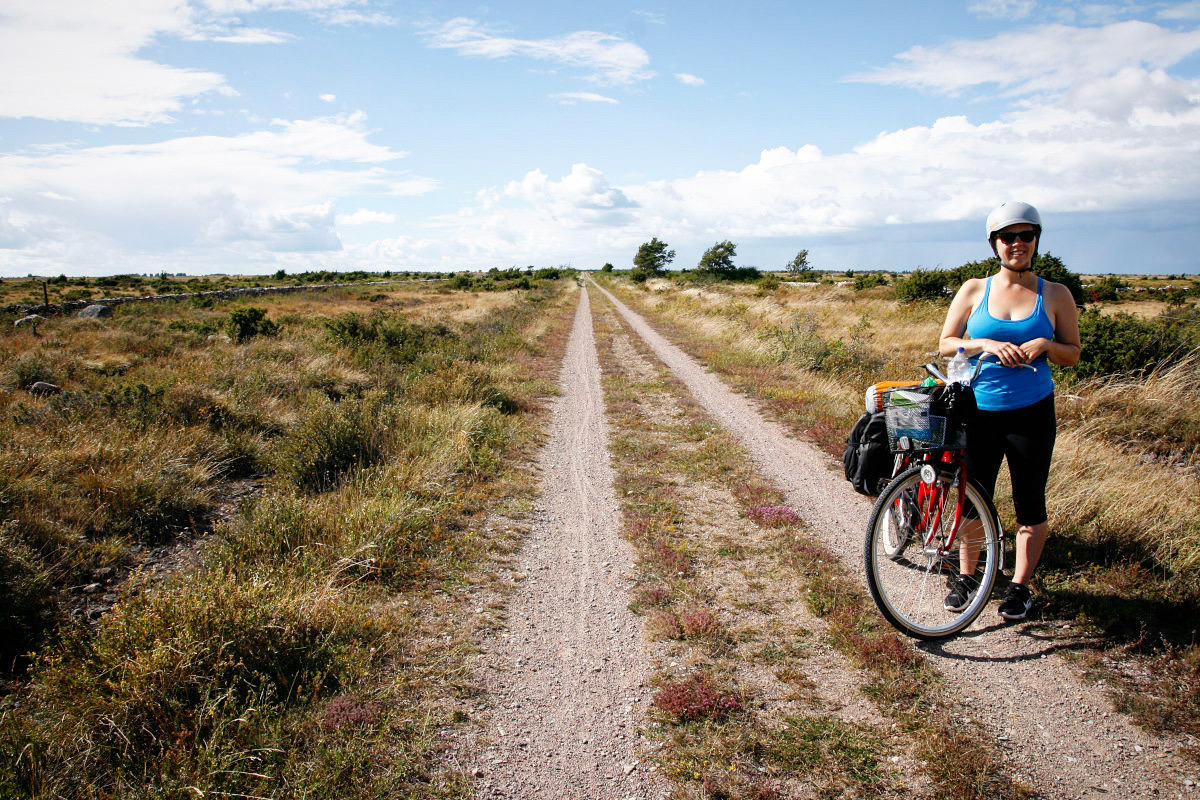
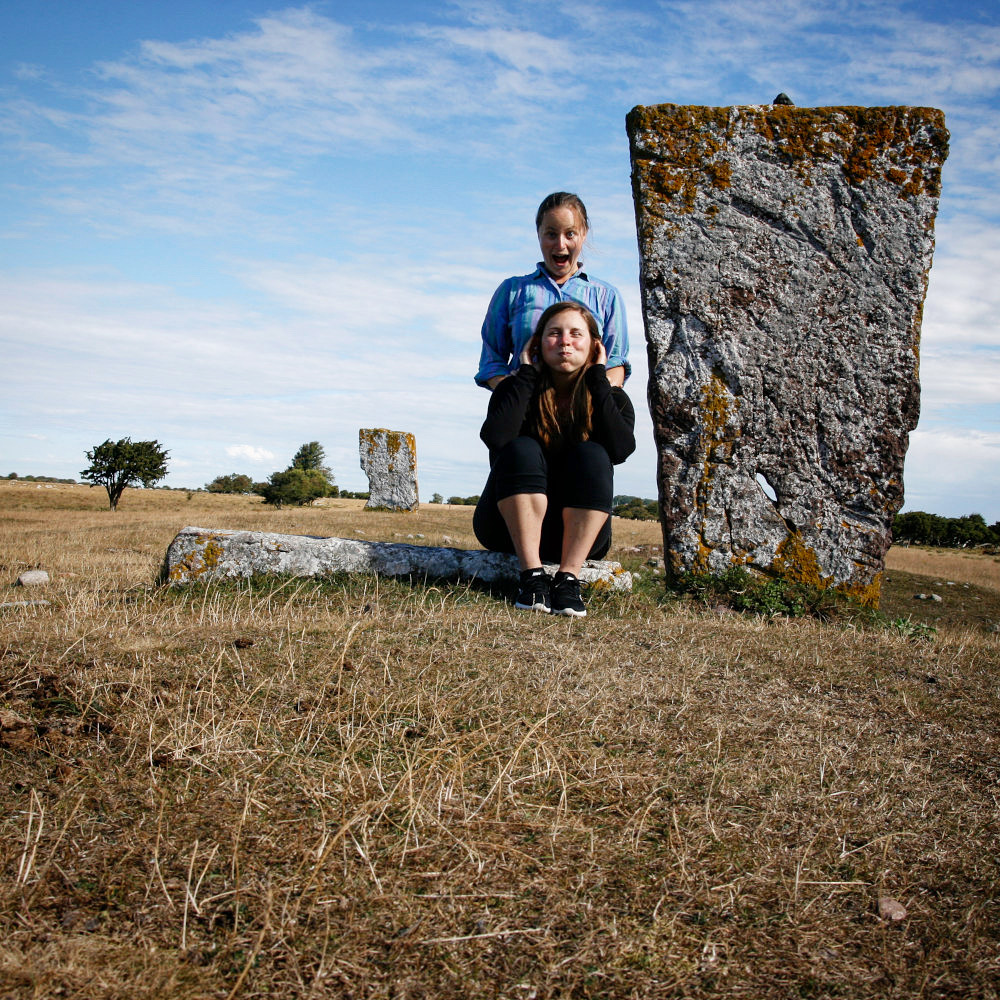
When I was invited to speak at the Burkina Faso day on Öland, I thought it could be a perfect opportunity to also do some vacationing. I convinced Ashley, a dear friend and Canadian in great need of seeing more of Sweden than just Stockholm, to come with me. So, for our shared brief, but lovely summer trip, we brought sleeping bags and a tent, rented bikes and spent three days cycling around the southern half of the second largest island in Sweden.
Our main interest was the UNESCO world heritage site “the Agricultural Landscape of Southern Öland”. It is a perfect example of a social-ecological system. Humans have lived and farmed there for more than five thousand years, adjusting their practices to the unique conditions on the island. This in turn means that the landscape and its vegetation has co-evolved with the humans.
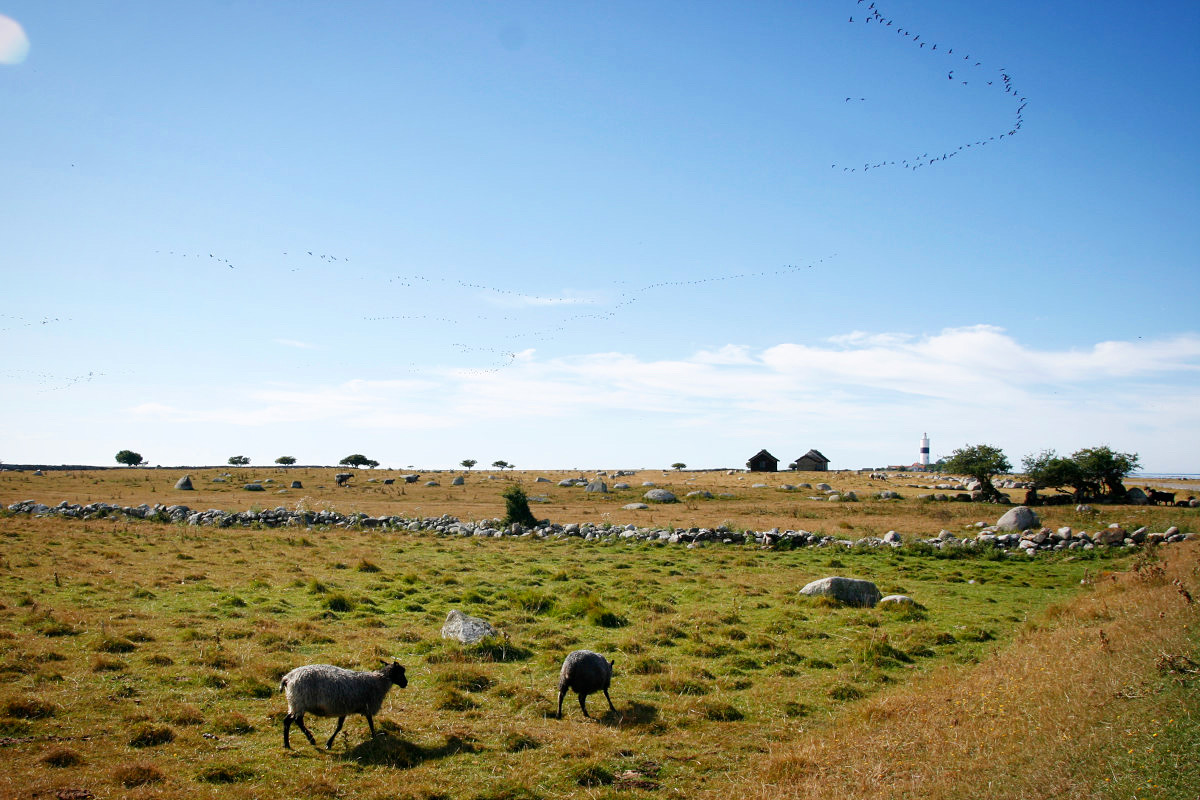
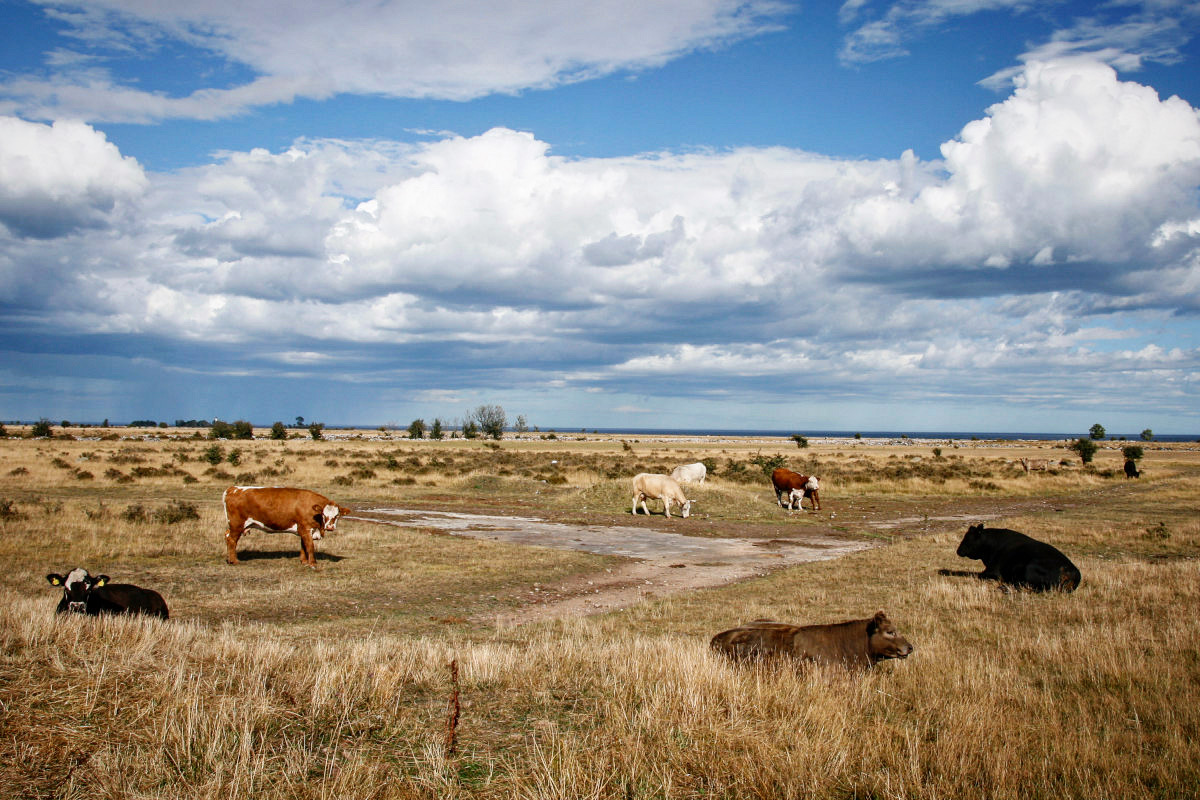
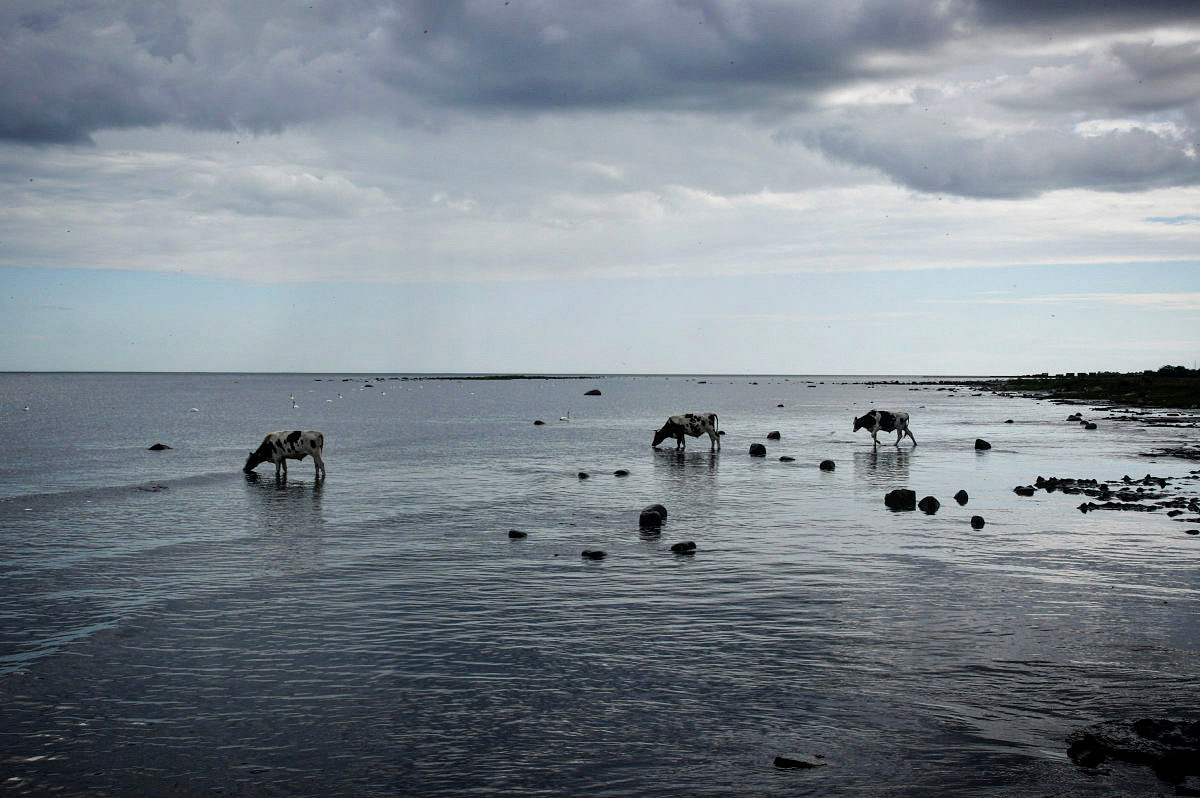
One example of this is the alvar, a sparsely vegetated grassland limestone plain where grazing animals have allowed a diversity of herb and shrub species to establish, some of which cannot be found anywhere else in Sweden. It is especially known for its orchids. Even though most of the alvar is protected now as nature reserves, it is still being grazed by sheep and cows at a low intensity, to keep the social-ecological open landscape from getting overgrown.
However, it is not only the long history of human-environment interactions that makes Öland unique. Öland also has special soils, compared to most other parts of Sweden, with a much higher lime content and, therefore, soil fertility. Combined with the slightly higher temperatures than in mainland Sweden, this has made Öland one of the more important agricultural areas in the country even today.
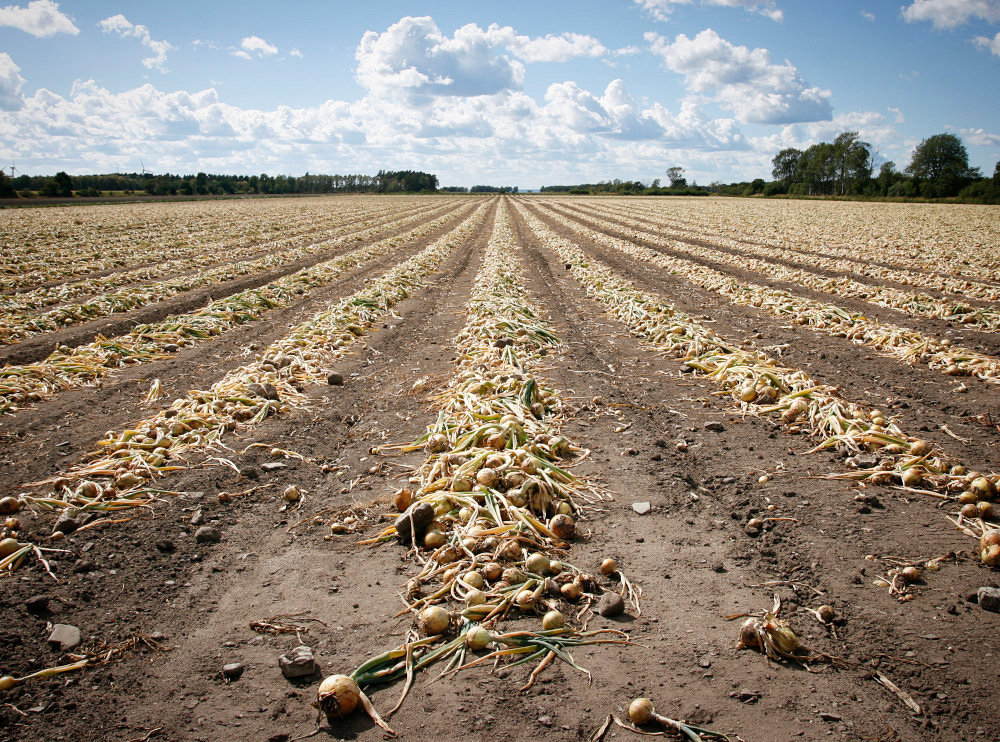
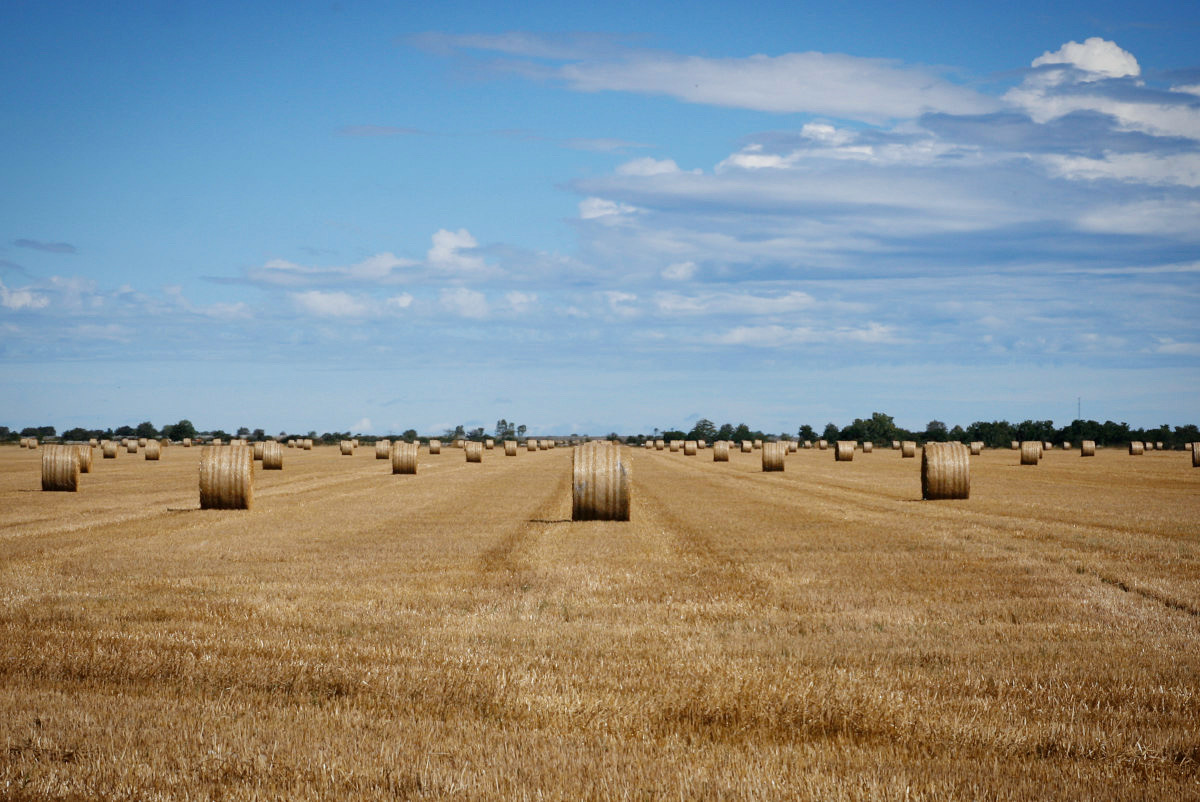
We cycled past fields of wheat, oats, barley and forage, potatoes, peas, beans, onions and maize. It was harvesting season, so there was a lot of activity in the fields. In the afternoon of our second day, dark clouds started building on the horizon and by evening, we had to race through a wall of rain. It was incredible, the drama of the sky and how the sea mirrored its color – but we got soaked and would probably have had a really unpleasant night in the tent. Luckily, at dusk, we happened upon a hostel with an empty double room. After a hot shower, dry clothes and some warm food in our stomachs, having experienced the ferocious rain only improved our memories of the day. And the next morning, the sun was shining again.
On the southern tip of Öland stands Långe Jan, a lighthouse. This is one of the most important resting places for migrating birds in this part of the Baltic. No birds had started migrating yet when we were there, but there are also plenty of birds permanently living and nesting on the surrounding beaches and waters. And our excitement was huge when we saw some weird gray shapes out in the water and realized it was a complete flock of grey seals enjoying the sun on some rocks.
Öland is a beautiful place with a large variety of interesting landscapes – but also so flat that cycling takes very little effort. There are even a couple of bike trails that cross and encircle the island, meaning that you rarely have to share the road with cars. I can really recommend going on a cycling holiday on Öland!

I’m catching up on some reading, newspaper articles that I’ve been recommended but haven’t had the time to read yet. I have a folder in my bookmarks bar that has been growing since March.
I read an article unexpectedly relevant for my line of work, titled “The word-hoard: Robert Macfarlane on rewilding our language of landscape”. It is an essay about all the almost-forgotten words that exist in different languages and dialects to describe very particular features of the landscape. And there is a romanticism in this love for words, the poetry that they hold, which awakens the pubescent writer in me. But it is also an aspect which makes the message of this article (don’t forget the language of landscape!) more literature than natural science. We have a rich language for forests, for wetlands, for anything cold, hard, dark and wet in the Swedish language. I loved dabbling in the borderline-banal art of scenery descriptions in poetry and prose when I was younger, before I turned my love for landscapes into an academic profession. Now I feel like I might have lost some of that feeling of wonder and magic, adopting my language into the technical, soulless vocabulary of science.
But reading Macfarlane’s article, I am reminded of how much is hidden in language. I have spent a considerable amount of time reading up on the scientific literature on local participation and indigenous knowledge in my work, and I was fascinated by the detail in the definitions of the words that Macfarlane had collected. The words were beautiful, and their definitions like small poems in themselves. But also, embedded in those precise definitions was a rich local knowledge about the landscape. A type of knowledge collected and inherited through generations of living in and living off the landscape, giving it a kind of time-coverage and experience of the ordinary and extraordinary that scientific measurements simply cannot capture.
And just relating this to the Swedish context: Anyone working with nature conservation, almost anywhere in the world, will be aware of the importance of wetlands. But in most scientific texts that I’ve come across, these landscape features are called just that, wetlands – when in reality, there are so many different types, all with different origin and life-cycles. In Swedish, the wetland equivalent våtmark is often used, but when I studied landscape ecology with a Swedish professor who had studied historical landscapes, she also taught us the definitions of myr, träsk, mosse, sumpmark, kärr. For most Swedes, these terms just sound old and aren’t used anymore, but for anyone wanting to understand wetlands and how they interact with the surrounding landscape, it is important to know the different ways in which wetlands occur. And one way to do this is to keep this rich language of landscape alive. In one word, they answer questions such as: Where does the water come from? How fertile is the soil? How stable is the wetland?
It was a nice reminder, in the end of my holiday, the way in which literature, the humanities and natural sciences can help and enrich each other. I must remember that, now that I soon return to the disciplined world of resilience research.
 Katja Malmborg