Life, with the mountain
Location: Reine, Lofoten, Norway • • • Visit: June 2014
I’m in Norway now, north of the Arctic Circle, and the light is doing weird things with my head. I can’t sleep and I feel lost in time.
I’ve hiked more than 25 kilometers today, at least 5 of which had a 40-70 percent gradient. Simple concepts like getting up to go get a glass of water don’t make sense in my head anymore. Even if I’m parched. So, I’m keeping (incoherent) notes instead.
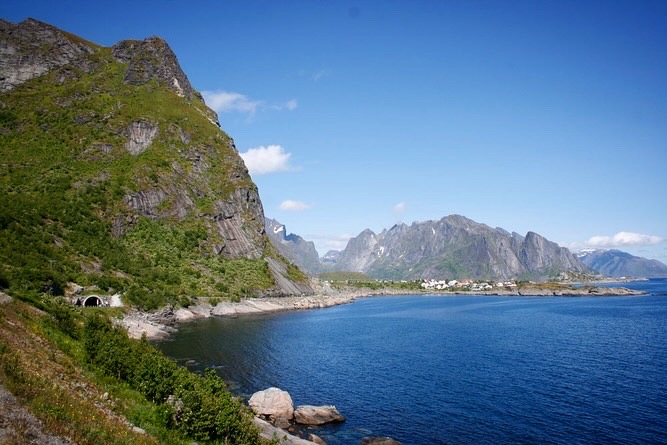
And. Lofoten in northern Norway is breathtaking.

I went to Bodø to have a meeting about the Arctic Resilience Report. As part of my traineeship, I was brought along from the SRC with two professors and a Ph.D. student, Juan. It was my first real business trip (because the trips with dad don’t count). I did not know what to expect. I felt both anticipation and excitement, and a little bit scared. But it went well, people were friendly and I learned so much from observing them discuss the development of an analytical framework and methodology. A soft start to my journey as a researcher.
And after, Juan and I took the ferry from Bodø to Moskenes for some weekend sight-seeing in Lofoten.

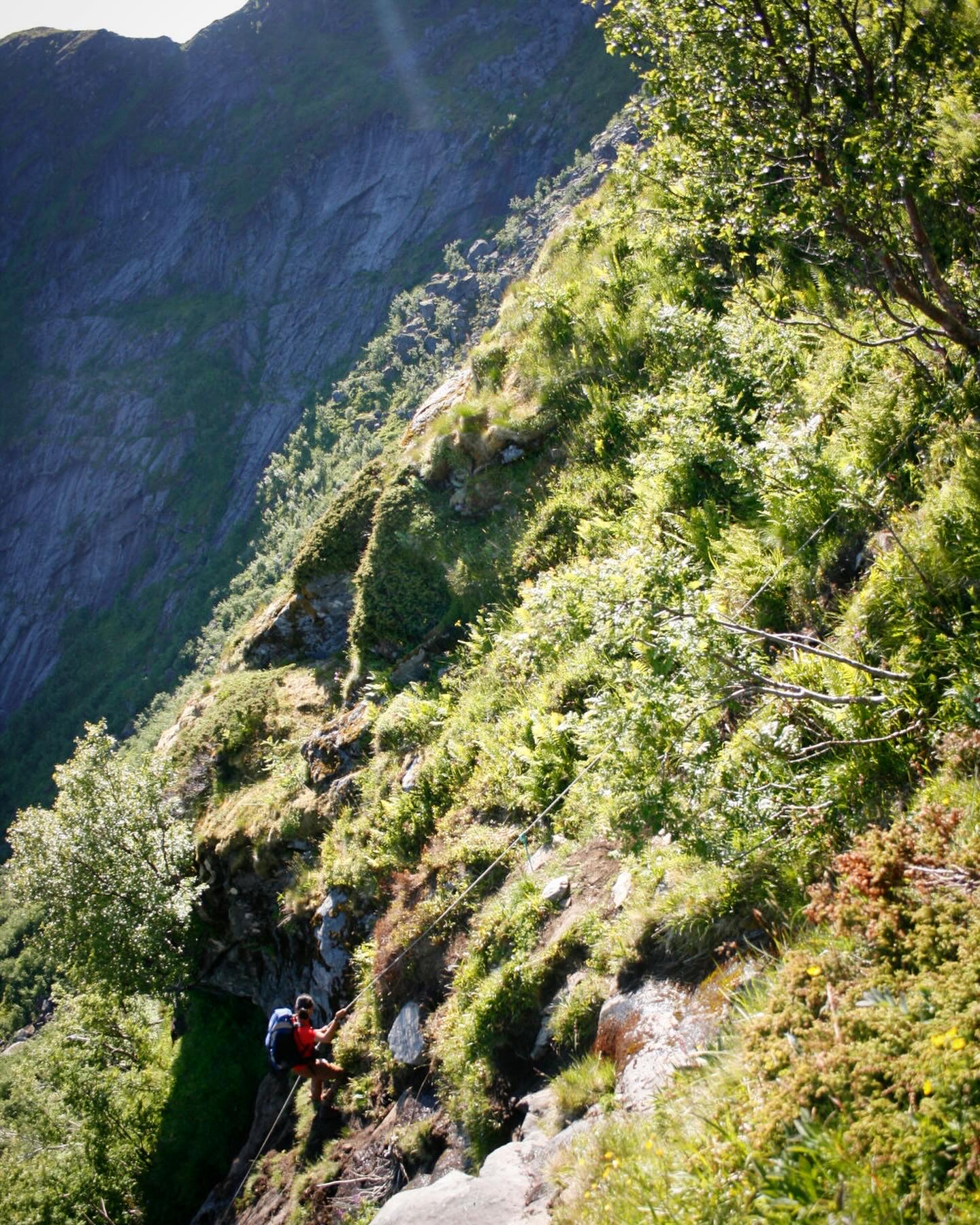
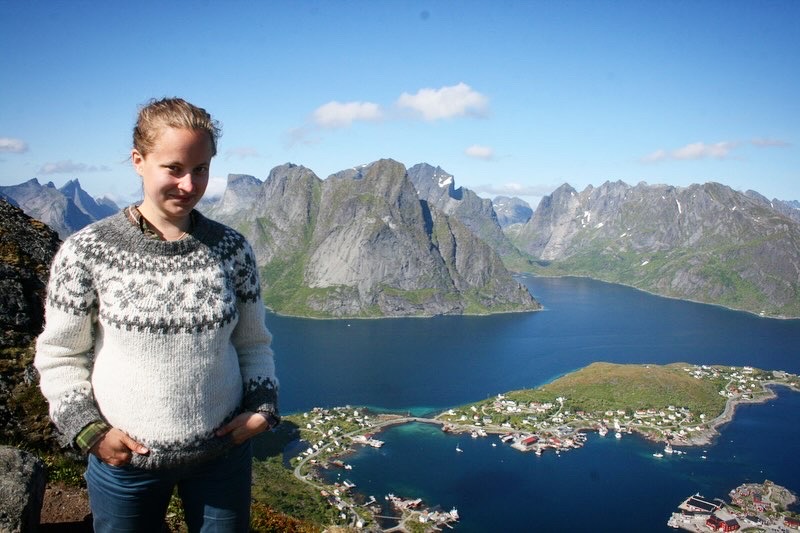
I could have died today. Or, at least that’s how it felt, several times, while climbing to the top of Reinebringen.
Reinebringen is a 448 meters high peak, rising basically from sea-level, straight up. The trail is steep, according to the internet with a 40-70 percent incline.
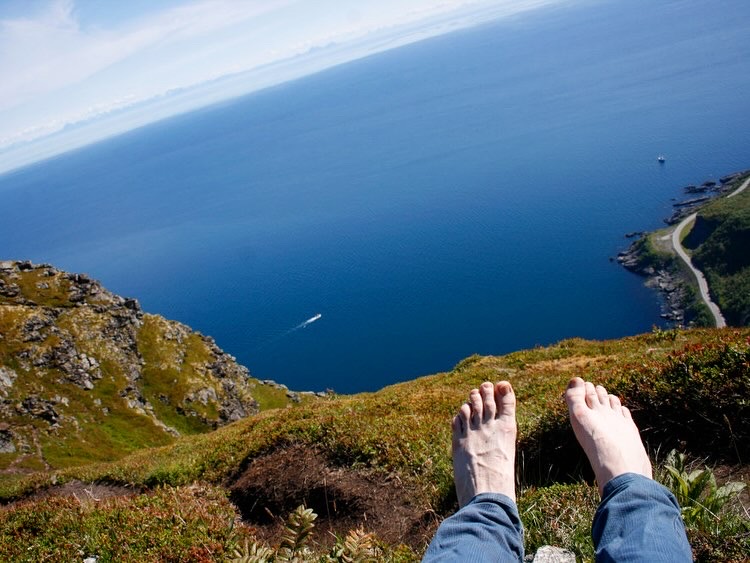
I don’t generally have a problem with heights, but I once had this panicked reaction when reaching the ridge of a mountain in the Olympic National Park in Washington, and I was afraid I might get the same thing here. I didn’t, but still. The view was incredible, like, among the most amazing things I’ve seen, but I could never totally let go of the awareness of how extremely steep the climb down would be.
I can just say, I was lucky I had Juan with me. I don’t know what would have happened if I didn’t have him there to ground me and remind me to marvel at the massiveness of the view.
(Let me just say, I now understand why the ‘landscape designer’ in one of The Hitchhiker’s Guide to the Galaxy books got a prize for designing the Norwegian fjords. The Norwegian coast really is the geomorphologist’s wet dream.)
After the climb, we went to have ice cream in Reine. I can’t believe the luck we’ve had with the weather here, sun and temperatures that encourage ice cream eating. While I hear it’s raining and cold in Stockholm.

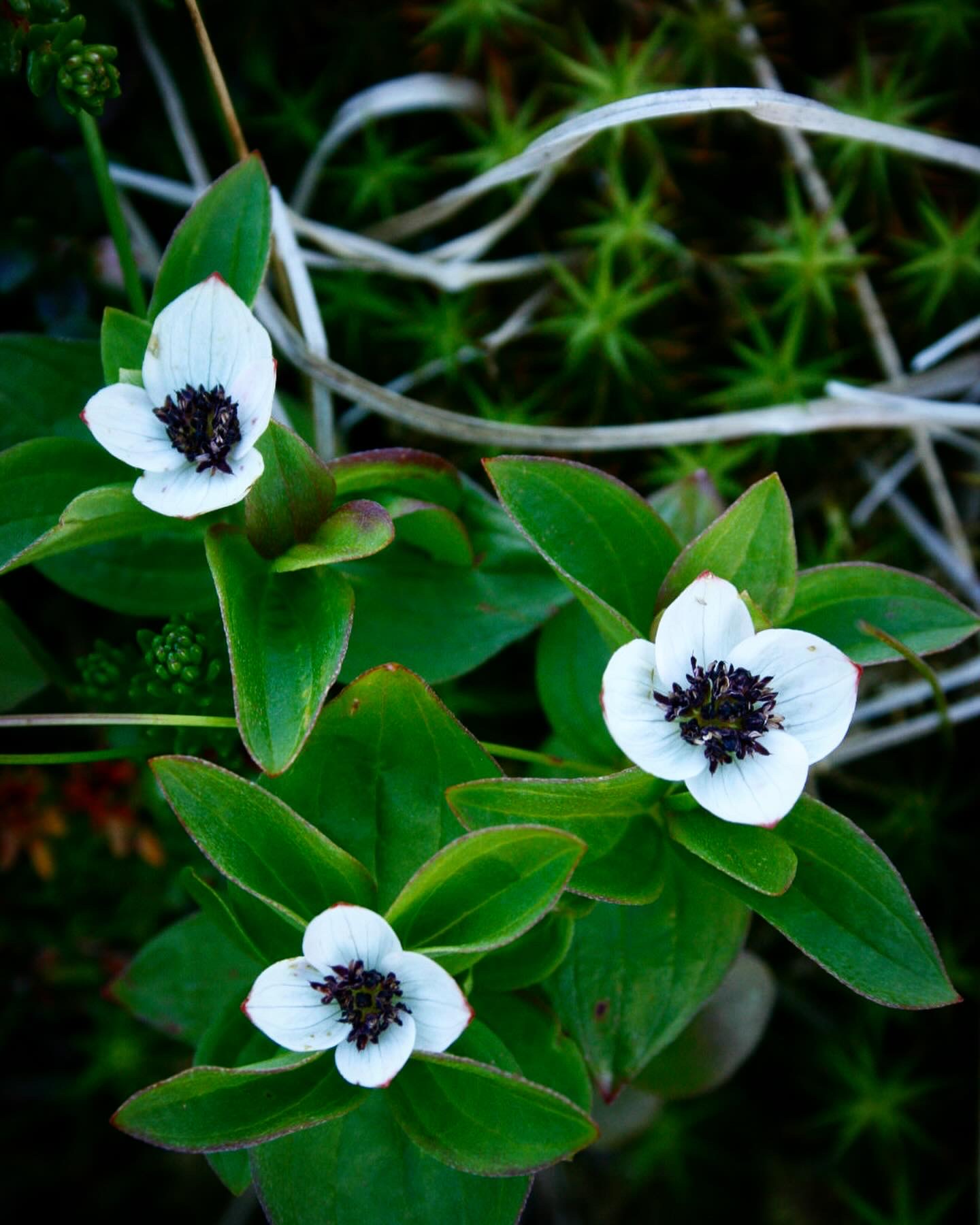
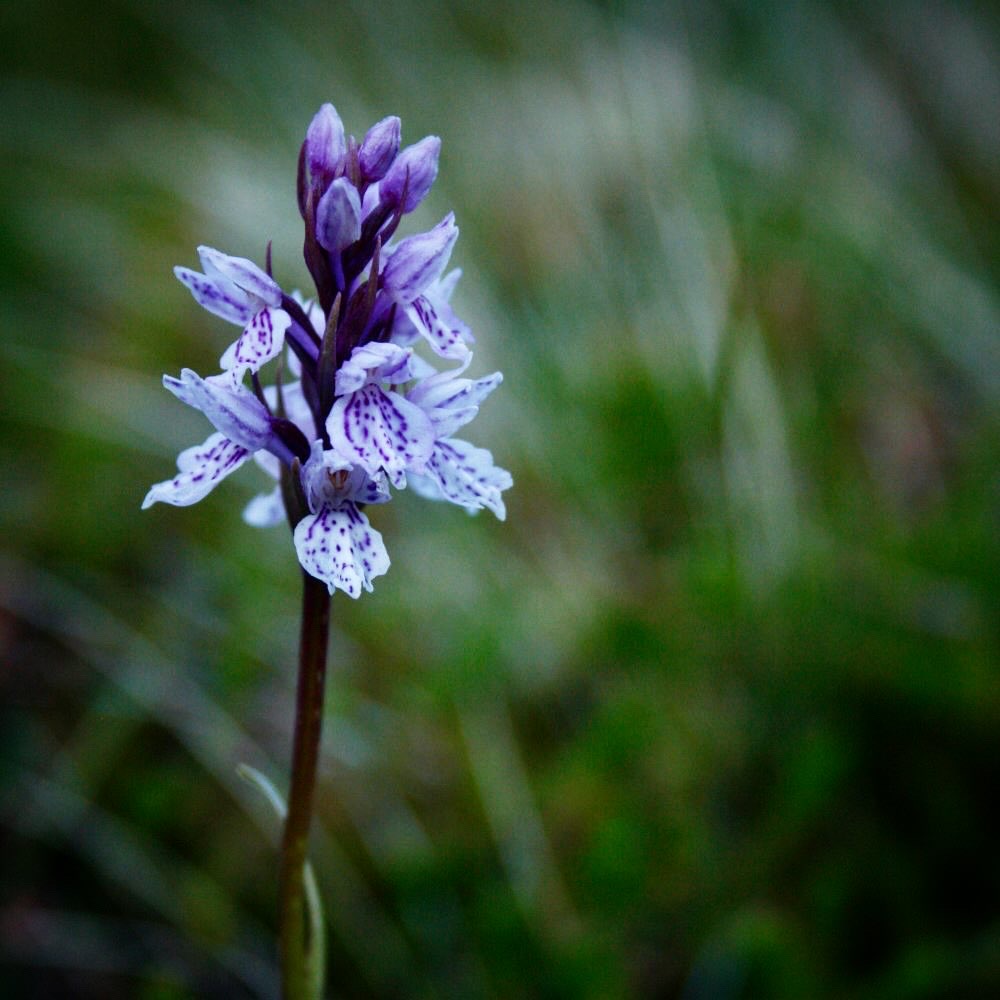
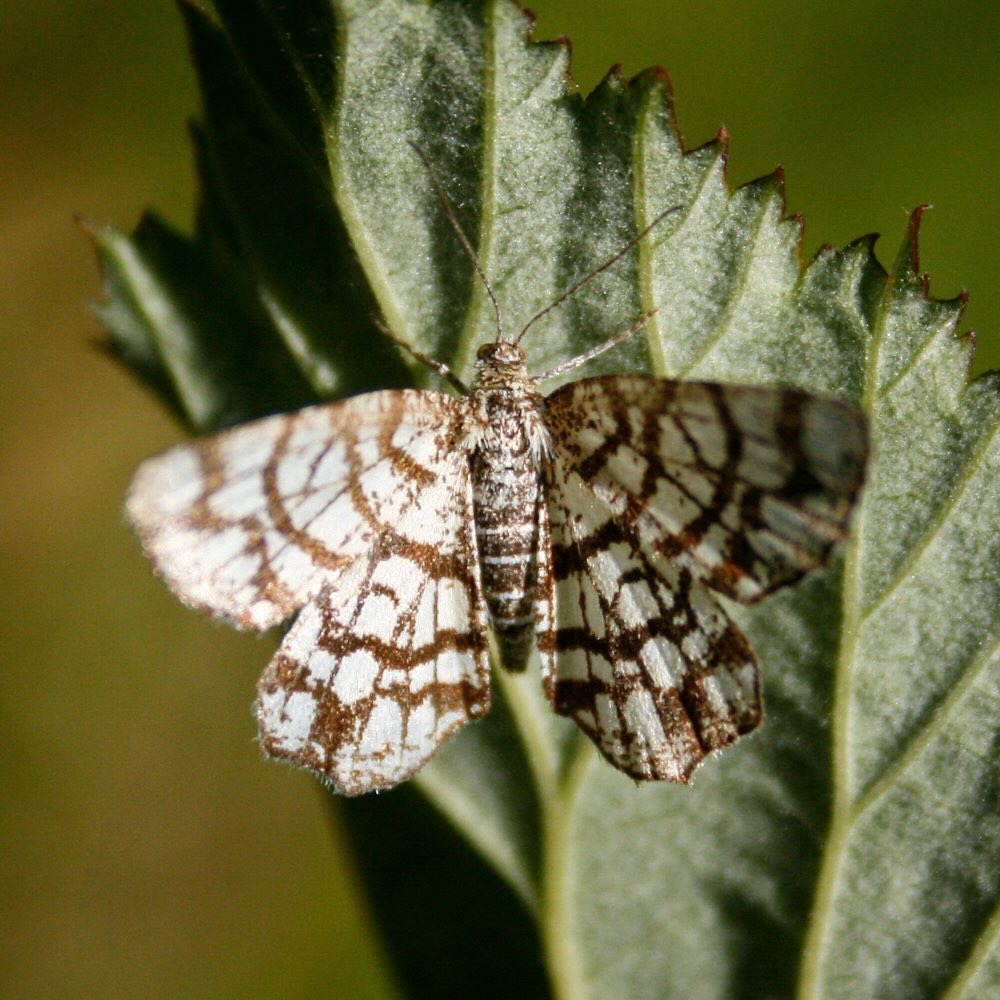
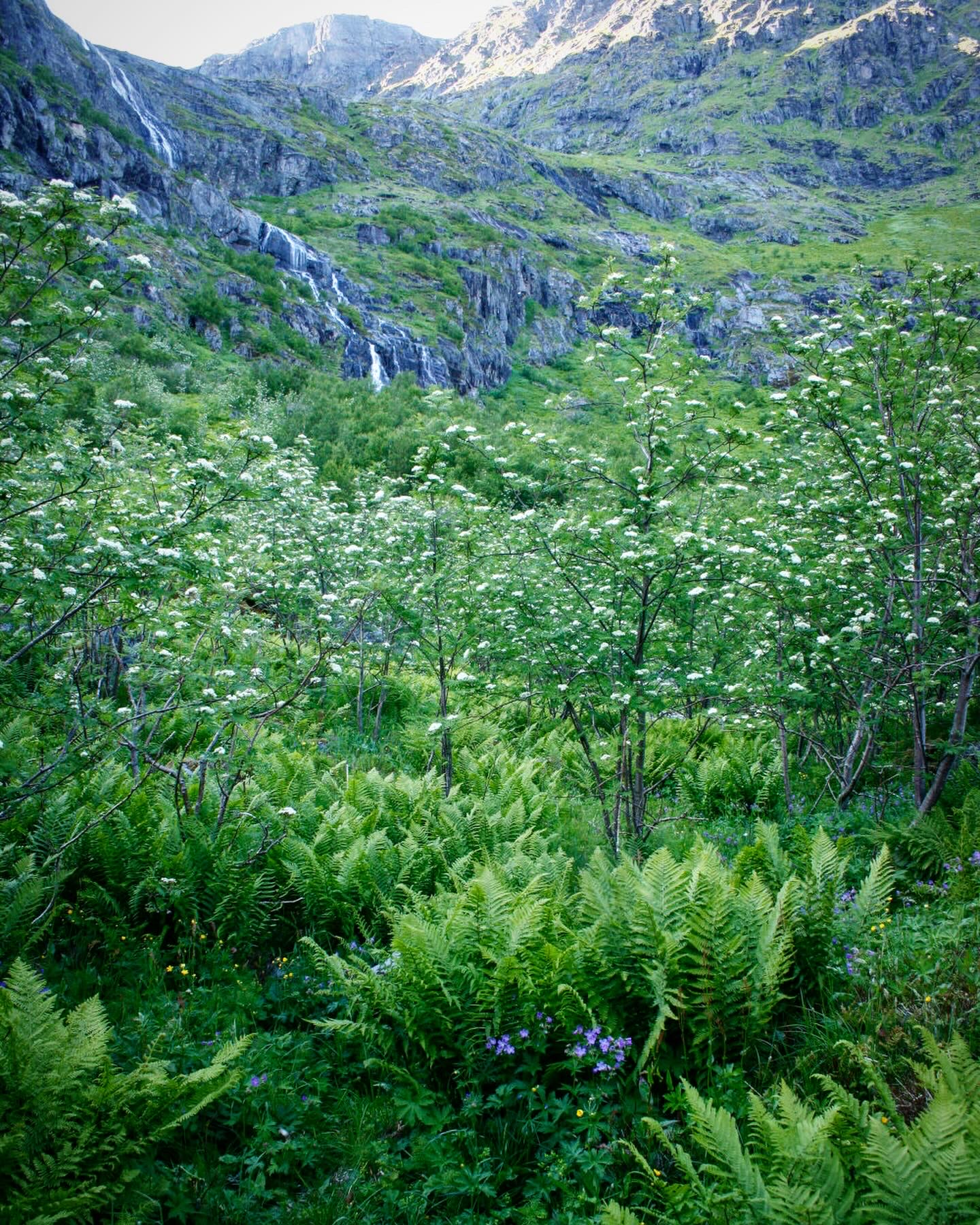
What I will remember most are the smells. The sweetness of blossoming rowan trees and cow parsley in the valleys by the lake where the tiny little white butterflies fluttered about in the wet meadows with ferns and wood cranesbill.
The dry, sun-warmed smell of low heather up on the peaks above the tree line, like an embrace.
The slight itchiness of rotting bladder wrack in in the air, the brownish-green seaweed covered in bubbles you can pop, so much associated with childhood adventures and learning how to swim.
And the light. The sun circling the sky, allowing devotion. The forgetting of time.

I had planned to spend the morning out on the pier in Å, reveling at the ocean, now that my attention this far had been given to the mountains. But I didn’t wake up until ten thirty, which meant I barely made it to my bus. Oh, well, I guess I needed the sleep.
Going north, the landscapes turned a bit softer. Still high peaks, but they were further apart and there were even fields and meadows between. Cows, sheep and ponies grazing, recently cut hay lying in the sun to dry.
It made me think of the first part of the bus trip from Sarajevo to Belgrade that I made last summer. Also through sunny mountains, listening to First Aid Kit. I’m creating a web of memories for myself. Life isn’t linear, not static. We create and recreate it, constantly, our past, present and future. Life is meaning, and meaning is what we ascribe to what we meet. The meaning of today is colored by that sunny, hot day on a bus from Sarajevo to Belgrade, and the meaning of that bus ride is colored by the high, austere peaks of Lofoten in the Norwegian Arctic. History as a circle. Life as the constant and constantly changing North Atlantic Ocean.
I arrived in Kabelvåg and it’s the cutest little village, with lovely old wooden houses and a beautiful church. I’m sitting down by the water now, on a cliff by the pier. The drama of the Kaledonian mountain chain continue into the horizon and the soft edges of the granite that I’m sitting on tells of rough fall storms. Today, though, there is almost no wind and the ocean only gently caresses the feet of my rock. I can’t believe how lucky I’ve been with the weather on this trip, constant sun and even warm enough to hike in t-shirt. I’ve heard it rains most of the time here, but not now.
There’s a watery quality to the sunlight, it never gets really strong, as if there’s so much atmosphere that it has to get through that only the bravest and purest sunbeams make it all the way down to Earth. It is clear, and always around.
Now the oystercatcher that kept me company flew away. Maybe I should find something to eat too.
Later, at the hostel: Burgers at the village restaurant were so expensive, I made oatmeal for dinner instead. Really, Norway is just silly. Moneywise.
But sitting in a crevice perfectly shaped for my body, reading ”The Golden Notebook” by Doris Lessing while the sun continued on its never-ending journey of the Arctic summer sky, food didn’t feel that important anymore. I can take a little bit of uninspiring food, if that is the price I have to pay for the rocks and the ocean, the mountains and the midnight sun.

On the train, from Narvik to Stockholm:
The sun has actually gone down. We’re south of the Arctic circle now, I’ve been on this train for almost eleven hours. A while ago, the sun was painting the trees and our faces golden – but now, it is gone and the sky is kind and soft like a My Little Pony.
I was thinking of this past year, my studies, the relationships, my tumult, and watching the sky gaze at its own reflection in the northern lakes. The hills are soft and voluptuous in this part of Sweden, if I remember correctly a remnant of the days when the landscape was situated much closer to the equator. Where heat and humidity weathers in different ways than in this icy north.
I was watching the clouds turn orange, and it hit me: I am a social-ecological system and I am going through adaptive cycles. These ups and downs, what a reassuring way to describe it. I could write an incredibly nerdy and completely unintelligible poem.
The organization, growth, conservation and collapse of a state of mind, identity, reorganizing and then growing, stagnating and falling apart all over again.
I don’t think I will, though. It’s half to midnight and I’m supposed to work tomorrow. I think it’s time for me to go to sleep.
 Katja Malmborg