
Life, with the garden
Location: Montpellier, France • • • Visit: September 2016
I went to a workshop in France. It was a final team meeting with most collaborators in the project that I’m part of. The project lead works in Montpellier, so that’s where we all went, people flying in from all over, Ghana, Burkina Faso, California, Minnesota, UK. Three days of discussing agricultural innovations and ecosystem services management in the Volta basin.
I had met several of the participants before, in the field, but I was still nervous. I would be the most junior participant in the meeting. In every sense of the word, age, experience, title. I mentioned this to my friend James a couple of days before going to Montpellier, about feeling inadequate and boring in the company of professors who’ve done everything and lived everywhere and published tons. Instead of reassuring me, however, James told me that it was probably true. Age and experience will, most of the time, mean having more interesting things to say. But this is also something that the old and experienced know. They’re not expecting me to be on their level. It is OK to be a bit boring, because my youth means I still have time to get more experience – and maybe I can contribute with a slightly different perspective. But not even that is necessary.
Embracing the fact that I’m still young and that I, in certain contexts, will be boring in relation to the other, more experienced people that I’m interacting with. That it’s perfectly fine to be boring. I have plenty of time to become interesting. I think that might have been the best advice I’ve gotten for a long time, and it definitely made me feel less awkward at the three-day Montpellier workshop.

After the workshop in September, I took a little time off and spent a couple of days walking around on the winding streets of Montpellier. It is a city situated 10 kilometers from the Mediterranean coast in a hilly, dry landscape. It was first mentioned in a document from 985 and came into prominence in the 12th century as a trading center, but now nearly a third of the population are students, thanks to the three universities and three higher education institutions situated in or around the city. And this is so obvious. As soon as I got off the bus from the airport, I was stunned by the number of young beautiful people on bikes. They were everywhere! And despite the old town with cathedrals and monuments and tiny squares and stone stone stone, the general atmosphere is youthful. Lovely. A perfect place to wander around, admire the beautiful architecture, get lost, have a crêpe and some cider, and then find your way again.

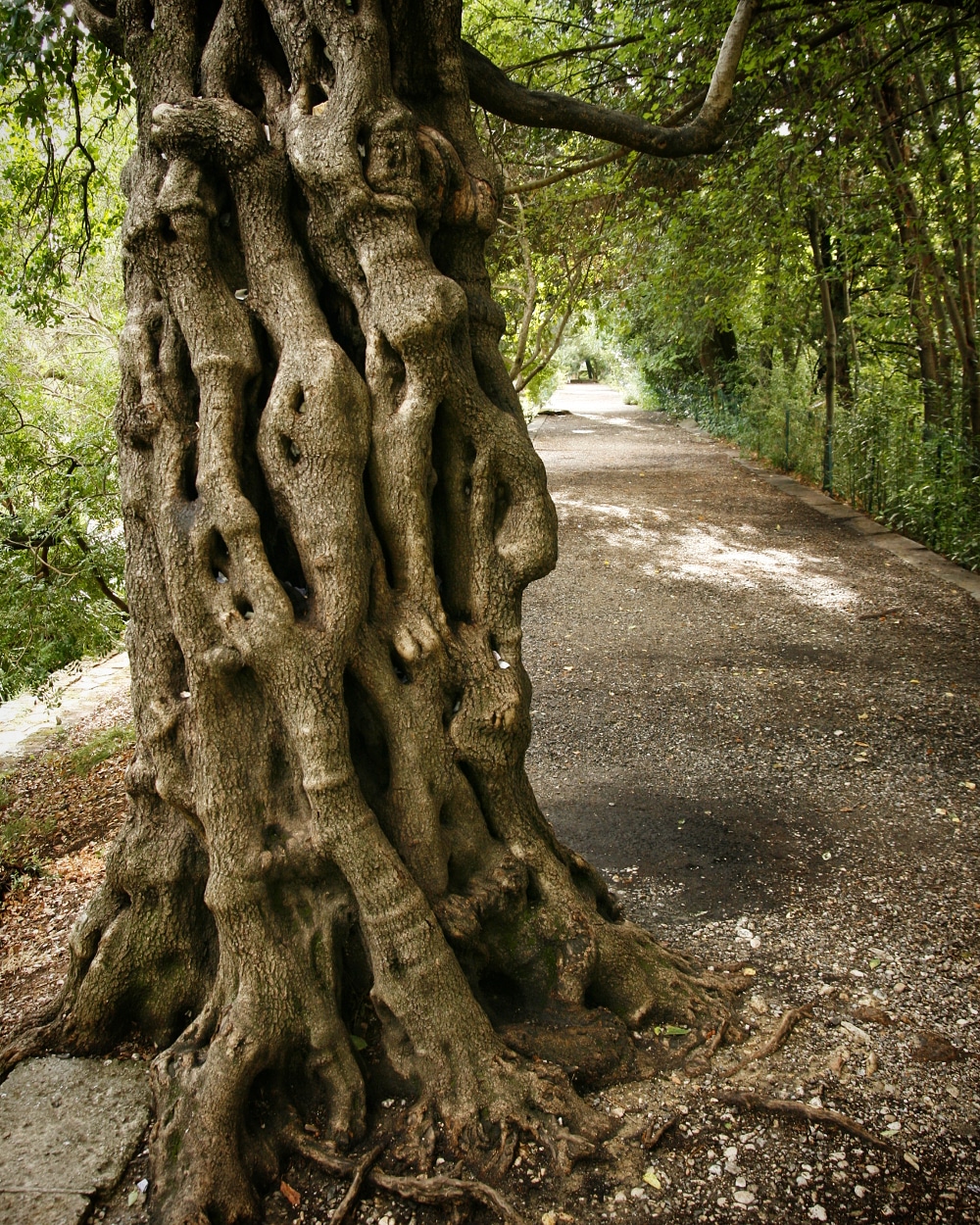
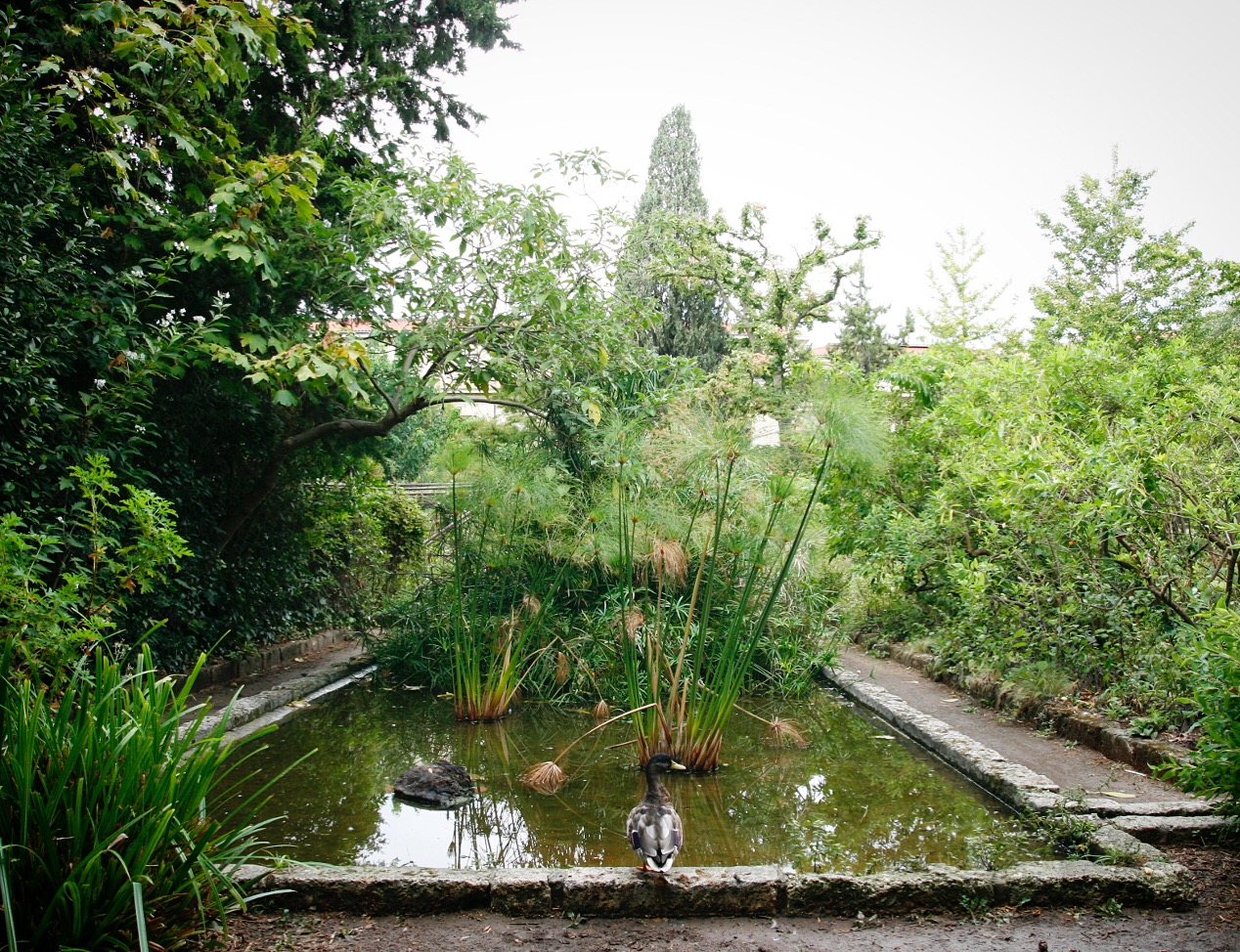
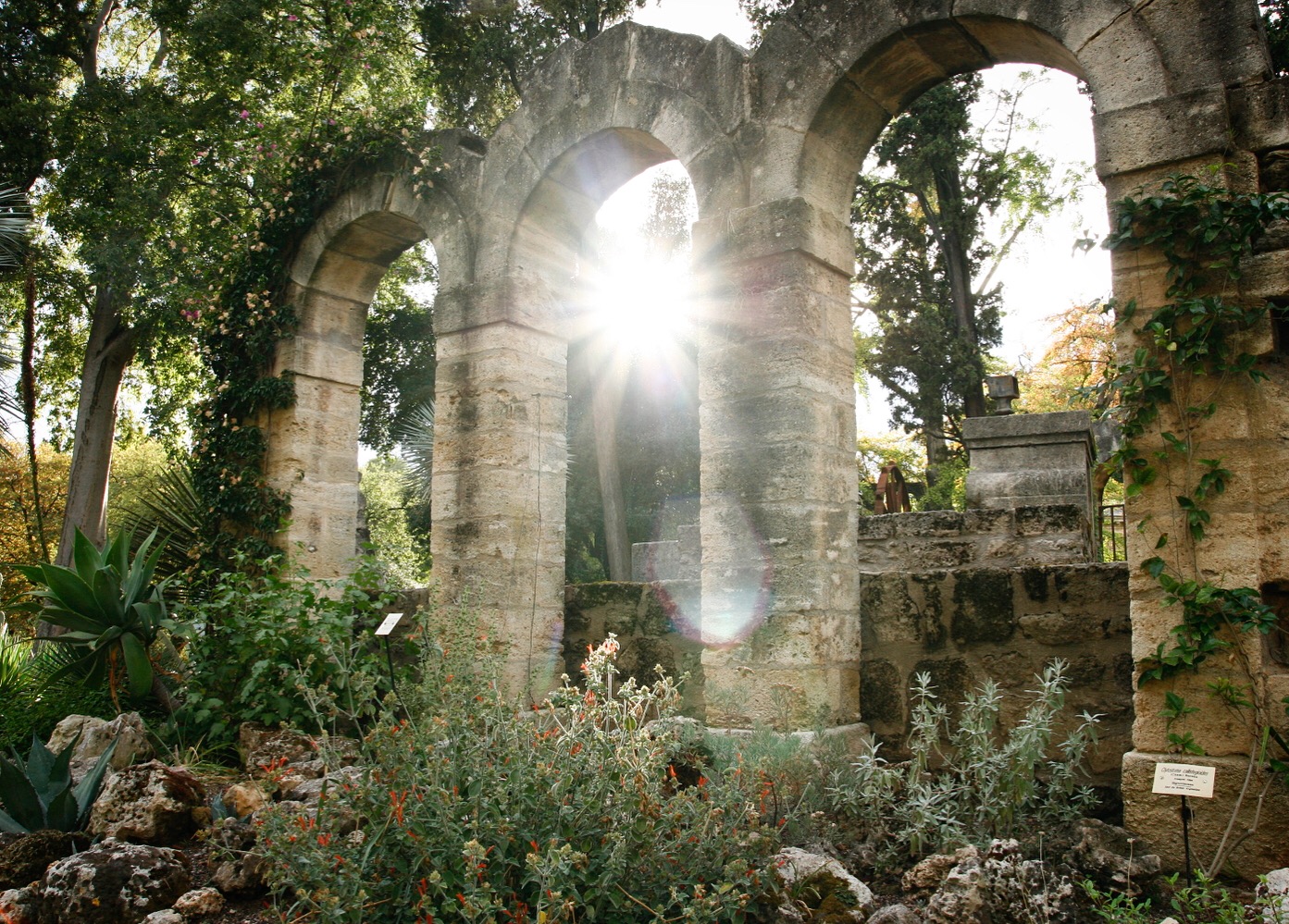
Narrow streets and cheese are some of the most enjoyable things with Montpellier – but, not surprisingly, what I liked the most about this university town was the botanic garden. Jardin des Plantes was established in 1593, making it the oldest botanic garden in France. It is a green oasis in the otherwise quite vegetation-poor inner city. Not very big, but lush, intimate, full of hidden paths and benches to sit and enjoy the greenery from, small architectural details perfectly blending in with the vegetation. Romantic.
There was no entrance fee to the garden, and the opening hours were long, making it a place that locals and tourists alike seemed to enjoy visiting for a calm evening stroll. There were birds, and cats everywhere! I spent several hours walking around on the paths, failing to get close to the cats, sitting on different benches, reading. I could easily have spent more time there. It was a beautiful, small, half-wild but still very well-kept botanic garden.

On those benches in the Montpellier botanical garden in September, I read the last chapters of Edward Abbey’s “Desert Solitaire – a season in the wilderness” (1968). It is a memoir of the years Abbey spent as a park ranger in Arches National Monument in Utah, USA, in the 1950s. It took me a long time to finish it, I started reading already in January, but then the library wanted it back and I went to Liberia, and simply didn’t get around to borrowing it again. Until my Montpellier trip. I started reading on the plane, continued in the evenings after the workshop, and then got really into it once my vacation days started.
My camera and the book is what I carried in my bag up and down the streets of Montpellier. When the sky opened and thunder roared, I took shelter at a crêperie, had lunch, got slightly tipsy on dry apple cider and read. In the afternoons, warmed by the golden setting sun, I searched the paths of the botanical garden for hidden benches, protected by banana palms and ivy.
Abbey criticized the way the national parks were turned into tourist attractions, roads being paved in the name of accessibility, ruining what, in Abbey’s opinion, should be wilderness. He wrote:
“Wilderness. The word itself is music.
Wilderness, wilderness… We scarcely know what we mean by the term, though the sound of it draws all whose nerves and emotions have not yet been irreparably stunned, deadened, numbed by the caterwauling of commerce, the sweating scramble for profit and domination.
Why such allure in the very word? What does it really mean? Can wilderness be defined in the words of government officialdom as simply “A minimum of not less than 5000 contiguous acres of roadless area”? This much may be essential in attempting a definition but it is not sufficient; something more is involved.
Suppose we say that wilderness invokes nostalgia, a justified not merely sentimental nostalgia for the lost America our forefathers knew. The word suggests the past and the unknown, the womb of earth from which we all emerged. It means something lost and something still present, something remote and at the same time intimate, something buried in our blood and nerves, something beyond us and without limit. Romance – but not to be dismissed on that account. The romantic view, while not the whole of truth, is a necessary part of the whole truth.
But the love of wilderness is more than a hunger for what is always beyond reach; it is also an expression of loyalty to the earth, the earth which bore us and sustains us, the only home we shall ever know, the only paradise we ever need – if only we had the eyes to see. Original sin, the true original sin, is the blind destruction for the sake of greed of this natural paradise which lies all around us – if only we were worthy of it.
/…/
No, wilderness is not a luxury but a necessity of the human spirit, and as vital to our lives as water and good bread. A civilization which destroys what little remains of the wild, the spare, the original, is cutting itself off from its origins and betraying the principle of civilization itself.”
It is beautiful. There is a lot to read, Abbey wasn’t afraid of extending a story, it might take a while to get into the flow of the text – but once you get there, it is definitely worth the read. I do not necessarily agree with his idea of the absolute good or even existence of pristine wilderness, my human geography/political ecology/sustainability science training wouldn’t allow me to, but it was also written in a different time. Middle-class consumers were conquering the world, modernization seen as something unproblematic and inherently good – but Abbey pointed at a risk with the unquestioned optimism, a precursor to later environmentalists. And I can really sympathize with his love and admiration for the desert. I have felt it too, in Namibia, Burkina Faso, Bolivia, Peru.
I do see the irony, me sitting in a botanical garden reading this book about wilderness. Opposites. But, I don’t know, it felt fitting. The lushness, birdsong, sun through the leaves. For me, Montpellier will forever be intimately associated with “Desert Solitaire”. I will remember both with fondness.
 Katja Malmborg