Life, with the garden
Location: Monrovia, Liberia • • • Visit: April 2013
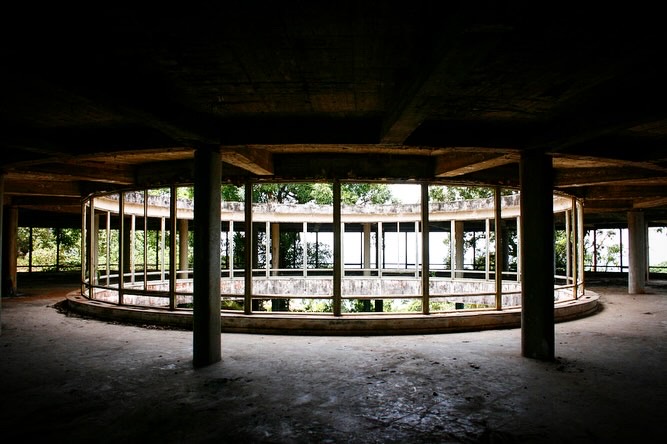
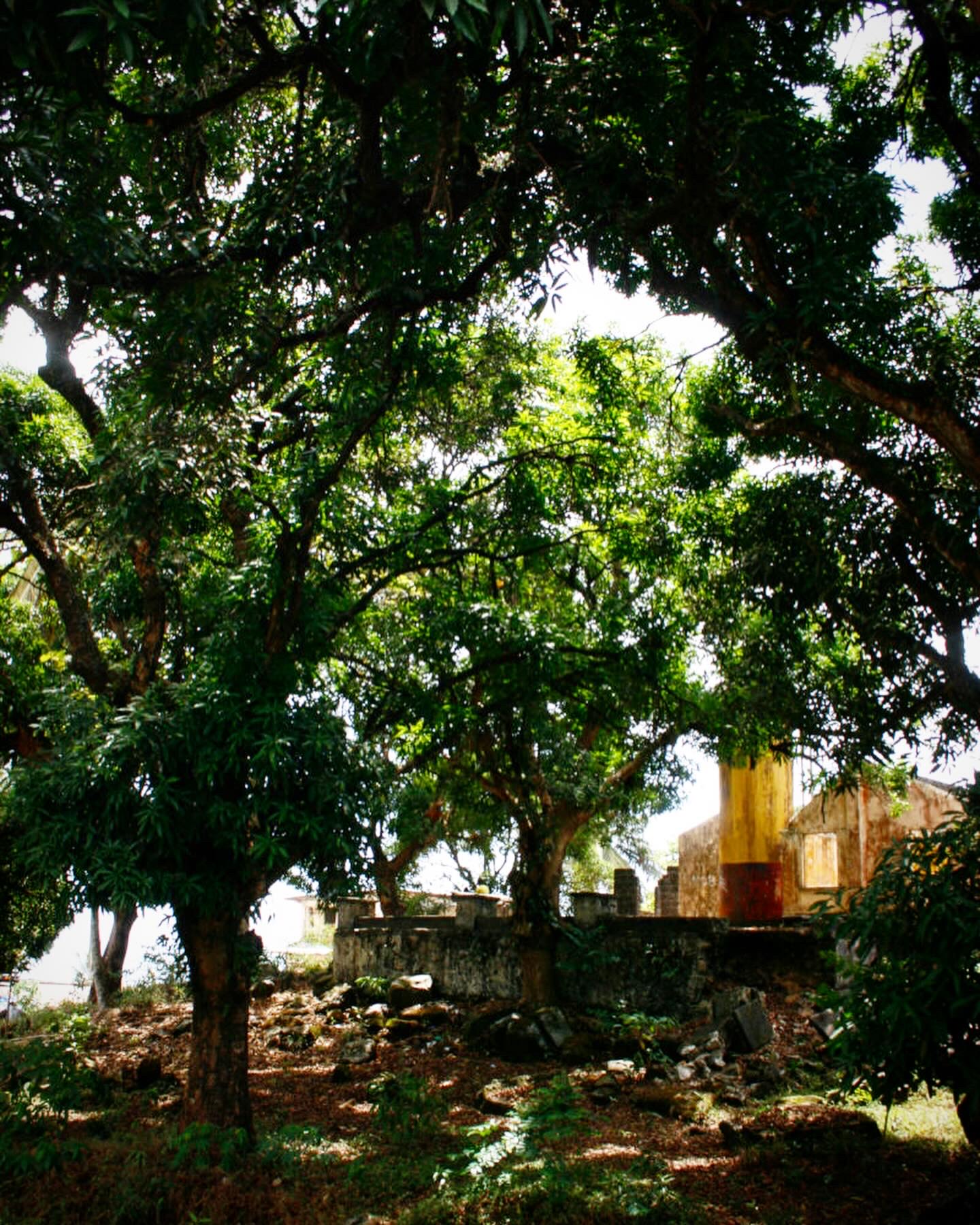
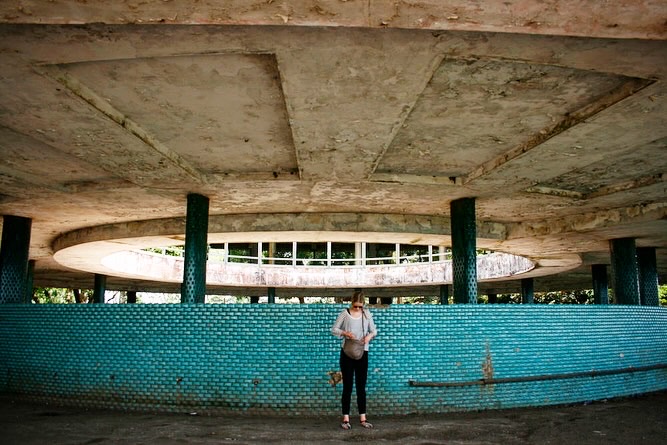
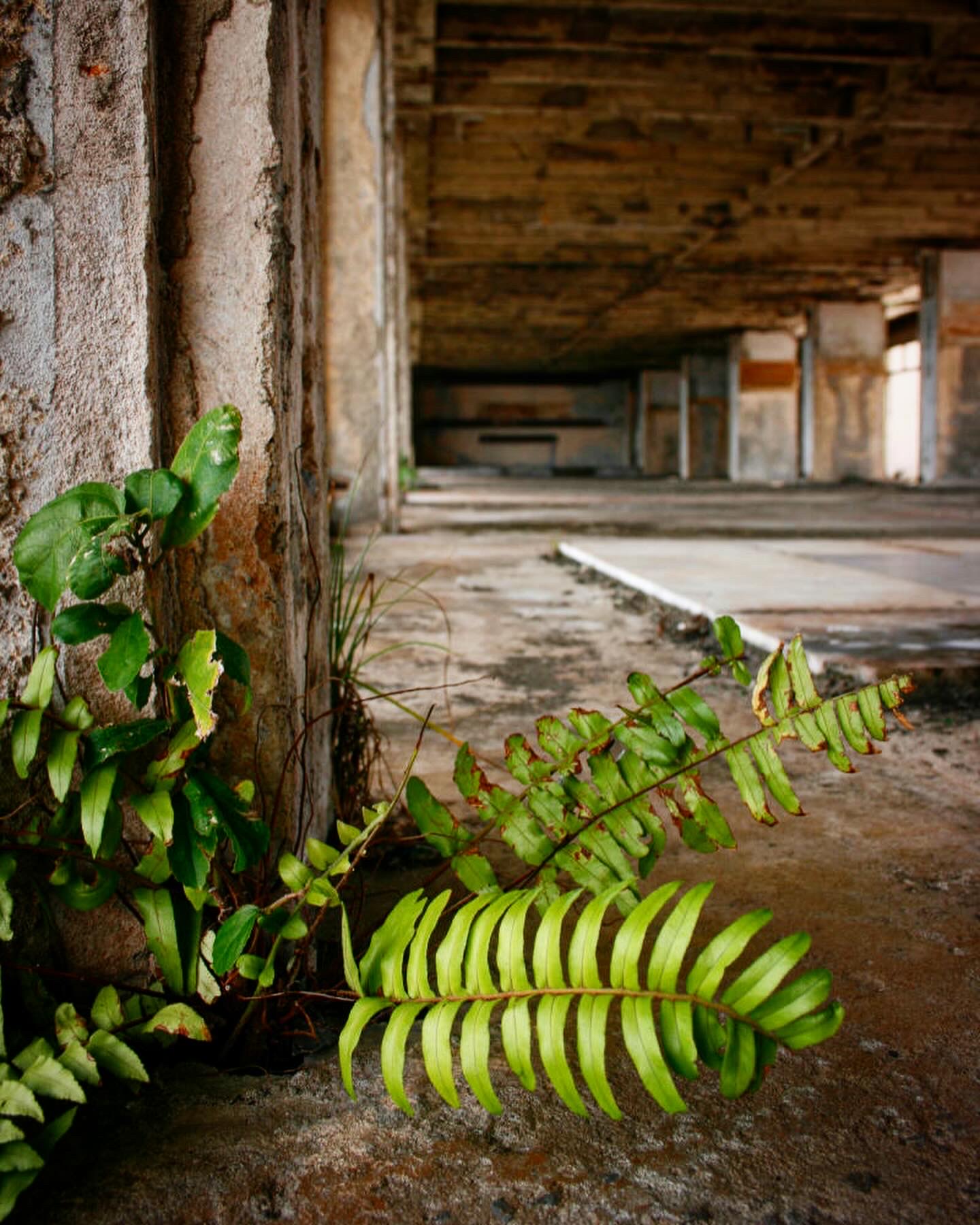
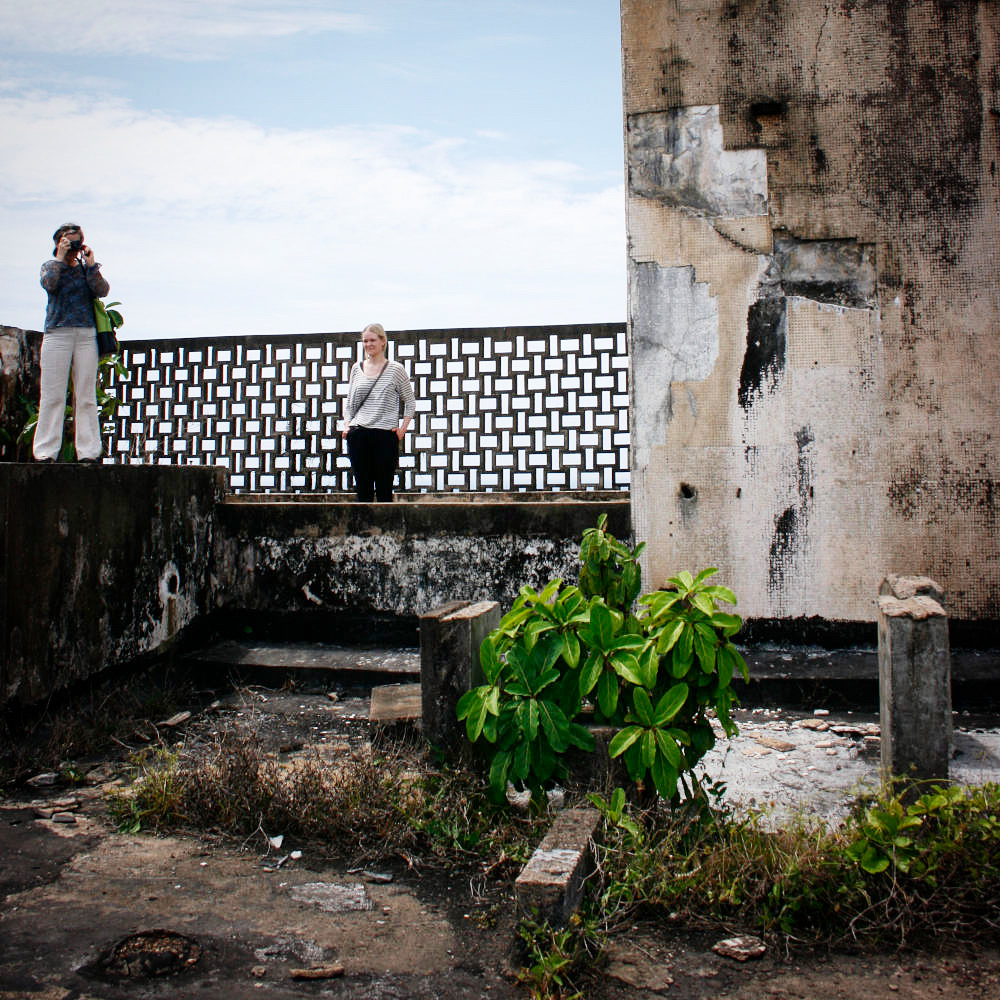
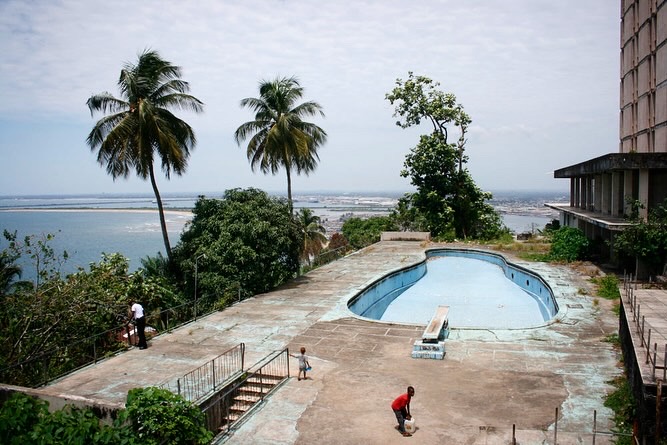
Ducor Palace Hotel in Monrovia. Not a botanic garden, but: A man-made structure where plants are slowly reclaiming their space. Another form of human-and-plant-life-intertwining.

I’ve been reading a book about Charles Taylor, the Liberian school teacher turned business student turned activist turned rebel leader turned president of Liberia and then finally turned convicted war criminal in the ICC. “Charles Taylor and Liberia” by Colin M. Waugh. It is a book about the complex person Charles Taylor, but also a book about the troubled modern history of Liberia.
In the last chapters, Waugh describes some of the war crimes that were conducted by the rebel groups during the civil war. It was common for them to recruit child soldiers, and Waugh tells this story of what happened when the child troops of the rebels clashed with the Nigerian peacekeeping force ECOMOG:
“Later, ECOMOG forces used loudspeakers to call to the advancing children, offering them toys, sweets or the longer-term inducement of the chance of a home and a school to go to, which in some cases proved effective in getting them to lay down their arms and defect.”
I was sitting on the subway when I read this, and it made me cry. I could see the children in front of me, desperately dropping their weapons with crushed childhood innocence in their eyes. I was reminded of my weeks in Liberia a month ago. I thought of all the children who gathered around me and wanted me to take their picture, of the boys at the beach in Robertsport who tried to teach me to surf, the young men who told me I was beautiful and asked me for my phone number.
Of course war is a terrible thing. But it should be something abstract for me, a theoretical horror that I can’t understand. Still, it always makes me feel so devastated, reading about it. I think it makes me think of my grandfather, alone in the dark, icy Finnish forest, fighting the Russians. Or my grandmother, running out in her nightgown, desperately holding on to her baby brother’s hand, looking for cover under the pine trees to hide from the bomber planes.
I don’t understand how a people ever can survive such a trial. I ache, and I cry, and I’ve never even been close.

One early morning in Liberia, I wrote this on my phone:
There is a smell, in the tropics in the morning. Right when the sun is about to rise, and the air is just perfectly warm. Before the heat and the bustle of the day has made the air dusty and sweaty. There is a touch of sulfur, I think, maybe from the highly weathered rich soil. It is made soft by the humidity, and fresh by the long starlit night.
I remember going to school in 1999 and 2000. I was living in Tanzania with my mom, and every morning at 06:45, I left home on foot, walking the short distance to school with Veronica, our maid. I was 11 and 12, and I woke up every morning to that smell.
Now I’m 25, waking up to the smell of the tropics in the morning again. Kind of like closing a circle.

It is odd, thinking that the last time I traveled, I climbed the hills of San Francisco and forced the heat in Phoenix. The contrast could not be more obvious, in the Liberian capital Monrovia. It is the city of the white expat 4WD monstrosities and the Liberians on motorcycles. There are many buildings that used to be beautiful, but it is clear that the funds to keep them up has not been around for a very long time. It is hot and intense, maybe not as big as many other African capitals, but enough to overwhelm a girl from sparsely populated Scandinavia.

One of the few sights that people recommend in Monrovia when you ask, is the old Ducor Palace Hotel. Or what used to be. It was the first hotel built in Liberia, in 1967, and one of the few five-star hotels in Africa for a long time. It had most things a classy hotel needs, like a pool, a French restaurant and an incredible view. However, it was closed due to the instability in the country in 1989, and during the civil war it was looted, sabotaged and filled with settlers that had nowhere else to go in the war-torn city. And now the disrepair is extensive.
A couple of years ago Gaddafi signed a contract with the Liberian government, with the plan to rebuild what had been destroyed – but then the Arab Spring came and now there’s only a couple of guards there, who, for a fee, can be persuaded to take you on a tour. A huge skeleton on the best piece of property in Monrovia. 300 rooms, molding.
The first thing you meet when entering the hotel is the bare bones of the lobby, with a large, round open space in the middle and views of the Atlantic. The lines of this place, the precision of the architecture – obvious even with all interior décor having been stripped. It’s not hard to imagine the once-upon-a-time-splendor of this place.
It was sad and tragic, but still, I couldn’t help feeling it was so incredibly intriguing too. There is an aesthetic with ruins, romantic, but also, in this case, knowing why: heart-breaking.

Hanna and I went on a road trip through Liberia with mom, to visit municipality buildings and other sites where Swedish development money had funded construction of infrastructure to enable local democracy.
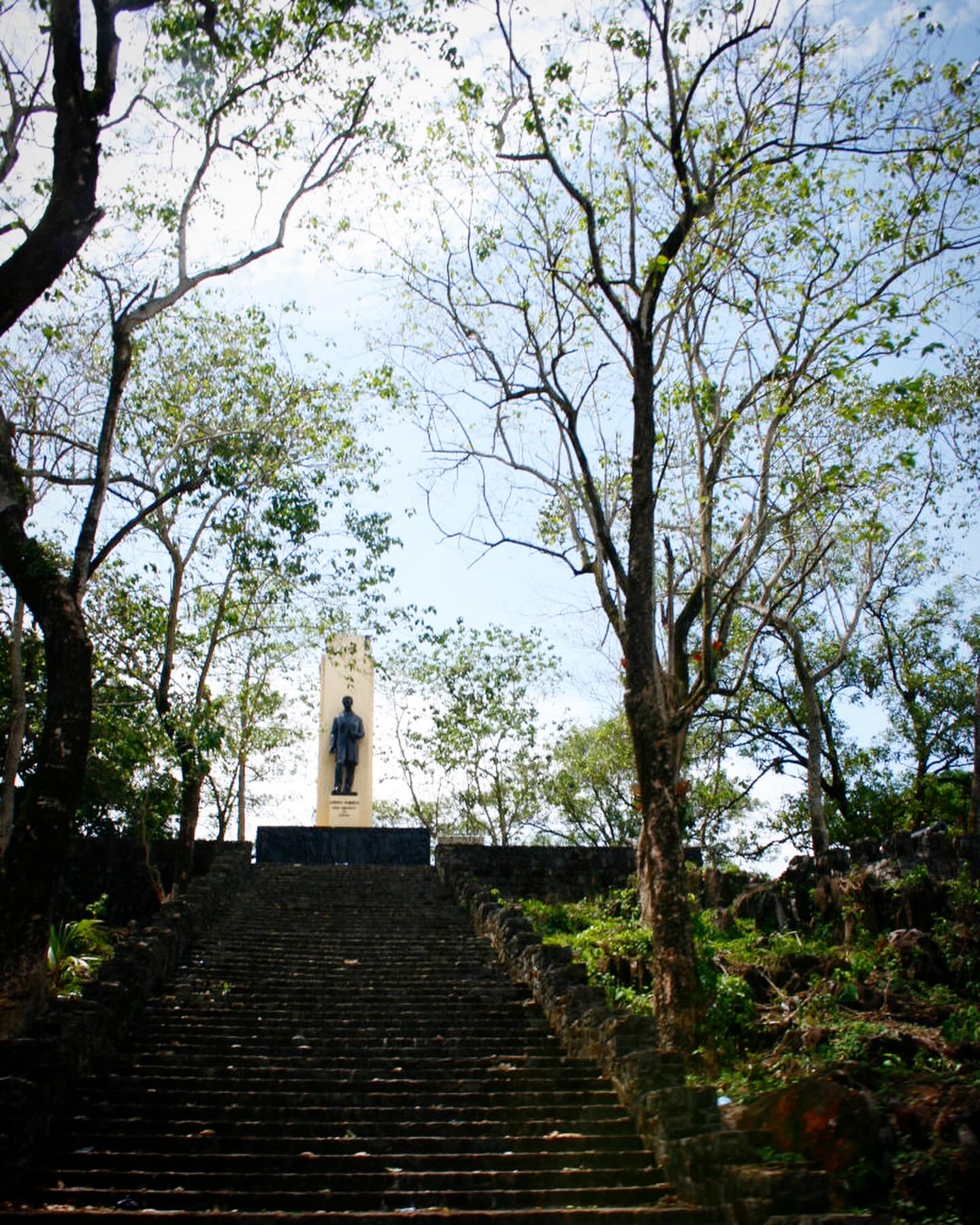
One afternoon in Harper, Hanna, Morris (the embassy driver) and I were looking at a monument of President Tubman’s mother, when we heard music coming from a newly built church nearby. It was choir practice, and I got the others to come in with me to listen.
The church was empty except for the choir standing in the front with the choir leader and a small electrical keyboard and a couple of chairs here and there in the big hall. But I think it was the emptiness that made the voices carry so well underneath the tin roofof the church. It was a simple hymn made up of chords for the different voices in the choir, with one voice changing notewhile the others stayed the same and then vice versa in a constant wave of changing harmonies. It wasn’t complicated, and in English too, so after hearing them singing it one time, I could easily follow them, singing under my breath. It was beautiful, though, in all its simplicity. So very different from both traditional European and contemporary American hymns that I’ve been singing in church choirs before.
The singers in the choir were young, teenagers mainly, and they had no sheet music, only the choir leader keeping pace. It made me miss singing. Like so many things, singing is an activity that I’ve felt I had to give up, at least temporarily, due to lack of time.
But maybe it wasn’t the actual melody, in the end, that felt exotic to me. I think it was the way they sang. A straightforward timbre, the strength of the voice derived from the stomach rather than “coming out of your eyes”, as the vocal coach my old choir used to say. It gave a less clear and disciplined feel, but instead felt so much more sincere. And the rhythm, not the same as but kind of related to the Swedish folk songs that are to be sung with emphasison the second and the fourth stroke.
I could have stayed there, listening to them for hours, while the lizards ran across the walls. But choir practice ended, and we were due to eat dinner with mom and the deputy minister.

The last night in Harper, we were offered to stay with the senator in his nearly finished house. Both mom, Hanna and the deputy minister had become sick from the mold at the guesthouse where we were staying, so we were more than happy to pack up our things and leave.
Later, way after sundown, the minister finally arrived, also to stay at the senator’s. We were already sitting in the big, empty entrance hall, and once the minister had settled in, the senator took out his bottles of palm wine. Finest quality. Because, in Liberia, as in most other countries in the world, traditional hospitality includes alcohol.
But Hanna was too tired, and mom doesn’t really drink, so I ended up having to defend both Swedish and Finnish pride as nations of drunks with these Liberian high shots. And I didn’t disappoint. Palm wine is a very strong, very easy thing to drink.
So, there was I, the former teetotaler, drinking shot after shot with a Liberian minister, senator and deputy minister, way after midnight, to the sound of the crickets and the generator, the night air barely even cool. Odd thing, indeed.

It’s been a while since my return now, but I just wanted to end with: Liberia really captured me. That there was something about the rainforest landscape and all the children. It is really beautiful.
A diamond in the rough.
(But then, again, I fall in love with most places I visit. During the last four years I’ve wanted to move to La Paz, Oxford, the Namib Desert, Vancouver, Vancouver Island, Seattle, San Francisco and now Liberia. My heart is in no way true to place.)
 Katja Malmborg