


Life, with the farm
Location: Fort Langley, British Columbia, Canada • • • Visit: March-April 2012
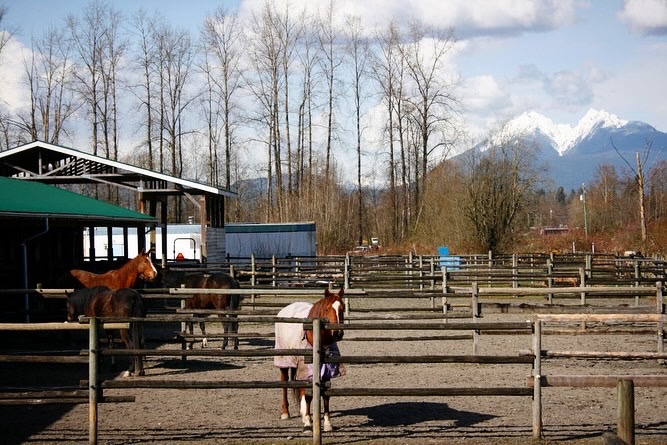
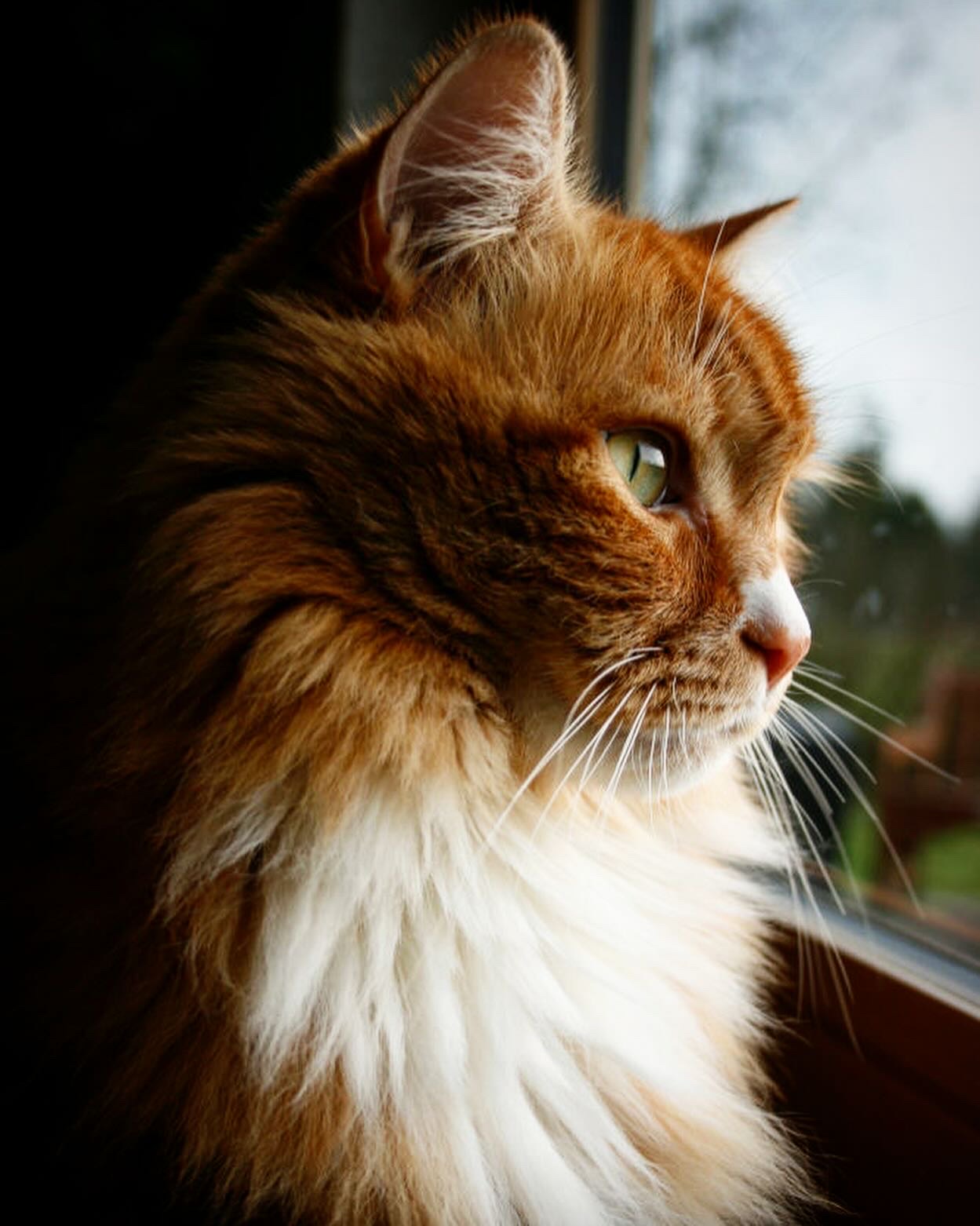
The first farm that I’m staying at during my journey along the west coast of North America is in the Fraser valley, close to Fort Langley, which is about an hour from Vancouver. It is called Time Out Farms, and its inhabitants are the hosts Diane and Willie, four dogs, four cats, twelve horses, three ponies and an everchanging number of wwoofers.
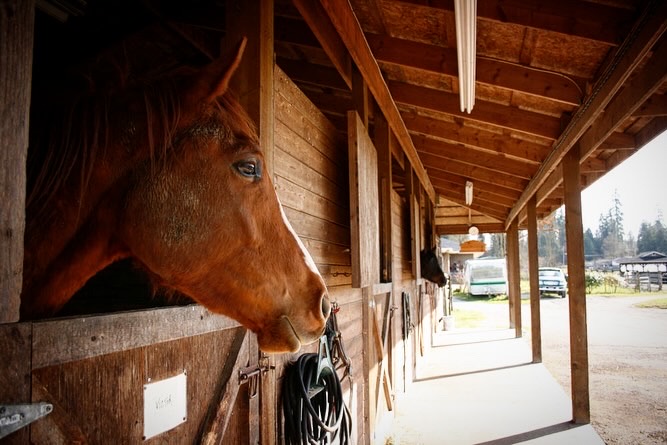
Eleven of the horses live in a row of outdoor boxes with doors that open to paddocks in the back and the remaining four in larger paddocks with sheds for shelter from the rain.
There are big meadows where the horses go in the summer, a lot of cars and tractors and sheds for Willies business and three trailers, two of which are occupied. The first impression might be that Time Out Farms isn’t a very big place, but once you start looking around, there are a lot of things to discover.
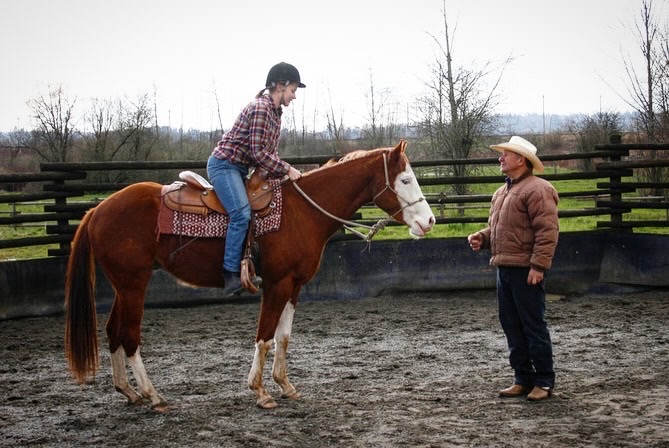
Two weeks into my stay at the farm, the horse trainer Jay hurt his back. That means that he can’t ride very much. So, when he comes to Time Out Farms, he has been using me as a substitute, combining training of the horses with teaching me how to ride his western-English-Natural Horsemanship mix. Some days, I ride four horses in a row.
After a day of stable work plus all that riding, I’m dead tired, but it’s totally worth it. It’s like I’ve found my way back home, to the joy of communicating and cooperating with a horse. That special feeling that I got with Ofelia, the pony I had as my own for a couple of years in my teens, the feeling that I later on lost, when riding all the different, lazy and tired and ill-ridden riding school horses. I didn’t feel comfortable having to force the horse to do as I wished, but there wasn’t really any other way, not with the horses at the riding school who were ridden by so many different people. They had to get used to all the contradicting signals from all the different (often not very good) riders, so in the end, most of them ended up being quite numb.
But with Jay, it’s all about simplicity and lightness. It’s about asking, not forcing. And it’s about understanding the horse, how it thinks, and working with it, not against. And, as if there wasn’t an end for how good things could be, Jay’s also a great teacher and an amazing person even without all the knowledge of horses.
Oh, I could stay here forever, just to learn everything that Jay has to teach.

But Jay doesn’t really do western, nor English. He looks like a proper cowboy, with the hat and the boots with long spurs and the sunburned face, but what he trains and teaches isn’t what any ordinary cowboy would teach.
Jay says that cowboys know animals, but don’t really care about riding well, and they can be really rough on their horses while riding. Other western riders are generally much lighter on their horses, but still have the same lack of theoretical knowledge as the cowboys. The English-style-riders, on the other hand, can be really good and know everything about technique and movement, but they don’t know shit about how horses think. What Jay does is combine the two styles and also add his own knowledge and experience from a lifetime of working with horses.
What he teaches might seem simple at first. The main idea is to work on the horses’ terms, to cooperate instead of using force. It’s about being light and to train in a way that you never have to be rough. And this is all possible, because horses are sensitive creatures and extremely aware of everything that happens around them. They notice everything, and if you train the horse to react to a word or a light touch in a specific way, they’ll eventually learn it. The practice of pulling the reins hard and squeezing the sides of the horse that is common in English-style-riding is desensitizing and sometimes even harmful – but most of all unnecessary. The horse can respond almost to a mere thought, if you train it right.
The training of any horse should be based on two evolutionary facts: that horses are flock animals, and that horses are pray animals, while humans are predators. As flock animals, they respond to leaders. In the wild, that would be a combination of a strong stallion and a dominant mare. In captivity, with people, the leadership issue tends to be much more confusing and sometimes even lead to dangerous conflicts. Any person working with horses should establish herself as the leader of the flock, but that is not just getting the horse to do the things you wish by force. The true leader has the respect of the horse and has been able to prove to the flock that she is strong and brave and trustworthy.
As prey animals, horses are very perceptive and aware of everything around them. Humans, on the other hand, are predators, which has given us an amazing capability to focus on one thing. While horses are always ready to flee, humans are always ready to attack. So, the training of any horse should be aimed at teaching the horse to focus, while the trainer or rider must teach itself to be more perceptive and aware. And most importantly, not working with one thing for too long. Jay calls it thinking with “horse logic”, not “people logic”.
This is what Jay teaches, how to become the leader of your horse and how to think with horse logic. And once you are the leader and have the respect of your horse, to train it to respond to lightness will be no problem at all. The horse will WANT to do as you ask. That’s how evolution has made them – following a good and strong leader, or perish. As long as the horse understands what you ask of it, it will do as you wish. It might take some time to get the horse to understand, but patience and calmness is essential to any kind of horse training.
The tricky thing is that the simplicity of the theory becomes challenging in practice. It’s all about reading the horse, and responding in a way that is both logical for the horse (but not necessarily for humans) AND that establishes you as a strong leader. But the signs from the horse are sometimes so small, and the timing is of such essence, that the whole thing eventually feels impossible. It needs practice and practice and a horse that is willing, and even then, it takes more time to teach the horse exactly what you want.
But Jay, he has it all at the tips of his fingers. Without seemingly moving at all, or only a step here or there, he can get a horse to run or stop, come to him, walk away from him or follow him. It’s amazing to see. I’ve spent hours just watching the horses melt like butter in his hands.

So, following Jay’s training programme, the first thing you have to do, is to establish yourself as a strong leader. To accomplish that, Jay has several exercises that you do from the ground, in a round pen (a circular riding paddock with a high fence around, maybe fifteen meters in diameter). Doing these exercises and, later on, when you start riding, you should strive for Jay’s three basic principles: cause movement, yield to pressure and follow a feel.
Causing movement is easy to understand, because that is what you see in the paddocks all day, horses chasing each other around, biting and kicking. What they are doing is pushing each other’s boundaries, trying to see who will fold first. The strong horse that can cause another horse to move, has the higher status. Eventually, no biting or kicking will be necessary, the low-status horse will move out of the way as soon as the high-status horse approaches, if the approach is made in a ‘move out of my way’ kind of way.
That is what a person working with horses should also try to accomplish. The horse should not be able to get you to move by taking a step closer to you – instead, the horse should move out of your way. If the horse comes into your space uninvited, he has to be sent away, for example with the end of a rope swung in a way that resembles the end of a swinging horse tail. In the round pen, you practice this by getting the horse to run around you, and in a saddle the whole point is to get the horse moving. It is horse logic. Horses are all movement, and to the horse, the individual that can make it move has the power.
To get the horse to yield to pressure becomes necessary when you want to start riding. That is what riders do, putting pressure on the sides of the horse to get it to move forward, putting pressure in the mouth to get it to stop or turn. What Jay wants is for the horse to listen to a pressure that is as light as possible. This you also start practicing from the ground in the round pen, getting the horse to move around you in a small circle, with you in the middle holding the halter rope, getting it to turn and change directions by only lifting your hand. And the trick is not to start using force. We don’t want to punish the horse if it doesn’t understand. Instead, we use the same amount of light pressure, but persistently, until the horse yields. Some horses are stubborn. What the horse trainer needs to be is even more stubborn.
The same principle applies when we ride. The rider should ask persistently, and be consistent and forgiving, not forceful and punishing. Eventually, most horses will cooperate. I’ve seen Jay do it, many times.
And all this seems easy, quite logical, once you get into that way of thinking. The difficult thing is the last principle, to follow a feel. That should be present from the very start. Because all of the exercises and all the work you do with horses has to be on the horse’s terms. You have to be able to read the horse and know when to be hard on it, when to just wait for it a little bit longer and when to be forgiving. Horses are instantaneous and you don’t get second chances. So, you have to develop this feel, practice your timing to perfection. And that requires more than a lifetime.
It’s hard work, this training programme of Jay’s. It requires much more from the trainer than from the horse. I will probably never have the time and opportunity to learn it properly. But watching Jay do it is amazing.

But in the end, I still want to become a geographer. Work as a geographer. So, in a way, one could ask what the point with all this horse stuff is. More than just for the fun of it. I won’t need to know about the hierarchy in a horse flock when I get samples from groundwater wells, or whatever it is I’ll be doing to earn my living. My curriculum vitae won’t look more attractive if I add the ability “kinda knows how to get a horse to trust me” on it. It could seem as if I’ve walked into a dead end here.
The fun is obviously the main reason for me being here and that’s what I’ll be taking with me when I leave. The memories of all the horses and the great connection Jay helped me to get with some of them. Especially Portia. But I also think that one could look at Jay’s training programme in a broader sense too, insights that are relevant even also for the academic geographer.
It’s about humankind’s relationship to nature. Firstly, the whole concept of a nature outside and independent of humans is neither constructive in a practical sense, nor true. Nature is in a constant state of change and, at the moment, humans happen to be part of that change. Nature has no opinions and doesn’t value one state of things above any other. Nature is. It’s us humans that value, we who are in BIG trouble if the change spirals out of control. Being an environmentalist is purely out of self-interest.
But that doesn’t mean that we, as conscious beings, can do just as we like. This tradition of seeing nature as one entity, separate from humans, has led us to use all other organisms on our planet for our own gain. Humans have a long history of taking what we want, without considering the consequences. To not destroy ourselves, we have to consider other organisms in our surroundings, and act according to their needs while trying to achieve our own goals. In that way, everyone wins.
And that’s exactly what Jay is doing. He has taken one tiny part of the non-human world, the horses, and taught himself how to train them on their terms. The goal with the training programme is still very human, the horses are trained for riding, but it is done in a way that the horses can understand. While training with the horse logic that Jay keeps talking about, the horses actually enjoy being ridden. Because, what they want is to trust and please a strong leader. And if the rider can convince the horse that she is a strong leader, the riding becomes a pleasure for both parties.
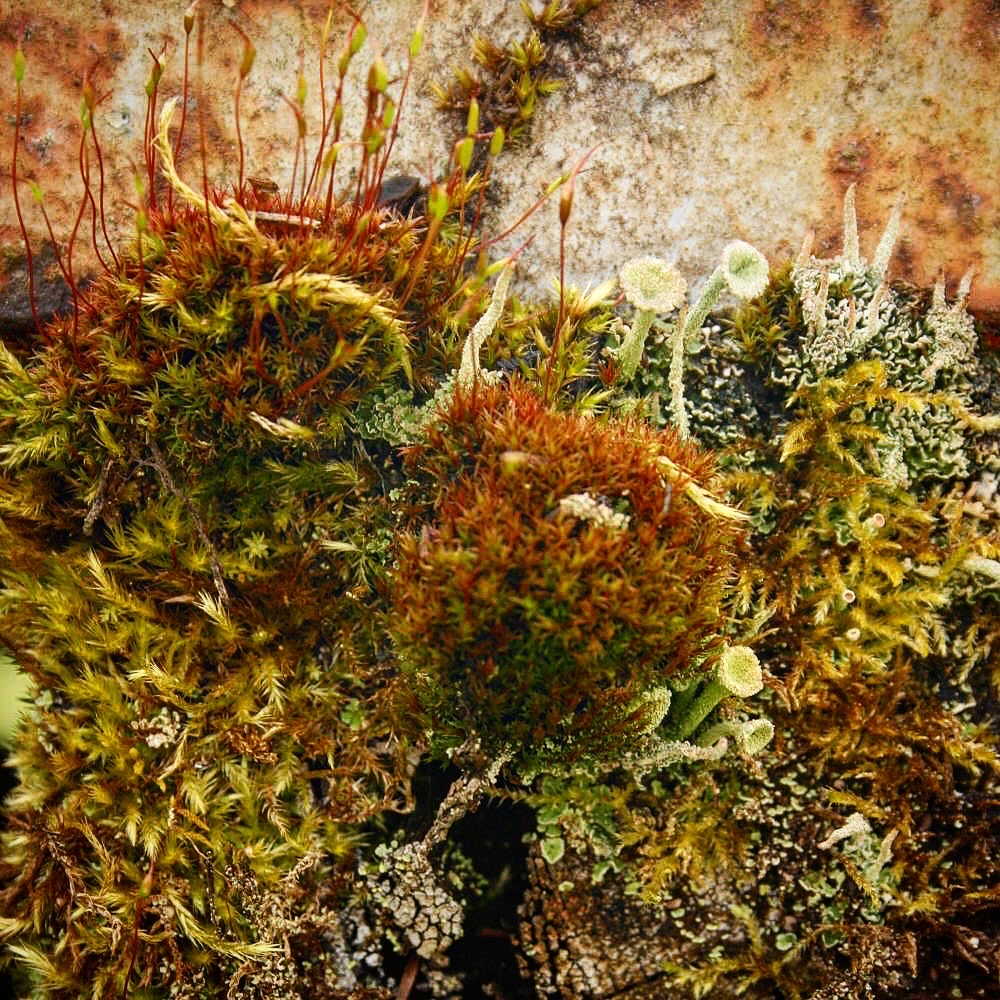
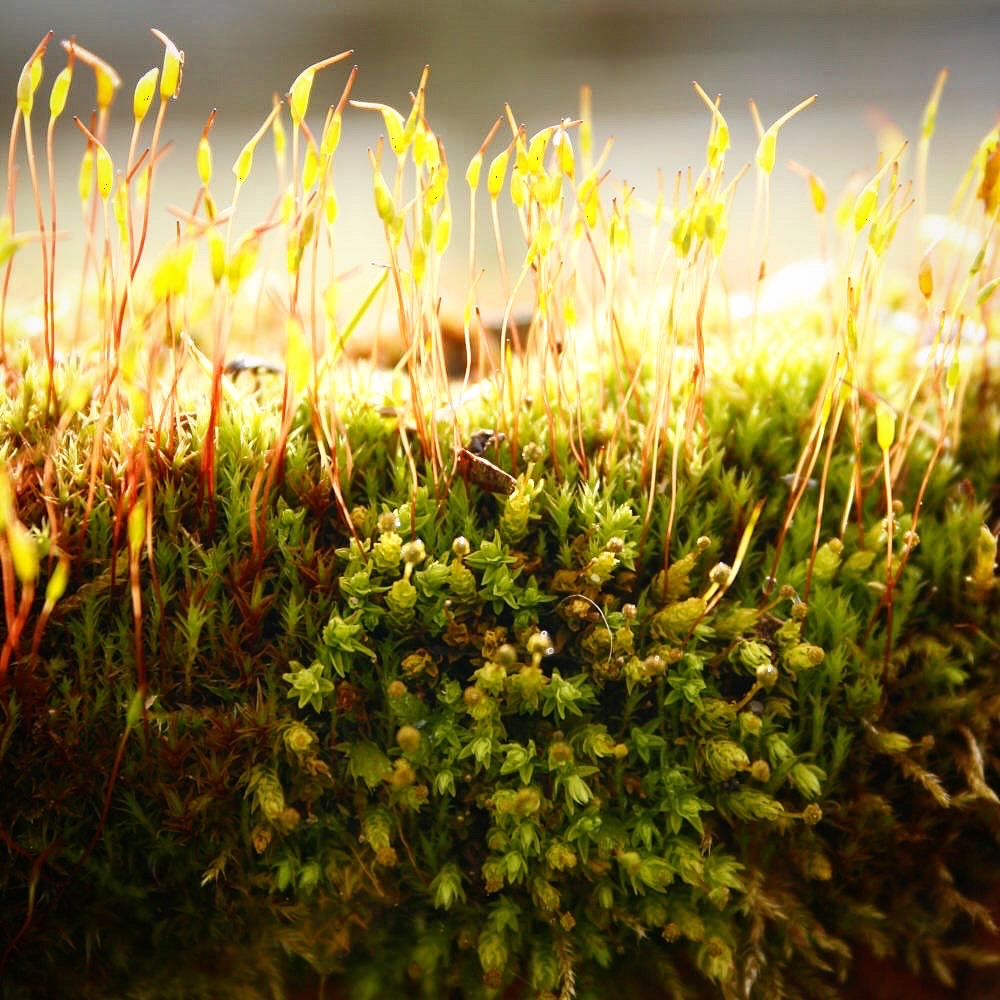
In my opinion, that is what we should do with most things in the world. First realize that we are a part of the whole. And then try to find ways that works for all parties involved. Mosses as well as frogs as well as humans. It might be much more complicated, doing things in this way. But we humans pride ourselves for being intelligent. For once, we should use that intelligence for something good.
So, in that sense, my training with Jay might also have been useful for my future career as a geographer.
 Katja Malmborg