Life, with the beach and the palm trees
Location: Elmina, Ghana • • • Visit: December 2014
I said goodbye to Elli and Helena, both of whom were going back to Stockholm, and caught a plane from Ouagadougou to Accra in Ghana. There, I met up with my mother.
She was working in Liberia, and originally the plan had been for me to go there to celebrate Christmas with her. But then, Ebola came. She was not allowed to move beyond her apartment and the Swedish embassy offices, and it would not be safe for me to go. So, we decided to meet up in Ghana and spend Christmas on a beach instead.
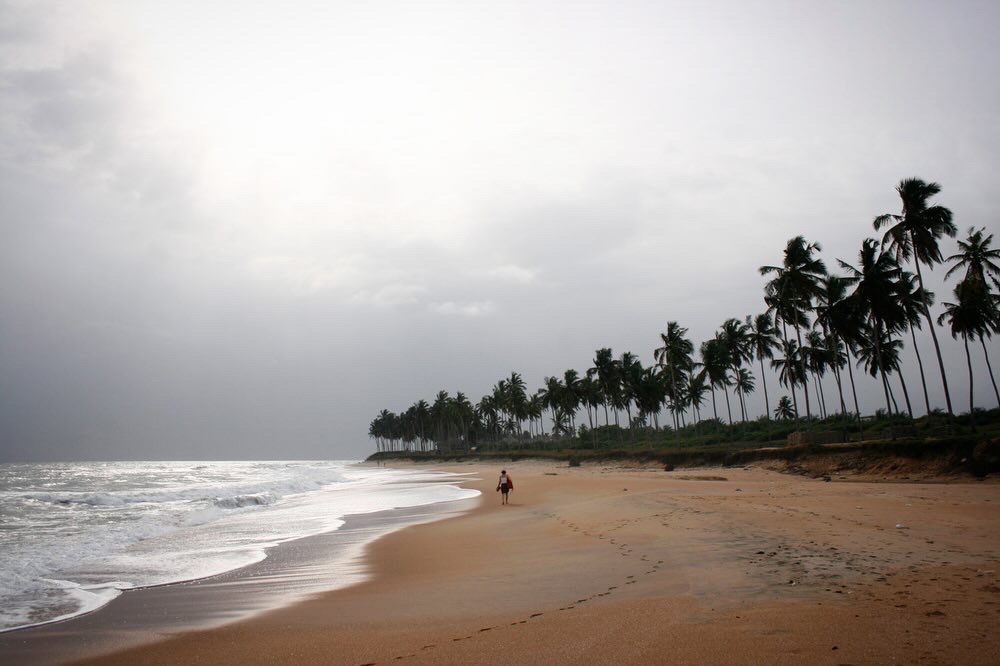
After some sightseeing in Accra and Kumasi, we arrived in Elmina, a small town by the ocean. The sun had just gone down when we got to the lodge Stumble Inn, but from the little that I saw before complete darkness, everything here seemed lovely. The first thing that I did, after dropping off our bags in the hut, was to take off my shoes and walk down to the beach. I stood in the surf with sand between my toes, letting the waves wash over my feet, with the darkness descending around me. A white-and-brown dog from the lodge came and sat down beside me, and for him and for the waves I sang a couple of Christmas carols.
Dinner was a sturdy stew.
Here, I’m pretty sure I’ll be able to relax.

I was walking on the beach, listening to En varg söker sin pod, a podcast by Liv Strömqvist and Caroline Ringskog Ferrada-Noli. Liv is an author and artist, and Carolin is an author and filmmaker, they’re both feminists and very good friends. I really enjoy listening to them talk about art and literature and current events and being alive.
Anyway, back to the beach. I was walking in the wet sand, the waves occasionally washing up my legs, listening to Liv and Caroline talk about a book, and how eccentric women are considered crazy, and the psychology of rejection.
It got me thinking. And the thoughts felt important. Like I should write them down. But I was walking on the beach and that was nice too.
And so, I continued walking, with the thoughts developing in my head. It scared me a little, that I would have these insights, and that I would forget them. Not learn anything from the smart things that I hear. I often feel like I’m having big thoughts, inspired, while listening to my favorite podcasts. But I rarely have time to write them down.
I was walking on the beach, the thoughts flowing through me like water. Or, rather, like waves crashing onto the beach. Every new one feeling like the big, overwhelming – but then it collapsed into the sand and melted into the next wave, helping to build up a new surf. And so, every wave comes and is forgotten.
And my thoughts. I guess it doesn’t really matter. There was sand between my toes. And we learn. It just doesn’t have the be conscious all the time.

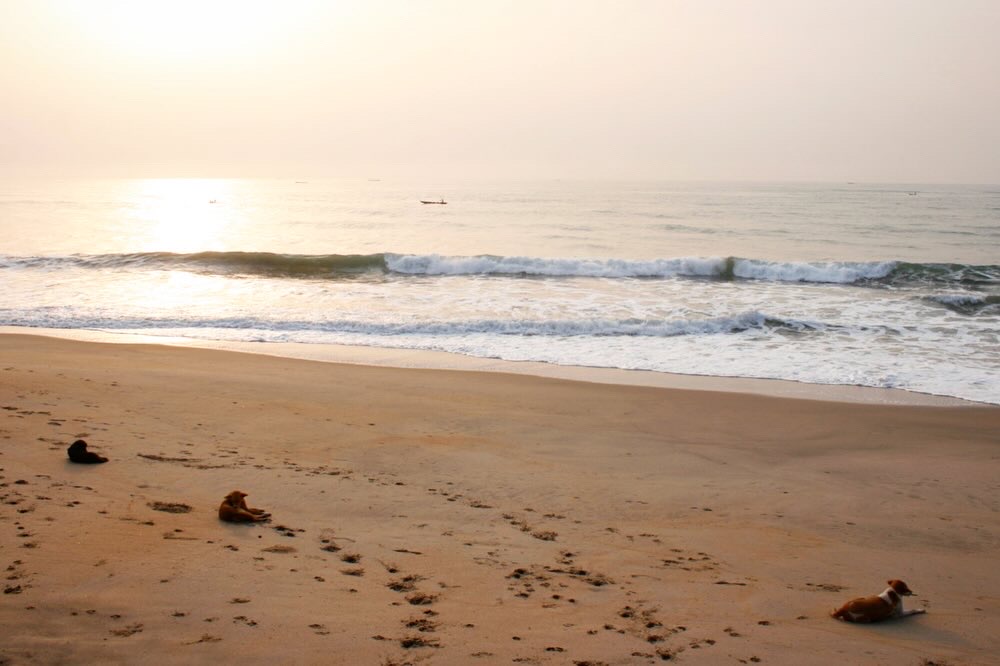
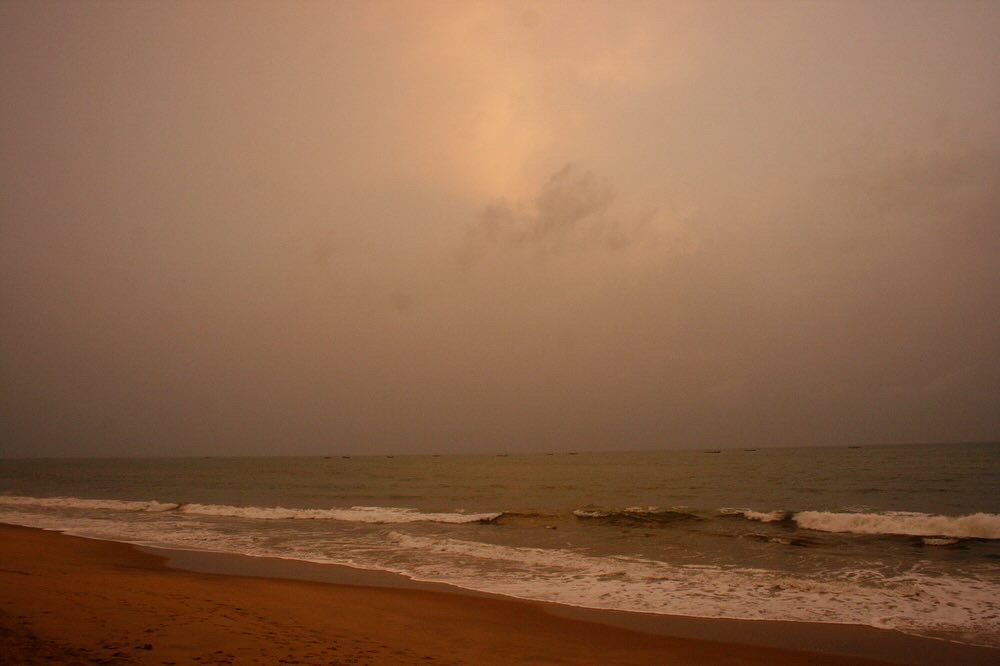
The fishermen are returning from the sea. There is a strange kind of brown tint to the light. Dusk, and a shapeless cover of clouds. The four dogs are sleeping on the sand underneath the palm trees. The bartender made me a very strong Cuba Libre.
That brings back another set of memories, from Bolivia again. Biking down La via de la Muerte, Death Road, formerly the stretch of road with the highest number of deaths per year in the world, now a tourist attraction. An adventurous day trip from La Paz. You start at a mountain pass at 4600 meters above sea level, and then the winding road takes you down to 1200 meters above sea level, from snow covered mountain tops and harsh Andean rocky mountainsides down to subtropical rainforest with huge turquoise butterflies fluttering between the big red and orange flowers.
I biked it with Natalia, Cecilia, Jonna and Alice in three hours, the speed such a rush – and the Cuba Libre that they served at the bar at the bottom went straight to our heads. The laughter just wouldn’t stop bubbling out of us. That, and the following couple of days in beautiful Coroico, bathing in waterfalls and going on impromptu butterfly safaris by the river in the bottom of the valley, and the delicious strawberry milkshakes that the woman on the street corner at the bottom of the hill made, and, oh, the incredible breakfast buffet at the hotel, was probably the best part of my half year in Bolivia and Peru.
So, my Cuba Libre now: Only fond memories.
This truly is an ecolodge. There isn’t even electricity. Only solar-powered torches for when the sun has gone down. There is a solar-powered battery-charging station, but it short-circuited when I tried to charge my computer. It can only handle phones.
It’s quite fine, really. I have a good book, and plenty of yarn still. A bag of unpeeled groundnuts that I brought with me from Burkina. And I don’t know how many hours of podcasts on my phone. Everything I write from here on will be by hand.

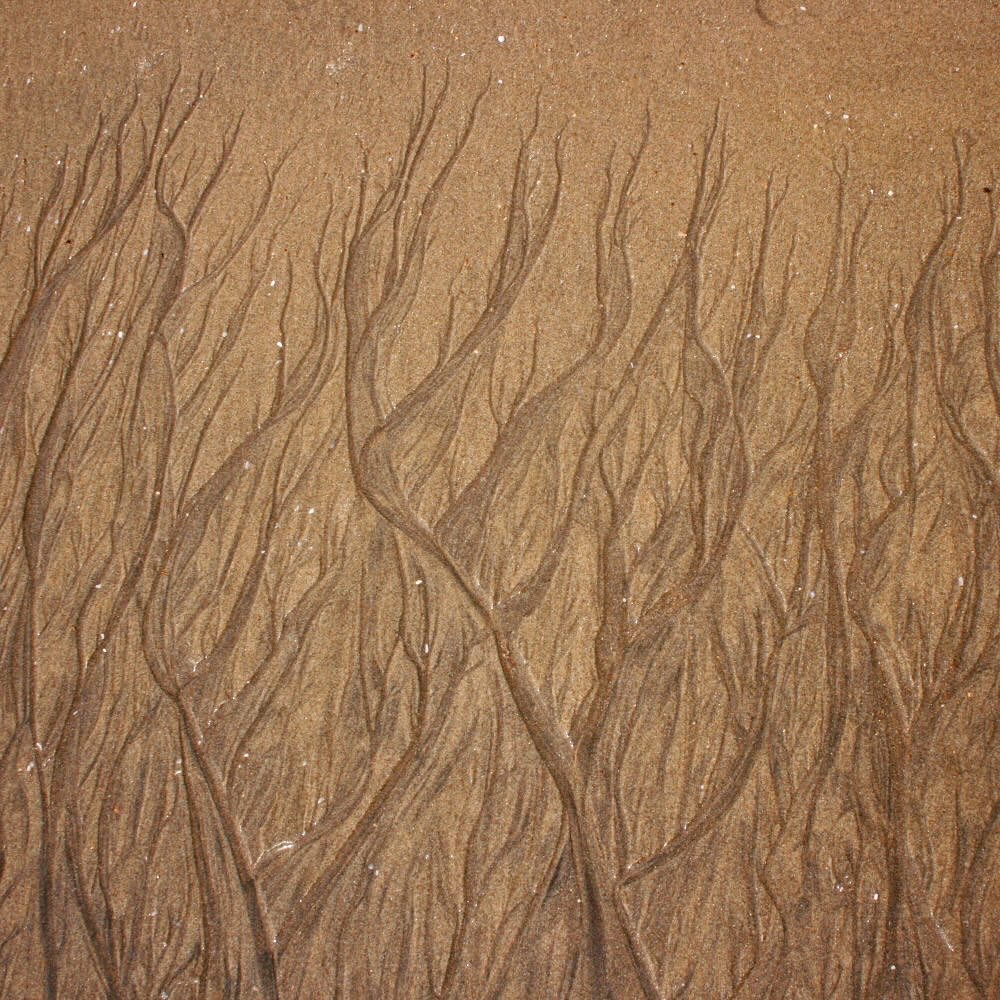
And I’m starting to get used to not doing anything at all.
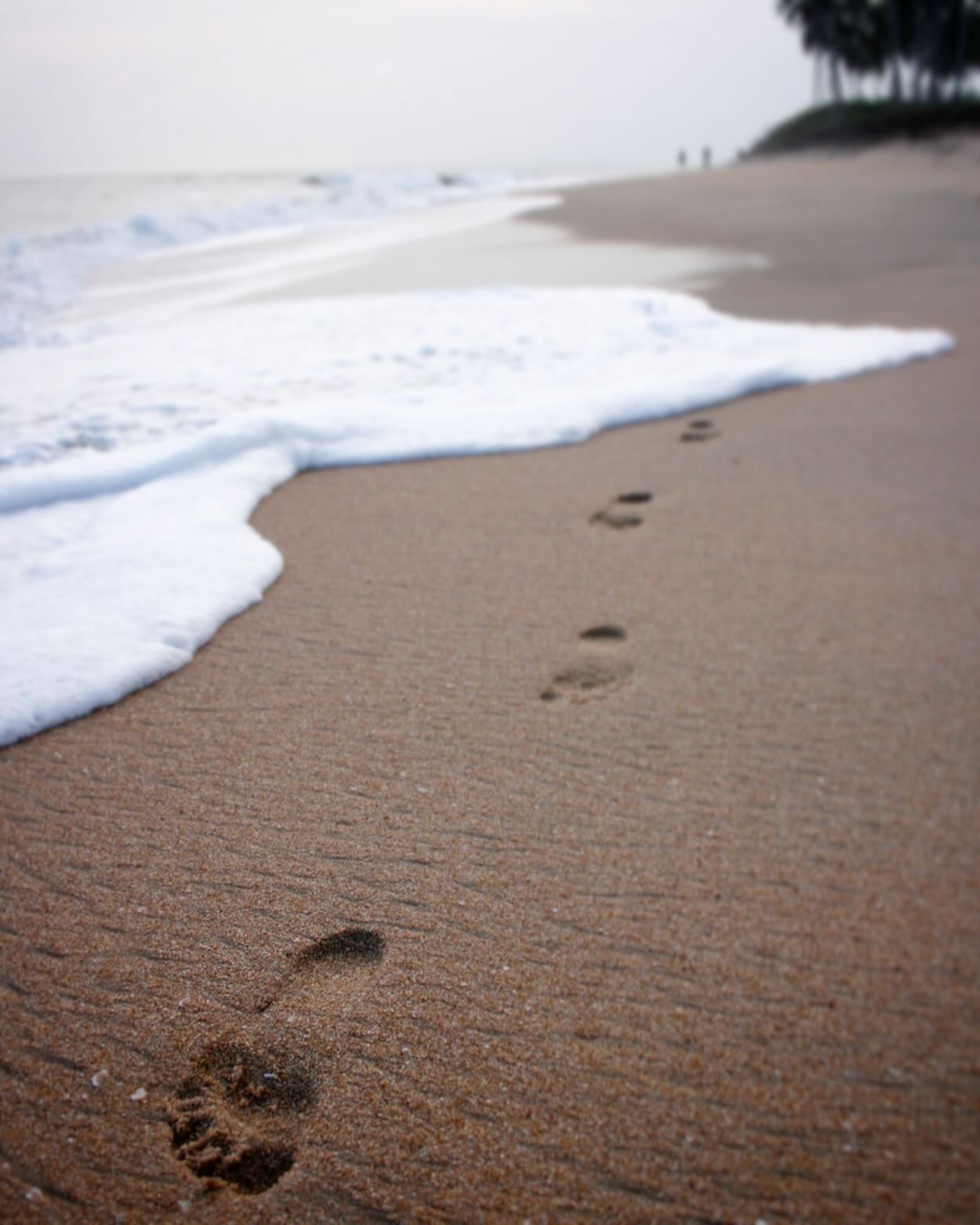
Like photographing patterns in the sand.

I woke up at 6.30, read for a while before breakfast. And then the day just passes, without anything happening – and I feel like something is healing in me.
I really don’t want to check my e-mails. I don’t even miss my computer.

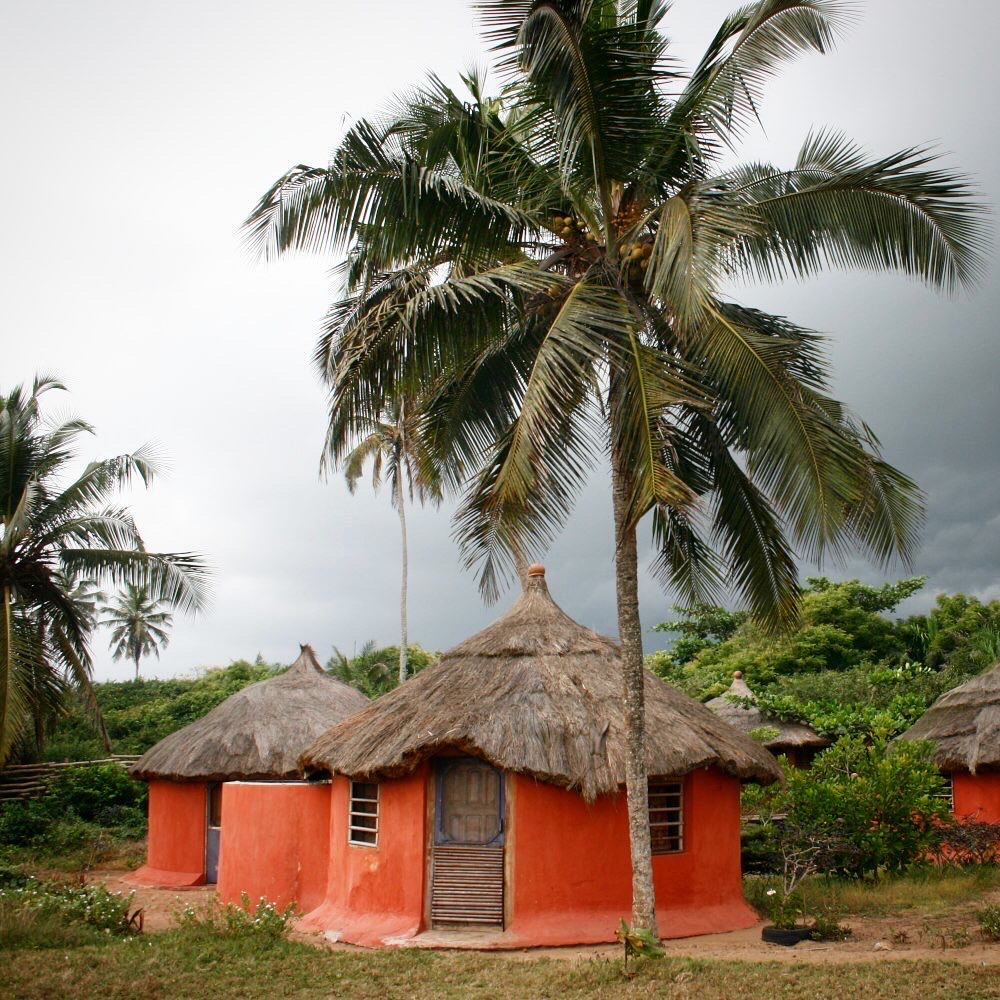
The ecolodge, Stumble Inn outside Elmina, is a really cozy place. It is rustic, with only solar-powered lamps and no other electricity, and the simplicity calms. The food in the bar is cheap and good, mostly vegetarian or seafood. There are four dogs and a couple of cats.
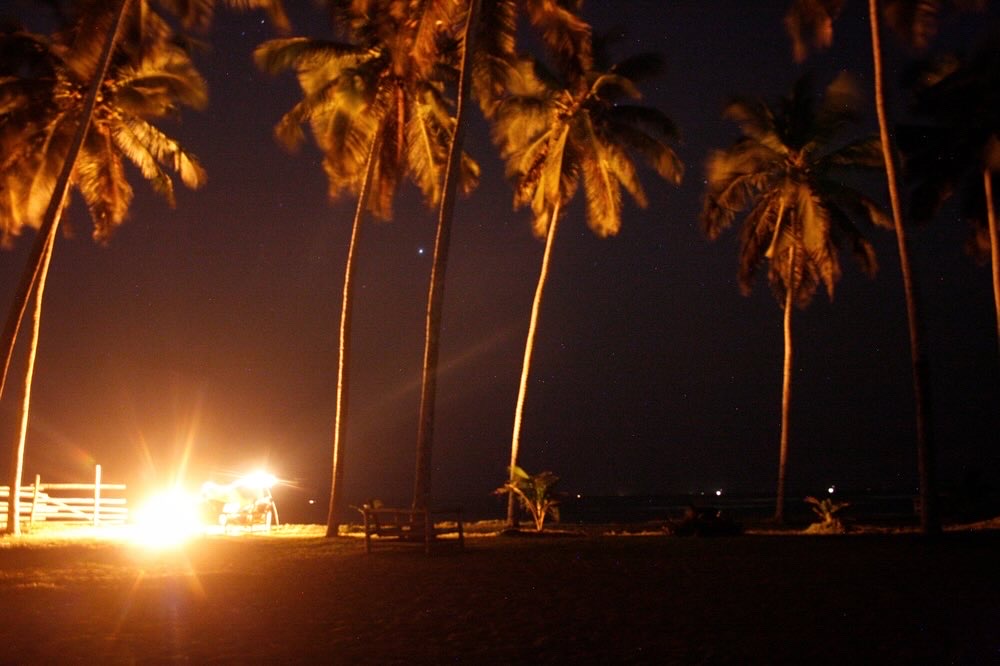
The clay hut where we’re sleeping has an open-air bathroom with a shower and a dry-toilet. Our hut door is only twenty meters from the beach, and every evening the staff lights a bonfire under the palm trees. The hut has only mosquito nets in the windows, and at night the sea breeze softly blows through the hut like a natural fan. Without the electricity, there isn’t much to do in the evenings, so we go to sleep early, to the sound of the waves.

The day before Christmas, mom wanted to send some Christmas greetings to friends and family, so we walked to the luxury resort further up the beach, for lunch, electricity and some wireless internet.
Later, walking back to Stumble Inn along the beach, every new wave seemed to reach higher up than the last. It was high tide.
And I was thinking about something that I wrote in an e-mail just a moment ago. That I can’t seem to get the pieces of my personality to fit together right now.
It was something I wrote without thinking. I do that sometimes. Get instant infatuations with wordings, without really knowing what I mean with them. But maybe now, here, I had managed to accidentally hit my head on the nail. Temporary personality incompatibilities.
My mother, who is a very wise, albeit quite chaotic, person, says that life is a never-ending succession of cycles. We go through crises, lurches of development, stabilization and stagnation. Like the adaptive cycle of resilience scientists, only on the very personal, psychological level. In that way of thinking, the idea that the pieces of my personality don’t fit at present isn’t such a far-fetched concept. It just means that I’m between the crisis and development phase. Things are as they should be, and I just need to ride it out.
It’s just. This has been going on for years. This being lost in one part of life – then thinking I’ve figured something out, just to have another part freak out or turn upside down and I’ve lost it again. The epiphanies keep on coming, but they’re washed away just as fast.
Like my footprints here on the beach, being washed away by the ruthless, high-tide Atlantic. I think I know who I am, for a moment, and then it’s gone.
Today, that feels OK. The tropical beach might not be an inspiring landscape for me, and I’m not having any epiphanies – but that also creates calm. Walking barefoot on the sand, having the warm ocean occasionally wash over my feet, while the sun is turning into an orange behind the palm trees, puts me in a kind of stability. Temporary, for sure, but rest nonetheless.
My personalities might not fit, but what does the Atlantic care about that that? The tide will come and go and the only thing I can do is to see it happen. Wash away my footprints as if they never were. And that’s fine. Beautiful even.
Beautiful even.

The last morning.
I woke up early, before breakfast, and couldn’t fall back asleep. I don’t know if I’ve ever wanted to go home more than now.
I went down to the beach to watch the waves and write in my journal. The fishermen were returning from the sea. The calm ocean and the mild-colored sky melded together in a soft mist. And the sun, rising, like a copper coin in the sky.
I had my last fruit pancake for breakfast. Papaya and pineapple.

We took the bus to Accra, spent our evening doing some last-minute shopping, and then caught our respective planes the next morning: Mom on the UN plane back to Monrovia, and me going via Addis Ababa back to Stockholm.
I arrived in a Stockholm under a light cover of snow, clear skies, and minus twelve degrees. When I left Accra, it had been thirty-five. An almost fifty-degree difference in temperature doesn’t even physically make sense, not for the body. I was in limbo, and it will probably take several days for me to get used to all the new sensations.
Dad met me at the airport and followed me all the way home. Finally, knowing where I was and not having to take all the responsibility by myself.
Coming home, though, was kind of anti-climactic. There was so much that I needed to do: unpack, laundry, grocery shopping, getting my winter clothes from the attic, answer e-mails, pay bills, wash myself, eat.
But then, finally, I could change into my pajamas and crawl into my bed, between my sheets, with my pillows and my smells. Quite unbeatable, that feeling.
And that, dear reader, is a nice finish to my trip. The notebook is full, I’m writing these words on the last page. Now, I’ll have some days of rest. And then: the next step in this process of producing a master’s thesis.
 Katja Malmborg