Day 24-25: Street art of Sarajevo

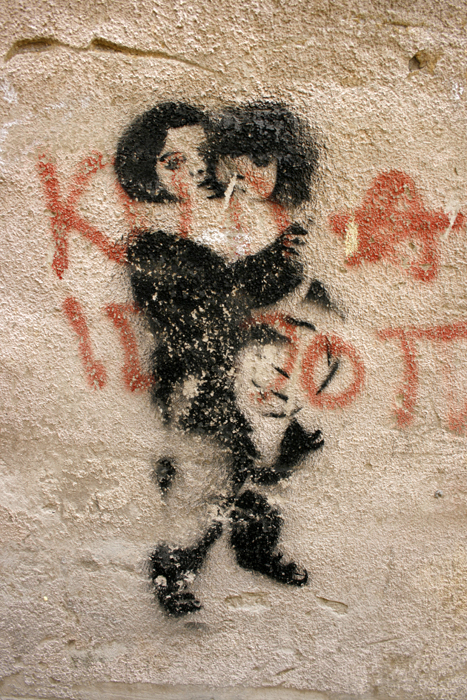
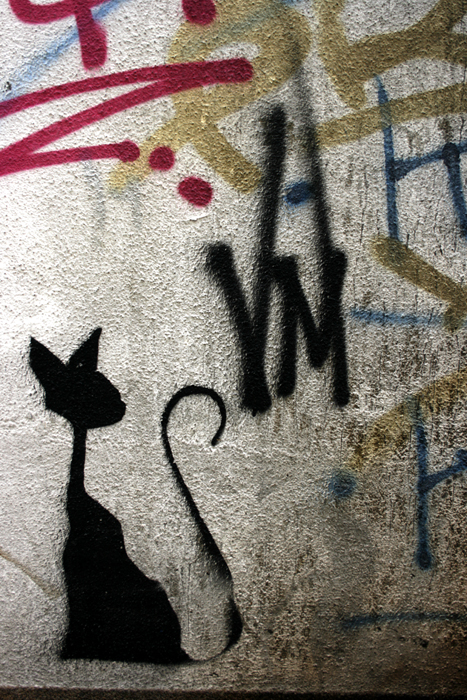
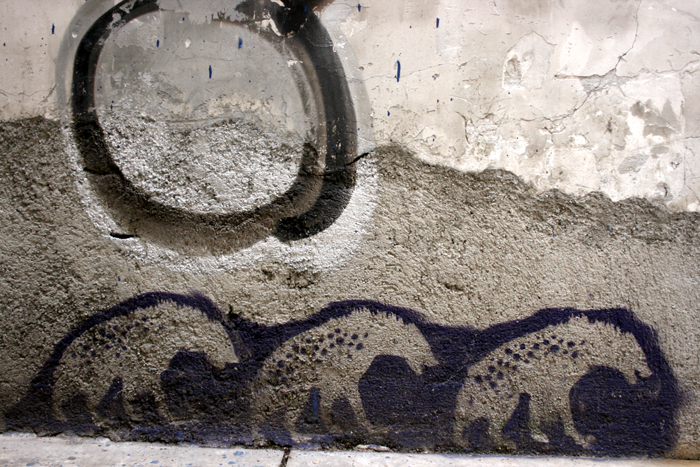
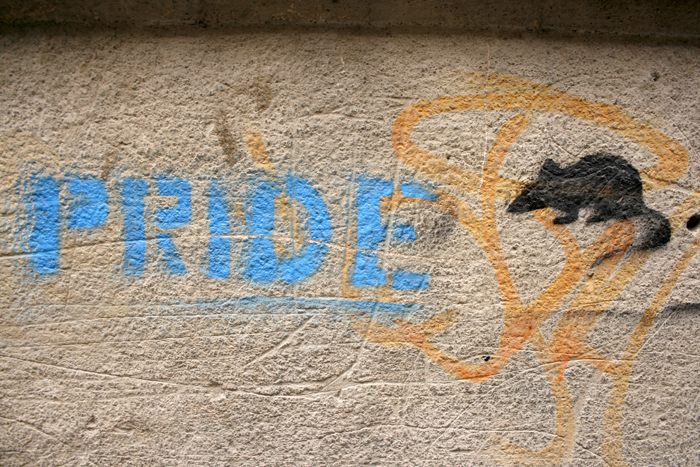
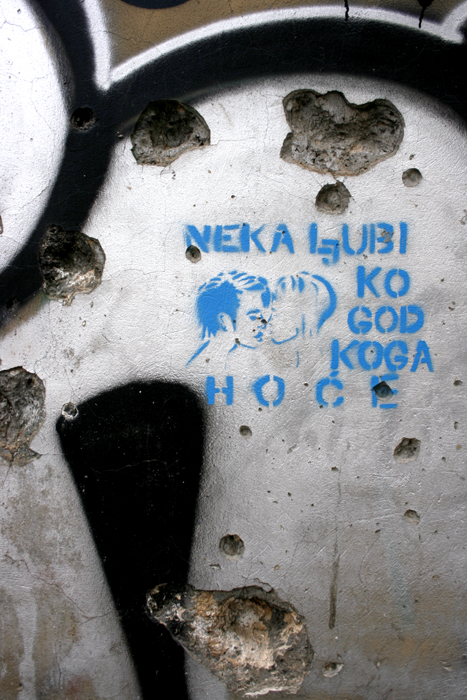
It is funny, how both different and the same street art can be all over the world. In Sarajevo, they also use stencil grafitti, but here, many of them were about LGBT rights. Which felt so refreshing, considering that the only fully filled out Couchsurfing host profile that I found for Sarajevo ended with the guy writing “I am not LGBT friendly”, which made me decide that I would stay in a hostel.

1

2

Let love whoever who wants, as translated by Google translate from Bosnian.

3

4

5

Day 25: Galerija 11/07/95

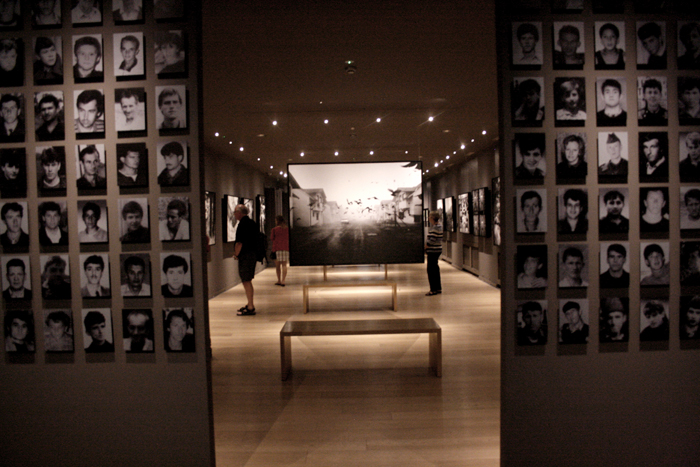
I did go to one museum in Sarajevo. The Galerija 11/07/95. It is a small photo exhibition of Srebrenica, consisting of quite recent photos of the refugee camp and the exhumation of the mass graves, commemorating that fateful day in 1995 when more than 8000 Bosniaks (Bosnian Muslims), mostly men and boys, were killed by the Army of Republica Srpska (Bosnian Serbs/Orthodox Christians). The photos were incredible. Black and white, so detailed, dark. And the stories the guide told – it is hard to understand how people can do such things to one another. Unbelievable. But a great museum.

1

Day 25: The free city tour

It’s a thing they have in these European cities: free city tours. You have a guide, who takes you around town, showing things, and in the end you’re expected to tip them. So they aren’t really free, but you can choose how much you pay for them.

I went on the city tour in Sarajevo, on my last evening there. And it was a really weird experience.

1

We started in the old part of town.

2

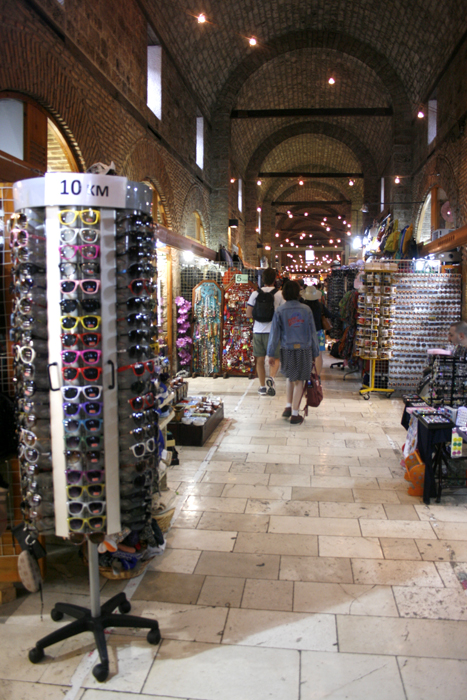
Our guide showed us some of the important buildings, and took us through the old market hall.

3

A visit to the Orthodox church, and the post office, and some monuments, and all through the tour she talked about how inventive and artistic and just utterly amazing the Bosnian people are. But at the same time, the country is also poor and then there is the war trauma and the completely worthless political power, divided into three and therefore without any way to make any decisive changes in the country.

I felt I had walked into a strange combination of a bragging and pity party for Bosnia, and I didn’t at all feel like she was giving a fair picture of the country. But, I guess you can’t expect too much from a free tour.

Day 25: The vista point

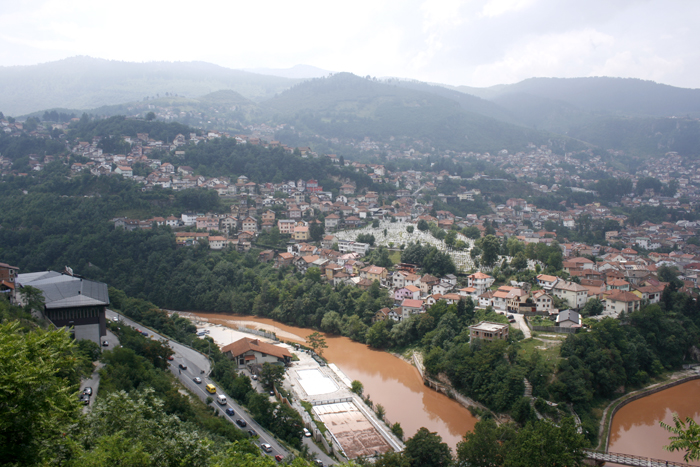
Not having slept very much in the night, my second day in Sarajevo was spent slowly walking up and down random streets surrounding the old town. I took a turn, and then another, walking uphill, and suddenly I found my way to another cemetery, and overlooking it and most of Sarajevo, a kind of small fort. A vista point of sorts, with a low stone wall surrounding it.

1

The view was incredible.

2

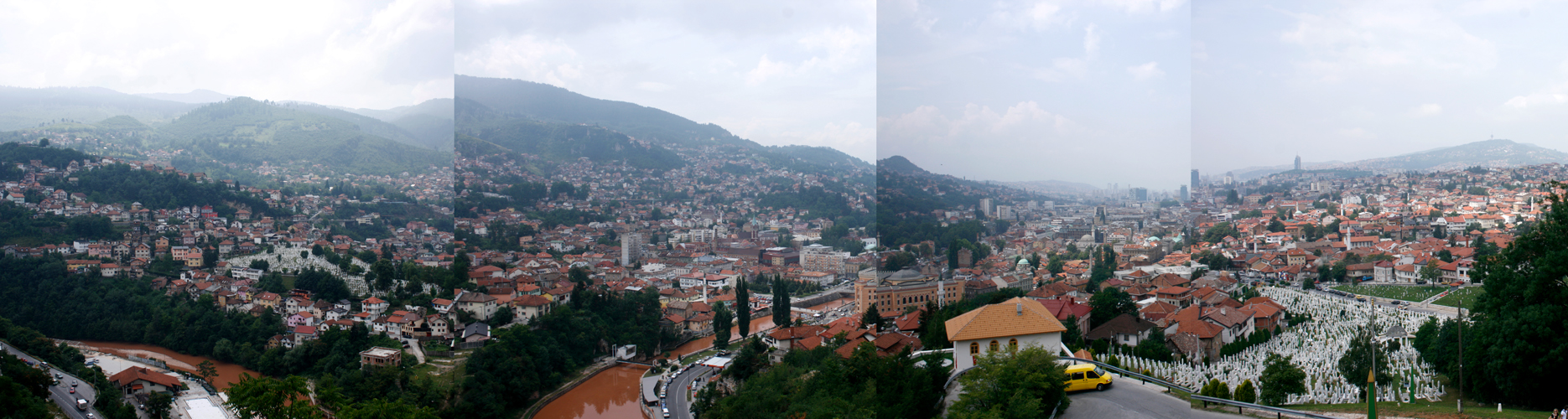
I tried to take a panorama picture of it, piecing together a series of photos, but it didn’t really turn out that well. The perspectives got all wrong and the light – but I think you get the idea anyway. This is poor copy of what Sarajevo looks like from above. [Click on the picture to see a slightly bigger version.]

I sat there, looking out over the city, listening to podcasts. Something new that I’ve just started with, listening to a podcast called Värvet, of which every program consists of an interview with a famous Swede of some kind. The interviews are very slow and mainly consist of the interviewee getting to talk freely about more or less what she/he wants. It is an amazing program, if you find the interviewee interesting. So there I sat, looking out over Sarajevo, listening to the very wise words of Johanna Koljonen, Liv Strömquist and Annika Lantz. (And isn’t it kind of funny, how so many of the people I look up to and admire among Swedish celebs are or have been working at the Swedish Radio. Koljonen, Strömquist and Lantz all have. Hanna Hellquist, Kakan Hermansson, Nour El Refai and Soran Ismail all do. It is a place where smart people gather and make good things together. I love the Swedish Radio and public service.)

3

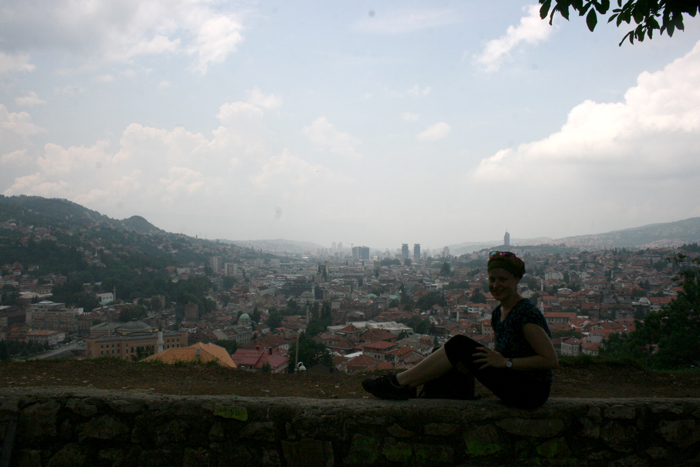
I asked a British girl to take a photo of me, sitting on the wall with this beautiful view. But there it happened again, this thing with my camera. I even tried to put all the right settings on, so that she

wouldn’t be able to fail – but then she did anyway, focusing on the rain heavy clouds and making the photo far too dark. Oh, well. It is kind of charming, this way too.

Day 25: Morning in Sarajevo

It’s way past 10 (9/7) and I should get going, really, go out do something. But my feet are full of blisters and yesterday I went to sleep after three in the morning.

I don’t have blisters because of my shoes, my shoes are great, I love my shoes. I have blisters because I’ve actually been walking so much. The blisters are on the soles of my feet. There is also this dull ache in them that doesn’t go away even after I’ve slept. So yeah, you could say I’ve been touristing pretty hard during the last 25 days.

Yesterday I ended up drinking beer with a bunch of 21-or-something-year-old Danes. They are also staying at my hostel and I didn’t get into bed until after three in the morning.

I’m 15 days behind with my blog posts. This is so out of control. I’m gonna go have Bosnian pastries for breakfast now.

Day 24: Conversations in the rain

My plan was to spend the evening catching up on my blog posts. I was so far behind, and being this overly ambitious is not always good for my peace of mind. But when I went down to the common room to rinse off my apricots and figs, the rain was pouring down outside and I’ve always had a weakness for heavy rain. Especially going out in them, barefoot, feeling the water fall on my face.

Out on the hostel terrace, which was situated on top of the roof of the lower neighboring building, the water was gathering in puddles. On the long wooden couch, in the shelter underneath the balcony one floor up, two of my fellow tunnel tour participants were sitting. I asked if I could join them with my fruits for a while, and then I just didn’t feel like leaving.

Sitting there, sheltered from the rain but with my feet sticking out (the couch was very deep, so my feet really did stick out, toes straight into the rain), I ate my figs and my apricots. Rain fell on my Bolivia tatoo, not cold, only leaving a fresh taste in the air. The boys from the tour were talking about tourist nationalities that bugged them. The German guy, who’s name I can’t remember anymore, disliked Australians – for their cheerfulness and their drunkenness. Sebastian, the Danish guy, thought Americans could be pretty rude. I told them about my not very pleasant experiences with nineteen-year-old Germans in Canada.

The discussion meandered on, touching upon my studies and development aid in African countries, about becoming a consultant and making a lot of money (both boys were economy students), and then we dived right into Kirkegaard. Next to economy, Sebastian was also studying philosophy, and him being a Dane I thought the Kierkegaard anniversary (Kierkegaard was born 200 years ago this year) could be an appropriate subject. It turned into a crash course in existentialism for the German, as both Sebastian and me were partial to the existentialist take on ethics, after which we were joined by the other Danes and the young hostel receptionist and the discussion turned to football. To that, I didn’t really have anything to add, but I was content sitting there, listening, feeling the drops of rain run down the sore soles of my feet.

Eventually, someone mentioned food. I wasn’t really hungry, but if I was to go to eat, it would have to be real Bosnian. The German had already eaten and the other Danes didn’t feel like walking down to the old town, where the Bosnian food serving restaurants were, but Sebastian was game. We were in Sarajevo, after all.

It was already eleven at night and still pouring outside, but I had my umbrella and Sebastian borrowed one from the hostel. When we entered the old town, the prayer call went out from the mosque, and when we passed it, the whole courtyard in front of it was filled with people. It was the first night of Ramadan, and now all the Bosniaks were praying as the start of their fasting. The immam was singing the prayer monotonously through the speakers and all the people in the mosque and out in the courtyard were kneeling, lowering their upper bodies and touching their foreheads to the ground, standing up and going back down again in unison. We stood there in the rain, Sebastian and I, under our umbrellas, watching the prayer through the mosque gates. The prayer song and the movements of the participants was hypnotizing.

We found a restaurant that still served food and I had a delicious lentil stew. Sebastian told me that he was planning to read all the Nobel litterature price lauretes, which is funny because I’m doing the same myself. I told him about my love for libraries and he said he preferes to own books. I told him about the Japanese fusion tapa restaurant in Vancouver, and he said that the food in Indonesia is very hot, tear producing hot.

And I just started thinking to myself: where were these boys when I was young and innocent? I’ve met a couple of them now, during the last year, young men with dreams and ideals. I used to be like that, when I was 17, 20 – but the boys I met then were either older or already cynics and I thought I needed to be cynical too and less exuberant in order to be cool and attractive. And now, I think I’ve passed the age when it’s charming to build castles in the sky, have big plans and get away with it. A part of me wished I could go back, be 20 again and run my fingers through Sebastian’s beautiful dark hair.

I blame the rain. Summer rains always do funny things with me.

After finishing our food, we met up with the other Danes, took a beer at a bar and then went back

to the hostel terrace to continue our talk about food and extraordinary travel experiences. Sebastian fell asleep on the couch, but his friends also had many stories to tell and we were joined by an American who was a student of international relations and I didn’t get into bed until after three.

The next morning, I went out for a midday walk and just missed the Danes when they left the hostel to go to Mostar.

I didn’t get to say goodbye to Sebastian and his friends. But he was an essential part of the most magical night of my trip (I can say that now, because I’ve been through it all). I will carry him with me, along with the feeling of the rain on my feet, walking through the dark Sarajevo streets underneath my umbrella, listening to the Ramadan prayer. He will be remembered, put away in that little place I have for perfect moments in life. Maybe that is the best that could have happened.
Day 24: A walk through the concrete jungle

After the tunnel tour, I still didn’t feel quite done with the day, so I decided to take a walk.

1

There are many bridges crossing the Miljacka River, one of which is this new construction in front of the Art School (I think).

2

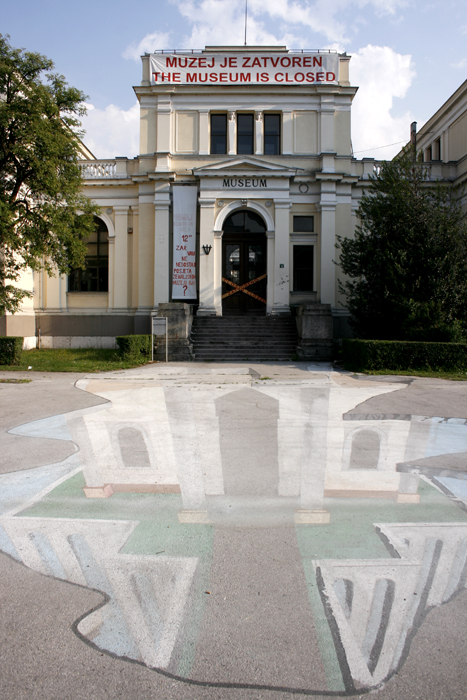
There aren’t really any museums to speak of in Sarajevo – most of them are closed. This is the Bosnian National Museum, supposed to have many interesting artefacts to show. But, due to lack of funding, it can’t keep open.

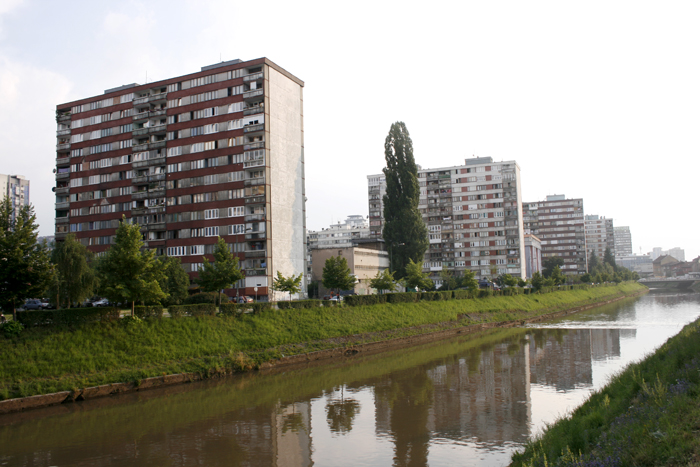
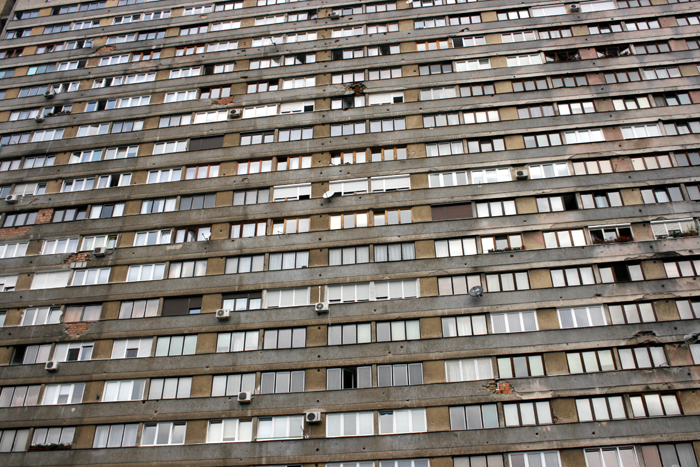
After the conglomeration of closed or only partially opened museums, the residential areas took over. Our guide during the tunnel tour explained that Sarajevo can be divided into three different circles: the inner circle, consisting of the old town center from the Ottoman period, the downtown circle surrounding the old town, consisting of 18th and 19th century buildings from the Habsburg era, and then all the rest, built during the glory days if President Tito. This last circle the guide called the communist city, and it mainly consists of huge concrete slabs, high and wide and standing in rows. I find them fascinating.

3

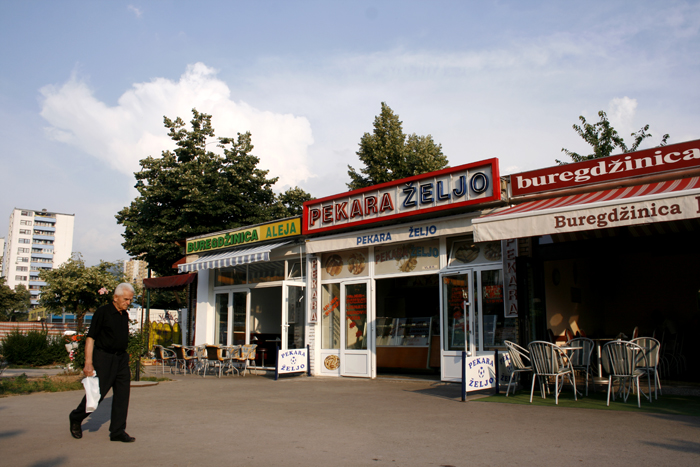
There, across the river, I found a small bakery. I bought a pastry filled with cherries for about the equivalent of 40 cents (€) and sat down on a bench by the river, watching people walk by in the afternoon sun.

4

It was a delicious pastry, sweet and flaky, and people seemed to be enjoying themselves, couples walking by hand in hand, children on bikes, old men sitting on the benches next to mine. The laid back feeling that I had gotten in downtown Sarajevo earlier that day followed me out into the suburbs. It was a sunny summer afternoon and people seemed very content with life.

5

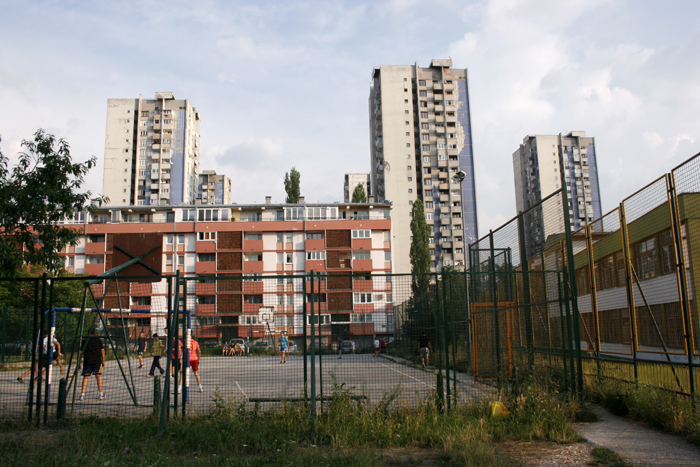
Boys were playing basketball on a field behind one of the big buildings, and right next to them, a couple of others were spraypainting things on a wall.

6

7

There was an odd mixture of houses in this part of town, the enormous concrete apartment houses with bullet holes in them, next to completely new, shiny examples of modern architecture. Some signs on the new buildings made me think that the money came from investors rich from Middle Eastern oil, but I don’t know. Nonetheless, it was intriguing and I would have loved to be invited into one of those concrete monsters. To see them from the inside. Maybe when I come back, in a year or several, Couchsurfing will have become bigger in Bosnia and I’ll find a suitable host to stay with in Sarajevo.

8

And while I was walking there, I listened to podcasts from the Swedish radio. Suddenly, my dad’s storyteller voice came on – I was listening to the Vetenskapsradion (Science radio) programs my dad did about Japanese humanoid robots. His voice, soft and quite different from many other radio journalists’s on Vetenskapsradion – perfect for reading Astrid Lindgren and Narnia outloud at bedtime when I was little. It felt kind of odd, walking around in this strange environment, taking photos of buildings with bullet holes in them, while my dad told me about humanoid robots through my earphones. How past and present, memories and futures constantly connect. Right there, the connection became so obvious and planin.

9

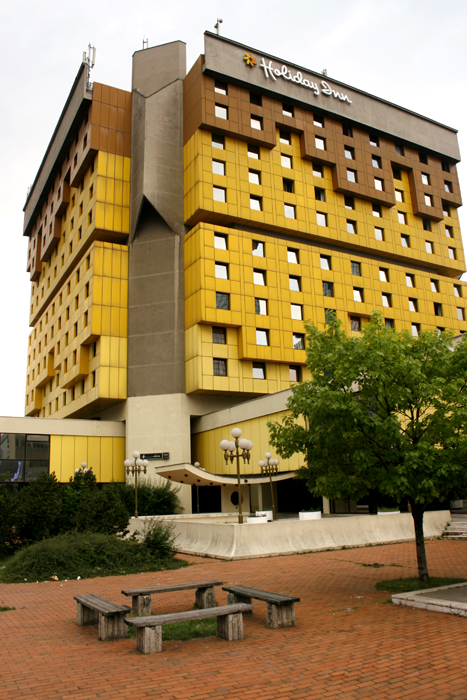
The Holiday Inn, the hotel where most of the reporters stayed during the war. It might look weird like this, in a single photo, but when in the context of its surrounding houses, it didn’t stick out much at all. For some reason, the outskirts of Sarajevo is a place where weird architecture thrives.

10

On my way back, I found this strange park, where young Sarajevans with black dyed hair sat on the mechanic sculptures. Thunder had been slowly building up its strength during my walk back into town, with heavy mountains gathering around the mountain tops, and here the first drops of rain started falling on my forehead. Luckily, it started slowly. I made it back to my hostel before the really heavy stuff started pouring down, aggressively, to the roar of thunder. Weather can change quickly, in the Dinaric Alps.

Day 24: The tunnel tour

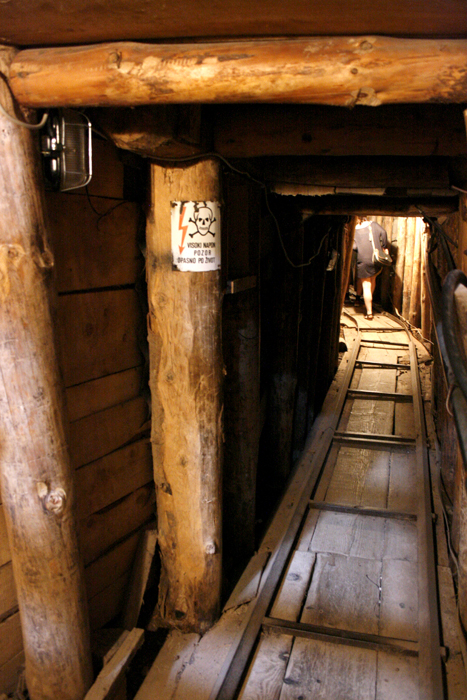
Between 1992 and 1995, Sarajevo was under seige by the Serbian army. The traces of the seige are still visible everywhere in the city: bullet holes in some of the house facades, abandoned buildings, memorials surrounded by flowers and lighted candles. And many of the most popular tourist attractions relate to the Balkan war in some way.

During the seige, the only contact to the outside world that the Sarajevans had was an 800 meters long tunnel that ran under the airport. Through that tunnel, the Sarajevans were supplied with food and arms throughout the three year seige. Most of the tunnel has collapsed since then, but about 20 meters are still there and around the entrances, a small museum has been opened, displaying photos, soldier clothes, samples of UN relief packages and a film. The hostel where I was staying arranged guided tours to the tunnel museum, so I went on one.

1

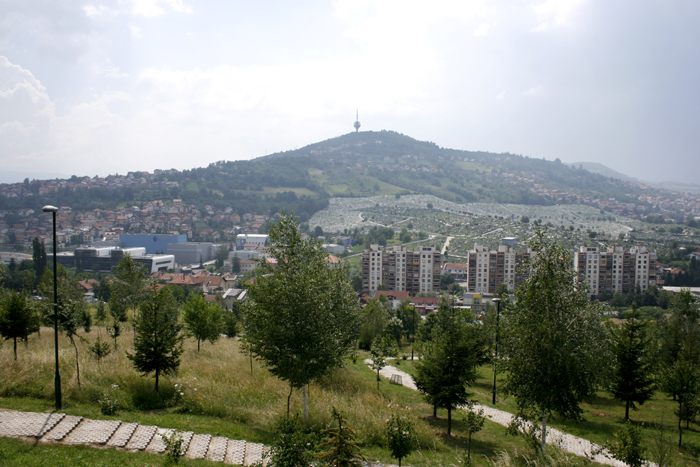
The guide started by taking us to this vista point, where the enormous Muslim cemetary with its white stones was visible on the opposite hill. 10 500 Sarajevans were killed during the seige, so there are wartime cemetaries all over the hillsides of Sarajevo.

2

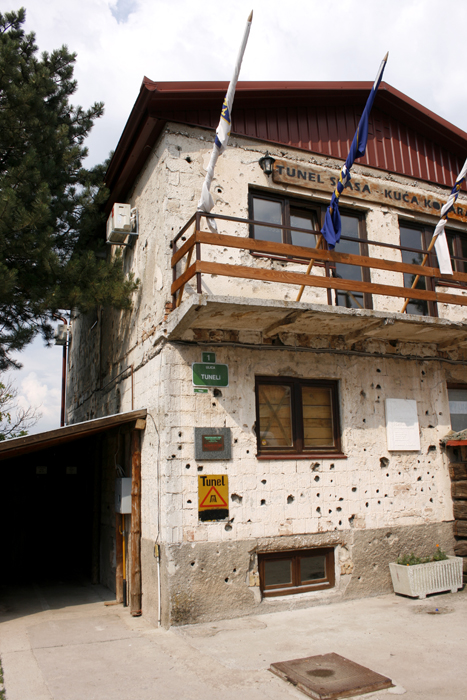
The entrance to the airport tunnel was through this building. The Serbs knew it was there, and going in and out of the tunnel was always extremely risky, from both sides. The building now housed the Tunnel Museum, where one of the things being shown was a film. A very strange kind of film, only consisting of footage from the seige. People transporting things through the tunnel, buildings being bombed, people running to take cover in the streets. The aesthetic was kind of similar to that of a Youtube film, showing several home video clips of people doing funny things. Except this time, the film didn’t show people for example being woken up by a foghorn and falling out of bed, but different buildings being bombed and falling apart. I found it very surreal and unsettling, not because what it showed per se, but how it had been made. Like an orgie in war footage, pornography for some morbid war enthusiast.

3

The tunnel itself wasn’t big. But it wasn’t the most narrow tunnel I’ve been in either. The war tunnels in Vietnam were pretty tight, and the tunnels in the Potosí mine in Bolivia were dark, wet and claustrophobic. Not that I’m prone to claustrophobia. I like tight spaces. I just want to brag about all the places that I’ve been to, I guess.

It is weird, with Sarajevo and the seige. It is there, ever present, in the house facades and in what people talk about. I guess the ethnic cleansing might be one reason, to suddenly wake up in a world where your neighbor suddenly wants to kill you just because you happen to have a Muslim surname instead of a Christian Orthodox one. And the fact that the Dayton Agreement has made

wartime divisions between the religious groups further complicate decision making, instead of letting the country move on. As I was told, Bosnia used to be a place where people mixed freely with each other, Bosniaks (Muslims), Serbs (Christian Orthodox) and Croats (Catholics), intermarried and were Bosnians, rather than identifying with the religion that they belong to. But then the war came, people were killed and when the peace agreement was brokered, the UN wanted to make sure that all three groups got equal say in the ruling of the country. So Bosnia got three presidents – three presidents that all have to agree before a decision is made. Which is almost impossible, according to the people I talked with, which in turn leads to nothing happening in the country. Everything just stands there, still, in indecision, putting Bosniak against Serb against Croat.

The war is always there, in a very tangible way. And I compare this to Liberia, where the civil war ended ten years later than the war in Bosnia – a civil war that also lasted for much longer. But still, the war is not as present in Libera as it is in Sarajevo. Of course, there were all the abandoned buildings and young men, former child soldiers, hanging out in groups in outdoor bars by their motorcycles, giving off an air of hostility. But the reminders weren’t everywhere to be seen, and I got the feeling that people in general felt that it wasn’t really relevant anymore. A very important and terrible part of their history, yes, but now they want to move on.

In Sarajevo, the war lingers. And I don’t really know why.

Day 24: On Pigeon Square

I’ve just eaten my lunch, a cevapcici (a kind of meatball-sausage in bread with onions). That’s what I was told to do by Alexander, get a cevapcici at Bascarsija. So here I am.

It was good, but heavy to digest and now I’m sitting lazily in my chair, listening to the prayer song from the nearby mosque. It is beautiful. (Seriously, I don’t understand how some people in Stockholm are against allowing the mosques to sound their prayer calls once a week. It creates something melodious on top of the city sounds that otherwise tend to only consist of engines and other noise.)

I’m watching the pigeons being fed, courting and flying in processions on Bascarsija or, as it is generally called in English, Pigeon’s Square. It is funny, how the males behave, all puffed up and dancing around a chosen female – and then the female just flies away, possibly wanting to be chased and courted some more.

And I wonder how it would be to be courted like that, persistently, and then having to choose. The rules are simple. I’m afraid, though, that I wouldn’t be able to handle it. In some cultures, the courting rituals resemble the pidgeon’s, but in Sweden they are so much more haphazard and irregular and almost random. And I’m afraid I know no other way. If I found myself being pursued, I would probably just think the guy was mad.

1