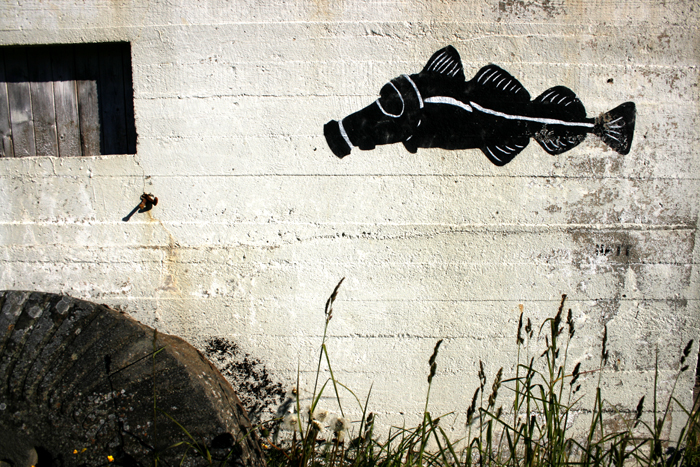
memories of Orlando

A month ago, we had a book club meeting about Virginia Woolf’s “Orlando”. I had taken lots of notes and I really liked the book. My intention was to write something about it here too, but then traineeship and Midsummer and Norway came and it simply slipped my mind. But I was reminded again when I went through the pile of library books that is constantly growing on my desk at home. It was time to return “Orlando”, and why not then do the writing now, even though it is rather late.

Orlando is a character who moves through the ages like a chameleon. He starts his life in the 16th century as the favorite squire of Queen Elizabeth I, and the book ends in 1928, when she’s finally gotten her poem The Oak Tree published. She moves between sexes, gender roles, class and adapts to the spirit of the times that she moves through, while at the same time keeping her integrity, the core of her personality, intact. The poet, the nature-lover, intelligent and passionate. It is a commentary on sex, gender, fashion, history, ideas, identity and time, and everything is captured in Woolf’s very intimate, familial voice. It’s like being told a story by a dear friend. It is really an entertaining book, smart and funny at the same time.

I was going through my notes and the excerpts that I had marked out, and this page towards the end of the book caught my eye. And it feels like this so perfectly fits here, now, considering what I wrote about the bus trip from Å to Kabelvåg a week or so ago, and it’s connection to the bus trip from Sarajevo to Belgrade last summer. It is about time, memory and identity, and how we are all layered.

That Orlando had gone a little too far from the present moment will, perhaps, strike the reader who sees her now preparing to get into her motor-car with her eyes full of tears and visions of Persian mountains. And indeed, it cannot be denied that the most successful practitioners of the art of life, often unknown people by the way, somehow contrive to synchronise the sixty or seventy different times which beat simultaneously in every normal human system so that when eleven strikes, all the rest chime in unison, and the present is neither a violent disruption or completely forgotten in the past. Of them we can justly say that they live precisely the sixty-eight or seventy-two years allotted them on the tombstone. Of the rest some we know to be dead though they walk among us; some are not yet born though they go through the forms of life; others are hundreds of years old though they call themselves thirty-six. The true length of a person’s life, whatever the Dictionary of National Biography may say, is always a matter of dispute. For it is a difficult business – this time-keeping; nothing more quickly disorders it than contact with any of the arts; and it may have been her love of poetry that was to blame for making Orlando lose her shopping list and start home without the sardines, the bath salts, or the boots. Now as she stood with her hand on the door of her motor-car, the present again struck her on the head. Eleven times she was violently assaulted.

And a couple of pages later, the question about identity comes up again:

… Orlando heaved a sigh of relief, lit a cigarette, and puffed for a minute or two in silence. Then she called hesitantly, as if the person she wanted might not be there, ‘Orlando?’ For if there are (at a venture) seventy-six different times all ticking in the mind at once, how many different people are there not – Heaven help us – all having lodgment at one time or another in the human spirit? Some say two thousand and fifty-two. So that it is the most usual thing in the world for a person to call, directly they are alone, Orlando? (if that is one’s name) meaning that, Come, come! I’m sick to death of this particular self. I want another. Hence, the astonishing changes we see in our friends. But it is not altogether plain sailing, either, for though one may say, as Orlando said (being out in the country and needing another self presumably) Orlando? still the Orlando she needs may not come; these selves of which we are built up, one on top of another, as plates are piled on a waiter’s hand, have attachments elsewhere, sympathies, little constitutions and rights of their own, call them what you will (and for many of these things there is no name) so that one will only come if it is raining, another in a room with green curtains, another when Mrs. Jones is not there, another if you can promise it a glass of wine – and so on; for everybody can multiply from his own experience the different terms which his different selves have made with him – and some are too wildly ridiculous to be mentioned in print at all. So Orlando, at the turn by the barn, called ‘Orlando?’ with a note of interrogation in her voice and waited. Orlando did not come.

You see, the precision of Woolf’s use of language, the way she connects to her own story all through the book, keeping the reader awake and attentive. And her use of historical events, the history of intellectual thoughts, it is so masterfully intertwined in the story so that it is hardly noticeable, unless you’re specifically looking for it.

And that I recognize myself in it. Even though I haven’t lived for 500 years, I feel these different times in me, the different identities that come and go more or less as they please. The difficulty of staying in the present, keeping experiences apart, that life is a circle, not a line. She’s written a book about life, and not only a declaration of love to her mistress Vita Sackville-West.

So, I think I can safely say: I recommend “Orlando”. Virginia Woolf fully deserves her reputation as one of the great authors. And this was definitely not the last book by Woolf that I’ll read.
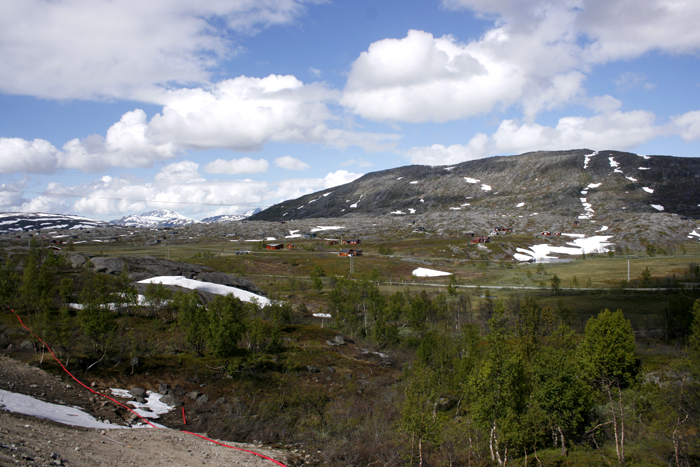
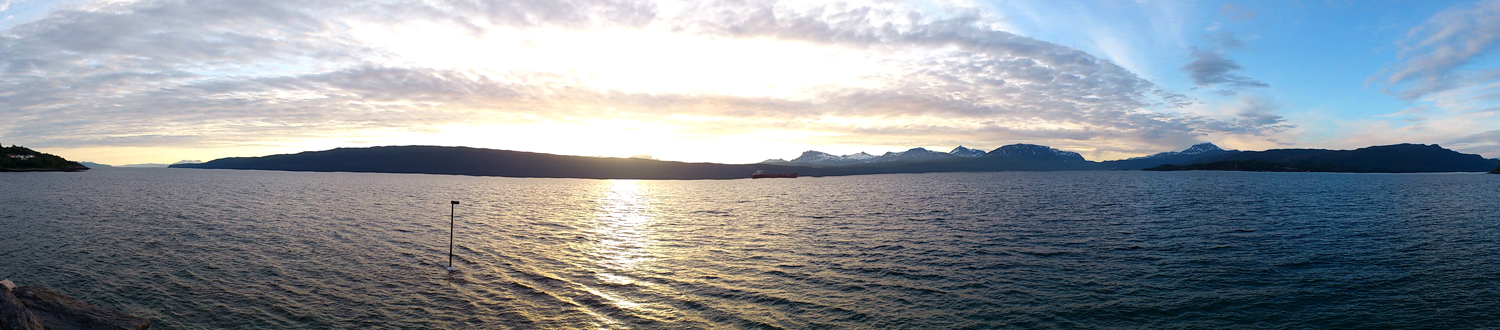
trainee in mid-July

I’m almost alone at the center now. Both of my supervisors are here, and a couple of Ph.D. students, but otherwise, it’s quite empty. There are no milk deliveries anymore, but I found an opened carton of milk, expiration date June 10th, in the fridge in the master’s student kitchen that actually hadn’t gone bad. I used it for the three cups of tea that I’ve had today. I also found a package of cherries in which only the top part had started molding. I don’t think anyone is going to mind that I ate the remaining non-moldy ones for my afternoon fika. (And I’m happy I’m not a biologist, so that I have no idea about the existence of the potential invisible toxic spores I might have ingested.)

I’m sitting in the master’s student thesis room in the basement, as this is an office that is completely empty now, i.e. I won’t be thrown out, as I’ve been in all other places I’ve tried to sit during my traineeship. It might be one of the warmest days of this summer today, 26 degrees and sunshine, but down here in the basement it’s freezing cold. I’m wearing a fleece jacket and my light blue cashmere shawl. I’m reading articles about coastal erosion in Alaska and searching for global datasets on climate and environmental change, talking to myself. Giving up excited little sounds whenever I find datasets that are actually georeferenced. The acoustics in this office is great. I sing Swedish folk songs and write lists on the whiteboard, walking barefoot.

It’s the small wonders, coincidences and happy surprises of life that keep us going.

pirate on a boat

Elli had her 30th birthday party yesterday, on a boat by Söder Mälarstrand. Beautiful place, beautiful evening, beautiful people. The party had a marine theme, and I had dressed up as a pirate. Everyone else from the SRC were also dressed up in various costumes, jelly fish and mermaids and kids’ bathing toys, but except for a couple of other male pirates, none of the other guests were anything else than prettily marine blue. Does that say more about Swedes, or about the kind of people that study or work at Stockholm Resilience Centre?

Once it got dark, we all went down into the big cabin, to dance and eat cake. They were playing old songs by Kent and Håkan Hellström and other popular indie dance hits from my high school days (which would mean early twenties for most of the guests at the party). I remember them by heart, the lines in all the songs, Kent’s I want to have my tongue there, where you are, so close that you become wet (but in Swedish, of course), it’s the songs from my late teens and there’s a melancholy softness to them, a kind of innocence.

It made me feel awkward. I am too young to start feeling nostalgic over old songs, going to parties where the music is chosen based on the number of memories you have with them. I still want to discover new songs and create new memories.

Today, I’m listening to Sleeping At Last. For me, something completely new.

Stories from the Narvik-Stockholm train, July 1st: When skies are pink and purple

The sun has actually gone down. We’re south of the Arctic circle now, I’ve been on this train for almost eleven hours. A while ago, the sun was painting the trees and our faces golden – but now, it is gone and the sky is kind and soft like a My Little Pony.

I was thinking of this past year, my studies, the relationships, my tumult, and watching the sky gaze at its own reflection in the northern lakes. The hills are soft and voluptuous in this part of Sweden, if I remember correctly a remnant of the days when the landscape was situated much closer to the equator. Where heat and humidity weathers in different ways than in this icy north.

I was watching the clouds turn orange, and it hit me: I am a social-ecological system and I am going through adaptive cycles. These ups and downs, what a reassuring way to describe it. I could write an incredibly nerdy and completely unintelligible poem.

The organization, growth, conservation and collapse of a state of mind, identity, reorganizing and then growing, stagnating and falling apart all over again.

I don’t think I will, though. It’s half to midnight and I’m supposed to work tomorrow. I think it’s time for me to go to sleep.

when looking away is the right thing to do

Several times during the last couple of days, I’ve witnessed couples almost unnoticeably showing their affection for each other on public transportation. A light caress, on a knee or a foot, almost absentmindedly, while reading a book or looking out the window. Tender in a way that has made me feel like I’ve seen something I shouldn’t. Even if me looking was by accident.

There is a trust in a movement like that, confidence. Confirmation. It is something very beautiful.

But in me, it has left a knot. Somewhere below the throat, over the lungs. An inner conflict of interest, I suppose.

Stories from the Narvik-Stockholm train, July 1st

_MG_9810

The view from the train window, just before we crossed the Norwegian-Swedish border.

I’ve now been on the train for four hours, and I haven’t achieved a thing. Why, a reader might ask, do I even need to achieve anything? I’m on a train, heading back home to a traineeship where I’ll have plenty to do, soon enough. Why not take this opportunity to not do anything at all? Well, because I feel completely useless, and uselessness makes me apathetic, and that in turn creates a vicous circle that is very hard to get out of. Especially since I had planned to do things during these 19 hours comfortably traveling through this oblong, coniferously forested native country of mine. I have to write my traineeship journal from the Bodø meeting. I have to write reading notes for two novels that I finished three and two weeks ago, respectively. I would like to transcribe a passage from ”The Golden Notebook”. And I should definitely finish my travel journal.

What I should not be doing is watch Source Code, a movie I found on my computer, left from last summer, when I saw it while traveling by train somewhere in Germany, I think. It is not even a particularily good movie, but it has Jake Gyllenhaal and Michelle Monaghan, both very beautiful people, and it’s easy to just disappear. A stranger telling you that you’re kind and beautiful and brutally honest, and then, with the knowledge that there’s only eight minutes left before the train we’re all on is blown up, he chooses to kiss you. Of all the things one could do during the last minutes of one’s life. To be honest, I feel a little bit insecure and out of place right now, and that kind of easy love story calms me.

There is a little romantic in me. I resent her and try to shut her up as much as I can, but sometimes. She just needs a little what-if-you-died-in-8-minutes-rhetoric.

Luckily, I’m in a all-women compartment, and all the others in here are middle-aged. Definitely nice-looking in their way, but not kissing material for my little parasite romantic.

Later, south of Gällivare:

A woman got on the train and is supposed to sit next to me in the compartment. She asked me to move my bag from the luggage shelf, just because she preferred to have her bag there instead. I moved it, of course, no need to start a fight, but seriously. People are weird.

And I can’t stop thinking about food. Since Bodø I haven’t really eaten anything proper, except for the amazing breakfast that they had in Kabelvåg hostel. I had pasta, oatmeal and soup in a bag with me, you know, the kind you bring on hikes that you mix with hot water. Nuts and dried fruit. Norway is expensive, and Lofoten even more so, and since I won’t be earning any money this summer, I thought I would try to travel as cheap as possible. And it’s worked fine, until I reached Kabelvåg and went in to that hamburger restaurant where the hamburgers cost 150 kroner. I didn’t buy one, but I really wanted to, and as soon as I got to Narvik, the urge became even more pressing.

I bought a sausage rolled in bacon for breakfast. I couldn’t even stay vegetarian! I’m so ashamed of myself. To be honest, I couldn’t find a fast food place that served anything vegetarian for less than 150, so that’s why I bought the sausage, but still. I so badly wanted something warm, cooked, greasy. A falafel would have been perfect, but I guess they haven’t reached as far north as Narvik yet.

I have plenty of points on my SJ (Swedish railway) membership card now, though, so in a couple of hours I’ll go to the train restaurant and buy all I can get for my points from my Uppsala, Copenhagen, Kiruna, Norrköping, Narvik and Härnösand trips.

Later still, the birches, spruce and pines outside the window are gradually getting taller:

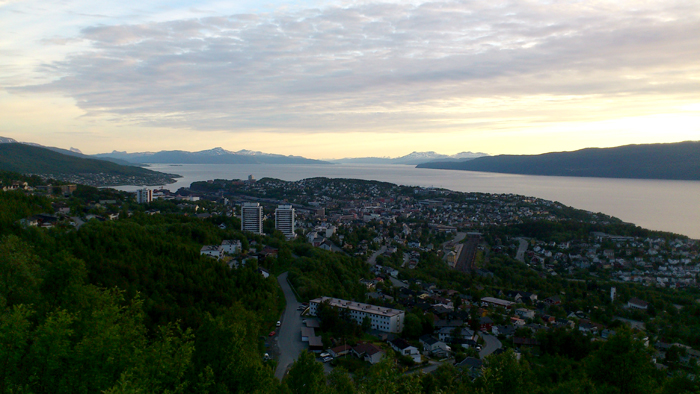
Maybe I could tell you a little bit about my Narvik experience, then. My couchsurfing host Jimmy took me on a guided tour of the city in his car, down to the sea and up on the mountain, and that was basically it. Some cute wooden houses, some quite ugly mid-19th century buildings, a new tall hotel in the middle of everything.

DSC_0339 DSC_0343 DSC_0348

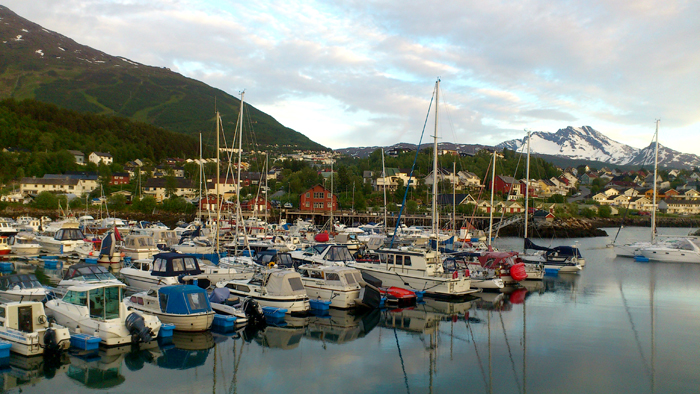
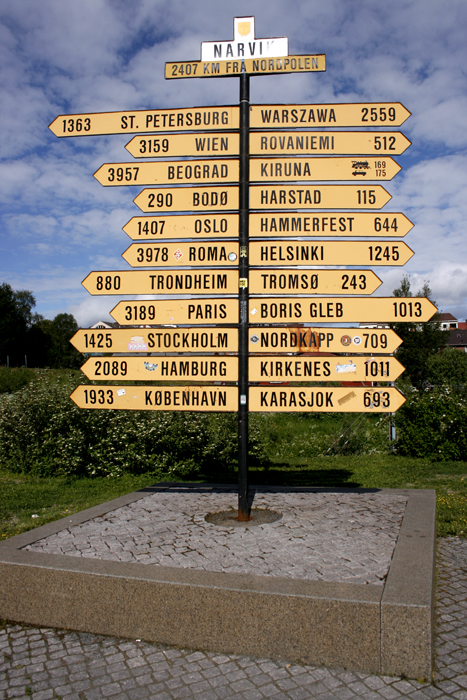
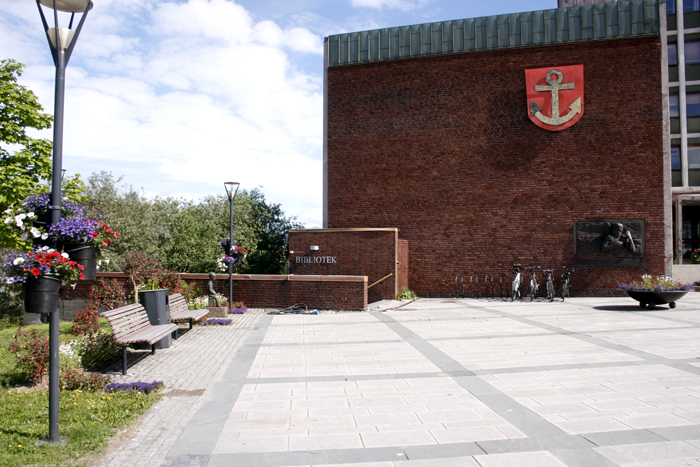
In the morning, before having to catch my train, I walked around a little bit in the center, but didn’t find that very inspiring either. Some statues and a sex toy shop advertised for in huge letters, that’s all. Narvik as a town is nothing that could draw anyone’s attention. It’s the surroundings. The sea and the snow-covered mountain tops. And the soft Norwegian spoken by the locals.

_MG_9800 _MG_9802 _MG_9804 _MG_9805

Peace is promise of future

What hit me there, the same as in Bodø, was the presence of World War Two. In monuments and also in the fact that basically the entire town was bombed to rubble way back when, which means that almost everything in the town was built in the mid-1940’s or later. That history is present there, in the same way as it is in Finland and the rest of Europe. It’s only Sweden that has this untarnished past, free from rubble, that makes it so easy to forget that there ever was a world war. Having the war present as it is in Narvik or Bodø might make forgetting what led up to the war harder. Or, I don’t know. It was just something that I reacted on.

Narvik is the northernmost stop in the Swedish railway system, from what I understand built as a means to transport iron from the Kiruna mines to the Atlantic. When I got on the train and entered my assigned compartment, the train seemed completely empty. But some other hikers were getting on. Standing in the door of my compartment, I suddenly stood face to face with Jonas. My brain didn’t react at first, I just stared at him, us standing about two decimeters apart, him looking about as flummoxed as I felt. My classmate Jonas, from the Resilience Centre! Of all the places to run into someone! He and his girlfriend Erika were going to sleep in the compartment next to mine. They had been biking on Lofoten. It took more than half an hour before we got over the chock.

But now everything has calmed down. I’ve been moving back and forth between my compartment (that eventually got filled with middle-aged women) and theirs (that stayed empty, except for them). The train ride from Narvik to Stockholm takes 19 hours, it’s always nice with some company. Especially if it’s people as interesting as Jonas and Erika.

if I could write a song

In the bus from Kabelvåg I listened to an interview with First Aid Kit. Such sweet little girls. Then I listened to their album again, while watching the mountains become higher and softer around the edges. It was such a perfect soundtrack, the austerity and beauty of the landscape and the melancholy of the Söderberg sisters’ singing.

They have a song on their new album, ”Shattered & hollow”, that did something to me already the first time I heard it. It is piercing, that clarity. It begins with:

I am in love, and I am lost

but I’d rather be broken than empty

oh, I’d rather be shattered than hollow

Oh, I’d rather be by your side

And I know that. I know what being empty feels like. I know hollow. And I remember thinking, when I suddenly realized that I wasn’t anymore, how much better it is to have something. Anything. Even if it is something that hurts. Because the hurt means there is something to work with. Something that might be mended, or transformed.

It is good to remember that, on nights when the hurt might feel overwhelming, intolerable, devastating.

It is better than emptiness.

And it can always be changed.

Stories from Norway, June 30th: The last hike

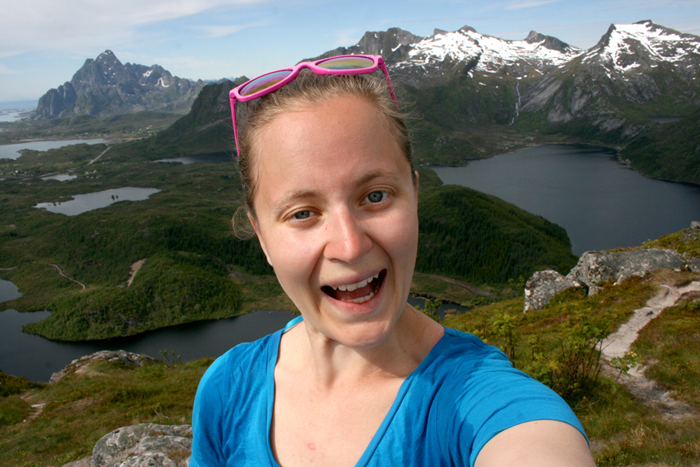
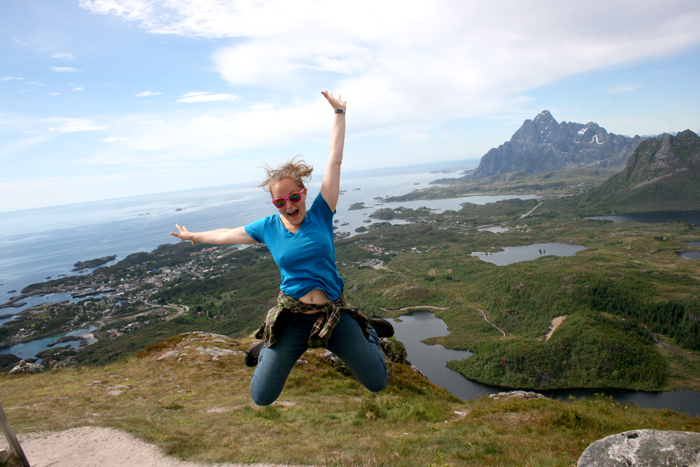
I went on a last hike in the morning, climbing yet another peak, before having to catch the bus that would take me away from Lofoten. The peak was called Tjeldbergtind and was 367 meters high.

_MG_9705

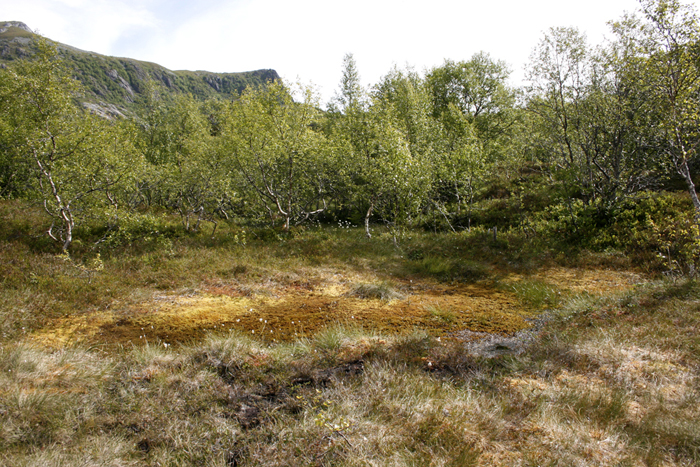
An Arctic wetland.

_MG_9713 _MG_9733

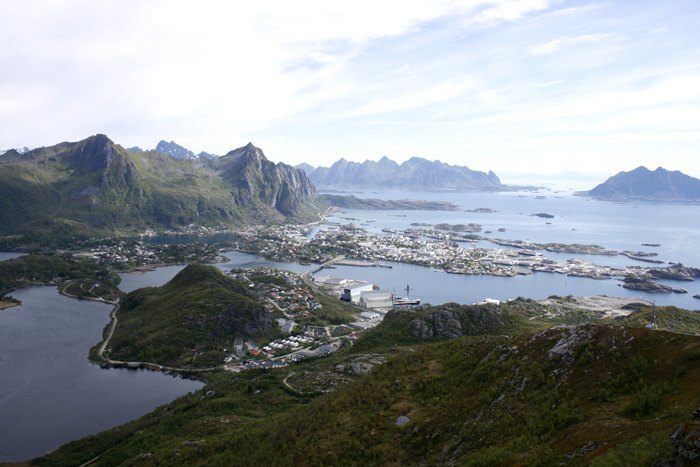
The view of Svolvær, the biggest town on Lofoten, as seen from the top of Tjeldbergtind. The view up there was incredible, with all the mountains, lakes and the ocean, but seriously. This trail was marked as easy, suitable for kids. It was no Reinebringen (which was marked as medium), but still, it was basically straight up and the last part, above the treeline, was scary steep. Norwegians are crazy, and their children must be a mixture of goats and spiders.

_MG_9787

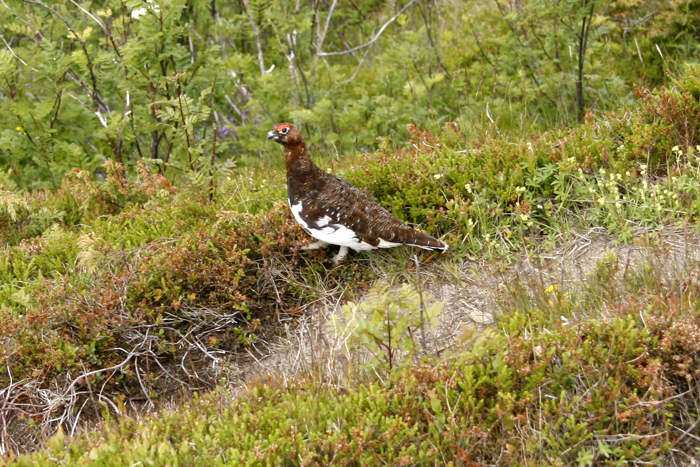
On my way down, I ran into this little fellow.

_MG_9796

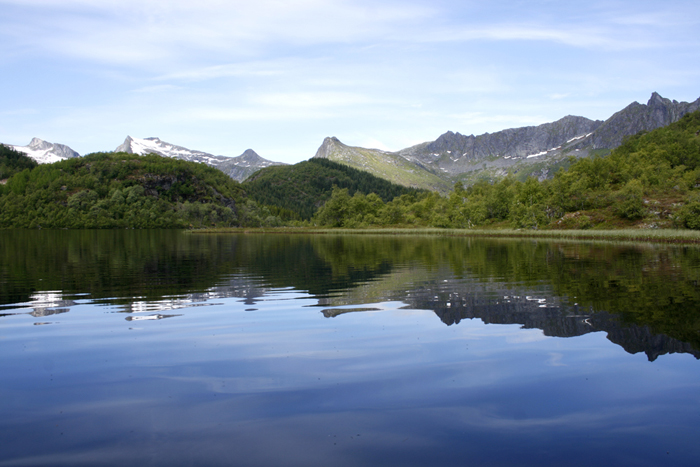
Prestvatnet. A perfect place for singing.