a walk through Teonsogo

_MG_3042

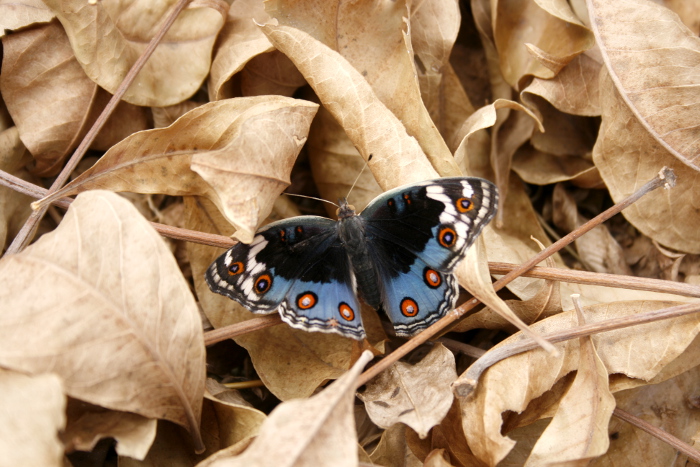
I should have studied biology, considering how I can’t stop photographing butterflies and bugs. I could have become a very specialized butterfly specialist, instead of the geography/sustainability science generalist that I’m becoming. Maybe that would have made life easier?

Yesterday, Helena came with me to the village Teonsogo. They didn’t have anything that particularly unique to show, it was just like all the other villages, incredibly friendly and generous people, millet fields and some dry shrublands. But walking around with Helena made it different.
IMG_3046

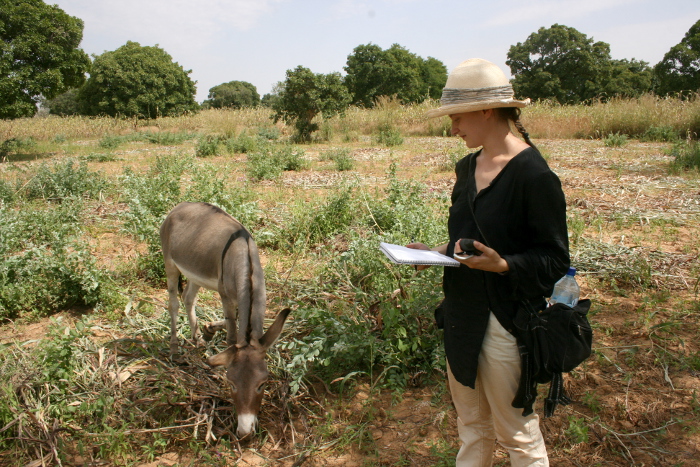
Partly, because she could take photos of me working, something which hasn’t  happened before.
_MG_3066

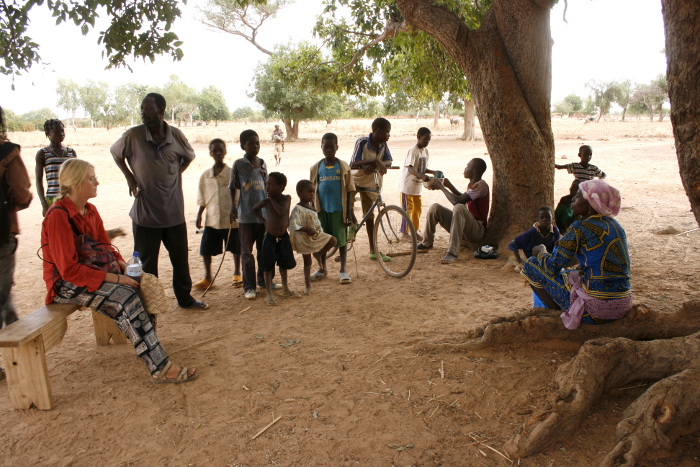
But mostly, it became different because while we walked, when I wasn’t asking questions about the fields and the crops and the seasonal changes to the landscape, Helena took the opportunity to ask questions about her thesis subject. Helena is a law student, you see, and she is writing about problems with enforcing human rights in a country where the culture is not based on the western, liberal principles. In particular, she studies human rights with regards to female circumcision. Incredibly difficult, incredibly interesting subject, if you ask me.

Female circumcision is forbidden by law in Burkina Faso, but it is still widely practiced in areas where traditions still hold a strong grip. Like in rural villages. Helena told me that most people that she had met, both highly educated lawyers and villagers, had said that human rights won’t be possible to enforce for real here, because they are not compatible with the “African culture”. But here, in Teonsogo, one of the women that took part in one of my walks disagreed. Her name was Yacouba, and she said: “It would be difficult, because there are so many people all over the world. But if it is possible to get it to work, it would be very good. We all come from the same place, after all.”
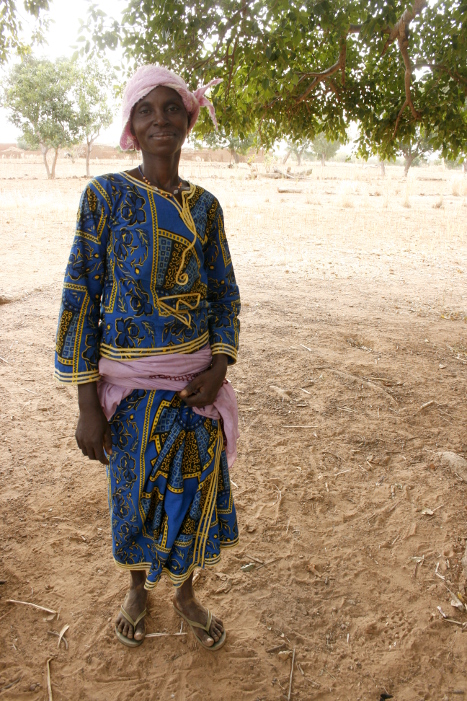
_MG_3069

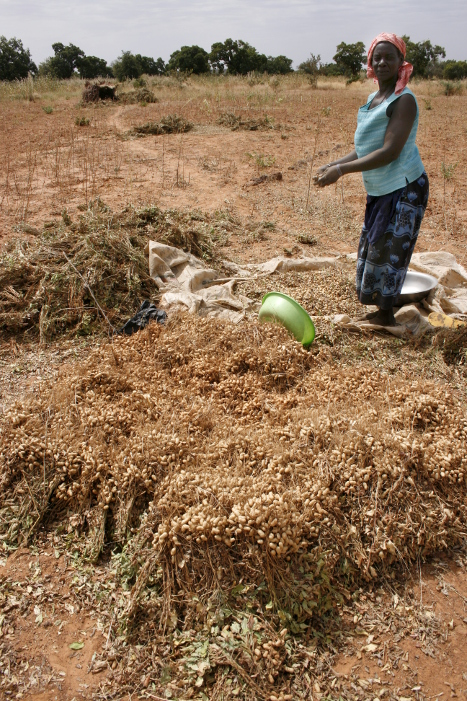
She had such a beautiful dress, too. And when we were about to leave the village, she came to the car with a big bag of unpeeled groundnuts for us. They are all great, the villages I go to, despite them being very similar.

During the last walk, we had been told about a very special stone formation some way south of the village. Desiré wanted to see it, so when we were done, the CVD jumped into the car as our guide and we went to climb a “mountain”. (Nowhere else, though, would they be called mountains, except for maybe in Denmark.)
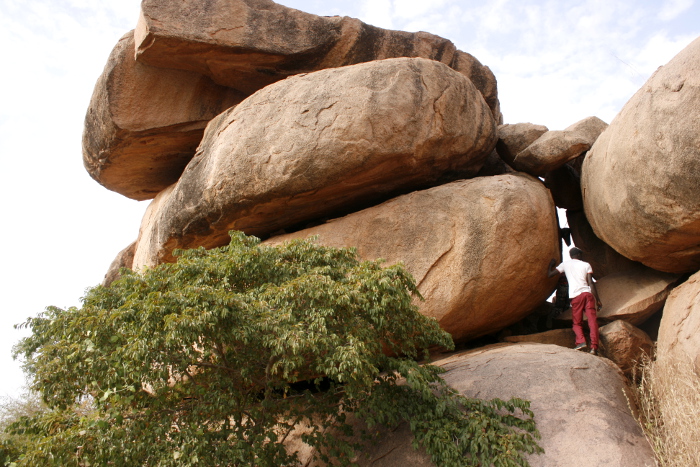
_MG_3072

It wasn’t very much a mountain, but more a big pile of rocks, but I must admit that this tor rock formation was quite impressive. Not at all like the tors they have in Namibia, for example, but definitely something special in this otherwise very flat landscape.
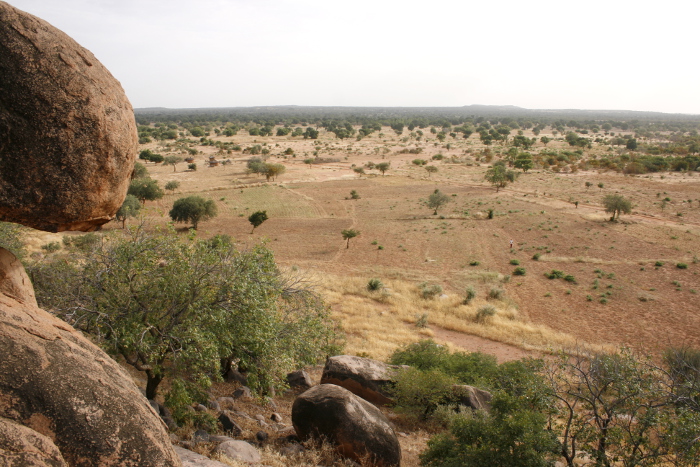
_MG_3083

And the view was pretty nice from the top too.

A very agreeable day, all in all. A nice change, having a guest like Helena come visit for a couple of days.

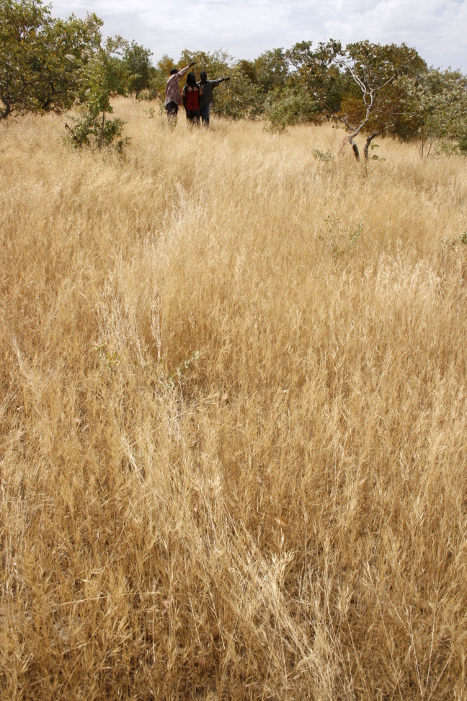
an orange sunset

It was Elli’s day to do field work today, so she left early this morning with Helena, another Swedish student who is here to visit us. I stayed in all day, transcribing my notes and transferring GPS points and reading scientific articles and knitting a little.

The sun went down in an orange haze. Elli and Helena found mango at the market, despite it not being mango season, and to be honest, I’m so happy I have Elli here. For many reasons. But today, in particular, because she needs the car too, so that I can allow myself to have these half-efficient days at the hotel. Doing fieldwork is so much more exhausting than what I could ever have imagined.

exciting landscapes (November 4)

Today, I did transect walks in a village called Rallo. Things look kind of the same everywhere here, at first glance, and I’m starting to feel like I’m an old record player stuck on repeat, asking the same questions over and over. The answers rarely suprise me, because I’ve already asked someone else, in some other village, about the use of that tree or that bush. But I’ve got to ask the questions anyway. It’s the repetitive work of science

But then I have these moments of wonder and excitement. They still come quite often, and I honestly don’t think they will ever go away. I still manage to get excited over the view from the tunnelbana window in Stockholm, and I’ve been traveling the same way almost every day since I was seven. It’ll take a while before I’m sick of this place, too.

_MG_2989

Mostly, it’s the landscape that excites me. Or aspects of the landscape that tells a story about the people that live there. Like this tree. It’s called something that sounds like ”sabnua”, and the roots can be used as medicine. Also, the resin can be burned and the smell and smoke will scare off bad spirits.

_MG_2983

This village also had a mountain. A small one, for sure, but in this otherwise flat landscape, it definitely stood out. We climbed it. It was covered in golden grass, and the view was beautiful.

_MG_3002 _MG_3013

Or sitting down for a moment to help a woman clean groundnuts, making everyone laugh, most of all the woman. She did ask me to help her, but I think the people here don’t expect white girls to be able to do anything. People always seem surprised when I want to do things myself, and actually pull it off.

_MG_3021 _MG_3030

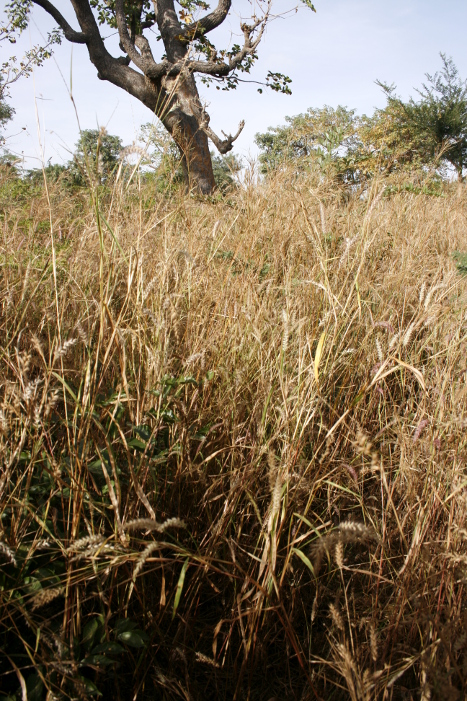
In the afternoon, I forced a depression. A depression here is a seasonal river, that during most part of the year is a densely vegetated sliver running through the fields and shrublands. This particular one also had high grass, and Desiré and the young man I was inteviewing challenged me to walk through it. I think they think my behaviour is weird, when I want to walk through fields and bushes just to get my groundtruthing points in the middle of things and not in between, on the roads. And I was too tired to argue with them, so I just walked on.

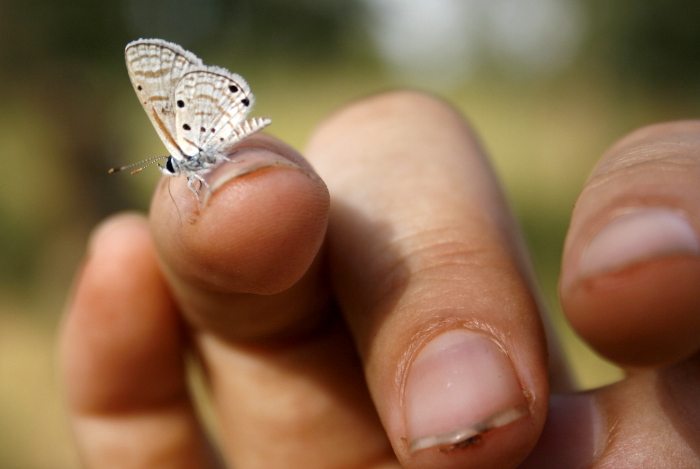
I don’t think they expected me to manage getting though this either, with my bags and machines. But I did, and on the other side, a tiny little white butterfly landed on my finger and found something really delicious underneath my very dirty fingernail.

_MG_3029

Another day of walking almost ten kilometers in the heat. I’m exhausted, I hate it, and I love it, all at once. I have something of a masochist in me. I like it when things are physically tough. To prove myself.

But soon, I think I need a break.

if anyone ever thought I wasn’t hardcore (November 3)

Today, we got up at 5.30 again, left the guesthouse before sunrise, and stayed out working until the sun went down. Elli did evaporation measurements, and then I (and Elli and Desiré) did four transect walks à approximately two kilometers each together with villagers. Almost ten kilometers walked in heat and sun.

_MG_2918

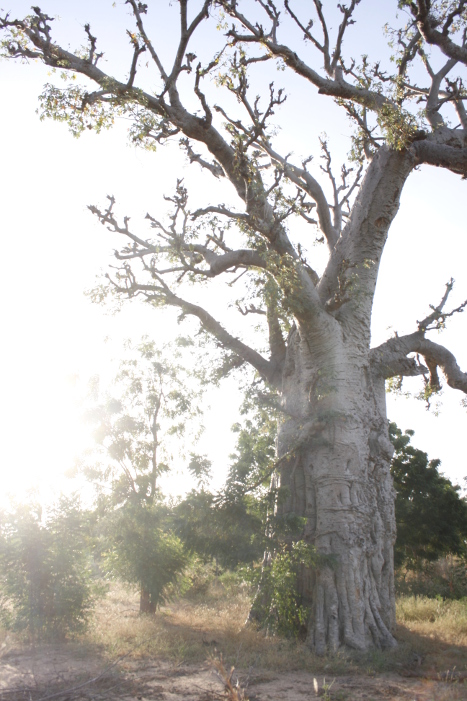
Sunrise and a baobab tree.

_MG_2929

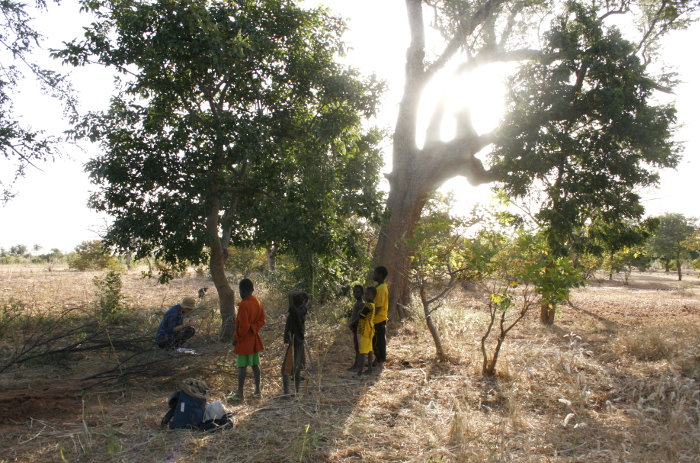
Elli measuring her lysimeters at dawn with a very attentive audience.

_MG_2956

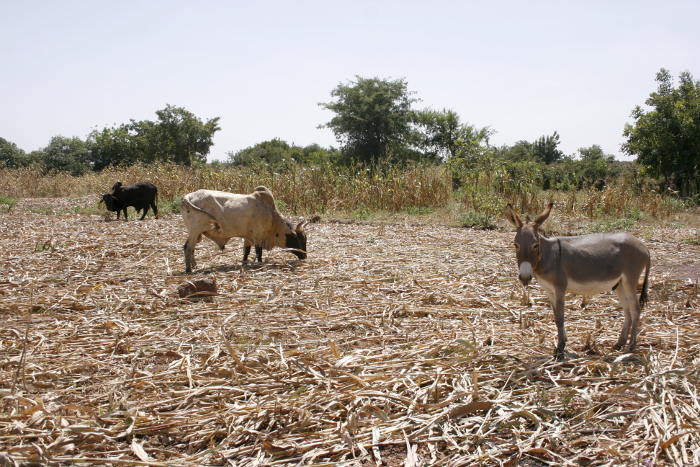
Animals eating the leftovers in a harvested millet field.

_MG_2958

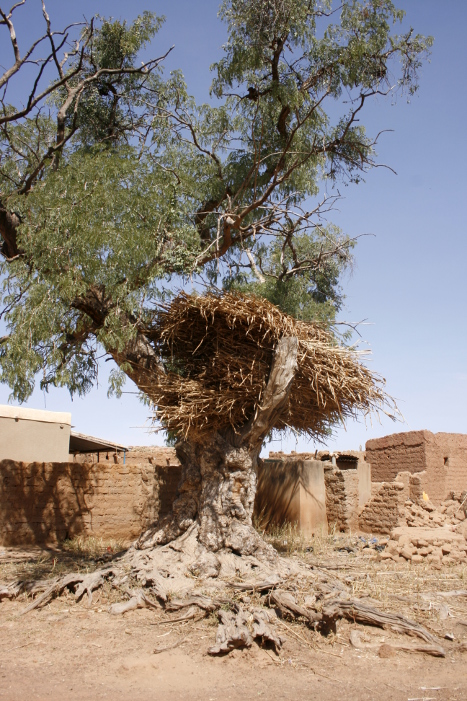
The village was called Robena. Spelled differently, and in Mooré, the name means ‘where the elephant’s tusks lie’. There was a tree in the middle of the village, and we were told that underneath that tree, an elephant was buried. This was where guests to the village where offered to sit, because it held the power of the elephant.

_MG_2967

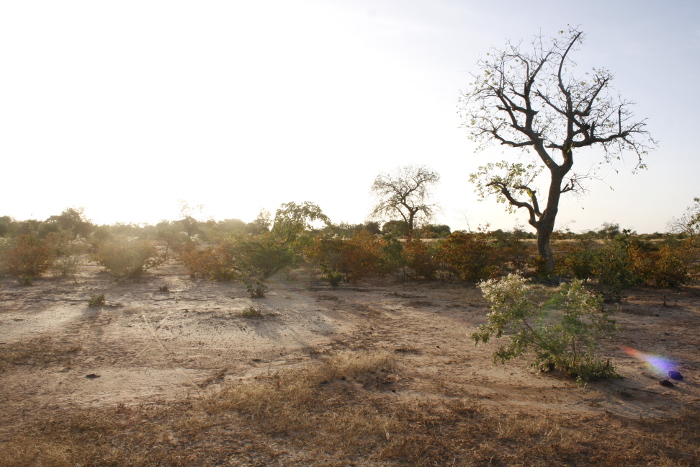
The sun going down over Reko.

I’m so exhausted now, I could die. More transect walks tomorrow, though. The life of a master student.

relapse

This afternoon, the streets in Ouagadougou became unsafe again. The opposition isn’t happy with the transition leader being a military man, and has called for more protests. Guns were shot at protesters outside the national TV station by soldiers. “The UN has condemned the military takeover and threatened sanctions”, says the BBC.

The Swedish embassy, that just this morning lifted the recommendation of staying at home, sent out messages this afternoon invoking the recommendation again. The Swedish Office of Foreign Affairs has issued a recommendation against any unnecessary travels to Burkina Faso for Swedish citizens.

It seems like everything is happening in Ouagadougou, though. Here, everything seems like it’s back to normal and we hope that we’ll be able to go out working tomorrow. Our schedule is tight now, if we are to finish here on time.

This is a really weird situation. Things are crazy in Ouagadougou, but here they seem calm and we don’t know what to think. I just have to go with my gut, and my gut tells me: In the villages life goes on as usual. We’re in the middle of harvest season. If everything else is changing, you can at least rely upon that.

And they are always so happy to see us there. That is what I think.

the fieldworker’s mansion

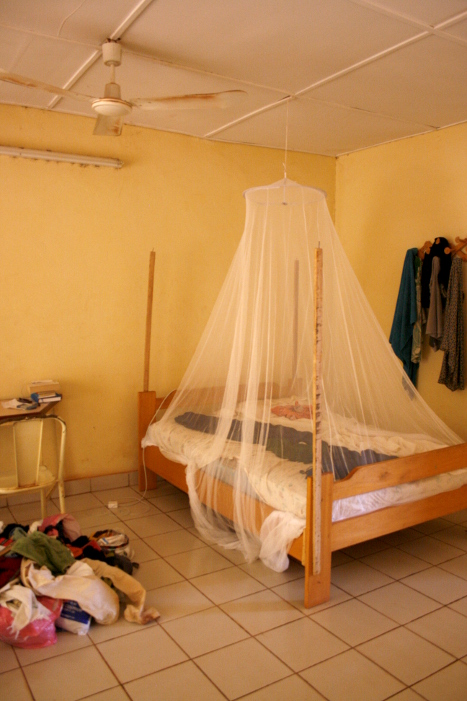
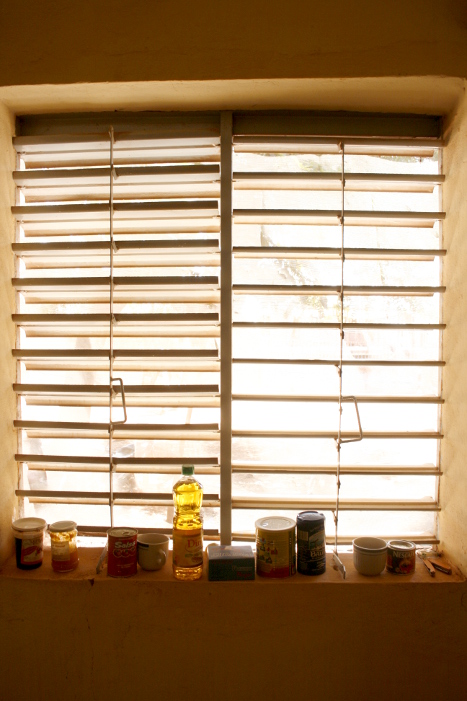
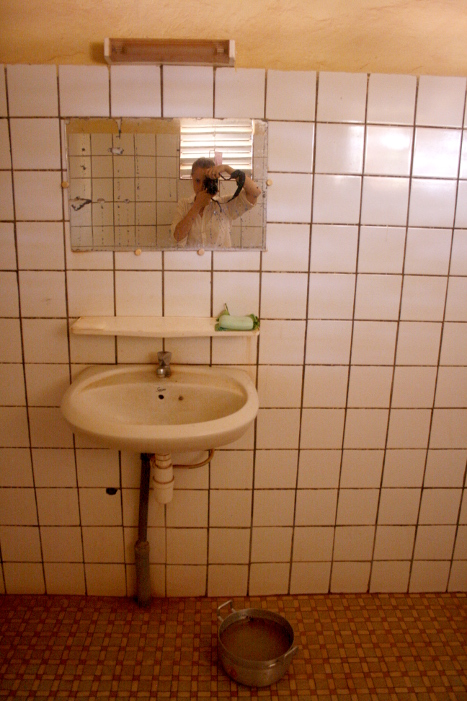
During a study break today, I decided to take some photos of our room. So here you go, a tour of where we read and eat and sleep.

_MG_2908

Where Elli and I sleep. With my wardrobe on the floor.


_MG_2892

Our kitchen, in one of the corners of the room.

_MG_2903

_MG_2886
W
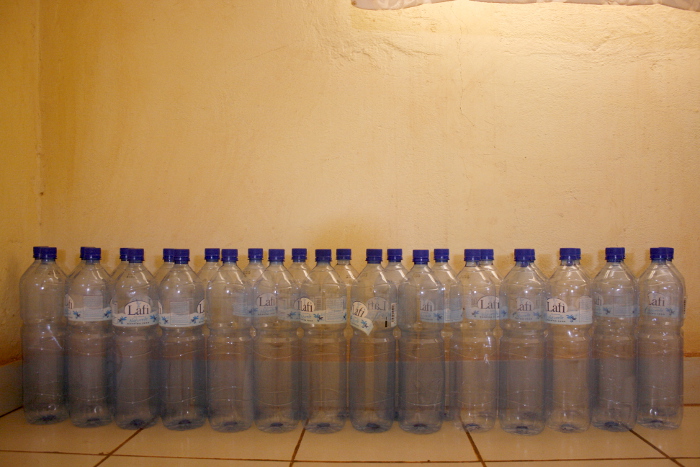
e do drink a lot of water. The water is called Lafi. That means peace in moré. Four liters of peace water a day. Must be good for the soul (and our stomachs, if not for the environment).

here’s to hoping we don’t get malaria

One of the big things that anyone going to tropical or subtropical Africa is warned about, is to avoid the malaria infested mosquitos. We take pills, wear covering clothes at night, insect repellent and sleep under mosquito nets.

People here, though, don’t seem to care very much. And since we’re living in a place for mainly local travelers, infrastructure around mosquito protection is really crap. We do have mosquito nets over our windows (that only have shutters, no glass in them), but the door that has the same kind of shutters does not have a net, only a curtain haning in front of it. This means that there’s always a couple of mosquitos in our room. We do have a mosquito net over the bed that I and Elli share (that we brought with us from Sweden), but what does that help if the mosquitos in the room have already bitten you during dinner.

The wi-fi area is outside, in a kind of gazebo and a roofed-in porch, which means sitting there at almost any time of the day means being eaten by a bunch of blood-suckers. Because, yes, did I tell you? The mosquitos here are active all day. Not in the villages, there they can’t handle the sun, but here at the hotel they never stop biting. And they are tiny and completely quiet. You only notice them afterwards, when your feet are covered in itchy red bites.

I had a low fever during our first days here. Yesterday, it was Elli’s turn. Apparently, if you take the malaria profylax medication, the malaria you get can show itself just as a minor cold. Maybe, both Elli and I have already had malaria, and we would never know. Maybe my liver is being consumed by malaria parasites as we speak.

Oh, well. I’ve managed to survive before. I slept on a tyre in the back of an open truck that had gotten stuck in the middle of a swamp in the Bolivian Amazon, in a known malaria area, in the middle of a dengue fever epidemic. If I waved my hand through the air, the mosquitos that bumped into my arm must have been hundreds. Enough to give you claustrophobia for lack of mosquito-less air. And I survived. I’m sure I’ll survive now too.

Sunday, reading day (earlier today)

I decided to stay at the hotel today. Weird, really, considering how feverently I wished to be allowed to leave the hotel just two days ago, during the period of house arrest that we experienced here. But now that I know that I can leave whenever I want again (not the country, though, the airport and borders are still closed), sitting here in a dark hotel room, reading scientific articles, feels perfectly fine. Elli needed to get her evaporation measurements started, and I need to figure out how to solve this situation of my groundtruthing points not being completely random, so this seemed like a good use of both of our time. Next week, I will be doing transect walks in four villages, so I’ll have plenty of time in the field, don’t worry.

I’m kind of impressed by myself, really. Elli and Desiré got up at five-thirty this morning, and I woke up too and couldn’t fall back asleep, so I ate breakfast and listened to a podcast, and then I started reading. And now it isn’t even nine yet, and I have already read two articles on the use of remote sensing in social science, and especially land use classifications. Very useful stuff, and read so early in the morning too. I feel like some kind of hyper-efficiency condition has come over me. Usually, reading just one article takes half a day. Sometimes, I have severe concentration problems.

It’s Sunday. Just a moment ago, the singing stopped from the church down the street. I must admit, the singing was so much nicer than what we usually hear coming from that place. In the evenings, they have a kind of screaming prayer, and the first times I heard it I thought it was some kind of serious fight. No, said Deisré, they’re just praying. That’s West African protestants for you. Screaming praise to the lord like they were being chased by bush demons.

I keep on going back and forth between feeling like what I’m doing is amazing, to thinking it’s crap and that I have no idea of what I’m doing. Right now, I feel like I know way too little, but if I pull it off, it would be damn cool. Especially since I came up with a considerable part of it all by myself.

back to normal – hopefully

This morning, we received the news that now it was OK to leave the hotel and use the car again. So, I went to two new villages to ask them if they were willing to help me and it felt amazing to be working again. In the car, we listened to the radio. I couldn’t always follow, but the latest news seemed to be that the commander in chief who had declared himself interim president last night, had been removed already early this morning and instead a younger colonel called Zita claimed to have the power. And later in the afternoon, the military declared that they supported Zita. The opposition seems to be warily fine with it too. So now, things seem to be calming down. Hopefully, they will stay this way, and elections will be held in 90 days, and then this country might actually be starting on it’s journey toward democracy.

Another thing that they said on the radio, was that the house of the president’s brother had been looted, and a big stash of artifacts of black magic had been found there. They said that maybe that was how the president had been able to stay in power for 27 years, and his family be so powerful in the country. Interesting theory, for sure.

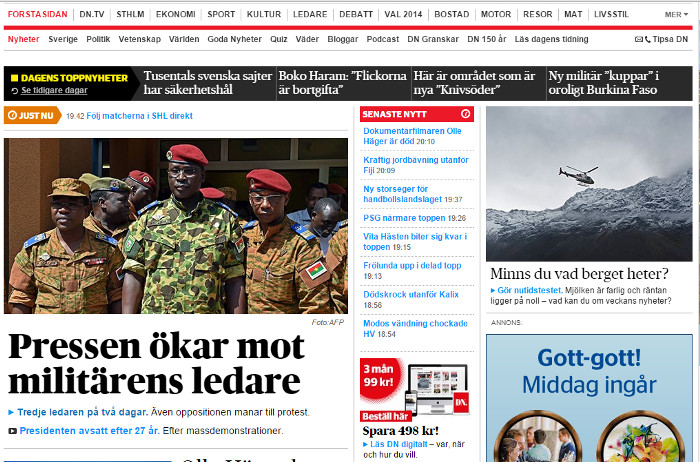
And finally, the developments here made headline news on the starting page of the biggest newspaper in Sweden:

dn

I’ve witnessed a kind of revolution first hand. I don’t think I’ve really understood the importance of these chain of events for Burkina Faso yet. I was just so happy to be allowed to go out working again today.

cooped up and crazy

The news of the day have been:

The president went out and said that the government was dissolved, but not the parliament, and that the military wasn’t in power at all. Then he offered to lead a new interim government until November next year, when the elections should be held as previously planned.

This was not good news, and it was feared that more protests would follow.

Then, just after lunch, the president went out and declared that he would resign, and then he was seen driving south in a long caravan of 20 cars. The commander in chief of the military declared that he was the leader of the interim government instead, and that elections will be held in 90 days.

People went out on the streets and celebrated. Storage facilities for the only Burkinabe beer were looted here in Ouahigouya, and people were drinking beer and drove around town honking.

Burkina Faso’s president of 27 years is not the president anymore. What everyone was demonstrating for has finally happened. Hopefully, this means that things will go back to normal. Some people are saying, though, that the commander in chief is too close to Compaoré and that the opposition isn’t content yet. Having the military in power never feels quite right. We’ll see. This evening, though, everyone just seems happy.

I realize that I’ve just been part of a historic sequence of days here in Burkina Faso. That these, hopefully, are the first steps toward creating democracy in this country. And a part of me really thinks that it’s cool to be here. This could be history in the making, after all.

But then another part of me is slowly losing my mind from sitting here, cooped up in a hotel, without knowing when we will be able to get out of here. I have my work to worry about – all this time here has meant a lot of reading of scientific articles, which in turn has led to me realizing there are so many things that I still don’t know and won’t have time to consider for my thesis, and how will it ever be any good if I can’t even get out to do my fieldwork? And at the same time: having constant access to slow internet, seeing people’s lives go on on my Facebook feed while few seem to have time to answer to my whiny cries for attention. I know that people care, and that they are worried, and that I shouldn’t read anything into the emptiness of my inbox, but I can’t seem to help it.

This is what being cooped up turns me into. Needy and paranoid. My very selfish reflection is: I need this coup d’etat to end now, so that I can get back to my villages, to my sweaty transect walks and moments of rest on tree trunks in the shadow of a homestead mango tree.