
I <3 reggae – NOT (Written on November 21)
All through our stay in Ouahigouya, whenever we were riding in the car and we didn’t listen to a French pan-African news radio channel, we listened to reggae. No, correction, one reggae CD. It was Desiré, and he must have loved it deep and hard and intensely, because he didn’t seem to have a need to listen to anything else. The same fourteen songs, over and over, for almost four weeks.
I’ve never been particularly fond of reggae. I haven’t really had anything against it either. I’ve just never really listened to it. If anything, I prefer ska.
But now, oh, the hatred. Maybe it’s just this particular CD, but backbeat, the feeling of never getting anywhere, the banality and repetitiveness of the lyrics, especially the repetitiveness of the lyrics. I just can’t stand it. The songs are constantly ringing in my head, and it makes me gag.
”Some call him Allah, some call him Jahve, some call him Judah. Allelujah, god is great. Allelujah, god is one.”
”We want peace in Liberia, peace in Monrovia, because Babylon shall not rise again. Babylon shall not stand again.” [Referring to the Liberian civil war, which means this CD must be quite old. Or of the Best Of-kind.]
”I heard Bob Marley died today. Oh, why do black heroes have to die so young?”
I guess it’s not fair of me to judge an entire music genre by one CD. But. The fact is, anything remotely backbeatish gives me chills right now. I’ll just have to get a cooling off period before I can stand getting exposed again. It might take years.
the last village of region Nord (Written on November 21)
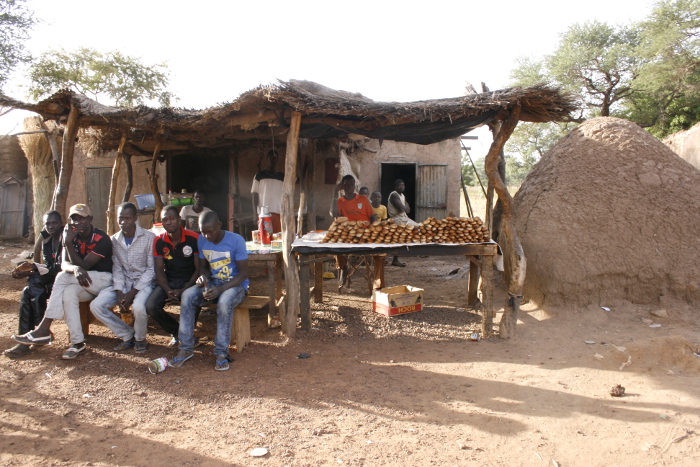
The last transect walks that I did in region Nord, where both Ouahigouya and Gourcy lies, was in a village called Minima. They had a big dam, but otherwise there wasn’t anything extraordinary about it.
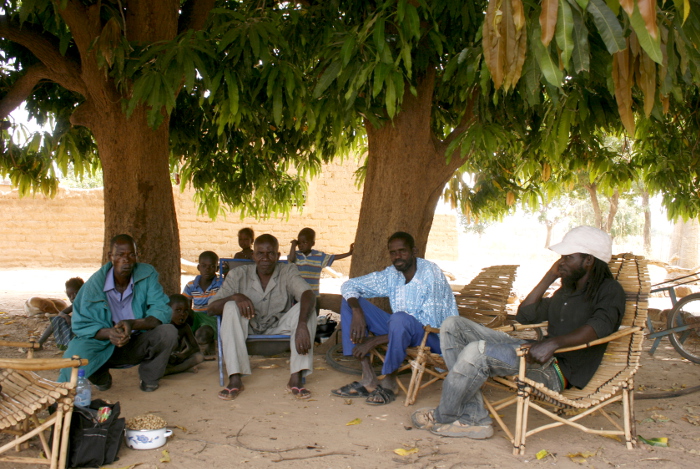
After the first walk, we sat under a big mango tree and Desiré and the former CVD, who had been in the military, started talking about the sins of Blaise Compaoré. That same morning, it had been announced that Kafando had been appointed transition president, and I guess that instigated the discussion. They were speaking a mix of Mooré and French, so the only things I understood were the names of the countries where Compaoré had been militarily involved: Liberia, Sierra Leone, Côte d’Ivore, Kongo. He has many sins on his conscience, that man, and all the people that I’ve met here seem to be happy that he’s gone.
Otherwise, it was an uneventful last day of fieldwork. I was introduced to the village chief, who was dressed in an amazingly orange and blue kaftan. All the other people (men) around me greeted him by taking his hand and basically bow-curtsying all the way to the ground. Seriously, the ceremonies surrounding greetings in this country. Coming from Sweden, I have trouble understanding the need for this extreme hierarchy, and I really don’t know how to behave in it. I just shook his hand and bowed my head a little bit. He smiled. Luckily, they’re very lenient with the ignorance of foreigners here, too.
That was it.
the laughing CVD of Ridimbo (Written on November 21)
In another Gourcy village called Ridimbo, the CVD was a youngish, joking, laughing man. He spoke mooré to me, and had a very expressive body language, managing to make jokes despite us not having any languages in common.
It was also a village where many other men did the same thing. It was a happy village, and the men seemed to enjoy our mere presence.

At lunchtime, the CVD half jokingly asked me to join him for lunch, and when I said that I would, everyone seemed to think it was the best of jokes. Until I actually started eating. That was an even better joke. I have no idea where all that happiness can come from.
The meal consisted of tó, a kind of very hard millet porrige, eaten with sauce, and maize couscous with a sauce of aubergine leaves. We ate with our hands, and first I almost made the mistake of taking the food with my left hand. Luckily, Desiré was there to stop me before I did. Because, as I had already been told, here you eat with your right hand. The left is used for washing yourself after you’ve been to the bathroom. Using your left hand when being offered food is a grave insult, like saying ”the food you’re giving me is as good as shit”. Oh, it’s a maze, navigating foreign cultures.
To be honest, the tó was discusting. A texture kind of like old oatmeal porrige, sour and starchy. I had to work on keeping a straight face while chewing it down, to the delight of the men around me. The maize couscous, though, had a very neutral taste, and the sauce was quite nice too, despite the aubergine leaves being very bitter. So, now I can at least say that I’ve tasted the real local cuisine.

In Ridimbo, they were also delighted with my and Elli’s fascination with animals. There were donkeys, cows and sheep, goats and chickens, as everywhere, but also pigs, horses with foals, ginnyfowl, ducks, puppies and bunnies. A man even more or less dragged me with him to his ponies and wordlessly showed me very clearly that he wanted me to take a photograph of him sitting on the little thing.

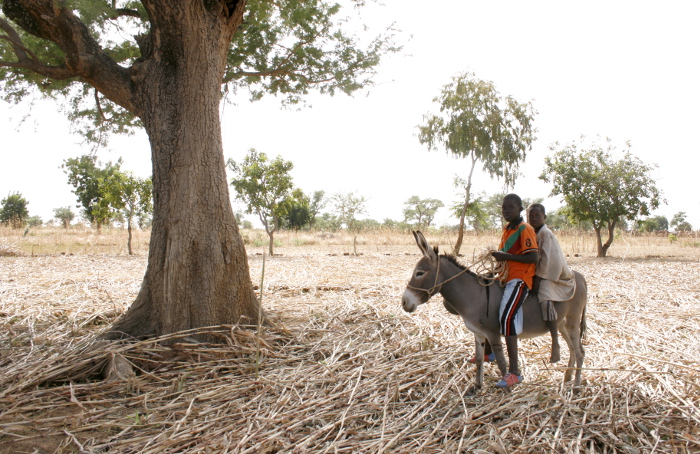
We were also shown the place where they made brick for the houses, and in the shadow of a big mango tree two boys were sitting, braiding mofaogo grass into a roof.


And when it was time for us to leave, the CVD said we should take a group picture. When I took up the camera, he said no no, they wanted me in the picture too. Elli took on the role as photographer. And when we were setting it up, more and more men and children gathered around the car and I ended up with this:

I felt like the event of the week here, and it wasn’t at all as unpleasant as it might sound. Actually, I didn’t want to leave.
And I was given another chicken, this time a small black-and-white one, nervously sitting in Elli’s lap all the way back to Gourcy.

(The driver gave it to a man with a BBQ stand close to our hotel in Gourcy, and the next day just before we left to go back to Ouaga, I was given a newspaper pack filled with barbequed chicken and onion pieces. It must have been marinated with herbs and pig grease, because it tasted like bacon. It, too, was delicious.)
I don’t want to pick favorites, but if I had to, I would pick Ridimbo, tied on first place with Teonsogo.
a different kind of science (Written on November 21)
One of the uses that the villagers here have of the wild plants is for medical purposes. I’ve been shown plants that can help with anything from malaria to curses and bad spirits. Or, as these examples:
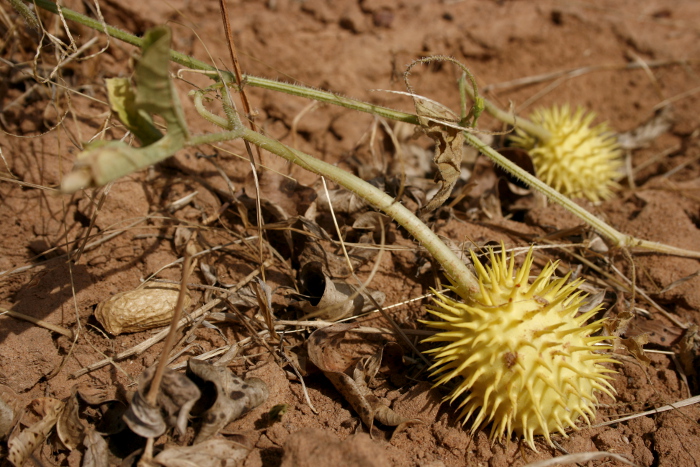
Nirjaba, that is given to chickens in their water if they get sick.
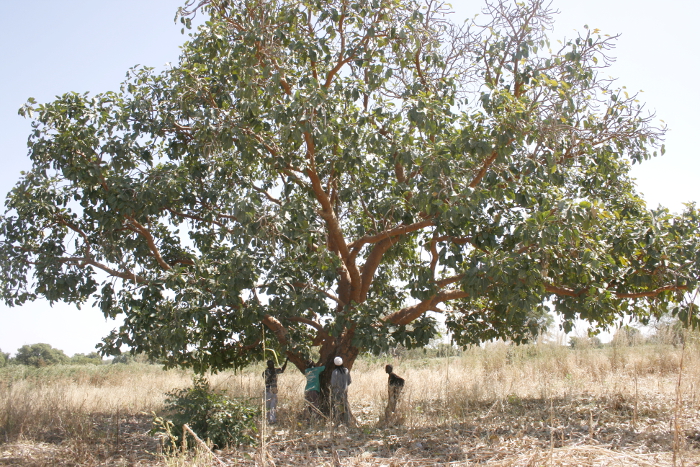
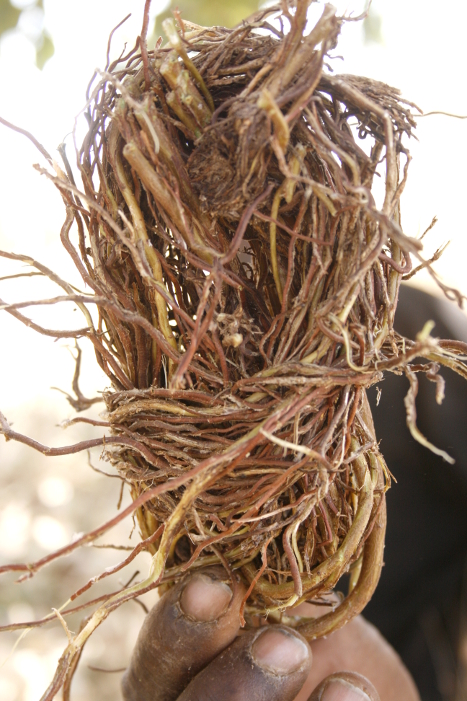
Kamsongo, a tree that sometimes grows roots on its trunk. These surface roots can be used to alleviate joint pains.
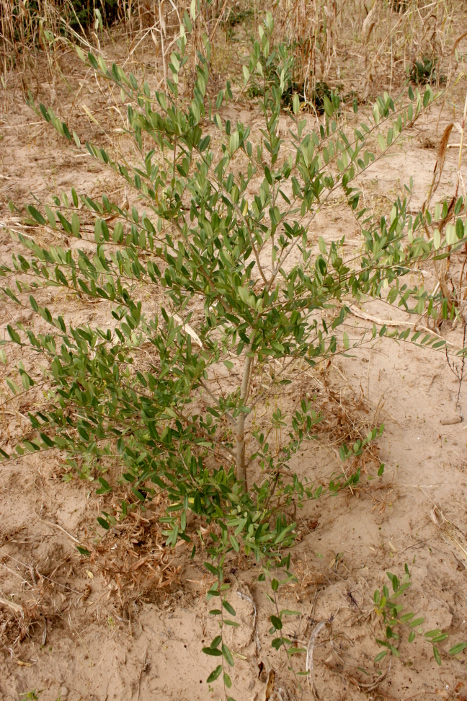
Pelgara, a bush with roots that can be used to treat trauma or insanity. I’m not sure, but I think it’s some kind of natural valium.
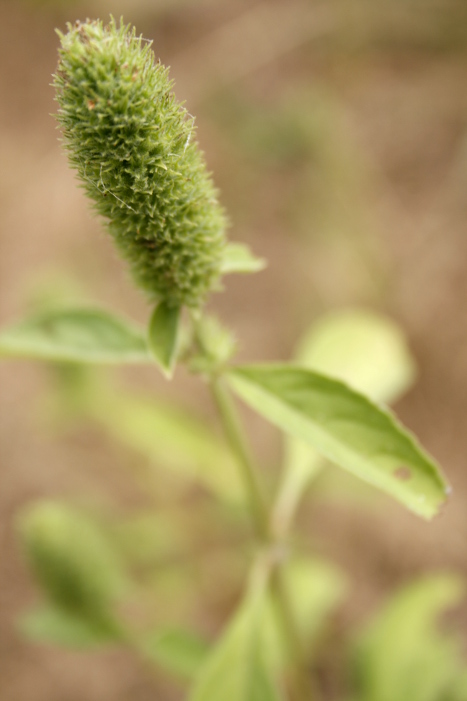
Younouyouga, the thyme-and-mint-smelling herb whose leaves can be dried, pulverized and inhaled through the nose as treatment of rheumatism.
There is so much knowledge here, so much knowledge that I’m sure we had in the Nordic countries at one point too. So many uses of the things all around us that we’ve completely forgotten. It is sad.
I hope development is more accepting to old knowledge here than it has been in the far north.
a new kind of gift (Written on November 21)
In Tarba, one of the villages close to Gourcy, I wasn’t given a bag of groundnuts. The village was quite a bit bigger than the other villages that I had been in, and the CVD here even ran a little shop. They had also been incredibly accomodating, and one of the men that I had interviewed had even been a traditional healer. It had been a really good day.
And then, when we were just about to leave, the CVD came walking toward the car from his house, carrying a white chicken. For me. As a gift.
I’m not sure how approriate my first reaction was. Surprise and confusion, I guess. But then I collected myself, grabbed the chicken around the wings just like I learned to do while working at a chicken farm on Vancouver Island, and thanked the CVD a thousand times.

All the way on the potholed and twisty road back to Gourcy, I sat with the chicken on my lap, patting it. It was so soft and so calm, really a beautiful creature. And if you’ve read what I wrote here while working on the chicken farm on Vancouver Island, you know how fond I am of chicks, chickens, hens and roosters. Amazingly funny animals, they are.
But what was I to do with a live chicken? It was a gift, so I had to accept it, but without the proper facilities and tools, I could neither keep it nor kill it. Luckily, the cook at our Gourcy hotel did. He took the chicken and the day after, I and Theo, our driver, shared a chicken stew with bread. It was delicious.
(I know some of you might find this callous, that I sat and cuddled with the chicken for an hour in the car, and then a day later ate it. I’m generally a vegetarian, after all. The thing is, though, that my reason for having a predominatly vegetarian diet at home is for environmental reasons, and because the meat industry in Europe is sick. The chickens here run around the homesteads, eating what scraps and leftovers they can find on the ground, especially around the places where the women clean the millet and beans and groundnuts. It is a chicken doing chicken things, barely having any additional strain on the environment at all. I don’t see a problem with killing an animal to eat it, what I object to is how most of them are treated in the life that they have before they die. This was a happy chicken. And it was a gift. In a culture where traditions and gifts and symbols are of utmost importance, not eating this chicken that was given to me would have felt like insulting the lovely people of Tarba. Like the blessings and the prayers that they dedicated to me would turn askew and give me bad luck instead.
In my opinion, if I can’t eat meat from an animal that I have met in person before it died, I shouldn’t eat meat at all. And I generally don’t. But now I did. And it feels OK.)
in the evening sun (Written on November 21)
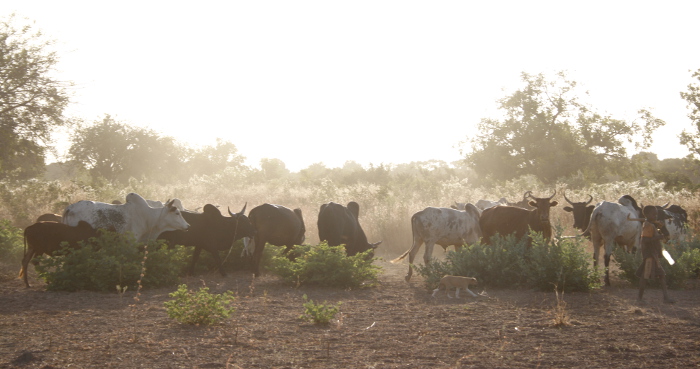
During the afternoon transect walk in a village called Tarba, we ran into a big herd of cows. They have them for selling, my transect walk companions told me, kind of as insurance. They do not eat the meat and they do not milk them.
The cows stirred up dust, making the air shimmer in the light of the setting sun. After a long hot day, the temperature was just perfect, and there was a slight breeze.
One of the boys who was herding the cows was walking with a little puppy by his side. He was singing, in a clear boy’s tenor, and the puppy was happily running back and forth between the boy and the cows. As if playing at being a shepherd dog.
One of those beautiful, perfect moments, walking through the fields and shrubby fallows together with a singing herder boy, his puppy and his cows, while the sun set in a shimmering golden mist.
my odd memory (Written on November 21)
I’ve learned something new about my memory here. I’ve always known that there are things that rarely stick, unless I put some effort in it, like names or phone numbers. Elli laughs at me for always having to ask her what my Burkinabe cellphone number is. It shouldn’t be too hard to memorize, eight digits, but I don’t know, I just constantly keep on mixing them up.
My memory is more of the bigger-picture-kind. I remember systems, things that logically fit together. In school, I was great at math and history and science, because those subjects are all about processes and chronologies and pieces that fit together to make a bigger whole. I guess my memory is associative, and based on understanding. A phone number can’t be understood, neither can a name. Photosynthesis, on the other hand, or the French revolution can.
What I’ve learned here, though, is that I have a great memory for places too. Maybe it’s something that I was born with. I’ve never been prone to get lost anywhere, and can usually find my way back if I’ve been someplace once. Before smartphones, I could even find my way to places I’ve never been to by memorizing a map before leaving home and knowing how I should walk based on that. It shouldn’t surprise me, then, that I have a memory that easily translates between real-world-features and representations of the same things as seen from the sky, such as in maps or satellite images. But I also think that my years as a geography student has fine-tuned this talent of mine. I’ve had plenty of practice trying to interpret maps and aerial photographs and other representations of the Earth’s surface.
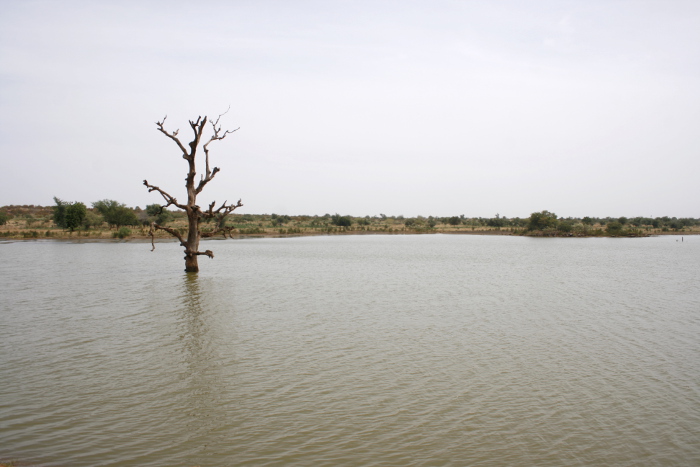
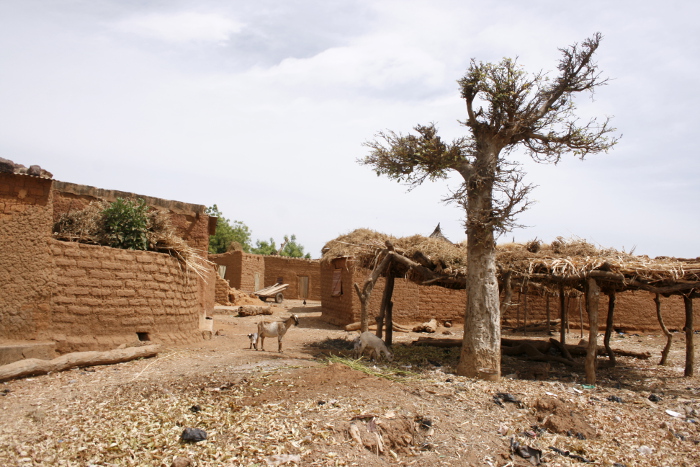
Here, I’ve walked through eight villages this far, for about ten kilometers each. I’ve logged GPS points every hundred meters or so, and I have taken notes. But when I sit down and go through the points, I barely have to look at my notes. I feed the coordinates into Google Maps, and based on the satellite image there, I remember exactly what it looked like and what I was thinking when we walked there. And when doing my re-visits to the villages, I have been able to recount the path that we walked with the help of the map sketches that I’ve made, clarifying for the villagers (who are not as acquainted with maps as I am) by explaining that this is the field by the big baobab tree, and here is the bare soil that they’ve tried to improve by digging down stone rows, and that is the little patch of holy forest where the big snake lives. Things that I haven’t even written down in my notes, but that I just remember anyway.
I guess the conclusion that can be drawn from this, is that I have a good memory for landscapes. I remember visually. I think that means that at least part of our memories, not surprisingly, are interest based. I remember landscapes, because they interest me, and I remember maps, because connecting them to landscapes comes naturally to me. And based on this, one could say that I’ve chosen just the right profession. Luckily for me.
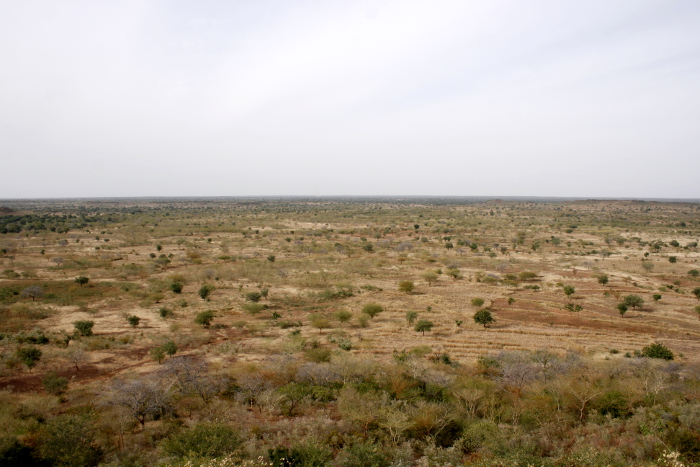
what I’ll miss from Ouahigouya (Written on November 21)
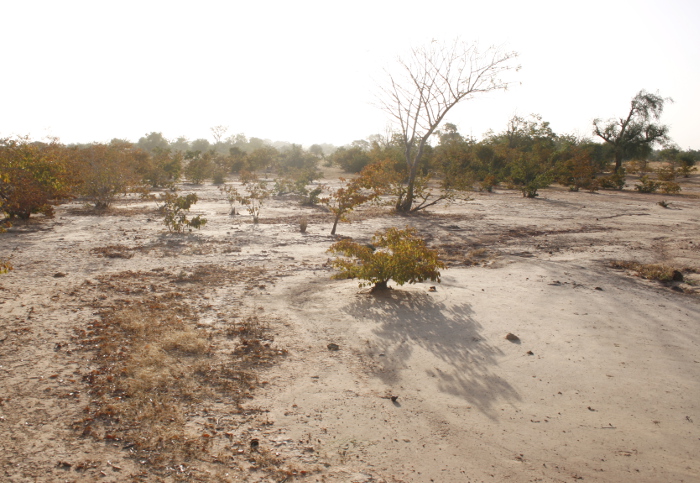
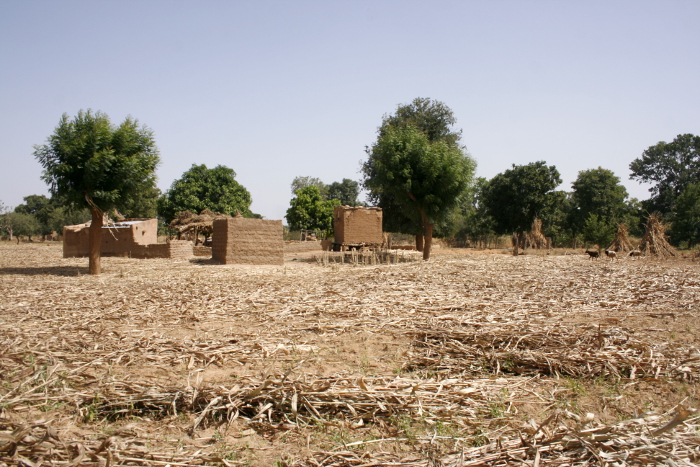
The sun rising over the shrublands. The smells of dawn, soft, dry and earthy.
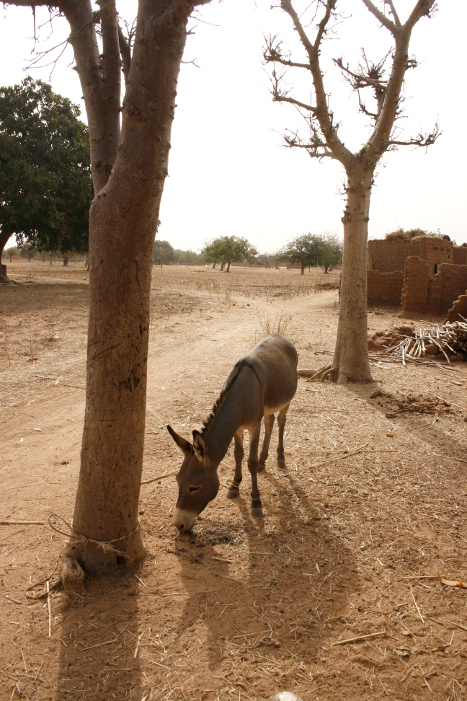
The sounds of donkeys and goats. The desperation in a donkey’s scream, or the very un-animal-like braying of the goats. Whereever I hear them, I can’t help laughing. I just can’t.
And the people. I’ll miss working with the villagers. Their sincerity and helpfulness, going out of their way to make sure I got what I needed.
Now that it’s over, I can safely say that my stay in Ouahigouya was a mostly nice one. Despite the house arrest that almost drove me mad, the misunderstandings due to culture differences, the rashes and mosquito bites, the inhumanly early mornings, the exhaustion and the constant heat. Despite all of that, it was good. It really was.

a farewell to Reko (Written on November 21)
Saying goodbye to the people in Reko was a strange affair. Of course, it was Elli who had worked there and I hadn’t been there much at all, but still. They had welcomed us with open arms, making us feel like anyone who was friends with Hanna got an honorary membership in the village too. And they had been so accommodating to Elli in her work, helping her to dig in the solid dry soil and weighing harvests.
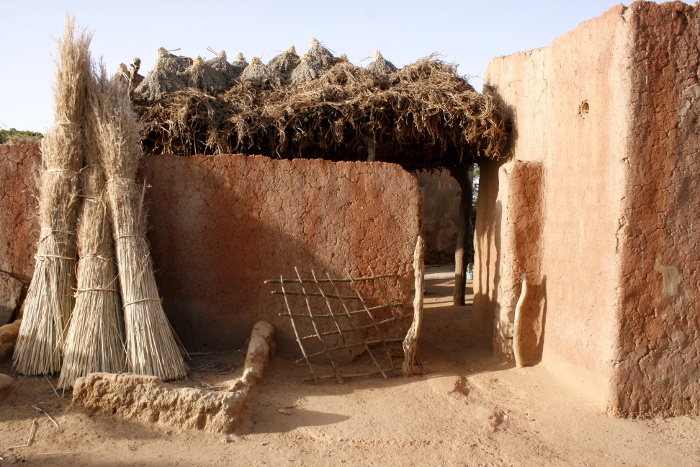
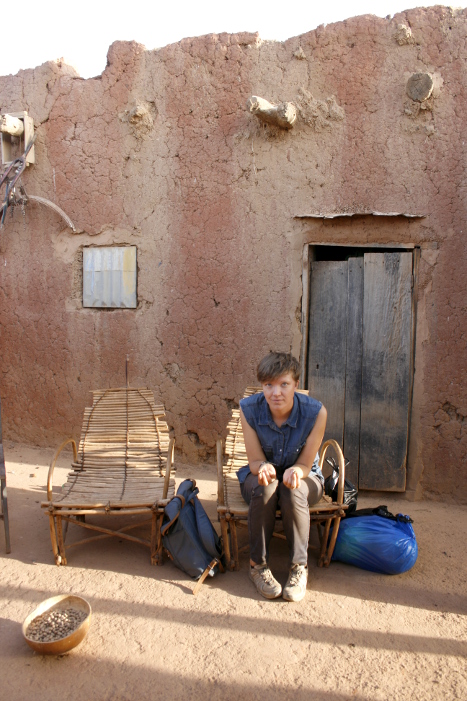
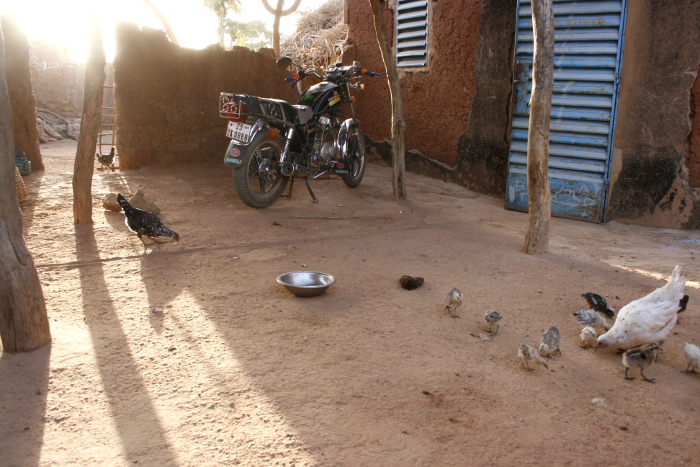
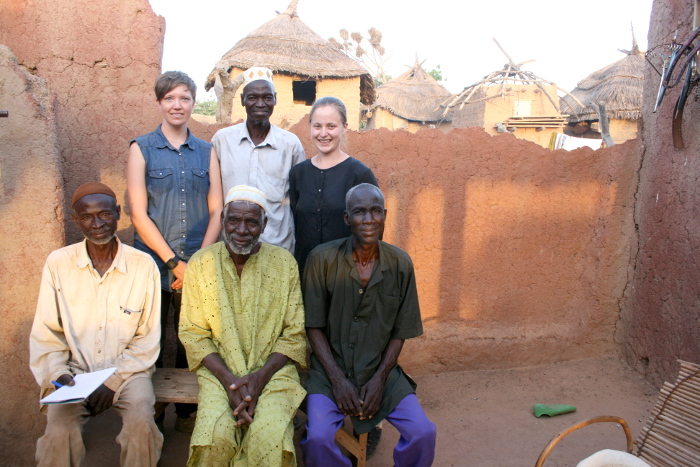
We had a little meeting outside Madi’s house, with Madi and Kassoum (the other man who had helped Elli when Madi was busy) and two of the village elders, while a hen and her chicks ran around, trying to steal groundnuts from the calebash bowl Madi had put on the ground. Elli thanked them for all their help and gave them gifts, they in turn gave us a beautiful little shirt to give to Hanna’s baby, as well as more groundnuts and a way too big bag of white beans (I’m serious, it was probably more than five kilograms, what are we to do with all these beans?). They wished us luck in our work and that we would be successful and that we would be healthy and our families too and said that we were always welcome back.
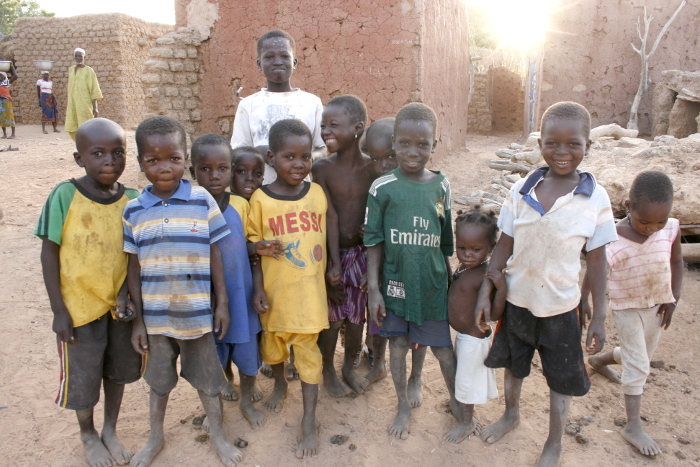
When we were about to leave, the children asked to be photographed, and of course I couldn’t say no. They all got so excited, though, the smaller children got trampled and I had to tell them to calm down. I don’t know if they got my bad French, most of them had not started school yet and probably didn’t speak anything other than mooré. It is strange, this fascination the children have of being captured in a photograph. Having your face show up on a tiny camera screen. Maybe I would have been the same, if I hadn’t had a journalist father. I remember my childhood as being constantly photographed. I got quite blasé about it.
The sun had already set when we left Reko and its sounds behind. A boy was leading a huge black bull by a rope. Goats were being herded back to the village. A lonely donkey was screaming somewhere in the distance.

This was the last that we saw of Reko. It is very possible, even probable, that we’ll never see it or its people again. A remote village in northern Burkina Faso, when would we have a reason to just pass by? I’ve left many things behind in my life, as I’m sure everyone has, many last meetings with people. But rarely have I been as acutely aware of the finality of a meeting as I was now. A really strange feeling, it was.
Reko is one of those truly friendly places on Earth, and we have been lucky to get the opportunity to spend this time there. Truly blessed, really. The prayers of all the villagers for our good luck has come true.
The next day, we left Ouahigouya for Gourcy, and three days of transect walking in villages there.
 Katja Malmborg