It’s my namnsdag today. A strange tradition, really, this Swedish one of making every day of the year the ”name’s day” for two names. Today, one of the names is Katja. I have met no Swedes today, though, who could wish me a good namnsdag.
Instead, I’ve been to Tanlargo. The watermelon village. This village is also small, and as it turns out, the people are not mossi. Instead, they belong to a people called Sonray who wandered in from Mali a long time ago and settled in a couple of villages in the Kaya area. They speak their own language, and had names that made Desiré laugh when he tried to spell them out for me. In the end, we had to look at their identitiy cards. Of course, they spoke mooré too. A bilingual village.
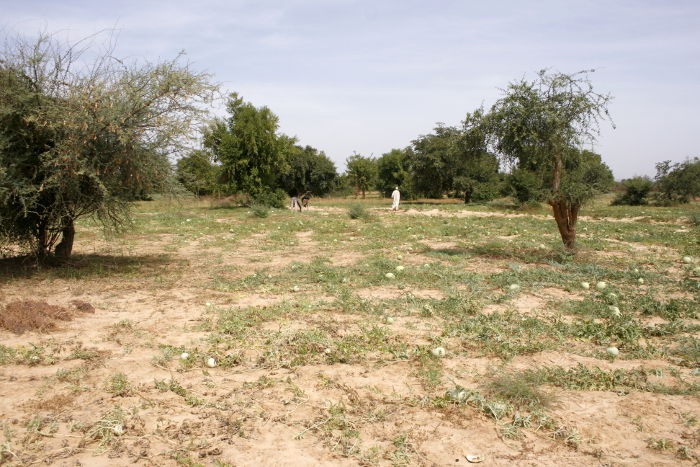
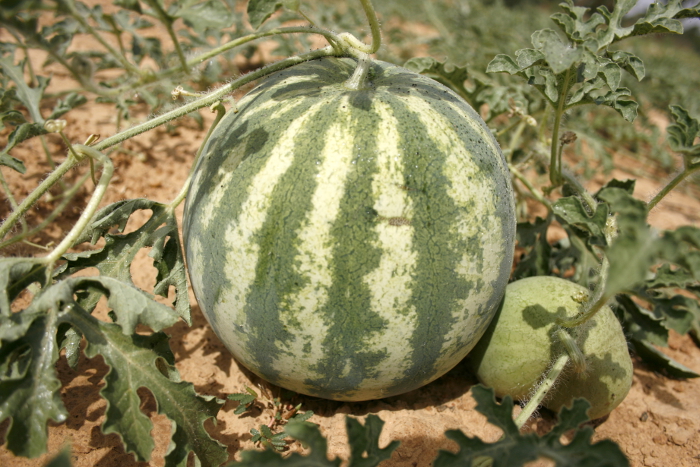
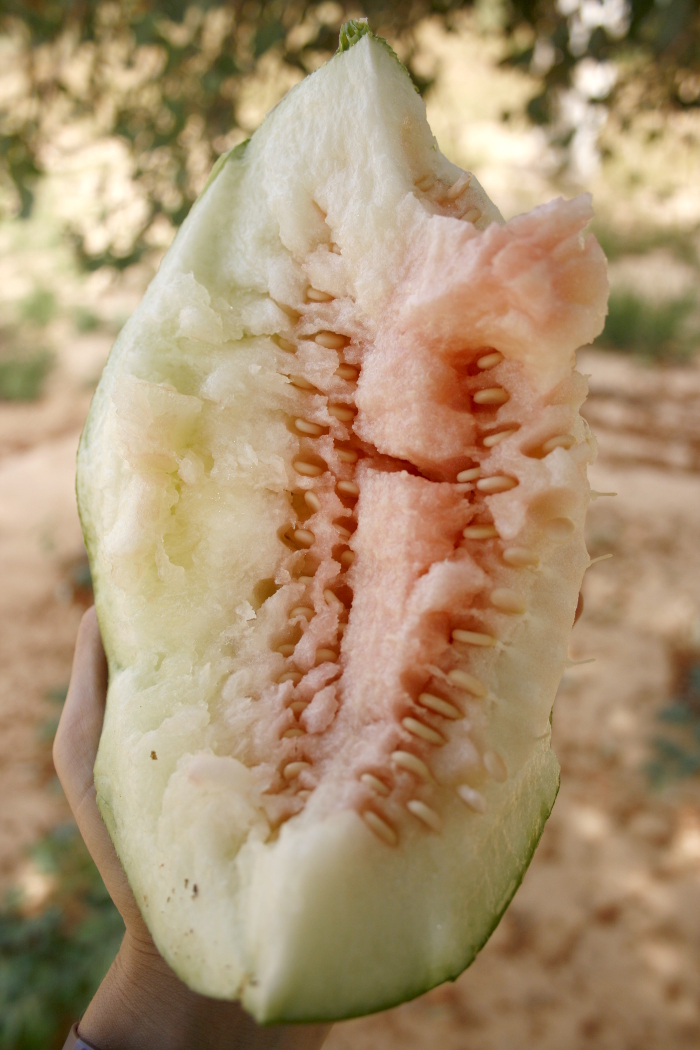
The most prominent thing in this village was the river that ran through it, and the big depression lying on both sides. There, they grew watermelons. One melon had accidentally been picked without being fully ripe, and they gave me a piece to try. It was like eating pink water, fresh, not tasting very much, but still refreshing, especially in the midday heat.
A recent development with the river, according to my guides, was that it had started to overflow more aggressively during the last ten years or so. The CVD said he thought it was because of the population increase, which had lead to an increase in land converted into fields. Previously, there had used to be buffer zones with bushes and other natural vegetation next to the river, to slow the water down, but now, after a heavy rain, everything just flooded.
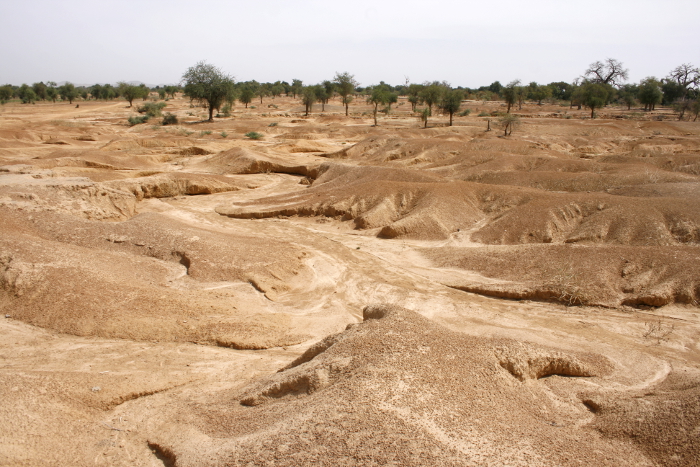
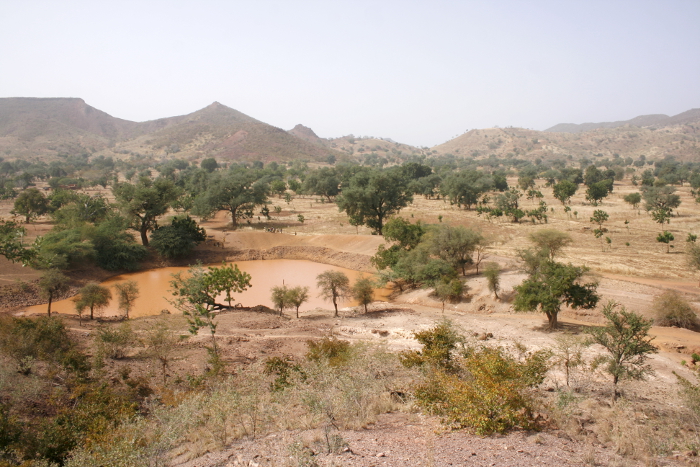
There was an area south of the river that had used to be fields, but now had turned into a huge expanse of barren soil, heavily eroded. Beautiful, in a way, how the water had carved its way down into the soil, creating a sort of badlands in miniature – but mostly tragic, of course, how drastically land can degrade.
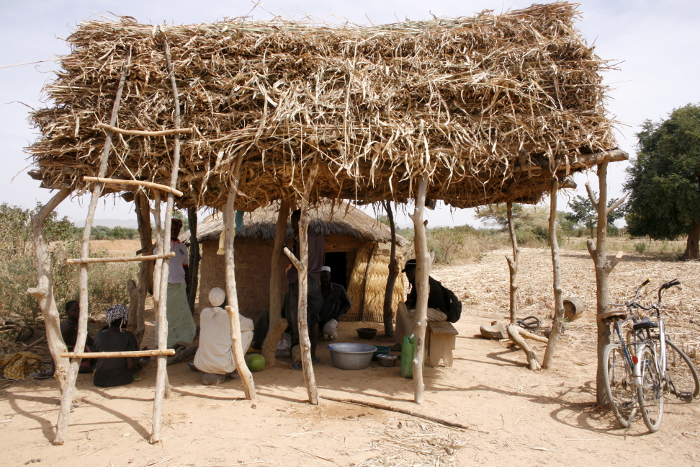
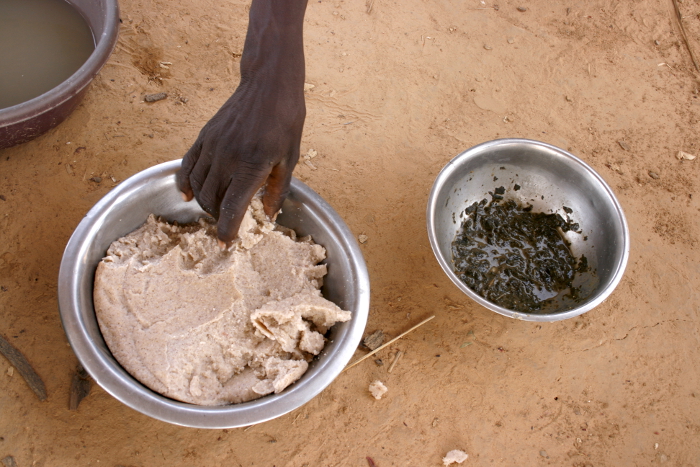
When walking past a field where a group of people were working, we were asked to join them for lunch. It became the second time I got to try tô. This time, the taste was less disagreeable, possibly not spiced with that putrid thing, but it was still slightly sour and the consistency still like old porrige. For sauce, they had a quite salty thing made out of the leaves of a weed that grew everywhere. The taste was okay, but it was slimey. I guess I’m a bit too European to properly appreciate the real village food here.
At the end of the first walk, when we returned to the school where we started, the village chief was waiting for us. He invited us to eat with him too, and this time it was spiced rice with small pieces of fish in it, more for the taste than for actual protein intake. That, I had no problems at all to eat. For dessert, they cracked open a water melon, freshly harvested from the field. It might have been the heat and the situation, I don’t know, but right there, I felt like that was the tastiest watermelon I had ever eaten.
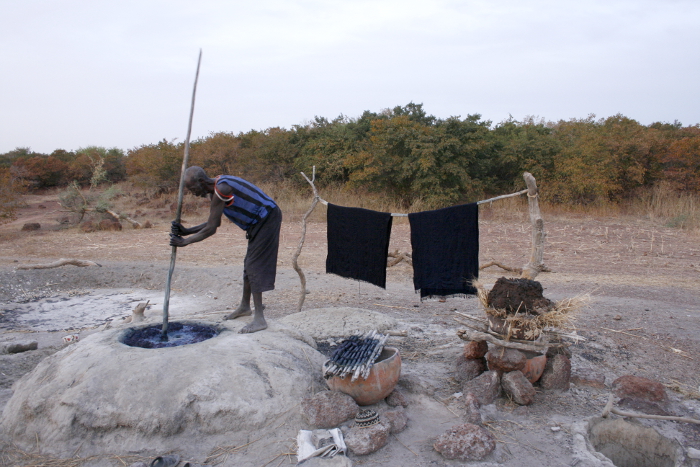
The afternoon walk ended up by a small hill behind the village, full of different sized, deep holes. The woman, one of the afternoon’s guides, told me that it was a traditional place for dyeing fabrics. A man was standing by one of the holes, pushing a pole up and down in a dark purple, viscous liquid. It smelled like rotten eggs, but next to him several pieces of cotton fabrics were hanging to dry, intensely black in the setting sun.
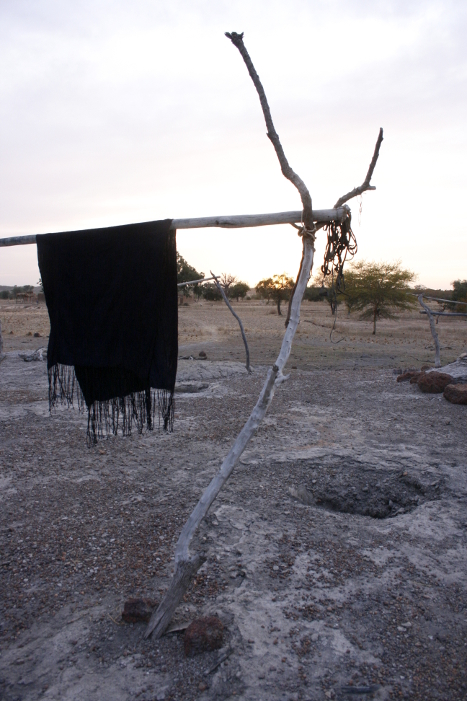
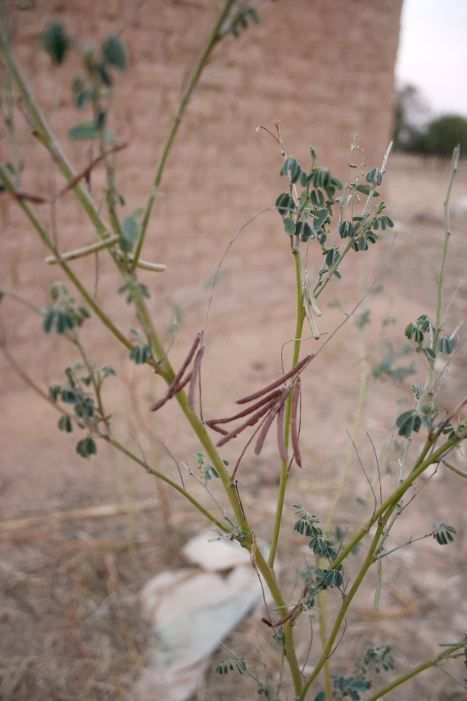
The woman told me that the black color comes from the leaves of a tree called gare, after several days of treatment. And then she showed me the tree, not fully grown, but still with the tiny, tiny leaves. Amazing, how something so little and green can turn into something so intensely black.
In the backseat on the way back to Kaya, the dark fast approaching outside the car windows, I sat caressing a new kind of gift in my lap. A huge water melon. And, of course, with a bag of unpeeled groundnuts by my side. A good day, indeed.



 Katja Malmborg