Cuba Libre on the beach (December 20th)

_MG_4678

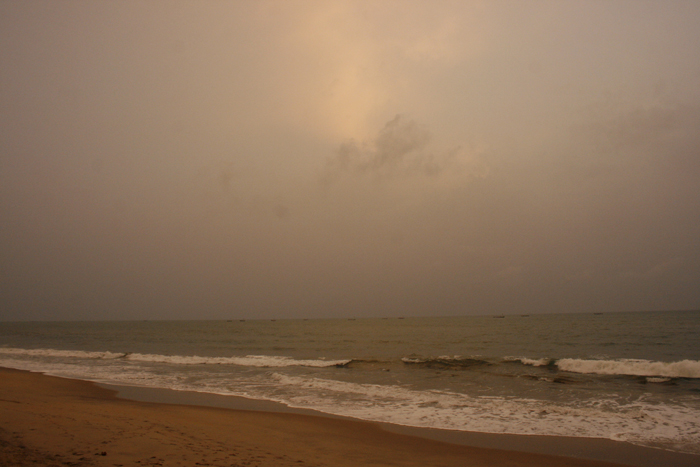
The fishermen are returning from the sea. There is a strange kind of brown tint to the light. Dusk, and a shapeless cover of clouds. The four dogs are sleeping on the sand underneath the palm trees. The bartender made me a very strong Cuba Libre.

That brings back another set of memories, from Bolivia again. Biking down La via de la muerte, Death Road, formerly the stretch of road with the highest number of deaths per year in the world, now a tourist attraction. An adventurous day trip from La Paz. You start at a mountain pass at 4600 meters above sea level, and then the winding road takes you down to 1200 meters above sea level, from snow covered mountain tops and harsh Andean rocky mountainsides down to subtropical rainforest with huge turquoise butterflies fluttering between the big red and orange flowers.

I biked it with Natalia, Cecilia, Jonna and Alice in three hours, the speed such a rush – and the Cuba Libre that they served at the bar at the bottom went straight to our heads. The laughter just wouldn’t stop bubbling out of us. That, and the following couple of days in beautiful Coroico, bathing in waterfalls and going on impromptu butterfly safaris by the river in the bottom of the valley, and the delicious strawberry milkshakes that the woman on the street corner at the bottom of the hill made, and, oh, the incredible breakfast buffet at the hotel, was probably the best part of my half year in Bolivia and Peru.

So my Cuba Libre now: Only fond memories.

This truly is an ecolodge. There isn’t even electricity. Only solar-powered torches for when the sun has gone down. There is a solar-powered battery-charging station, but it short-circuited when I tried to charge my computer. It can only handle phones.

It’s quite fine, really. I have a good book, and plenty of yarn still. A bag of unpeeled groundnuts that I brought with me from Burkina. And I don’t know how many hours of podcasts on my phone. Everything I write from here on will be by hand.

The only thing is Buffy. She’ll have to do without me for a week. But she is an incredibly capable woman. She’ll survive just fine without me, I’m sure of it.
_MG_4675

thoughts and waves (December 20th)

I was walking on the beach, listening to En varg söker sin pod, a podcast by Liv Strömqvist and Caroline Ringskog Ferrada-Noli. Liv Strömquist is a creator of graphic novels and playwright, but she also has a past in humor and satire programs in Swedish public service radio. She is a feminist, left-wing and intellectual. In a sense, she’s one of my idols, if that is something that one has at my age.

And I like the way they talk, Liv and Caroline, it’s like being allowed to listen in on the conversation between two friends. Two very intelligent, well-read and well-connected friends. They’re incredibly annoying too, at times, and I don’t agree with everything that they’re saying, but that’s not necessary. I don’t like everything unconditionally about my real friends either. That doesn’t make my affection for them any less whole-hearted. Simply put: I like the podcast En varg söker sin pod, and I feel like it broadens my perspectives on things.

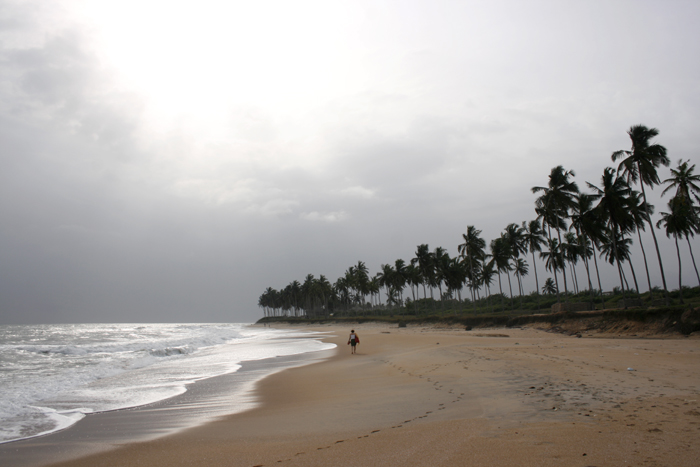
Anyway, back to the beach. I was walking in the wet sand, the waves occasionally washing up my legs, listening to Liv and Caroline talk about a book, and how eccentric women are considered crazy, and the psychology of rejection.

It got me thinking. And the thoughts felt important. Like I should write them down. But I was walking on the beach and that was nice too.

And so I continued walking, with the thoughts developing in my head. It scared me a little, that I would have these insights, and that I would forget them. Not learn anything from the smart things that I hear. I often feel like I’m having big thoughts, inspired, while listening to my favorite podcasts. But I rarely have time to write them down.

I was walking on the beach, the thoughts flowing through me like water. Or, rather, like waves crashing onto the beach. Every new one feeling like the big, overwhelming – but then it collapsed into the sand and melted into the next wave, helping to build up a new surf. And so every wave comes and is forgotten.

And my thoughts. I guess it doesn’t really matter. There was sand between my toes. And we learn. It just doesn’t have the be conscious all the time.

_MG_4662

getting from inn to inn (December 19th)

Ghana might be a beautiful country with rainforests and beaches – but it all gets kind of ruined from the extreme hassle that any kind of transport entails. Men screaming at you from all directions, wanting your business, but there is no niceness about it. And being white, they’ll happily charge you three times the local price without blinking. I don’t know if that is something that I should just accept, but, I just can’t let go of the feeling that taxi drivers and bus ticket sellers constantly want to cheat me and treat me like I’m stupid, and that makes me put my warrior suit on. I have no problem haggling here, since I can do it in English and I can hold my own, but constantly having to do it, well. My point is: getting anywhere (spatially) in this country is exhausting.
After a slow morning at the B&B, we kind of haphazardly ended up in a not very comfortable bus that took us from Kumasi to Cape Coast. The system here seems to be No Timetables. Instead, the bus leaves when it is full. And it really was. Completely packed.

IMG_7901

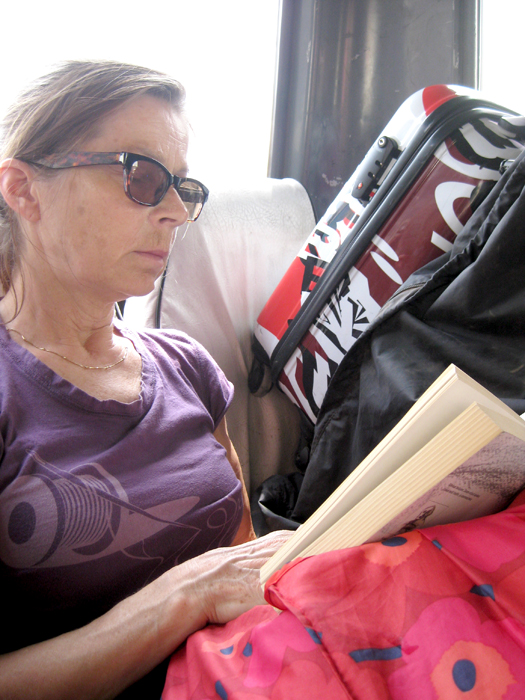
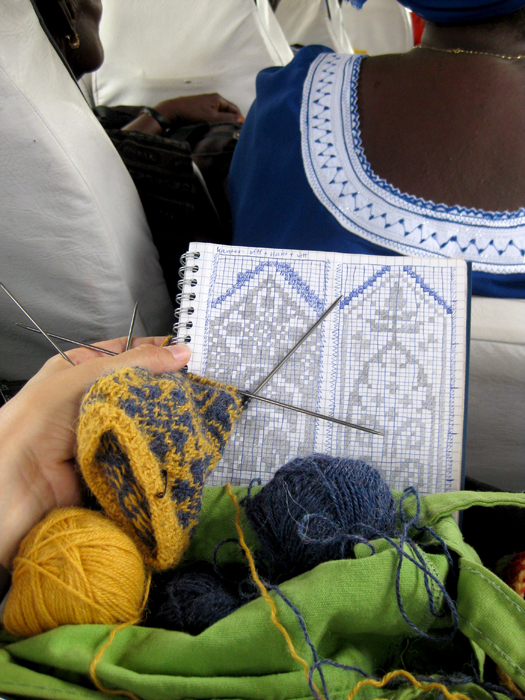
So there we sat, in the back, mother and I. Her reading, me knitting and listening to radio programs about the new political situation in Sweden. All windows were open, so there was a constant breeze, but most of the time it felt like we were breathing more road dust and exhaust fumes than air. It wasn’t the worst bus trip that I’ve ever been on, for sure, and I’m not particularly picky when it comes to public transportation. But it wasn’t a relaxing trip.

IMG_7903

It ended up being a five hour trip. We drove past small towns, beautiful green mountains and secondary forests with the odd high rainforest tree. It was a beautiful landscape, but still the journey wasn’t really enjoyable. Halfway through, the engine of the bus started sounding suspiciously coughy, so, that stuck in my mind instead. What if the engine would explode?

But it didn’t, and in Cape Coast we gave up and took a taxi the last stretch of road to the beach-side ecolodge that will be our Christmas hideout.

IMG_7909

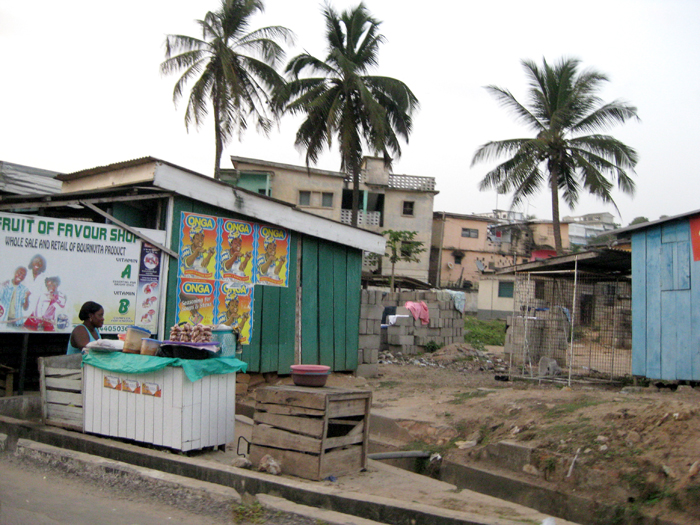
(A photo from Cape Coast, taken from the taxi window. As the Christmas week later unraveled, this would turn out to be the only sight-seeing we did in the former capital of the colonial British Gold Coast. Mother and I were simply too lazy to take the forty minute tro-tro ride from Elmina to Cape Coast for some proper sight-seeing and slave trade fort visiting.)

The sun had just gone down when we got to the lodge Stumble Inn, but from the little that I saw before complete darkness, everything here seemed lovely. The first thing that I did, after dropping off our bags in the hut, was to take off my shoes and walk down to the beach. I stood in the surf with sand between my toes, letting the waves wash over my feet, with the darkness descending around me. A white-and-brown dog from the lodge came and sat down beside me, and for him and for the waves I sang a couple of Christmas carols.

Dinner was a sturdy stew.

Here, I’m pretty sure I’ll be able to relax.

the four villages tour IV: Bobiri Forest Butterfly Sanctuary (December 18th)

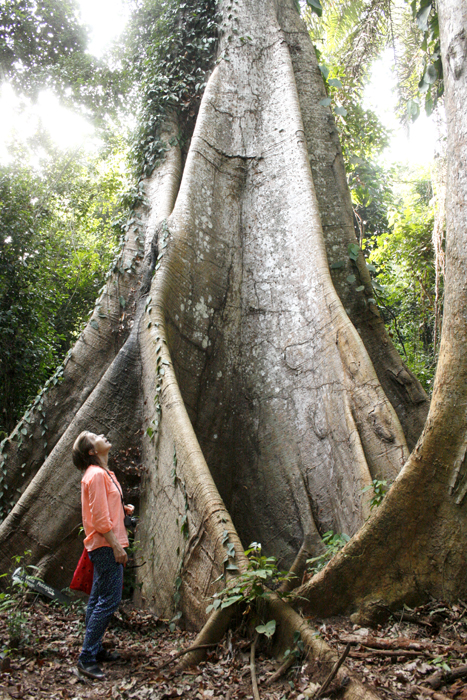
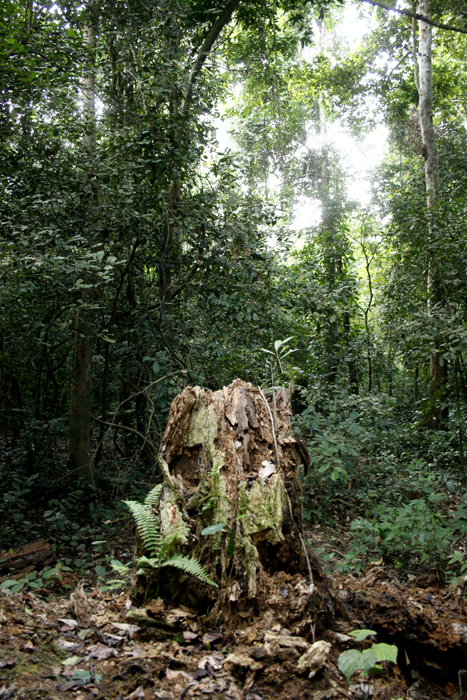
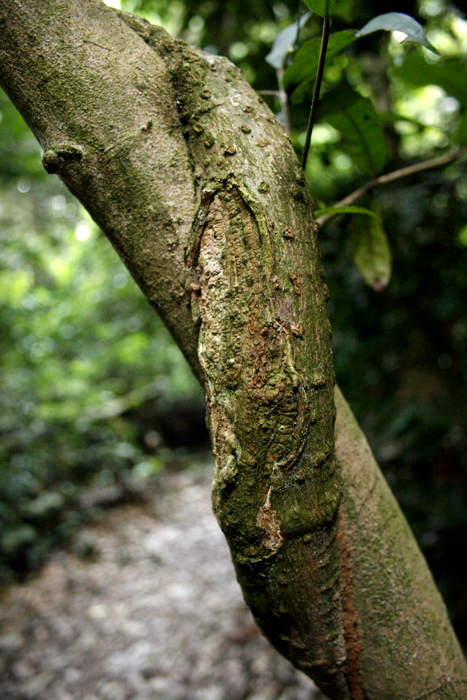
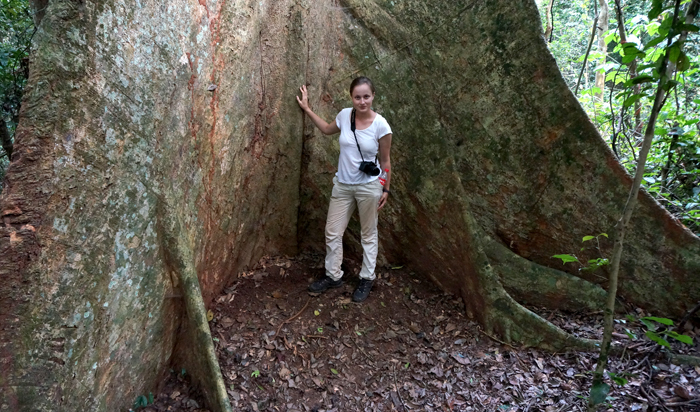
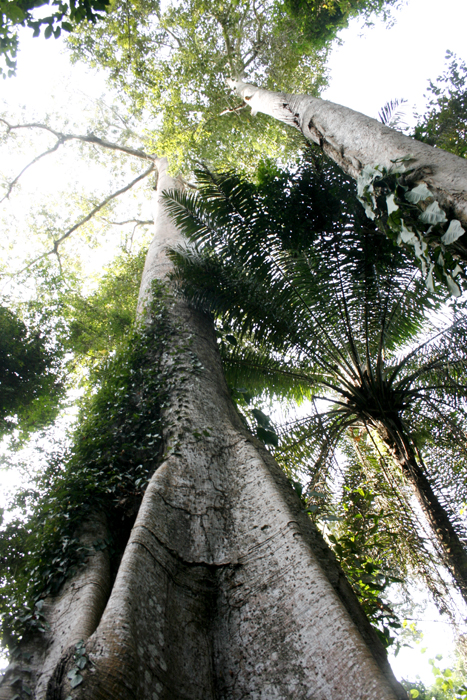
Strictly speaking, Bobiri isn’t a village. It was, however, the last stop on our craft village tour. It is a nature reserve and a butterfly sanctuary. Unfortunately, it was the wrong season now to see any butterflies, but there were plenty of humongous rainforest trees.

_MG_4546

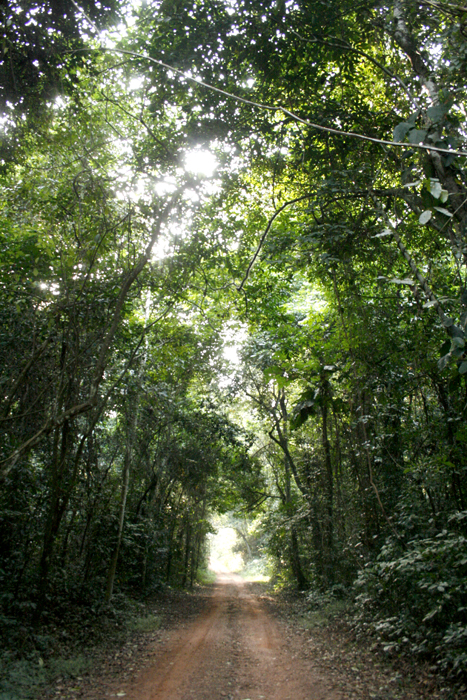
After all the noise and the bustle in and around Kumasi, getting to this quiet, calm and cool place was certainly like coming to a sanctuary. Everything so green, calming for the eyes. A place of rest.

_MG_4591 _MG_4599 _MG_4643 DSC04915

You know how I love trees. Well, this was the high point of my Kumasi visit.
_MG_4636

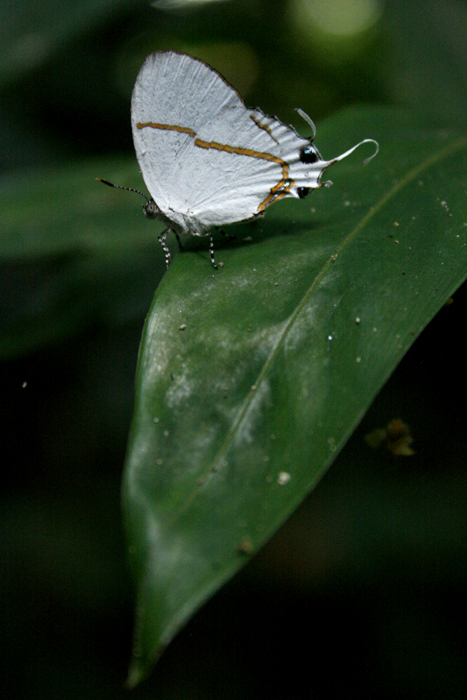
And we even got to see a butterfly in the end. It was tiny, but prettily white and it sat so still on the leaf for me, as if it wanted to be photographed.

_MG_4553

Sitting in the car on the narrow road back from the sanctuary, watching the wall of high trees and dense undergrowth pass by, I thought about the extreme difference between this place, and the villages where I had worked in Ouahigouya. There, the colors mostly brown, with a splash of olive here and there, and the sun so bright it could burn your eyes out. Here, every shade of green you could imagine, and the shadows keeping all the mysical creatures of the rainforest just out of your sight. It’s fascinating, the steep gradient from north to south here in West Africa – that the climate and vegetation differs so much, while the societies were so similar. Of course there are many differences between the Mossi and the Asante cultures, but from my European perspective, the similarities still seemed to dominate. Despite this extreme variance in landscape.
Also, on a more personal level, it felt significant, almost as an illustration of the long and very eventful journey that had taken me from the Sahelian semi-desert to the Ghana rainforest. I’ve seen so much, experienced so much, and I do not yet know how to make sense of it all.

_MG_4638

the four villages tour III: Adanwomase (December 18th)

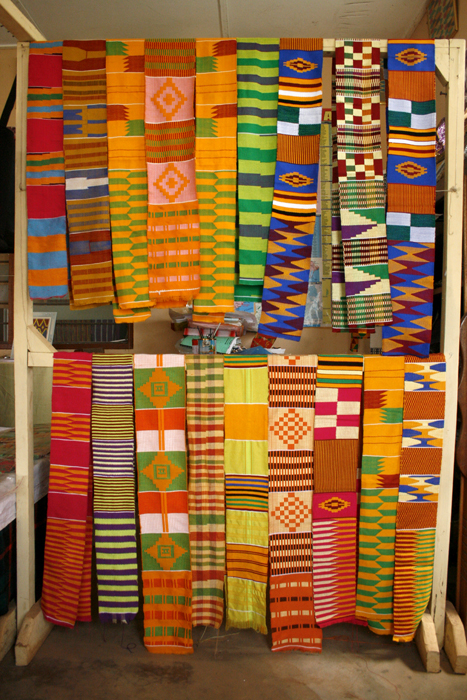
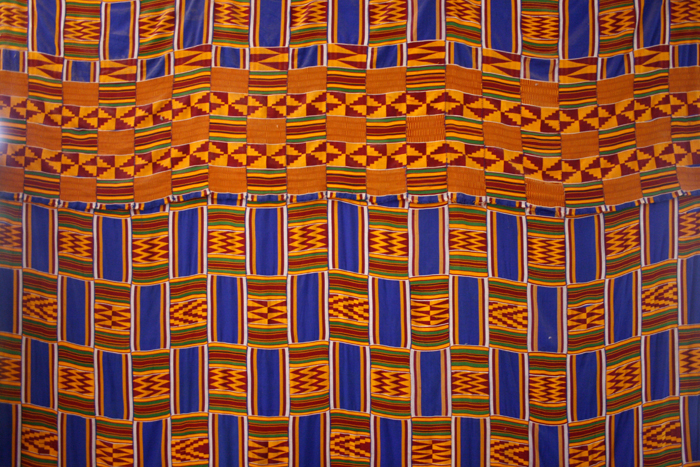
The flag ship of Asante crafts is the kente weaving. In Adanwomase, they make the weaved strips of cloth with intricate patterns that are sown together and made into the clothes of the Asantehene and his family.

_MG_4419

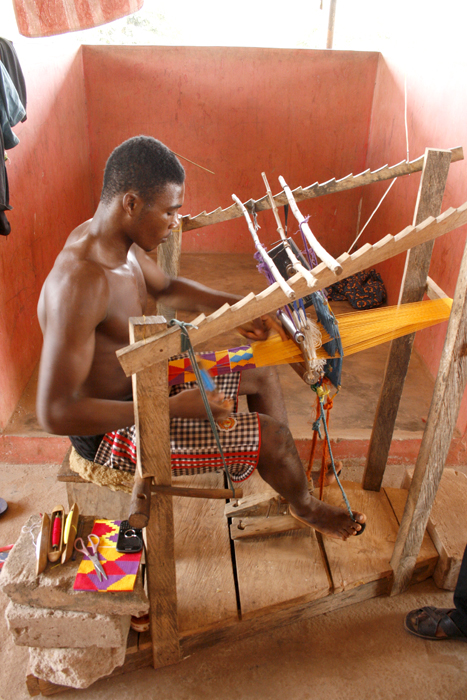
It is a weaving technique that is only taught to the boys and men of the village, and they can already start practicing at the age of eight. However, it isn’t until they’re sixteen that they are allowed to start weaving full-time. Our tour guide made sure to point that out.

_MG_4405

We were shown around among the looms. It was obvious this was a very advanced kind of weaving technique, with many strings and pedals. It was fascinating, watching them work with both hands and feet making the patterns. So fast! Such craftsmanship! There’s just something about watching people who really know how to work with their hands, be it as a pianist or a kente weaver. It is hypnotizing. I can’t stop watching.

_MG_4486

As with the adinkra, all patterns and colors have different symbolic meanings, and if its done the proper way, every kente weave is done specifically for the person who will wear it. They are usually ordered for a family, a piece of clothing with identical pattern and colors for every member of the family. That shows unity, something which is essential in the Asante tradition.

_MG_4497

Some of them were really beautiful. And quite expensive – as they should be, considering the time, effort and expertise that is put into producing them. One kente weave strip takes up to a couple of weeks to produce by a master weaver.

DSC04892

I didn’t buy anything. I simply didn’t know what I would use it for. But the guide made me try on a traditional kente dress that they had on display. I must admit, it wasn’t the best-fitting outfit that I’ve  worn.

The village Adanwomase also grew cacao. Cacao is one of Ghana’s largest exports, making up about 10 % of the country’s economy. It is also the second largest producer of cacao beans in the world, with about 20 % of the total world production. Quite a lot of the cacao in Ghana is actually produced in these kinds of small-scale farms in villages, after which the cacao beans are sold and sent on to the next stages of processing.

_MG_4462

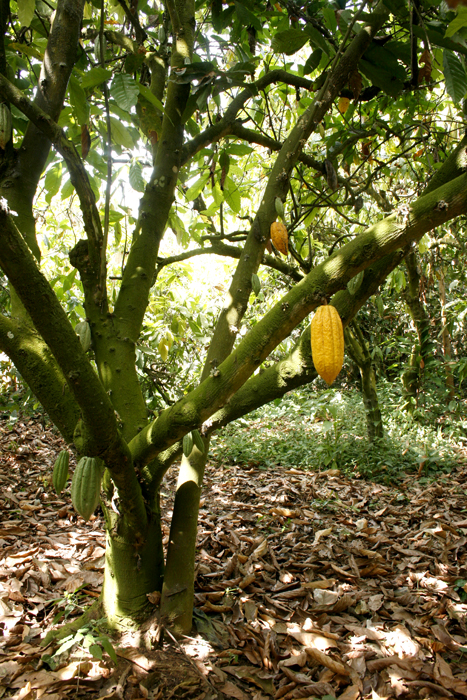
The cacao fruit grows on a quite small rain forest tree, originally from the northern Amazon basin.

_MG_4449

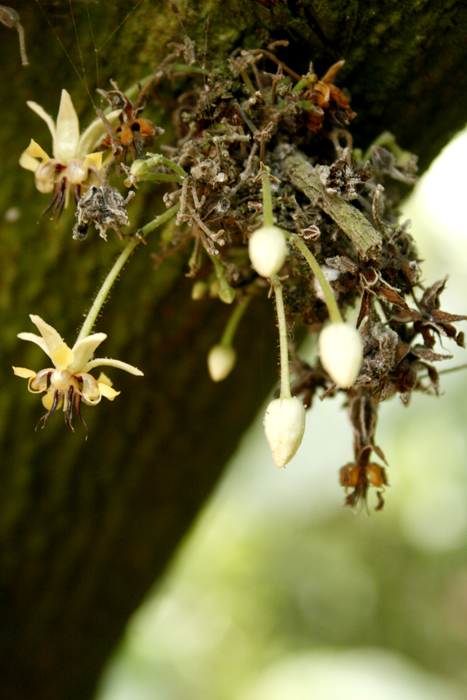
The flowers are tiny, growing out straight from the branches …

_MG_4431

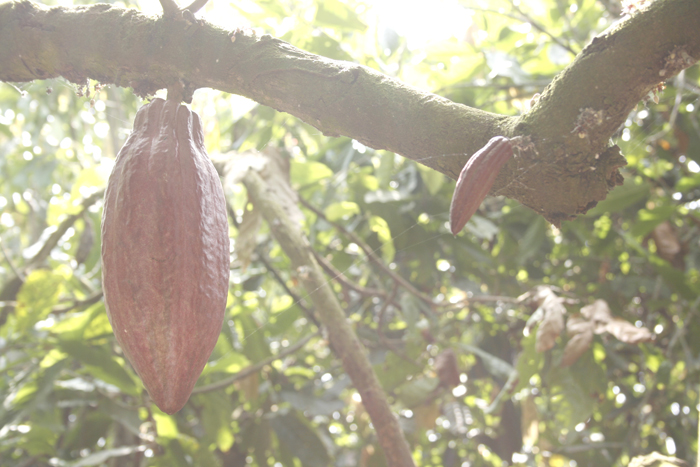
… and develop into a large fruit that turns yellow when ripe.

_MG_4453

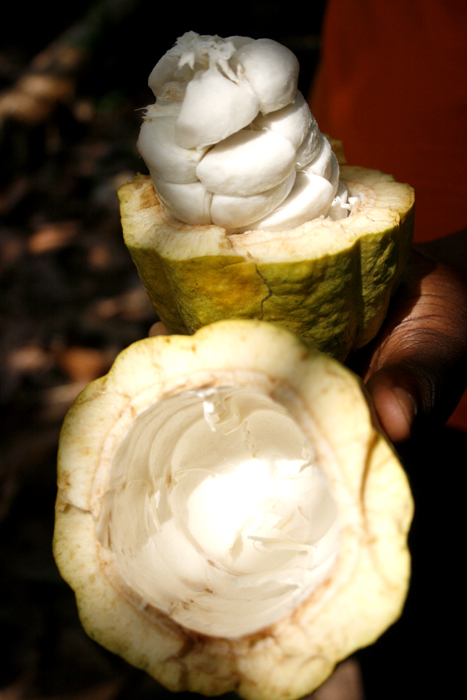
Inside, the beans are covered in a sweet and slightly sour, white pulp, tasting a bit like the lychee fruit. It is really good, anyway.

_MG_4479

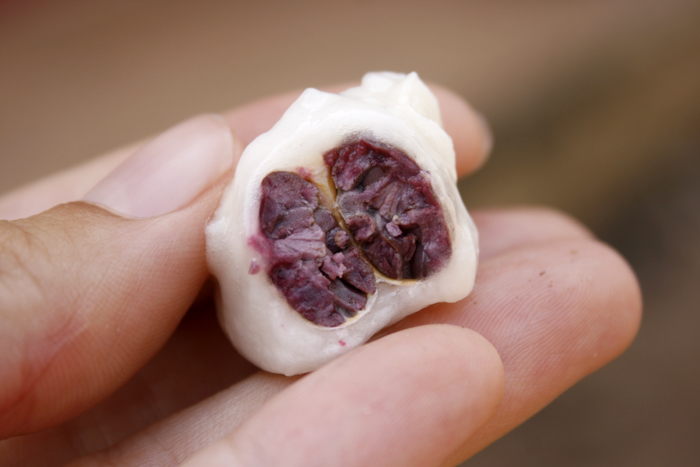
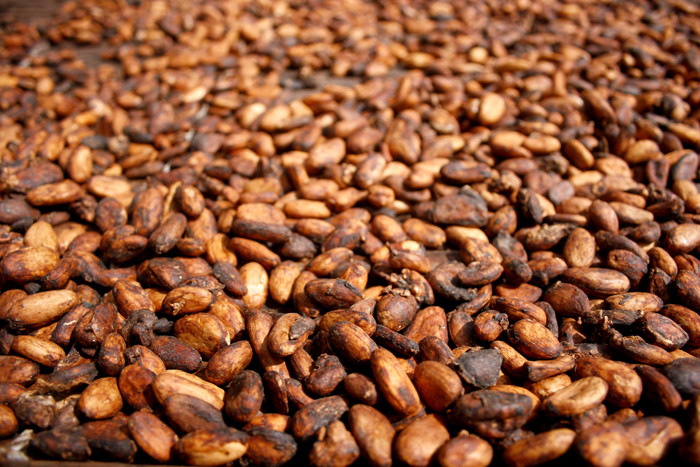
The purple bean within is bitter and quite inedible. I have no idea how the indigenous people’s around the Caribbean came up with the ingenious idea to turn the cacao bean into chocolate, because there is nothing whatsoever about the raw bean that remotely resembles anything tasty.

_MG_4475

After harvesting, the beans are fermented under plantain leaves for a week, and then they are dried in the sun for another. After that, they are sold to cacao dealers for further processing. I’m not sure if the majority of cacao growing villagers here even know what heavenly pieces of deliciousness this bitter bean is turned into.

the four villages tour II: Ntonso (December 18th)

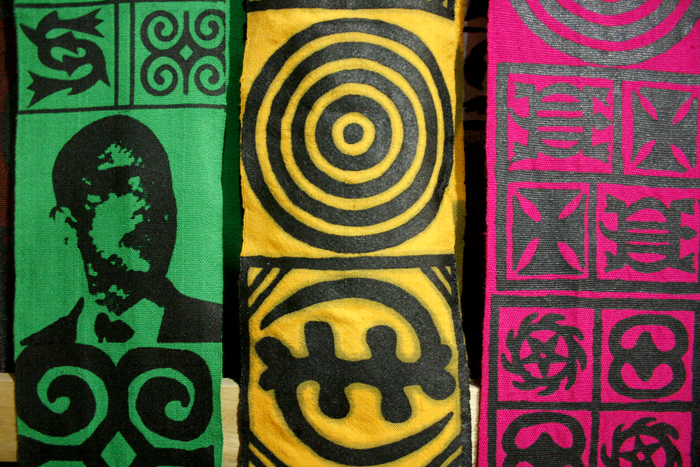
In Ntonso, they make Adinkra, a traditional way of printing black symbols on strips of cloth.

_MG_4390

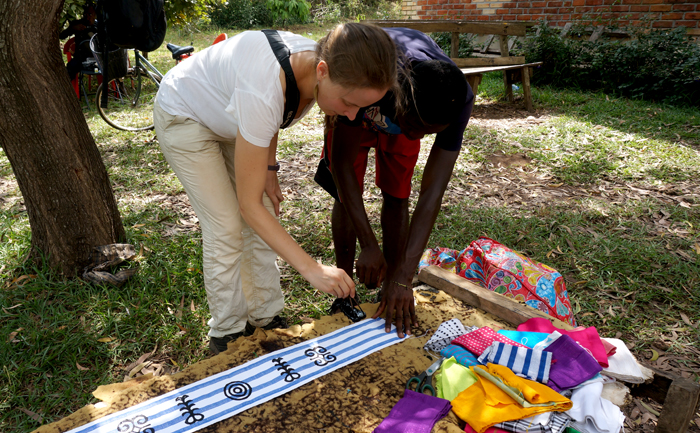
The tour here was more organized than in the carving village, and we were shown the different stages of the dye making and printing. The dye was made from a special kind of tree bark, burned and then boiled and distilled for days, quite similar to the process of making tar, if I’m not mistaken.

_MG_4396

The figures, all symbolizing a particular word or saying of importance for the Asante culture, were carved onto calabash stamps.

DSC04835

I even got to make my own adikra prints on a cloth strip of my choosing.

_MG_4398

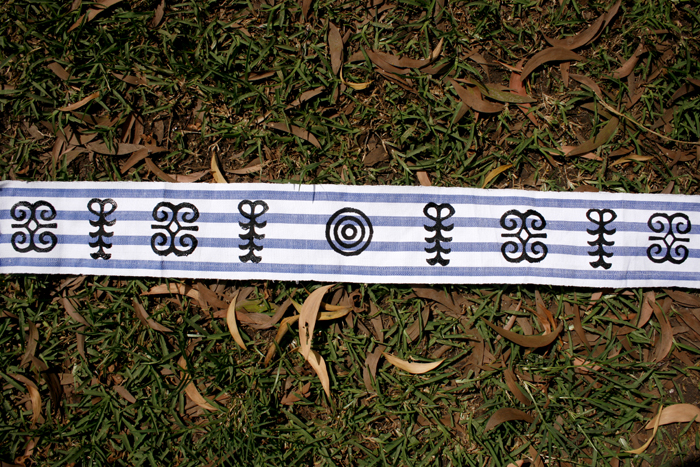
This was the result. The symbols mean strength and wisdom, defiance, and leadership. I thought it suitable. It was fun, the printing. I should really get my shit together and apply to that screen printing class that I’ve been talking about for years. The kid in me who’s favorite classes in school were art and shop really needs to get out more. Knitting simply isn’t enough to satisfy her.

the four villages tour I: Ahwiaa (December 18th)

The Asante culture is known for its long tradition of craftsmanship. In the past, many of the finer crafts were meant for the Asantehene and his family, and the making of the different crafts was centered in certain villages outside of Kumasi. Nowadays, the fabrics and pots are made for anyone who can pay for them, but the actual crafting is still done in special villages. It has become a popular tourist attraction, to go on a craft village tour in the Kumasi area and see how the things are actually being made and buy them for higher prices than the market value.

The son of the owners of our B&B offered to act as driver for us, so we did as everyone else and went on the craft village tour. Our first stop: Ahwiaa, the wood carving village.

We saw them making stools and painting a whole set of hugging figures, but we didn’t buy anything. The wooden animals can be found all over Sub-Saharan Africa, and I must admit I’ve seen prettier mahogany elephants from both Tanzania and Zimbabwe.

_MG_4372

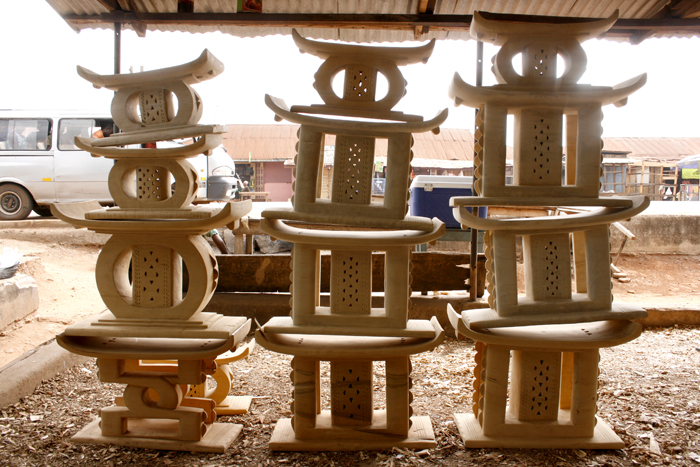
Traditional Asante stools, the feet symbolizing unity, leadership and strength.

Our guide, the B&B man, told us in his subtle Canadian accent that they even exported wood carvings from here, all the way down to South Africa. It wasn’t dominant, his accent, but then again it rarely is, the Canadian. From what I picked up of his stories, he had spent a big part of his life in Montreal and Toronto, so that’s where the accent came from. And I really enjoyed listening to him talk. Not really because of what he said, but because of how he said it. It made me feel safe and comfortable. I guess it’s all the nice associations. Ashley, of course, and Lorri at Whiskey Creek Farm. Jay the horse trainer. All of Frida’s nice friends in Edmonton. Canadians just have an unfair advantage when it comes to me.

evening activities at Four Villages Inn (December 17th & 18th)

IMG_7844

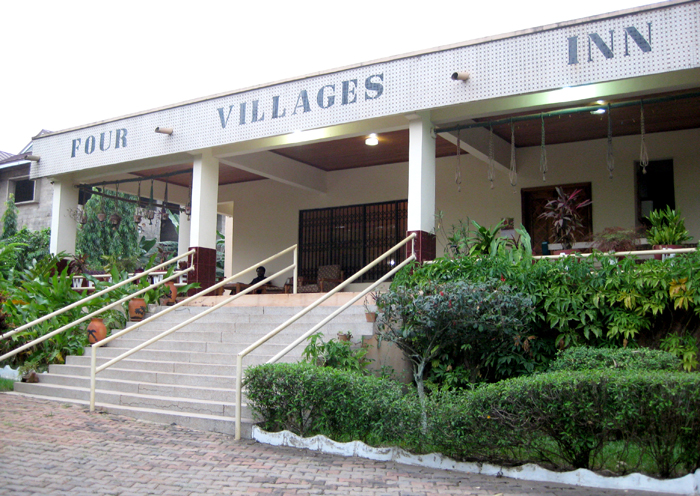
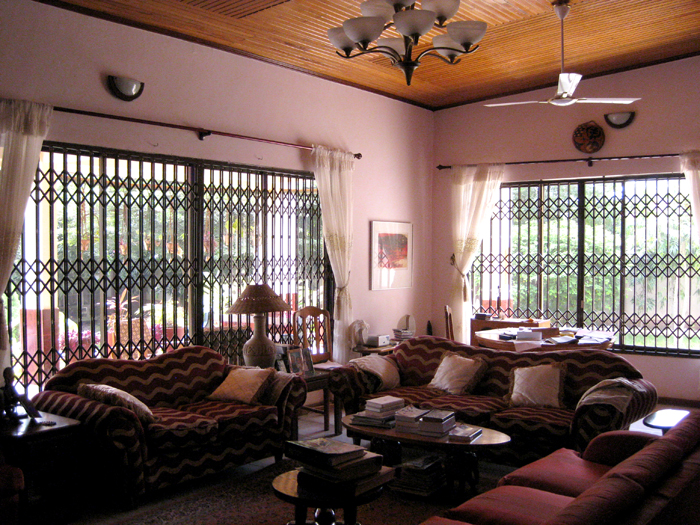
In Kumasi, we stayed at a bed and breakfast called Four Villages Inn. They only had four rooms, and a very shy dog. It was by far the most luxurious place where I had stayed during my time in West Africa. The room was big, the bed enormous and the common rooms decorated exactly like my prejudices told me B&Bs should be decorated, pillows and frills.

IMG_7866

It was really nice, though. The calm atmosphere and the softness of the place. In the evening after the market visit, I took a bath. A cold bath. There is a first time for everything, right? It was an interesting feeling, getting into the cold water – but so amazing, after a day of sweat and dust and city noise. And afterwards, the feeling of being completely clean for the first time in ages. That is pretty unbeatable.

The other night, we watched a movie. The inn had a whole shelf with DVDs the guests could borrow, and I picked out Kiss Kiss Bang Bang. My love for Robert Downey Jr. is strong and has outlived many other loves and commitments in my life. This preference is one of the things that Natalia and I first bonded over back in high school when we became friends. If not for anything else, that is something that will always make Robert keep that special place in my heart.

The movie was okay. I had seen it before, one rainy August night in 2008. I remember eating yogurt-covered coconut tops. There’s a story in there too, but not one that I want to tell.

cocktail memories (December 17th)

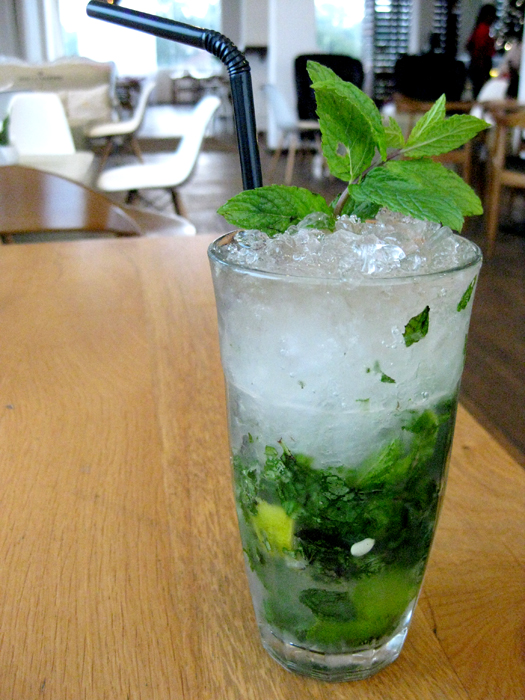
We needed some time to calm down after the intense day at the market, so we went to The View for a pre-dinner cocktail. I got a mojito.

IMG_7897

It was good. And drinking it, in an incredibly deep and soft couch, I suddenly remembered another mojito that I had drunk. Natalia, Cecilia, Jonna, Alice and I had climbed to the top of the hill in central Sucre, the constitutional capital of Bolivia, to look at the view of the city. There, in the small park, we met two American backpackers who we started a conversation with – and then the heavens opened and the rain poured down like there was no tomorrow. We ran, and the American girls lead us to a bar by the central square where they had been the night before. There, we all ordered lunch and mojitos, and the American girls told us about the amazing quality of the cocaine that was sold at the end of the guided tour of the San Pedro prison in La Paz. We countered by starting a long discussion about the great merits of the Harry Potter novels. By the end of this very nice, mojito-tasting afternoon, the Americans promised that they would read the books. We never tried the San Pedro cocaine, though. Not really our cup of tea.

a visit to the market (December 17th)

Kumasi is the second largest city in Accra, and the capital of the Ashanti kingdom. The Asantehene, the traditional leader of the Asante, which is the largest ethnic group in Ghana, still lives here and plays an important role in the society.

IMG_7875

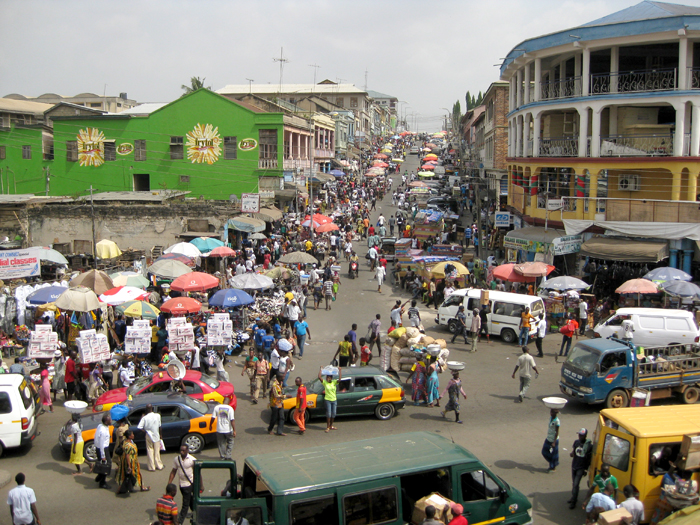
What left the strongest impression on me of Kumasi, though, was not the presence of royalty, but the extreme congestion of every place we went to. The cars and the people and the constant commerce. It was intense, and hard to navigate, and if we hadn’t hired an excellent guide through the B&B, I’m not sure if we had been able to move at all.

IMG_7876

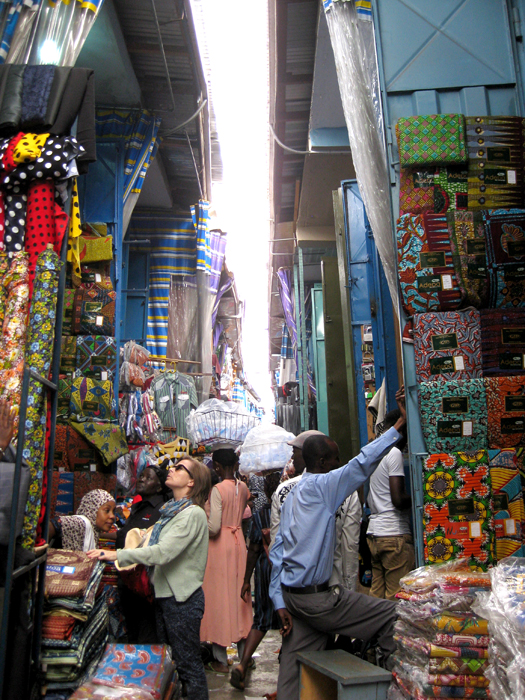
The most dominant feature of the Kumasi cityscape is the Kejetia Market. Kumasi prides itself with having West Africa’s largest outdoor market with more than 11000 stalls, and it really is enormous. And you can find basically anything there. Huge snails for eating, trying to crawl out of their buckets, any kind of fabric you could imagine, cheap plastic knick-knacks, toiletries. Entire rows with people producing sandals right in front of your eyes, or tailors sowing you a dress right on the spot. The smells, sounds, people, everything and from everywhere at once.

IMG_7886

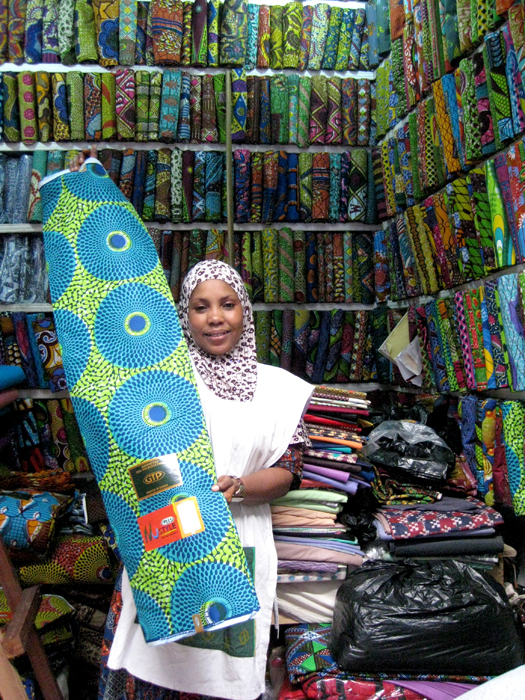
We bought fabrics. Colorful, wax printed and produced in Ghana. I already have about thirty meters of wax printed fabrics, bought in Liberia when Hanna and I lost our minds in a crazy shopping spree last year. What am I to do with all this fabric?

IMG_7890

We also went to Prempeh II Jubilee Museum, a small exhibition on Asante culture and traditions, especially showing artifacts relating to the different Asantehenes and the Queenmothers. It is really a king cult, the Asante culture, where the Asantehene is still treated like some kind of semi-god. It was interesting.

IMG_7894

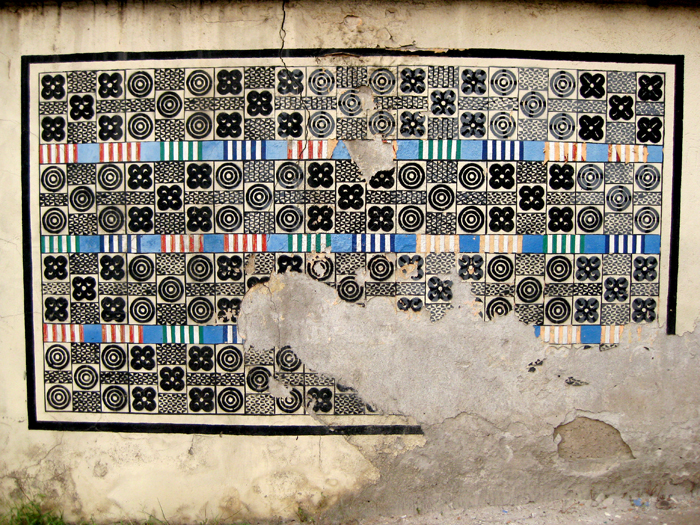
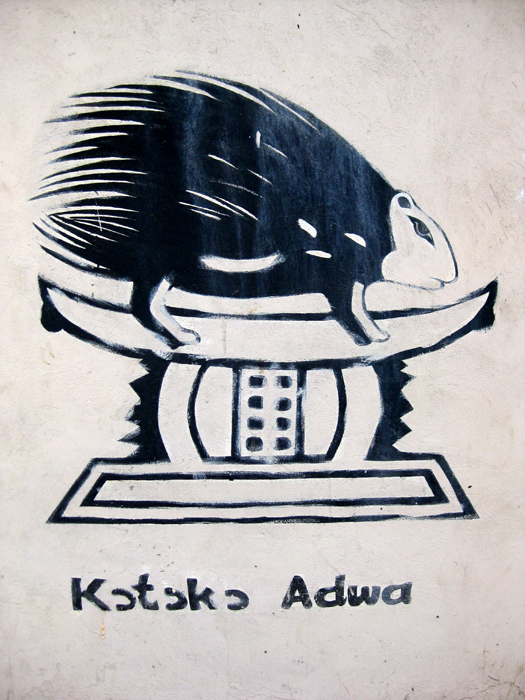
On the wall of the museum. The Asante art is full of symbols that are being reproduced in weaves and prints, carved wood, pottery, metal-work and beads. I like them, the combination of symbolism and simple patterns. I’ve done many sketches, and will definitely adapt many of the patterns into my own knitting.

IMG_7895