my favorite landscapes (December 22nd)

It probably doesn’t come as a surprise to you that I’m really into landscapes. My chosen field of study alone speaks heaps about this interest of mine. Geography and landscape ecology is all about the mountains and the forests and the deserts.

And I’ve tried to choose a favorite landscape. You know, make a list. Because, I have traveled a great deal and I’ve seen many landscapes and I should be able to pick a favorite. The problem is, I can’t.

People ask me why I chose to go to Burkina Faso to do fieldwork. Well, the obvious reason was that that’s where the project I wanted to do happened to be. But there’s more. I like deserts. The harshness, the living on the margin of what is possible. The space. The subtlety in color.

For the same reason, I like mountains. In deserts, the feeling of space tends to come from the flatness, and being able to see so far. In alpine landscapes, the obvious space-creators are the mountains themselves. The mountains can be almost anywhere, but the Andean Altiplano and the Swedish-Norwegian mountain chain will always have special places in my heart.

A similar harshness can be found along certain coastlines. Like the bare bedrock on the Swedish west coast, or in northern Scotland, or the misty, windswept beaches and cliffs from British Columbia all the way down to northern California. And the Stockholm archipelago will always make my heart tick a little extra.

And then again, there is the richness and depth of colors in the rain forests. I prefer the temperate, maybe because I feel more at home among conifers, but the tropical is also almost hypnotizing, especially during butterfly season.

A golden wheat field among lakes and patches of forest in a mid-Swedish or -Finnish landscape will always make me think of happy childhood summers, and the dry smells of the Mediterranean!

You see! I can’t choose. I’m hopelessly in love and I’m serious poly-amorous when it comes to landscapes.

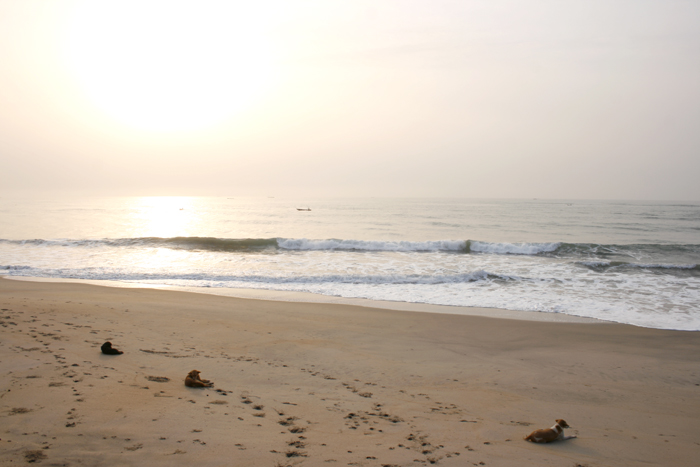
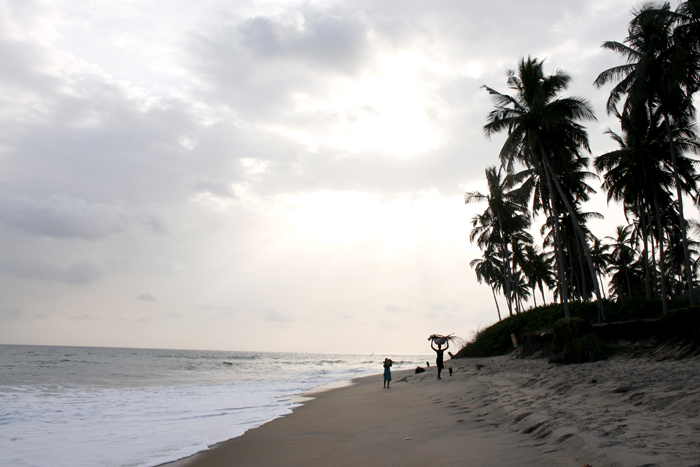
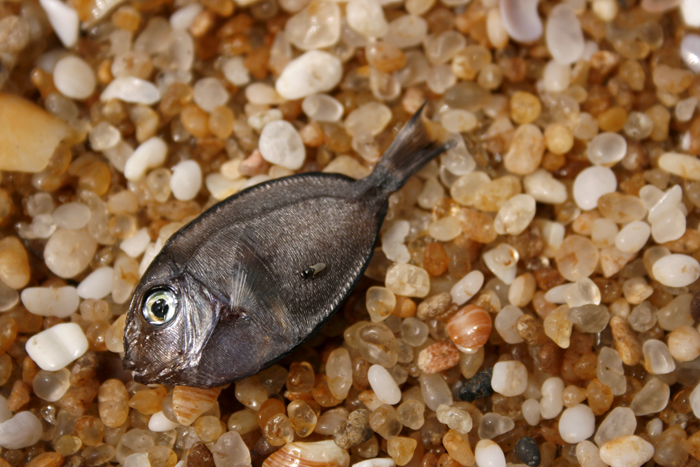
One of the few landscapes that I don’t feel anything special for, however, is the tropical beach. You know, the one that we’ve all been programmed to associate with paradise: white sand, palm trees, turquoise water and cocktails with colorful umbrellas. It just doesn’t speak to me. Nothing happens. It’s so easy. So comfortable. Unchallenging. Simple.

I’m on the beach and I don’t feel inspired. It’s kind of dull, really, in a sort of relaxing way.
_MG_4952

the greatness of The Golden Notebook (December 22nd)

I am reading “The Golden Notebook” by Doris Lessing now. It’s basically all that I do. It has taken me over completely.

I started reading it last summer. It is a thick book, so I thought summer is a good time to get into it. But I couldn’t focus last summer, I just didn’t get into it and then other books came along. It was put aside.

When I told someone that I had decided that I would give it another try when I went to Burkina Faso, she asked: “But if you’ve put it aside once, is it really good then? Wouldn’t you have continued reading it if you’d liked it?”. But, you see, I don’t agree with that. It’s a very flat, simplistic understanding of literature and what it can offer us and how. It’s not like chocolate, possible to eat and make you happy at any time. Books can be complex. Sometimes you just need to be in the right place both mentally and physically.

That was definitely the case with “The Golden Notebook”. Here, I’m drinking it like the baobab trees drink the rain in the Sahel. It is political, psychological, philosophical, structurally fascinating and complex, such an excellent example of literary craftsmanship. It is a masterpiece. Lessing was a true author. She really deserved her Nobel prize in literature.

And I think that there’s especially one theme in the book that speaks to me right now. It’s the woman  in crisis, trying to understand who she is, what her relationships should be, on the verge of what will hopefully be catharsis. I’m completely hooked.

_MG_4955

on the beach, again (December 21st)

_MG_4818

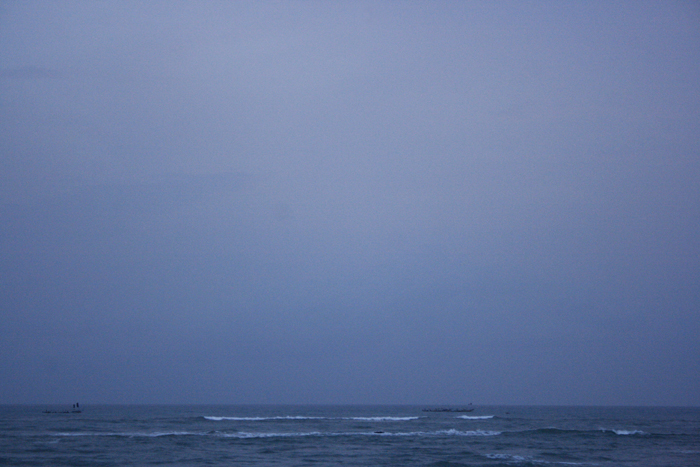
Sitting, reading the incredible “The Golden Notebook”, in a bamboo chair by the beach. There was thunder earlier and even a couple of drops of rain, but now only the clouds still have purple edges. And the fishermen are going out to earn their living. Because that is one thing that I learned today. At dusk, the fishermen aren’t returning home. They are going out. Long lines of Fanti boats, heading out to sea.

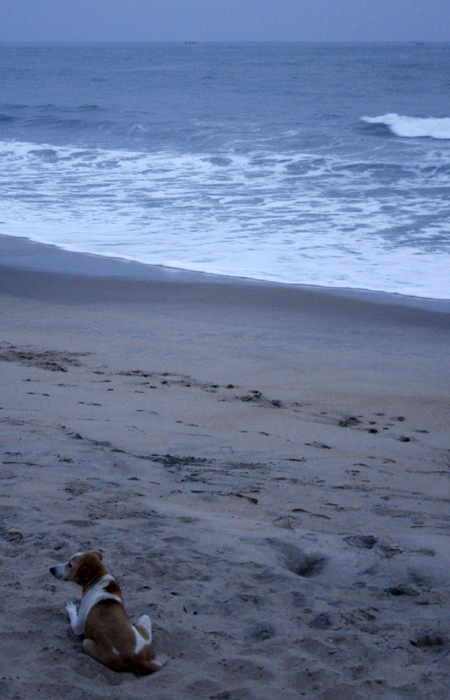
The beach dog joins me for a while, then he jumps down and gets comfortable on the sand, also watching the fishing boats moving along the horizon.

_MG_4826

_MG_4846

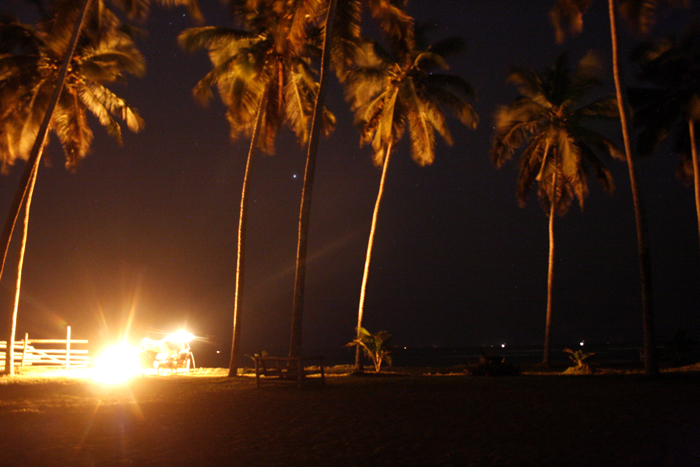
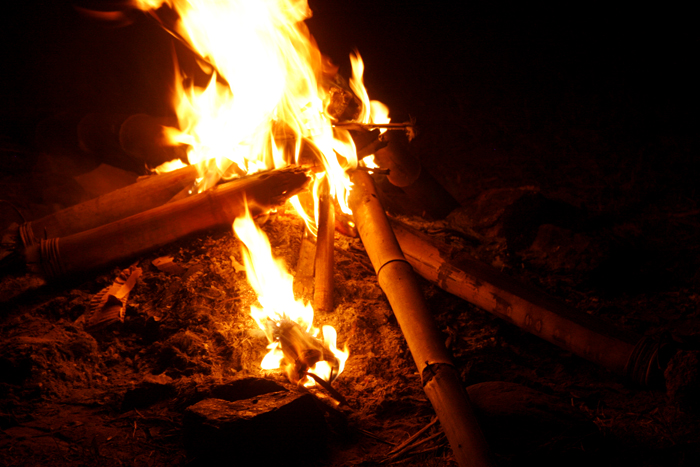
Later: The darkness that falls like a blanket over the world here. At six-thirty, pitch, and my body tells me to fall asleep. The lodge staff light a fire by the beach. The wind in the palm trees sounds like rain. The lights on the fishing boats mix with the stars, creating the illusion of galaxies melting into the sea.

_MG_4840

a small piece of Elmina (December 21st)

_MG_4800

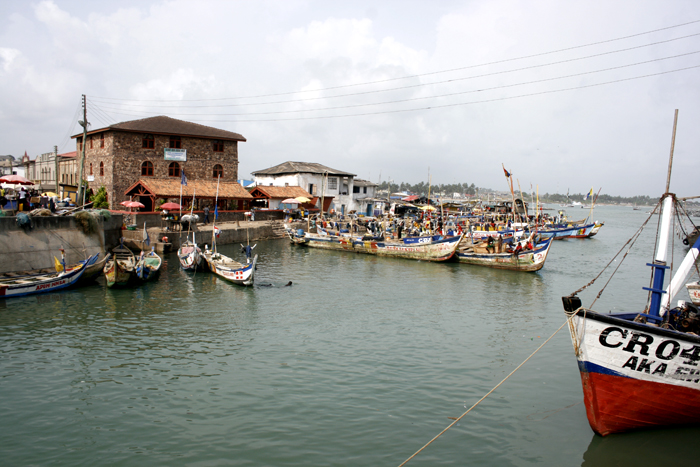
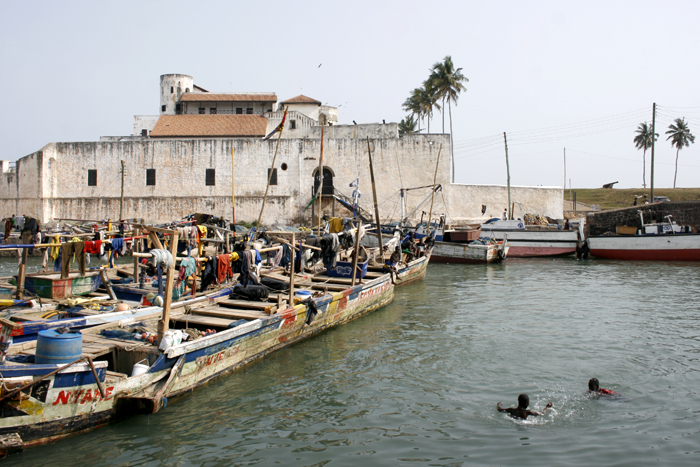
After the castle, we ate late lunch at a restaurant next to the canal between the ocean and the lagoon. There were beautiful, colorfully painted Fanti boats anchored to the dock, and since it was Sunday, the boys were jumping from the stern, swimming and laughing. All while the shadow of the old slave castle looms in the background.

_MG_4806 _MG_4815

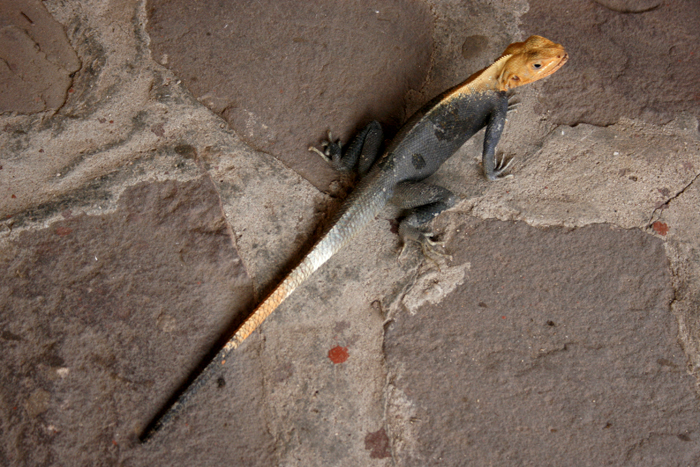
The outdoor seating for the restaurant where we were eating was populated by lizards. Many of them. Climbing walls, chasing each other, even stopping for long enough to get photographed. So considerate of them, really.

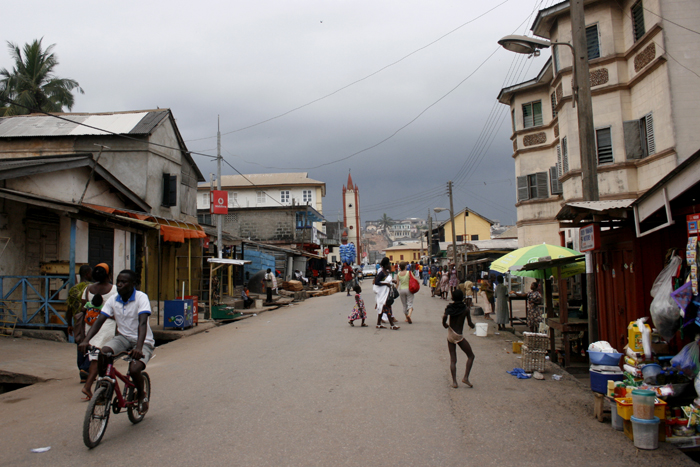
Elmina as a town has left its glory days behind it and is now a small fishing town. But the houses still reveal memories of the past. There are many colonial buildings left, in great need of repair. Both style and condition quite reminds me of Potosí in Bolivia. Both have old, dark colonial histories.

_MG_4816

at the slave fort (December 21st)

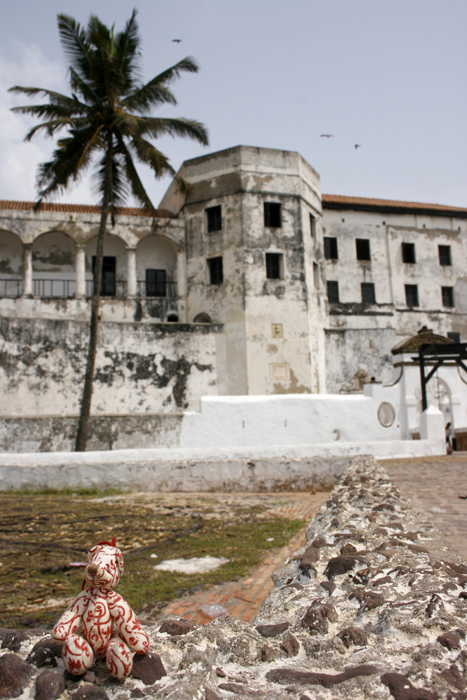
For hundreds of years before Ghana’s independence, the Europeans traded along the West African coast. Due to favorable geophysical conditions, the stretch of coastline that later became Ghana’s became the center of the European-West African trade. The competition was fierce between the Portuguese, Dutch, British, French, Germans, Danes and even Swedes for a little while. By the late 18th century, there were 37 trading forts along the coast. It is interesting, in a quite morbid sense, how some of this trade primarily was used as moves in the bloody power game that was going on between the European nations, thousands of kilometers away. The Swedish involvement in the building of Cape Coast Castle during the 17th century, for example, was basically just a move used to rattle opponents during the Thirty Year War.

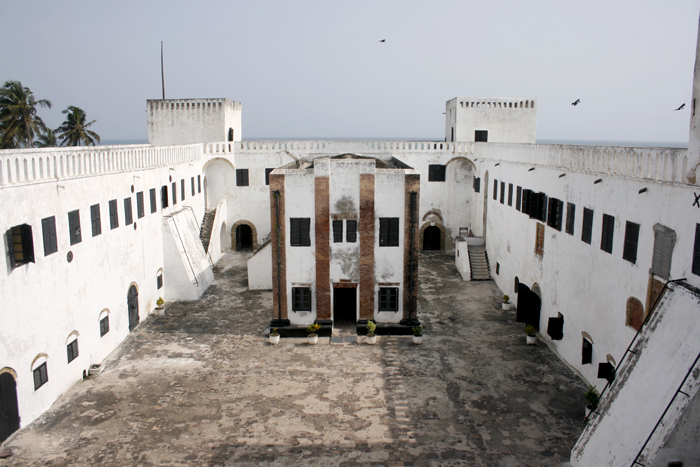
One of the oldest forts is St George’s Castle in Elmina. It was built by the Portuguese in 1482, and was the center of their gold and ivory trade until it was captured by the Dutch in 1637. It then became the headquarters of the Dutch West India Company until the British took it over in 1872.

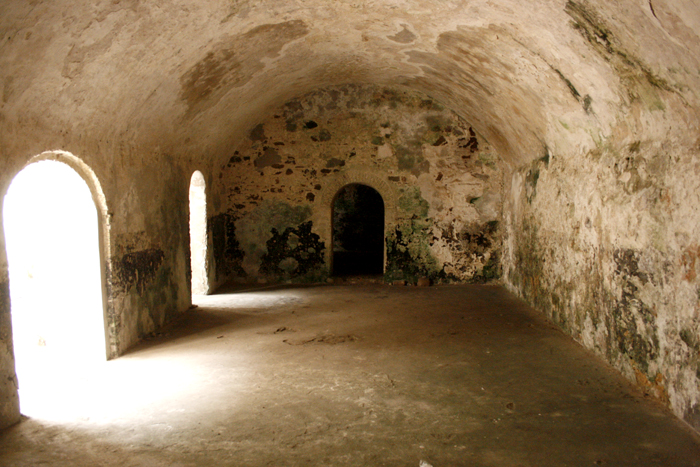
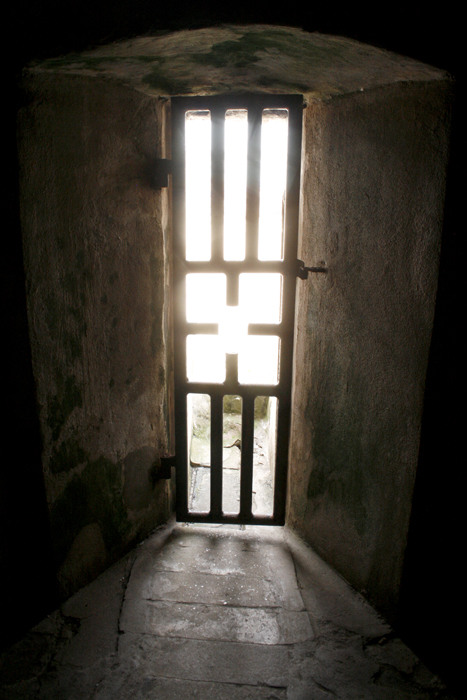
At first, the castle was built as a trading post. However, as the slave trade took over as the major activity for the Europeans in this part of the world, the storages were turned into prison dungeons, where slaves were kept under terrible conditions for months on end before being shipped over the Atlantic.

It is a heavy history, that this castle has borne witness to. Included in the entrance fee is a guided tour around the castle, from the dungeons to the commander’s chambers, and hearing the stories of how the slaves were treated, well. The terrifying statistics on how many died in the cramped, unsanitary conditions in the dungeons, and then again in the ships during the journey crossing the ocean, that’s the stuff of nightmares.

But it’s kind of like visiting a concentration camp. The places are actually not that much to see, but the stories that you’re told, and what they force you to imagine. I just kept on spontaneously bursting into tears during that anti-racism week in Berlin that I was sent to by my political science teacher in high school. Visiting concentration camps is not the nicest thing I’ve ever done. And I’m not sure how useful it really is, feeling that terrible. I’m not saying that its bad, I simply don’t know. Has it made me more capable of making sure terrible things like that don’t happen again? I mean, I’ve read about the camps, and I’ve read about the slave trade. Theoretically, I know what happened. Do I need to see it too, to not forget?

I guess I’m more seasoned now, than at seventeen. There were no tears at St George’s Castle. Instead, I kept on being distracted by the pretty, old colonial Portuguese architecture.

_MG_4778

The main inner courtyard, with the old Catholic chapel in the middle. Now, it houses a small but very informative exhibition on Elmina’s history.

_MG_4720

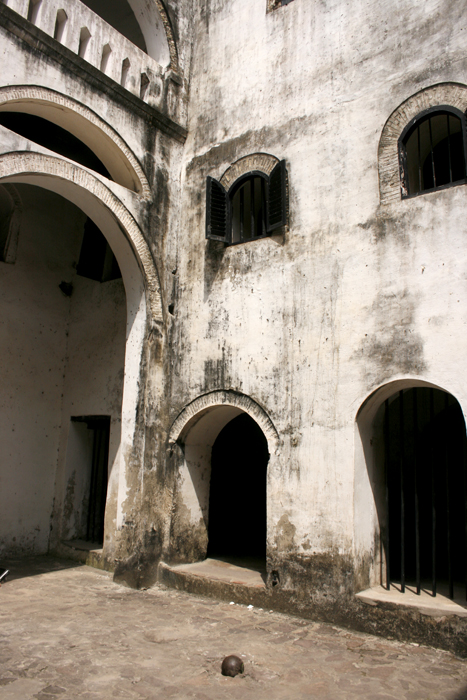
The small courtyard outside the females’ dungeon. The cannonball lying on the ground was used to punish the women who refused to sleep with the Portuguese or Dutch soldiers.

_MG_4715

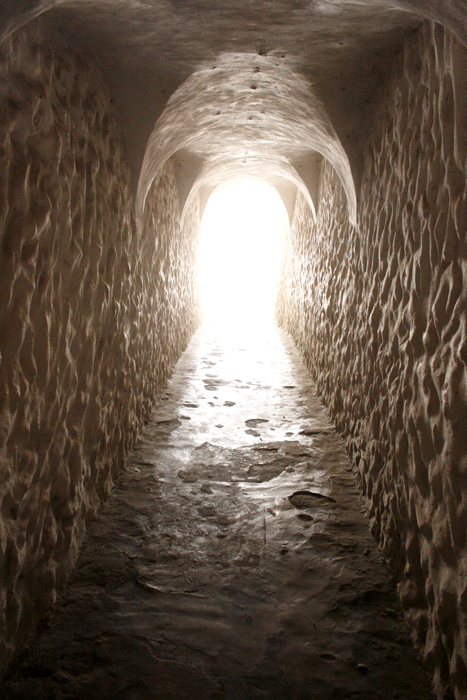
The tunnel down to the females’ dungeon.

_MG_4725

The females’ dungeon.

_MG_4745

The Door of No Return, that leads out to the docks, where the slave ships waited for their cargo.

_MG_4758

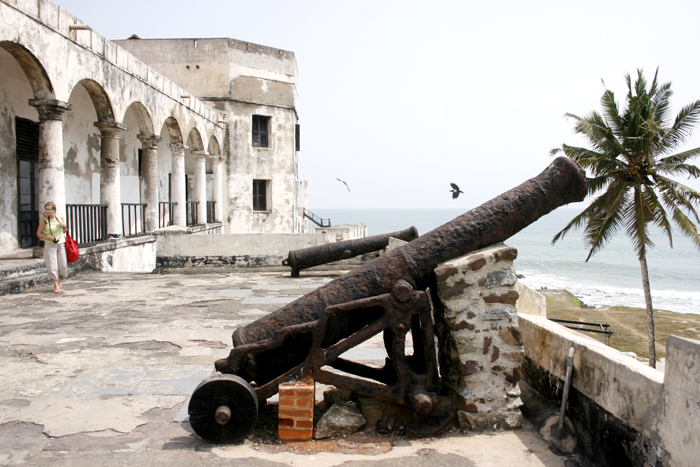
The fort needed a lot of protection – not from the locals, because the trade was mostly handled amicably between the Europeans and the coastal chiefs, but from other European traders. Now, everything iron is fast rusting away in the humid heat and salt.

_MG_4772

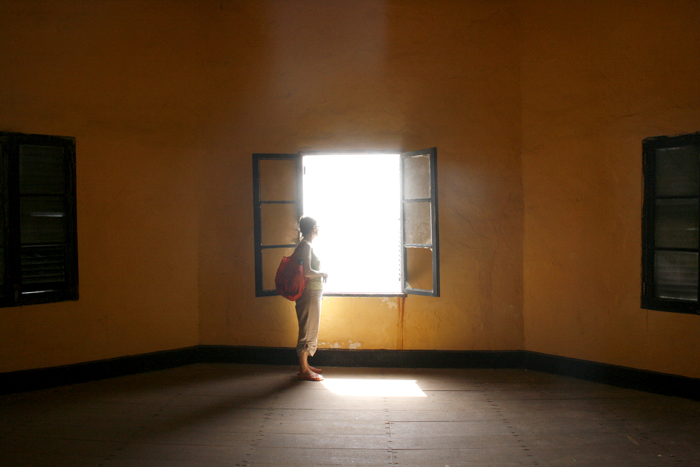
The commander’s chamber, with an amazing view over the lagoon, fishing village, the beach, palm trees and the Atlantic ocean.

There were other people in the tour, though, who actually did seemed surprised to hear the stories that the guide told us. Maybe everyone isn’t as well-versed in our nightmarish past as I am, having studied post-colonial theory, economic history and all. Maybe these places are needed for those people, the once who don’t much enjoy reading but who need to see something before they can try to grasp it. Places that make history real, and not just a bunch years and statistics.

St George’s Castle is, together with the Cape Coast Castle, a UNESCO World Heritage Site. I can definitely understand why.