interlude: the best midsummer ever (June 2015)

I barely made it home from Burkina Faso and Ghana, before it was time for me to get on the road again, this time to celebrate midsummer with my master’s class in Leksand. It was the last thing we would do together as a class, before many of my classmates started scattering across the world, back home or on to new adventures. Elli grew up in Leksand, which is in deep Dalakalia in central Sweden close to the Norwegian border, among the forests, lakes and mountains. It’s the perfect place to go experience a real Swedish midsummer. A great end to these two eventful, intense, tough and amazing years that we’ve had together as a class.

36

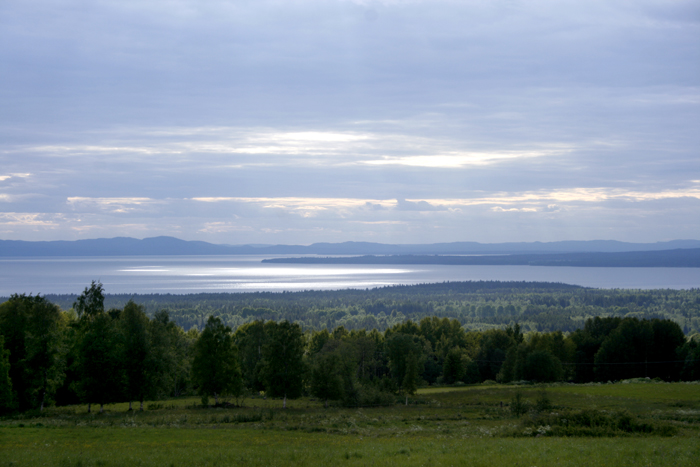
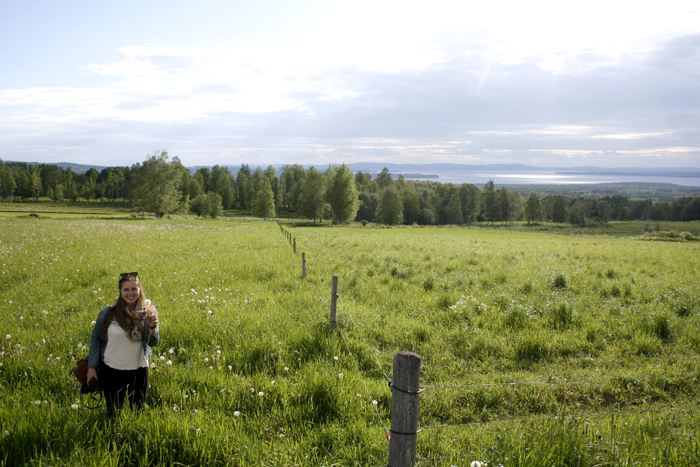
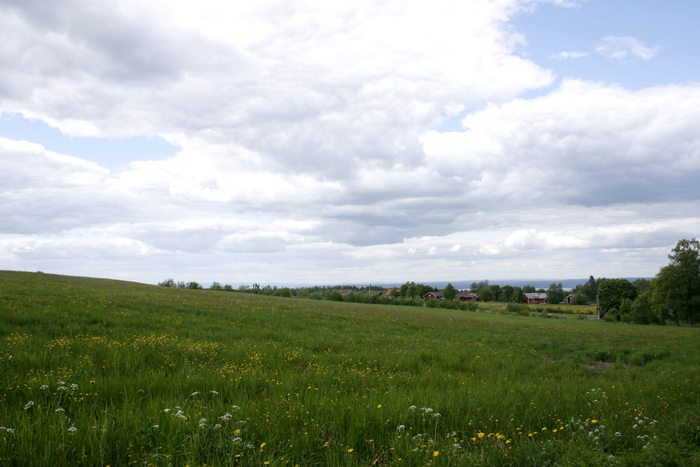
The landscape around Leksand was so beautiful, with the hills and the pastures, and clear blue Siljan lake down in the valley.
37

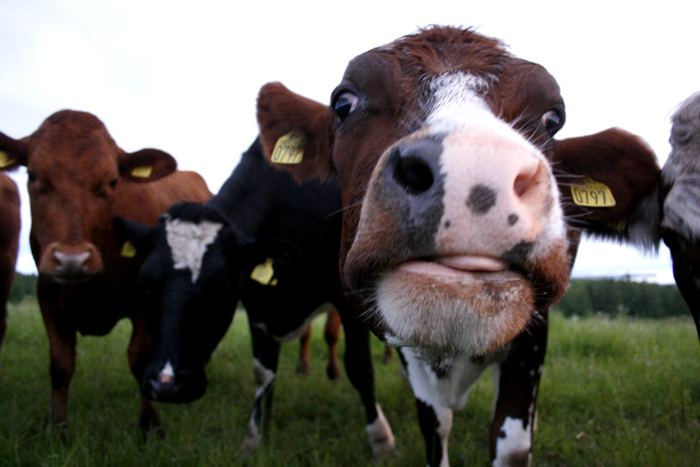
I made friends with a bunch of cows.

38

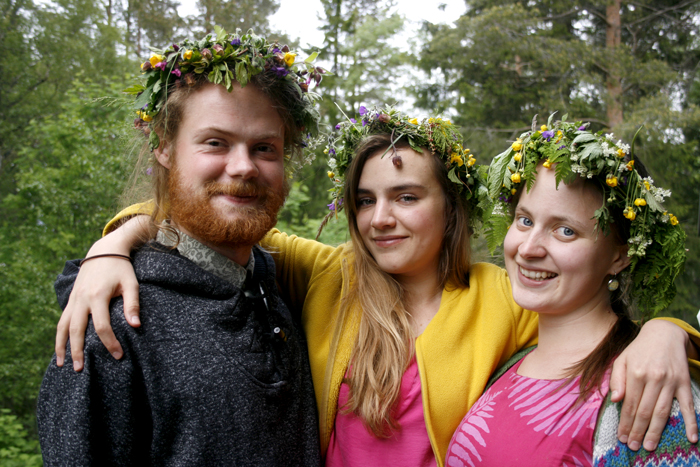
On Midsummer Eve, I taught the others to make flower wreaths.
39

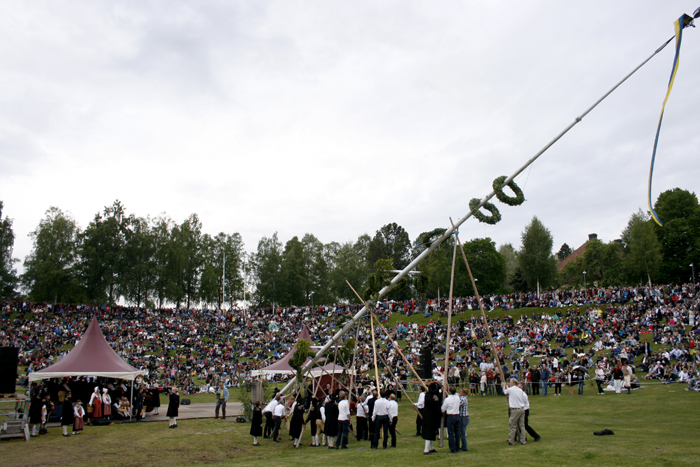
In the evening, we went down to Leksand (Elli’s childhood home, where we were staying, is in a small village up on the mountain, about 15 minutes drive from Leksand town). There, they were raising the Maypole. Once it was up, we took part in the largest midsummer dance around the Maypole in Sweden.
40

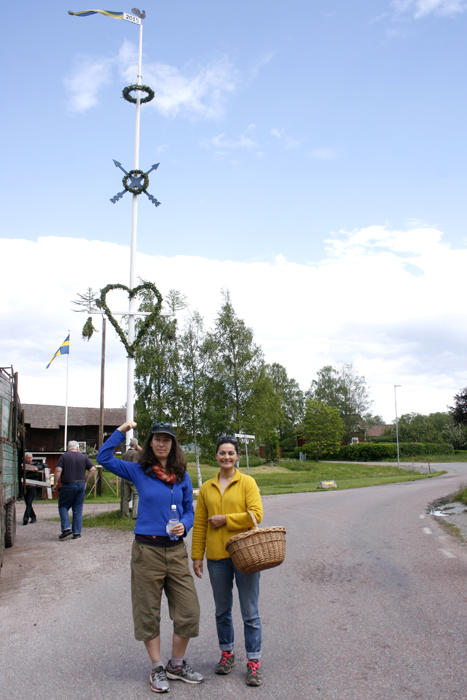
On Midsummer day, the sun was shining and there was midsummer celebrations in Elli’s village.
41

Kate and Vivi helped raise the way smaller, but still really beautiful village Maypole, and then we did some more dancing.
42

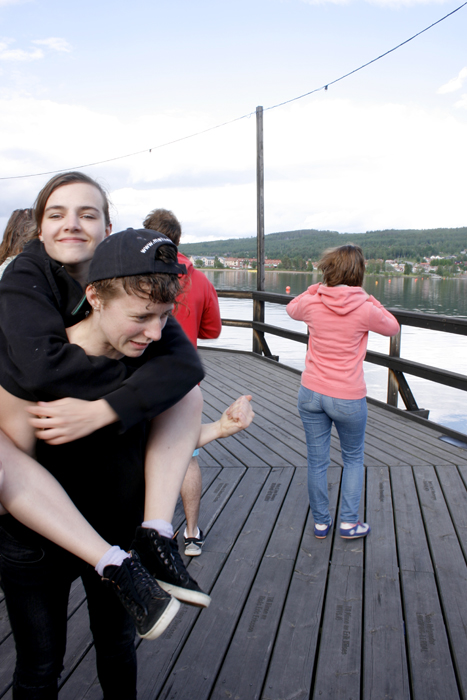
We went swimming in chilly Siljan.

43

Magical.

44 45

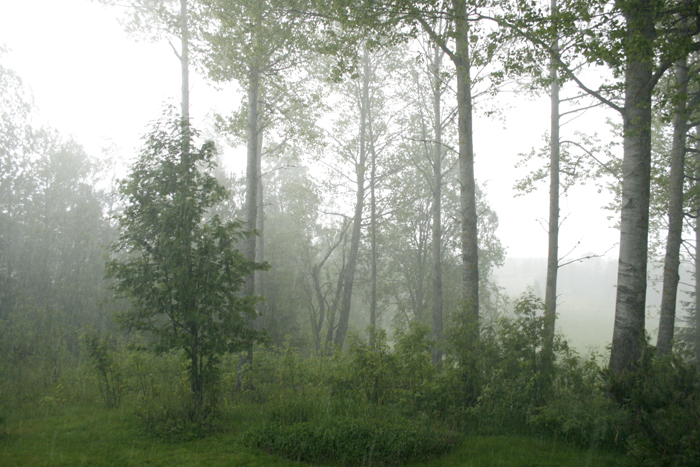
And then came a thunder storm. We got to experience the whole palette of Swedish summer weathers: warm and sunny, cloudy, drizzly and cold, and the crazy summer thunder storm.
46

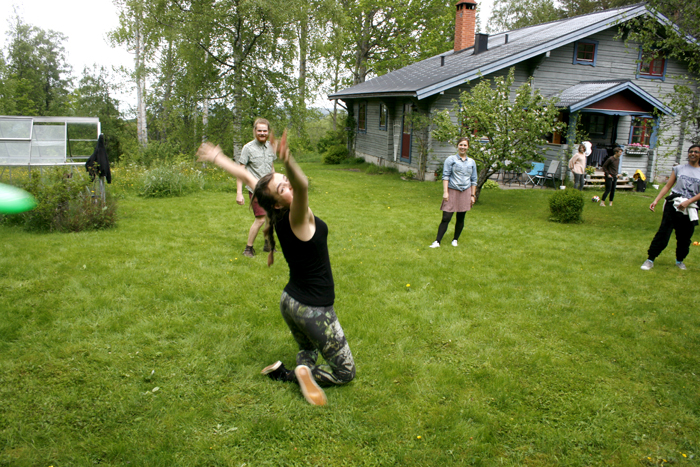
And whenever not occupied by cooking, eating or doing some traditional Swedish midsummer stuff, games were played in the garden.

47

On our last night there, at the stroke of midnight, we surprised Jessica with a song, gifts and a birthday cake consisting of her favorite tuber: potatoes.

It was a great weekend. I was exhausted, from turning in my thesis and the Volta trip, but even I could enjoy myself, in this beautiful place, among these amazing people. Really, a worthy end to this incredible class.
fruits in season (June 2015)

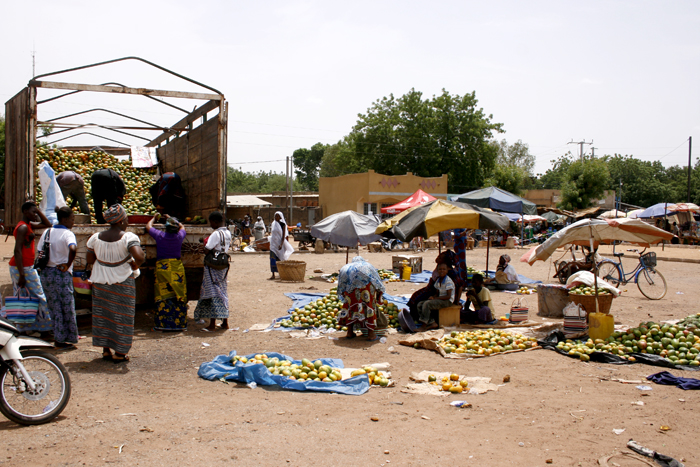
June is peak mango season in this part of the world. There were mangoes being sold everywhere.

27

Huge truckloads being taken in from the villages to the market towns, here in Tekondogo in southern Burkina Faso.

28

Being in season, the mangos were so cheap. You could get five or more mangoes for the equivalent of a euro, depending on the size of the fruit. And they were so good. Sweet and soft and so juicy. I ate at least a couple a day during my whole stay.

29

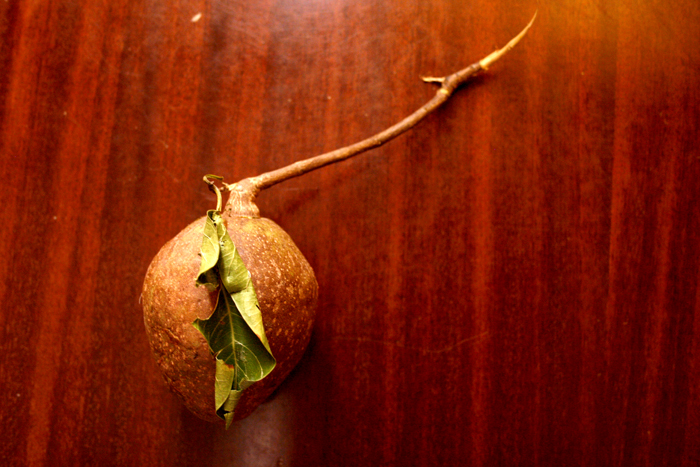
I did eat some other fruits too. This we bought from some kids on the side of the road. It’s called wade in more, and Mansour, one of our Burkinabe partners, said that it’s a wild fruit that the kids pick and sell by the side of the road for pocket money.

30

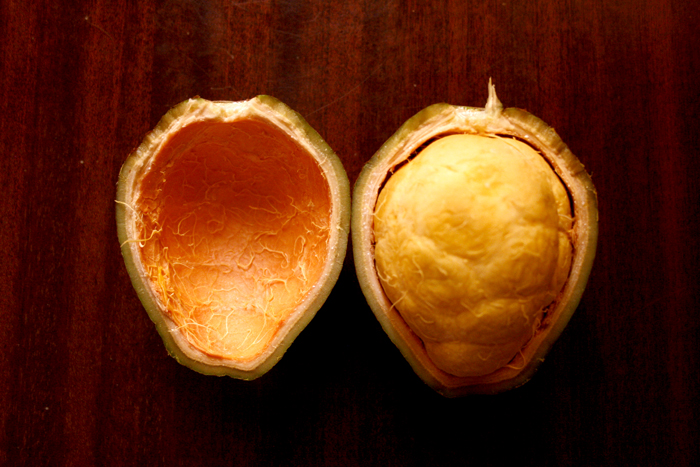
It consisted of a cluster of stones, all covered in a layer of sweet, but very tart orange fruit. It tasted very similar to the palm fruit, alamamba, that I tried down by the coast in Ghana last Christmas. In taste, it kind of had some similarities with grapes, but not at all in texture, and it was VERY tart.

Oh, I like trying new fruit.

field visits (June 2015)

After the workshop was done, most of the team went back to Ouagadougou or Accra. We were a couple, however, who wanted to see more. Get a feel for the northern Ghanaian and southern Burkinabe landscape. So we took the car, a driver and went on a road trip.

12

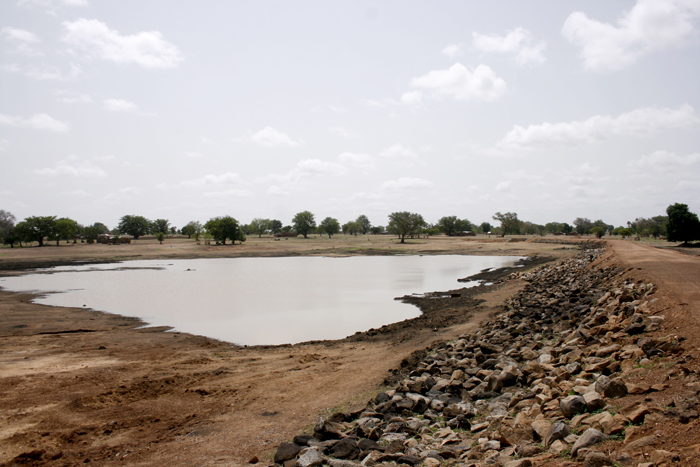
This project is centered on dams, so every time we drove by a dam, we stopped and went to look at it, scrutinizing its canal system or lack thereof. Kate was an amazing source of knowledge, being an ecohydrologist, and I learned so much about dams and irrigation.

13

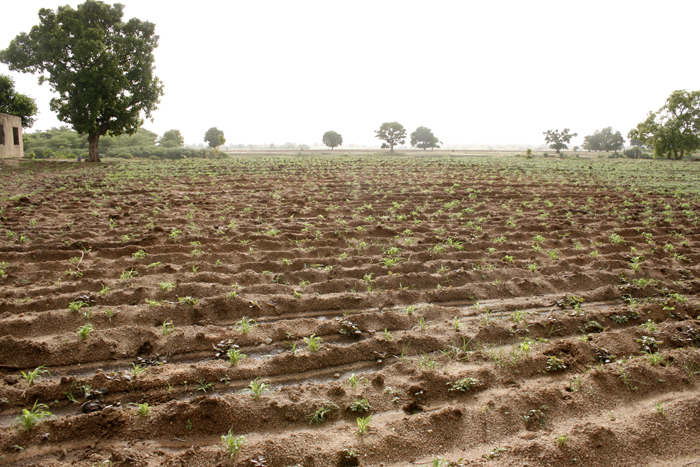
Generally, rainy season starts in May, but this year it was late. In the beginning of June, there had only been a couple of intense rainfalls. This meant that the sorghum, millet and maize fields had just been planted, in preparation of the rains to come. The soils seemed richer here, darker, higher in organic content, than up in northern Burkina. And the fields so much bigger. This valley around Zebilla really was intense farmland.

14

Next to one of the dams, they had planted a mango grove. The canal system from the dam had broken, though, so the top soil had been washed away from all the overflowing water. The trees had been planted so close together that no undergrowth could survive in there, you see.

15

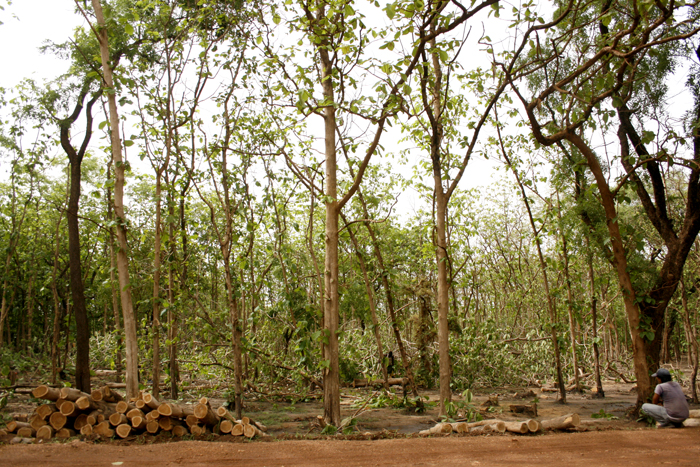
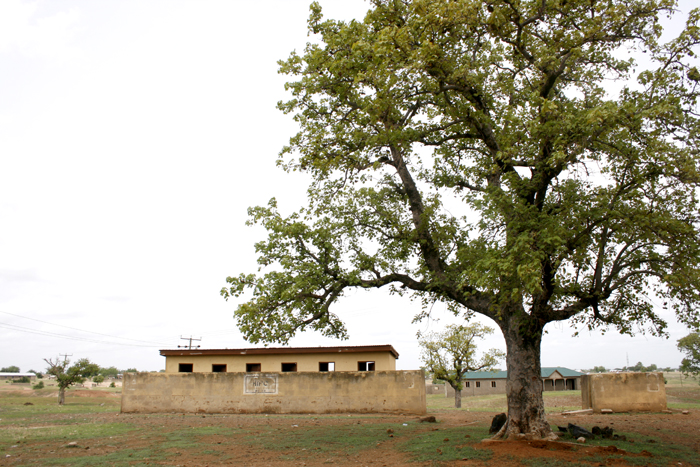
There was also a state-owned teak tree plantation in between Zebilla and Bolgatanga. Imagine that, huh? This is what they make our garden furniture out of.

16

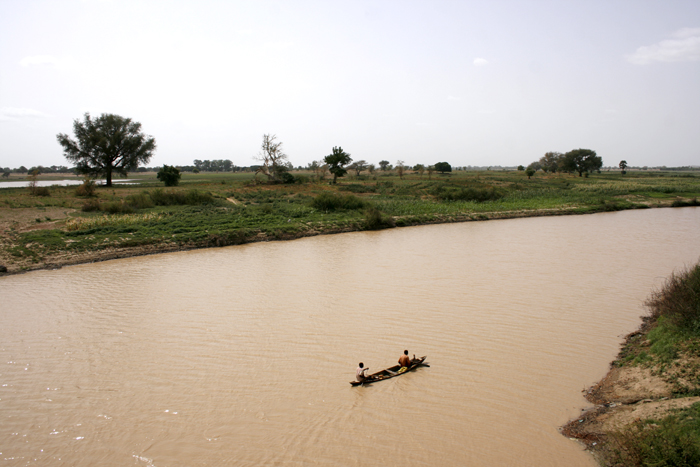
Across the border, we took a look at the White Volta, or, as they call it in Burkina Faso, the Nakambé. It was a slow-flowing river, with dense vegetable plots on either side.

17

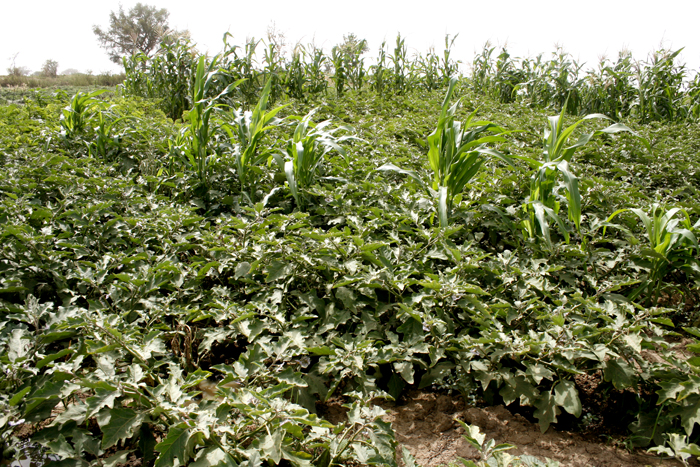
An eggplant and maize plot by the river, so lush and intensely green.

18

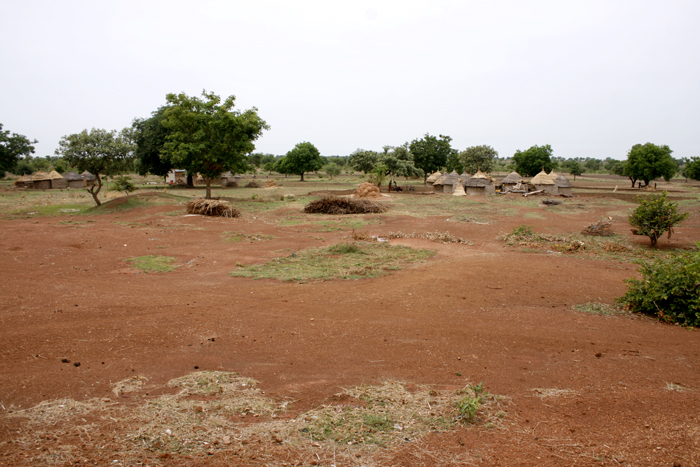
Otherwise, the landscape was quite dry. I would say that there are more trees here south-eastern Burkina, compared to my old study area in the northern parts of the country, but also less undergrowth. In the north, the fields are smaller and bordered with a lot more shrubs and grasses. The south is more densely populated, which might mean there are also more livestock here. Maybe the grazing animals have made this landscape seem barer, despite the fact that it rains more here.

19

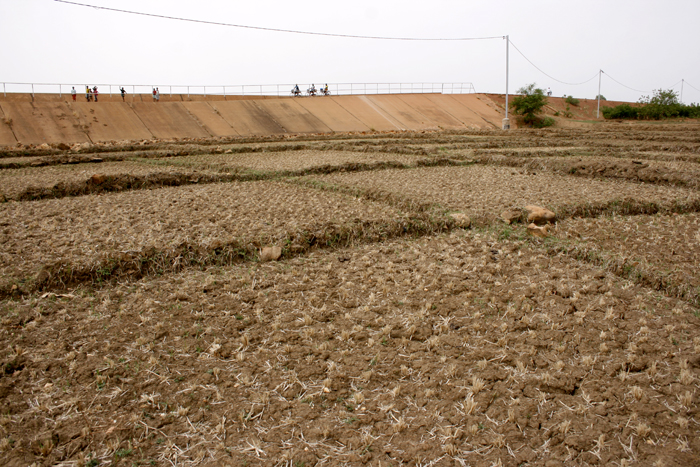
The dry rice fields next to a dam. There seem to be so many different way to construct these dams.

20

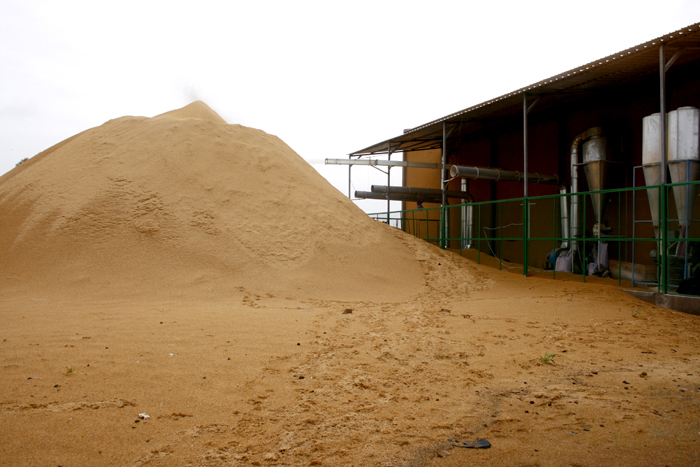
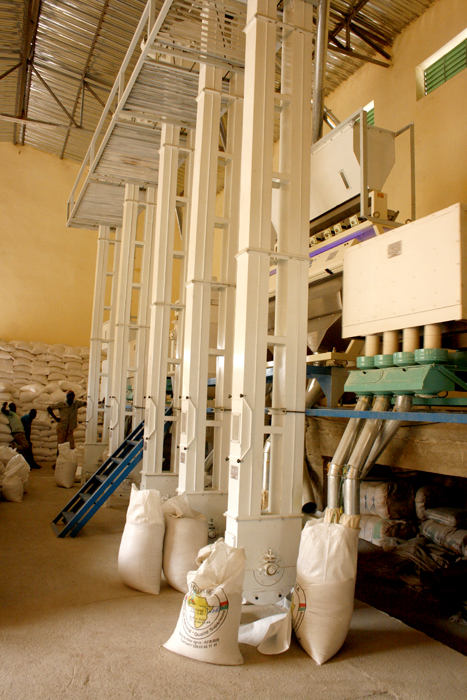
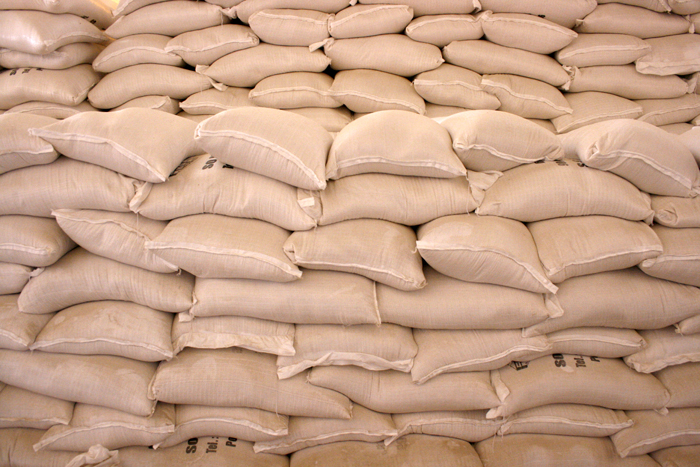
And some way off, they had a rice processing plant, where the harvested rice grains got peel, UV treated and packaged into huge bags.

21 22 23

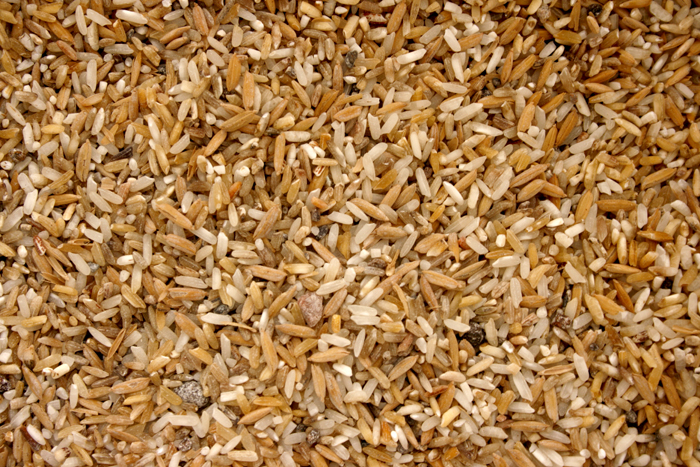
The newly peeled rice grains. This is no white rice.

24

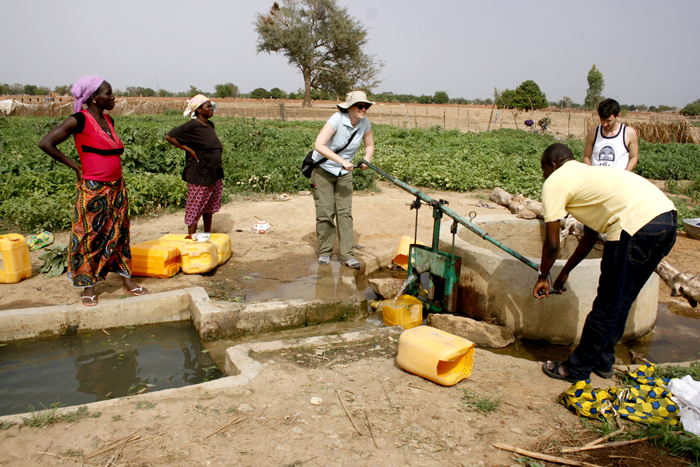
Dams are not the only way they do irrigation here. Outside of Tekondogo in southern Burkina, we also saw this kind of structure, where they used a well and a water pump and irrigated the leafy greens by hand. Kate and Mansour wanted to try pumping it, to the amusement of the farmers.

25

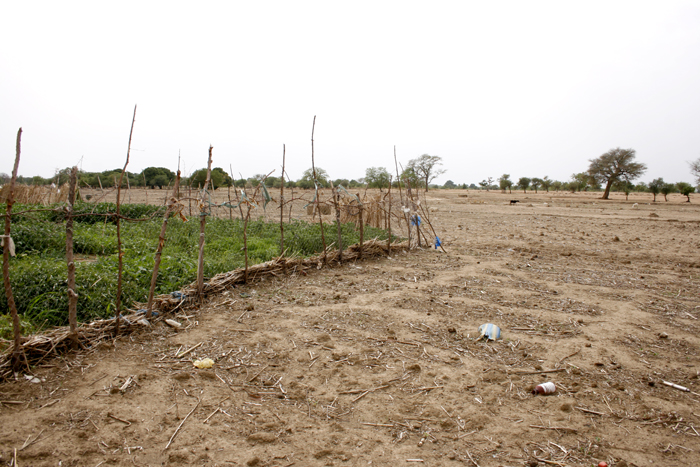
The difference is extreme, between the irrigated and non-irrigated land. Looking at it like this, it’s clear what a difference well-constructed, sustainable irrigation could do for this agricultural system, be it though dams or ground water irrigation.

26

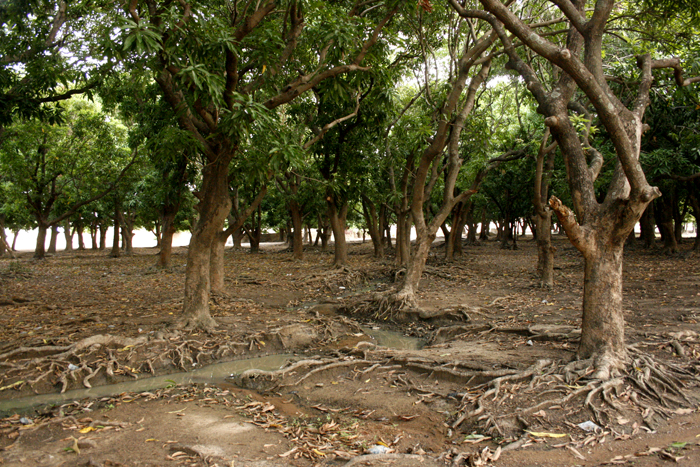
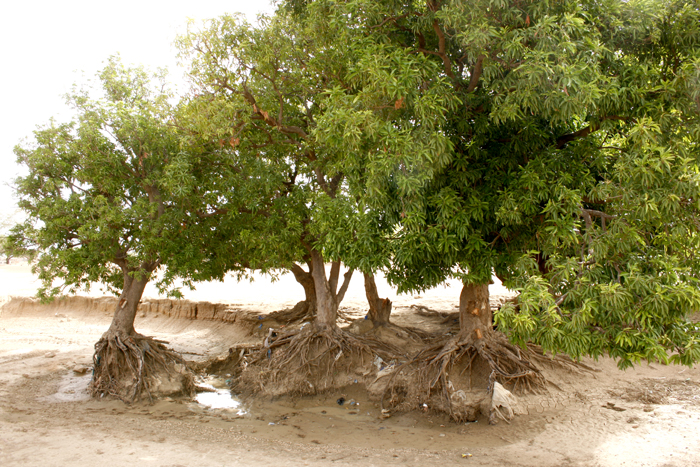
So, this area is dry most parts of the year, but when it rains, it rains like crazy. And the erosion, transport and sedimentation is insane. As you can see on these mango trees growing in the bend of a river, there’s barely any soil left except for the bare minimum keeping the trees still standing. These extremes, of dryness and extreme rainfalls, are also something that need to be considered when designing irrigation systems, and agricultural practices in general.

It is not an easy task that we’ve set out to do, the questions about dams and irrigation and food security. But solutions are really needed. It’s going to be interesting to see what we come up with.

32

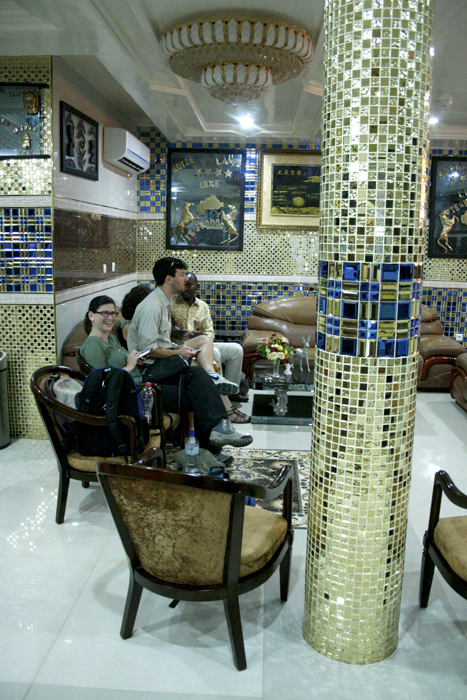
In Tekondogo, we stayed in a really nice hotel, very luxurious. Just walking into the lobby was a chock of gold and glitter. It is interesting, how what is considered good taste can be so different in different places.

my colleagues (June 2015)

We were sitting out by the empty hotel pool in the warm evening, planning the last day of the workshop, when I realized: The number of nationalities here is incredible. There had been so much going on since I arrived, with the meetings and the drive to Ghana and the workshop, that I hadn’t had a chance to reflect over it. But now I counted: Ghanaian, Burkinabe, French, British, South African, Spanish, American, Ugandan, Argentinian, Swedish. Ten nationalities divided between thirteen people. An international project team, to say the least.

the workshop (June 2015)

The main reason for this visit to Burkina Faso and Ghana was not to plan the project with the different teams, but for one of the teams to hold a workshop in Zebilla, a village close to Bolgatanga in northern Ghana. The rest of us tagged along, out of curiosity about the workshop and to familiarize ourselves with the landscapes that we are going to study.

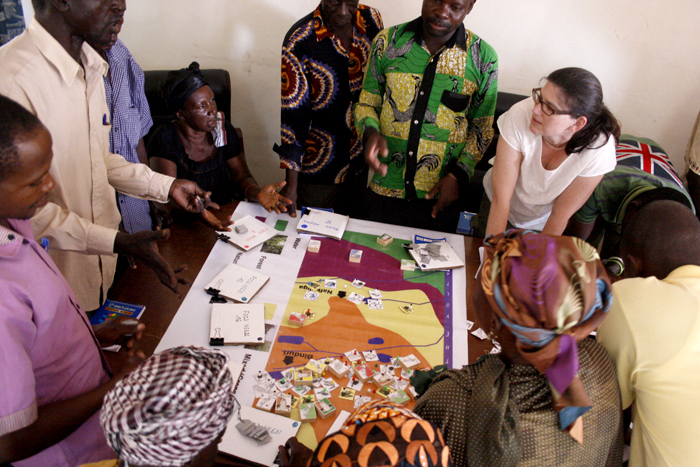
The workshop was centered on a board game (which incidentally was quite similar to Settlers of Catan). It was developed by the team from the French research institute CIRAD, and they had played it once before two years ago with the same communities as now. Basically, they had made a board showing the general land cover types around the participating communities on either side of the White Volta (which is the sub-basin where some of the project teams will be focusing their research). The participants were farmers from the communities, assembly members, extension agents and representatives from different district level or regional agencies.

08

Each player got a set of pins and tokens, depending on the size of their families (for farmers) or their political, social or economic capital (for the other participants). During the rounds, these could be used to buy seed, animals (for farmers) or an intervention (for the other participants). They were then placed somewhere on the board in accordance with where they would do these activities in real life. After every round, the game facilitator (in the picture above, Kate) gave new tokens to the farmer participants based on where they had placed their activities. The number of tokens were then compared with the size of each family, to see if it was enough to feed them.

09

The marker used to symbolize different activities in the village landscape.

Board games are generally fun in themselves, but the main reason for this specific one was to create a base around which the participants could start talking. Partly, so that the game facilitators (us researchers) could find out how the farmers were thinking about their farming practices (almost like having unstructured focus group interviews with the game as a discussion starter), their reasoning behind the decisions that they make and how they relate to other involved actors, but also as a way to get farmers and decision makers to talk to each other. It became clear that it is not always the case that the extension workers and politicians actually talk that much with the farmers, which leads to their interventions sometimes being misunderstood or just not successful.

10

It was a pretty messy affair, and since I had been given the task to photograph the activities, I think the confusion on my part became even bigger from going from table to table, taking photos, and never really sitting down to figure out what was really going on. But by the end of the second day, things kind of clicked for me too. The participants seemed to be content with their experience. It seemed like everyone had learned new things about farming practices or the problem with erosion and siltation of the dams or contamination of water supplies from pesticides and fertilizers. It wasn’t only the external researchers, among them me, who had been given a chance to learn something new.

11

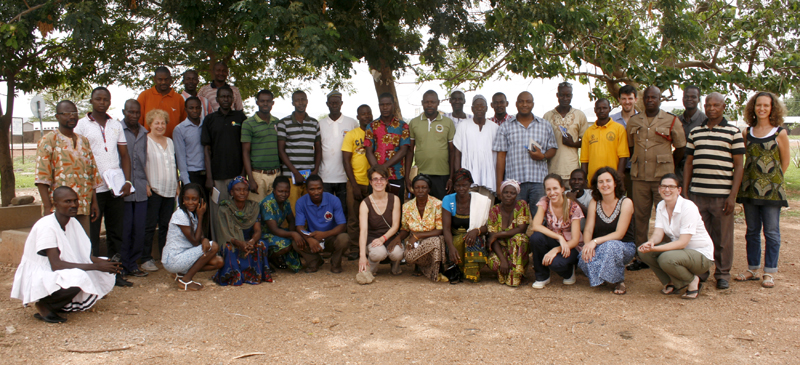
All workshop participants, including the research teams.

It was an interesting way to do research, this board game workshop setting. It is a lot bigger project to make happen, with all the getting hold of the right participants and the logistics, than what I’ve ever experienced before. It required social skills from the game facilitator that I don’t know if I would even be able to develop, and the planning, the rules and the framing of the questions that were to be asked, everything that had to be considered, just made my head spin. I don’t know if what the researchers eventually got out from the workshop was more valuable or informative than what they would have gotten from more downscaled focus group interviews, for example, with farmers in their own communities. However, the opportunity for communication between the farmers and other involved actors that this game facilitated gave an additional dimension to the method, something which would never have happened through the kind of research that I’ve done before.

My tasks in this project do not involve using these kinds of games, I’m focusing more on larger-scale statistics, so I will not be doing any more of them for now. However, it was really fascinating to witness, and a really good experience for possible future projects where this kind of participatory method could be useful.

diving into the deep end of development research (June 2015)

I graduated on June 4th. I did not get any time to enjoy the feeling of having a master’s of sustainability science, though. My contract as a research assistant started the same day I graduated, and three days later, I left Sweden for project meeting/workshop/study site scoping trip to Burkina Faso and Ghana.

05

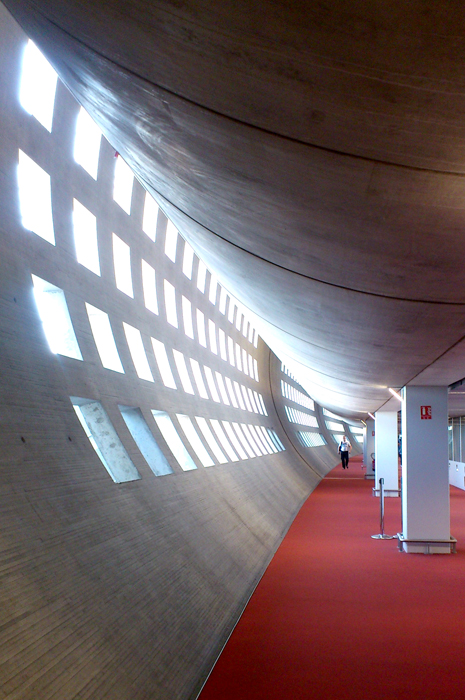
Charles de Gaulle airport was a maze. To be honest, now afterwards, I’m not sure going on this trip so soon after graduating was optimal. I was so exhausted after having turned in the thesis, doing all the celebrating with classmates and other friends, and then presenting. I felt like I hadn’t slept properly for weeks. Which I probably hadn’t. And then going on a long trip, with the stress of flying, and meeting all the new people (no one else from the SRC team came with me, so I was all alone among strangers), and especially the new setting. Discussing a project together with professional researchers. It was daunting, and terrifying, and I am certain I did not make a good first impression on these people. I was confused, the things I said only made half-sense, I hadn’t done all the suggested background reading. It didn’t help that none of the others were really sure about what this huge, still not properly crystalized project was all about either, or what we were supposed to do here.

(I will tell you more about the project in a later post, and how it’s structured. For now, it’s enough for you to know that the project is focused around agricultural innovations in the Volta basin, especially the construction and use of micro-dams, and the project team consists of researchers from many different backgrounds and disciplines, from different universities and research organizations, and they are all grouped together in different teams that are going to study this thing about the dams from different perspectives. That means that there are a number of different quite separate puzzle pieces that need to be fitted together to create a meaningful whole. It will be hard, but if we pull it off, we’ll probably come up with some really cool results.)

So, to summarize, it was just a couple of really confusing first days spent in a meeting room at the CIRAD office in Ouagadougou, with the representatives from the different teams trying to fit their respective pieces together.

06

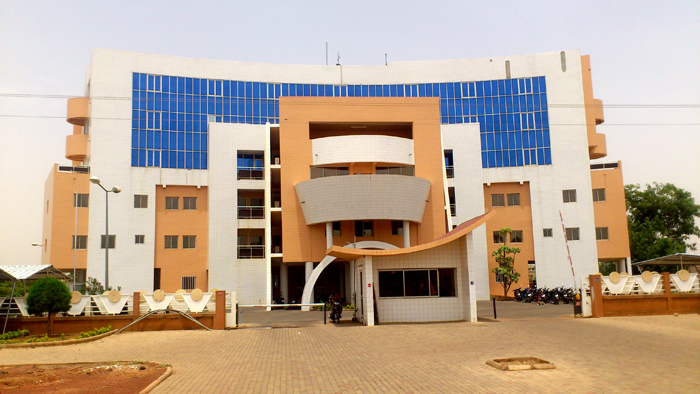
But the days in Ouagadougou were not only spent in a meeting room. I also went to the maze-like, kafkaesque statistics office in Ouaga 2000 (pictured above) in search of data for our part of the project. What we’ll be doing is to use already existing biophysical and socioeconomic data for the entire Volta basin, and try to group them together somehow, in order to identify different social-ecological systems – basically, places where the social and ecological conditions are similar. (I’ll write more about this later too.) This means that our project depends on the existence of the right kind of data, and us getting access to it. In countries like Burkina Faso and Ghana, that can be very complicated.

But Kate and I were, as it turns out, incredibly lucky. (Kate is a researcher from Minnesota who will be working on the same part of the project as me. She’s great.) We met a man, and he took us to his office, and started copying statistical reports onto my USB stick. Just like that. They were all in pdf format, which isn’t ideal since it’ll have to be digitized somehow into a format that statistical programs can understand, but at least we got it. Later, when we talked to other people who had tried to get access to data too, it became clear that we just happened to be at the right place at the right time and catch the right guy. Normally, getting data from the Burkinabe statistics office can take weeks of sending request letters and getting permissions. Now, I have something to work with during the summer.

07

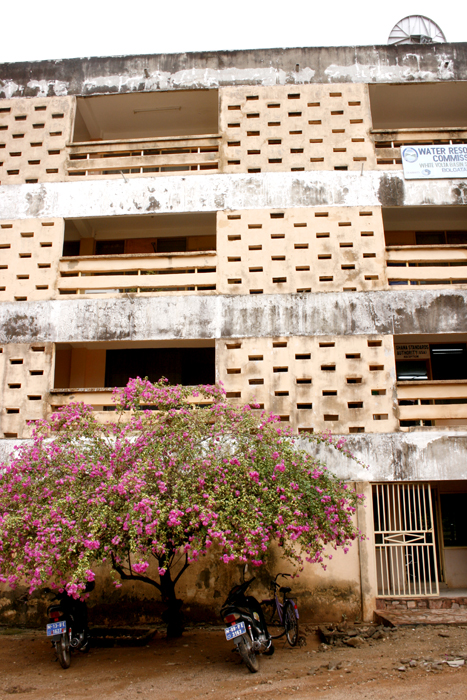
In Ghana, we did not go searching for any data. All the official offices are in Accra, and we didn’t make it that far south.  But we did visit the office of the Water Resource Commission, housed in this rain-painted building.

It was an intense couple of days, my first as a research assistant, in Burkina Faso and later Ghana, at meetings and data search visits. Right now, things aren’t fully making sense yet, but I think we’ll get there. It’s a great group of people, the larger project team, and once I got over my insecurities of being the least prepared and least experienced of the participants, I really enjoyed myself. I think this job will be really exciting.

re-inventing the blog

This blog, with the title Geographies of belonging, was started in March 2012, just before I went on my half-year journey along the North American west coast. And even after I came back from there, the theme of this blog has to some extent kept on loosely revolving around finding my place in the world, and especially when on the road. Liberia, my summer in Europe, Burkina Faso.

Lately, though, I’ve been thinking it’s time for me to get a more specified focus on the blog. I will probably not go off on any long trips anytime soon, now that I’ve graduated and have a job. But there are other stories to tell. The science, for example. My new job.

I think it could be good for me, to practice writing about what I do in layman’s terms. And maybe, if I learn to do it well, it might become interesting from a more general public, and not only consist of musings about my own life that probably only are interesting for people who know me. I would like to be a good science communicator, and I think it’s important that the kind of science that I hope I will be doing gets out there, in a way that people can understand. The world is changing fast and if we want to keep this change on a trajectory that will enable future generations to have good lives too, all of us need to take our part in steering progress toward the future that we want.

Science is important for knowing how to get to where we want to go – but at least in the past, science has had a tendency to exist in its own little bubble, to a large degree separated from politics and the economy and public knowledge. Not really on purpose, but out of elitism and narrow-mindedness. This needs to change. Research might come up with amazing solutions for our shared problems, but if people don’t know about these solutions, and how they relate to other issues, the solutions can’t be implemented in any efficient way. Especially the solutions that are not pure engineering, but more socially and culturally oriented, needing more than only expert participation.  We need transparency, communication, mixing up of knowledge systems. Discussions and change needs to happen on all scales, from the grassroots to top-level political forums.

And I think, with some practice, I would like to become a small part of that bridge between knowledge systems. With time, once I’ve become a more established researcher (if that’s the sphere where I will end up working, we’ll see what the future brings), I would like to be able to communicate some of the cool and progressive things that sustainability research comes up with for people who might not be academically trained but have a stake in the things that are being researched upon. Agriculture and food systems, for example. Or water resource management.

Stockholm Resilience Centre, where I’m now working, is a great place to do this too. The director of the center, Johan Rockström, is an amazing science communicator (check out his TED talk, for example), and I think if I stay there, developing transdisciplinary research and my science communication skills would be encouraged – not least through all the amazing people who come through the center as employees, visiting researchers and non-academia collaborators.

Yeah. Simply put, this is what I wanted to say with this very long post: From now on, I will be focusing on my job on this blog. It will be a test run and training center for my science communication skills. I will give it a new name, I just haven’t come up with it yet. And there might still be the occasional post about life in general, or certain details of my everyday life, but I will try to frame it in a way to still be relevant in relation to my job – which shouldn’t be hard. Resilience and sustainability science could basically be about anything, after all. It is not a particularly limiting focus.

So, please, bear with me while I figure out this new format. I hope it will work out. I’m quite excited, as I always am in the beginning of a new project. Let’s see how long the excitement lasts.

the first week of June, when everything happened at once

I finished my thesis. But you know that already. Turned it in on June 1st. Had beers with Roweena, Phil, Ashley, Dries and Josh (the last three only there for sympathy reasons, they are still working on their theses). A wet night that ended with us drinking cloudberry liquor and watching Buffy the Vampire Slayer lying in piles on the couches and a mattress on my living room floor.

Wednesday was the SRC spring party, flower power themed, arranged by the first years to celebrate us who were graduating. The sparkling wine did not run dry. I ended up sleeping in Ashley’s bed for about six hours (because she lives so much closer to uni than I do), after which she made me pancakes and coffee, and put me on a bus back to uni, where I did the last preparations for my presentation, and then. I presented. And despite lack of sleep/a slight hangover, or maybe precisely because of that, the presentation went well, I didn’t feel stressed at all, and I could answer all the questions that I got. Mostly, I was amazed at the attendance – almost every person in the class came, despite it being at 11 in the morning and some people, I was told, didn’t leave the party until 4. All that supportive energy must have had an impact too. I’ve had such an amazing master’s class.

So I graduated. And after a brief lunch, we had the first official project meeting with the Targeting Agricultural Innovations in the Volta Basin team. And I was off on my first day of working as a research assistant.

There was a celebratory dinner with dad that same night, and then a sunny brännboll game with a mixture of geoscience people the day after, and then, early on Sunday morning, I was off to Burkina Faso again.

the last month of thesis writing (May 2015)

The month of May is a blur. I don’t remember anymore what I did, except long days of trying to write and making figures, in the computer lab in the Geoscience building together with Roweena and Jessica (among others), and alone at home. I can’t remember if I did anything else, even properly go outside to enjoy the blossoming spring of the southern suburbs of Stockholm.

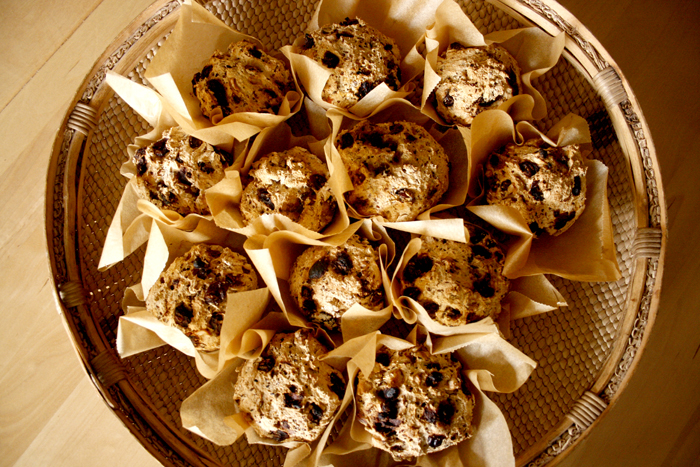
I did do other stuff, though. Even if I don’t properly remember it. There is photographic proof. I baked. Cookies, that I fed to Josh, Dries and Roweena. And I made “cold-raised” breakfast muffins, that I brought to a study session at Elli’s.

03

I think it’s one of the things people tend to find weird about me, the fact that I don’t really like baked goods. Eating bread or cookies or cake, most of the time I don’t mind it, but if given the choice, I prefer vegetables or fruits or ice cream. But there are always home-baked goods at my house, because I so enjoy the act of baking. The feel of the ingredients in my hands, different textures. The smells. And I like the way it looks, when I put the whole yield of muffins or buns in a basket or a bowl, how delicious and excessive it makes my kitchen seem. So. That’s why I do it. Bake. (There’s also something incredibly satisfying with the smiles on people’s faces when I bring out  a cake or a box of cookies at home or at uni, I so enjoy other people’s enjoyment.)

04

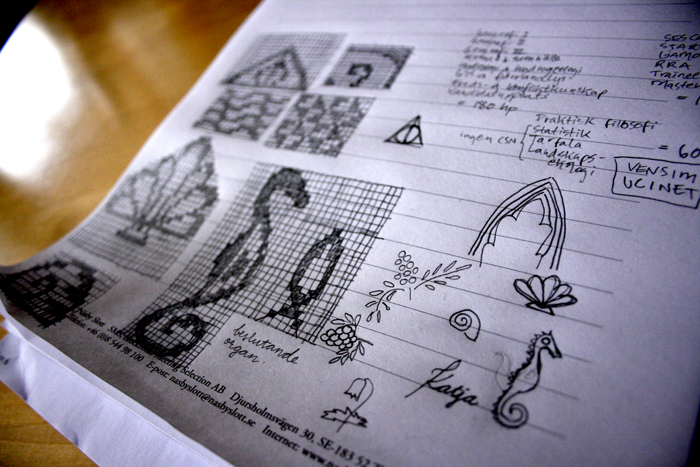
There were also student council-related meetings with important people at hotels and university conference rooms. They were likely my last, at least as a student, after a long career of being the student representative in almost every council and advisory board at the Stockholm university science faculty. I should have cherished them. I’ve enjoyed the university politics, after all. Instead, I couldn’t focus. I think it was the thesis, too ingrained on my brain for me to be able to follow the discussions about course descriptions and student rights. Instead, I drew knitting patterns for my mittens. My kind of doodling.

And that was it. The very undramatic end to my student representative’s career.

links across time (April 2015)

02

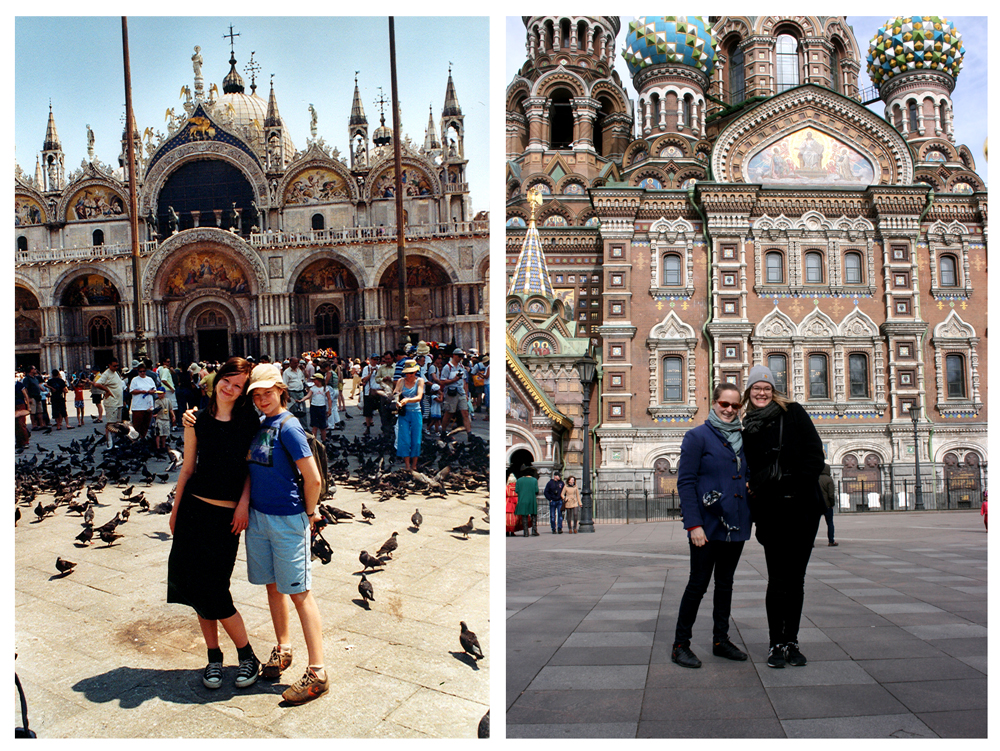
Kirke took this picture of Hanna and me in front of the Savior on the Spilled Blood Church in Saint Petersburg – but it wasn’t until I got home and started going through the travel photos that I realized that it’s almost an identical staging of a photo that my dad took of Hanna and me in front of the Saint Mark’s Basilica in Venice when we were there in 2003. Look at it. Without planning to, we’re standing in the same way, even wearing the same colors.

And I don’t know, maybe age has made me sentimental, but this pair of photographs makes me feel like I’m looking at something almost holy. Many things have changed during the twelve years that passed between when those two photos were taken. We’re both completely different persons, multiple times heavier with experiences and memories. But also, the similarity of them, that we’re standing there, with the colors and the postures, in front of these two world-famous churches. And most of all, that we’re standing there. That we’re still traveling together.

It makes me feel, despite all the change, like there is also continuity in life. The important things stay the same. Evolve, maybe, but at the core, the same. I still like blue. I still like traveling. And I still like doing it with Hanna.