from thesis to article

I haven’t only been cleaning data this fall, though. Since I’m working with the same supervisors and in the same general geographical study area, the line between my current project and the finished master’s project has become a little bit blurred. As part of my work, I have therefore also been allowed to edit my master’s thesis into a publishable scientific article.

In academic research, everything is about getting published in peer-reviewed scientific journals, especially in the natural sciences. Since the master’s program that I did is a research oriented program including a one year thesis project, we were recommended to write our thesis in article format. This is much shorter (about 10 pages of text) than what a more conventional master’s level monograph-type thesis would be (20 pages and beyond). We’re recommended to do this, in order to make the process of publishing easier once the thesis had been approved. So I wasn’t expecting there to be that much editing once I had submitted the thesis and my grading committee passed it with flying colors.

Boy was I wrong. First, the Introduction, Discussion and Conclusions sections all had do be completely rewritten. It is incredibly important how your research is framed. You can do a study on anything, as long as you manage to put it in a relevant context and explain how your work is filling a research gap and/or could become useful for society. I already had the basic idea of how to argue for this in the thesis, but for the article I quickly realized that it was even more important to think through the order of each sentence, even weigh each word, to make sure I managed to fully explain my point without any superfluous words.

Also the Methods and Materials section had to be heavily edited. My thesis project consisted to a large part of developing a method, and therefore, a large portion of the thesis text was dedicated to describing this new method. I had worked a lot on turning my very iterative and messy method development process into an intelligible text, but now I realized I would have to cut it down by at least half. Luckily, I had help. Hanna, the PhD student whose work I built my conceptual framework on and whose data I partially used for training, has basically written the whole article manuscript together with me, and my supervisors have both read and commented different versions. This manuscript will have gone through many filters before it is done.

screen3

This is a screenshot of what the manuscript looked like after a round of edits and comments. Each color represents a different person involved in the editing process. Barely any of my original text is left. That sometimes makes me think it isn’t mine anymore, that maybe I don’t deserve any credit for it – and then I remember I spent a year producing the actual results that the article is communicating, and I feel a bit better.

I am fascinated. The extent of literary craftmanship needed to produce a scientific article goes way beyond what I ever could have imagined. I spent most of my teens practicing to become an author, and I even have a manuscript for a novel, written when I was nineteen, stored deep in my hard drive somewhere. I’ve spent hours and hours studying, discussing and trying to create beautiful language. I thought I knew how to write. I thought, the requirements for literary precision and elegance when writing scientific texts is child’s play compared to the harsh world of fiction. I thought I wouldn’t be allowed to nurture the love for words that I harbor in the career path that I’ve now chosen for myself.

Turns out, I’m merely a novice when it comes to writing. There is a particular kind of meticulousness that comes with science. Writing it, it’s like you have to distill your thoughts and arguments to their absolute core. No room for fuzziness, as with prose. Good scientific writing has the same kind of spot-on quality as poetry – most readers just don’t notice it as intuitively. Poetry describes feelings, and when it’s right you feel it in your gut. Physically. Science writing speaks to our minds. We look for it to make sense, but the magic of a perfectly formulated sentence rarely get through to that place behind the lungs. That doesn’t mean the elegance isn’t there. I’m excited for this next, unexpected part of my journey as a writer.

My article manuscript is in its last rounds of edits. If all goes well, we’ll be able to send it in for review in the end of January. And then starts the whole peer-reviewing process (which I hear can be a whole other kind of nightmare). We’ll see if 2016 is the year that I get my first scientific publication.
glimpses of a fall: … but I’m feeling 22

Sure, there was a roadtrip and talks and a play, but most of my time I spent sitting in front of my two computer screens, searching for, cleaning, structuring and visualizing data on demographics, education, household economics and agricultural production in Burkina Faso and Ghana.

Visualizing data into maps is a pretty simple thing if you know how to use a GIS, and the downloaded data has been structured in an analysis-friendly way by the data provider. I was taught to do basic GIS visualizations years ago on data from Statistics Sweden. There, all data that you download is structured by the municipality codes, and these in turn can easily be connected to municipality boundary files in a GIS. A couple of clicks, and you’ve got a choropleth map showing basically anything you can imagine. That’s how good Statistics Sweden and the Swedish Land Survey are.

Now, this is not at all the case with the data that’s available for Burkina Faso and Ghana. If the data even exists, it’s in pdf format that needs to be digitized, or in an Excel sheet full of errors, and I’ve had to spend hours on cleaning and structuring the data, not to speak of trying to figure out what the data is actually measuring. Ghana has also had a number of district reforms, meaning that data from different years cannot be directly compared. I’ve had to play detective, trying to figure out which districts are the same, and which have been merged or split up.

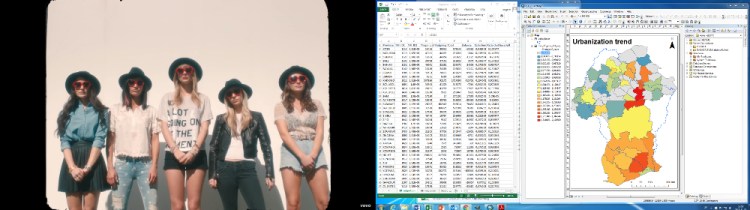
It is not a particularly intellectually challenging job, but it needs to be done. I fell into the habit of listening to music while doing it, just to keep the energy up. I’ve needed something upbeat and catchy. Naturally,I became obsessed with Taylor Swift. Whenever possible, I’ve had her videos playing in the background. I must have looked deranged whenever a college walked by my desk, twitching by my office chair with spreadsheets and maps covering my two screens, with Taylor singing in my headphones for only me to hear.

screen2

One of her songs is called “22”. The lyrics go like this: It feels like a perfect night to dress up like hipsters and make fun of our exes. It feels like a perfect night for breakfast at midnight, to fall in love with strangers. Yeah, we’re happy, free, confused, and lonely at the same time, it’s miserable and magical. Tonight’s the night when we forget about the deadlines, it’s time. I don’t know about you, but I’m feeling 22. Everything will be alright.

It made me think: Who was I at 22? Probably dressing kind of like a hipster. I still do. I didn’t really have any exes to make fun of. I don’t like breakfast. I did fall in love once that year, but not with a stranger. I was definitely happy, confused and miserable all at the same time. I don’t know how much of a 22-year-old that made me in Taylor’s eyes, but it is a catchy song and I liked to think I once was one of those 22-year-olds in heart-shaped sunglasses next to Taylor. Even if that would be to completely rewrite history.

But one thing is for sure, though: At 22, I did not expect to spend hours cleaning data, staring at uninspiring spreadsheets. And, in a backwards way, kind of enjoying it.

_MG_8307

Me at 22, in Namibia doing fieldwork.

glimpses of a fall: the talk

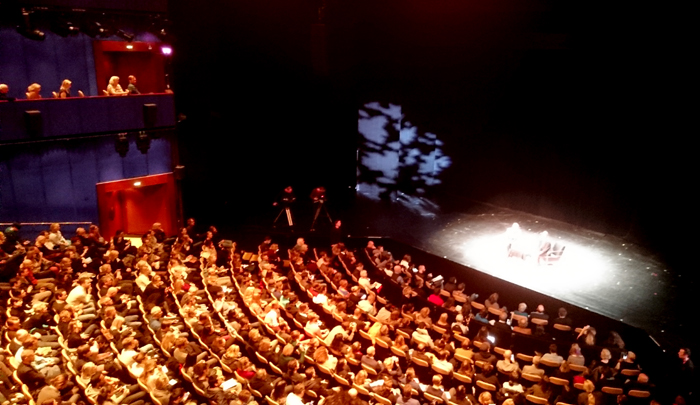
In mid-November, Naomi Klein came to Sweden to talk about her new book, This Changes Everything. As part of this visit, she had a one hour talk with Johan Rockström (professor of environmental science and my boss) on the main stage of the Stockholm city theater.

It was fascinating, just the sheer number of people that showed up to the talk. The tickets, that had been released a couple of weeks before, ran out in just a couple of hours. It gave me hope, that so many people wanted to pay to listen to an author and a researcher talk about climate change.

DSC_0363

A lot of their discussion revolved around the upcoming Paris climate negotiations. The terrorist attacks in Paris had just happened, and a question Rockström asked was how Klein thought those might affect the negotiations. Klein answered that, if anything, they should make the negotiations even more important. According to her, the negotiations to reach a global climate agreement could also be seen as negotiations for peace and security. Firstly by the simple fact that so many countries would be coming together to agree on something, instead of fighting. Also, more importantly, by reaching a good agreement, we would hopefully be able to limit the rate and extent of climate change, which in turn will limit the pressures a changed climate would have on our water resources, food systems, ecosystems and vulnerable populations. Humans wage war and commit acts of terrorism, and unequal or unstable social structures and economies cause this – but climate, ecosystem health and access to water are all things that can make a social system tip from unstable to full-blown war. Just look at Syria, and the long period of droughts that led up to the start of the conflict there.

That message clicked in me. She put words to something that I have been kind of thinking but not been able to formulate. Now we have a climate agreement, and to a certain extent, it was a success. But I think it is important now to continue. As Klein said at her talk, the work does not end in Paris. We need to continue to figure out how to change our current, destructive trajectory.

And I will read This Changes Everything.

glimpses of a fall: Nyköping and Hundby

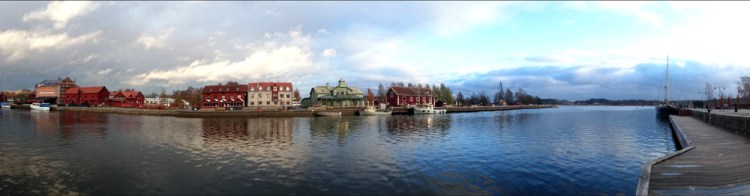
It is important to get away sometimes. In early November, Hannes and I went on a roadtrip. I made him drive me to Nyköping, to see the castle, the river, the small picturesque buildings by the water.

DSC_0286

I should do it more, visit places in Sweden. I’ve traveled the world, but my familiarity of Sweden is very limited. Growing up, we didn’t have a car, and it isn’t until recently that I have family anywhere else but in Stockholm.

DSC_0301

Nyköping was quaint. And the winter-prepped fields on our way back to dad’s cottage beautiful in the setting sun.

DSC_0312

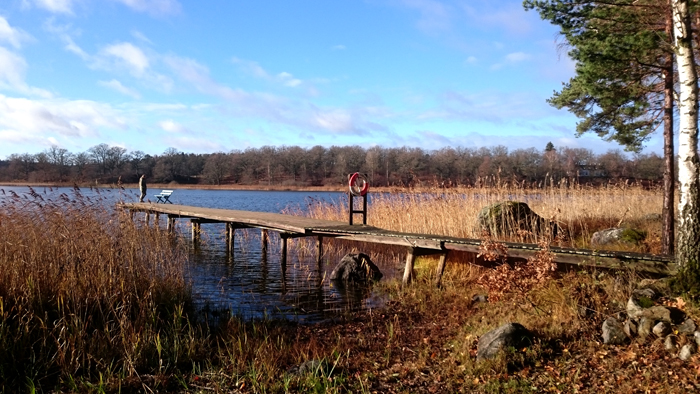
We spent two days in Hundby, Hannes working on his thesis and me reading articles about water management in West Africa. But the sun was shining, and we had time to take short walks down to the lake and at night make dinner together.

DSC_0328

A calm get-away. Getting out of the city is nice even off-season.

glimpses of a fall: the play

In early November, I went to a play together with Hanna and Tora. It was a performance of Athena Farrokhzad’s poem Vitsvit (~ white suite), a monologue of sorts performed by three actors.

It was interesting.

It explored the immigrant’s experience, being born in another country than your parents, listening to the stories of past times and far-away landscapes. The trauma of war, of having to leave everything behind. The constant conflict between belonging and not belonging, the rootlessness, of growing up in a home where people longed back to a place that doesn’t exist anymore. But also how arbitrary that longing can be, only showing up when the local society doesn’t live up to your expectations of life.

It made me think of my mom and her aunts. They were not political refugees, like Farrokhzad’s parents, but I experienced some of that in-betweenness growing up. The Swedish and Finnish cultures are more different than what many people might think. And the memory of war, so dominant in my grandmother, but also as a shadow, an inherited unsettledness in my mother and all my aunts and uncles.

Yes, it was a good play.

Afterwards, there was a panel discussion. A girl in the audience asked the rest of us: My parents were immigrants, I can feel this. But for the rest of you, all you for-many-generations-Swedes, can you understand at all?

That comment scared me. Partly, because it suggested people cannot feel for anything that they haven’t experienced themselves. What would be the point of art, in that case? But it also made me realize how separated these two spheres of human experiences have become. The refugees, who come with their traumas experienced someplace far away, costing money (at least to begin with) and then with varying degrees being able to fit into our Swedish society. They are a group, and even if they all have their individual experiences, there are also similarities and that is seen as enough for them to be understood as a group. And then we have all the rest of us, some with family traumas and rootlessness and other things that could easily be related to the experiences of the so-called immigrants, but they generally aren’t. Those are experienced by individuals, and should be understood as particular, not belonging to any group.

I think, maybe, if we could start seeing the similarities in the human experience, how trauma and grief and suffering can be the same, despite the variety of guises that they come in, then maybe it would be easier to see the individuals. See what it is that we share, and feel with that, rather than being threatened. The European sense-of-self is in need of a serious re-boot. What the “refugee crisis” has done with us this fall is worrying, to say the least.

So yes. It was an interesting play. Yet another reminder of how important art is for getting us to think.

DSC_0279

the naming of landscapes

I’m catching up on some reading, newspaper articles that I’ve been recommended but haven’t had the time to read yet. I have a folder in my bookmarks bar that has been growing since March.

I read an article unexpectedly relevant for my line of work, titled The word-hoard: Robert Macfarlane on rewilding our language of landscape. It is an essay about all the almost-forgotten words that exist in different languages and dialects to describe very particular features of the landscape. And there is a romanticism in this love for words, the poetry that they hold, which awakens the pubescent writer in me. But it is also an aspect which makes the message of this article (don’t forget the language of landscape!) more literature than natural science. We have a rich language for forests, for wetlands, for anything cold, hard, dark and wet in the Swedish language. I loved dabbling in the borderline-banal art of scenery descriptions in poetry and prose when I was younger, before I turned my love for landscapes into an academic profession. Now I feel like I might have lost some of that feeling of wonder and magic, adopting my language into the technical, soulless vocabulary of science.

But reading Macfarlane’s article, I am reminded of how much is hidden in language. I have spent a considerable amount of time reading up on the scientific literature on local participation and indigenous knowledge in my work, and I was fascinated by the detail in the definitions of the words that Macfarlane had collected. The words were beautiful, and their definitions like small poems in themselves. But also, embedded in those precise definitions was a rich local knowledge about the landscape. A type of knowledge collected and inherited through generations of living in and living off the landscape, giving it a kind of time-coverage and experience of the ordinary and extraordinary that scientific measurements simply cannot capture.

And just relating this to the Swedish context: Anyone working with nature conservation, almost anywhere in the world, will be aware of the importance of wetlands. But in most scientific texts that I’ve come across, these landscape features are called just that, wetlands – when in reality, there are so many different types, all with different origin and life-cycles. In Swedish, the wetland equivalent våtmark is often used, but when I studied landscape ecology with a Swedish professor who had studied historical landscapes, she also taught us the definitions of myr, träsk, mosse, sumpmark, kärr. For most Swedes, these terms just sound old and aren’t used anymore, but for anyone wanting to understand wetlands and how they interact with the surrounding landscape, it is important to know the different ways in which wetlands occur. And one way to do this is to keep this rich language of landscape alive. In one word, they answer questions such as: Where does the water come from? How fertile is the soil? How stable is the wetland?

It was a nice reminder, in the end of my Christmas holiday, the way in which literature, the humanities and natural sciences can help and enrich each other. I have to remember that, now that I soon return to the disciplined world of resilience research.

3 Oset _MG_2126

the first meal of 2016: the watermelon cake

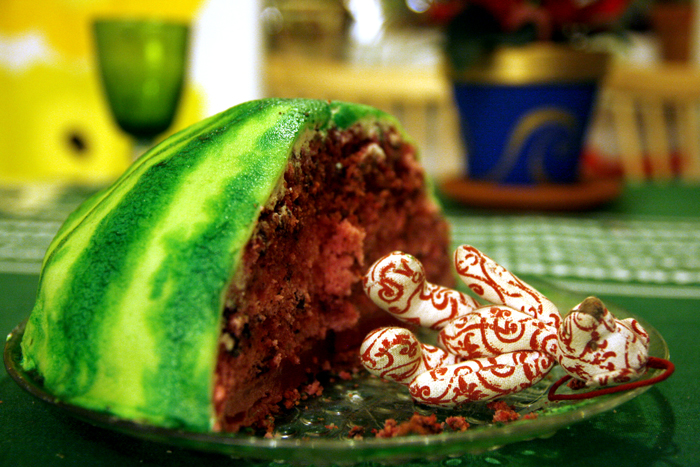
I spent New Year’s Eve with Natalia and Alice, cooking food, drinking sparkling wine and baking a watermelon cake. That meant we spent the entire evening in aprons, constantly eating, laughing and building a mountain of dishes in the sink.

This is the third year in a row that I spend New Year’s Eve with Natalia. I’ve known her for more than eleven. She might be the best person I know. And Alice isn’t bad either.

When we went outside to look at the fireworks at midnight, we found this random guy. He wanted to join us for some watermelon cake. (OK, maybe not that random. It was Jakob, the son of a friend of my mom’s. I’ve known him since he was born. He’s turned into a really funny guy.)

_MG_6856

So there we were, having our first meal of the new year. The watermelon cake didn’t turn out very tasty. Not bad, just a bit dry. Natalia and I will have to keep on experimenting a bit, with the cake recipe and the filling. Being half-way a professional prop-maker already, Natalia of course made sure that the cake at least looked beautiful.

_MG_6884

And now Mr. P and I will start the year in constant sugar comas – there’s so much cake left!

a brief pop cultural summary of my 2015

I have always done this on New Year’s Eve, ever since I started blogging back in 2006, and this year will be no exception – despite the rest of it being so irregular.

The band that I listened to the most this year is, without a doubt, The Staves. I saw them live with dad in April, and have been spell-bound since then. As to their best song – well, they don’t really do hits, so there isn’t one obvious favorite song. But if I had to choose, it’ll have to be Facing west. I’ve also listened a lot to Tallest Man On Earth, Anna from the North, Låpsley and, believe it or not, Taylor Swift this year.

I’ve mostly read scientific articles this year. But of the few novels that I’ve read, most have been set in different parts of Africa, and of them The Poisonwood Bible by Barbara Kingsolver was the one that left the deepest impression. I got it from Anders, who neglected to return it to the library in Boone when he was there over Christmas, and then he gave it to me because “it made him think of me”. Those kinds of recommendations are always interesting to read. I started reading it by the pond at the farm in Sebastopol, and finished it on a beach in Lisbon. And it really is an impressive piece of fiction. Definitely a compliment.

It should be no news that I’m a sucker for the epic. I choose Star Wars: The force awakens as the best film of the year. They’ve done it well, created a couple of interesting new characters and built on the already existing story-lines, and not only ridden on the immense popularity of the Star Wars franchise. I saw it on the Swedish premier day with dad, brother and Anna. I should go to the movies more often.

As for TV shows, Parks and Recreation is by far the best, and funniest, show I watched this year. I adore Leslie Knope, adore her!

Untitled-6

And finally, just to stress the all-consuming effect that research has had on my year, I will not choose a photograph for 2015, but a map. To be more precise, one of the two maps that I produced as my master’s thesis. This piece of colors is what gave me a master’s degree.

SA2_map2

There you have it, my year in pop culture! Have a happy New Year now! I’m going to bake a water melon cake with Natalia and Alice!

the yet-to-become blog posts

I haven’t even written in my journal since December 1st. Normally, I write in it every night. December was simply too much. I have a big pile of notes, though, for potential blog posts. And a bunch of photographs to illustrate them. My brain has been running on full speed in all directions, but it’s as if I’ve lost my ability to focus.

(And just as I write the previous sentence, I remember I have a bag of groceries that hasn’t been unpacked sitting on a chair in the kitchen. Cream and frozen vegetables melting away. I was just supposed to sit down by the computer to put on some nice music, and then go do stuff in the kitchen in preparation for the New Year’s dinner that I’m scheduled to start hosting in an hour. Scatter-brain!)

I don’t know if I should just leave all those notes, not write them up. Maybe re-booting myself would be the kindest thing for my fragile mind. But there are so many important things that have happened this fall, there are the sustainable development goals and the climate negotiations in Paris and then of course the long and winding road of the project that I’m working in, and I just feel like I would like to write about them. For myself. To make up my own mind about what’s going on in the world, and with me.

I don’t know what would be best. Maybe I’ll have an epiphany at midnight, when 2015 turns into 2016. Maybe January will re-teach me how to concentrate, and I will be able to preform well at both my job, at writing, and in life in general.

In the meantime, I should really take care of those melted vegetables in the kitchen.

and now that the year is ending

November and December were tough months. In many different ways. I’ve taken some time off, now between Christmas and New Years, and it has taken days for me to catch up with myself. I’m not there yet, but I’m working on it.

It is nice, anyhow, that the snow finally came. I like it when the world glitters, and turns my nose red.

_MG_6830