a harvest of hearts (mid-April)

During my field visit, southern Burkina Faso was entering mango season.

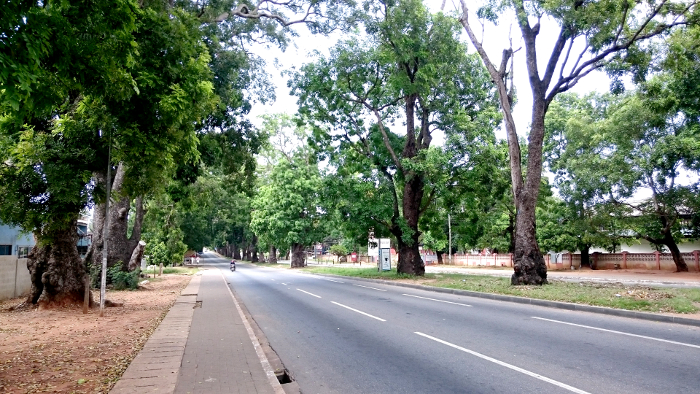
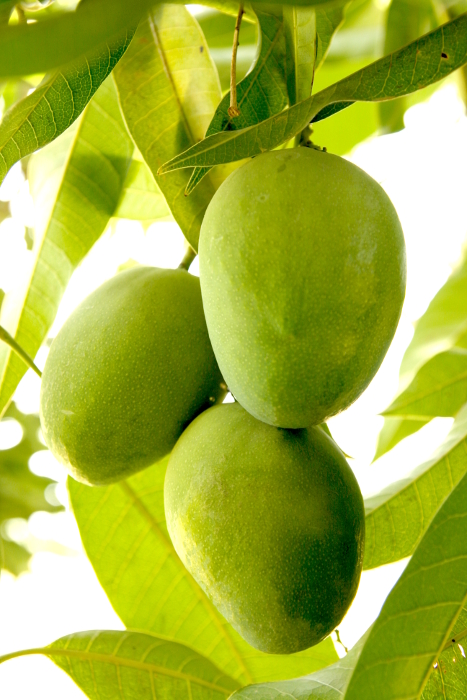
These magnificent trees, dense, deep green crowns. Looking even more extraordinary in the otherwise barren, end-of-dry-season landscape.

And their fruit, light green, a promise of sweetness.

Like a heart, hanging from a vein.

_mg_8409

It made me think of something written by Catherynne M. Valente, a voluptuous, surreal image, tree of hearts. A faint rhythmic humming in the shade from the pumping. Bleeding sap and sticky yellow juice.

The Sahel heat really does something with your head.

fieldworking in Tenkodogo & Zebilla (mid-April)

We spent about two weeks doing fieldwork in southern Burkina Faso and northern Ghana, my fellow researchers and I. A small number of communities with small reservoirs had been selected around the town of Tenkodogo in Burkina and Zebilla in Ghana. Together with our local partners from universities and other organizations in Ouagadougou and Tamale, we engaged in a wide range of data collection activities, all with the focus to learn more about the dynamics surrounding small reservoirs, irrigation agriculture and food security in these areas.
_mg_7909

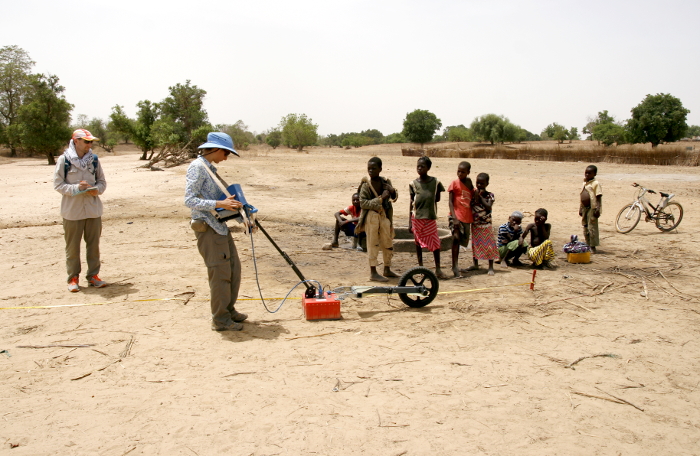
Alex and Aline used a ground-penetrating radar to measure sediment depths and a LiDAR to create digital elevation models around the reservoirs, all to understand storage capacities, sedimentation dynamics and how these might affect the fish stocks in the reservoirs.

David collected soil samples from both irrigated and non-irrigated agricultural plots to learn more about grain sizes and nutrients in the soil.

_mg_8688

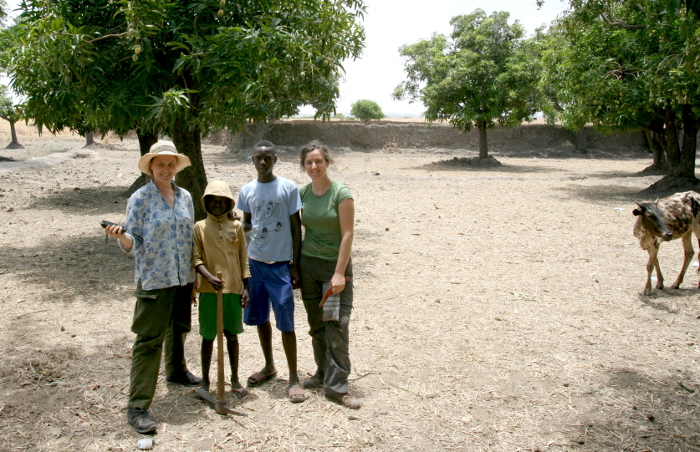
Sarah collected soil samples too, but also measured infiltration rates, ground vegetation cover, crop types and, if possible, interviewed the farmer of the plot about fertilizer and pesticide use, the history of the plot and other management practices. When I wasn’t busy with my own data collection, I helped Sarah with digging and measuring – and in the village of Tanga, we got two excellent assistants, Daoda and Ebenezer!

img_8440

img_8719

_mg_8737

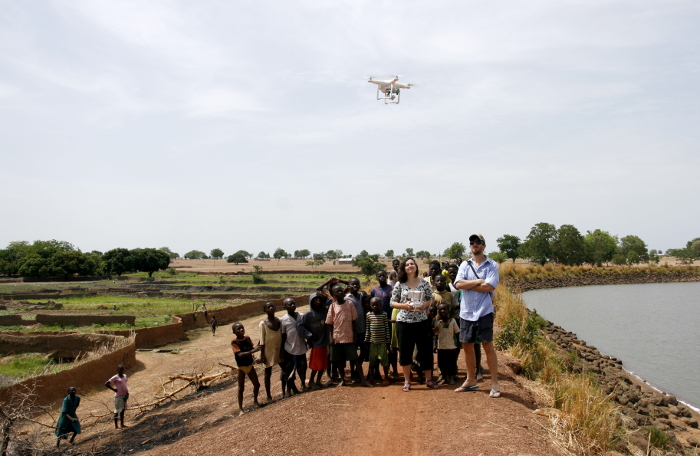
All our activities drew an audience, mostly consisting of children, but by far the biggest crowd-pleaser was the drone. Sarah, together with Fabrice (not in the picture, though, that’s David standing next to Sarah!), also collected aerial photographs of the land around the reservoirs using a drone equipped with an infrared-sensitive camera. These images Sarah will use together with the plot data that she had collected on the ground, in order to better understand the conditions and management practices for farming around the reservoirs and in the communities that we were studying. All serious stuff, for sure, but the process of data collection with the drone very much seemed like a game with a cool toy, and the kids in the villages loved it! They came running from all over as soon as that loud, humming noise started, the drone shooting up in the air like a monster-sized bee.

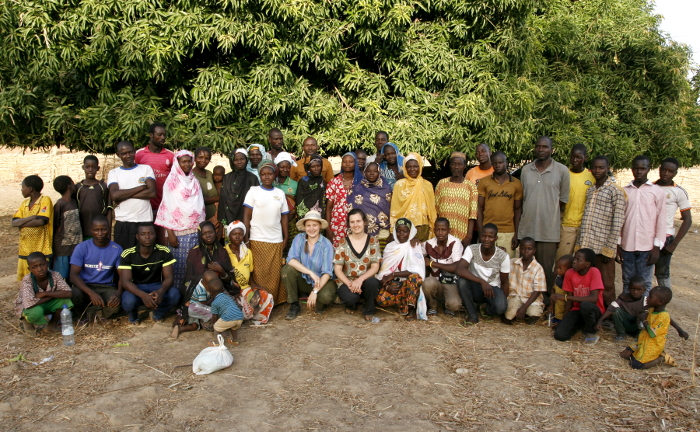
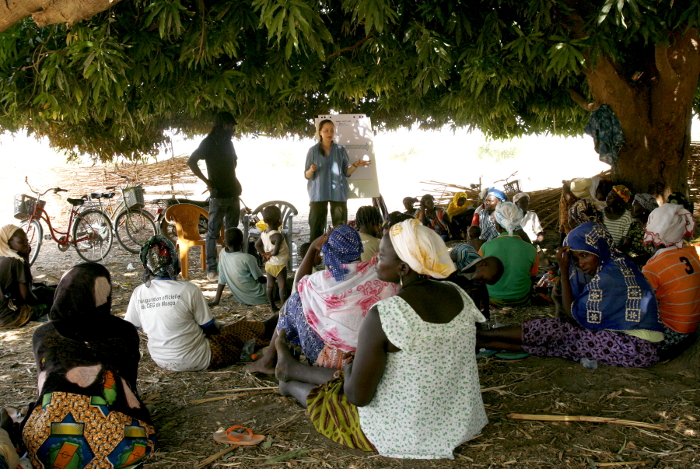
As for me, I tried to conduct focus group interviews to understand how governance of the reservoirs worked and other social aspects of the communities around them. I say tried, because it turned out to be very hard. For my first interviews, in a village called Lagdwenda, I had asked to talk with about eight men in the morning and eight women in the afternoon. Sarah was also going to conduct interviews, so we were going to work parallel, her with the women first and the men after. When we arrived at the mango tree in the morning, though, close to fifty people had showed up. They were curious, of course, about what these strangers coming to their village were up to, but conducting interviews with more than twenty people at a time is near impossible, and I was completely overwhelmed by the task. Some of the men started to play a game with rocks in the dirt, and the children came and went, seeming to see this more as a nice hang-out under the magnificent mango tree rather than a serious research endeavor.

_mg_8306

_mg_8173

_mg_8084

_mg_8329

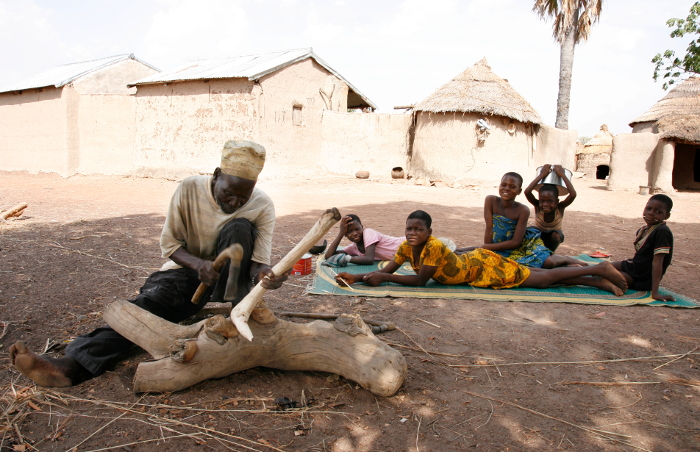
I did get some very interesting answers, though, and plenty of experience, allowing me to refine my set-up technique. For the next village, Tanga, I was very clear about not wanting more than five people present for one interview, and I ended up having a couple of very low-key, relaxed and informative interviews with both men and women in the next couple of villages.
_mg_8598

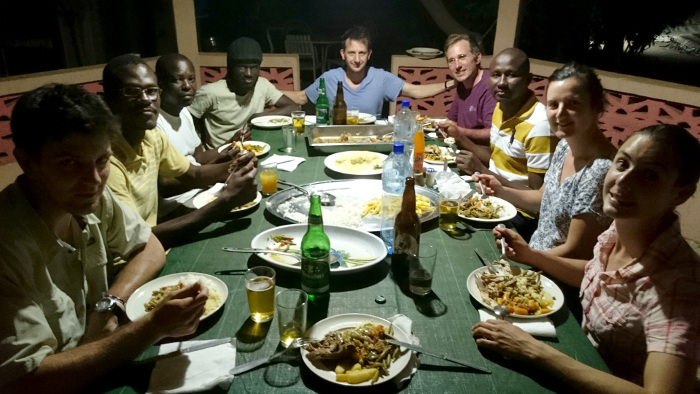
What I’ve realized is that you’re forced into a very steep learning curve when doing fieldwork, things rarely work out like you expect and it’s essential to have a flexible enough mind to adjust your plans and sometimes reach solutions where you did not expect to even have to look. This kind of fieldwork is not for the rigid of mind! And requires a great team!
dsc_0805

a hipster side of Tamale (mid-April)

After about a week on my own in Accra, I was joined by colleagues  from other teams in the project that I am working in: two from Montpellier, France, one from London, two from Washington State, US – and so, with huge bags full of machines and equipment, we boarded a flight to Tamale.

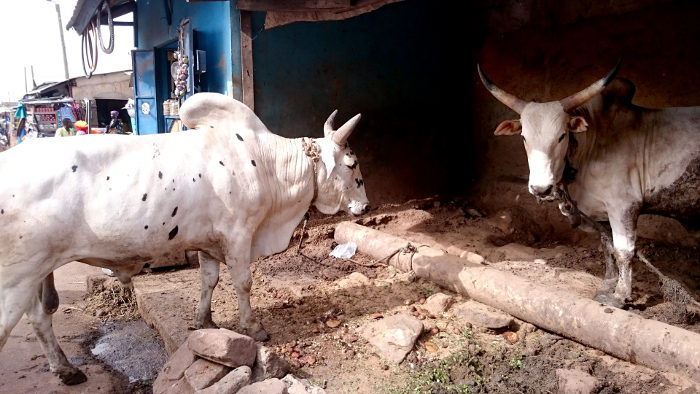
Tamale is the largest town in the northern part of Ghana with its more than 200 000 inhabitants. Entering the town, though, it doesn’t feel that big, not for someone with a European understanding of a city, meaning dense and high stone and concrete building city centers. The central parts of Tamale had basically no buildings higher than three stories, most only had one, and the cows, sheep and goats that were kept even in the marketplace between stalls selling electronics, hardware and cosmetics gave it all a rural feel. But then again, the more or less randomly built residential areas stretched out far outside of the center, creating a large mixed semi-urban/rural area that was hard to precisely delimit.

dsc_0769

dsc_0771

dsc_0772

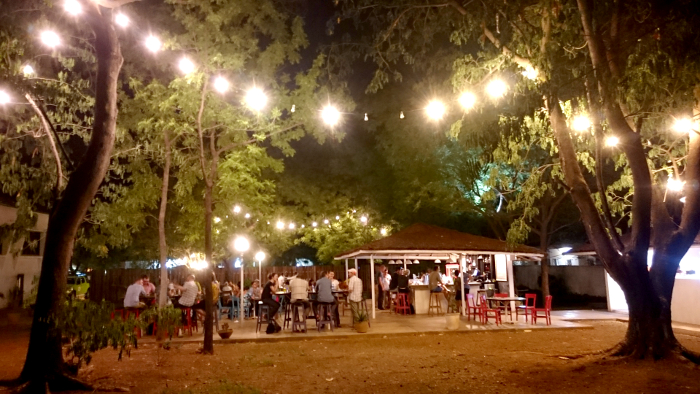
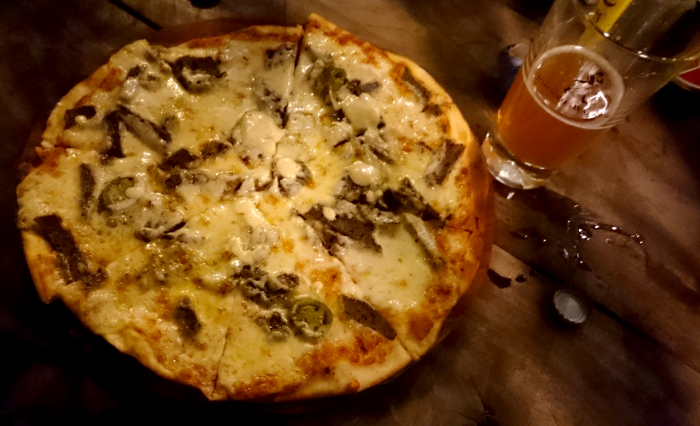
In the evening Raymond, a professor at the local university and a collaborator in our project, took us to a bar close to the guesthouse where we were staying. We were seated outside and there were lights hanging from the trees around us. Apparently, it was run by a Swedish guy whose wife worked in an NGO in Tamale. They brewed their own beer and served pizza made in a wood-burned oven. As darkness fell, the patio filled up with Converse-shod and bespectacled women in colorful dresses and men in chequered  shirts and full beards. The bar played a nice mix of indie music, including Robyn, Peter Bjorn and John, Tallest Man on Earth and Lykke Li (all Swedish bands). They even served kebab pizza! (For those of you who aren’t acquainted with Swedish food culture, the kebab pizza is a dish that Swedish pizza-makers pride themselves of having invented, a combination of the Italian pizza and the Turkish döner kebab.)

dsc_0778 dsc_0781

With a home-brewed ale, a kebab pizza and First Aid Kit playing in the background, it was just as if I had entered into a summer bar in a park on Södermalm in Stockholm. Only, it was at least 15 °C too hot and the mosquito bites much more dangerous. A very hipster side of Tamale.

off-duty activities in Accra (beginning of April)

It is strange, considering how much time I’ve spent in tropical climates, how much the heat of Accra affected me. I was fine walking around from office to office, sitting in waiting rooms with squeaking, barely spinning fans – but the moment I decided I was done for the day, it was like I lost all energy. My body felt hollow. I can’t remember ever having felt like that before, from heat and humidity.

DSC_0895

Maybe there is something special about city heat. Something about the exhaust fumes and millions of sweaty bodies. The constant noise. The rancid smells that suddenly sneak up on you, from open sewers and trash lying in the gutters. And the smiling! Coming from Sweden, I am not used to strangers wanting to talk to me. Knowing how to say no thankyou with a smile turned out to be very important in Accra, where I stick out in so many ways.

DSC_0749

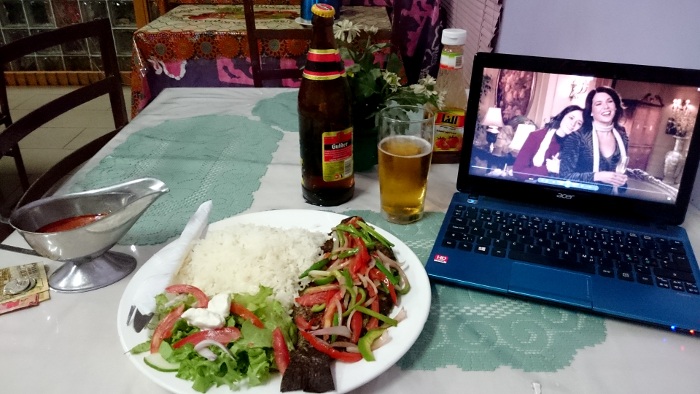
So, most nights I spent on my own in the hostel restaurant, where neither AC nor fans rarely were on, in front of Gilmore Girls. Netflix is making a new GG season! I’m so excited. GG was the first proper TV show I really followed, season after season, and I decided to re-watch it as soon as I heard they were making a new season. And watching it in Accra felt nice too. There’s a safety in re-watching old shows or movies. When your surroundings are just too overwhelming, watching something that can give no surprises while drinking starchy Ghanaian lager and eating greasy rice is the perfect thing. It’s like a warm blanket, and it allows you to get ready for the next day of walking and sweating and smiling.

DSC_0751

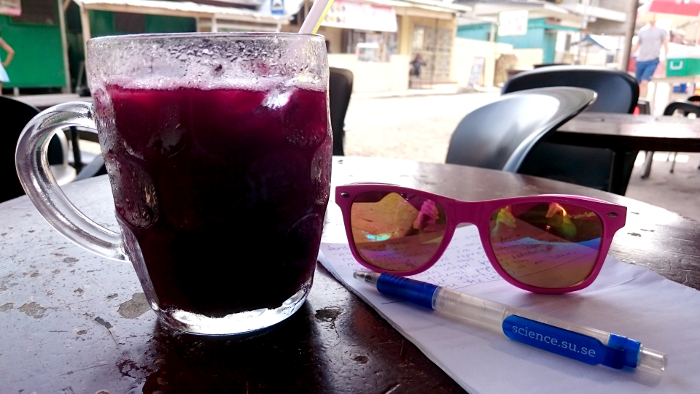
I did do a little bit of non-work-related sight-seeing, though. On a street off Oxford street (one of the main shopping streets in Accra too), I sat down for a wonderfully chilled hibiscus and ginger juice that nicely matched my sunglasses.

DSC_0753

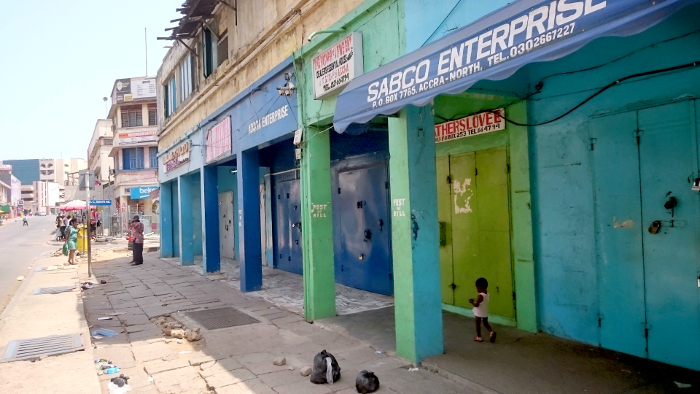
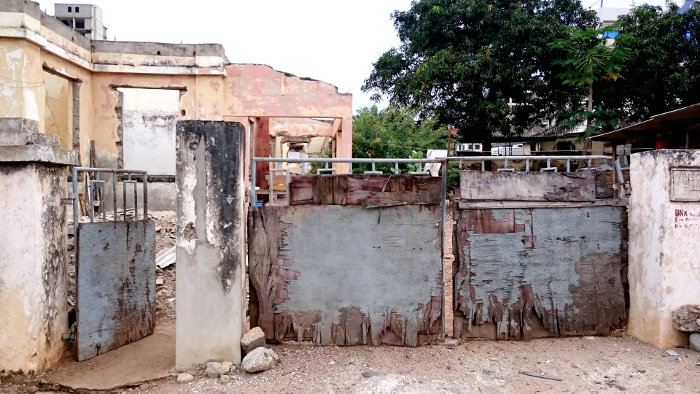
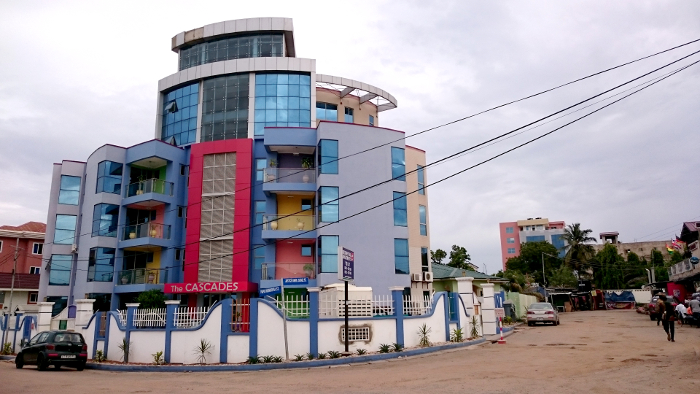
And just a couple of blocks down, the extremes of Accra materialized in the architecture. Within a hundred meter stretch of street, there were houses that looked like they would fall apart at the first thunderstorms of the rainy season, without roofs but still lived in, and buildings that looked like they would take off and fly out into space at any moment.

DSC_0758

Accra, the city of superlatives.

hunting for data in the capital of Ghana (beginning of April)

I left my brief vacation in Liberia, to start working in Ghana. I began with one week in Accra. It was the warmest time of the year, and I’ve never found heat so exhausting. Here, it wasn’t only the temperature. There was also a humidity, and the pollution of a large, dense city full of motorbikes and old yellow taxis that made the air stick in my throat.

DSC_0740

But still, I walked. Almost everywhere. From the quiet residential area where I was staying, to the Ministries neighborhood downtown. I went from ministry to ministry, trying to track down the right data and people to talk to, for information and permits.

DSC_0729

I was pointed in different directions, sometimes along quite questionable paths, not always correct, to find my way to the right department of a ministry. It was difficult, with street names rarely written out and offices having been relocated – but there was always a friendly man or woman on a street corner to ask.

DSC_0730

And I always found my way to the right place, in the end.

DSC_0742

Often, I was asked to wait outside the office of the person I needed to talk to, but I rarely had to make an appointment and come back later. I was just given a newspaper, and half an hour later, the person in charge arrived, looked at my introduction letter from SRC, and then happily assisted me with whatever I asked for.

Things might not have been that well organized at first glance, from an outsider’s perspective, but everything could be arranged on short notice and I got everything I needed. Data might not exist on everything I would have wanted, but any data that was there I could have.

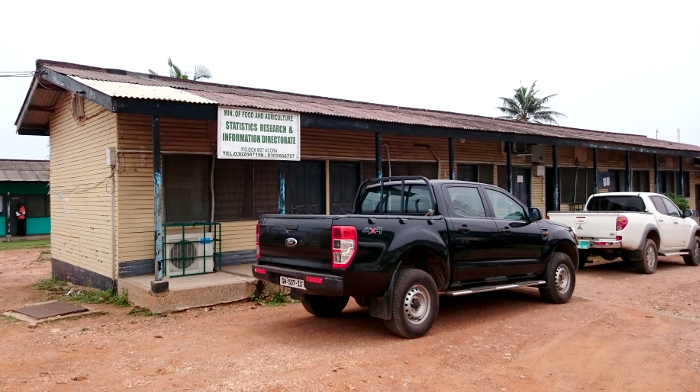
And I just wonder how this would have compared with data hunting in Sweden. Most statistics you would be able to find online, for one, but if you needed to see someone, have an actual face to face meeting, I doubt it would have been possible to arrange even with a couple of weeks’ notice. Some of the ease might come from an increased service mindedness towards me due to my whiteness and papers from a European university, for sure, but it also seems like Ghanaian public servants have a more flexible attitude towards time. I guess that has both good and bad sides to it, but for me it worked in my favour. I got what I needed and more in the week I was there, with time to spare, and I am so grateful for all the friendly people I met at the Ministry of Food and Agriculture, the Statistical Service and the Ministry of Fisheries.

Work_Accra

Even so, I left the hostel in the mornings before the heat struck, willing myself to feel like on top of the world, and returned in the afternoons, sweaty and sunburned, feeling leached out and like I would never be able to smile like the nice white girl I was ever again.

the end of a summer

I went on vacation. My intention was to make time for writing. But things rarely go as planned. I had a nice time, spent with family, reading novels, going for short trips to Swedish islands. And now, it’s the last day of my summer vacation.

DSC_1269

It’s raining in Skarpnäck, but there are still flowers in the gardens. Tomorrow I’m due back at the office, there is a conference at main uni campus, then there’s the SRC fall kick-off on another Swedish island, and then I’ll be going to Montpellier, France, for a workshop. No slow start.

One thing I’ve promised to take with me into the fall, though. I’ve promised to not let myself get overwhelmed again.

_MG_0132

Ashely said, when I met her a week ago: “You seem a lot happier”. Three weeks of not thinking about my research, that was it.

Allowing myself time. It’s a necessity. Reading novels make me happy. Spending time with family, close friends. Being outdoors. And not letting the weight of what I’m doing drown me in worry and blind me to the light, small things that make the serious possible to bear.

Writing is a small thing. But it is something that I’ve been carrying with me since I was eleven. It’s become part of how I think. Only, I haven’t given myself the time to put anything down lately. So now, I promise myself, and you, that I will make myself the time to write. Here, or elsewhere, for fun, separate from the difficult, exhausting scientific writing that I’ve been trying but still cannot wrap my head around. I will find my way back to that teenage passion – and hopefully, it will get me through the fall.

IMG_9716

Me, enjoying the twenty meters per second wind on Koster, the westernmost inhabited group of islands in Sweden. Beyond the crashing waves, only ocean.

This is a start: Let me take you back to my visit to West Africa in April.

INTERLUDE: … while letting time pass by on Instagram

Jared_leto1

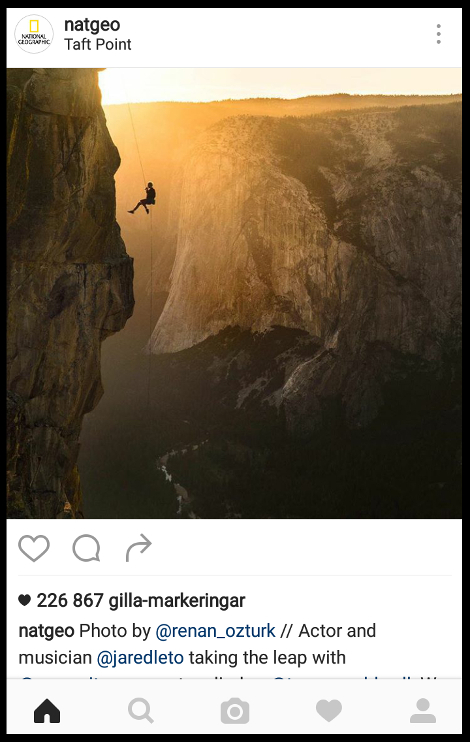
An amazing picture of a climber in sunset, National Geographic always makes me long for my backpack, but… OMG! It’s Jared Leto!? THE Jared Leto. Climbing. In the setting sun. In Yosemite National Park.

Anyone who has seen My So-Called Life will understand why my heart starts beating just a little bit faster. He embodied all my early teenage longing and promises of the future. The mysterious musician who never quite materialized in my real teenage life. I still get strangely weak in the knees from grungy flannel shirts.

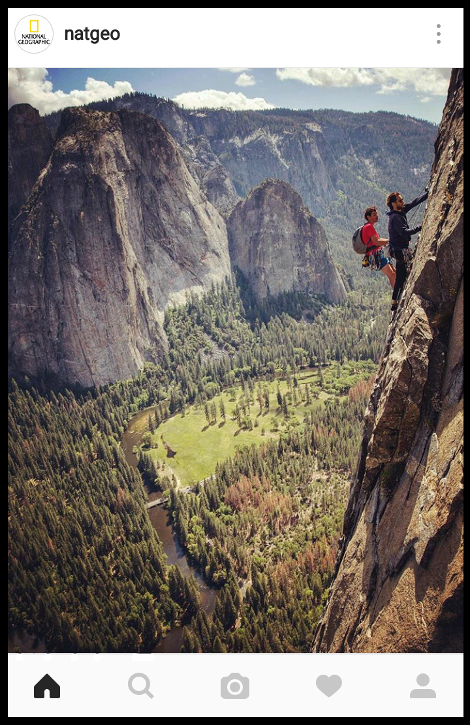
And now he is making documentaries with National Geographic about wilderness explorers to celebrate the centennial of the US National Par Service. Jared Leto climbing in the setting sun in Yosemite National Park. It is possible to get too much of good things.

Jared_leto2

* Top photo: Renan Ozturk / Bottom photo: Jimmy Chin

crafty slow Saturday (April 2)

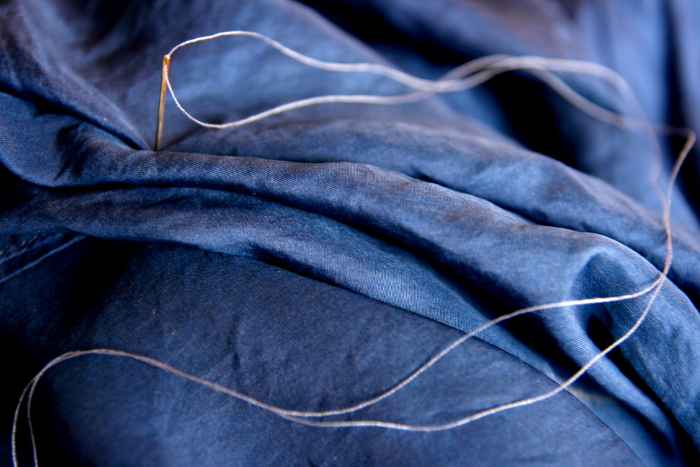
Once we were safely back in Monrovia after our adventures in rain forests and on thunderous oceans, I spent an entire day lying on the enormous bed in mom’s guestroom. With the air conditioner set on a comfortable 26 degrees Celsius and me smelling faintly of lavender soap, not sweat and mosquito repellent and old sunscreen and mud. It is hard to shake off sometimes, that cold Nordic blood. I ate mango and pineapple, read “The Underground Girls of Kabul” and sewed. I needed to mend my silk traveling sheets, you see. The seam had ripped when I was at the farm in Sonoma last summer, but I hadn’t gotten around to fixing it and now I really needed to. I was expecting to need the sheets’ soft and cool shelter to sleep in the coming couple of weeks.

Because, that is maybe the one advice that I would like to give to any person about to embark on their first trip to a faraway place: Get som good travel sheets. We’ve been through a lot together, my sheets and I. Bolivian rain forests, Canadian horse ranches, couches all over the North American west coast and Europe, hotel room s in rural Burkina Faso where you, for sanity’s sake, shouldn’t look too closely into the corners or under the bed. I don’t sleep easily in strange places, but with the deep blue silk sheets that my aunt Eva gave me before my South America trip in 2009, I can create a feeling of familiarity wherever I am. I know it’s a mental thing, the magic that I’ve assigned to the sheets, but so is often the ability to sleep for me. I love my travel sheets. I’ve sung their praise before, I know. But they deserve all the love and care I can give them. Hence, spending most of a Saturday fixing a tear, meticulously stitching by hand.

_MG_7729

_MG_7725

Outside the window, the clouds threatened rain, but it never came.


a West African interpretation of street art

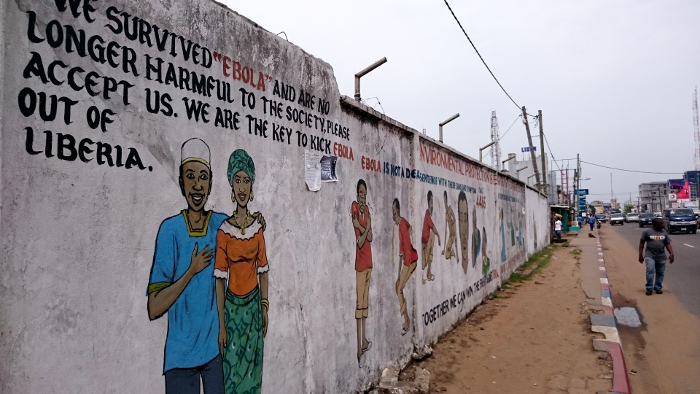
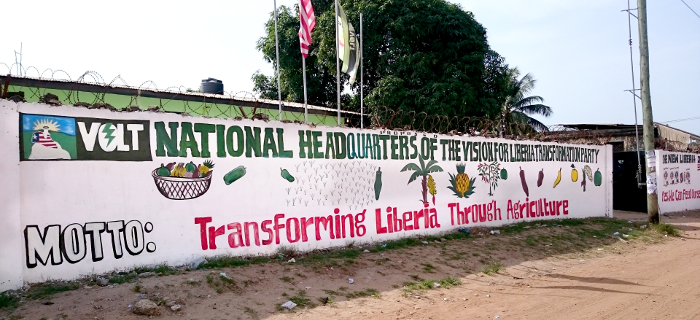
I guess it depends on your definition of street art. If it’s enough to be art appearing in urban spaces, on walls and pavements. Or if there has to be an element of illegality in it too. in that case, these political messages on the walls in Monrovia couldn’t me called street art. They were painted on the walls around the Environmental Protection Agency, or the office of a political party. Not illegal, but, in a sense, propaganda on otherwise empty urban spaces. I like them.

DSC_0683

“Environmental protection is everybody’s business” and “Yes, we can feed ourselves”. Messages I agree with. And even if the art isn’t very sophisticated, there is something heart-warming about it.

DSC_0702

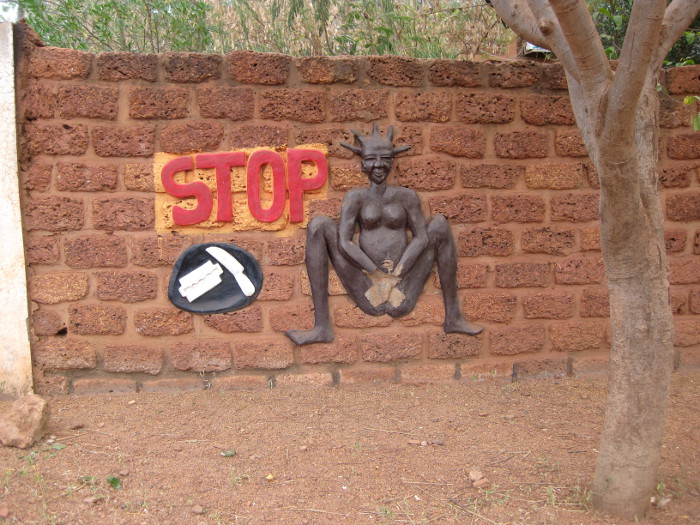
They did the same in Burkina Faso. Messages promoting literacy and condemning littering and female genital mutilation. In a world where urban space has not yet been drowned in advertisements, and literacy is low, walls are covered in political cartoon messages instead. Any peaceful way to get your message out, right? I can’t help but like it.

IMG_7687

living large in Liberia (March 30)

DSC_0713

Like most cities in Africa, Monrovia is a place of enormous contrasts. The extravagance of its upper class isn’t as evident in the architecture as in many other places, but it is hidden right under the surface of the densely city.

After our days in the rain forest and in small fishing villages, mom wanted to treat me to some luxury, so we went to get our nails done. Already that was something completely new and slightly awkward for me – manicures belong to a category of womanly activities that feels completely foreign to me. And while we were sitting there, mom started telling stories to the other ladies in the salon about our rain forest adventures: the humidity, trees, magic.

And the woman sitting next to me said: “That sounds nice. I had no idea Liberia had anything like that. Maybe I should go there? I have lived in Monrovia for ten years, and I have only ever been to Robertsport* once.” [* A town with a beautiful beach approximately two hours from Monrovia.]

And it’s so typical. The rich, business-owning class in Liberia are mostly expats, who live in Monrovia and move in the tight expat bubble of restaurants and beauty salons and resorts by the beach, and then they go to spend their holidays with family in Lebanon or Europe or the US. They don’t know the country that they’re living in. The money that they make in Liberia might not even be spent there, because they send for most of their consumer products from elsewhere. Economists sing the praise of the open market, but how is the market of Liberia ever to develop and grow when the money of the rich isn’t trickling down to the general population at all, but to businesses in far-away places where the economy is already a well-oiled machine?

_MG_7681

Of course, I’m aware that the way my mom, as a diplomat/development worker, is living isn’t completely exempt from this problem. She lives a comfortable life in an apartment and can afford to eat at the expat restaurants a couple of times a week, go to the beach. Treat her daughter to a manicure in a salon run by an Italian in a Lebanese luxury hotel. I know we’re part of the problem. It’s a disease in the system, and I don’t know where and by whom a change should be started.

_MG_7635

Big, complicated things aside. The luxury expat life of Monrovia does not attract me at all. What I enjoyed most was the fruit. The simple, and definitely Liberian things. Mangoes, papayas, pineapples. I ate until my gums were bleeding, and then just a little bit more.