a weekend in the Netherlands

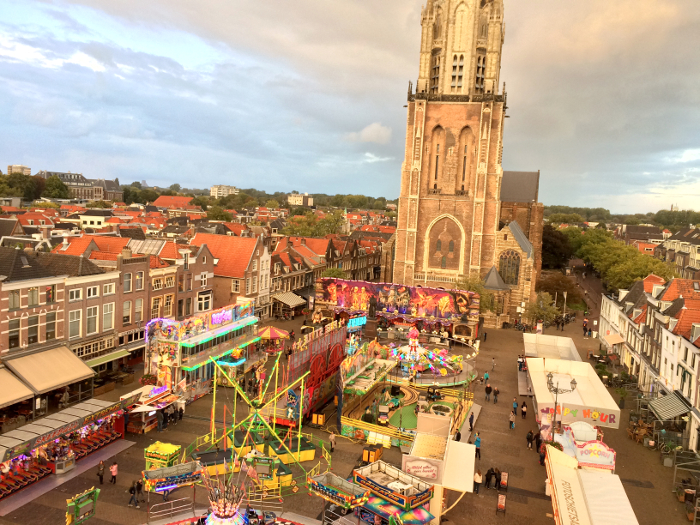
After Belgium, I moved on to the Netherlands. I met up with my former roommate and good friend Lina by a canal in Delft and we strolled into the old town, rode a ferris wheel in the last rays of sunshine before the rain – the beautiful rooftops of central Delft drenched in a golden light.

After: Having the creamiest of chocolate ice creams as appetizer and then beers and fries at Lina’s favorite pub. Walking through the streets, by the canals, in the dark and rain, I could fully understand why Lina wanted to move here.

The next day, we went to The Hague to see some Dutch golden age art: Mauritshuis. Rembrandt, Vermeer, Rubens. [Above: Two pieces by Vermeer, “View of Delft” and the famous “Girl with a Pearl Earring”]

The incredible detail, knowledge of light and shadow, composition, symbolism. It is incredible. Who takes the time to develop that kind of skill today? The patience and practice that it must have required, I’m not sure there is the time for it in today’s fast-paced and digital society. Time is such a luxury. The detail in these paintings was breathtaking. [Above: “The Goldfinch” by Carel Fabritius, “Vase of Flowers” by Jan Davidsz de Heem, and “Man Offering Money to a Young Woman” by Judith Leyster]

Otherwise, The Hague was not at all as cozy as Delft. But the Dutch really know their art.

at the pumpkin patch

One of the days I was visiting Dries and he was working, I took the train and bus from Hasselt to the botanic garden in Meise outside of Brussels.

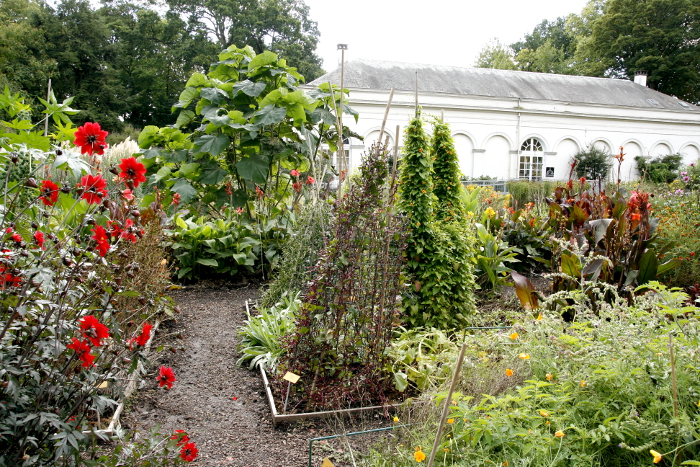
It is BIG. Impressive. Covering 92 hectares of land, it can not be fully seen in a day. I could have spent several there, wandering around in the groves and thematic gardens. There was a traditional, convent-style garden in full autumn bloom, inhabited by bright butterflies. Another garden had only medicinal plants, with small signs explaining what the plants have been used for.

Part of the greenhouse complex was being renovated, so some of the wings were closed to visitors – but even so, the available greenhouses covered most of the major biomes and if there was a place to learn about botany from all corners of the world, this is the place.

_MG_3733

And the pumpkin patch. There were parts of the garden that were dedicated to seasonal displays, and in early autumn: pumpkin season. Such a beautifully arranged garden, with pumpkins of all different colors, shapes and sizes.

Yes, the garden in Meise was really impressive. A great example of a space for environmental education, where both wild and cultivated plants from all over the world and examples of seasonality gets communicated in the garden grounds. It is not as lush and alluring as some older gardens, like the one in Montpellier or Copenhagen, but the way in which this huge garden is put together is scientific and really speaks to the researcher in me. A model for outdoor education. I like it.

a Belgian tour

In early September in Belgium, during my long and winding railway journey home from the summer school in Peyresq, I visited friends. Dries in Hasselt and Jessica at her parents’ house in the small village Lummen. I like it, seeing where friends grew up, walking on their streets, hearing stories of teenage viola lessons and favorite shopping places. I feel like those kinds of small details gives a person more depth, letting me grasp at what might have made them become what they are today.

Pieces of Hasselt, including the genever museum, Hasselt’s pride and joy. Genever is a Flemish/Dutch alcoholic beverage quite similar to gin. Hasselt has historically been one of the centers of producing it. Hasselt is small, but cute and easy to move around in. I’m not surprised that Dries likes it there.

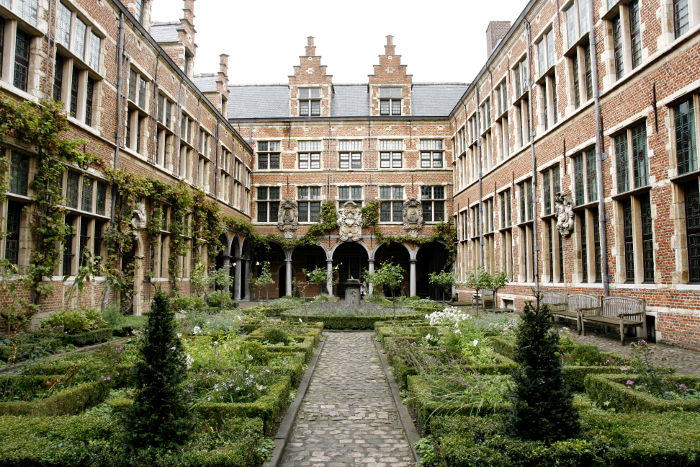
Lummen did not have many sights to brag with, expect for Jessica’s parents’ gorgeous house – but instead, Jessica, her mom and I got on the train and spent a day and a half touristing in Antwerp. The old printing press, turned into a beautiful museum, relating an interesting history – while the rain poured down outside. Old cathedrals and castles. And Jessica and her mom making sure I got the full Belgian experience by feeding me waffles with hot cherries and whipped cream, drinking beers of all colors, and having moule frites for dinner.

The statue of a popular Belgian childrens’ story in a square. And the train station in Antwarp! See, that’s what I call a proper train station.

Belgium, at least the parts I saw, were really friendly. It felt familiar, in a sense, but also not. Rainy, though. Every day. Maybe I was just unlucky.

jardin des plantes in Paris

The main plan for my day in Paris was to visit the botanic garden, Jardin des plantes de Paris. It was established in 1635, in France only surpassed in age by the botanic garden in Montpellier (which is a lovely garden, by the way). It also figures in the beautiful but sad novel “All the light we cannot see” by Anthony Doerr. Granted, in the book it is mainly the natural history museum that is described in such a colorful, romantic fashion – but the adjoining botanic garden also gets sprinkles of attention. And it is the main botanic garden in France. Needless to say, my expectations were high.

_MG_3442

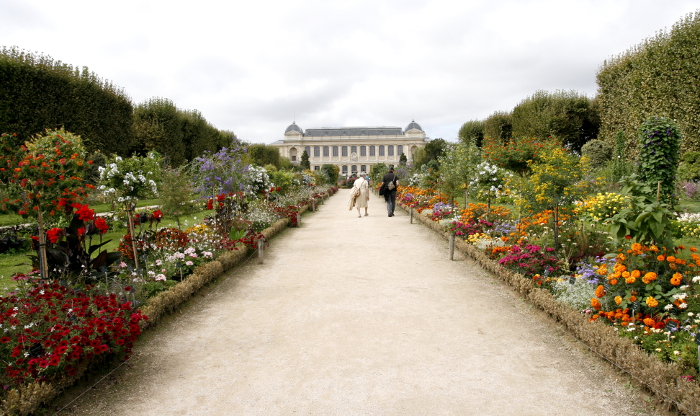
I think this garden follows the French style, more so than the Montpellier garden does – although, admittedly, I barely know what I’m talking about. What I mean with the French style is pictures I’ve seen from French castle gardens, especially the ones at Versailles. The open spaces, meticulously cut bushes and trees, flowerbeds, geometric patterns created by the paths. More elegant than lush. And flowers, so many flowers, with bees and butterflies in abundance.

The greenhouses were rather small, with the first one containing an impressive jungle – but otherwise, not very systematic or educational. In that sense, more pretty to look at than useful for learning names and expanding horizons.

It was a well-frequented garden, with people taking walks and running along the paths. What it lacked were the snug benches to sit and read in, the nooks and hidden corners that were so easy to find in Montpellier or Glasgow. I was also surprised by the presence of guards (I guess due to the general terror threat in Paris?) and that part of the garden was a zoo just made me outright uncomfortable.

So yes, the botanic garden in Paris is pretty, and meticulously cared for, but it is not the lush oasis in the middle of the city like the gardens in Montpellier, Glasgow or Copenhagen. I prefer the gardens with hidden spaces to disappear in.

my Sunday in Paris

[Written on September 11th]

I had one full day in Paris. It started with breakfast at a café, café au lait, orange juice and pain au chocolat, while studying the map of Paris. It felt so French.

I walked around in the latin quarters, looking at the small shops, cute houses, soaking up the friendly feeling. Listening to Liv Strömqvist’s and Caroline Ringskog Ferrada-Noli’s podcast “En varg söker sin pod” in the botanic garden. Reading their book “Kära Liv och Caroline”. Loving the way their openness about feelings and feminist analysis made me feel sane.

Eating crepes and drinking a whole bottle of artisanal dry cider from Bretagne, getting a bit tipsy. It started raining and I remembered that day in Montpellier when I sat at the crêperie and the sky completely opened, thunder roaring. So many tourists outside Notre Dame. Accidentally finding the famous bookstore Shakespeare and company. It was lovely, someone reading poetry upstairs in a room, someone else playing the piano in another – but also so many people, everywhere, full, too full, I had to get out of there, the magic of the books and constantly having to get out of the way became too much.

_MG_3555

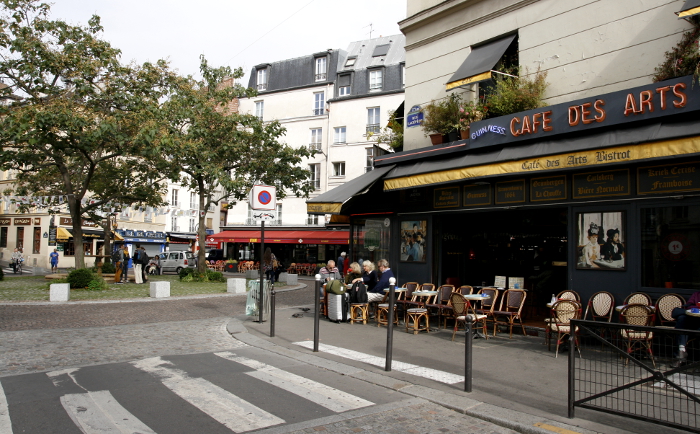
The next morning, I ate breakfast in a quaint but touristy square, and then got on the train to Belgium.

French journeying

[Written on September 9th]

We left Peyresq early in the morning, everyone tired from the party the night before. Saying goodbye to the tutors and some of the lecturers in the village square, most of the participants at the airport, the last few at Nice train station. Wondering who I would see again, at conferences or workshops or when visiting other universities. Unsure, right then, what I would be bringing with me from these two weeks in the southern French alps. Unsure, also, of what I had left behind in the others.

IMG_0669

The train to Paris ran late. Suddenly, a heavy rain started falling and we were stuck in between Nice and Antibes. Apparently, the trains in Sweden aren’t the only ones that cannot handle weathers.

It was nerve-wrecking, arriving late in Paris and finding my way through the metro system and streets to the hostel. That is one backside to solo traveling: late evening arrivals in strange cities. But I made it, and celebrated by eating Finnish chocolate in my hostel bunk bed. Feeling a bit lonely – but luckily, sleep arrived quickly.

the magic of old stones and music

Towards the end of the summer school, my voice gradually returned. I got some bad news about a friend back home, but being so far away there wasn’t anything I could do and I felt helpless – and also, weird, from being in such a social situation but not really having anybody there to talk to about my jumble of feelings. Everyone a friendly stranger. But the mountains were comforting and with my voice back, I could sing again – and I realised how much I had missed it. Being able to feel the vibrations of something behind the lungs in a forte. How important that is for me as release.

_MG_3116

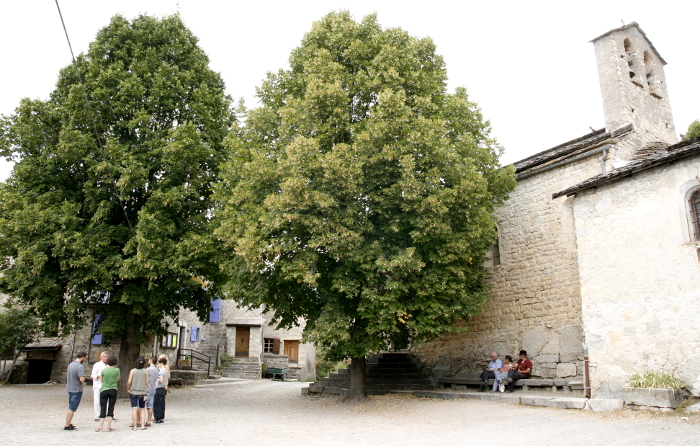
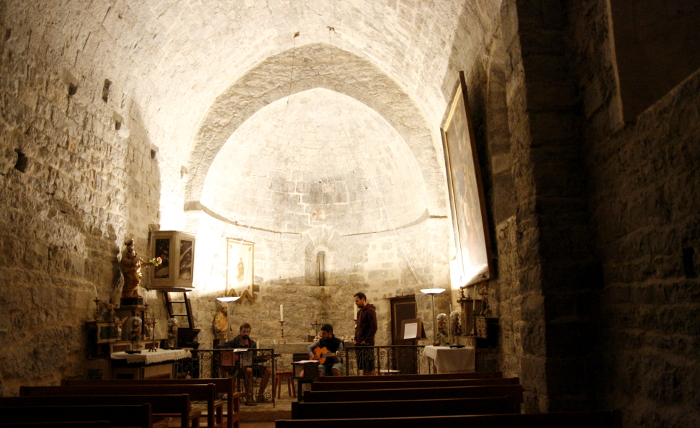
In the tiny village square, next to two lime trees, stands the tiny village church. A modest stone structure with roots from the thirteenth century, it does not look like much to the world. But appearances deceive. On the second to last night, we got to borrow the key and after dinner, a couple of us preformed some songs for the school with our voices and two guitars. The acoustics were incredible. The stones had been placed perfectly to make the sound grow and linger in the dark.

_MG_3356

The next night, the last one in Peyresq, Miguel and I went to the church ourselves. Miguel, a Portuguese PhD student, also had a past as a choir singer and we just could not let the opportunity pass. We needed to try our songs against the acoustics of the old stones. With people dropping in, it ended up being an impromptu acapella concert of traditional Portuguese and Swedish songs.

And just like the sound under the arched ceiling of the church, so did we linger there in the dark. It was like a space out of time, the sound of the old stones so clear and fragile. I could have stayed there all night, listening and singing, filled with wonder. Something let loose in me from the vibrations. And maybe the others felt it too – something other than the academic, rational. An opening to an other part of being.

But of course we had to stop eventually. There was a goodbye party to go to. It felt strange, stepping out from that fragile darkness and then going to a dance party, the base heavy and higher in volume than the speakers could really handle. I had to do the dancing in short intervals, with breaks outside to speak quietly or look at the stars.

lake-side lectures and butterflies: the second excursion

Our second excursion during the summer school first took us to a lavender farm. This is a completely different kind of agricultural endeavour than the shepherding. While the shepherd got a majority of his incomes from European Union support funds, the lavender farmer ran completely on what her crop could give her. Since lavender comes from this part of the world, growing it like this in the mountains requires very little fertilizer or pesticides – and since she uses her own seeds, the lavender bushes are very resilient. That’s what happens when natural seeds are used – the genetic diversity will give the next generation of lavender bushes varying degrees of coping capacities to different stresses and threats. This means that whatever happens, be it drought or rain or a pest, there will most likely always be some bushes that survive. The yields might not be as high as when using store-bought, genetically identical seeds, but this practice is also much less vulnerable to unexpected events. That’s what evolution is all about. Lavender is also a perennial, meaning that once the bush is planted, it will grow for several seasons and the mountain slopes will not be left bare, protecting the soil against erosion.

We did not get to see any lavender fields, but the lavender farmer showed us her refinery and we got to buy her products in the adjoining store. In general, though, she said that she exported her products and that there is very little of a local market. She also had trouble finding farmhands – there simply weren’t enough skilled people around in the nearby villages. Transportation was hard, and many young people chose to move away. She gave us a lot to think about for our group project.

The rest of the excursion, we spent in the Mercantour National Park. Or, strictly speaking, we had been in the park our whole time in Peyresq. Mercantour is structured around an inner, fully protected core, and then a periphery where individual communes can choose to be part of the park. The periphery areas, which Peyresq was part of, agree to a certain extent of protection, limiting certain activities in the landscape. In exchange, they get to be part of the park, which attracts visitors and other opportunities for the locals. Our excursion took us to the park’s core area.

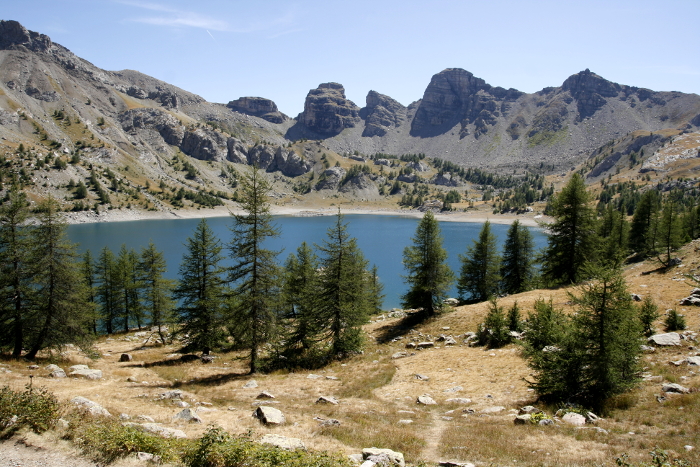
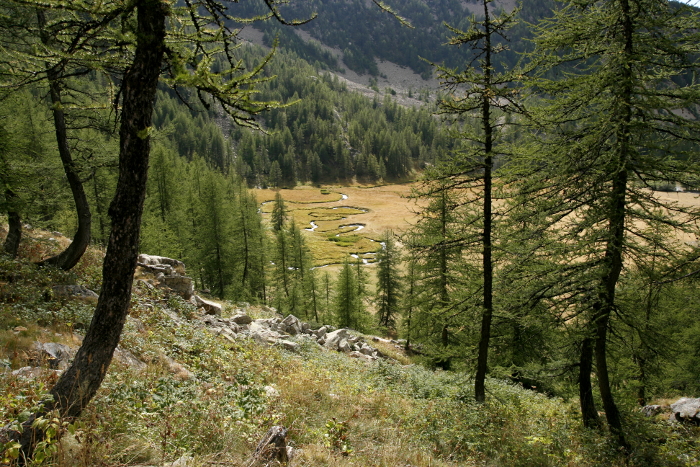
We had lunch next to a meandering stream. We hiked up to a lake, such a deep shade of turquoise, it almost hurt the eyes. We got to speak to a paleoecologist about the evolution of the landscape, plants and animals in the park, and the park manager about the current state of the park, its mission and collaboration with the surrounding communities.

A recurring topic were the grazing sheep. Even here, in the core area, the shepherds were allowed to bring their sheep for grazing. Shepherding is a historical practice in this area and considered an important part of the cultural heritage and landscape. Grazing keeps the mountaintops open, which has an aesthetic value, and promotes some species that are important for biodiversity. But there is a fine balance. Overgrazing is also an issue, and an increased input of nutrients from the sheep’s urine and feces affects both species composition and water quality. The sheep also affect other species negatively, making their impact on biodiversity not completely clear. The sheep have been around for a long time, though, and if anything, there has been a decrease of them over the last century. This is at least suggested from the recent increase in tree cover on the mountain slopes.
_MG_3338

All in all, though, the park seemed to be doing fine. Previously threatened species had started to return, like the ibex, and the collaboration with the surrounding communities seemed to be going smoothly.

Down by the lake, butterflies were fluttering between thistles and sun-warmed rocks. It was a beautiful day in a beautiful park.
 

wordlessly navigating a summer school

The cold left me, but took my voice as it went. In a place full of new people, a summer school built on discussions and a prime opportunity to build a network of like-minded young scholars in the ecosystem services field, being voiceless is not ideal. I felt dull and plain, and like I wouldn’t be making a mark on anyone there.

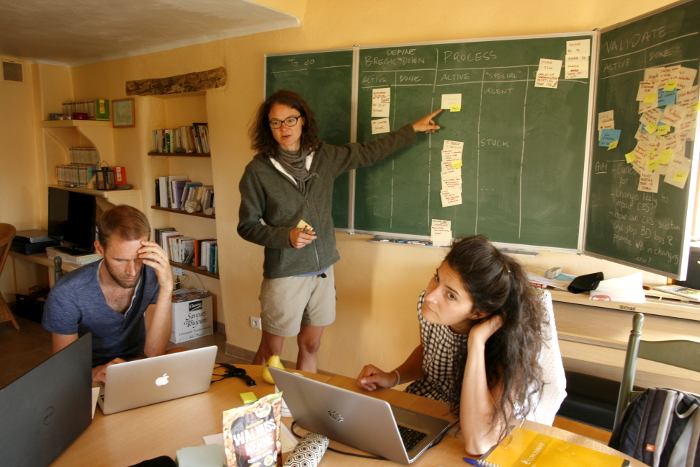
Part of the summer school was built around a group project. We were all divided into smaller groups according to ecosystem service categories and in the end we were to present a synthesized ecosystem services assessment of the upper Verdon valley, where Peyresq is situated, and policy recommendations for how to make sure the villages in the valley will continue to flourish. In my voiceless state, it became an exercise in how to not have opinions about everything. Not an easy task for me. In the beginning, the discussions in the cultural ecosystem services group were many. But I’m happy with what we accomplished in the end – and we had a lot of fun getting there.

In the evenings, after the three course dinners, we socialized in the common room, played board games or danced in the makeshift bar. A couple of nights, some of the guys started playing a guitar and it developed into a (semi-drunk) communal singing session. It was painful, not being able to take part in the singing.

_MG_3350

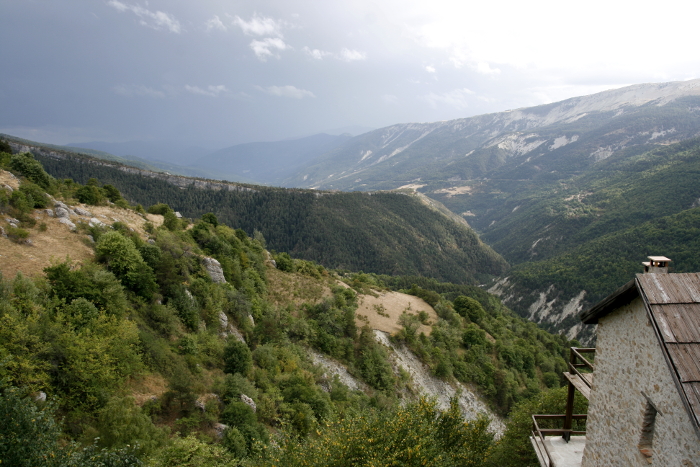
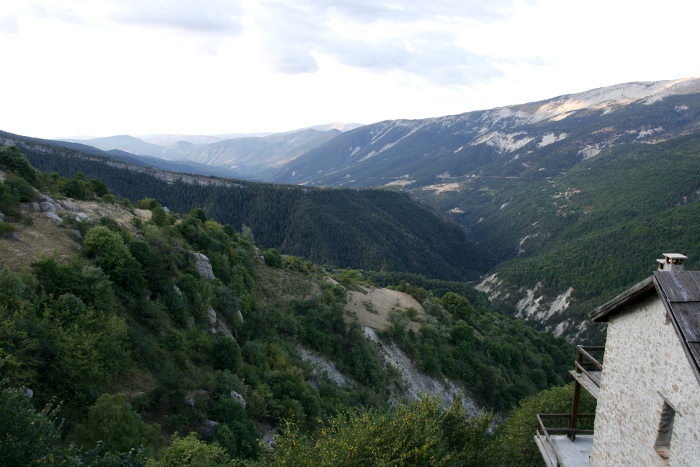
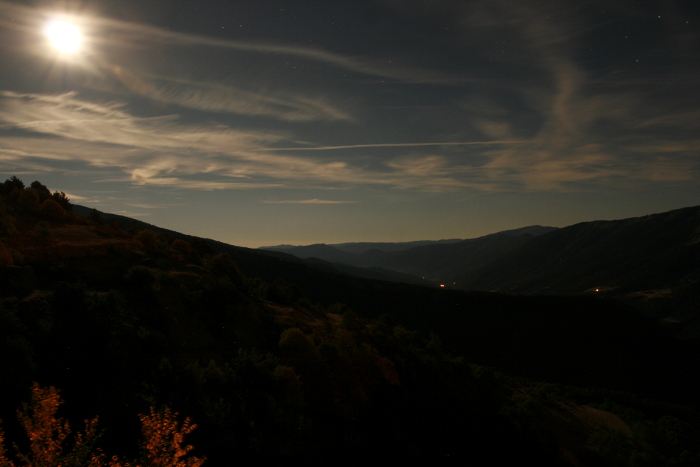
But, outside: The moon over the valley giving the hillsides a blue touch of fairy-tale. And in the elder tree, the house mice were munching away at the deep purple berries, jumping from branch to branch.