unravelling in deathly celebrations, part 2: Día de los Muertos

Yes. Remember. I landed in Oaxaca completely shaken up by delays and jet-lags and what-if-scares. On top of a general exhaustion from being a PhD student. It wasn’t the best of circumstances. Especially to enter straight into the Día de los Muertos celebrations in Oaxaca.

There are individuals on the internet who claim that Oaxaca is the place to be for Día de los Muertos. I have no way of corroborating this claim, since I’ve only ever been to Oaxaca, but this I can say: They seem to have spared no expenses for this celebration. There was a carnival-like atmosphere in the old city center, with live concerts, dance performances, exhibitions. People everywhere with faces painted like skulls. Flowers and piñatas hanging from windows, and mezcal, mezcal everywhere!

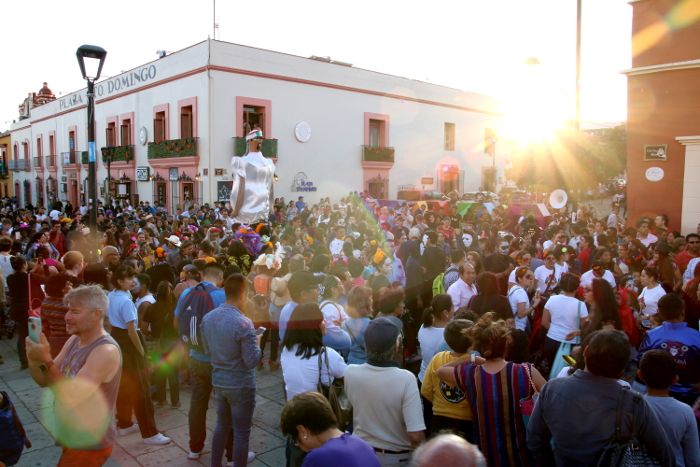
And it was exciting, yes. But also, while I was standing there in the square by the Santo Domingo temple, I got this uneasy feeling in my chest, like someone was squeezing me a little bit too tight. Two papier-mâché giants were dancing to the tunes of a small brass orchestra, with the late afternoon sun making all the costume-clad children look like fairy-tale silhouettes. But. Although the dancers and musicians and children amounted to a fair number of people, I think the amount of people around, watching, with cameras and I’m-not-from-here written all over their outfits, were twice as many. This was a spectacle, and it made me want to just get out of there.
IMG_0050

It isn’t that I disapprove of the celebration as such. Not at all. I find this way of celebrating the memory of the dead really nice, actually. I do not believe in forgetting and I also do not see death as something to be afraid of. We should acknowledge death, and the memories of the people we have loved, but lost. I was brought up with a similar tradition, the Swedish All Saint’s Eve, when we always went to light candles on the grave of my great grandmother, and later grandparents. The Mexican altars that people set up in their homes, with flowers, photos, and the favorite foods and drinks of the dead, is a similar way of honoring the memories. As is the lively picnics that people have next to the graves of their dead loved ones.

What I think upset me about these first days in Oaxaca, was how this profound, deeply emotional celebration had been hijacked by flocks of backpackers looking for an exotic and exciting party. It made me feel dirty, somehow. Like I was part of soiling something sacred. Tour companies sold package deals where you could combine mezcal tastings with tours of the cemeteries at night, where people would party until dawn. The thought of it made me feel queasy.

Now, I know that tourism is a very important income for many people in Oaxaca. During the days of the Día de los Muertos celebrations, every single hotel, hostel and AirBnB is fully booked. Restaurants are bursting with people. Hosting this festival is definitely a cash cow for the city of Oaxaca. And all the local people I spoke to only expressed excitement and approval of outsiders coming and experiencing their local traditions (all these people made a living from the tourists, however, so I do not know how representative they are of Oaxacans in general).

And maybe my feeling of “dirtying” of something is a misplaced value judgment of what is “genuine”, a sentiment if acted on forcing “the other” to “conserve” their exotic traditions for the benefit of my experience. Like what is sometimes said about “conserving” policies towards indigenous groups in western countries, where their traditions are romanticised and not allowed to evolve according to the needs and preferences of the groups themselves. I don’t know. Of course people have a right to make a living. And of course people have a right to experience exciting, exotic things. I myself am a big believer in traveling as a way to become a more understanding, conscious world citizen. And if lots of people find the same things exciting, well, then you will get a lot of tourists attracted to the same places. No helping that.

This combination, though. Flocks of tourists and the sacredness of honoring the dead. To me, it just felt wrong. Not in an universal sense, I do not claim to have the right to judge anyone in this. I do not even fully understand where my own feelings regarding this come from. What should have been an exciting experience, just made me incredibly uneasy.

Or maybe it was just the exhaustion from arriving in Oaxaca. The last night of the celebrations, I painted half of my face. A small challenge of my own feelings. It felt OK.


IMG_0195

unravelling in deathly celebrations, part 1: Arriving in Oaxaca

Arriving in Oaxaca, Mexico, was unnerving. In the end of October, Stockholm, the alarm woke me from a nervous half-slumber at three-thirty in the morning, and I rose to get ready for the long journey west. However, I arrived at the airport and was told I had been put on standby on two of my three flights and a knot formed in the pit of my stomach. In the end, I made it onto all my flights, but in the uncertainty I was wandering around the airport in Mexico City, with only a couple of hours of sleep in my body, unravelling. The flight to Oaxaca was over-booked with Day of the Dead tourists and it finally left three hours later than scheduled. Landing in Oaxaca after midnight, I did not make it to the hostel where I had booked a room until almost three in the morning.

I rang the bell. No one opened. The street was deserted, the airport shuttle had dropped me off and I had no sense of direction, no idea of where anything could be found. Ringing and ringing on the hostel doorbell, it became obvious that the twenty-four hour reception was just words on the website. Me and my suitcase, on a dark street in a strange city. The area looked residential, and I had no way of telling in which direction I might find another hostel, night club, anything that might have helpful, awake people at this hour. My phone did not work.

After half an hour of standing outside the hostel door, not knowing what to do, I started walking. Mainly, just to not be standing still on a dark street. A man walked by. He started talking to me, he had long hair and well-worn jeans, he said he was an American photographer who lived in Oaxaca. When I explained my situation, he offered to help me, to walk with me in a direction where we might find something that was open, and I felt I had no other choice.

The thought ran through my head: What if he leads me to a secluded place and robs me now, or rapes me, or both – but I was too tired, my mind too fragmented to let the thought fully register and turn my stomach into ice. And when we walked by a door saying ‘Hostel’ just a couple of blocks up the street, we rang the bell, a drowsy man opened and the American photographer helped me with the Spanish, explained my situation and the man said: Sí, sí, they had an available room that I could occupy until ten thirty the next morning. The American photographer said goodbye, and I carried my bags into the room. And I do not know if I have ever been more relieved, getting undressed in the dark and crawling into a too hard, slightly uneven bed with faintly strange-smelling sheets. I was asleep within minutes.

It did not dawn on me until the next morning. How lucky I had been, under the circumstances. How I might not ever have been closer to something bad, during all of my travels, I have been spared, but this: Alone in a strange city in the middle of the night. Remember this. Remember that this is how I arrived in Oaxaca, right smack in the middle of the Day of the Dead celebrations. My life had been hectic since August, with conferences and PhD courses and fieldwork and workshop preparations. I had no energy reserves. And now this arrival in Oaxaca. Jetlag.

Simply put: I was a wreck, and in no position to celebrate anything. And here I was, about to enter the party of the year in Oaxaca.

Me, my first day in Oaxaca: Hot, exhausted and paper flowers in my hair.

managing my time, or, how to feed my inner list-maker

Just before Christmas, a researcher from the philosophy department came to talk to our PhD group. Her name is Åsa Burman and she has recently published a book about time management, or, “how to finish your PhD on time and stay happy in the process”. She gave us some simple, hands-on tricks for how to work more efficiently in our unruly, amorphous jobs as PhD students.

The first thing she recommended us to do was to make weekly plans. In the end of each week, we should make three clear and manageable goals for the next week, and then make an approximate schedule for when we would work on these goals and other tasks that are necessary in our everyday work life. We should schedule to do the hard, heavy-thought-requiring tasks during the time of day when we are best at focusing (for most people that is between morning and lunch), while stuff like answering emails and filling out admin forms can be bundled and done in one go in the end of the work day. In the end of the week, we should make note of if we managed to reach our goals, both to get the satisfaction of actually ticking something off the list (I love that!), but also in a more general sense to make us see that we are actually progressing in our work (in research, something which can be a bit hard to feel sometimes).

The second trick is to work in blocks. Working for forty-five minutes at a time and then taking a break is, according to Burman, what neuroscience is telling us to do. Most brains cannot focus for more than forty-five minutes at a time, so any time spent working after that will be used less efficiently. By taking a break, even just for five minutes, to do something completely different, will allow our brains to reboot and return to the task at hand with renewed focus. However, these forty-five minute blocks have to be uninterrupted work-time, so, turn off phones and email notifications! Burman also said that for the kind of cerebral work that research is, we cannot expect to do more than four, five blocks of work a day. Forcing more time out of our poor brains is just inefficient. Use the rest of the workday for something less thought-heavy, like managing files or chatting with colleagues.

The third trick is combine the first two by keeping track of how much time you spend on working on your thesis, and how much is spent doing other things. We do not always have clear perceptions of time, so it can be good to get some actual numbers on time spent for different activities. If I have spent fifteen blocks in a week on progressing with my thesis, I should feel good about myself. By tracking this, I can stop feeling like no matter how much I work, it is not enough. I am progressing with my thesis – it is just that the research endeavor has such insanely delayed gratification. On the other hand, if I notice I am spending very little time on actual thesis work, I can do something about that. Schedule more thesis time when planning my weeks, and being more disciplined with myself in following my own schedule.

IMG_1341

As my New Year’s resolution, I decided to try this out for the month of January. In addition to be more explicit with tracking the time I spend on my thesis, I also decided to add the goal of reading something out-of-the-box for approximately one block a day. With out-of-the-box, I mean scientific books or papers that are not directly related to what I am currently working on, but that I find interesting and that could potentially inspire me for later on in my PhD – and in life in general.

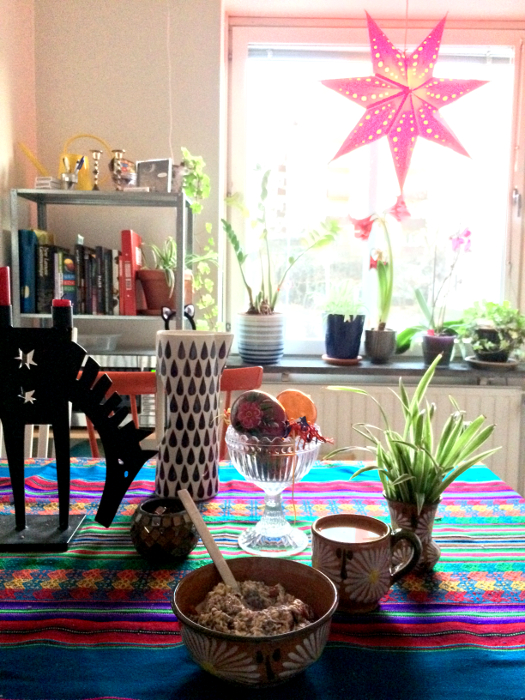
I am also trying out being more structured in general. Routines. I know it’s not cool, but they are good for me. I get up at the same time every morning, have porridge and tea in my Mexican pottery, walk to work, get started with the tasks of the day. Eating lunch at the same time every day, taking a short walk afterwards at least twice a week. Leaving work at five, going to a class at the gym at least two evenings a week. Cutting down on the socializing, spending more time with myself, knitting, reading novels, playing the piano. Getting more centered. Going to bed at a reasonable time.

IMG_1363

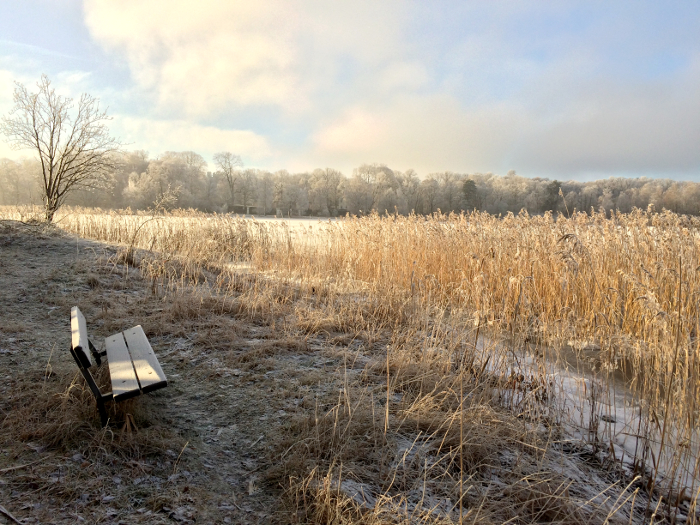
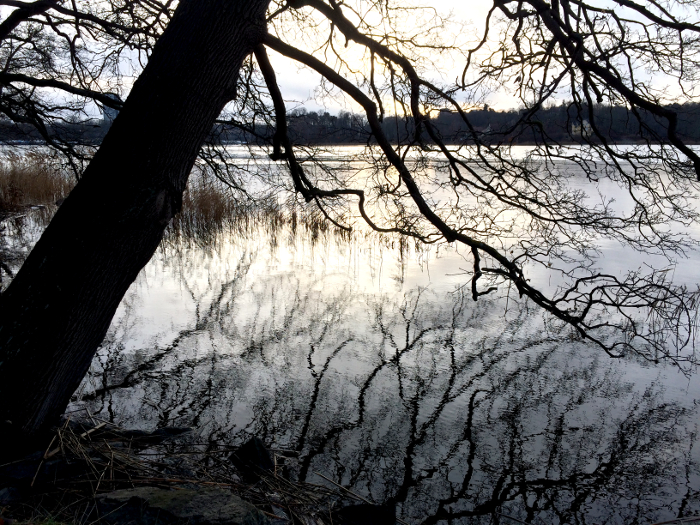
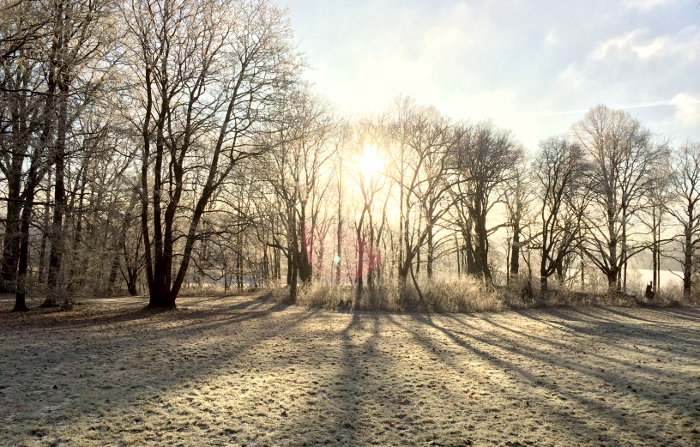
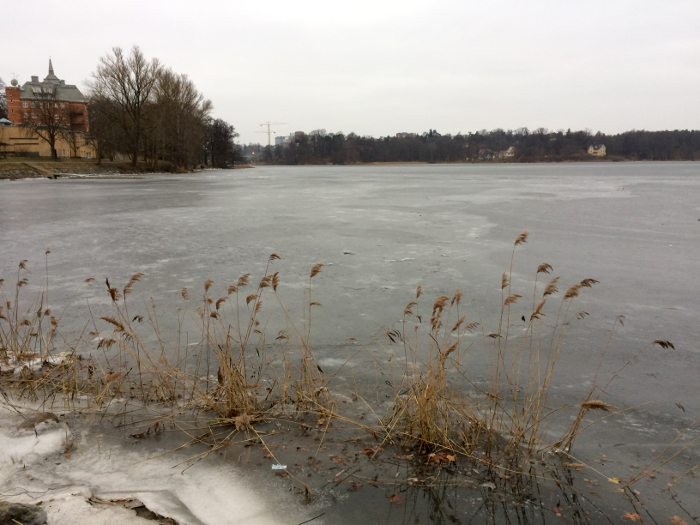
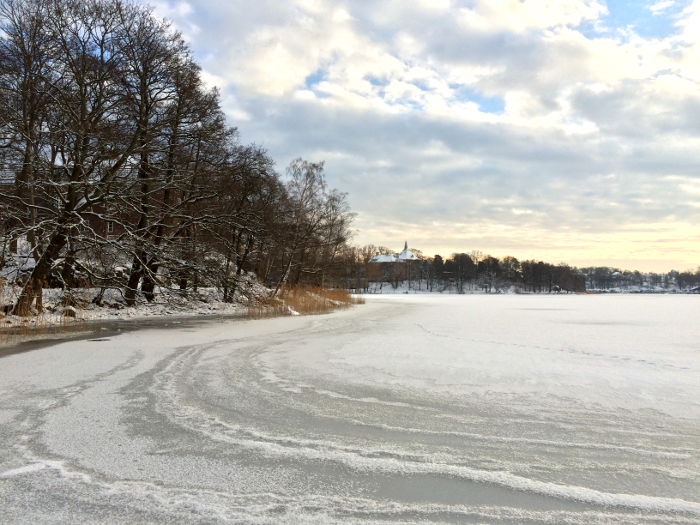
After two weeks of work, I was over the moon. My enthusiasm has dampened a little now halfway through week three, but I am still liking it. Especially the break-taking and reading. It is giving me so much energy. On Thursday, I finished a really interesting book that I will write more about at some later time – and the lunchtime walks are incredible. The national city park is so beautiful: when it is sunny and when the frost is making the reeds glitter, but also when the impenetrable grayness makes lake and leafless trees and clouds blend. It is silly, how twenty minutes outside in daylight can make such a difference. I should not be surprised, though. I was born in Sweden, after all.


WEEK 1

IMG_1378IMG_1384


WEEK 2

IMG_1395IMG_1422


Of course, I am aware that the circumstances may be playing a part in my improved state of mind. I have just had a calm Christmas holiday, and the work tasks that I have had to deal with have been more manageable than many of the things that I had to tackle last autumn. The last two days, the first of week three, have felt a bit more sticky – but still, despite the dampening of the mood, having clear blocks of time for specific, manageable tasks has made it possible for me to still get something done. Normally, on a day like yesterday, when everything felt just sooo pointless, I would not have gotten anything done. Managing to tick off three 45 minute blocks of manuscript editing and a full book chapter about critical realism is a real feat under the circumstances. The list-maker in me is fully satisfied.

Maybe this could be a new beginning.

a brief pop cultural summary of my 2017

It’s been 2018 for two weeks now. Two rather good weeks, I must say. Preceded by a rather good last week of 2017 as well. I have been catching up on things at home. I went to museums. Sleeping. A lot of sleeping. Getting rid of that racing heartbeat.

On January 31st, when I usually write this post, I was having such a calm day, reading and preparing for the traditional New Years party with my high school friends – so I ended up not writing a post. And the following week, well, there were more museums to visit, friends to see. The first week back at work was good, but intense, and here we are, two weeks into 2018, and I’m finally ready to give you my pop cultural list of 2017.


MUSIC

I didn’t listen much to music in 2017. It was a year of podcasts. But still, there were a couple that got me quite obsessed for a while. “Weathered” by Jack Garratt, which was on the soundtrack of the final season of Girls, spoke to me with its base like a beating heart and the beautiful lyrics. And it’s titled weathered. The amateur geology enthusiast in me cannot help but love that.

A couple of times this year, for example at the jam session at one of the Resilience 2017 conference parties, I sang “Emmylou” by First Aid Kit with My on accordion, Luigi on guitar and other colleagues on other assorted instruments. I have a conflicted relationship with singing, both loving it and needing it but also being very much aware of my limitations. “Emmylou”, however, seems to fit well with my voice, and when My and Luigi start singing harmonies in the chorus, I feel like it’s as close as I could come to a perfect moment.

But best this year has to be “Dian Fossey” by Säkert!. Few can beat Annika Norlin when it comes to lyrics, and this song tells such a beautiful story. Feminism and insecurities and about the boundless love for a child, with her trademark combination of life-and-death depth and humor. She has been my idol since I saw her live for the first time at a music festival in May 2006, and she never disappoints.


BOOKS

I read 34 books in 2017. Three more than in 2016, so, I’m improving. Nowhere near my top achievement, though: in 2010, I read 78. In 2011, 77. I’m not sure that’s anything to strive for, though. Those were the years when I worked in the reception in different companies most of the summer, bored out of my mind, with the e-books sneaked onto the reception computer the only thing that kept me sane. I would not want to go back there again, even if it meant more time to read books.

In the spring, as part of the feminist book club, I read “Fear of flying” by Erica Jong. A classic example of the 1970s sexual revolution literature. And I actually really enjoyed it. Its frankness and humor, but also, the main character’s conflictedness toward sex and love, intimacy and freedom. It felt honest, and I could relate to it.

But the deepest impression in me was left by “Den sårade divan” by Karin Johannisson. It is a non-fiction book about three Swedish female artists who lived and created during the first half of the 20th century – and who also spent significant periods of their lives in mental institutions. It is the history of the female creative genius, and how in a society and in a class that did not allow for erratic and norm-breaking behavior in women, it could sometimes be easier for them to resort to madness. It was an incredibly interesting book that somehow spoke to me. I read the last half of it while in Mexico, so when I manage to get around to writing about that trip, I’ll probably write some more about the “wounded diva” as well.


MOVIES

Just as last year, I don’t remember much. I have not really been to the movies. It gets deprioritized, among all the things that need to be done. But I saw La La Land. I liked that.


TV SERIES

Somehow, 2017 ended up being a year during which I mostly caught up on favorites from before. I saw the last seasons of Girls, True Blood, The Good Wife, Bones, Please Like Me. None had amazing endings, but that was OK. Closure is nice.

But I did find some new stuff too. Brooklyn Nine-Nine, a favorite of Natalia’s that I finally got around to checking out. Hilarious. And Atypical, a heartbreakingly sincere and funny Netflix show about a teenage boy with a diagnosis on the autism spectrum and his family. Lovely, with a great soundtrack.


PHOTOGRAPH

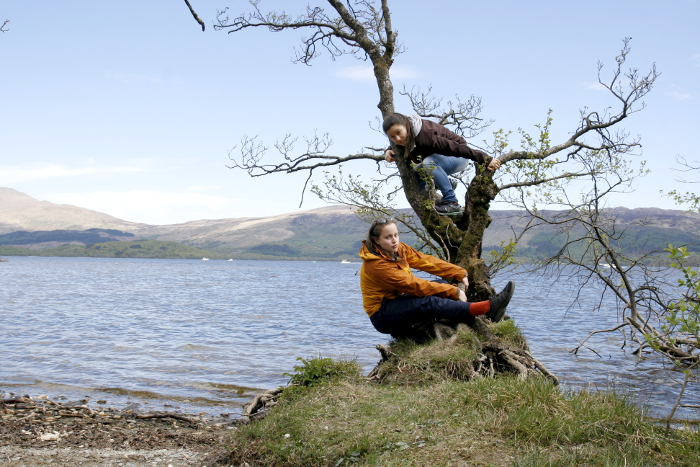
I think the fondest memories I’ll have with this picture: Natalia and me, playing monkeys by Loch Lomond in Luss, Scotland. Slightly out of focus, but what can you do, when the self-timer is all you’ve got to work with. A lovely memento of a wonderful trip to Glasgow: a weekend of indulgences, deep conversations and Parks & Recreation.

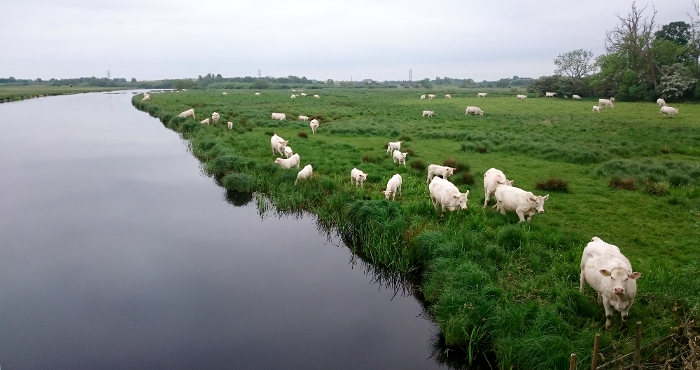
As for something more aesthetically pleasing, I think this photo of the curious cow in the wet meadow by the river Helgeå turned out really nice. This is part of my study area, and what my life will revolve around for the coming four years, so choosing it as the best of 2017 feels quite fitting.


KNITTING

I feel it’s appropriate I introduce a new category into my yearly summary: The favorite of the year’s knitted accomplishments by because Katja said so. This year, it has to be Vivi’s Norwegian style ram cardigan. It took me FOREVER to make, but I’m happy with the result.

Of the mittens, I think Liz’ Zanzibari-Irish sea-creatures turned out the best.


Yes. That was my pop cultural 2017.

for future reference

I went to Mexico, came back and the first snow both fell and melted. I promise to tell you about it, but first:

In late October, I went down to Skåne, southern Sweden, to conduct my last preparatory stakeholder interviews. What I asked them and what I will use their answers for, I intend to write about some other time. (There is not going to be another trip for a while, so I am hoping there will be more time.) Hässleholm did not show its prettiest face (although, I am not sure it ever is a particularly beautiful place to visit – it was first founded when the railway line between Malmö and Stockholm was constructed in the second half of the 19th century and the lack of both history and size, well, a certain soullessness. This is my snap judgment.)

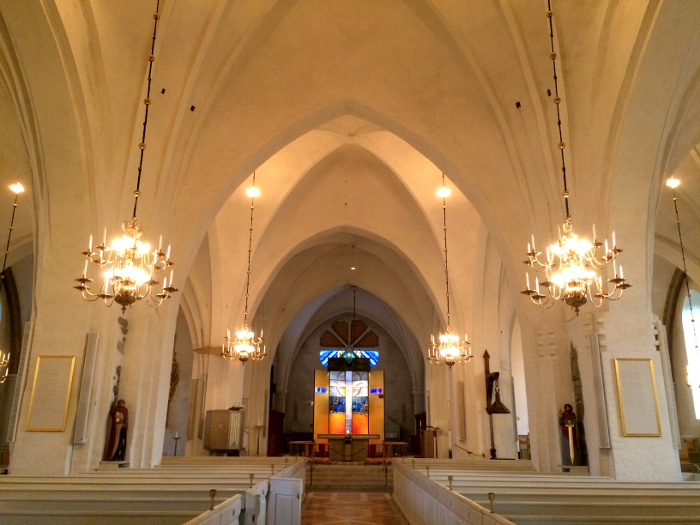
In Växjö, for the second time, I realized I missed something really special when I was there in early June: to enter the cathedral. The light, and the glass art. The region of Sweden where Växjö lies is known for its glass. I was all alone in there, a rainy Monday at six in the evening. I couldn’t help myself, with those arches. The acoustics were incredible. The sound lingered for what felt like seconds after a crescendo.

I don’t know what’s gotten into me lately, with churches and singing.

IMG_1110

It is easy, in a place like the Stockholm Resilience Centre, with so many brilliant people doing groundbreaking research, being exposed to all those papers and books, to lose your balance. Feel small and insignificant and out of place. After a spring and summer of PhD courses and conferences, I had started to doubt what the contribution of my work will be – there are so many doing so much great stuff already.

But while conducting my interviews in October, I was reminded. It is not all about what gets the big headlines in Nature and Science, the shiny global analyses or charismatic case studies in exotic places. Doing locally grounded research in a Swedish local governance context can be just as important – especially for those involved. Several of the people I have interviewed have expressed how interesting they find the participatory process that we have started and how important our perspective on sustainability is. It is like an energy boost, every time I interview someone.

I have to remember that, when the doubt comes looming over me again. I am not doing this for the headlines. I am doing this because I want to understand how things work in my own backyard. I want to contribute to making Sweden more sustainable. And I am doing it for the people who think it is important – the stakeholders in my study area. That is enough.

returning

One night in Copenhagen, I met up with Rikke, a friend from when I went to school in Tanzania. I haven’t met her since 2002. Strange, but nice, to meet someone from such a long time ago. We have taken such different paths – and still being able to relate. We are really not that different, humans.

Early next morning, crossing the bridge, seeing the wind turbines sprouting out of the sea, slowly spinning. Feeling a strong pull.

So relieved, when I opened the door on Körsbärsvägen. Home.

other thoughts, on a German train

[Written on September 19th]

There is a feeling that comes to me on German trains. Maybe I would get it in other trains too, under the right conditions – but on this trip, and on the one I did in 2013, it was mainly on the German trains that the feeling came to me. Maybe there is something about the quiet efficiency of German trains. A feeling of safety – allowing thoughts to wander, jumping from cow to hill to sunrays on a cumulonimbus cloud outside the window. It allows me to put words to messy thoughts. That is another reason for why I like traveling by train. There is a space in the movement. A space for exploring, a space for after-thought.

a rough diamond of Göttingen

Göttingen, being an old university town with biology and agronomy as two of their strong disciplines, has three botanic gardens. I managed to visit two. And I fell like a pine tree (as the Swedish saying goes).

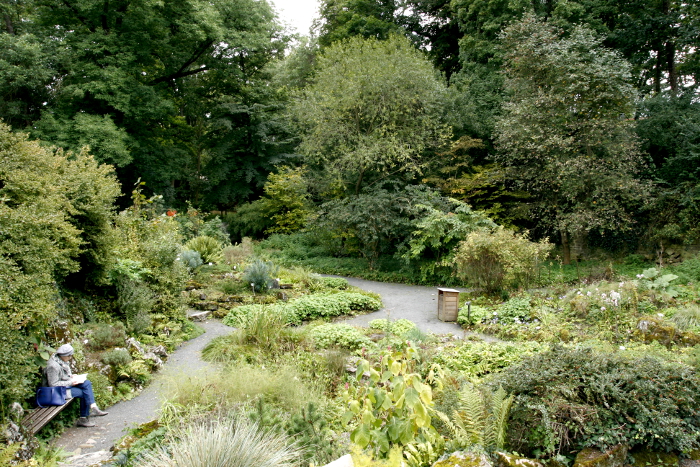
The old garden, situated on the edge of the old city center, is a slightly overgrown, wondrously romantic piece of lush greenery, with generous flowerbeds overflowing with butterflies, snug paths over small hills and next to the small pond. It was first established in 1736, and lies on both sides of the old city walls, connected by a long, dark tunnel.

And the greenhouses. The greenhouses! Old and quite small, so intensely green it almost feels like they were planted and then left to rewild in their tiny universe of tropical rainforest in the middle of chilly autumn Germany. The first one I entered was completely dedicated to ferns – this beautiful, ancient group of plants that triggers imaginations of fairies and trolls and dinosaurs.

_MG_3885

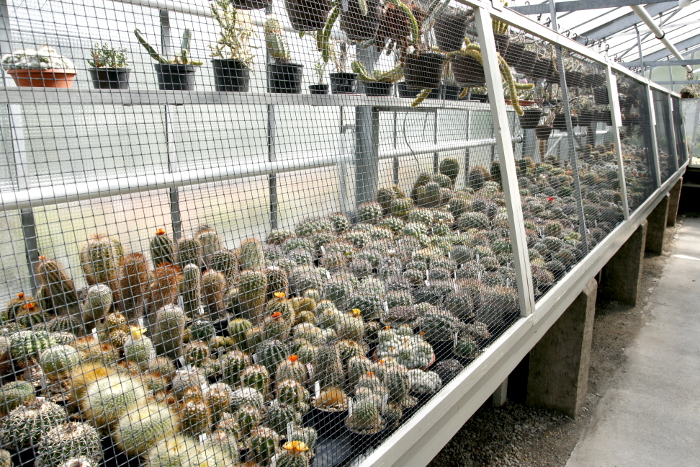
There was also a more generic tropical greenhouse, and a dryland house with an incredible selection of cactuses.

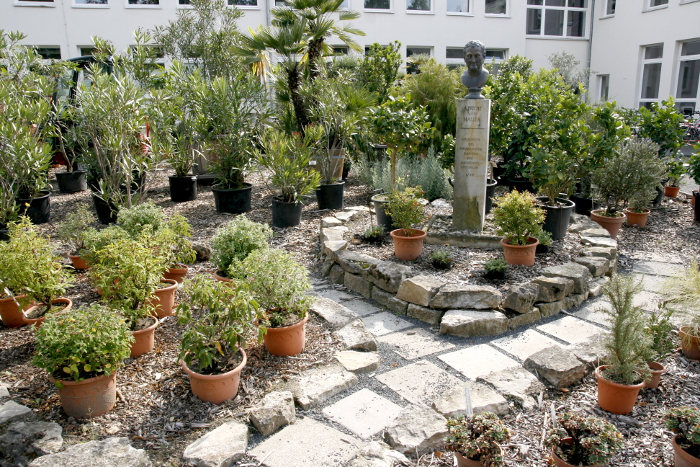
The second garden I visited was the experimental botanic garden. That is where the botany department does its current research experiments and it is obvious when walking around there that it has more of a scientific purpose than being aesthetically pleasing. Still, it is nice to walk around in, larger, with flower beds, roses, some trees. They even had a geology section, showcasing different kinds of rocks and petrified trees.

I didn’t make it to the third garden, but that is an arboretum, for research and probably great too. So, I guess I have a reason to come back to Göttingen, in addition to seeing Esther again. To visit the arboretum, and see what happens with this tension between the university and the city regarding the management of the gardens. Esther told me that the university doesn’t want to manage the old garden anymore, since no research to speak of is conducted there any longer – instead, it wants the city to take over the management of it, considering it’s a historic landmark. However, the city is reluctant to take over.

_MG_3915

From my point of view, getting back to my recent musings of the role of environmental education and fostering feelings of care for the ecosystems of Earth, the issue seems quite straight-forward here. A botanic garden should also be seen as a place to educate the public about botany and ecology. Especially such a beautiful garden as the old one in Göttingen holds the potential to both inspire and educate. Most cities fund at least a couple of museums, there to educate the public about history, art and technology. A botanic garden should be seen as an outdoor museum, and therefore part of a city’s mission to offer opportunities for learning to its citizens.

_MG_3978

So, we’ll see what happens with the management of the old botanic garden in Göttingen. Either way, I fell in love, and will definitely try to come back – which isn’t an impossibility. Having someone to visit in central Germany is nothing but beneficial, when traveling by train in Europe.

the perks of not flying

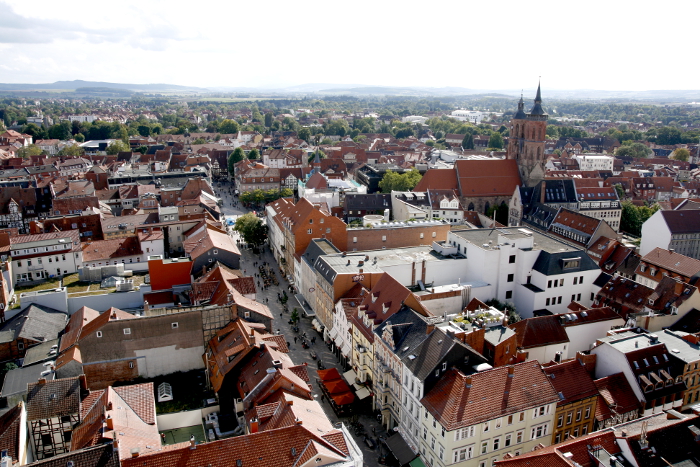
I went to Göttingen to visit Esther, a former trainee at SRC who now is doing her PhD there. It is a beautiful little university town, full of lively students and old, beautiful buildings. The view from the top of the Jacobikirsche church tower beautiful, and the Holocaust memorial both serious and hypnotically appealing all at once.

_MG_4002

And this is another thing about train-traveling. Taking the time to visit old friends. Seeing their new (or old) homes. Seeing a foreign place through the eyes of a local: the best way to travel. There are so many people all over Europe that were once important in my life, but now live far away and keeping a relationship alive through satellites and screens just isn’t the same.

On this trip, I managed to stay with six friends. Out of sixteen days on the rails, I only spent four nights in hostels. If I had flown to Nice, I would never have had the pleasure to swim in turquoise Lake Zürich, have moule frites in a rainy Antwerp and delight over the incredible botanic gardens of Göttingen. The journey can become an end in and of itself.


thoughts about train-traveling

[Written on September 17th, on trains between Delft and Göttingen]

Traveling by train in Europe: All the changes, I have seen many stations, waited on many benches. In some ways, it is stressful. It takes a long time, it is a hassle to carry my bags around, trying to figure out where to go next when all information is in languages I don’t master, changing plans due to delays. Filling in the Interrail itinerary.

But in another way, it is a much more humane way of traveling. I see the landscape I am traveling through. The hills and fields, forests, mountains. As a geographer, I feel like I am being more respectful of the landscape. And with that, I don’t mean due to the smaller environmental impact (which, obviously, is another important aspect: a globetrotting environmental researcher being a little less of a hypocrite).

What I mean is that at least on a train, I am also forced to see parts of a country that I did not intend to see. It feels a little bit more democratic, however silly that sounds. Also seeing the parts that aren’t conventionally beautiful. Not only the azure blue coast and breath-taking alpine mountain valleys of southern France, but also the flat agricultural landscapes of central Germany, the canals between grazing cows in the Netherlands, dusty industrial towns nested like supporting cogs around the shining metropolitan centers.

I feel like that recognition of the physical movement makes traveling easier to understand, and allows a sense of connectedness, an experienced line from downtown Stockholm to Nice and then all the way back again. It gives an awareness of how the landscapes are connected. Not existing in a vacuum, like when a plane drops you off in a faraway exotic place.

Places are not exotic. They are connected through earth, landscapes and sea. Train-traveling is a way to sense that.