thoughts from a session: Fostering complexity thinkers

Almost every session I went to at the PECS conference gave me something new to think about, and I took a lot of notes also from the sessions I was not assigned to blog about. They’re all a jumble now, both notes and impressions, and I can’t really trace them back to a specific session anymore. But, I’d like to write down some of these half-baked thoughts anyway. Mainly because I’d like to get back to them when there is more time and mental space to develop them into fully-baked idea meringues and chocolate chip cookies and whatever else they might turn into. So here are now two final composite posts about the second conference of the Programme of Ecosystem Change and Society.
IMG_0659

Many of the sessions I went to revolved around different aspects of transdisciplinary science. Partly because that is one of the common themes of PECS research, so the sessions about it were naturally many, but also because it is one of the main building blocks of my PhD project. I gravitated toward those sessions. Sustainability science, which is the discipline I am getting my PhD in, is all about figuring out solutions for complex problems. That is, problems where the causes are not really clear, where there might be many different interests competing, where ethical considerations make decision-making complicated and where it is hard to predict what any solution you choose to go for actually will lead to. In those kinds of situations, traditional disciplines aren’t enough to guide you.
IMG_0627

This is where the complementarity of different knowledge systems becomes really valuable: The hydrologist might know how a generic river should behave based on the aggregated knowledge from controlled experiments and statistics. However, no river is The River, average in all its behavior. Here, the long-term and practical knowledge of someone living by or working around the river in question can contribute with experience of how this particular river behaves. However, due to the different ways and settings in which these knowledge systems develop and learning occurs, it is sometimes really difficult to communicate between them. Sustainability science needs to not only develop methods for combining different kinds of data, but also ways how to exercise true dialogue between individuals and between knowledge systems. Be transdisciplinary. Equality, empathy and openness is essential, and the willingness to learn from each other. We need to exercise epistemological agility (an academic term that I’ll get back to at some later point).
IMG_0378

Sometimes, talking is not enough. Translating between knowledge systems can require boundary objects – things or practices that people have a shared understanding for and can connect over. Like food or music. Inviting inspiration and creativity into the knowledge-generating process. Understanding the complexity of a problem can also be really hard, especially if you’ve been trained in a more narrow, cause-and-effect type of discipline. And also making people with the power to make decisions understand the importance of perceiving the problems as complex, and not just simply solvable through some engineering fixes, can be really challenging. In those situations, fostering complexity thinking in the research process can be done by using key assets, for example water, to help stakeholders see the connection between for example hydrology, infrastructure, economy and society.  And as a researcher in a transdisciplinary process, one should be the broker, identify tension points and blockages, “false” conflicts and mitigate between narratives.

IMG_0787

Oh, god. This turned into a really dense post. Maybe it’s completely unintelligible. If that’s the case, I apologize. But I will definitely write more about these, and other related, ideas and perspectives from transdisciplinary science in the coming years. Several of them, I’m already exploring myself in my own research. So even if you didn’t really follow, but think you might find it interesting, I’ve got so much more in store. The PECS conference in Oaxaca was truly a treasure chest of inspiration for me and my PhD project.
interlude: My take on transdisciplinary and sustainability science

While writing my final posts about the PECS conference, I realised some background explanations were needed. So I started writing. And the paragraphs just grew and grew, until I realised I probably should turn them into a post of their own – so as not to overload you with text! So here you go, some background on the terminology: three paragraphs on transdisciplinary and sustainability science!

For those of you not indoctrinated with the academic lingo, transdisciplinary science is research that is not only based on traditional scientific disciplines or mixes of those, but also on other types of knowledge. These other knowledges can be labeled as anything from local to indigenous and common research methods include processes of co-creation with mixed groups of actors or stakeholders, like workshops or participatory mapping. Now, there might be different takes on this, but simply put, my perspective on transdisciplinary science is that there is heavy focus on the methods you choose for the research. The co-creation of knowledge is at the very core of what allows you to transcend the disciplines, so to speak.

Another term commonly used in my field of research is sustainability science. That is the discipline I will get my PhD in (if things work out as planned). Sustainability science, or so I see it anyway, is more about the type of research topics that you choose. Sustainability science is problem-oriented, often applied, and to a certain extent normative – we want to find solutions and create an environmentally sustainable and socially just world. This orientation toward problem-solving often requires extending across traditional disciplines, and sometimes even beyond academia, to find appropriate methods and data to solve the problem at hand.

This means that there is often overlap between these two fields of research. Many problems that sustainability science is trying to solve require the inclusion of multiple types of knowledge, that is, engaging in transdisciplinary research methods. And many transdisciplinary processes, being inclusive by nature, often include social justice and equity, but also environmental sustainability, as part of their goals and aspirations. However, it is possible to do transdisciplinary research without having a sustainability motivation, and many sustainability scientists do not use transdisciplinary methods. They overlap, but are not the same.

Of course, there is a lot more to say about these two terms – but I think this is enough as an introduction.

_MG_2458

thoughts from a session: Teaching sustainability science

[Written for and posted on the official PECSII blog on November 23]

Transforming the way we think about education – Reflections from Friday innovative and immersive session “Educating ‘glocally’: place-based research in international sustainability-education”

The last day of the conference, just before lunch, I attend a small immersive session on education in sustainability science. Chair, Leonie Bellina from Leuphana University, Germany, starts the session off by saying that the sustainability challenges we are facing do not only require new ways of doing place-based sustainability research, but also a shift in how we educate. The larger part of the fifteen, or so, participants are experienced educators from universities all over the world. Some, though, are like me, just about to start teaching and want insights on how to do it well.

IMG_0588

The session is centered around three broad discussion topics from the book ”The Glocal Curriculum – A practical guide to teaching and learning in an interconnected world”, which Bellina has co-authored with John and colleagues (2017), downloadable here. The first topic is the curriculum and how to make education emancipatory, rather than instrumental. In sustainability education focus needs to be shifted towards more experiential learning, and the process of inter- and transdisciplinary research, rather than specific topics. We discuss how it is sometimes necessary for teachers to take on separate roles, as instructors, coaches or examiners, in order to build trust with the students.

The teaching-learning environment is discussed at length. The participants share their thoughts on how to allocate time from being spent in lecture halls, to working with students in the field, on longer group projects, and encouraging students to be reflexive of their own roles as aspiring researchers. Many exemplify how their teaching is demand-driven, focused on real cases where the results of the students’ work matter. Nevertheless, there is a fine balance. Students must also be okay with failing. Therefore, starting the experiential learning by testing methods on each other, can be a good way to make students comfortable in their roles as researchers. Learning not only with the head, but also hands and heart, is essential.

Many sustainability courses and programmes are ‘glocal’, in the sense that they are often based on place-based research and case studies, but incorporate global connections. These connections range from covering cases from different parts of the world, to running collaborative courses between universities in different countries. In many ways, ‘glocal’ is a requirement in achieving the goal of educating globally aware and emphatic sustainability professionals. However, this great mix of cultures and experiences also poses challenges for both educators and students. An example is when, how and how much students from different backgrounds tend to speak. This varies greatly, thus the educator’s role as a facilitator is very important. Making students aware of their behaviour in a group, without creating guilt, ensuring everyone gets to share, is difficult, but essential to make these ‘glocal’ learning environments constructive.

I feel like a sponge, sitting there in the ring, listening to stories of sustainability education in Mexico, Germany, Australia. So many great examples of approaches, some of which I recognize from my own time as a master’s student at Stockholm Resilience Centre, but also others that I would love to experience or try out myself. These are passionate, committed educators who believe in helping students grow, on many levels, to become critical, ethically aware thinkers, competent researchers and engaged individuals.

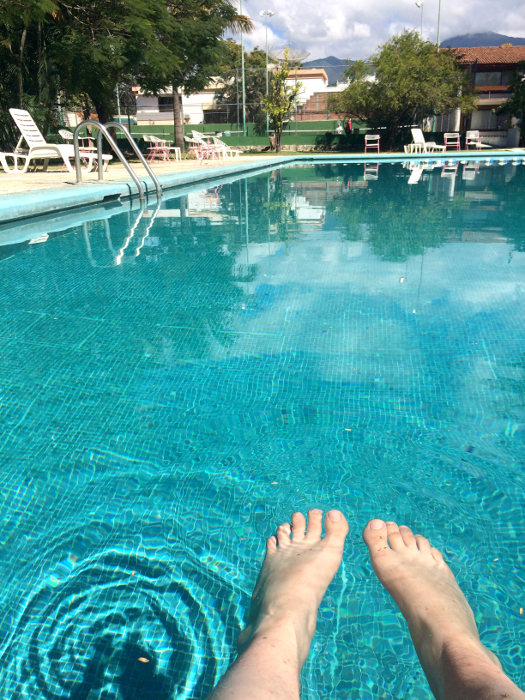
After the session, as I walk over to the hotel pool and dip my feet in the cool water, I start to wonder: Is it not very much to ask from an academic education, both from students and teachers, that they should foster these multifaceted world citizens? Would this kind of experiential learning not have to start earlier for it to have a real impact? Probably. Maybe that would be a good thing, though. Like the rings that spread in the turquoise water from my toe, so does education hold the potential for new mindsets to establish and spread in our societies.

Education is key for sustainability transformations.

IMG_1234


Referenced work:

John, B., Caniglia, G., Bellina, L., Laubichler, M. 2017. ”The Glocal Curriculum – A practical guide to teaching and learning in an interconnected world”. Available for download here.

thoughts from a session: Socio-cultural valuation of ecosystem services

[Written for and posted on the official PECSII blog on November 14]

My morning walk: Socio-cultural alternatives to valuating ecosystem services – Reflections from Thursday parallell session “Socio-cultural valuation of ecosystem services”

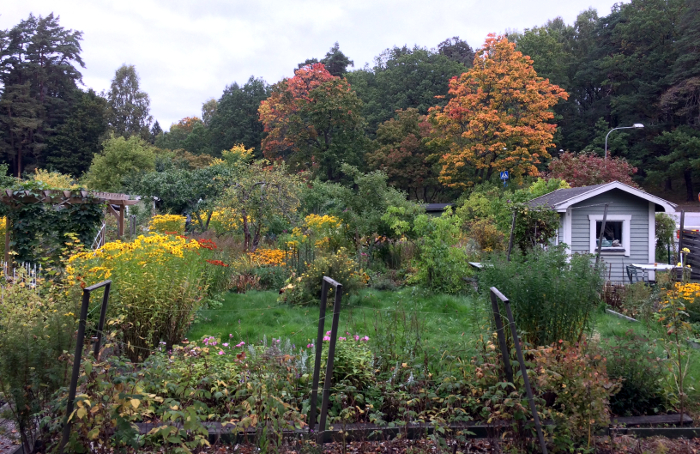
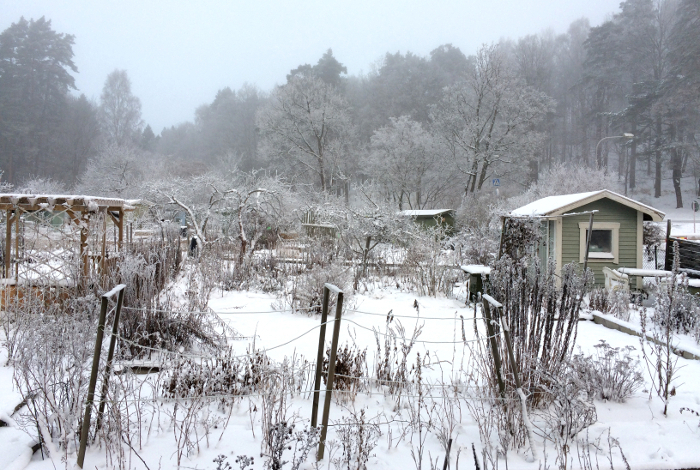
I have just moved apartments. From my new place, I can walk to work. Every morning a path through a little grove of birch, maple and pines, down a hill and through an allotment garden. They are very well tended to, the lots. Throughout autumn, I walked passed the growing kale and orange flowers while the maples have turned red to yellow to leafless. It is a peaceful start to the morning. Invigorating. In the afternoons, however tough the day at work has been, the shifting colours always manage to make something behind my lungs tingle.

IMG_1011

The allotment garden comes to mind, as I am listening to the presentations in the session “Socio-cultural valuation of ecosystem services” on Thursday morning. The session is chaired by Claudia Bieling of Univeristy of Hohenheim, Germany, and Tobias Plieninger, University of Kassel and Georg-August-University Göttingen, Germany. Socio-cultural valuation approaches examine the importance, preferences, needs or demands expressed by people, and articulate values through qualitative and quantitative measures other than monetary or biophysical units.

Plieninger tells us about a recent study in which he and his colleagues used social media photographs to assess cultural ecosystem services in different sites in Europe. Bieling explains how she used freelisting interviews, a short format interview developed in anthropology, to get at the linkages people make between landscapes and their wellbeing. Tim Daw, researcher at Stockholm Resilience Centre in Sweden, stresses the importance of using multiple indicators for poverty when assessing patterns of ecosystem service benefit distribution. Jason Julian of Texas State University, US, talks about how they used surveys to find cross-scale connections and diverse preferences between different users of the San Marcos river in USA. Sarel Cilliers, North-West University, South Africa, takes me back to my garden thoughts and explains how health clinic gardens have been used to increase human wellbeing in the North-West Province in South Africa.

Finally, Erik Gómez-Baggethun, Norwegian University of Life Sciences, passionately argues for how the market cannot capture the values we attach to ecosystems. He believes we need to reform public economic policy and that the legal system, being normative by nature, is a good tool in working with environmental equity and social justice. Elisa Oteros-Rozas, University of Copenhagen, Denmark, and Universidad Pablo de Olavide in Spain, insightfully summarises the session by saying that socio-cultural approaches can help create spaces for diverse knowledge systems. Spaces that hold the potential to mobilize people and instigate change.

I love my morning walks to work. I think my afternoon walks back home help soothe my ragged PhD student spirit. I would not be able to put a price on that walk. It would feel like tarnishing that space, which is so reassuring to me. By developing these socio-cultural valuation approaches, ecosystem services research can help us get at those other values, and make them become part of decision-making. I also might be able to share how much I enjoy walking past that allotment garden every day.

IMG_1425.JPG

thoughts from a session: Opening plenary

[Written for and posted on the official PECSII blog on November 8]

Power assymetries and global finance: Embracing conflict and connecting with unexpected alliances – Reflections from first plenary on “The role of place-based research for global sustainability and how global drivers affect place”

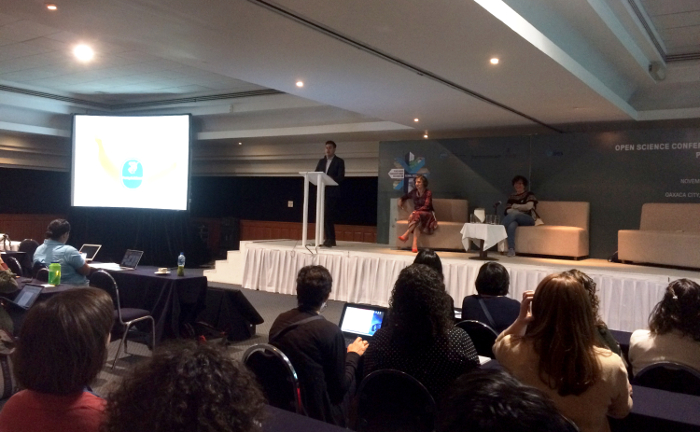
Wednesday morning at Hotel Misión de los Angeles. The air is still a bit chilly, but the milky morning sunlight promises yet another hot day in Oaxaca, Mexico. Entering the big plenary hall is disorienting at first – it is so dark! Plenary chair Professor Patricia Balvanera, La Universidad Nacional Autónoma de México, enters the stage and welcomes us to the opening plenary session of the second PECS conference.

IMG_1215

We are asked to move again. Due to the recent earthquakes in Oaxaca and Mexico City, we are instructed to go through an earthquake drill, just in case. We have to remember that we are in Mexico, where people have had to adapt to the tectonic forces for thousands of years. So, find one of the emergency exits, follow the signs, meet at the meeting point outside the hotel. I think, maybe, this little walk outside into the sunlight, the movement, gives us just the tiniest bit of more energy. Once everyone is seated again in the dark plenary hall, the mood feels lighter somehow.

The first keynote speaker is Sandra Diaz, professor at the Universidad Nacional de Cordoba in Argentina. The focus of her talk is how the conceptualisation of people’s relationship to nature has evolved from “people despite nature” to “peoples and nature” over the last century. As an example of the latter, she brings up IPBES and its conceptual framework, which acknowledges multiple worldviews, knowledge systems and values, but also puts governance and institutions in the center. However, this pluralistic approach also poses many challenges. “Will IPBES work? I don’t know”, she says, and the whole room laughs. Power asymmetries is just one of the major challenges. Diaz concludes that conflict has long been the elephant in the room, and we have to start acknowledging it as a strong driver in social processes.

IMG_1216

Second keynote speaker, Victor Galaz, associate professor and deputy science director at Stockholm Resilience Centre at Stockholm University, takes us into the world of economics. His focus is on how finance shapes the Earth system. Specifically, his recent work on the role of “tax havens”, that is, countries with tax and financial secrecy, in driving ecosystem change. In an audience of, I am assuming, mostly ecologists and case study focused social scientists, Galaz does a great job at pedagogically explaining global finance. In this case, how money moves between a company and its subsidiaries in “tax havens”, and then back again, effectively avoiding taxation. As an example, he brings up the case of big soy and beef companies driving deforestation in the Brazilian Amazon. The use of “tax havens” is partially funding companies’ deforestation, and consequently causing great losses in tax revenues for the Brazilian state.

At a first glance, these two topics seem very far apart, but listening to the concluding discussion, I realise there are several overlapping themes. Diaz and Galaz are both talking about global processes, how these have the potential to influence local places, and how global analyses need to be anchored in local cases. Diaz’ call to acknowledge conflict and learning to work with it instead of ignoring it, along with Galaz’ reflection to develop tools for better connecting scales, can be two sides of the same coin. Isn’t it so that conflicts often occur between scales, local populations and national governments, or between local farmers, ecosystems and large agribusiness? They both stress that PECS plays a key role in this space, in advancing excellent social-ecological science, allowing rich case studies to connect across scales and fostering an environment where unexpected alliances can happen.

Stepping out into the bright sunlight and heading to the pergola for some fruit salad and hot chocolate, I feel this was an inspiring start to the second PECS conference, setting the stage for diverse discussions in and outside of sessions.

IMG_1213

the second conference of the programme of ecosystem change and society

I was not in Mexico to get overwhelmed by the celebrations of the dead, to visit temples or even to learn how to cook a proper mole colorado. I was there to attend a scientific conference. The second conference of the Programme of Ecosystem Change and Society, or PECSII for short.

PECS is a research program connecting projects across the world that aims to integrate research on the stewardship of social–ecological systems, the services they generate, and the relationships among natural capital, human wellbeing, livelihoods, inequality and poverty. The program director of PECS is Albert, one of my co-supervisors, and many of my colleagues are involved in the network. I think we were about twenty people in attendance affiliated with Stockholm Resilience Centre. But there were other people too, of course. About 350 in total. I spoke with researchers from all over the world, from Mexico, Chile and the US to Spain, Germany, South Africa and Australia.

It was my second real conference – but since my first was Resilience 2017, which I and the rest of my colleagues were part of organizing, I think it is safe to call this my first real taste of the kind of concentrated self-promoting and networking science event that conferences are. It overwhelmed me. I went to so many interesting and inspiring sessions, attended so many mingles overflowing with mezcal and Oaxaca-style tapas, spoke with so many intelligent people doing interesting research, and even went out for food and dancing one night with a group of Mexican, Spanish, Belgian and Finnish researchers of whom none were friends of mine before the conference. And the conference party, eating and drinking and laughing, dancing salsa barefoot in the grass under a starry sky. It was a hurricane, a force of nature, and I could only let myself be swept away in the torrent.

Albert, being my co-supervisor, had recruited me to write for the official PECSII blog, to record the sessions of the three-day conference. So in-between all the inspiring session-attending and mezcal-mingling, I also had to find the time to jot down my impressions in an understandable way, to be posted on the blog the next day. I barely had time to breathe.

But I did write three posts for the blog. I will repost them here, for you to see how much sense I managed to make out of things during those whirlwind days of conferencing.

IMG_1243

the care in cooking

Oaxaca is famous for its cuisine. Therefore, I excitedly accepted the offer to join a cooking class together with a couple of my colleagues one day before the conference started. The classes are run by a woman whose in-laws run a bed and breakfast where my colleagues were staying, and are held in the outdoor kitchen in the family’s garden on the mountain slope overlooking downtown Oaxaca. I cannot imagine a more beautiful spot for cooking.

IMG_0372

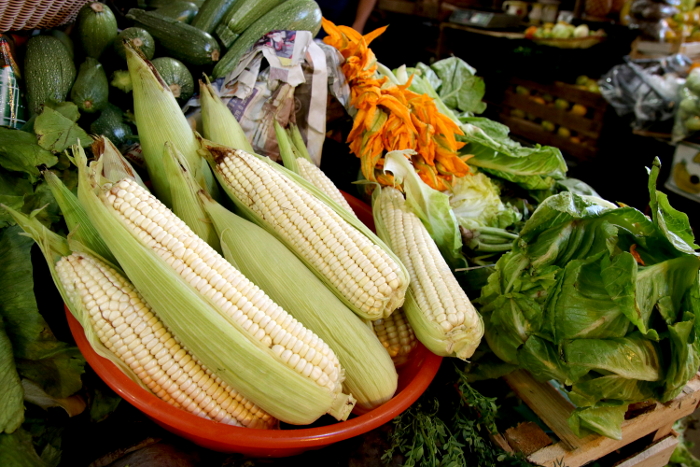
We started the class by going to the market to buy our ingredients. Vegetables, spices, chicken – the variety and color a joy to behold. Many things I could recognize (although the diversity of chilies or tomatoes was fascinating), while others felt quite odd.

The moldy maize, for example. It is called huitlacoche and is actually maize infested with a fungus that makes it get a rich umami flavor, a little bit like mushrooms or black garlic. And the deep-fried crickets – that are actually delicious, if spiced properly with chili and salt and sprinkled with lime juice.

We were going to make a three-course meal: Enchiladas with huitlacoche and cheese, mole colorado and caramelized guava for dessert. The enchiladas were quite easy, we just needed to roll the dough, flatten it, bake it on the tortilla plate and then fill it with the huitlacoche and cheese that we had prepared. And the guavas needed to be cut and put in the melted brown sugar to simmer. It all took time to make, but it was not complicated.

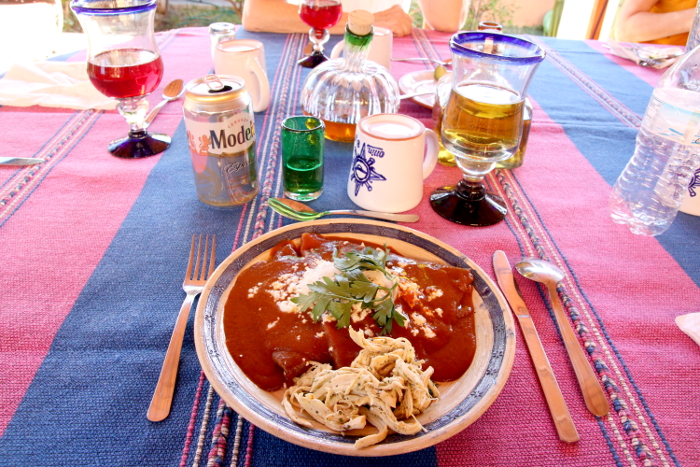
With the mole, though, it was enough to make your head spin. There were peppers, tomatoes and plantains that needed to be fried separately, several different types of dried chilies roasted, broth made with the chicken and then the chicken separated from its bones, onions and apples boiled in the broth with spices, and then everything (except the chicken) combined in the right order while simmering and mixed to make a smooth, sweet, savory and hot sauce with a flavor as nuanced and deep as its shade of red. It was served on top of black tortillas with the chicken, parsley and some local, feta-like cheese sprinkled on top. And a generous sip of mezcal, of course.

In the end, it took us half a day to prepare this meal of appetizer enchiladas, mole colorado and dessert guavas. Not a meal you would prepare on a normal weekday after work. But for a special occasion. All that time and detail, the steps that go into preparing the sauce and the tortillas, the planning behind it. That is love. Forget buying fancy presents and going for luxurious vacations. Make a meal like this. Delicious, nutritious, something to savour and then remember. A building block of true intimacy.

IMG_0427

Oaxaca truly has amazing food.

the ethnobotanic garden of Oaxaca

I was so excited about the ethnobotanical garden in Oaxaca. It is one of the top sites in the city and it’s an ETHNObotanic garden. Ethnobotany has become one of my academic side interests ever since my visit to Burkina Faso, so I was seriously pumped about this place. And then I arrived, and realised the only way to visit it is to take a guided tour. In Spanish, because there’s only three English tours a week, and with my conference and fieldtrip schedule, I would not be able to make it to either of those times. No planlessly wandering around, no solitary exploring. Such a disappointment. Well. I went for the Spanish one-hour tour, and by the end of it my disappointment had waned somewhat.

IMG_0799

The ethnobotanical garden lies in the former monastery gardens, the beds separated by a grid of narrow gravel paths and surrounded by the high monastery stone walls. It was originally part of the 17th century monastery grounds, and it wasn’t opened as an ethnobotanic garden until 1998. They used to allow visitors to wander around freely in the garden, but had so many plants stolen that they had to restrict the visits to guided tours (or so I understood the guide – my Spanish is far from fluent).

And to be fair, there is definitely a point to having a guide explain things in the garden. There were no signs, but the guide was incredibly knowledgeable and explained all about the wild and the cultivated, the native and the species that were brought here by the Europeans. The state of Oaxaca, according to the guide, is an incredibly biodiverse place and is home to more plant species than grows wild in all of Europe. And the different peoples of Oaxaca have been using the plants for everything from food and medicines to fiber production and dyes for centuries, way before the Spanish arrived with their monks to catalogue it all.

IMG_0242

The garden is organized into the different vegetation zones that exist in Oaxaca, from the high-altitude drylands to the lowland lush forests, and it is just as much a place for research as a plant museum. For example, they’ve just finished a climate-controlled greenhouse where plant experiments will be conducted, testing how different species will react to changing climates.

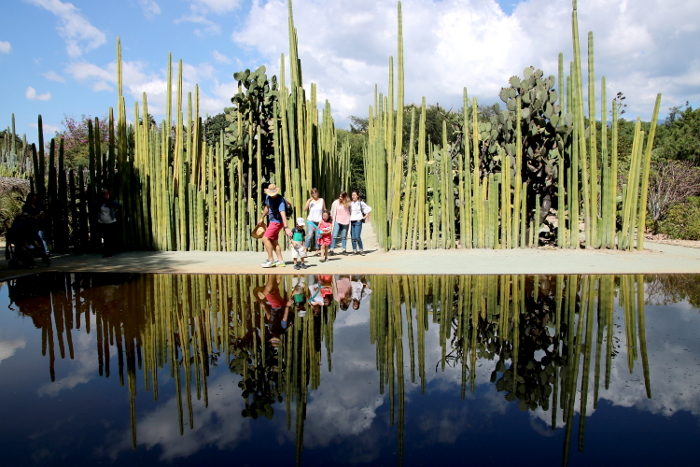
I was most intrigued by the cacti. The life force in these inhospitable plants, and the beauty in the patterns on their skins. It amazes me. This is pure survival. And I must admit, the cacti and pond installation in the end of the tour was really a masterpiece of organic symmetry and reflection.

IMG_0313

The garden was small, but dense, and with the guide there was much to learn. It is definitely worth visiting. I would have liked it better, though, if I’d been allowed to wander around on my own after the tour, to marvel at the cacti in a little bit more intimate and slow detail.

IMG_0340

cold chocolate and the inspiration of the vagabond

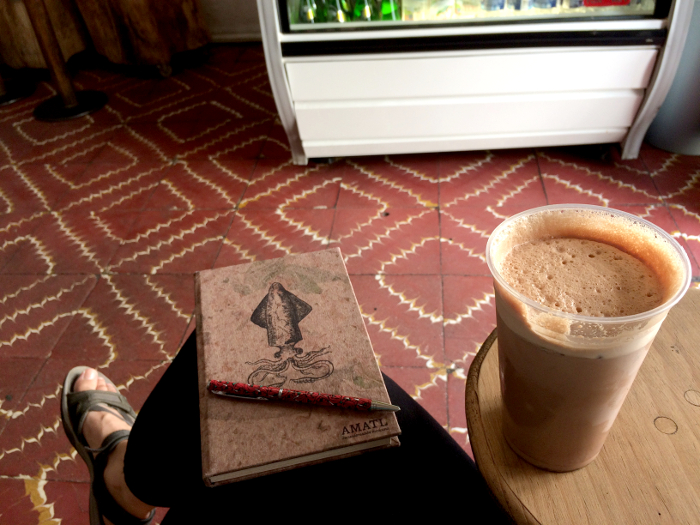
I found a favorite café in Oaxaca. A chocolate place, only big enough to fit three small tables and the counter, squeezed into the one storey building opposite the Santo Domingo church and walls of the ethnobotanical garden. The floors had earth-red tiles and the cold cardamom chocolate that they served was divine. I don’t know how many I had over the course of my stay in Oaxaca.

The coolness of the small space, and the open doors giving a view of the calm street and massive, sundrenched walls of the church, made it a perfect place to sit and think. Read. Make notes. I had ideas. Felt a kind of excitement about writing stories that I haven’t felt for years – I’ve been too busy writing science to think about stories. But there was something about the old houses in this colorful town, walking around in sandals in a strange place, creating new, temporary routines. It triggered me. It always has. I never write as much as when I’m on the road. For the last decade, though, that has mostly meant blogging. Here, the fictions in me started stirring from their decade long slumber. Maybe, I can start writing prose again.

IMG_0367

I felt filled up. But also, there was a note of melancholy behind the joy. This elatedness and inspiration that I feel when wandering around in a strange place, it has become so rare. I don’t travel as much as I used to. I don’t want to fly. The joy I get from writing can’t depend on me going far far away to get inspired. I need to develop my ability to get the same kind of inspiration closer to home. In people, maybe. Or art. Music. Challenging my senses in my own backyard. A new mission.

At the chocolate place in Oaxaca, though, this was just a fleeting thought. I was enjoying myself too much in my new-found state of inspiration.

IMG_1185

the city of Oaxaca

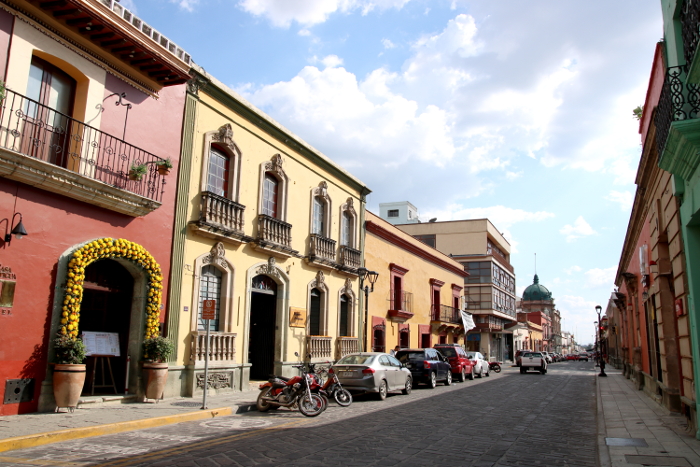
After the celebrations of death had ebbed out, Oaxaca returned to what I think is its normal pace: A couple of bustling streets and busy markets, and otherwise, calm, leisurely, with few people seeming in a rush to get anywhere. And I liked it so much better.

IMG_0362

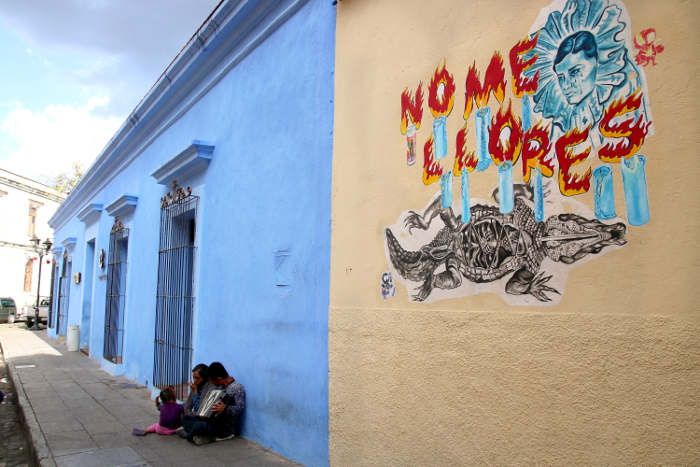
After a couple of nights proper sleep, and days of few musts, I was ready to take it all in. The colorful, elaborately decorated buildings. The massive stone walls and gilded inside of the church of Santo Domingo. The street art and sundrenched mountain views.

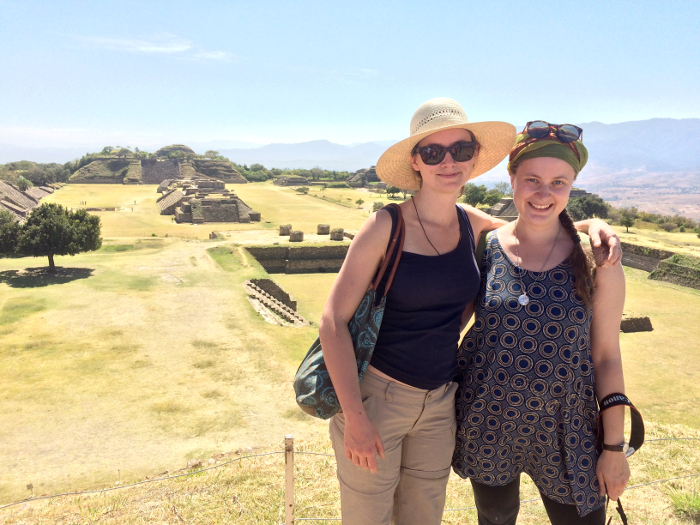
Just outside the city, there are also several pre-Columbian temples, easy to get to for half-day tours. Monte Albán was built by the Zapotecs on an artificially flattened mountaintop close to what later became the city of Oaxaca and has been around for at least two thousand years. The view from up there was stunning – I can definitely understand why one would place a civic-ceremonial center there.

IMG_1208

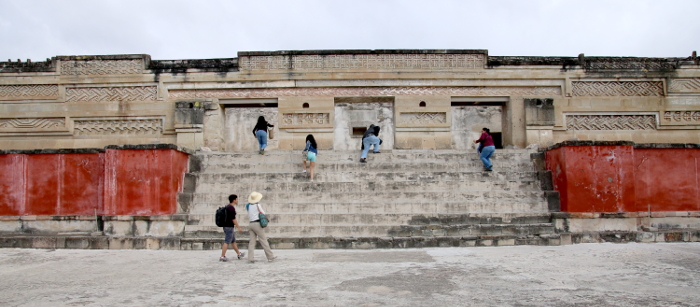
The other archeological site I went to was Mitla, the main religious center for the Zapotecs. For long periods of time, after the Mixtecs took over control in the region about a thousand years ago, the religious site was shared between the two groups and influences from them both can be seen in the architecture of the temples. What I found most fascinating there was the beautifully decorated walls, with geometric patterns in the stone.

IMG_0731

Or just having hot chocolate and bread in the bustling Mercado 20 de Noviembre market. Oaxaca is a friendly city, amazing to wander around in, or just sit and enjoy. I really liked it.