The Botanical Garden of the Bathing Friends in Visby

A text written in early September 2018

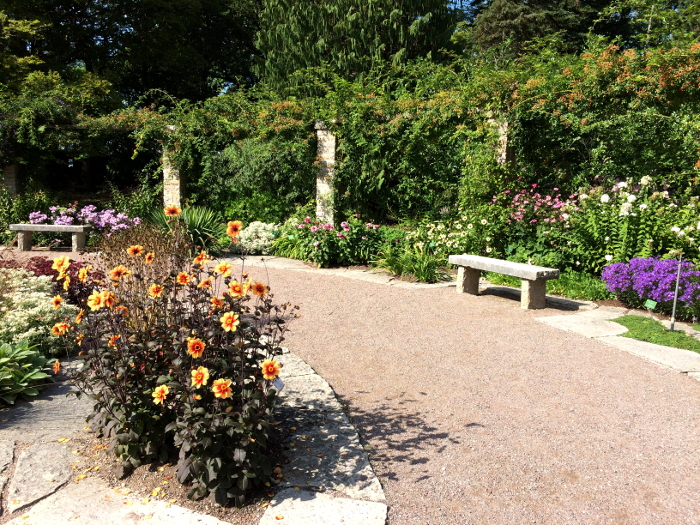
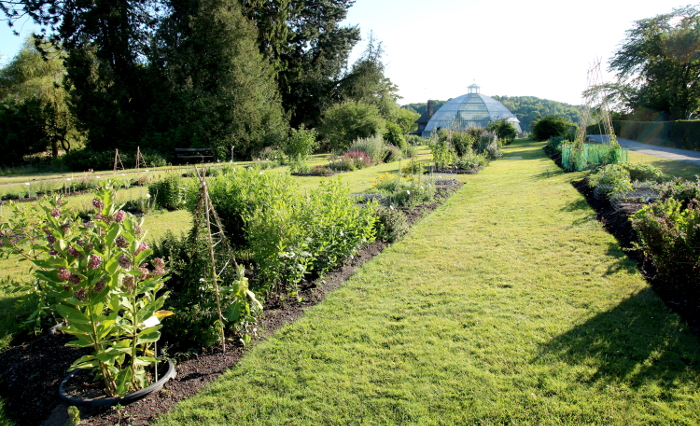
Perched between the low medieval buildings of old Visby and the steel-grey Baltic lies a tiny botanic garden. For being so small, though, it manages to accommodate a great number of different plants. Cared for by the association DBW (De Badande Wännerna = the bathing friends), it has been situated here since 1855.

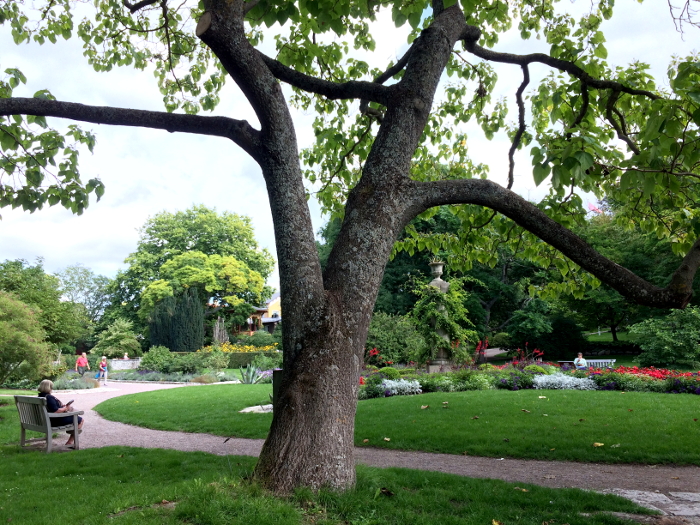
Already at the entrance, I am greeted by two massive platanus trees. A bit further in, an ancient apple tree is leaning leisurely on the ground – and already here, it is easy to forget the dense town of timber walls and cobble-stone streets outside the garden walls. The greenery being so lush and protective.

I am there at the peak flowering of autumn dahlias, green apples on the grass glistening with droplets of the rain that just fell. The rose garden is planted in a symmetric amphitheatre, so delicious for the eyes. It might not be the most scientific botanical display I have explored, but every single patch of this place speaks of having been meticulously tended to by generations of plant-lovers. It oozes joy of gardening.

IMG_2658

And there are plenty of benches to sit and read on. For a brief moment, the sun peaks out behind the clouds and I spend some minutes reading the so incredibly impressive “The Unwomanly Face of War: An Oral History of Women in World War II” by Svetlana Alexievich, but then I have to leave. Colleagues await at the ferry terminal. But I know, had I spent more time in Visby, this would definitely have been my favorite reading spot.

IMG_2673

IMG_2577

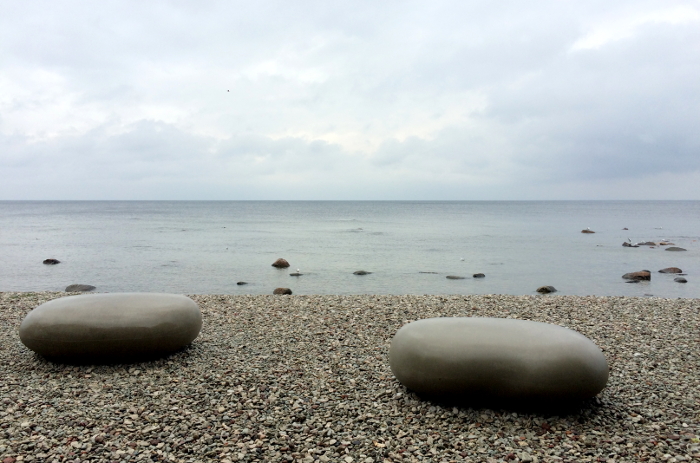
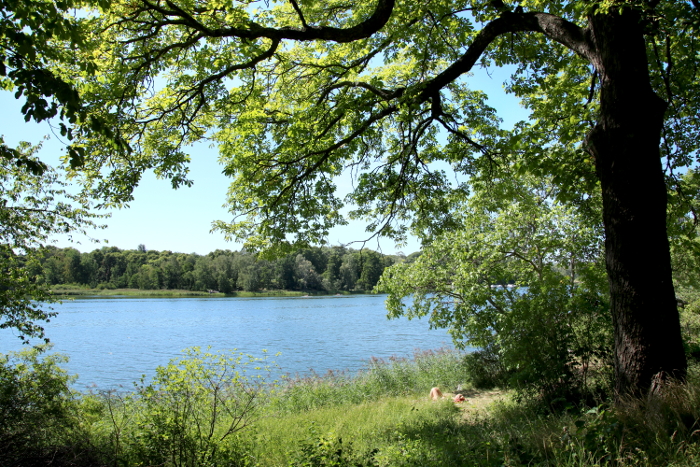
And just outside the garden walls, the Baltic is slowly breathing, biding its time for the autumn storms.

a (very late) brief pop cultural summary of my 2018

The older I get, the more on edge with time I seem to become. I cannot estimate how long things might take to complete – but also, I cannot let go of the things I thought I would have time to do. I used to be better at it. I did not use to come late to everything. It is the beginning of things that excite me – no, not even that. It is the thought of beginning something that gives me that tingly feeling of being alive. So not having time to start something disappoints, and not being able to let go of that remembered excitement makes my list of things-to-do grow ever longer.

That is what happened with my 2018 pop cultural summary. Too many things that I was excited about. But here I am, now, two months into 2019. Ready to give it a try.


MUSIC

Another year of not listening that much to music. First Aid Kit came out with a new album. It was OK. I discovered that Queen is great exercise music, especially “Can’t stop me now”. As always, Säkert!’s EP “Arktiska oceanen” was wonderful. In one of the songs, Annika describes how she flies across the Atlantic together with trees, ants and polar bears to Washington, and she: “oh God I felt foolish for having thought I was more important than the ocean”. So beautifully written!

But I think, emotionally, what stuck the most during 2018, was Ane Brun’s cover of “By your side“. It is like a blanket, warm, safe, something to hide in just for a moment when the world feels too hard and tough. And it’s doubly nostalgic: My dad listened a lot to Sade, the original artist of “By your side”, when I was a kid. And Ane Brun was one of my favorite artists during my late teens, the most intense pop-listening period of my life this far. And so the layers of a life are sedimented on top of each other, distinct but never fully separate.


BOOKS

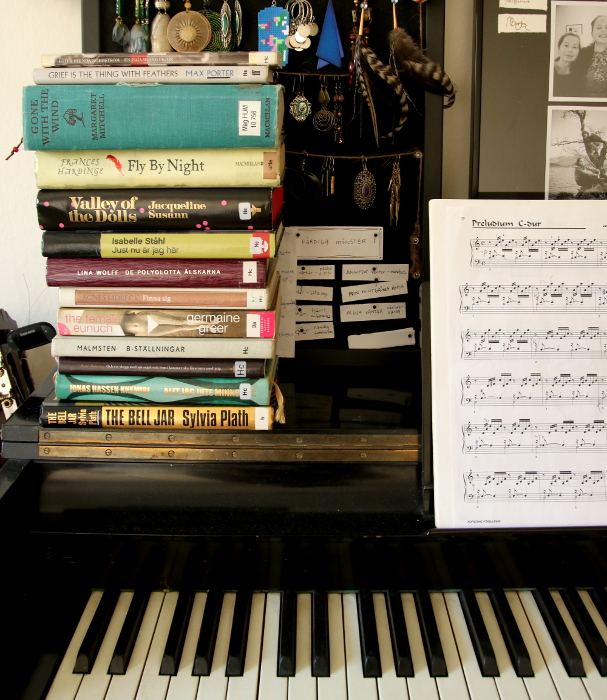
I read 44 books in 2018. And when I look through the list now, I can definitely see a pattern. Many of them have been about the female experience. Feminist literature, in a way. One theme: New Swedish novels by female authors dealing with topics like the sexualized male gaze on the female body (“De polyglotta älskarna” by Lina Wolff), the narrow roles of the girlfriend, the mother and the caretaker that women have to live up to (“Finna sig” by Agnes Lidbeck), and also just being young and generally lost in modern life (“Just nu är jag här” by Isabelle Ståhl).

A second theme: I started a project. I want to read the book “How to be a heroine, or, what I’ve learned from reading too much” by Samantha Ellis. It is a feminist reading of some of the English language classics that many women grow up reading, and what kind of ideals they might foster in a growing person. I love these kinds of books! But being Swedish (and therefore spending most of my teens reading Swedish language classics), there are several of the heroines that are being discussed in “How to be a heroine” that I know of, of course, but haven’t actually read myself. So. I took the reference list of the book and made a little reading list for myself: the literary heroines to get better acquainted with before I pick them apart together with Samantha Ellis. It has been a very exciting and enlightening journey. I have read children’s classics like “Anne of Green Gables”, scandalous romances like “Lace” by Shirley Conran and “Riders” by Jilly Cooper, romantic classics like “A room with a view” and the absolutely fascinating, revolting, captivating melodrama “Gone with the wind”. As well as one of the cornerstone books of second wave feminism: “The Female Eunuch” by Germaine Greer, to give some perspective to all the romance. And I am not done. There are still many books on my list of readings before I can take on “How to be a heroine”. I have no idea if the book itself is even close to being good enough to deserve this kind of preparation – but I am thoroughly enjoying myself, plowing through the stories about classic literary heroines across the whole spectrum of respectability. So it does not really matter.

And a third theme: Women in war. Or, one of the most impressive books I have ever read, Svetlana Alexievich’s “War’s unwomanly face”. Through hundreds of interviews with women who fought for Russia in the second world war, in the words of the women themselves, she tells a heart-breaking story of what it meant to fight for your country, and then be despised for it, looked upon with suspicion, sometimes even forgotten. It shook me somewhere deep, and changed my understanding of the way stories can be told. “War’s unwomanly face” is definitely the best book I read in 2018.


MOVIES

I went to the movies exactly twice in 2018. First, I saw “Phantom Thread”. It was a captivating film, beautiful, a challenging story. A bit weird, though.

Then, I saw the documentary about Ursula K. Le Guin. Now, that was an interesting film. I have liked Le Guin’s books since I was a teenager, but I had no idea she was that interesting as a person. A really nice film, as far as documentaries go.

And then I saw “The Bridges of Madison County”. Better late than never. You know, I like dialogue-driven movies. One of my all time favorites is “Before Sunrise”, which is basically just a two hour uninterrupted conversation. And, in a way, so is “The Bridges of Madison County”. And Meryl Streep is amazing. So, I pick that as the best movie I saw during 2018.


TV SERIES

I watched a lot. Few things stuck, though. I watch a lot of just OK stuff, because they don’t require me to focus too much and I can engage in the main activity instead, that is, my knitting.

But I watched the sitcom “You’re the Worst”. That was entertaining.


PHOTOGRAPH

There are many nice photos that I took during 2018 in the botanic gardens I visited. There were seven in total. I’ve only published one of the posts I wrote about them on the blog, though, so the rest of the garden photos will pop up here eventually. When I have the time.

But it wasn’t one of the garden photos that ended up being the best one. No, as per usual, the best photo is one with people. This one, taken with Hanna and Kirke at the patisserie Miremont in Biarritz during our first afternoon in this lovely (and expensive) town. I feel like there are so many perspectives to this image.


KNITTING

I worked on a couple of bigger projects in 2018, things that I haven’t finished yet. But I made a bunch of mittens. I think I like the swallows I made for my aunt’s partner Jukka the best.

And the Icelandic style sweater I made for David. He wears it all the time.
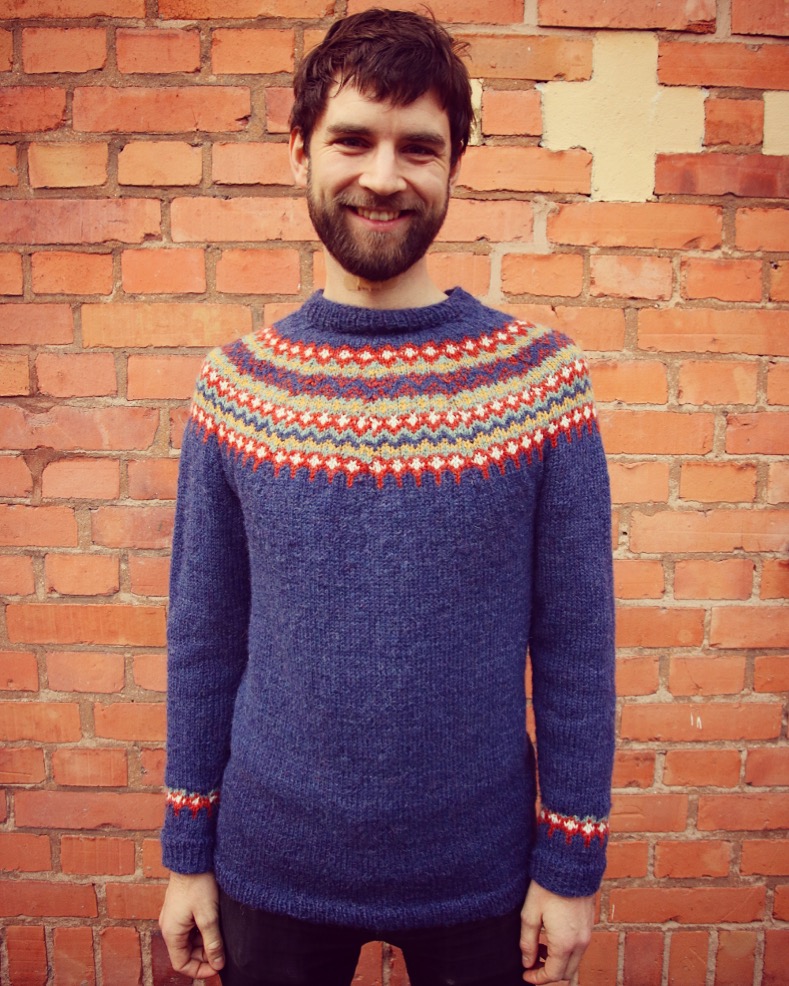

So, finally, that was my pop cultural 2018.

waiting for rain

[Written on August 4th]

At the cottage. The smell of lingering dust, memories of mornings in the desert. No rain for six weeks.

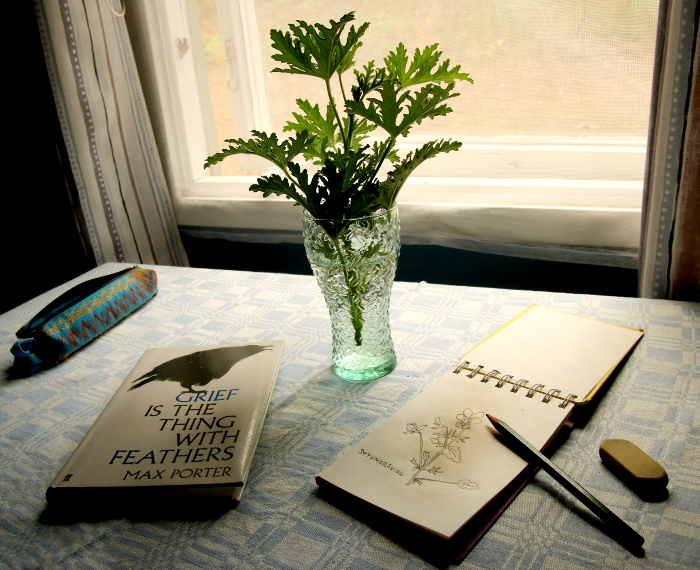
Reading “Grief is the thing with feathers” by Max Porter. It is short, so simple – and carries the heaviest on its shoulders. Death, sudden, to be left behind. It is a feeling and the words bring it out, so carefully that it is barely noticeable. It is beautiful. And funny. In the difficult moments, the perspective of a crow might be just what is needed.

Thinking: The grief felt over yellow edges on birches in early August. I need a crow for that too.

IMG_2128

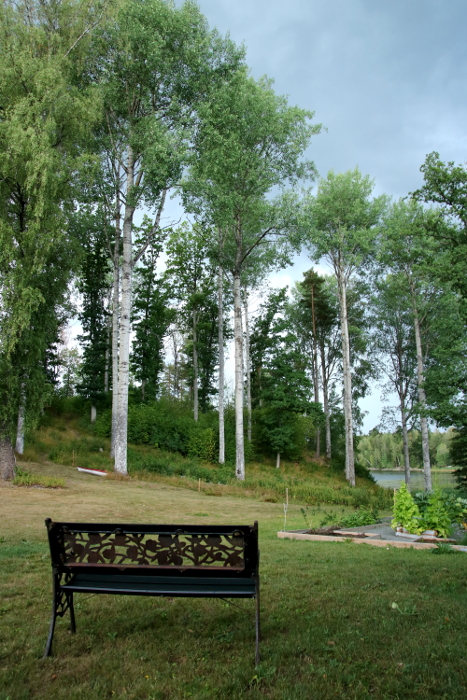
Later, sitting on grandma’s old bench, sketching flowers. (Maybe the start of something, the tingle from the promise in a new project.) The sky darkening behind the quivering aspen leaves, contrasting in shades of purple with the gray-green trunks. Wind, gathering speed in the crowns of the hill-top oaks.

A drop, a flash, rumbles in the distance, and the sky opens.

After, the stillness. Air heavy with earth, sweet. After-drops falling from leaf to leaf, like sighing. A rainbow behind the hazel hedge.

IMG_2142

honouring the lives not lived

Some time ago, I listened to a podcast interview with the Swedish actress Eva Röse. When I was a kid, in the Swedish version of the Mickey Mouse Club, there was Alice, Johan and Eva. Every Friday evening, my parents made me TV dinner and let me watch these lively youths present loud American cartoons, and I loved it. Three of my childhood idols, in a sense, that have taken different paths in life since. Alice is now in the environmental party and the Swedish minister of culture. Johan is a rather famous comedian and TV presenter. And Eva, she became an actress.

In the interview, she was talking about her character in the play she was currently rehearsing for. She said:

To make it brief, it’s a woman who has to choose. She feels locked in and she has made choices in life that she just has to live with. Just like you can feel yourself, that you have to carry the sorrow of the choices you have made. Even if it is an active choice, there is always a sorrow over what wasn’t chosen. The feeling that you aren’t really completely free and, like: “Yes but I do want I want and I follow where the day leads me, follow the wind, it’s Goa here and Ibiza there, and I’m just awesome”. Yes, but every time you sit down on the plane to a destination, you opt out of others. And that, in a way, at my age, in the middle of life, with all the choices I make – and everything I’ve opted out of. There is something painful and very beautiful in that, if you can accept it.

And isn’t that true? I feel short of breath, sometimes, when I think about the impact of some of the choices that I have made in life. Cross-roads passed, sometimes very deliberately, others rushed through without realizing the significance until years later.

Of course, regret is easy to feel. But often, mourning paths not taken is not fair. Instead, honour the choices I have made. A touch of sorrow, maybe, yes, but then. Seeing how delicate the moment is that I am in right now. I could have been anywhere. The frail beauty in existing at all.

living in the age of humans

It has been an exceptionally hot summer, dry, an extreme high-pressure system stuck, looming over our parched Nordic soils. I found it tough. Working in July, walking through the oak groves around university, seeing trees start to drop their leaves. Hearing news about the largest forest fires in Swedish recorded history, crops failing, animals having to be sent to slaughter due to lack of fodder.

That smell of dry grass, parched soils. It is subtle, easily missed. Like a light tickle. Among the acacias and baobabs of northern Burkina Faso, that smell is lovely. In the early morning sun, like a poem.

In Stockholm, though, the same smell just makes me want to cry. It is wrong. It aches and itches in its subtlety.

Helplessness, thinking of the release party of a Swedish literary magazine that I attended in June, themed “Climate Rage”. Jonas Gren, a poet, journalist and friend, saying: We need to explore what it means to live, act, feel, be in the age of humans. But how do you do that without drowning, Jonas, how?

(Not with science. No. Figures and logic and theory-building, it will not make you float. Definitely not with science.)

When my holiday finally started, my way of dealing with angst: the yearly library run. That childish happiness of holding an unread book in my hand, the potential for magic, strange worlds unfolding. At least I can still feel that.

(… maybe there I can find a key.)

IMG_2118

two seasons in the Bergius Botanic Garden

You know my thing for botanic gardens. I have a neat collection now, 28 gardens on four continents. A bit surprising, then (or maybe, absolutely not) that I have not yet written a proper post about the botanic garden just next door: the Bergius Botanic Garden, run by Stockholm University. There is one post from before I was really systematic about my garden writings, and one I wrote after having been on a guided tour about medicinal and magical plants in the herb garden. But none exploring the actual garden as such. About time, then.

During the final feeble breaths of last year, I visited the garden several times over the course of a couple of days. That time of year in Stockholm, days are short and rarely sunny, so photographing is difficult. But if you are lucky, you can manage to catch the sun. And then, the clarity of that light, making the frost glitter, the crispness of the air. It is unbeatable. And the stillness of the bay under ice. At the darkest time of year, there is a tranquility to the garden that you simply do not get when it is bursting with life.

And when the sun went down, the Edvard Anderson greenhouses shone like green oases in the icy darkness. Entering the middle house, the Mediterranean smells, just breathing. Or the moisture in the tropical house, like a caress.

Season appropriate, there was a Christmas theme in the greenhouses, with signs showing and explaining the use of different Christmas-related plants: amaryllis, false Christmas cactus, cloves, ginger and cinnamon. It was all very neatly done, both pedagogical and cute. Adapted to all the happy children running around on the winding, narrow paths, allowing them to marvel at the wonders of plants.

And the darkness outside. Sitting in the palm room, drinking tea in the dim green light, while the sky was pitch black outside. I do not think I can imagine anything more romantic.


 – – – = : @ : = – – –


A couple of weeks after midsummer, at the height of a hot summer, I went back with my camera. Now, at the opposite end of the year, the garden had a completely different atmosphere: people on every path, sun-bathers all along the water, a richness in everything, stimulating the senses.

IMG_1798

Compared to other botanic gardens, like Kew in London or the one in Meise outside of Brussels, the Bergius garden is not big. But somehow, they have still managed to divide it into several distinctly different parts, sections with such completely different characteristics. I spent two half days there with my camera and notebook, and that was not enough to fully explore everything I wanted to see.

IMG_1914

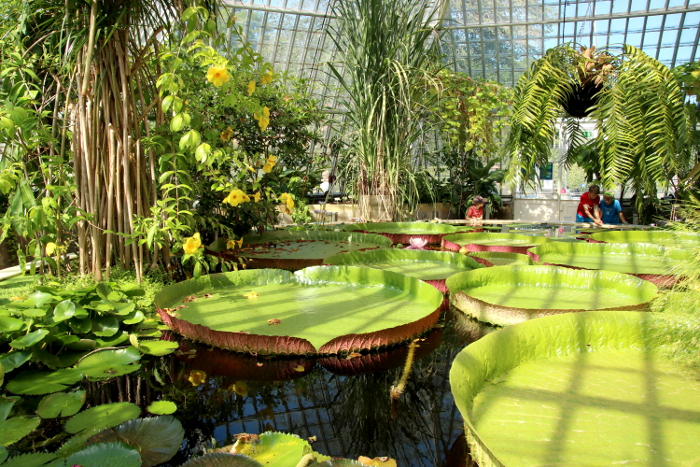
During the summer months, the small Victoria greenhouse down by the water is also open. It is tiny, completely taken up by a circular pond with Victoria water lilies, and a small selection of other tropical plants surrounding it. It is pretty.

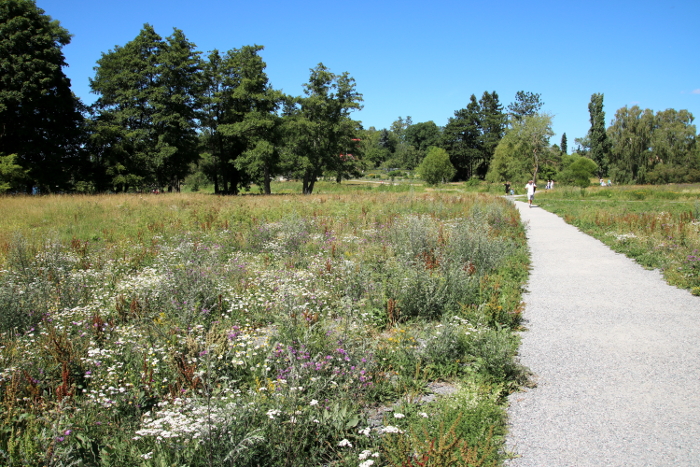
And just like the main greenhouses in winter, the outside garden is also pedagogically planned. There are the flowerbeds with garden flowers (for example, a special dahlia exhibit), the sections representing different more or less exotic ecosystems – but also, the recreated wetland and several meadows, that are managed, but only sparingly. Mostly, they look like they are allowed to grow as they will, host the plants that happen to find their way there – and the insects and birds that thrive in this half-wilderness!

IMG_1818

IMG_2016

But maybe what I like the most is the herb and fruit garden. That is not a very common feature in botanic garden contexts, the cultivated and non-ornamental. Showing the plants that we rely on for sustenance and that might be the clearest examples of what can come out of the social-ecological interdependencies that we as humans have created. Allowing the useful, the cultivated be part of this museum of the living world – and not excluding it as something uninteresting or unnatural.

IMG_2029

This separation of the “wild” and the “unnatural” has a long history, but became all the rage among the nineteenth century naturalists and conservationists. This is also a time when many botanic gardens where established, which is why I think it is so rare to find sections with cultivated, non-ornamental plants in botanic gardens. But by leaving these species out, a really important part of ecology education gets lots. The thousands of years of biodiversity development driven by human need and ingenuity, a diversity that is now fast being lost to agricultural monocultures. Botanic gardens are one of the places where biocultural diversity best could be celebrated and taught, and it is an opportunity and calling that many botanic gardens have missed.

IMG_2039

But in Bergius botanic garden, there are tens of different varieties of strawberries, currants, apples, kale, tomatoes, potatoes, herbs. I think it is wonderful, what they have done in the orchards, vegetable and herb gardens. Stockholm University really has a botanic garden to be proud of.

There. Two seasons in the Bergius Botanic Garden.

in the process of creating science

I will forever associate the April, May and June of 2018 with writing my extended research proposal. About one year in, at the research school where I am enrolled, the PhD student is supposed to write a detailed plan, including a theoretical background and literature review, of the PhD thesis that they intend to complete. At a first glance, this might look quite straight-forward, and for some students it probably also is. Read a bunch of papers, come up with your research questions and the methods that can help answer them, and argue for why these answers are needed in the larger scheme of things. For me, though, it became a strangely existential process.

It started out innocently enough. Going out to dad’s cottage with two colleagues for a writing retreat, starting to flesh out what the four papers should contain and how they are connected. But this soon led me into thoughts about what I wanted the papers to give me, in a larger sense, the methods and topics and collaborations that I wanted to cultivate. What do I want to become when I grow up? And how (terrifying, daunting question) can I contribute to science, this noble human pursuit of knowledge?

Being so completely focused on one single thing puts me in a special place. I had no other responsibilities at work, all my teaching was done for the spring, there were very few meetings and seminars happening, and I had even taken a break from the reading groups I am part of. The only things I did was eat, sleep and write-think-breathe my extended research proposal.

IMG_2225

Already during the second week of working on it, I would get into these states. I do not really know how to explain it, except for it being like a door opening. Thoughts would just appear, ideas, connections, elegant turns to my arguments. And not only related to my research. Once in that state, the ideas that came flooding could just as well be about short stories, video clips, art projects, events, baking, knitting patterns. I was not particularly focused. Instead, it was as if I was working on all fronts at once, and it was overwhelming and exhilarating. It will take me years to finish all the ideas I got, if I were to decide to realise them. Which I most likely will not.

But this prolonged state of flow was not only thrilling. At times, it made me feel unhinged, and even though I, in the moment, thought all my ideas were brilliant, there were moments when I could not shake this nagging feeling of having lost touch with reality and that actually, these ideas were banal, too strange, or simply nonsense. The exhilaration also made my sleep unreliable, making every other night mostly sleepless, a haze of inspiration that I did not know what to do with. Eating often slipped my mind. And my behaviour towards people around me became erratic – although, being inside it, it is hard for me to really tell. Long, cryptic text messages sent, winding, explorative monologues, mood swings. Very little listening on my part. A shot of undirected energy, unmanageable. I cannot have been easy to be around.

IMG_2249

IMG_2281

I presented two days before the summer solstice. It went well. Both discussant and supervisors had mainly nice things to say about it. So the plausibility of my ideas was not only in my head. A day later, I drove up to Leksand and celebrated midsummer with about half of my former master programme classmates. Intense, exhausting, lovely.

And after the weekend, I drove straight to dad’s cottage. Twelve days on my own in a small house by a lake. Catching up on emails, reading papers and book chapters on philosophy and history, taking a step back from the directly thesis relevant. Running or swimming at least an hour a day. Saving butterflies and bees from dying inside the glass verandah. Entire days of not speaking with anyone. Time to breathe.

After that, I felt ready to enter into normal life again. I am still cleaning up some of the messes created during my writing process. The social side-effects. It was amazing, this feeling of being completely consumed with something, the days on end in a disorienting, pulsing flow. The openness. But I do not know how much of it I can survive and still be a functioning, healthy, tax-paying human being with stable and loving relationships. I am going to have to keep it in restricted doses, for things that really matter. I do not have the constitution to live in that kind of high for long, or often.

forgive us our crazy and unease

It’s been more than half a year, now, but at the hostel in Oaxaca, in the mornings before the adventurous twenty-something backpackers had woken up yet, I read. In the tiny inner courtyard, with the small mossy fountain and potted plants, there were hammocks and the black cats would walk by, stroke their sides against my back, wanting to get scratched for a minute, and then jump up on the not-yet-opened hostel reception counter to watch over the waking guests. It was calm, in the fragile light of the morning sun.

The book I was reading was a history of female mental illness in the early twentieth century. The title of the book was ”Den sårade divan” (“the wounded diva”) and it was written by the Swedish historian Karin Johannisson. It was a fascinating read. The main argument in the book revolves around the narrow and inflexible role of the middle- and upper-class woman in the late nineteenth and early twentieth century. The expectations on her. Beautiful, pleasing young woman, wife, mother, keeper of a household. How this, if a woman could not fit into that form, sometimes took the shape of mental illness. Women being admitted to mental institutions for weak nerves, hysteria, schizophrenia, paranoia. Immoral behaviour.

Particularly with female artists at the time, being admitted was not uncommon. During the Romantic era and afterwards, the artistic genius was celebrated as something higher, nobler. That is, the male artistic genius. The same erratic, eccentric, rule-breaking behaviour in a woman was considered sick, against nature, and had to be cured or locked away. And Johannisson tells this story of repression through the lives of the author Agnes von Krusenstjerna, painter Sigrid Hjertén and poet Nelly Sachs.

I had a brief obsession with Agnes von Krusenstjerna when I was seventeen. I read all the books in her series about the misses von Pahlen, which starts out as a beautifully written, but still quite banal story of a broken-hearted lady in a manor taking in the orphaned daughter of her brother. However, during the course of the seven books, spanning the two first decades of the twentieth century, the story develops into something quite exceptional. The type of liberal and alternative family relations described in the end could be considered controversial even today. So imagine how they were received when the books were published back in the nineteen-thirties. At seventeen, I read them as a feminist manifesto, and loved them.

I read a collection of Nelly Sach’s poems in 2010. She was Jewish and born in Germany in 1891, and managed to flee to Sweden with her mother during the second world war. She was awarded the Nobel prize in literature in 1966, and was accompanied to the award ceremony by her psychiatrist. In my notes from 2010, I wrote: ”the pain [the poems] expressed, that was heavy. [some] I didn’t get at all, but [others] had a sort of abstraction, emotion, I don’t know, appeal that moved me.” So, a mixed bag, I guess.

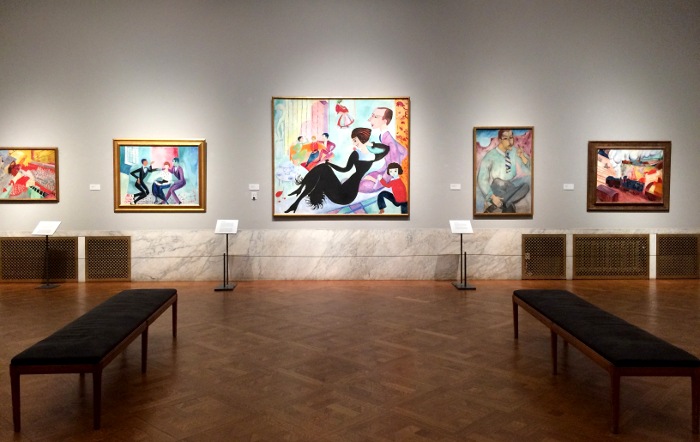
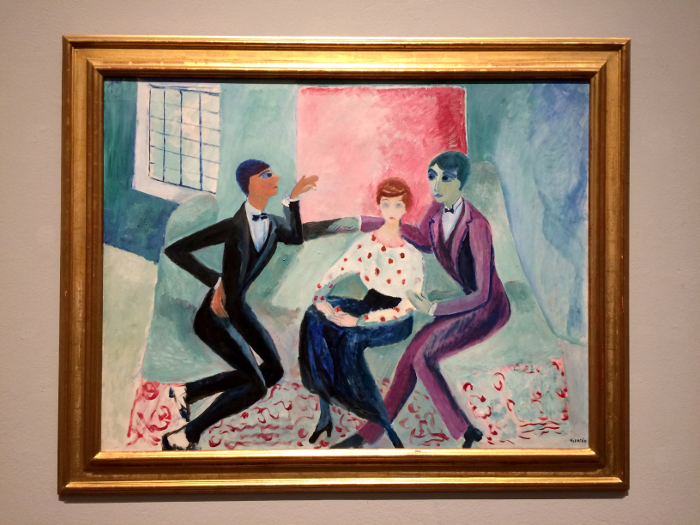
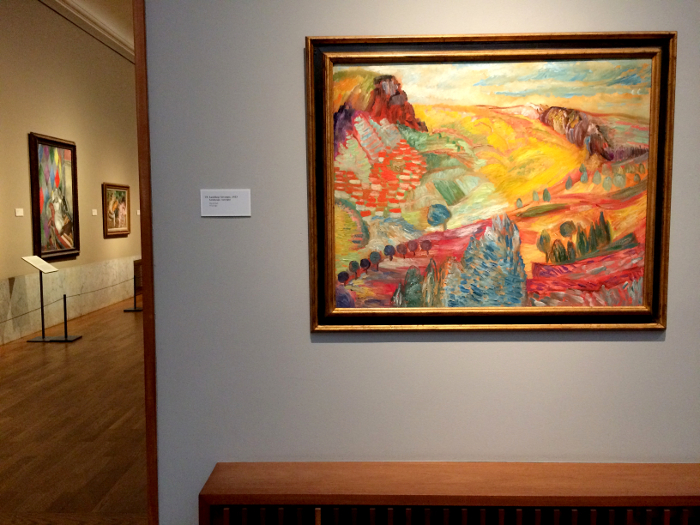
And just the other week, I went to an exhibition at a gallery in Stockholm, showing paintings by Sigrid Hjertén. The colors so vivid, constant, expressing emotions, shapes moving from clarity to abstraction throughout her life, ending up in something almost completely disintegrated before she died of a failed lobotomy. And the heart-breaking isolation – or is it just that I see it, because of what I know about her life?

IMG_2391

Because what these three women had in common, in addition to being part of the absolute avant-garde of the Swedish art scene of their time, is that they spent considerable amounts of their time in different mental institutions. Voluntarily, or admitted by their families. But what Johannisson argues, by having studied their medical journals, is that they were not only victims of a patriarchal society that considered them improper, misfits. To a certain extent, there is an agency in their illnesses. They are unstable and self-destructive, yes, but also at times very deliberate in their acting out of the disease. At the institutions, they are allowed to behave as eccentrically and erratically as they please – because they are not women, they are crazy. Normal societal expectations do not apply.

In this way, there seems to be a sort of dialogue between the female artist and the societal expectations on the woman. The creative personality of the artist is considered abnormal in a woman, forcing her into psychiatric diagnoses – but in that process, the female artist can use the temporary boundlessness that the diagnosis allows her to act out her creativity. Safe within the uniform of the insane. All three of the chronicled women create some of their most inspiring art either while hospitalized, or during periods between being admitted.

This is not to belittle the very serious issue of mental illness. Johannisson never claims that either of the three artists were actually not struggling. Like many people with creative dispositions, they were probably very sensitive, prone to depression, manic episodes, paranoia. But the fact that they were not allowed to deal with this through creating art as freely as their fellow male artists probably exacerbated their issues. And the varying degrees of freedom from judgement that they felt at the mental institutions must have felt like a relief, mixed up with the anguish and darkness they were already struggling with. Their medical journals suggest that they at times acted out the role of whatever diagnosis had been assigned to them, because it granted them more freedom than being a woman in the world.

IMG_2406

That trip to Mexico was tumultuous in many ways. That can be part of the reason why Johannisson’s book made such a strong impression on me. The right book at the right time. Things have changed since the early twentieth century. Women are not admitted to mental institutions for hysteria. In many ways, gender roles have become much more flexible and porous. But in other ways, also not. For both women and men, societal expectations are creating a lot of unease and distress. It still requires courage, confidence and a touch of recklessness to act outside the norm, and people’s reactions to your norm-breaking behaviour still varies depending on who you are.

But reading this book encouraged me. Made me feel like it is okay that people sometimes call me weird and crazy. It became like a protective blanket there in Oaxaca, at the conference full of intelligent, interesting people, the vulnerability I always feel when trying to make a connection. The erratic behaviour of my inspiration. It made me realise I need to forgive myself my unease. And that sometimes, maybe leaning into it instead of hiding it will make me feel more at home in my own body. Make me freer.

I still carry that feeling with me. Like a talisman. And I am going to put up a Hjertén reproduction on my wall. To remind me, for whenever I am feeling lost.

IMG_2400

Oaxaca epilogue: Journeying through the mountains

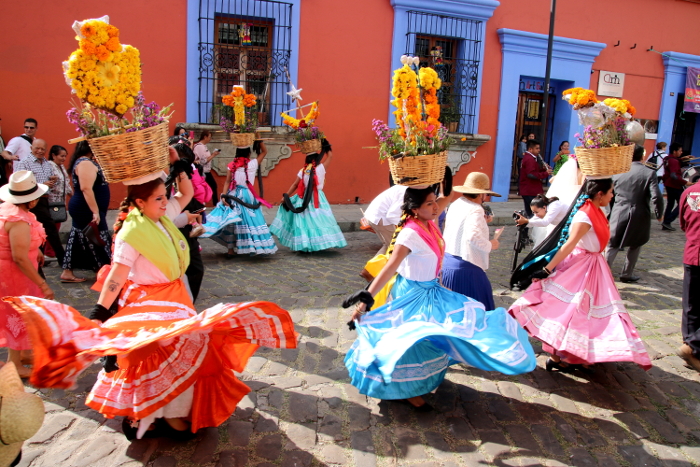
The conference ended with an extravagant party, with food and mezcal and performances. And it was like everyone was floating on the wave of a successful, inspiring conference – and now, the wave broke. An extreme discharge of energy. Everyone dancing, from master students to world-renowned professors. And I will forever remember this: Dancing salsa barefoot on the grass under the starlit sky. A perfect moment in time.

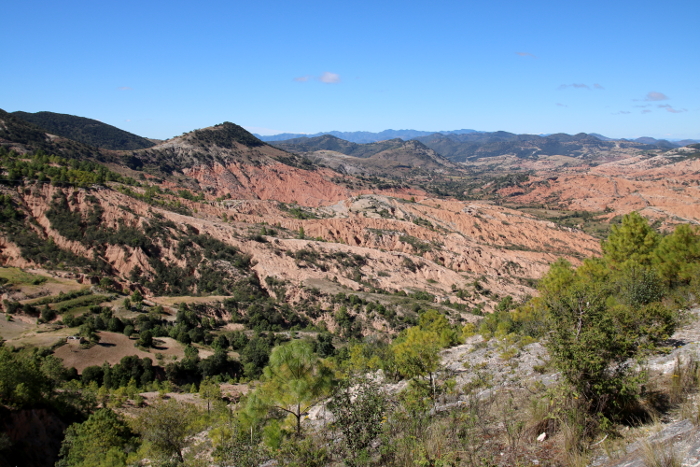
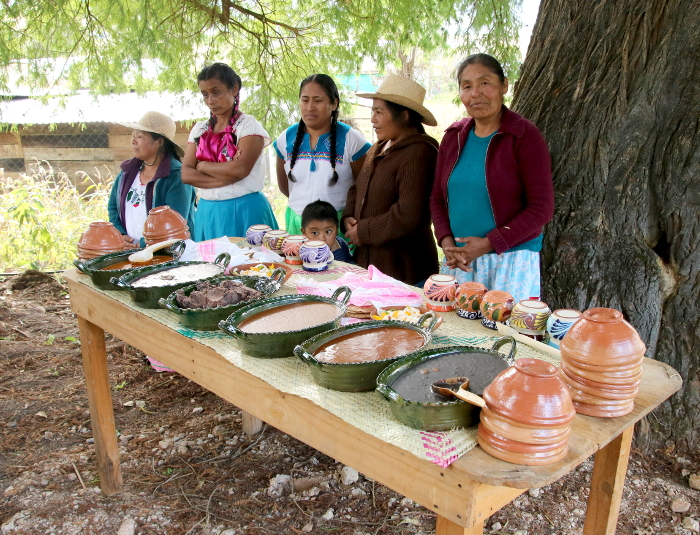
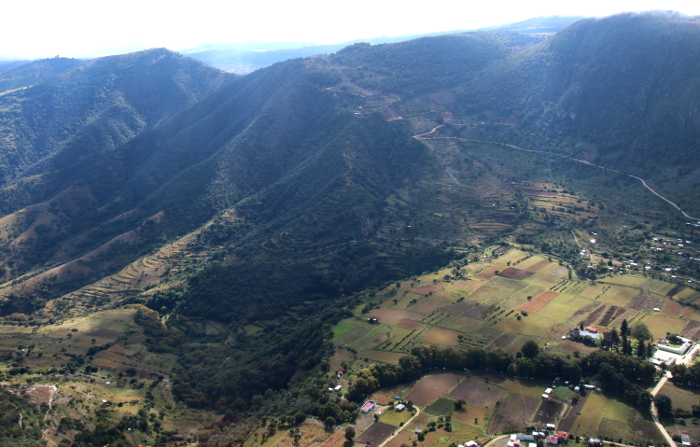
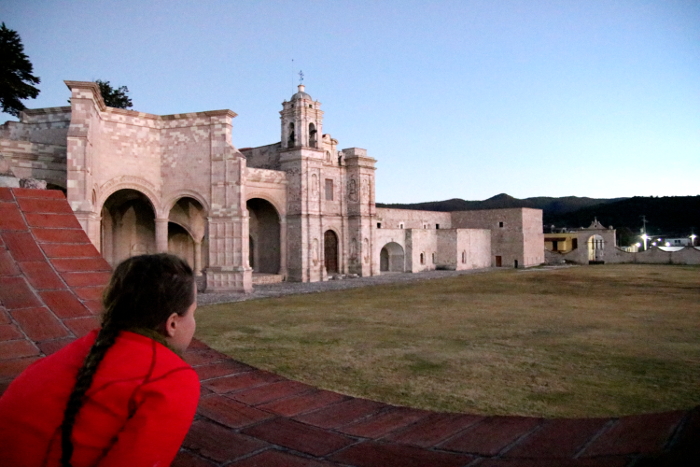
The next morning, after only a couple of hours of sleep, My, Ashley and I got picked up for a last fieldtrip. Up to Mixteca alta, to see monasteries, geological formations, temples and learn about Mixtec mythology, handicraft and food traditions from members of Mixtec mountain communities themselves.

IMG_0716

Beautiful, interesting, incredibly educational – but through it all, I felt like walking through a haze. Sleep-deprived, over-exposed and more than saturated with inspiration. I simply couldn’t take it all in.

IMG_0647

At dusk on the second day, when we had started the journey back to the city along the winding mountain roads, I’d had enough of conversation. I put on my headphones and turned to the green slopes outside my window.

And without really thinking about it, I put on a mix of First Aid Kit songs. While Johanna and Klara were singing about bitter winds in Stockholm and how they’d rather be broken than empty, I watched clouds roll over the mountain ridges like dough rising over the edges of a bowl, and I remembered: I’ve felt this before. Not once, but twice. The harmonized voices of Johanna and Klara, a journey, meetings that touched something deep, and watching high mountains pass outside a bus window. The first time, between Sarajevo and Belgrade in 2013. The second time, between Å and Narvik, northern Norway, 2014. And now, somewhere in Mixteca Alta, Mexico, 2017.

Mountainous transit linkages across time.

IMG_0765

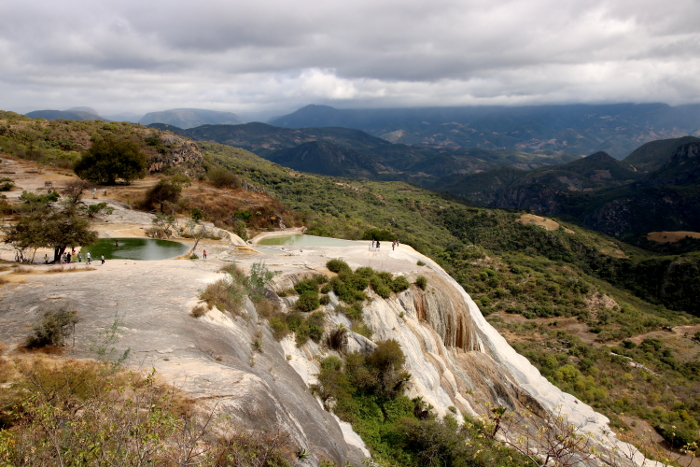
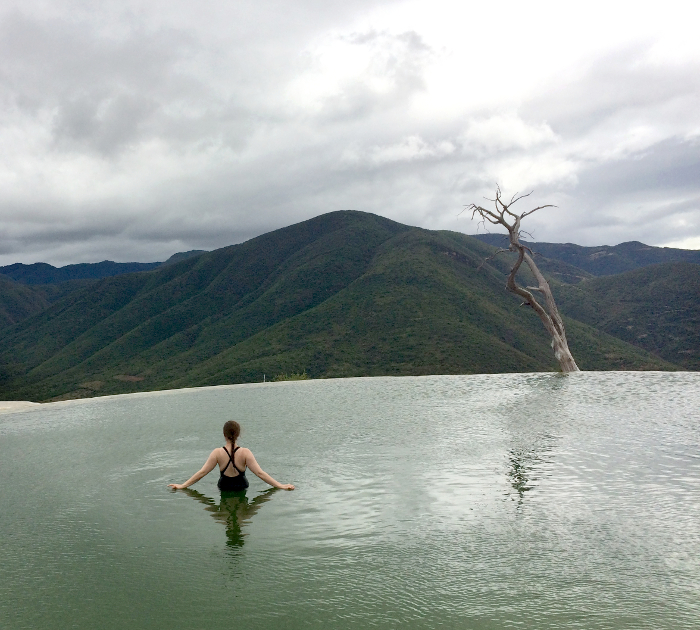
My last full day in Mexico, My and I visited the natural pools at Hierve el Agua. They are part of a geological formation with mineral-rich water bubbling up from the mountain-side and over the centuries having created a series of pools, while the minerals have made petrified waterfalls on the side of the mountain. It is one of Oaxaca’s major tourist attractions, but somehow, this day, here, I didn’t really care about all the people. The view was too large, swimming in the cool water too soothing. The lush green sides of the mountains on the other side of the valley like someone had carelessly tried to cover the rock with a deep green velvet bed spread.

IMG_1264

Standing there watching the mountains, with the azure water up to my waist, I felt like something fell into place. A year of work-related turmoil, a distressing arrival in Mexico, an overwhelming conference and a journey up into the mountains. And now here. Not back in one piece yet, but. I felt like it would all work out, with time. Here, now, I felt confident it would.


thoughts from a session: Telling stories for more hopeful futures

To wrap up about the PECS conference in Oaxaca, let me just tell you a little bit about a part of the research presented there that really speaks to me on an emotional level. It is research about stories.

We are a storytelling species.

(This is so true for me! Anyone who has known me for even the shortest amount of time knows that I have a tendency to turn everything into a story. For some, it might seem like I never get to the point – but Jessica, my roommate, so nicely told me once that she’s learned that this isn’t true. In the beginning, she would get impatient with me, but now she knows that if she just leans back and lets me do my thing, I will get to the point in the end. And that most of the time, I even manage to weave all threads I threw out into something meaningful in the end. So yes. Storytelling species.)

We favor emotions over facts. To make any real change happen, you’ve got to understand what makes people tick. People have different worldviews and the more people you bring in, the more conflict you will have – but if handled right, this conflict can be turned into a constructive process, where everyone’s voices are heard, and solutions turn into more than just one plus one equals two.

But, as I also go into in the previous post, these kinds of messy, diverse processes require neutral places and platforms to occur, and learning processes that foster dialogue. Everyone participating needs time to think, to understand oneself, but also to fully appreciate the other’s potential, create a shared meaning. Letting things take time. And for this dialogue, and because we are a storytelling species, we should use artifacts, symbols and rituals as part of these processes. Symbols and rituals give meaning.

IMG_0615

Elena Bennett, one of the keynotes speakers at the conference, proposed a new kind of science for the Anthropocene, working directly with communities. She said she felt done with cataloguing all our problems. Understanding the anatomy of them is important, of course, but now we also need to create hope. Highlight where positive things are happening. And she suggested storytelling a powerful tool, a way of sense-making for achieving hope. In practice, in her case, this means using different scenario exercises together with communities to build shared positive visions of the future.

IMG_0361

Yes, we are a storytelling species. And the role of science should not only be to point out all of our flaws. It should also use our passion, our emotions, inspiration and sense of fun to build hope and meaning.

That was the second conference of the Programme of Ecosystem Change and Society.