Chapter 30: My first encounter with Canadians

I barely got to sleep one decent night’s sleep, before it was time to get going again. Frida had a lecture at noon, so after breakfast she walked with me to the campus, where she showed me around a little before going to class.

I strolled a little, bought a bagel just because I’m in America now, and while walking and eating got a live example of the Canadian niceness that Frida has been praising so much. I was walking out of a door, thinking of all the new things that I was seeing and didn’t realise until too late that there was someone behind me. I had let go of the door, and if the guy coming after hadn’t taken the last few steps at a run, the door would have smacked him right in the face.

But now, he got out just in time to say: “Thankyou”. Not at all ironically. Just as if he was really thankful that I had almost held up the door for him, as if it was enough to make his day that I almost managed to be polite.

And as the day continued, I got more examples of this niceness, all the hello’s and thankyou’s and sorry’s in situations where a regular Swede wouldn’t even bother you with a glance. And it felt nice and welcoming. I’m not saying that the Canadian way in general is any better than the Swedish. I’m not one of all those Swedes who dislikes everything Swedish, and really, I know nothing about Canadians yet. I’m just saying that this particular part of Canadians, the niceness to strangers, made me feel really good despite jetlag and a general feeling of being lost.

Chapter 29: My first day in Edmonton – the photographs

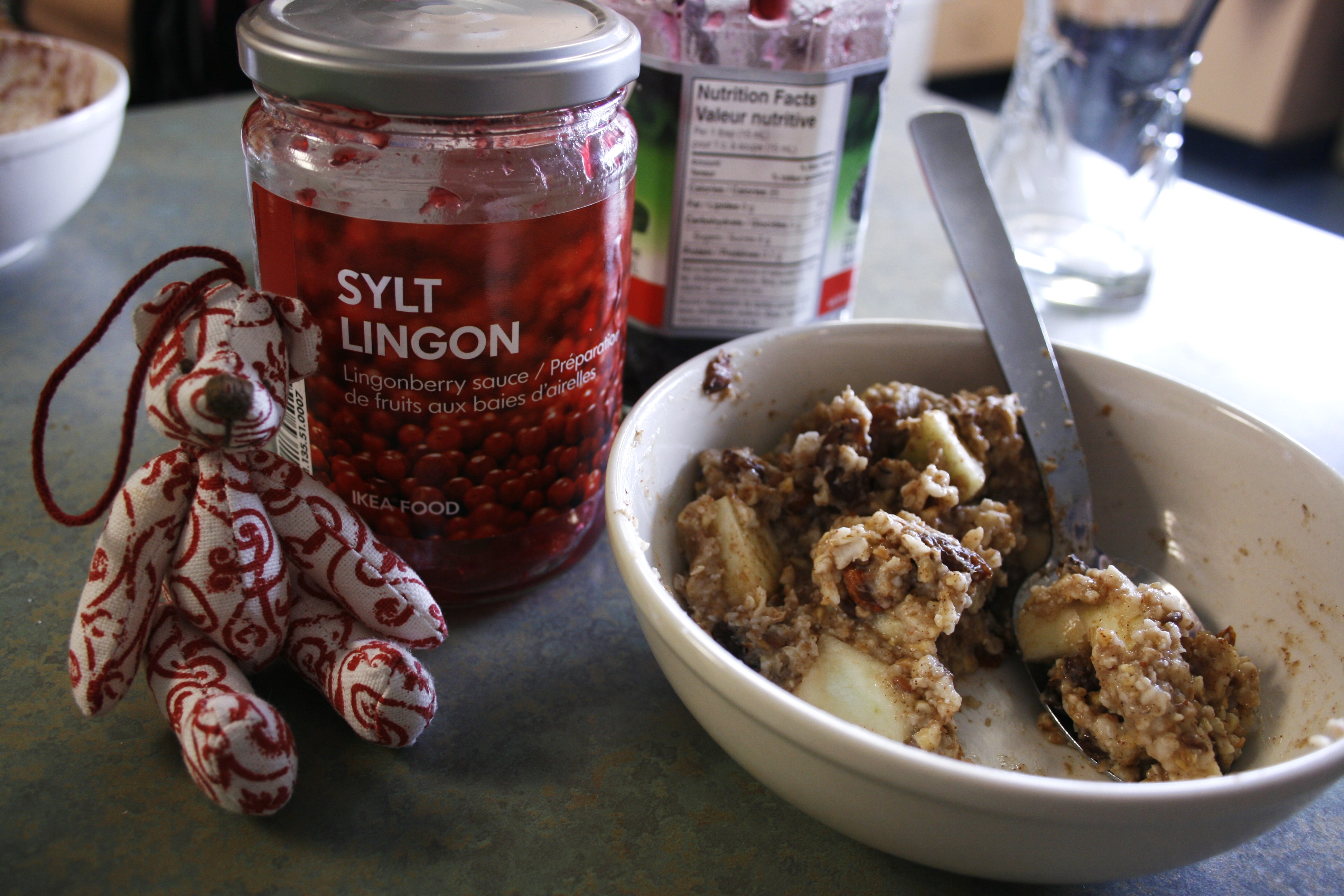
Mr. P enjoying his first Edmontonian breakfast of oatmeal porrige and lingonberry jam, bought from the IKEA store right outside of Edmonton.

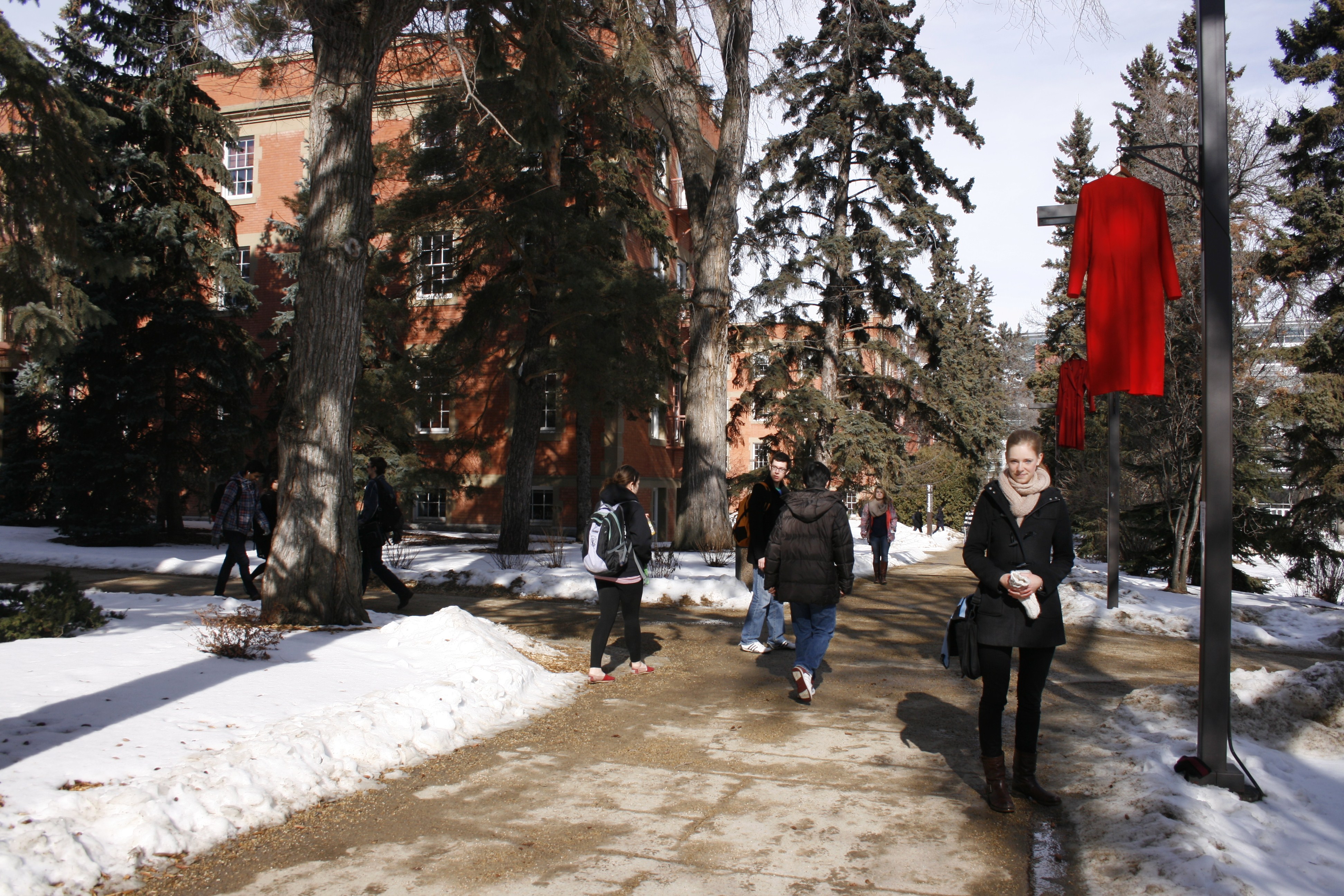
 Frida att the University of Alberta campus. The buildings are mostly made of red bricks, which instantly makes me feel at home (seeing as I grew up in Skarpnäck, the red brick suburb of southern Stockholm), but due to the abundance of trees, it’s more or less impossible to get a clear shot of any of them. Annoying for the architecture loving photographer in me, but for the ordinary visitor really adding to the coziness of the place. The red dresses are part of an art project trying to increase the awareness of the abuse of women in the aboriginal community in Alberta.

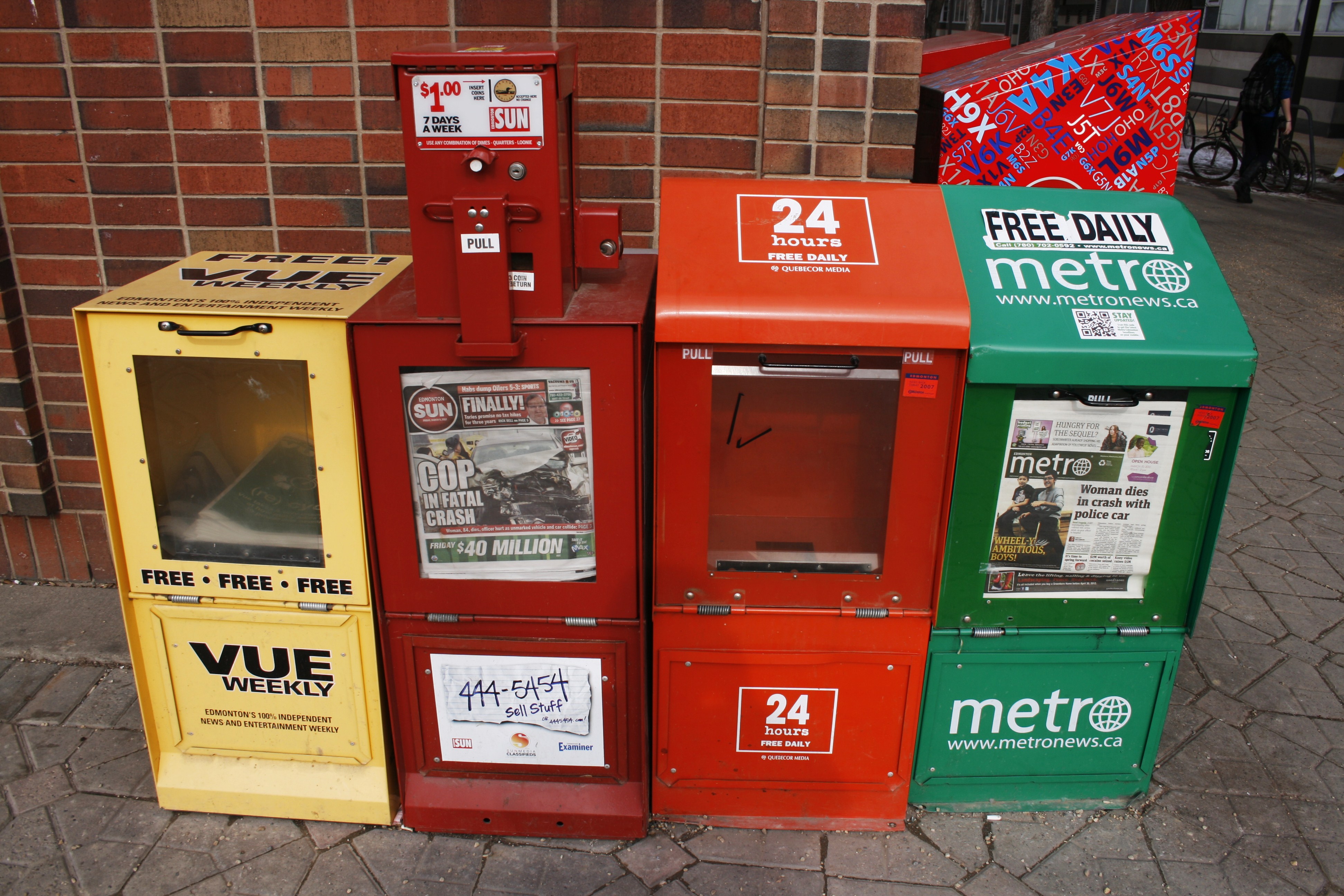
 By the university metro station, they provide these four free newspapers. One of them is Metro, our Swedish media export.

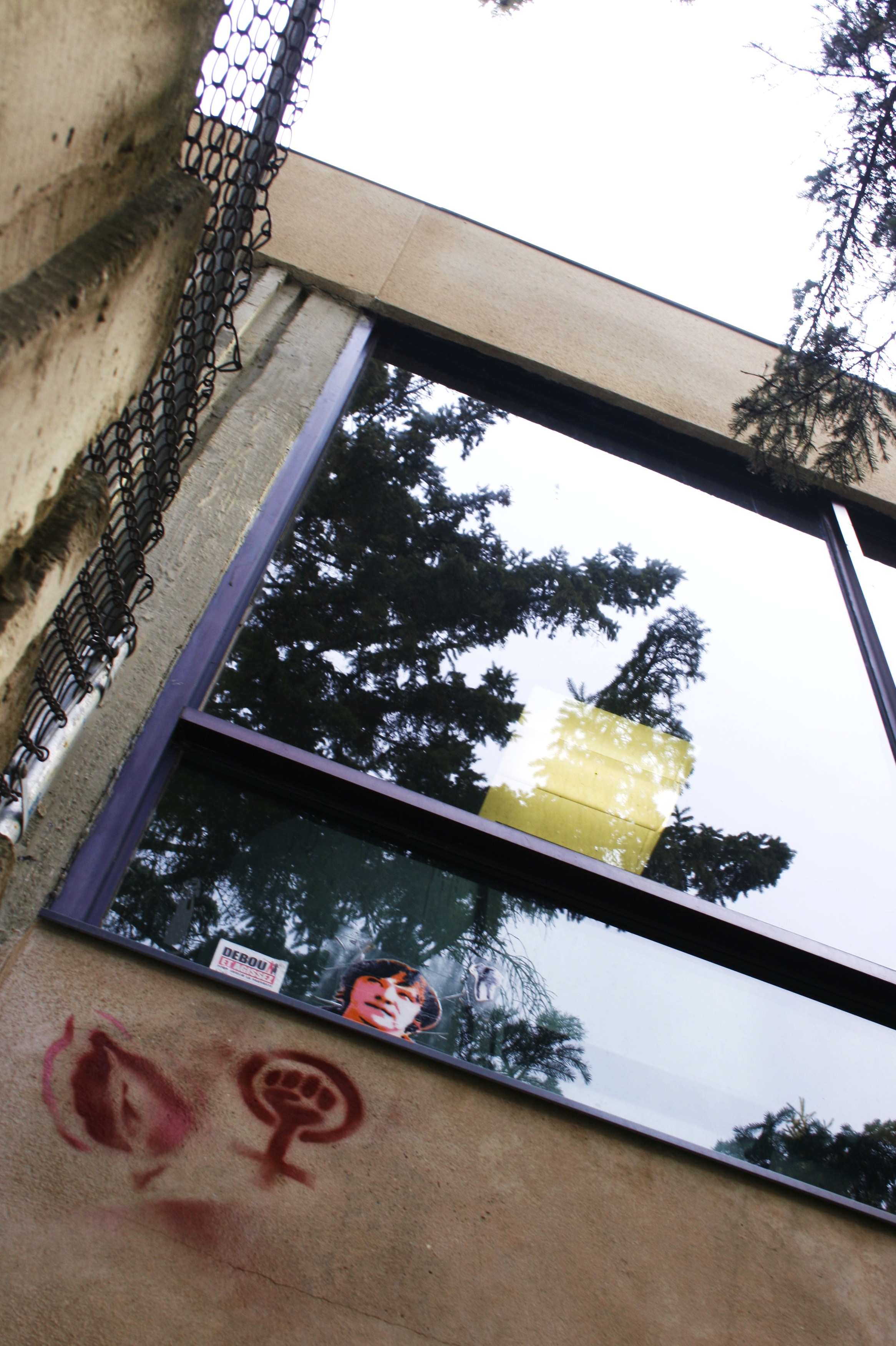
 They have feminist street artists in Edmonton too.

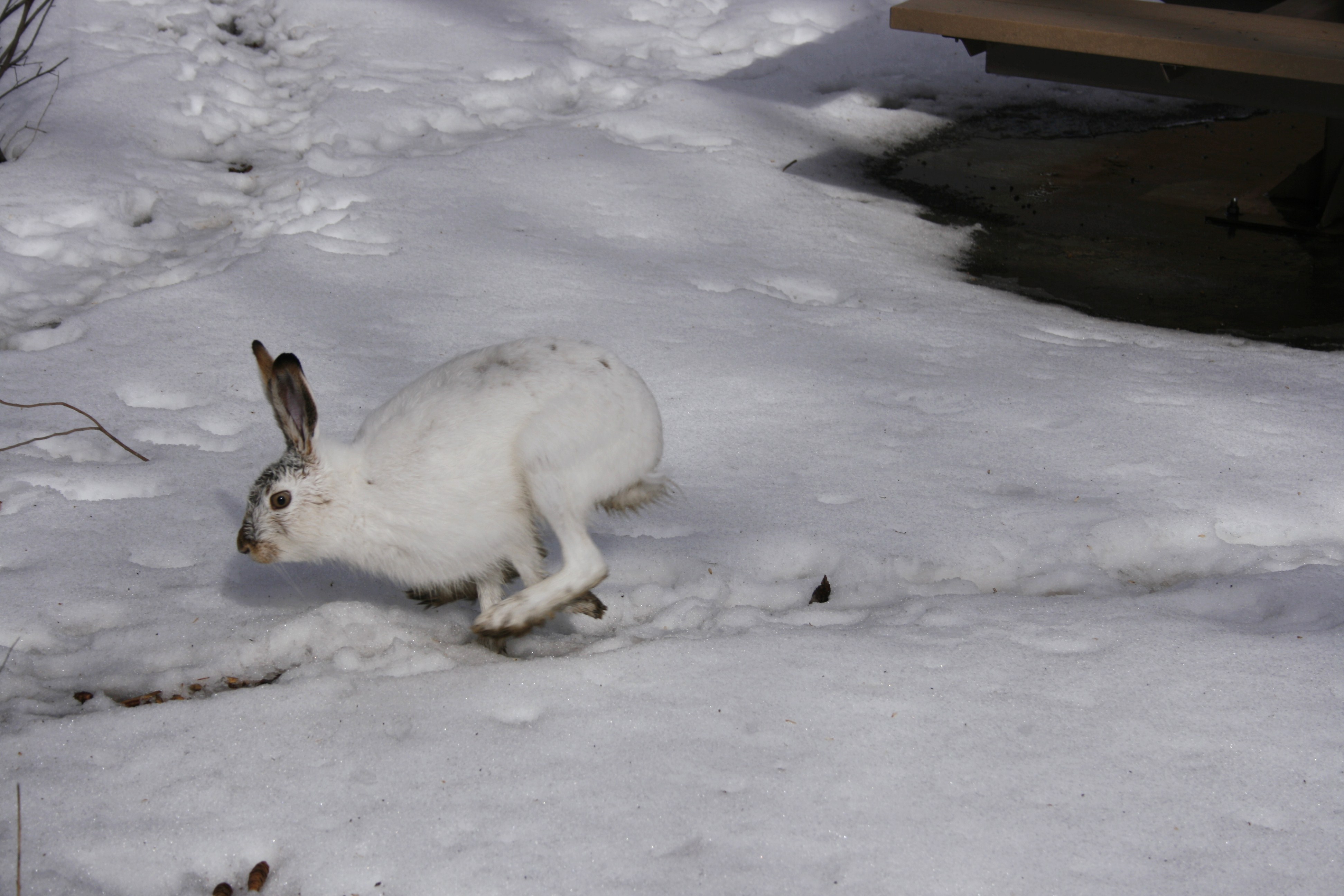
 The U of A campus isn’t only populated by students. There are also loads of rabbits and squirrels jumping around. This cute thing, still wearing its winter coat, feels like a much nicer campus inhabitant than the rats that run around the Geoscience building at Stockholm University.

Chapter 28: From Stockholm to Edmonton

 Mr. P waiting for boarding at Arlanda Airport, Stockholm.

11.30 Frankfurt: I’m almost certain that I didn’t sleep for a single moment tonight. I was so worked up by all the packing that I couldn’t relax and by five when it was time to get up, I felt strangely out of touch with my body.

The ticket worked. I was supposed to check in myself with the self service machine, but the machine said that my booking number didn’t exsist. Luckily, the line for the self service assistance desk wasn’t long enough for me to become really worried. It turned out that they had changed my booking, and therefore my booking number aswell, but she fixed it and I got to the right gate more than an hour early anyway.

Amazingly, I managed to fall asleep on the plane, and only woke up to see the beautiful meandering rivers on the German plains when we began our descent. From that perspective, it becomes obvious why German rivers get such pretty curves, and not the Swedish ones. We simply have too many mountains and hills, eskers and drumlins and far too many trees. There is not enough space for the water to be artistic, it has to get to the sea, fast. Around Frankfurt, everything is flat. No hurry there.

The plane was 25 minutes early to Frankfurt, so now I’m sitting and waiting for the gate number for my next flight to appear on the blue screens. Everyone speaks German and almost all the fligts on the screens are Lufthansa. Mine is the only Air Canada.

– : o : –

18.36 somewhere above southern Greenland: I saw a pointless Hollywood movie, ate a late pasta lunch, not at all bad (but then again I’ve never had trouble with airplane food or slightly burnt or dried out stuff – I love the last, dry and hard part of the cheese and spaghetti when it hasn’t been stired while cooking so that several spaghetti strings have stuck together). Then I managed to sleep for an hour or so again. It’s amazing.

Usually, I can’t sleep in airplanes at all, even if I’m tired to death. I remember the journey home from Lima, first a day walking around the city, then an eight hour night flight to New York, nine hours at the airport, another eight hour night flight to Stockholm and I didn’t sleep a wink during the entire journey. Luckily dad and Anna and mom came to the airport to pick me up, because otherwise I think I wouldn’t have found my way home. I was almost delirious.

One would think that after the months in Bolivia and Peru, my body would have learned to sleep anywhere, anytime, when it got the chance. All the long, uncomfortable buss rides, the heat and insects of the jungle, I even managed to sleep on top of the spare tyre, in the back of the truck that had been made into a bus, when we had to spend the night on a bridge in the middle of nowhere because the roads were so muddy and the driver refused to continue driving in the darkness. A rainstorm came and surprised us and all the mosquitos from the river decided to take cover under the tarp covering the truck. Just by stretching out a hand, you would hit tens, if not hundreds. It was in the outskirts of the Bolivian Amazon, malaria territory and during the last months, the news had been reporting about a dengue fever epidemic not far from where we were stuck. Even there I managed to sleep. While volunteering at the monkey reserve, my mattress was filled with straw, and I can honestly say that I have never slept better than I did there. Monkeys can really suck the energy out of you.

I’m letting my thoughts run away with me. I just wanted to say that even after that trip, with all that experience to sleep just about anywhere, I still couldn’t sleep in an airplane. That’s how amazing it is that I’ve managed to sleep now. I must really be tired.

– : o : –

Later, still above southern Greenland: They served ice cream. I’m thinking of the magnetic north pole, if the north they are showing on the map on my personal film screen is the actual north pole or just the geographic one. We’re far enough north for there to be a difference, I think. It’s probably the geographic.

It’s cloudy, so we can’t see the the island below. I would really like to go there, I think. Maybe I could change field, become a quaternary geologist instead. I really enjoyed digging up mud from the bottom of a lake on Gotland in October and then analyzing the carbon in the samples in the lab, after all. Paleoclimatology is intriguing. Very meticulous business. I’m good at meticulous.

No, who am I kidding? I won’t be going to Greenland to take ice core samples anytime soon. I know what I want. I just have to believe that I can make it.

– : o : –

Switching to Alberta time, eight hours in the past – 13.34, above northern Canada: Now the skies are clear, but everything down on the ground is still white. It’s the glacier, magnificent and enormous, you can see where the ice has carved the stone underneath, there are peaks and valleys and bays. Oh, I still want to go, experience a real glacier. Not a melting top glacier, like in Bolivia, but a real, continent sized. I have this adventurer in me that wants to visit extreme places, just to see if I can handle it. Walk on a glacier, ride across Mongolia, climb a volcano in New Zeeland.

I also have this pragmatic in me, the sceptic who asks what would be the point, in the long run. Mostly the pragmatic wins, but sometimes I do lash out. Like now. Isn’t this entire trip an attempt for me to push my own boundaries?

– : o : –

18.39 between Calgary and Edmonton: This plane is tiny, with propellers. Twelve rows, and then mine, which is right in front, backwards, which means that all the other passengers naturally watch me when they look forward.

We fly below the clouds. It’s getting dark, and the plains below are shrouded in some kind of bluish haze. In Calgary, most of the snow had melted away and the yellowish brown prairie fields were a special sight, checkered, just like one of the quilts that I’ve made, and completely flat. Here, nearer Edmonton, the snow still covers the ground and the prairie is interrupted by groups of trees and small forests. On the other side of the plane, I can glimpse the Rocky Mountains, but through my window it’s totally flat as far as the eye can see. And I realise that I lack the term for this kind of landscape in English. I’m quite sure we’re flying above a huge ‘peneplan’, larger by far than what you can ever find in Sweden. But ‘peneplain’ or ‘peneplane’ in English doesn’t feel right. I’ll have to find a physical geographer at Frida’s university and ask.

– : o : –

21.34 International House, Edmonton: Finally, I’m here. In Frida’s tiny room, sitting on the mattress that is going to be my home for the following twelve days. I can’t really think. I’ll tell you more about Edmonton and Frida and everything else when I’m conscious enough to have an opinion.
Chapter 27: The backpack crisis

Yesterday I got my international driver’s license. On the bus from the motorist club office where they make them, my backpack broke. Not the big, beautifully green one that is my new crush, but the small blue one that I bought before going to Bolivia. I’ve used it daily for three years, so it braking isn’t that surprising really, but I got sad anyway, and stressed as hell. I really liked that bag. We’ve been through alot together. And my way of handling pressure is panic.

But that’s when it’s good to have a dad who works as a freelance journalist. He gladly took half a day off today to tend to my frail nerves. I drove him to a sports outlet and he helped me to pick out a new backpack. A different shade of blue, not as pretty but with loads of pockets. I think that we’ll get along just fine. The driving went well, it felt natural. Maybe I didn’t trick the inspector when he passed me after all, maybe I really know how to drive. I’ve had my doubts. Now I feel calm.

I have a big backpack that weighs 14 kilograms. Not over weight. I have a small backpack with a lot of pockets for all my cameras and cables and mp3-players and, most importantly, the tablet. I have a ticket and a passport. Now, I only need to buy some lingonberry jam and Marabou salt licorice chocolate for Frida, my personal Swedish alien in Canada, and I’m ready for take-off.

Chapter 26: Mr. P travels the world

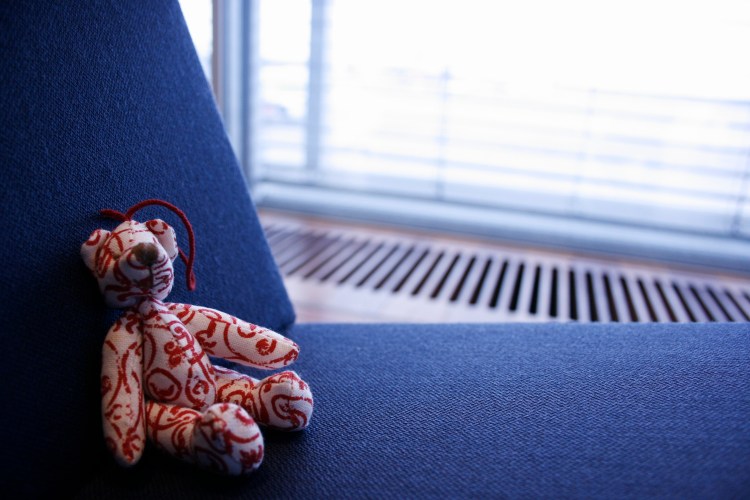
When saying goodbye to Natalia last Friday, she gave me a book (Gaiman, of course) and a teddy bear. She named him Mr. P (short for Gonzalo Polyroi) and said: “He wants to see the world. Please take him with you.” And I can never say no to Natalia, so from here on, you can expect to get photo updates on all the amazing places that Mr. P visits, just like the garden gnome in Le fabuleux destin d’Amélie Poulain.

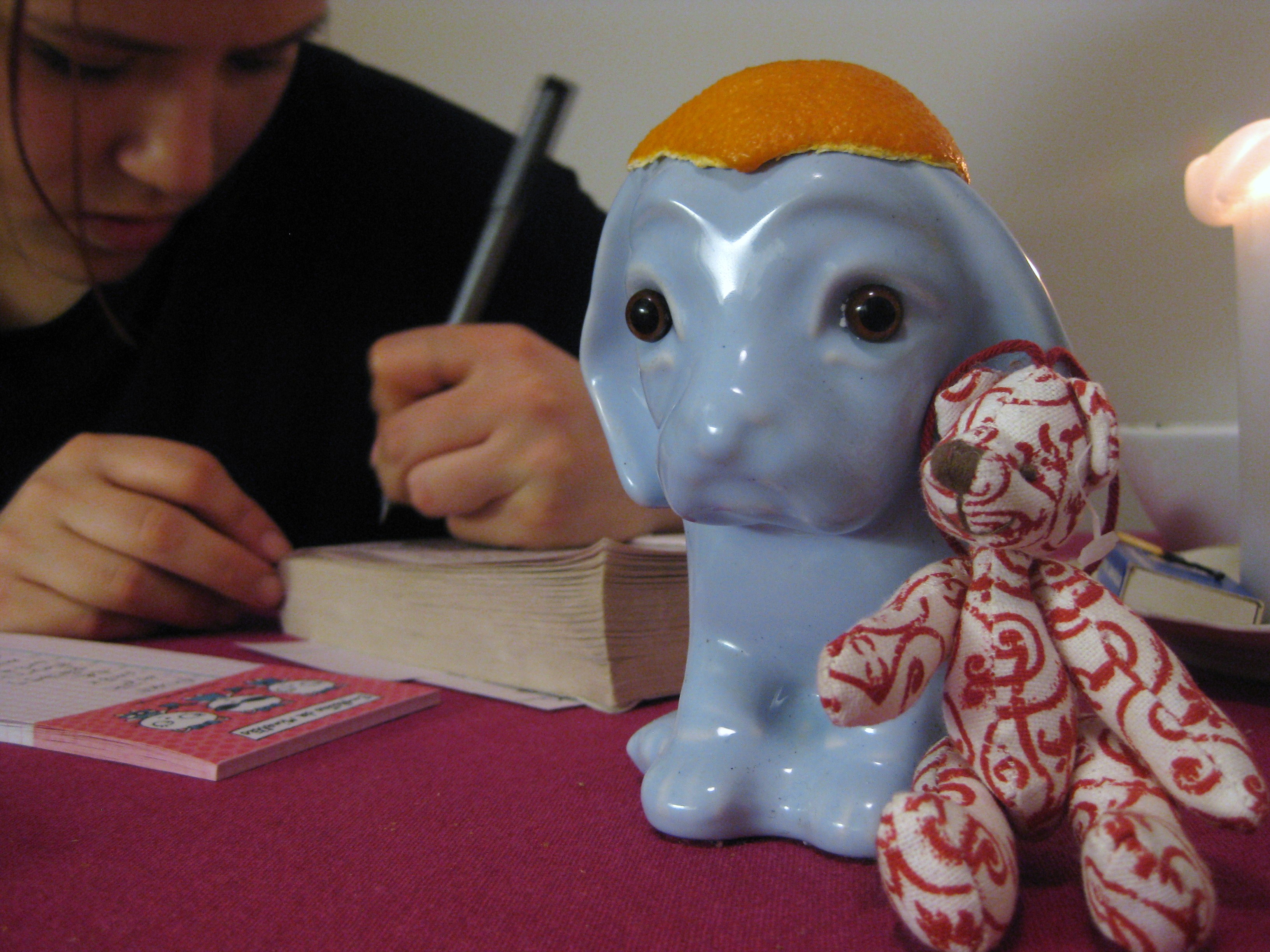
Mr. P chillin’ out with his friend the salt shaker while Natalia writes a dedication in the Gaiman book.

Chapter 25: Instead of sleep

Sunday night / Monday morning: It’s way past midnight and I’ve got work tomorrow, but the adrenaline is pumping and I think I wouldn’t be able to fall asleep anyway.

I’m doing lists. To-do lists, packing lists. I’ve packed my bag twice already, both times my stuff fit without any trouble, but then I thought about something that I had forgotten and had to do it all over again. I will probably empty my bag again tomorrow and pack it a third and fourth time, just to be perfectly safe. Or is it seventh time’s the charm?

I have a total of thirteen hours of flying on thursday, I’ll have plenty of time to sleep then.

Chapter 24: The safety of food

I’ve inherited a passion for food from my dad. I think that an important part of belonging and feeling at home is food. Atleast for me. When traveling in Sweden or Finland, nothing ever really feels totally strange or exotic, because the food is mostly familiar. If nothing else, I can always go to the store and buy the foods that make me feel safe.

While traveling in other countries, though, the feeling of security through food is a lot tricker to accomplish. For me, the first inkling if homesickness that I get is a longing for specific foods. I’m not especially prone to homesickness, while traveling I’m usually too busy taking in everything new to think about home. It’s not that I don’t miss the people at home, it’s just that I choose not to think about it. But food I can actually actively miss.

For example, in Bolivia I could get these urges for proper, whole grain, rye bread. The Finnish kind. With really strong cheese on. The only thing served in most hostels for breakfast in both Bolivia and Peru was white French toast with strawberry marmelade. Not what you’d call a proper morning meal. That’s why being woken up on my birthday by Natalia and the others with breakfast in bed consisting of dark bread with real cheese, hot chocolate, fresh strawberries and ABBA songs strongly added to that being the best birthday I’ve had so far. The bread was amazing, bought from a luxury supermarket in a La Pazean suburb. And I had never had fresh strawberries on my birthday before, it being in February and all. It’s strange, really, how I could miss the bread so much. At home, I don’t eat bread that often. Only, like, once a week or so. But there, it was all I could think about some mornings.

Or the totally irrational situation with yoghurt in Namibia. In the Namibian supermarkets, the food is imported from South Africa and is quite European, really. Not very exotic for a Swede, excepting from the biltong meat and the occational strange fruit. It became standard for us to buy yoghurt for breakfast, because it was so easy to transport and prepare. They had dozens of different flavours, but for some reason, all of them were fat free. And when I say all, I really mean ALL. Fat free, but so sweet that most of the yoghurts could easily pass as desserts. If making the yoghurts fat free was to make them more healthy, then the reasoning behind adding all that sugar is beyond my understanding – but during my month in Namibia I came to shudder at anything sugary for breakfast and really miss the proper, sugar free but fat yoghurt at home. Fat is what makes the yoghurt taste! Fat is what makes you feel full. Sugar, on the other hand, is like a drug. They are strange, Namibians / South Africans.

What I’ll miss when in Canada remains to be seen, but I’m prepairing myself by eating extra everything of those foods that I suspect are missing from the supermarket shelves in North America. Like sourcream, rice cakes and really strong cheese from northern Sweden.

Chapter 23: My last chocolate bar

It has started to sink in now. I’m going away. I’ve started to say my goodbyes. Friends, family, collegues. While doing my everyday stuff, I’m thinking: Maybe this is the last time I do this for five months. It’s an exhilirating thought, both scary and exciting.

At the store yesterday, they had an offer on chocolate bars. I don’t usually buy candy, I seldom even eat it – but yesterday I thought “I’m leaving” and bought two Fazer bars, my favourite Finnish chocolate. I ate them both, slowly, getting quite nauseous by the second one, but enjoying myself all the same. Nothing make things as sweet as the feeling of finality.

Chapter 22: Flashback

Wednesday evening: I’m sitting in my aunt’s incredibly comfortable couch and suddenly I remember the last time. Three years ago, she prepared me a bath, poured me full of black currant and grapefruit drinks and fed me her special mashed potatoes. She gave me a cashmere scarf, the big, warm, not fancy kind, and told me stories of when she hitchhiked through South America in her twenties. During the following half year, I used the scarf almost daily, from Lima to Sucre and it kept me warm through the long, raw Andean bus rides.

Now, my hair is wet and I’m drinking a black currant and raspberry drink while my aunt is finishing the mashed potatoes and marinated tofu in the kitchen. I really am leaving. Soon.

Chapter 21: Parenthood

Before Jonatan, my cousin and older brother (depending on how you choose to define the terms), left for his internship in Peru in January, he spent an afternoon lying on my bed, with me sitting on the floor, and we got to talking about Parenthood.

Parenthood is a TV show about the Braverman clan, the old patriarch and his wife, their four children and seven grandchildren. They live in the San Francisco Bay area, and their lives are uncommonly intertwined for being a modern day family. They have dinners and parties and get involved in each other’s business, they are nosy and opinionated and fight, have their small family dramas and make up again. In some ways, the family could be called dysfunctional, they have far too little respect for each other’s privacies and they are kind of co-dependent. But at the core of this is a strong, sometimes even desperate kind of love, messy and by no means perfect, a connectedness that overpowers all the obsticles.

As for the show, it always manages to surprise me. It isn’t very Hollywoody. There are no extreme illnesses, no catastrophies, no far-fetched intrigues. Just life, a little bit condensed, and the complicated relationships that develop between people when they really care for each other, especially when the people are a bit eccentric and quirky. The actors are great, the Californian surroundings where it is filmed are beautiful, the filming itself is unusually good for a TV show and the music is well tuned and really good too. Really, it is a good show.

And Jonatan agreed with me. He said: “It reminds me of our family. It reminds me of the Ruohomäki clan.” I could do nothing but agree.

Because that’s just how my family is. The four Finnish sisters who all moved to Stockholm from their tiny village in southern Finland, by way of London and Athens and Caracas, with their children and the occational brother coming over the Baltic sea for a visit. A little bit crazy, very emotional, nosy and loud, always fighting over something, never totally agreeing but always sticking to each other. I grew up in the middle of this, being an only child until I was 14, but never feeling really like it, because I had Lari and Jonatan as surrogate big brothers. The strong feeling of belonging I got with them growing up, is something that I’m still searching for with my adult friends, but I haven’t really found it yet. Not with a group, not like that. But it is a safety net I have – I know that I can always turn to my aunts and cousins and they will care and listen, no matter what I might have done or not done last week that hurt them or disappointed them or maybe just embarassed them. It is unconditional. Complicated and annoying and sometimes even hurtful, but unconditional.

So maybe that’s why we like Parenthood so much, Jonatan and I. Because we recognize ourselves and our family in it. For, in the end, the best way to touch someone with art and pop culture, is to let them see themselves.