Chapter 179: The risks of traveling

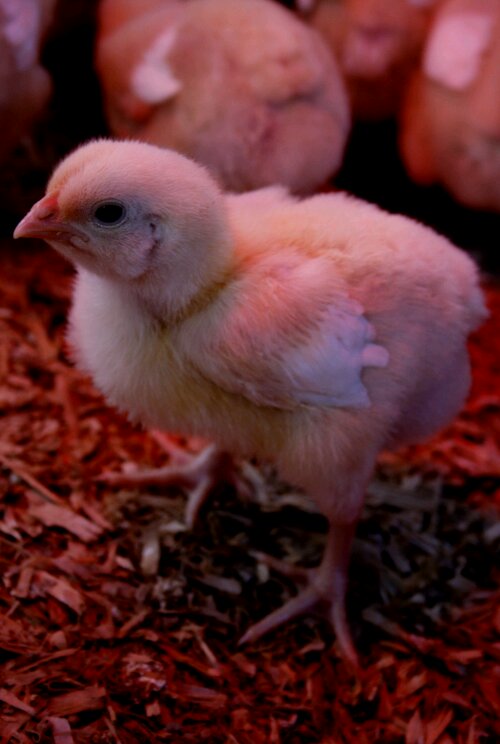
Tuesday (29/5): So, now I’m sitting in the bus, leaving Whiskey Creek. I feel sad. I didn’t want to go. I could have stayed with Lori for the rest of the summer, eating chicken and eggs and played with Tango and cuddled with the baby chicks and made apple pie and rhubarb sauce.

But, at the same time, I want to continue on my journey. If the bus isn’t too late, I’ll make it to the ferry from Victoria to Port Angeles, where I’ll spend one day hiking in the Olympic National Park – and after that, I’m meeting up with Hanna in Seattle. She has just turned in her Bachellor’s thesis and is flying across both an ocean and a continent to go on a two and a half week roadtrip down the US west coast with me. I’m really excited about that, and feel completely torn between these mixed up emotions.

But I guess that’s the risk you have to take when you go traveling like this. The chance that you might fall in love with a place is always there. You are never safe. And unless you’re ready to uproot your entire life, you always have to move on.

Chapter 178: The last supper

image

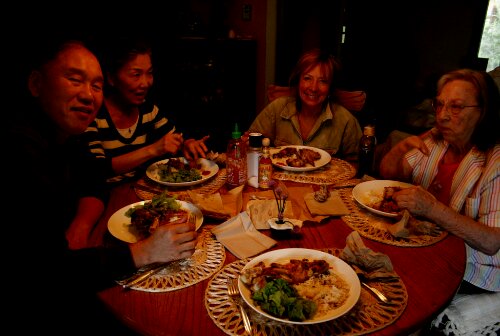
The last dinner at Whiskey Creek Farm, chicken wings, vegetables, salad and rice. Delicious. We ate a lot of chicken at the farm. “Chicken for a change” was the catch phrase when it came to food. But really, I’ve never eaten tastier, more tender and juicy chicken in my life. Everything will taste dry and flat after Whiskey Creek Farm chicken.

Lori’s new wwoofers, Sunny and Jany, were a very nice Korean couple. I felt completely safe, leaving the care of the chicks in their hands. But Lori and her mother Vi I will miss. That’s for sure.

Chapter 177: Mr. P finally gets a bestie

image

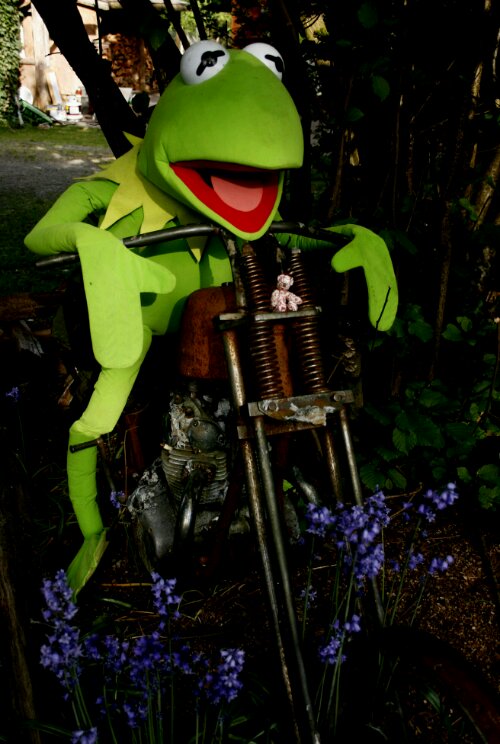
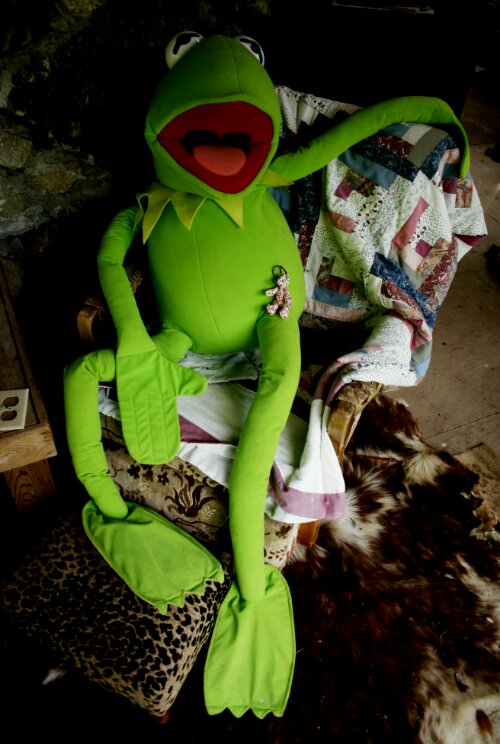
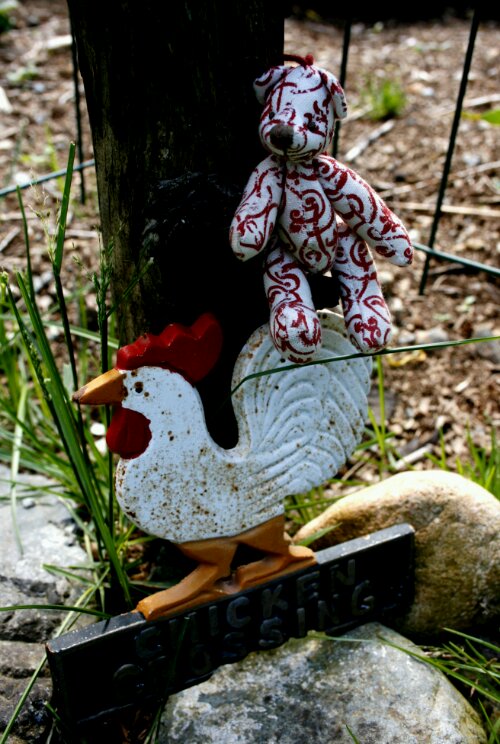
Well, it took a while, but finally Mr. P found a real friend at the farm. Kermit might seem slightly too big for little Mr. P, but he didn’t mind one bit. And they had so much fun together. They went motorbiking on the property.

image

Or just hanging out, talking until late into the night, on the verandah. Mr. P was so happy. He finally found a real best friend.

Chapter 176: The beginner horse whisperer

In the evenings, I usually spent some time trying to get the excersies that I learnt from Jay to work on Lori’s horse Tango.

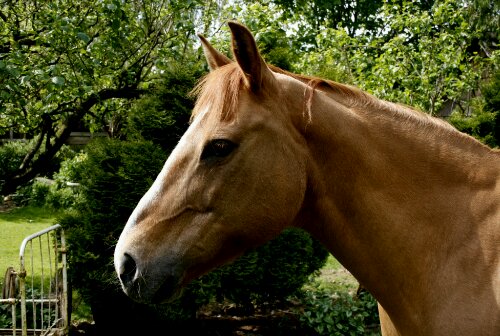
She is a beautiful, reddish thing, but she is also extremely mareish and stubborn. She had also been let to walk around by herself, all over the property, for a very long time, and not been trained for a while. I think this combination of circumstances were what made the cooperating with her so hard. She was used to do whatever she wanted, and didn’t like being told what to do.

The first time I tried the exercises, she behaved perfectly and did everything right. Lori had done similar things with her before, working in a roundpen, so she knew what was expected of her. But after that, everything went downhill. She started turning her back to me, trying to run in the wrong direction. For a couple of days, she wouldn’t even let me catch her. She was doing everything to show me that she wouldn’t let me boss over her.

I tried to keep my ground, though. Never let her get away with things. Maybe I wouldn’t get her to do new stuff, but at least she would learn that I could be as stubborn as her. Oh, but how I would have wanted to have Jay there, to tell me how to read her. I’m pretty sure that many of the annoying things that she did was only due to me doing things slightly wrong, not being hard enough when needed, or at other times not light enough. We were in a constant struggle against each other, and quite a few times Tango was the one who got out as the winner.

The last couple of days, though, I felt a change. She was starting to be more attentive on me, even when we weren’t in the roundpen, kind of keeping an eye on me to make sure I wouldn’t sneak up on her. I guess that could be considered something good. I wasn’t an uninteresting piece of moving flesh that occationaly gave her food anymore. I had made her see me, made me count. If I’d stayed and worked with her for a couple of more weeks, she might even have accepted me. Eventually.

As it is, she’ll go back to her old comfortable life with as much fresh green grass as she could ever wish for.

image

Chapter 175: What I also did

But taking care of he chickens was only one of the things I did at the farm. Most of my time, I spent weeding in the garden. But there really isn’t anything exciting to tell about weeding. It’s mostly just annoying, with the roots always braking and never ending, but done right, it also gives an amazing feeling of accomplishment afterwards. Like I’ve done something worth while. Being a student, that doesn’t happen very often. Studying is a very self-centered occupation. It is what comes after that might lead to something good.

But one funny thing about the weeding, though. I would kneel there btöy the garlic plants, listening to Swedish radio podcasts, when I suddenly would dig up a small skull or a small thigh bone. At first, I was a little bit shocked, but then I realised: that’s what’s in Lori’s compost. Leftovers from the butcher shop. Alost everything has decomposed by the time it is put as new soil in the garden, but a few bigger bones and skulls might still be more or less intact. A kind of morbidly funny detail of the gardening work at Whiskey Creek Farm

Chapter 174: Being a midwife

Now in the spring is the time when the hens want to have babies. But they are strangely communal about the egg laying process. They’ll find a spot that they like, build a little nest there and start laying eggs. When the original hen isn’t there, some other hen might lie in the nest for a while, leaving an egg as a gift of sorts. Some hens, on the other hand, are so greedy that they will steal eggs from another nest, carrying them underneath her wing. When there is an appropriate amount of eggs in the nest (the exact number varies greatly between different hens, some are greedier than others), she will start the actual laying process, keeping the eggs warm for three weeks.

The tricky thing about this is that in the beginning, the hen still leaves the nest for short periods of time to eat. Since another hen might come and lay a new egg in the nest during the laying hen’s absence, a couple of eggs in the nest might be behind the other eggs in maturity, so to speak. When it’s time to hatch, the first chick might start crawling out of it’s shell while the last still needs a day or two to mature in it’s egg. This leads to the hen getting off the nest when the oldest chicks are ready to leave, while there still might be a couple of eggs that are only half hatched. They can’t hatch on their own, they need the heat from the hen, so if the mother leaves, the half born chicks die.

But I was so excited about the hens lying on eggs, wanting to see the newly hatched chicks, so I checked on them often and managed to be on time to save seven chicks from freezing to death in their eggs. That was when the midwifing process started. Lori made it my responsibility to make sure the chicks were warm enough, possibly help them get out of their eggs and let them dry before I put them back underneath the hen-mother again. It’s alot harder than it sounds, though.

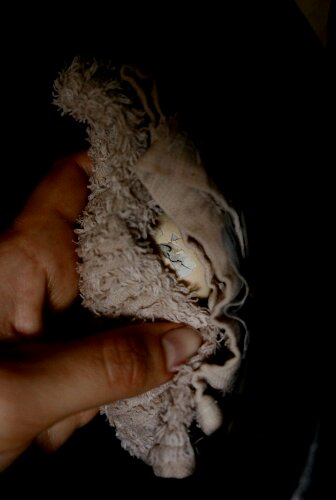
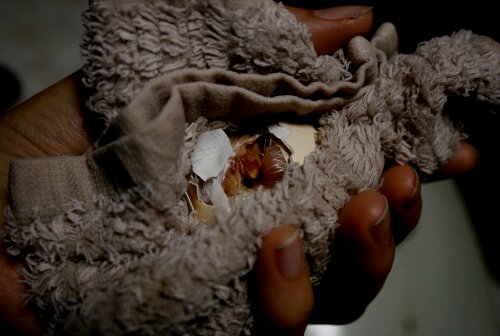
The first chick I midwifed was the only chick in the the batch that didn’t make it out on time. It had only just cracked through it’s shell, and was tweeting like only bird babies can. I could see the beak through the hole in the shell, but that was all.
image

image

At first, I kept the egg warm with towels soaked in hot water. Lori was out working in the butcher shop, but on one of her visits in the kitchen, she showed me where the cooker that she used for making broth was. In that, I thought the egg might be warm enough. But the hatching was slow. Eventually I started helping the chick crack its shell, pealing off small pieces.
image

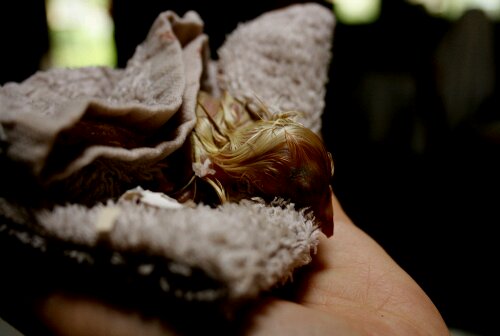
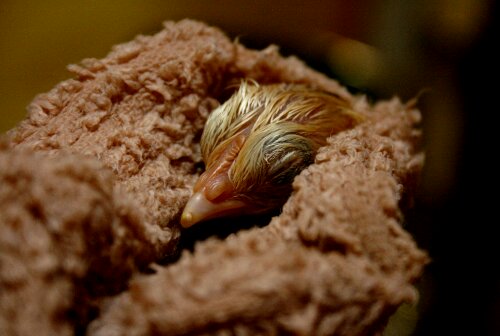
When it finally got out, it looked like a tiny alien. Seriously, if someone had showed me this creature out of context, all wet and still crooked from the egg, I might have believed a claim that it was a dinosaur baby. Now the heating got trickier, the wet towels prevented the chick from drying. I found a hair dryier, but using it seemed to scare the chick. It looked tired and weak and I didn’t have a clue how to give it the right, mother-hen belly temperature. At last, after more than two hours of midwifing, the chick died. I was holding it in my hand when it took it’s last breath.

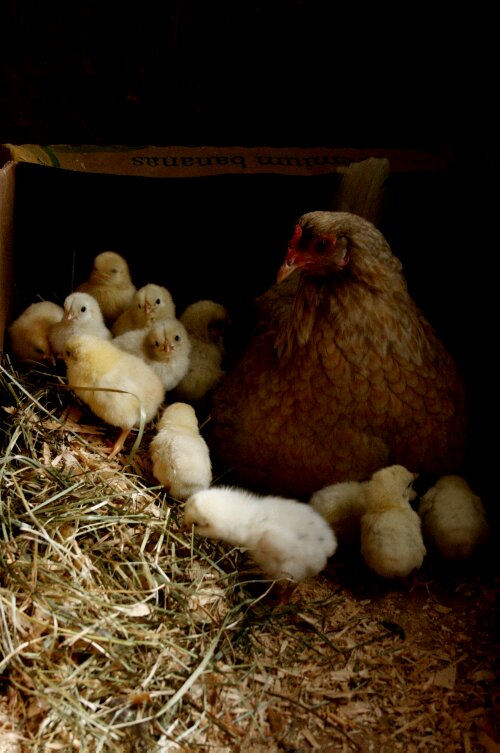
Really, I’m not that sensitive, but still I felt kind of sad afterwards. The chick had gotten seriously cooled down before we found it, so it was weak – but if I had found a way to keep it warm and comfy for a long enough period for it to dry, it still might have survived. I think. My first try as a chick midwife was a huge failing. To lighten my mood, I had to go visit the chickbarn, where we kept all the newly hacked chicks and their mothers. It’s hard to be sad with those small, cute tweeting cottonballs running around you.
image

The next time I was more prepared. This hen had laid her eggs in the worst place imaginable, on top of the wood shavings pile, in the corner up against the tarp where the wall didn’t go all the way up to the roof. And she was protective of her eggs, so she wouldn’t let Lori move her into a cardboard box to make sure non of the eggs fell down from the shavings pile. To make matters worse, she had more than twenty eggs, far too many to be able to keep them all warm enough. So, when her eggs started hatching and the first bunch were strong enough to start moving, more than half of her eggs were still unhatched.

Luckily, I walked by just then, on my seach for the days catch of eggs. We quickly moved the hen and her chicks into the barn and found three half-hatched eggs that were still tweeting.
image

image

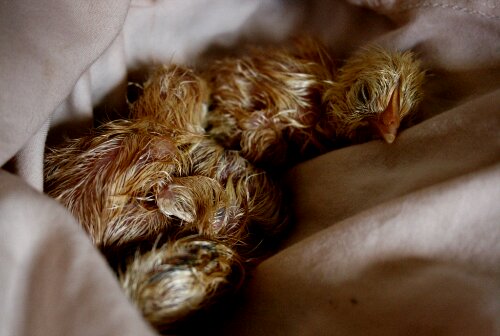
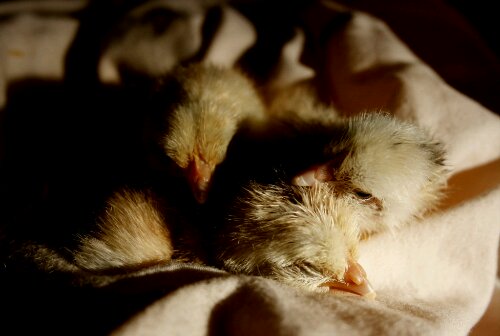
Now, I knew what to do. First, I helped all three chicks to get out of their eggs. Then I created a system where I wrapped all the mini dinosaur babies in towels soaked in hot water. I continually had to change the towels, before they cooled off, but all three chickens seemed to be doing fine. Then Lori got the idea to use the small heater in the living room to keep the chicks warm. So I built a nest of dry towels for the babies and placed it right underneath the hot air vent. There, the chicks could dry, and eventually all of them were lifting their heads and moving around. When they were all dry and fluffy, I took them to the chick barn and placed them underneath the vary mother-hen, hoping she would let them rest for long enough.
image

image

Just to make sure, Lori and I went back to get the unhatched eggs from the wood shavings pile. There, we found two more chicks, one all hatched, but lying at the bottom of the pile, bleeding from it’s stomach and barely breathing, and another one with barely a hole in it’s shell. These must have been really strong, to hatch completely without the mother-hen’s heat. So, I did the same procedure to them, with the hot towels and the heater, and when completely dry, put them back underneath the mom. They both seemed very much alive and strong.

The next morning, when I went to check on the chickens in the chick barn, I found two dead chicks in the nest where the newest hen had been lying that night. One was the chick with the wound on it’s belly. It had probably been caught by a raven from the top of the shavings pile just after hatching, but then dropped for some reason and fallen to the bottom of it. It might have had internal bleeding that was too severe for it to survive, even though it seemed extremely strong the night before. The other chick was yellow, maybe the one of the first three that had seemed more tired and groggy than the other ones.

But still, I managed to save three happy little chicks from freezing to death and making it through those first critical hours of life outside. That must be considered an accomplishment for a second time chicken midwife.
image

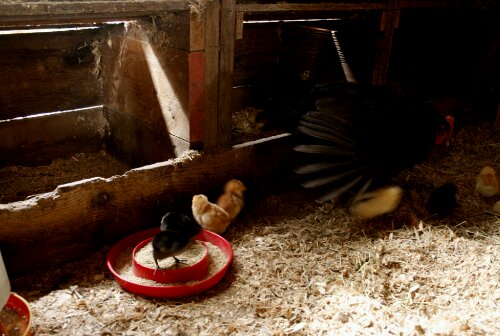
Protective mother-hen, letting the chicks under her wings.
Chapter 172: The peculiarities of hens and their eggs

When Lori gave me the responsibility to gather the days catch of new eggs, she said that the hens were sneaky and that every day was like a never-ending Easter egg hunt without a map. But I didn’t realise just how sneaky.

Some hens laid ther eggs in the egg barn, where Lori had built cosy little nests for them. That was all well and simple. But most hens seemed to think that nesting there would be making it far too simple. They wanted a challange.

I found nests in the tool shed, inbetween tools and nails. I found a nest in the fire wood shed, behind piles of logs. I found a nest in the back of the meat bird barn, where the laying hens weren’t even really supposed to go. Behind the bakery, underneath a chair. Next to a big plastic excercise ball in the horse barn. Behind the feed bags and hay bales in the stall where horse food was kept. Even just under the roof of one of Lori’s quirky sheds, in a decorative basket sitting on the very narrow shelf which the roof was built on.

At first, I just picked the eggs. But then, Lori told me that if a hen finds her nest competely emptied, she will think it’s been robbed (which is completely true) and find another place to build a nest. To avoid this, one should either put a golf ball in the nest, which resembles an egg enough to decieve a hen, or just leave some of her own eggs in the nest.

Since the golf balls were scarce, I came up with a system. I would take old eggs from a nest that I’ve just found, mark them with the date, and redistribute them into the nests I knew were active laying places for the hens. No one wanted to do anything with those eggs anyway, since they might have been in the hidden nest for weeks and maybe even laid on and then left (resulting in it containg a half-developed, dead chick). Win-win. If a hen found a nest with many eggs in it, she would become all excited, think it was a good laying place and start laying eggs there herself. And I would know how to separate between the new eggs and the old.

It became a highlight of my days at the farm, going on the egg round, trying to find new nests and the excitement when an old nest with new-old marked eggs had managed to fool a hen into start using the nest again. Ah, maybe I would make a decent chicken farmer after all.

image

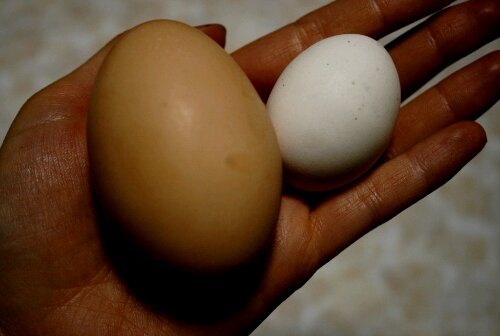
The largest and smallest find of one day’s eggs.

image

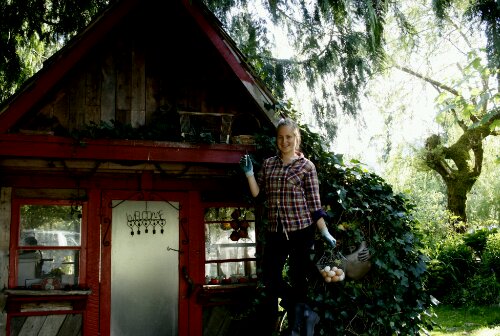
Me in all my egg-picking gear: egg basket, gloves (to protect from the beaks of vicious hens that don’t want to give up their eggs),  and the egg marker.

Chapter 171: The chicks & me

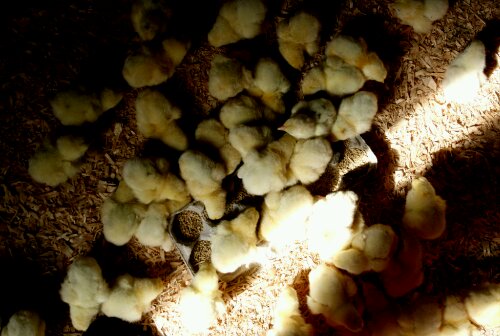
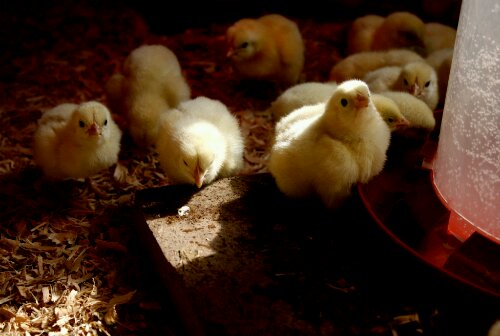
Oh, you wouldn’t believe how cute they are when they are one day old. The laying hens’ chicks are hard to get close to, since their moms are there to protect them. But the meat bird chicks, that Lori buys and gets delivered from the mainland freshly hatched, are all on their own and are just craving to hide underneath something. They are comlepletely yellow and soft as cotton balls and their small tweets make your heart melt.

image

image

image

Or when they’re a little bit older, and have started becoming more independent. When I entered their shed, they were all vary at first, even scared, but eventually some would be brave enough to come closer, eating from my hands and even jumping up on my lap, expecting to find more food. They try to squeeze through everything, but if they end up on the other side of the fence all alone, they start screaming and running around in a panic until you catch them and let them go back in to the chick shed again.

image

They are funny creatures, chicks. After having spent some time among them, I now know that they are just as baby playful and teenager rebellious as most other animal’s kids.

As for the adult meatbirds, they tend to be dim-witted and easily scared. Not as interesting to watch, but funny in a more mean way.

image