97
–
98
It is hard, though. This thing about going to faraway places and claiming knowledge about them. Taking the right to tell those stories. It is walking a fine line between sharing an understanding, and turning it into something exotic, appropriating, taking advantage of my multiple layers of privilege to be in a place that isn’t mine.
Writing up these texts has reminded me of the struggle I felt during the years I worked in research projects in West Africa. The feeling, from two angles, of: how to not repeat the (sometimes well-intentioned) mistakes people like me have been making for centuries in this region, and the fact that I was still learning. I should be allowed to make mistakes, but is this really a place where me making those mistakes is fair? These doubts made me decide not to pursue a PhD project in West Africa. Instead, I applied for a project in Sweden, where allowing myself the student’s right to make mistakes didn’t feel like such a high-stakes gamble.
Last year, I circled back to a study, similar to the walking interviews from that first time in Burkina Faso. Now: How do private forest owners in southern Sweden relate to their forests? The places I was told about had so many meaning to the owners, often years of care, everyday uses far beyond the cubic meters of timber that the places could be valued by. Talking about the groves as of individuals that the participants had gotten to know. But often, also, how regulations and the market and management recommendations from industry-oriented experts has created structures and routines in which this intuitive sense of relating becomes really difficult to acknowledge and act on.
It reminded me of those walks across the savannah landscape of northern Burkina Faso. The regions may, at least in some sense, be at opposite ends of a development trajectory – but the meanings that the people I spoke to attached to the landscapes around them was surprisingly similar. This bond to landscape, like a weave with many threads, very much active in Burkina Faso and almost forgotten, but longed for, in Sweden. Maybe that can be a state of mind where we can meet?

Ethnobotany, as a practice, can be a tangible way for people to explore and care for that human bond to landscape. Sharing stories, like these, from places where the practice still is an active part of people’s everyday lives can inspire.
However, what we should not do is to romanticize how things are done in some of these places. Some people I interviewed in Burkina Faso said that they would not harvest the wild plants in the way I’ve described, if they could get a large enough yield to feed their family and sell the rest at a decent price at the market. And then again, others expressed pride and excitement in getting to share their knowledge about wild medicinal and edible plants with me, even asked me to pass these stories on to my people back home.
So, allowing space for these practices to be maintained or re-created as part of local culture and identity is important, but I don’t believe it should be anyone’s only option. Both have to exist in parallel. As exemplified in the little plant anecdotes I’ve shared, people and landscape are intricately woven together through practice, knowledge, culture and identity in northern Burkina Faso. Taking a step back from the individual plants, the research that I contributed to covers a range of scales, from the local participatory ecosystem service mappings to the social-ecological system archetypes analysis that covers the entire Volta basin in Burkina and Ghana. Finding meaningful ways to capture these social-ecological nuances at scales that are appropriate for the intended use is key for sustainability, both in Burkina Faso, Sweden and for people and landscapes everywhere.
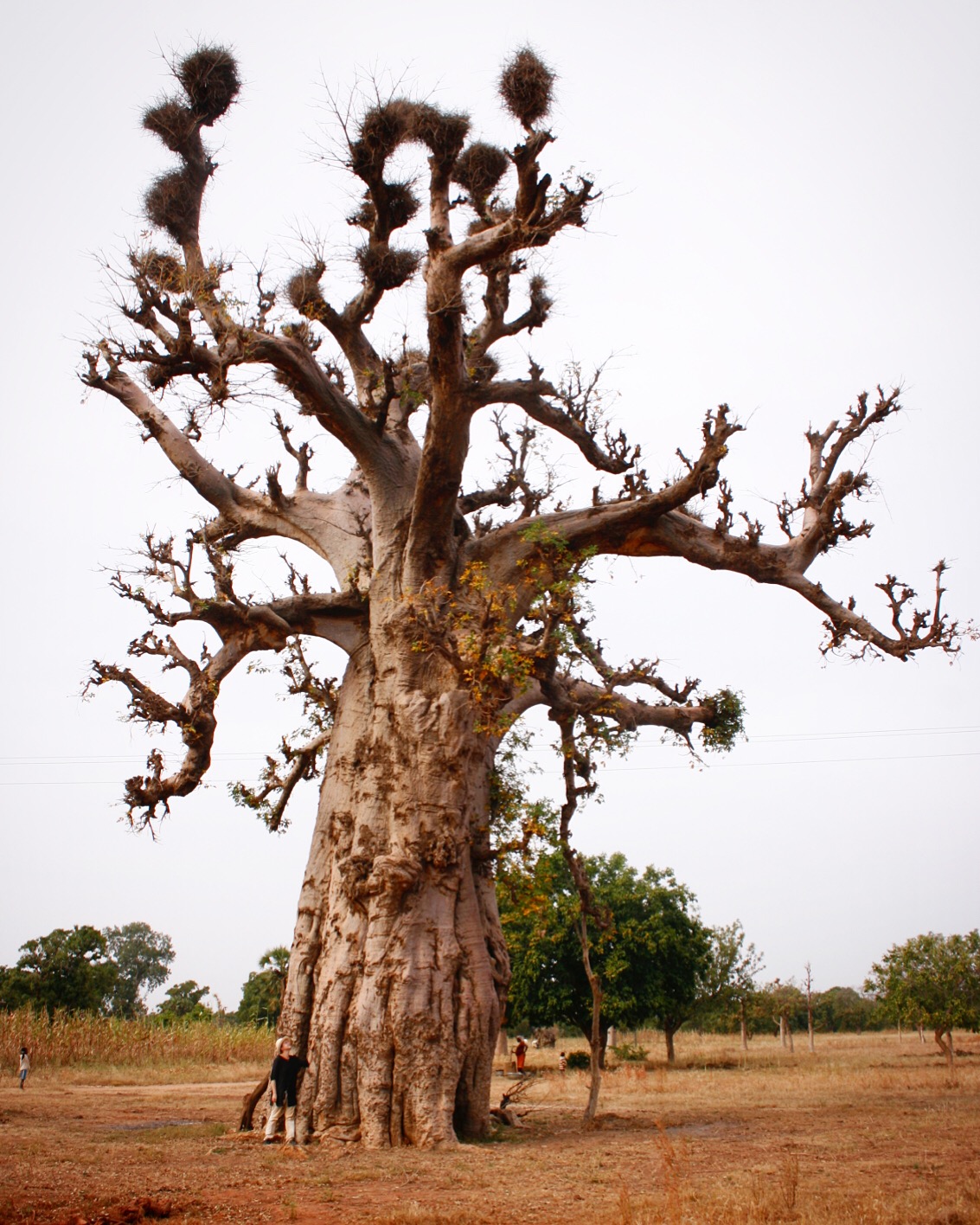
Photo: Me with a baobab tree & biciclist in village south of Tenkodogo, Burkina Faso, 2014. Posted on Instagram February 18, 2021.
 Katja Malmborg