90
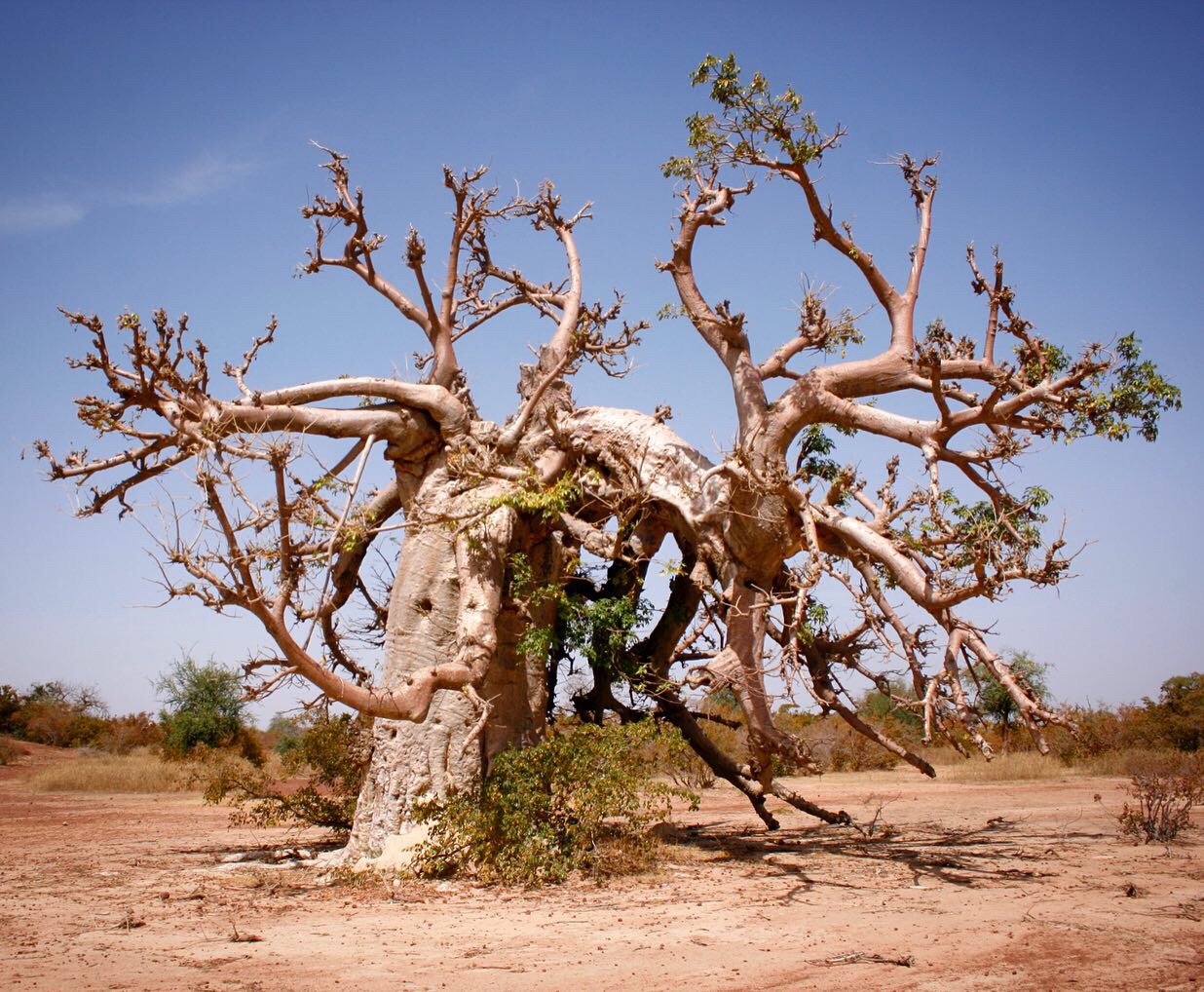
In rural northern Burkina Faso, certain wild trees, shrubs and herbs are actively being managed as integrated parts of the agricultural landscape. They are important for food, income, fodder, medicinal uses, crafts and construction, especially during years when cultivated crops fail. These pockets of wild vegetation therefore support the resilience of the communities, while at the same time having a positive impact on biodiversity in the landscape. Pictured is a baobab tree (Adansonia digitate)*, and its fruit.

The baobab tree grows wild on the savannah, but is also planted by villagers close to their homesteads. Its nutritious leaves are dried and used as a condiment, and are both consumed by the farmers themselves and sold at the market. Children also love the baobab fruit as a treat. I got to try it myself, offered to me by some kids who had picked the fruits from a nearby tree. It was dry and sweet like candy, hard and powdery to the touch.
*All plant names in this series of posts are the local Moore names, with the scientific and/or English names in brackets.
Photo: Baobab tree & baobab fruit in village west of Kaya, November 2014.. Posted on Instagram January 11, 2021.
 Katja Malmborg