60
Many things have been said about gardens. Among them, that they are an example of how humans have tried to control and manage our natural surroundings. A way to enjoy the beauty of plants, without having to engage with the chaos and unpredictability that comes with any “naturally” evolving ecosystems. In some ways, I think this is true. But at the same time, I also think that some gardens, and specifically botanic gardens, can have the opposite function.
Gardens are often the most diverse ecosystems in highly managed urban environments – the only place for many urban inhabitants to easily access nature. Here botanic gardens hold a special place, for they should be created and managed for education and research about plants. Tended to not only for what is aesthetically pleasing, as many other urban gardnes and parks are. Botanic gardens are also public (even though some might charge an entrance fee), which makes them much more accessible than many gardens in our increasingly privatized urban landscape.
Not all botanic gardens I’ve visited through the years have been equally successful with this educational mission, but I have some favorites. The garden in Meise, outside of Brussels, is huge and amazingly diverse. Glasgow is accessible and friendly. Barcelona, this unique deep-dive into Mediterranean ecosystems. And, of course, Bergius in Stockholm. Their botanists and gardeners do an amazing job with their seasonal displays and tours, both outdoors and in the greenhouses. A real gem by the Stockholm University campus.
Yes, there is more to botanic gardens than pretty flower beds and plant nerdiness.
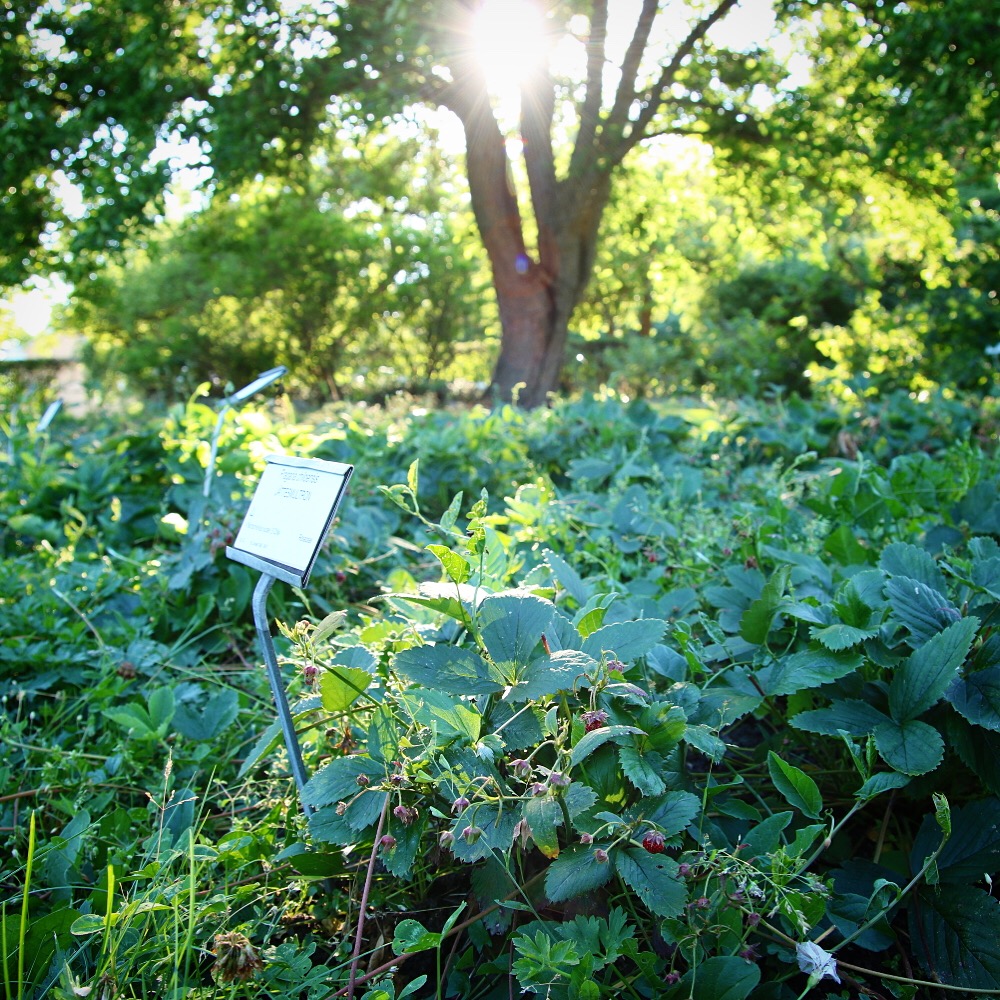
Photo: Strawberry display in the orchard, Bergianska trädgården, Stockholm, July 2018. Posted on Instagram October 5, 2020.
 Katja Malmborg