
A text written in early September 2018
Perched between the low medieval buildings of old Visby and the steel-grey Baltic lies a tiny botanic garden. For being so small, though, it manages to accommodate a great number of different plants. Cared for by the association DBW (De Badande Wännerna = the bathing friends), it has been situated here since 1855.


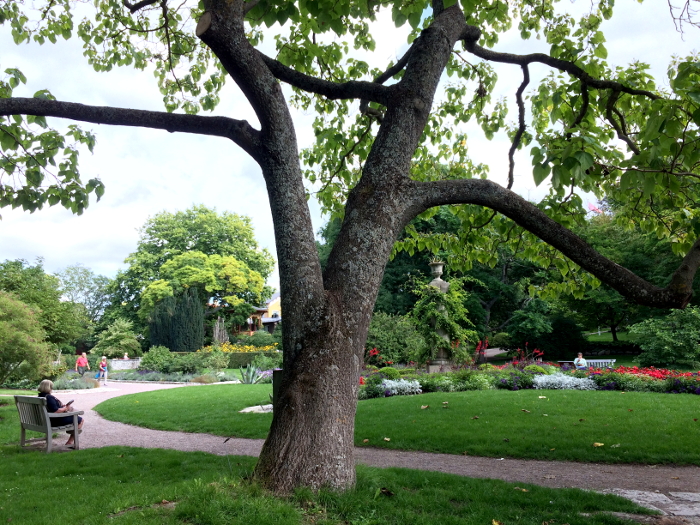
Already at the entrance, I am greeted by two massive platanus trees. A bit further in, an ancient apple tree is leaning leisurely on the ground – and already here, it is easy to forget the dense town of timber walls and cobble-stone streets outside the garden walls. The greenery being so lush and protective.


I am there at the peak flowering of autumn dahlias, green apples on the grass glistening with droplets of the rain that just fell. The rose garden is planted in a symmetric amphitheatre, so delicious for the eyes. It might not be the most scientific botanical display I have explored, but every single patch of this place speaks of having been meticulously tended to by generations of plant-lovers. It oozes joy of gardening.


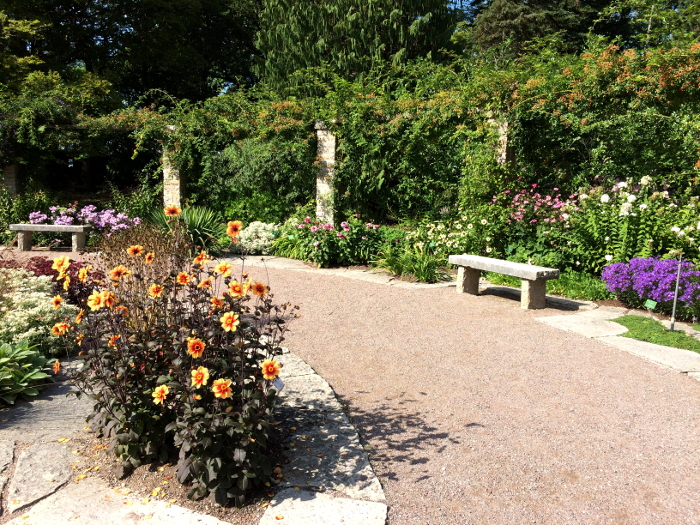
And there are plenty of benches to sit and read on. For a brief moment, the sun peaks out behind the clouds and I spend some minutes reading the so incredibly impressive “The Unwomanly Face of War: An Oral History of Women in World War II” by Svetlana Alexievich, but then I have to leave. Colleagues await at the ferry terminal. But I know, had I spent more time in Visby, this would definitely have been my favorite reading spot.
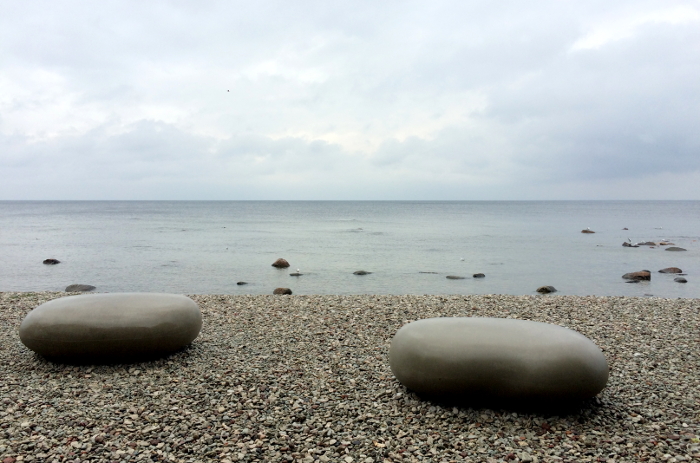
And just outside the garden walls, the Baltic is slowly breathing, biding its time for the autumn storms.
 Katja Malmborg