Just before Christmas, a researcher from the philosophy department came to talk to our PhD group. Her name is Åsa Burman and she has recently published a book about time management, or, “how to finish your PhD on time and stay happy in the process”. She gave us some simple, hands-on tricks for how to work more efficiently in our unruly, amorphous jobs as PhD students.
The first thing she recommended us to do was to make weekly plans. In the end of each week, we should make three clear and manageable goals for the next week, and then make an approximate schedule for when we would work on these goals and other tasks that are necessary in our everyday work life. We should schedule to do the hard, heavy-thought-requiring tasks during the time of day when we are best at focusing (for most people that is between morning and lunch), while stuff like answering emails and filling out admin forms can be bundled and done in one go in the end of the work day. In the end of the week, we should make note of if we managed to reach our goals, both to get the satisfaction of actually ticking something off the list (I love that!), but also in a more general sense to make us see that we are actually progressing in our work (in research, something which can be a bit hard to feel sometimes).
The second trick is to work in blocks. Working for forty-five minutes at a time and then taking a break is, according to Burman, what neuroscience is telling us to do. Most brains cannot focus for more than forty-five minutes at a time, so any time spent working after that will be used less efficiently. By taking a break, even just for five minutes, to do something completely different, will allow our brains to reboot and return to the task at hand with renewed focus. However, these forty-five minute blocks have to be uninterrupted work-time, so, turn off phones and email notifications! Burman also said that for the kind of cerebral work that research is, we cannot expect to do more than four, five blocks of work a day. Forcing more time out of our poor brains is just inefficient. Use the rest of the workday for something less thought-heavy, like managing files or chatting with colleagues.
The third trick is combine the first two by keeping track of how much time you spend on working on your thesis, and how much is spent doing other things. We do not always have clear perceptions of time, so it can be good to get some actual numbers on time spent for different activities. If I have spent fifteen blocks in a week on progressing with my thesis, I should feel good about myself. By tracking this, I can stop feeling like no matter how much I work, it is not enough. I am progressing with my thesis – it is just that the research endeavor has such insanely delayed gratification. On the other hand, if I notice I am spending very little time on actual thesis work, I can do something about that. Schedule more thesis time when planning my weeks, and being more disciplined with myself in following my own schedule.
As my New Year’s resolution, I decided to try this out for the month of January. In addition to be more explicit with tracking the time I spend on my thesis, I also decided to add the goal of reading something out-of-the-box for approximately one block a day. With out-of-the-box, I mean scientific books or papers that are not directly related to what I am currently working on, but that I find interesting and that could potentially inspire me for later on in my PhD – and in life in general.
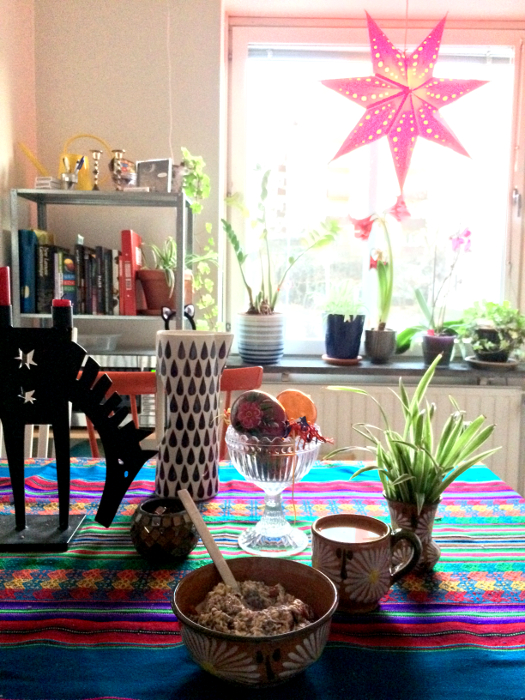
I am also trying out being more structured in general. Routines. I know it’s not cool, but they are good for me. I get up at the same time every morning, have porridge and tea in my Mexican pottery, walk to work, get started with the tasks of the day. Eating lunch at the same time every day, taking a short walk afterwards at least twice a week. Leaving work at five, going to a class at the gym at least two evenings a week. Cutting down on the socializing, spending more time with myself, knitting, reading novels, playing the piano. Getting more centered. Going to bed at a reasonable time.
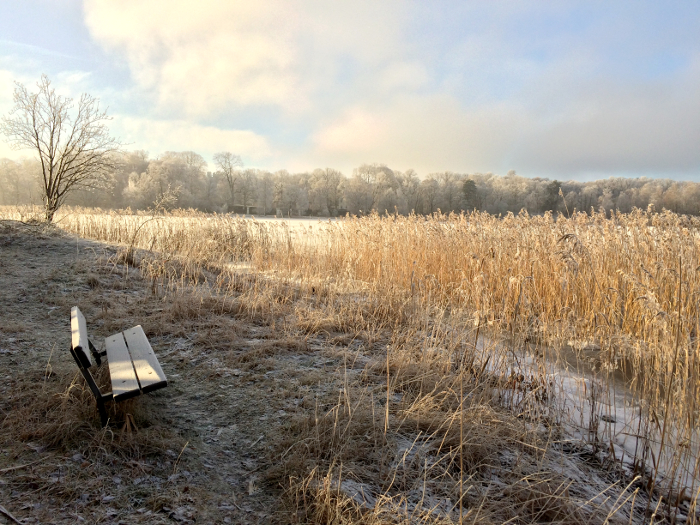
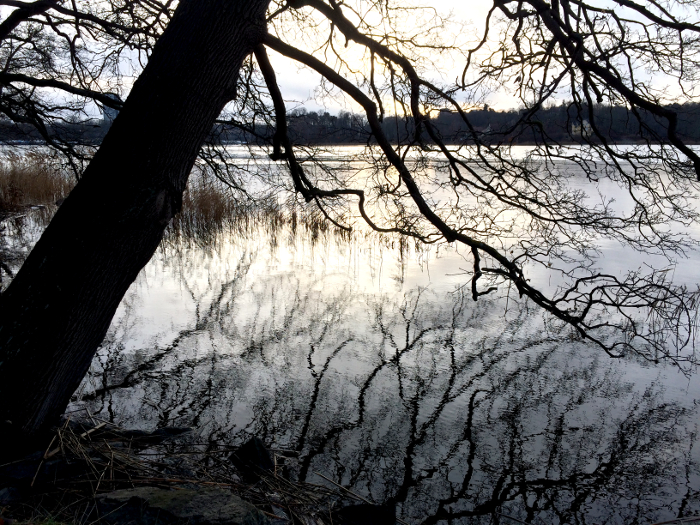
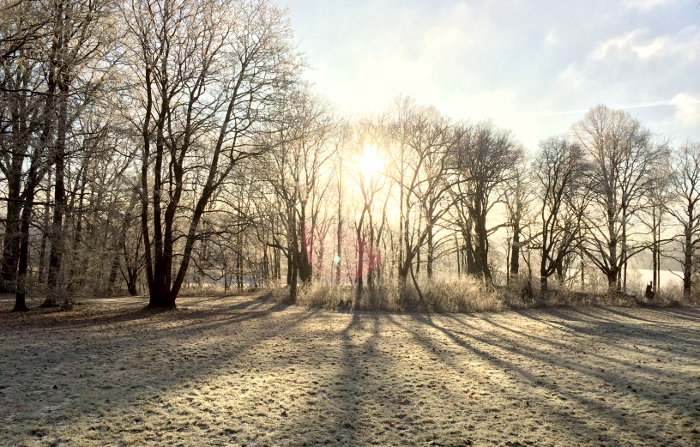
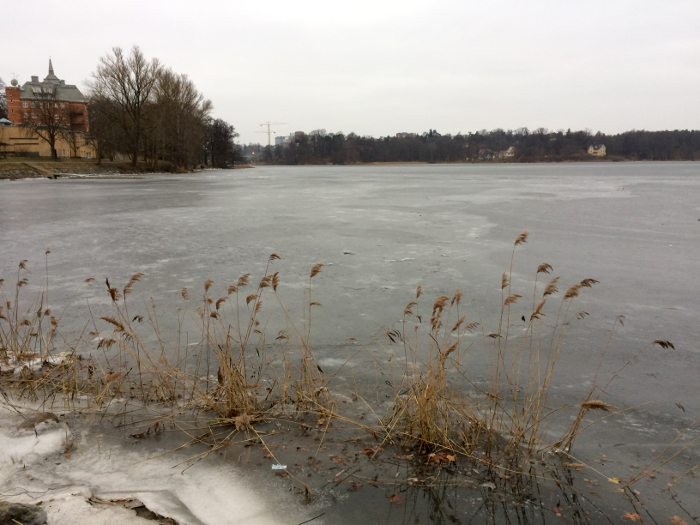
After two weeks of work, I was over the moon. My enthusiasm has dampened a little now halfway through week three, but I am still liking it. Especially the break-taking and reading. It is giving me so much energy. On Thursday, I finished a really interesting book that I will write more about at some later time – and the lunchtime walks are incredible. The national city park is so beautiful: when it is sunny and when the frost is making the reeds glitter, but also when the impenetrable grayness makes lake and leafless trees and clouds blend. It is silly, how twenty minutes outside in daylight can make such a difference. I should not be surprised, though. I was born in Sweden, after all.
WEEK 1
WEEK 2

Of course, I am aware that the circumstances may be playing a part in my improved state of mind. I have just had a calm Christmas holiday, and the work tasks that I have had to deal with have been more manageable than many of the things that I had to tackle last autumn. The last two days, the first of week three, have felt a bit more sticky – but still, despite the dampening of the mood, having clear blocks of time for specific, manageable tasks has made it possible for me to still get something done. Normally, on a day like yesterday, when everything felt just sooo pointless, I would not have gotten anything done. Managing to tick off three 45 minute blocks of manuscript editing and a full book chapter about critical realism is a real feat under the circumstances. The list-maker in me is fully satisfied.
Maybe this could be a new beginning.
 Katja Malmborg