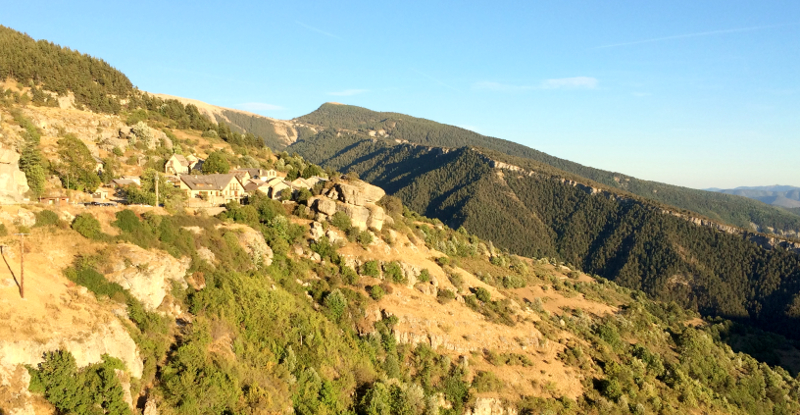
My reason for traveling for three days to reach southern France was to attend the ALTER-Net Summer School in the beautiful village of Peyresq.
As a PhD student, I’m not only supposed to do research and write scientific papers, I am also expected to advance my academic skills in a more general sense by presenting at conferences, participating in reading groups, teaching. And taking PhD courses. Since the number of PhD students with a certain interest at a specific university tends to be low, it is common that PhD courses are done as summer schools where PhD students from all over gather and spend a week or two (or longer) together learning about a topic. In this case, ecosystem services and the science-policy interface.
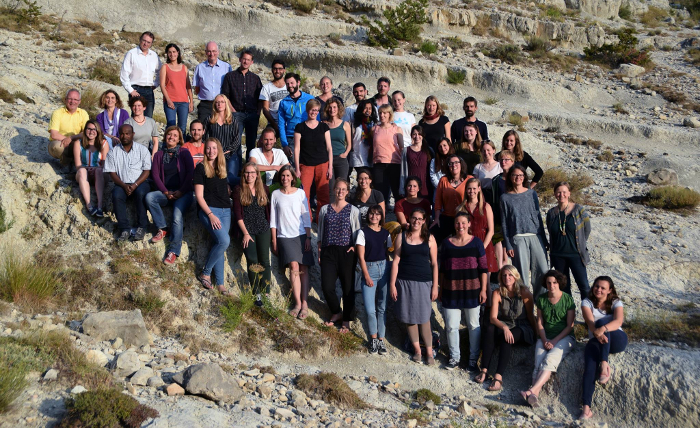
We were 35 students, mainly from different parts of Europe, but also from Argentina, Brazil, Ethiopia and India. As part of the first days, we presented posters about our work, and the topics of people’s PhD projects were really diverse: from hands down, old school entomological studies of counting pollinators in different types of production landscapes to ethnographic studies of locals’ relationship to their urban wetland in metropolitan Accra. Many things fit under the umbrella of ecosystem services research, which was made clear by the wide spread of disciplinary backgrounds in the room.


The same goes for the lecturers. Almost every day for the ten days of the summer school, we had three lectures with three different researchers, many of whom were really big names in their respective fields. But not only that, they had also been invited to lecture at the summer school because of their engaging, funny or provocative lecturing styles (or their kick-ass skills at giving song-lectures on the ukulele!) – and there was always time for discussions during or in the end of the lectures.
Some of the topics were quite familiar to me, like map-making etiquette and research through participatory workshops, while others were new, like how law has implications for conservation and how research about tree genetics makes (or doesn’t make) it into policy. Others were just thought-provoking and inspiring, like talks about science in a post-truth world or how nitrogen really is the main ingredient in the Philosopher’s stone. Maybe what I enjoyed the most were the talks that brought in my closeted love for philosophy-leaning endeavors, like different ways of valuing ecosystems and for whom – but also what the role of the researcher should be in this whole jumble of things.
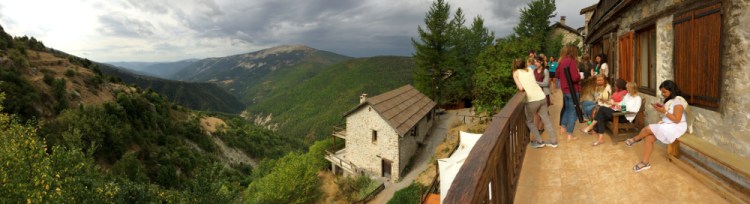
Yeah, you get the picture. So many people, so many topics, such an insanely beautiful, interesting and inspiring environment to be in – which made it completely overwhelming and a constant balancing act between excitement and complete over-exposure. In my case, probably made even more so since I was popping French cold medication like there was no tomorrow. Potentially it made me drowsy, and therefore slightly more relaxed – but still, the exhaustion. I was completely drained by the end of the summer school, maxed-out on social capital and with intellectual food for thought to digest for months to come.
I don’t know if I’ll ever be able to pick up on everything this summer school gave me a glimpse of – but I guess that’s not necessary either. Sometimes, it’s just good to know what’s out there. I have started to build my mental universe of the ecosystem services field. It is not likely to stop growing anytime soon.
 Katja Malmborg