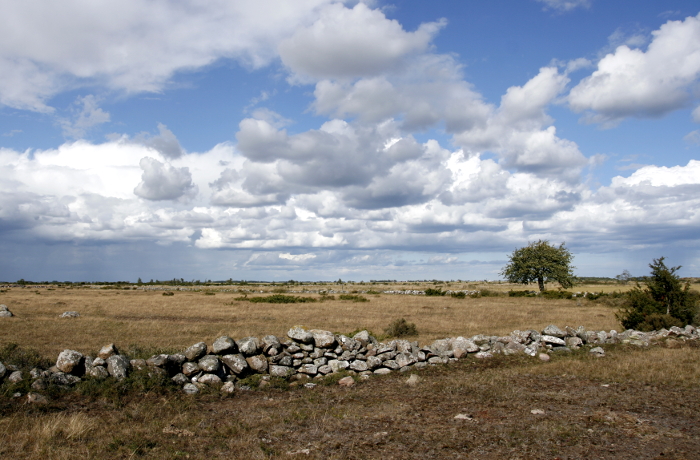
When I was invited to speak at the Burkina Faso day on Öland, I thought it could be a perfect opportunity to also do some vacationing. I convinced Ashley, a dear friend and Canadian in great need of seeing more of Sweden than just Stockholm, to come with me. So, for our shared brief, but lovely summer trip, we brought sleeping bags and a tent, rented bikes and spent three days cycling around the southern half of the second largest island in Sweden.
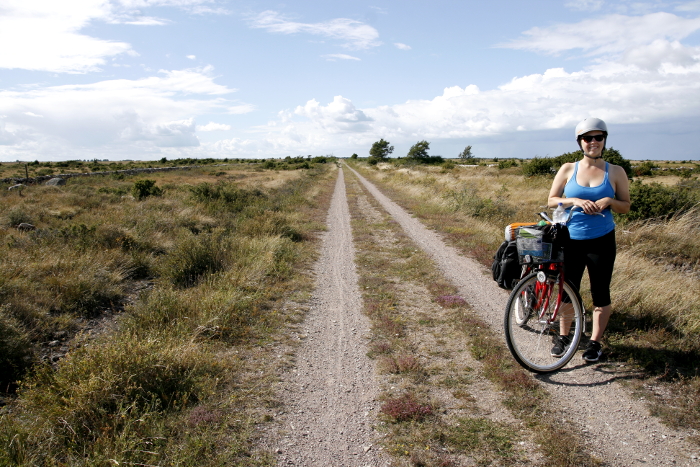
Our main interest was the UNESCO world heritage site Agricultural Landscape of Southern Öland. It is a perfect example of a social-ecological system. Humans have lived and farmed there for more than five thousand years, adjusting their practices to the unique conditions on the island. This in turn means that the landscape and its vegetation has co-evolved with the humans.


One example of this is the alvar, a sparsely vegetated grassland limestone plain where grazing animals have allowed a diversity of herb and shrub species to establish, some of which cannot be found anywhere else in Sweden. It is especially known for its orchids. Even though most of the alvar is protected now as nature reserves, it is still being grazed by sheep and cows at a low intensity, to keep the social-ecological open landscape from getting overgrown.
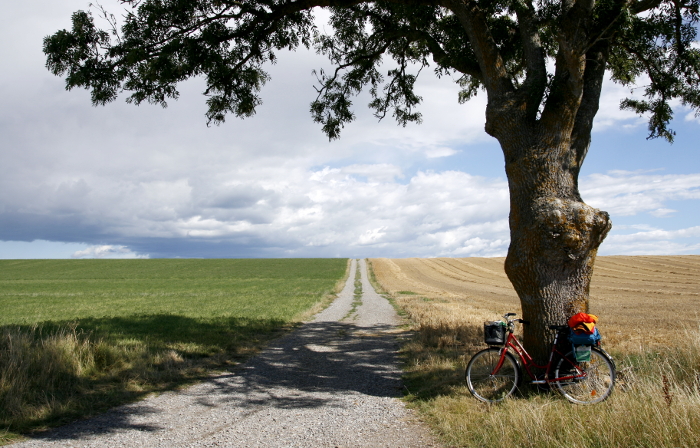
However, it is not only the long history of human-environment interactions that makes Öland unique. Öland also has special soils, compared to most other parts of Sweden, with a much higher lime content and, therefore, soil fertility. Combined with the slightly higher temperatures than in mainland Sweden, this has made Öland one of the more important agricultural areas in the country even today.


We cycled past fields of wheat, oats, barley and forage, potatoes, peas, beans, onions and maize. It was harvest season, so there was a lot of activity in the fields. In the afternoon of our second day, dark clouds started building on the horizon and by evening, we had to race through a wall of rain. It was incredible, the drama of the sky and how the sea mirrored its color – but we got soaked and would probably have had a really unpleasant night in the tent. Luckily, at dusk, we happened upon a hostel with an empty double room. After a hot shower, dry clothes and some warm food in our stomachs, having experienced the ferocious rain only improved our memories of the day. And the next morning, the sun was shining again.


On the southern tip of Öland stands Långe Jan, a lighthouse. This is one of the most important resting places for migrating birds in this part of the Baltic. No birds had started migrating yet when we were there, but there are also plenty of birds permanently living and nesting on the surrounding beaches and waters. And Ashley got excited like a child when we saw some weird gray shapes out in the water and realized it was a complete flock of grey seals enjoying the sun on some rocks.
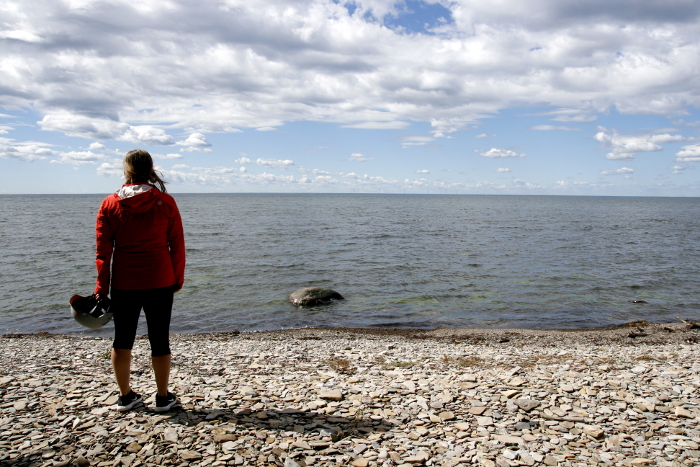
Öland is a beautiful place with a large variety of interesting landscapes – but also so flat that cycling takes very little effort. There are even a couple of bike trails that cross and encircle the island, meaning that you rarely have to share the road with cars. I can really recommend going on a cycling holiday on Öland!
 Katja Malmborg