Rainy season was just about to start when we left Zebilla in northern Ghana. The first drops of rain fell on our very last day in the field. Oh, the drama.
You can’t miss the rain’s arrival to the Sahel (although, strictly speaking, Zebilla is slightly south of the proper semi-desert). It is like the water, so rare here and therefore immeasurably precious, has to announce its approach unmistakably clear. Make every creature stop and wait in awe.
First come the clouds. High, dark cumulonimbus. Purple against the dry, pale, bare landscape. Turning early afternoon into dusk.
Then comes the wind. First only carrying dust, but quickly gaining strength, picking up dry leaves from branches, pulling off branches from trees, howling and roaring, all-powerful on the flat, sparsely vegetated plain.

Few dare to fight their way through the furious wind. The dust gets into your eyes, ears, nose, your hair and clothes desperately trying to hold on to your body. The dust is like a fog, obscuring contours even of the building next door.
A couple of loud crashes, thunder.
And then comes the rain. Such an anti-climax, after all that foreboding and roaring, a couple of pregnant drops. Full, heavy, making small craters in the dry earth, but not nearly enough to even cool it down. The water evaporates as soon as it hits the surface, and then the rain is over.
Stopped. Before it even had time to properly begin.
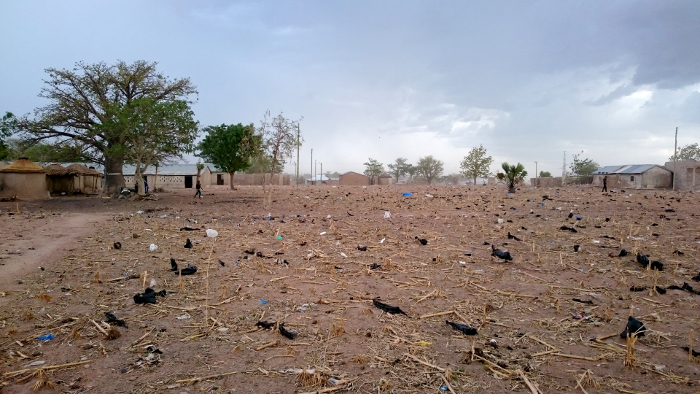
The clouds stick around but no more rain comes and we’re left feeling unfulfilled, empty. After all that build-up – nothing. Even thirstier than before.
I’m told the rains get richer later in the season, proper storms making dry rivers flood. This was only a first glimpse. I can only imagine the drama, the pure brutality, when the real rains come to the Sahel.
 Katja Malmborg