
We spent about two weeks doing fieldwork in southern Burkina Faso and northern Ghana, my fellow researchers and I. A small number of communities with small reservoirs had been selected around the town of Tenkodogo in Burkina and Zebilla in Ghana. Together with our local partners from universities and other organizations in Ouagadougou and Tamale, we engaged in a wide range of data collection activities, all with the focus to learn more about the dynamics surrounding small reservoirs, irrigation agriculture and food security in these areas.
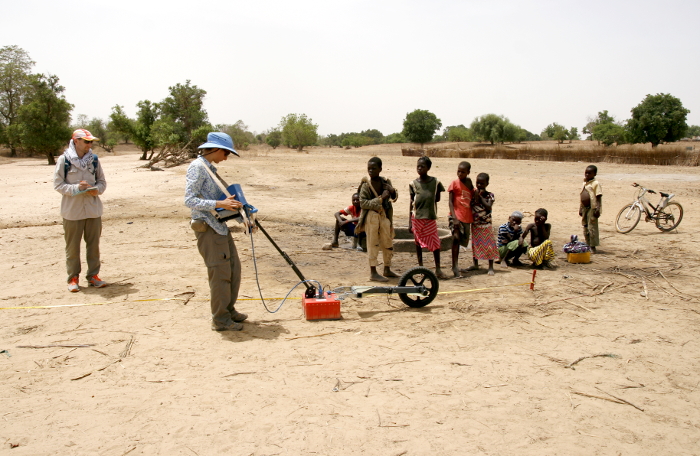
Alex and Aline used a ground-penetrating radar to measure sediment depths and a LiDAR to create digital elevation models around the reservoirs, all to understand storage capacities, sedimentation dynamics and how these might affect the fish stocks in the reservoirs.
David collected soil samples from both irrigated and non-irrigated agricultural plots to learn more about grain sizes and nutrients in the soil.

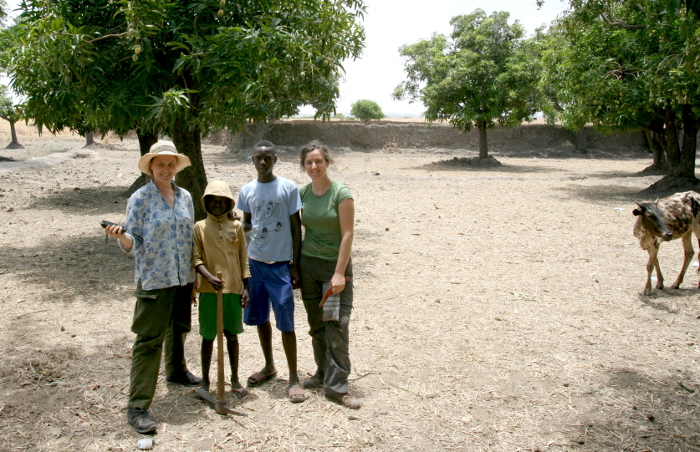
Sarah collected soil samples too, but also measured infiltration rates, ground vegetation cover, crop types and, if possible, interviewed the farmer of the plot about fertilizer and pesticide use, the history of the plot and other management practices. When I wasn’t busy with my own data collection, I helped Sarah with digging and measuring – and in the village of Tanga, we got two excellent assistants, Daoda and Ebenezer!

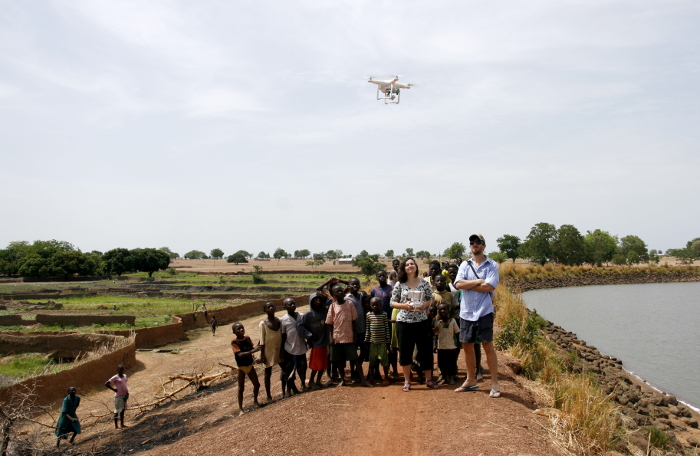
All our activities drew an audience, mostly consisting of children, but by far the biggest crowd-pleaser was the drone. Sarah, together with Fabrice (not in the picture, though, that’s David standing next to Sarah!), also collected aerial photographs of the land around the reservoirs using a drone equipped with an infrared-sensitive camera. These images Sarah will use together with the plot data that she had collected on the ground, in order to better understand the conditions and management practices for farming around the reservoirs and in the communities that we were studying. All serious stuff, for sure, but the process of data collection with the drone very much seemed like a game with a cool toy, and the kids in the villages loved it! They came running from all over as soon as that loud, humming noise started, the drone shooting up in the air like a monster-sized bee.
As for me, I tried to conduct focus group interviews to understand how governance of the reservoirs worked and other social aspects of the communities around them. I say tried, because it turned out to be very hard. For my first interviews, in a village called Lagdwenda, I had asked to talk with about eight men in the morning and eight women in the afternoon. Sarah was also going to conduct interviews, so we were going to work parallel, her with the women first and the men after. When we arrived at the mango tree in the morning, though, close to fifty people had showed up. They were curious, of course, about what these strangers coming to their village were up to, but conducting interviews with more than twenty people at a time is near impossible, and I was completely overwhelmed by the task. Some of the men started to play a game with rocks in the dirt, and the children came and went, seeming to see this more as a nice hang-out under the magnificent mango tree rather than a serious research endeavor.

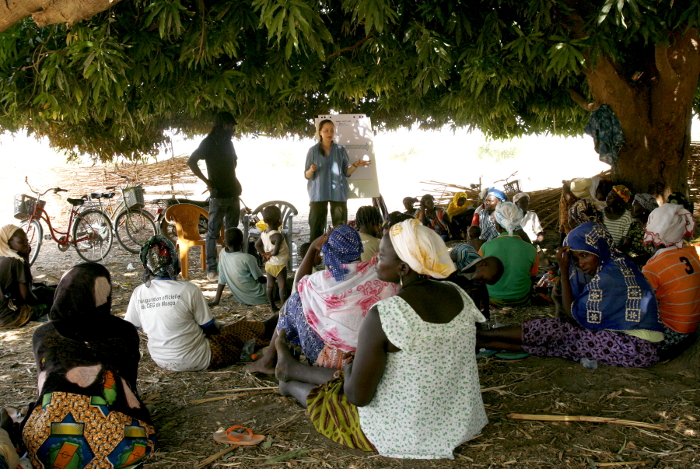

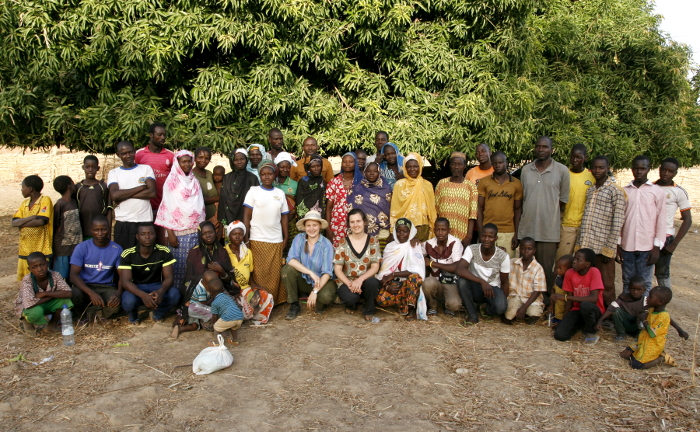
I did get some very interesting answers, though, and plenty of experience, allowing me to refine my set-up technique. For the next village, Tanga, I was very clear about not wanting more than five people present for one interview, and I ended up having a couple of very low-key, relaxed and informative interviews with both men and women in the next couple of villages.
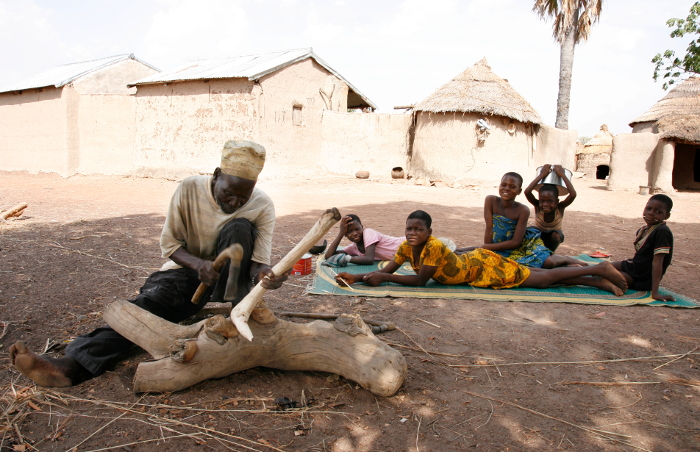
What I’ve realized is that you’re forced into a very steep learning curve when doing fieldwork, things rarely work out like you expect and it’s essential to have a flexible enough mind to adjust your plans and sometimes reach solutions where you did not expect to even have to look. This kind of fieldwork is not for the rigid of mind! And requires a great team!
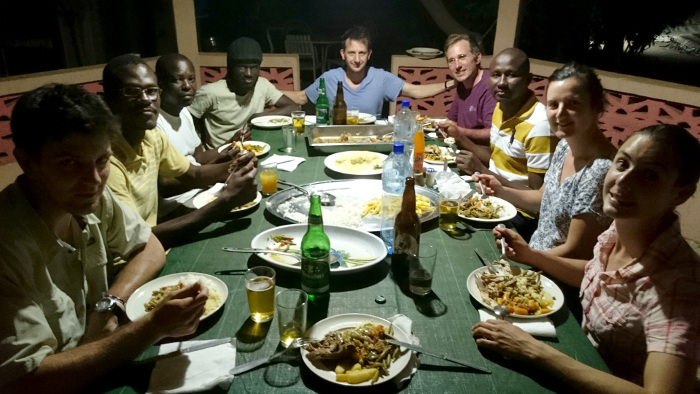
 Katja Malmborg