
During my week in Liberia, I was reading a book about a world after the big disaster. “Station Eleven” by Emily St. John Mandel takes place in a world after the Georgian flu has wiped out the majority of the human race, and with that, civilization as we know it. In a fluid narrative meandering back and forth in time, we follow the lives of a couple of characters, the ex-wife of a famous actor, a psychologist turned curator, an aspiring paramedic, an actress in the Traveling Symphony. The flu and what it did to the world is ever-present, but what makes Mandel’s storytelling so affecting is that the disaster never gets to take center stage. Her characters tell their stories, heart-wrenching and banal and dirty and profound all at once, and the unravelling apocalypse is just a foundation that turns all the painfully human more desperate. She sees the small things in the world-altering, and I couldn’t put the book down because it it.

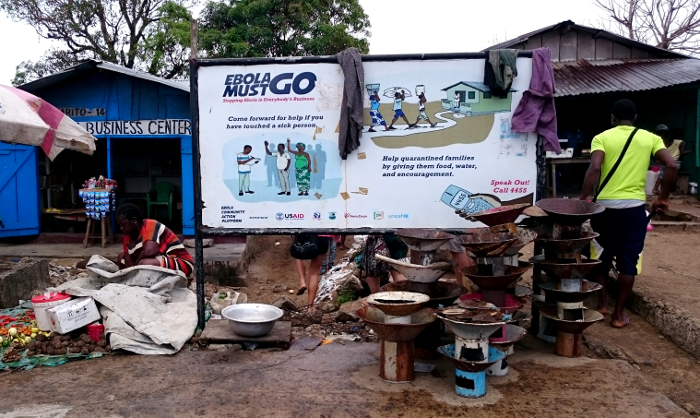
I started reading it on a plane. Eerie, as it turned out, since airplanes have a rather important role in the novel. Small capsules in the sky where time is separated from Earth during the hours of travel. And then I arrived in Liberia, a country that has just survived the worst outbreak of the Ebola virus in recorded history. Everywhere, signs had been put up informing about how to avoid getting infected. And also subtler things, the decades-old traces of a long, painful civil war mixing with the new layers of a country completely shut down for a year by a disease. Liberia had their own almost-apocalypse, and I arrived in the time just after, people picking up their lives again, and I don’t think there can be any setting that would have made the dystopian “Station Eleven” seem more real.
An amazing book. Really. Read it.
 Katja Malmborg
great post