I’m catching up on some reading, newspaper articles that I’ve been recommended but haven’t had the time to read yet. I have a folder in my bookmarks bar that has been growing since March.
I read an article unexpectedly relevant for my line of work, titled The word-hoard: Robert Macfarlane on rewilding our language of landscape. It is an essay about all the almost-forgotten words that exist in different languages and dialects to describe very particular features of the landscape. And there is a romanticism in this love for words, the poetry that they hold, which awakens the pubescent writer in me. But it is also an aspect which makes the message of this article (don’t forget the language of landscape!) more literature than natural science. We have a rich language for forests, for wetlands, for anything cold, hard, dark and wet in the Swedish language. I loved dabbling in the borderline-banal art of scenery descriptions in poetry and prose when I was younger, before I turned my love for landscapes into an academic profession. Now I feel like I might have lost some of that feeling of wonder and magic, adopting my language into the technical, soulless vocabulary of science.
But reading Macfarlane’s article, I am reminded of how much is hidden in language. I have spent a considerable amount of time reading up on the scientific literature on local participation and indigenous knowledge in my work, and I was fascinated by the detail in the definitions of the words that Macfarlane had collected. The words were beautiful, and their definitions like small poems in themselves. But also, embedded in those precise definitions was a rich local knowledge about the landscape. A type of knowledge collected and inherited through generations of living in and living off the landscape, giving it a kind of time-coverage and experience of the ordinary and extraordinary that scientific measurements simply cannot capture.
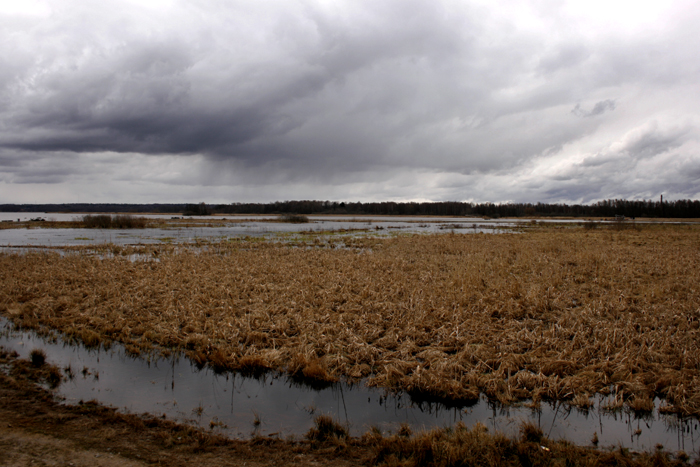
And just relating this to the Swedish context: Anyone working with nature conservation, almost anywhere in the world, will be aware of the importance of wetlands. But in most scientific texts that I’ve come across, these landscape features are called just that, wetlands – when in reality, there are so many different types, all with different origin and life-cycles. In Swedish, the wetland equivalent våtmark is often used, but when I studied landscape ecology with a Swedish professor who had studied historical landscapes, she also taught us the definitions of myr, träsk, mosse, sumpmark, kärr. For most Swedes, these terms just sound old and aren’t used anymore, but for anyone wanting to understand wetlands and how they interact with the surrounding landscape, it is important to know the different ways in which wetlands occur. And one way to do this is to keep this rich language of landscape alive. In one word, they answer questions such as: Where does the water come from? How fertile is the soil? How stable is the wetland?
It was a nice reminder, in the end of my Christmas holiday, the way in which literature, the humanities and natural sciences can help and enrich each other. I have to remember that, now that I soon return to the disciplined world of resilience research.
 Katja Malmborg