After the workshop was done, most of the team went back to Ouagadougou or Accra. We were a couple, however, who wanted to see more. Get a feel for the northern Ghanaian and southern Burkinabe landscape. So we took the car, a driver and went on a road trip.
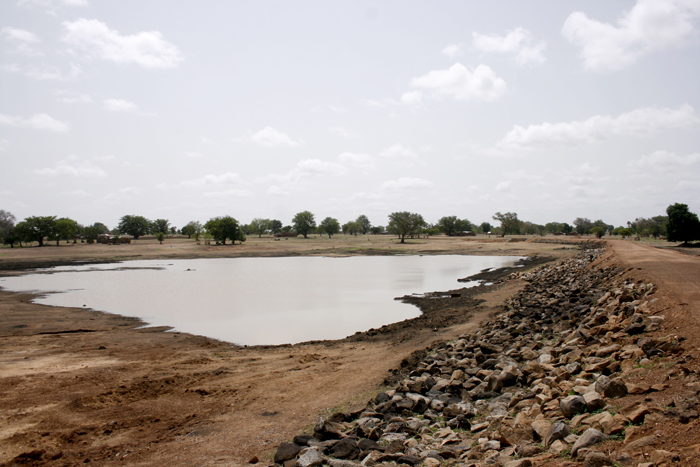
This project is centered on dams, so every time we drove by a dam, we stopped and went to look at it, scrutinizing its canal system or lack thereof. Kate was an amazing source of knowledge, being an ecohydrologist, and I learned so much about dams and irrigation.
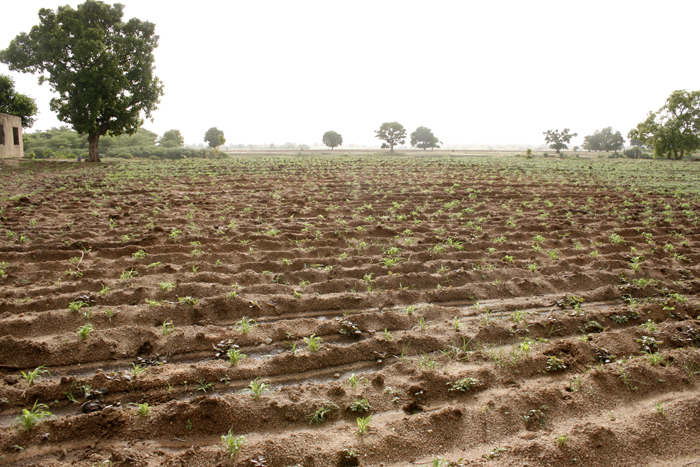
Generally, rainy season starts in May, but this year it was late. In the beginning of June, there had only been a couple of intense rainfalls. This meant that the sorghum, millet and maize fields had just been planted, in preparation of the rains to come. The soils seemed richer here, darker, higher in organic content, than up in northern Burkina. And the fields so much bigger. This valley around Zebilla really was intense farmland.
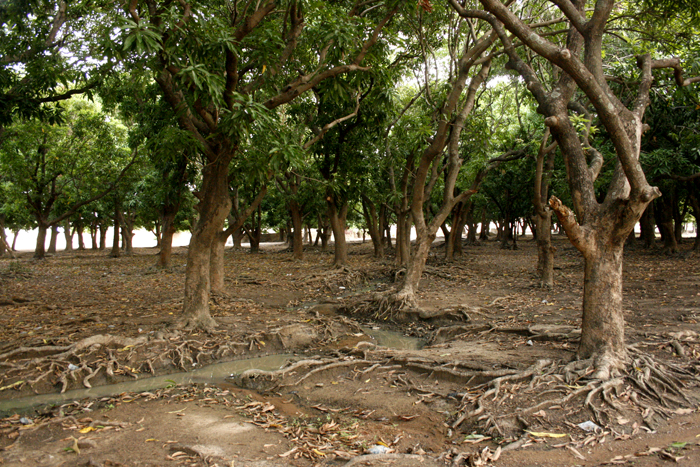
Next to one of the dams, they had planted a mango grove. The canal system from the dam had broken, though, so the top soil had been washed away from all the overflowing water. The trees had been planted so close together that no undergrowth could survive in there, you see.
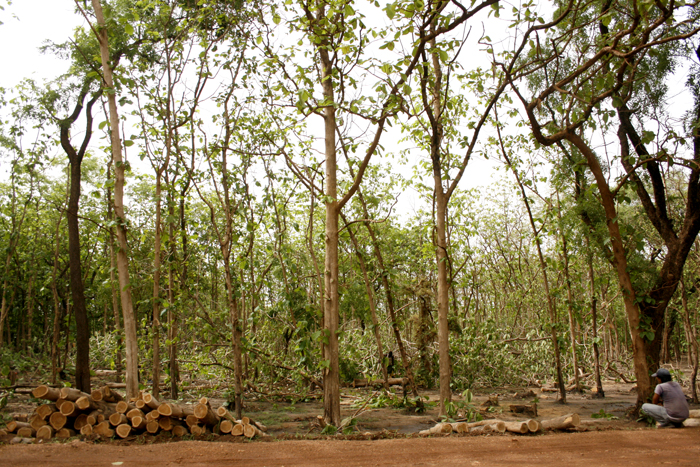
There was also a state-owned teak tree plantation in between Zebilla and Bolgatanga. Imagine that, huh? This is what they make our garden furniture out of.
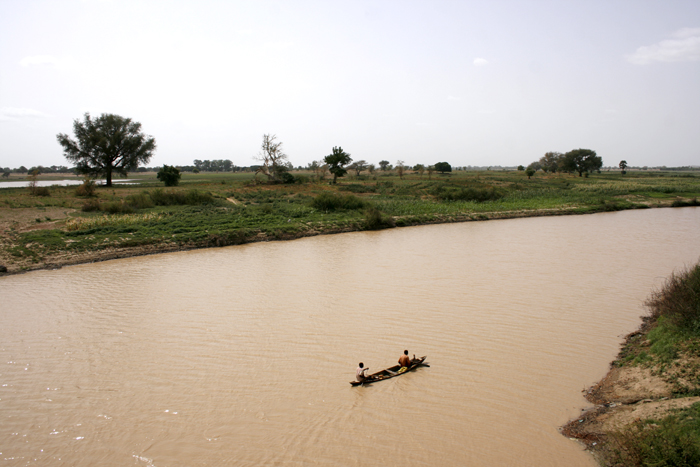
Across the border, we took a look at the White Volta, or, as they call it in Burkina Faso, the Nakambé. It was a slow-flowing river, with dense vegetable plots on either side.
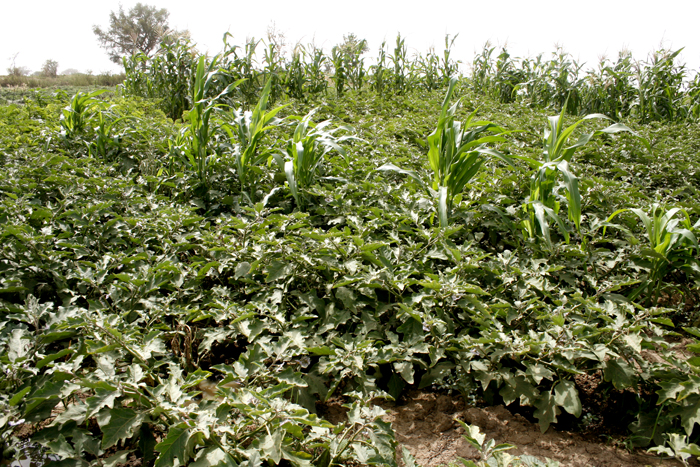
An eggplant and maize plot by the river, so lush and intensely green.
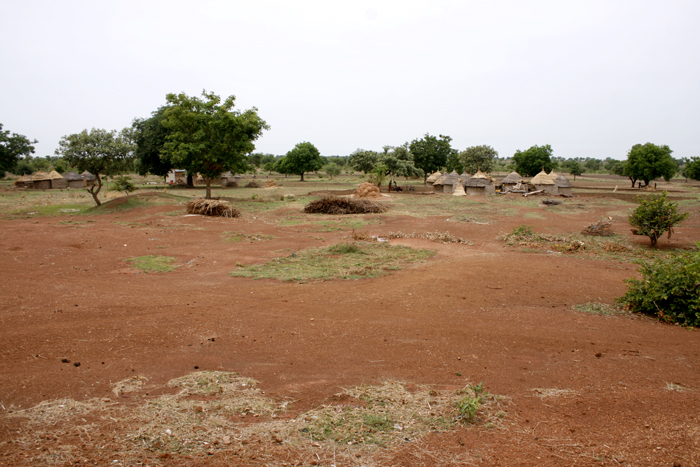
Otherwise, the landscape was quite dry. I would say that there are more trees here south-eastern Burkina, compared to my old study area in the northern parts of the country, but also less undergrowth. In the north, the fields are smaller and bordered with a lot more shrubs and grasses. The south is more densely populated, which might mean there are also more livestock here. Maybe the grazing animals have made this landscape seem barer, despite the fact that it rains more here.
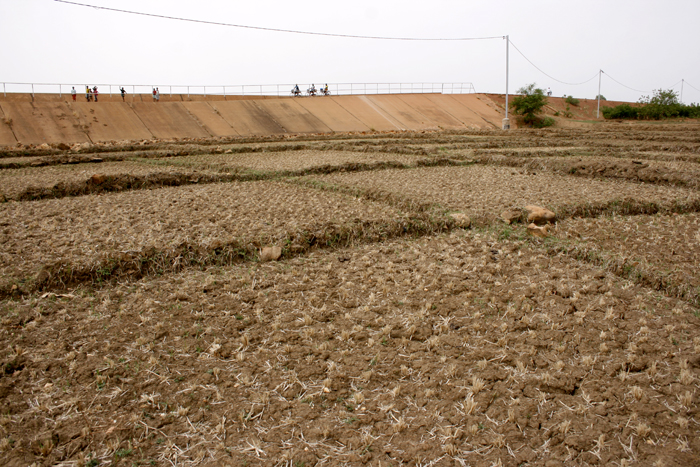
The dry rice fields next to a dam. There seem to be so many different way to construct these dams.
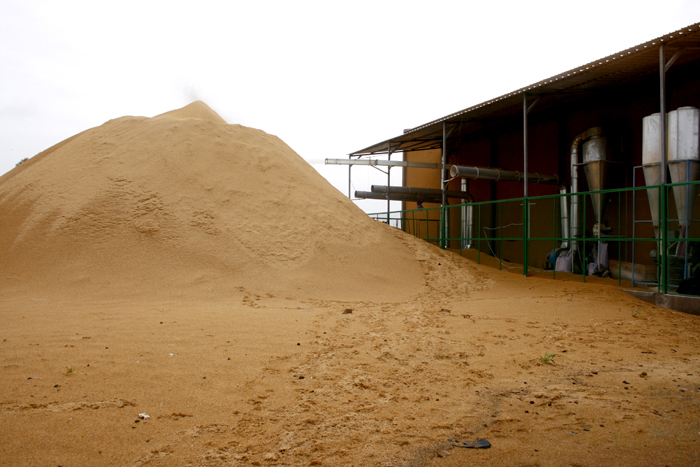
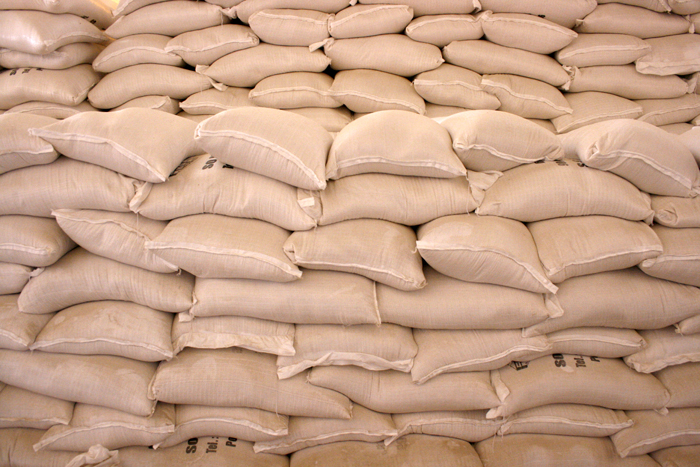
And some way off, they had a rice processing plant, where the harvested rice grains got peel, UV treated and packaged into huge bags.
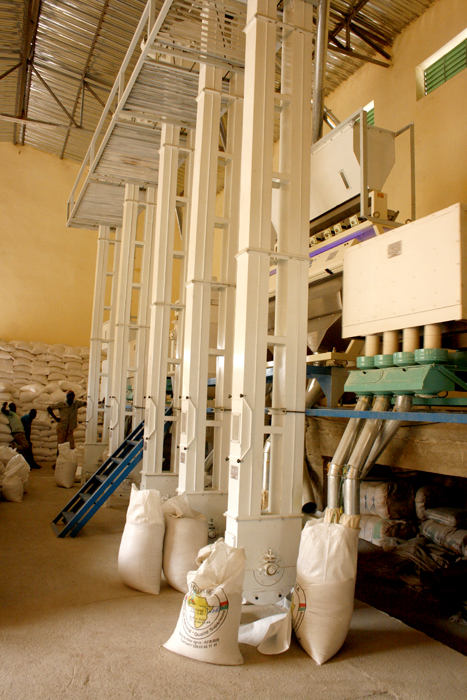
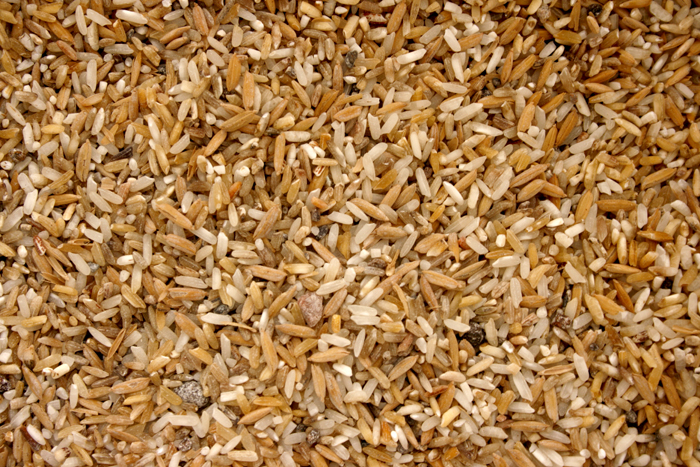
The newly peeled rice grains. This is no white rice.
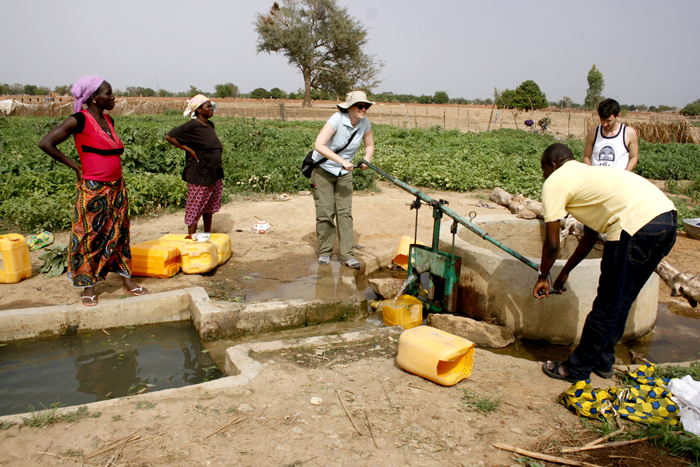
Dams are not the only way they do irrigation here. Outside of Tekondogo in southern Burkina, we also saw this kind of structure, where they used a well and a water pump and irrigated the leafy greens by hand. Kate and Mansour wanted to try pumping it, to the amusement of the farmers.
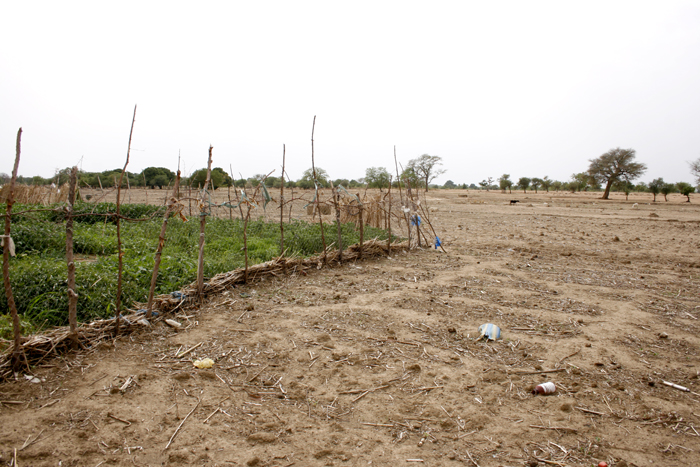
The difference is extreme, between the irrigated and non-irrigated land. Looking at it like this, it’s clear what a difference well-constructed, sustainable irrigation could do for this agricultural system, be it though dams or ground water irrigation.
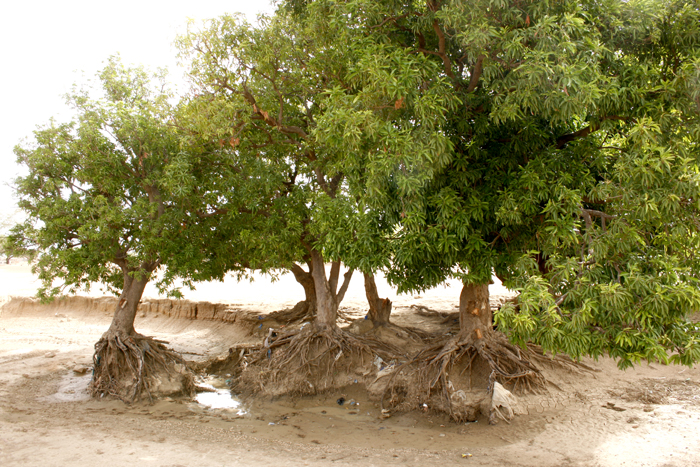
So, this area is dry most parts of the year, but when it rains, it rains like crazy. And the erosion, transport and sedimentation is insane. As you can see on these mango trees growing in the bend of a river, there’s barely any soil left except for the bare minimum keeping the trees still standing. These extremes, of dryness and extreme rainfalls, are also something that need to be considered when designing irrigation systems, and agricultural practices in general.
It is not an easy task that we’ve set out to do, the questions about dams and irrigation and food security. But solutions are really needed. It’s going to be interesting to see what we come up with.
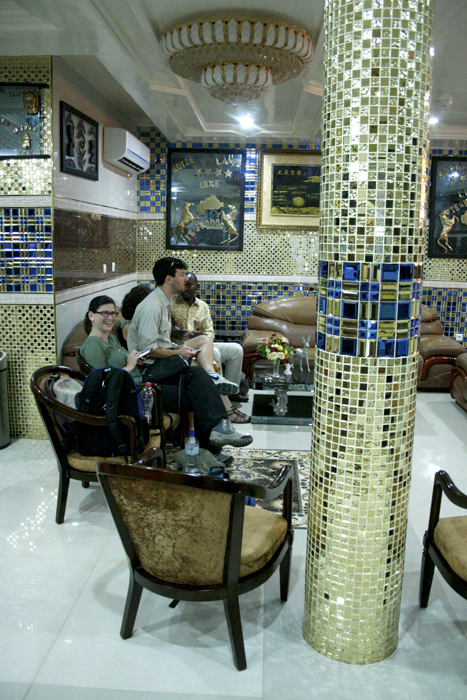
In Tekondogo, we stayed in a really nice hotel, very luxurious. Just walking into the lobby was a chock of gold and glitter. It is interesting, how what is considered good taste can be so different in different places.
 Katja Malmborg