The flag ship of Asante crafts is the kente weaving. In Adanwomase, they make the weaved strips of cloth with intricate patterns that are sown together and made into the clothes of the Asantehene and his family.
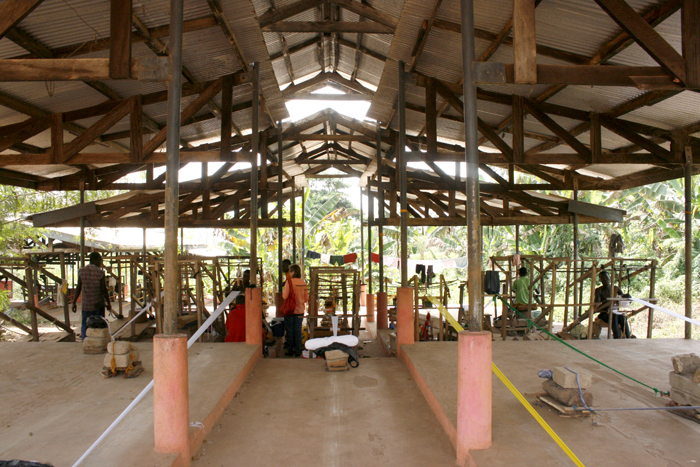
It is a weaving technique that is only taught to the boys and men of the village, and they can already start practicing at the age of eight. However, it isn’t until they’re sixteen that they are allowed to start weaving full-time. Our tour guide made sure to point that out.
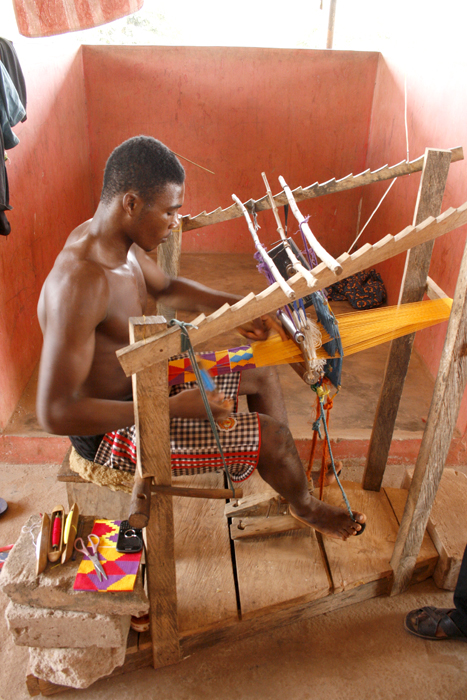
We were shown around among the looms. It was obvious this was a very advanced kind of weaving technique, with many strings and pedals. It was fascinating, watching them work with both hands and feet making the patterns. So fast! Such craftsmanship! There’s just something about watching people who really know how to work with their hands, be it as a pianist or a kente weaver. It is hypnotizing. I can’t stop watching.
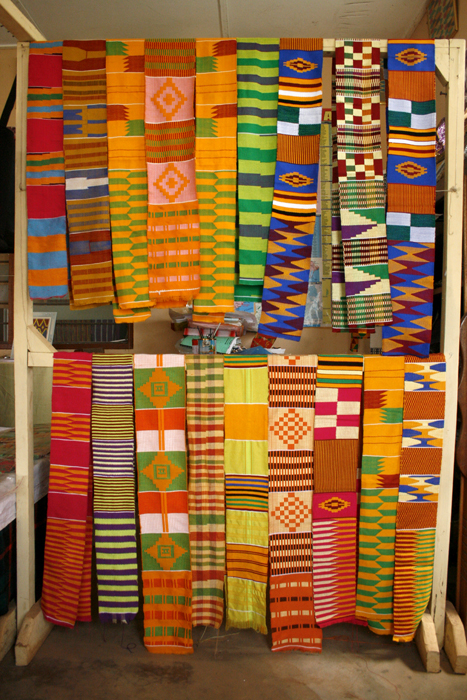
As with the adinkra, all patterns and colors have different symbolic meanings, and if its done the proper way, every kente weave is done specifically for the person who will wear it. They are usually ordered for a family, a piece of clothing with identical pattern and colors for every member of the family. That shows unity, something which is essential in the Asante tradition.
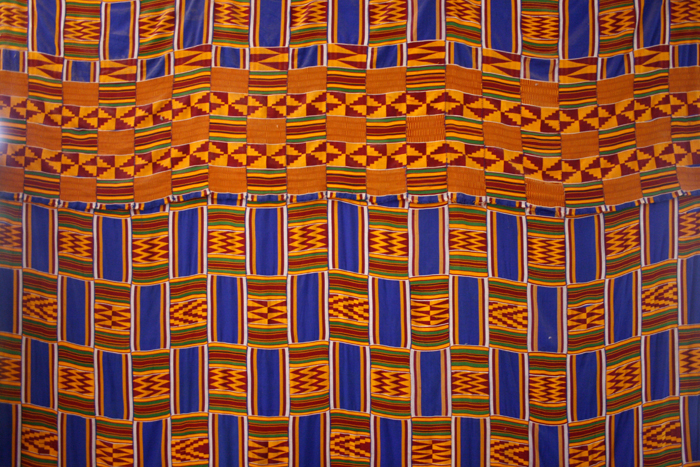
Some of them were really beautiful. And quite expensive – as they should be, considering the time, effort and expertise that is put into producing them. One kente weave strip takes up to a couple of weeks to produce by a master weaver.

I didn’t buy anything. I simply didn’t know what I would use it for. But the guide made me try on a traditional kente dress that they had on display. I must admit, it wasn’t the best-fitting outfit that I’ve worn.
The village Adanwomase also grew cacao. Cacao is one of Ghana’s largest exports, making up about 10 % of the country’s economy. It is also the second largest producer of cacao beans in the world, with about 20 % of the total world production. Quite a lot of the cacao in Ghana is actually produced in these kinds of small-scale farms in villages, after which the cacao beans are sold and sent on to the next stages of processing.
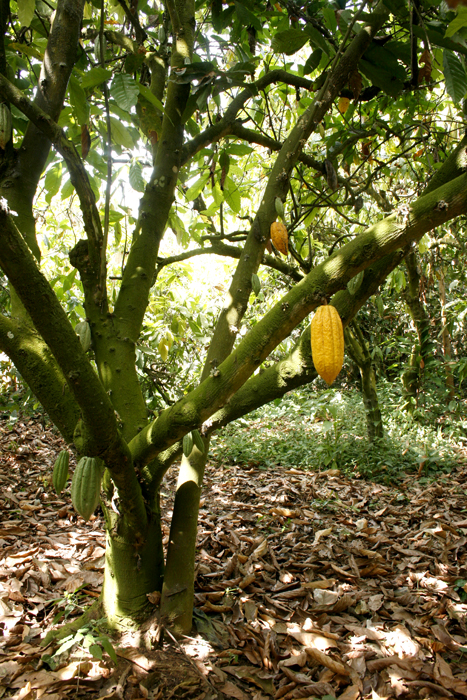
The cacao fruit grows on a quite small rain forest tree, originally from the northern Amazon basin.
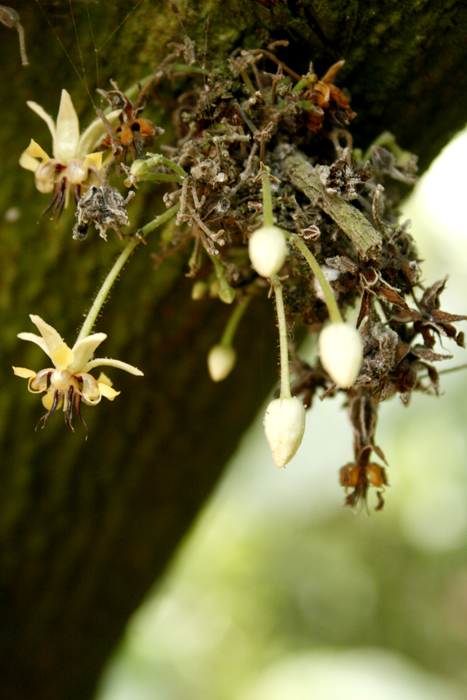
The flowers are tiny, growing out straight from the branches …
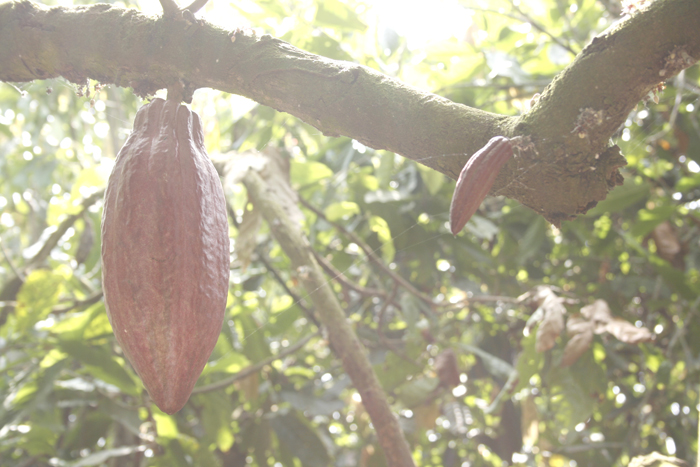
… and develop into a large fruit that turns yellow when ripe.
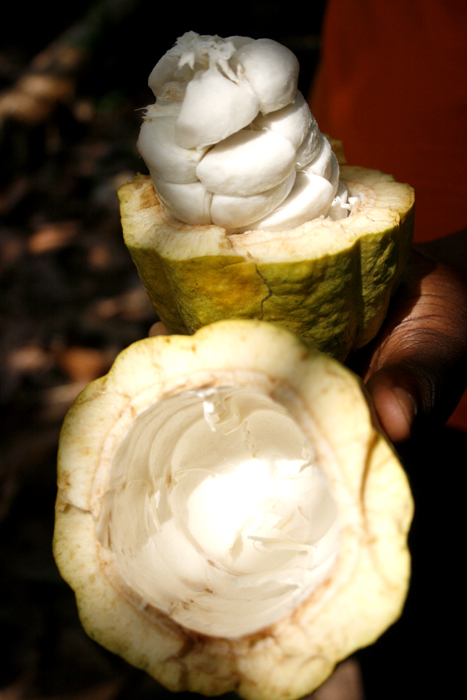
Inside, the beans are covered in a sweet and slightly sour, white pulp, tasting a bit like the lychee fruit. It is really good, anyway.
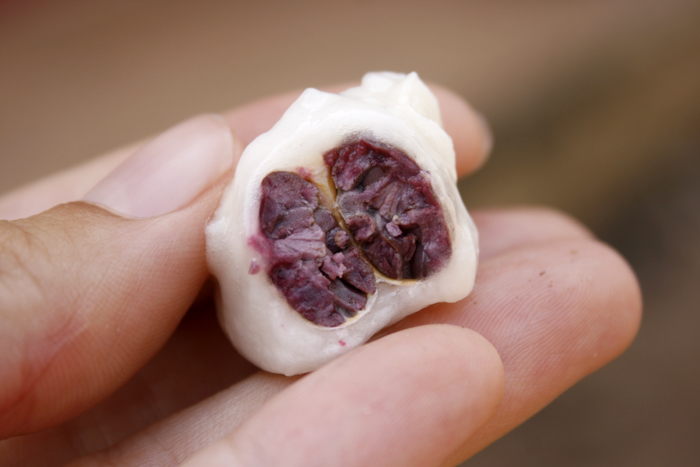
The purple bean within is bitter and quite inedible. I have no idea how the indigenous people’s around the Caribbean came up with the ingenious idea to turn the cacao bean into chocolate, because there is nothing whatsoever about the raw bean that remotely resembles anything tasty.
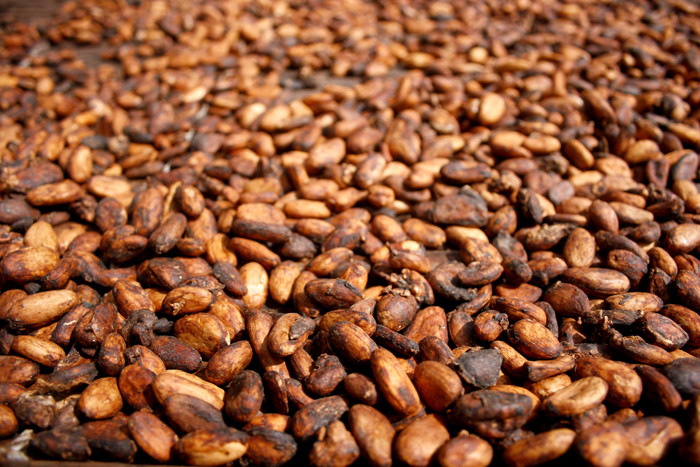
After harvesting, the beans are fermented under plantain leaves for a week, and then they are dried in the sun for another. After that, they are sold to cacao dealers for further processing. I’m not sure if the majority of cacao growing villagers here even know what heavenly pieces of deliciousness this bitter bean is turned into.
 Katja Malmborg