For hundreds of years before Ghana’s independence, the Europeans traded along the West African coast. Due to favorable geophysical conditions, the stretch of coastline that later became Ghana’s became the center of the European-West African trade. The competition was fierce between the Portuguese, Dutch, British, French, Germans, Danes and even Swedes for a little while. By the late 18th century, there were 37 trading forts along the coast. It is interesting, in a quite morbid sense, how some of this trade primarily was used as moves in the bloody power game that was going on between the European nations, thousands of kilometers away. The Swedish involvement in the building of Cape Coast Castle during the 17th century, for example, was basically just a move used to rattle opponents during the Thirty Year War.
One of the oldest forts is St George’s Castle in Elmina. It was built by the Portuguese in 1482, and was the center of their gold and ivory trade until it was captured by the Dutch in 1637. It then became the headquarters of the Dutch West India Company until the British took it over in 1872.
At first, the castle was built as a trading post. However, as the slave trade took over as the major activity for the Europeans in this part of the world, the storages were turned into prison dungeons, where slaves were kept under terrible conditions for months on end before being shipped over the Atlantic.
It is a heavy history, that this castle has borne witness to. Included in the entrance fee is a guided tour around the castle, from the dungeons to the commander’s chambers, and hearing the stories of how the slaves were treated, well. The terrifying statistics on how many died in the cramped, unsanitary conditions in the dungeons, and then again in the ships during the journey crossing the ocean, that’s the stuff of nightmares.
But it’s kind of like visiting a concentration camp. The places are actually not that much to see, but the stories that you’re told, and what they force you to imagine. I just kept on spontaneously bursting into tears during that anti-racism week in Berlin that I was sent to by my political science teacher in high school. Visiting concentration camps is not the nicest thing I’ve ever done. And I’m not sure how useful it really is, feeling that terrible. I’m not saying that its bad, I simply don’t know. Has it made me more capable of making sure terrible things like that don’t happen again? I mean, I’ve read about the camps, and I’ve read about the slave trade. Theoretically, I know what happened. Do I need to see it too, to not forget?
I guess I’m more seasoned now, than at seventeen. There were no tears at St George’s Castle. Instead, I kept on being distracted by the pretty, old colonial Portuguese architecture.
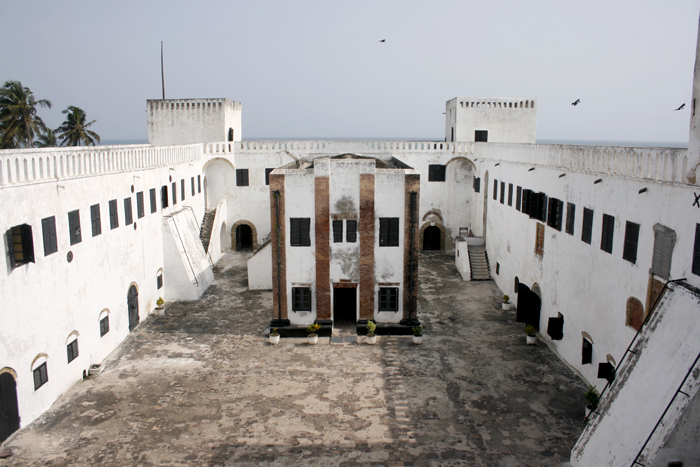
The main inner courtyard, with the old Catholic chapel in the middle. Now, it houses a small but very informative exhibition on Elmina’s history.
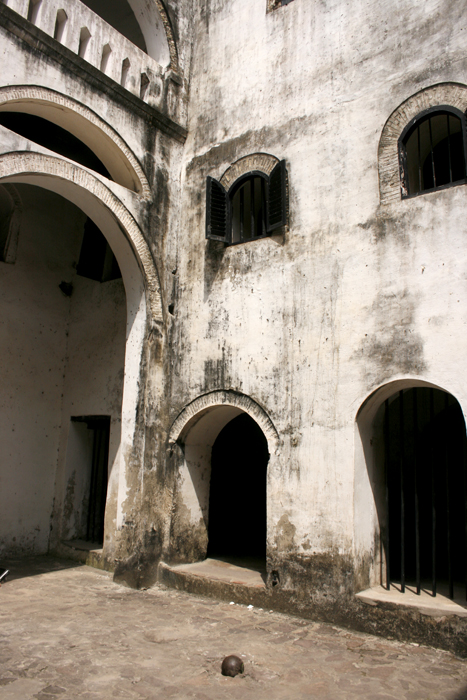
The small courtyard outside the females’ dungeon. The cannonball lying on the ground was used to punish the women who refused to sleep with the Portuguese or Dutch soldiers.
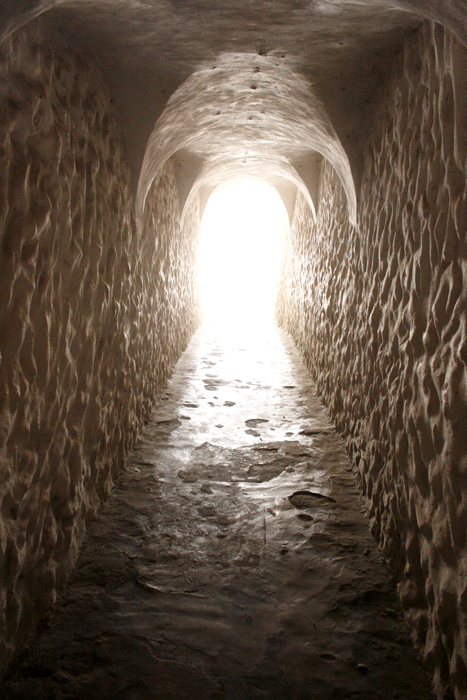
The tunnel down to the females’ dungeon.
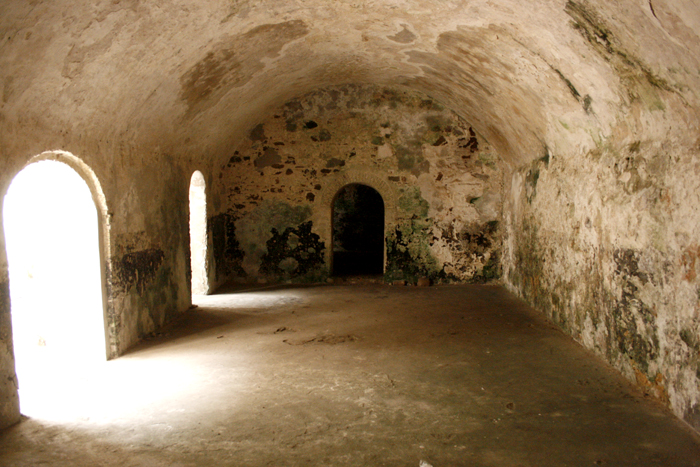
The females’ dungeon.
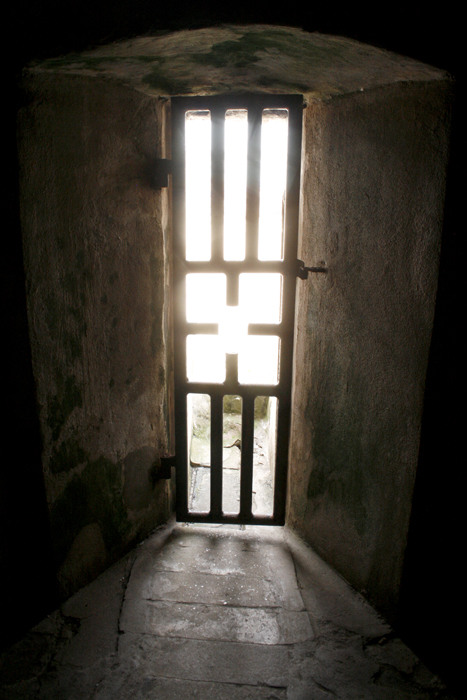
The Door of No Return, that leads out to the docks, where the slave ships waited for their cargo.
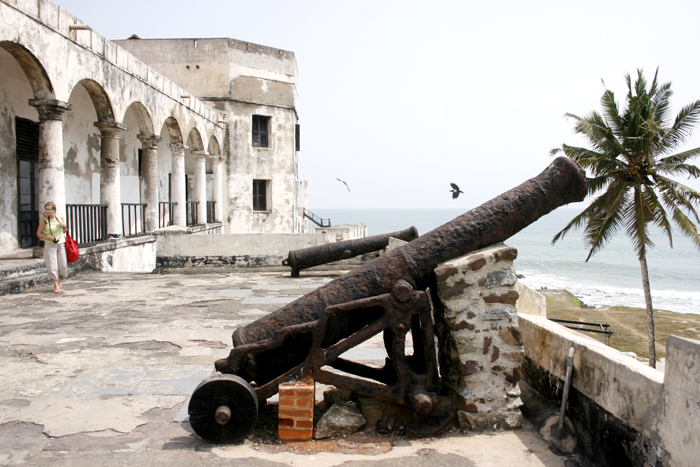
The fort needed a lot of protection – not from the locals, because the trade was mostly handled amicably between the Europeans and the coastal chiefs, but from other European traders. Now, everything iron is fast rusting away in the humid heat and salt.
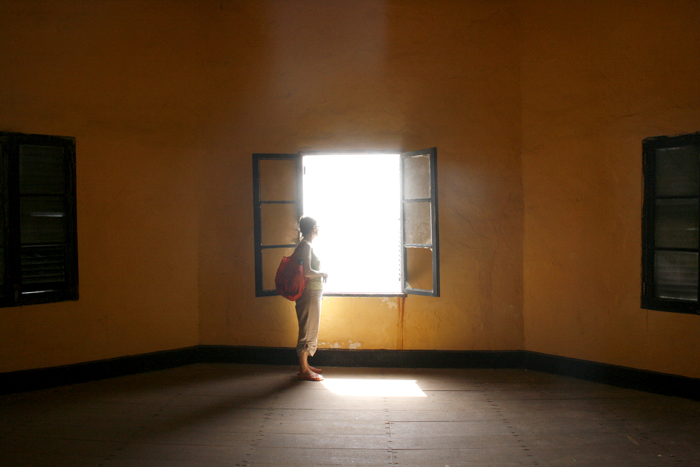
The commander’s chamber, with an amazing view over the lagoon, fishing village, the beach, palm trees and the Atlantic ocean.
There were other people in the tour, though, who actually did seemed surprised to hear the stories that the guide told us. Maybe everyone isn’t as well-versed in our nightmarish past as I am, having studied post-colonial theory, economic history and all. Maybe these places are needed for those people, the once who don’t much enjoy reading but who need to see something before they can try to grasp it. Places that make history real, and not just a bunch years and statistics.
St George’s Castle is, together with the Cape Coast Castle, a UNESCO World Heritage Site. I can definitely understand why.
 Katja Malmborg