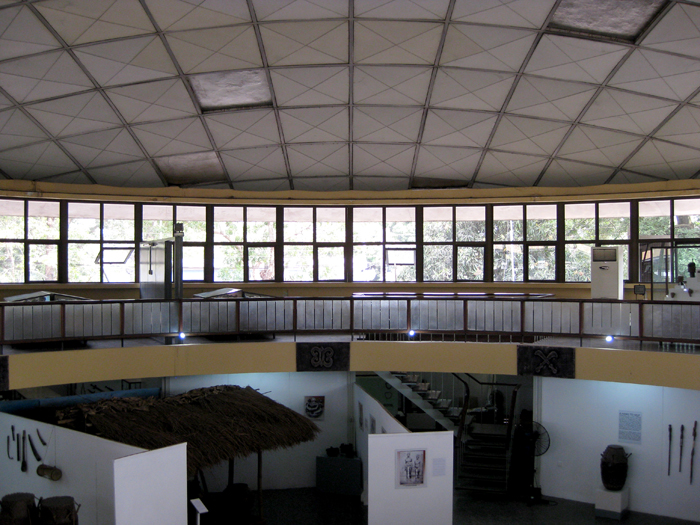
Ghana’s National Museum wasn’t a very exciting affair. There were some dusty examples of Ghanean and other West African fabrics, carved wood and metal art, a small exhibition about a Danish slave ship and another showing pictures of young people learning the old traditional dances of Ghana, accompanied by silly texts about how the young people are the future of a country and that museums have an important role in making sure that the kids know their history and heritage. Don’t get me wrong, children are the future and I’m all for museums. The texts in this little display, though, were just so self-evident they felt like jokes.
And about the artifacts, I’ve seen more beautiful, more impressive pieces both from Ghana and other West African countries before. At museums in Europe, both in their own collections and in visiting exhibitions. Especially the British Museum is amazing.
That says something of Ghana’s history, maybe even more than the artifacts at the National Museum. That the most impressive manifestations of the cultural history of a region aren’t in the possession of the countries themselves, but in museums in faraway countries where they can be looked upon as curiosities by school children. “Imagine, there was culture and art in Africa even before the colonialists arrived. I had no idea!”.
They do have some amazing craft traditions here in Ghana. Definitely something to be proud of. Their National Museum, unfortunately, does a poor job showing it.
 Katja Malmborg