Being further south, and therefore having a climate that is more strongly affected by the Intertropical Convergence Zone, Banfora was obviously a lot greener than Ouahigouya or Kaya. But there was also a difference in topography. In Banfora, there are actual mountains and valleys.
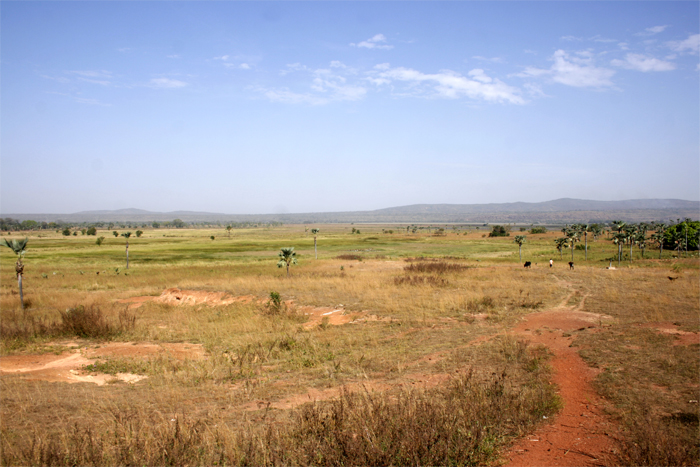
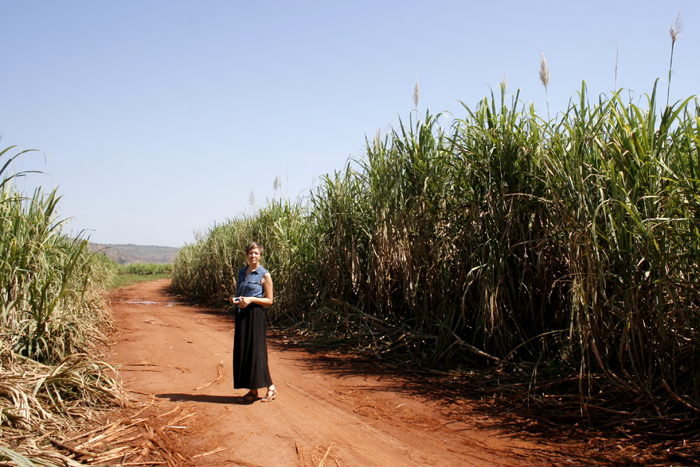
In the valleys, there are vast sugar cane fields being irrigated with huge machines. Driving on the muddy road through the field, there was a slight smell of something sweet and rotting.
In the small mountains, there are outcrops with bedrock where interesting rock formations have developed. The most striking are the domes of Fabedougou.
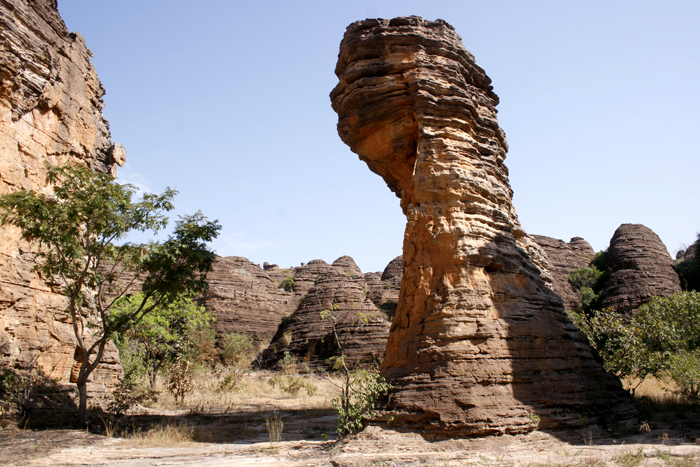
The guide claimed they were formed by wave erosion when this area was by the sea, but I was skeptical. I didn’t tell him, because he was a macho rasta man and they are so easily offended.
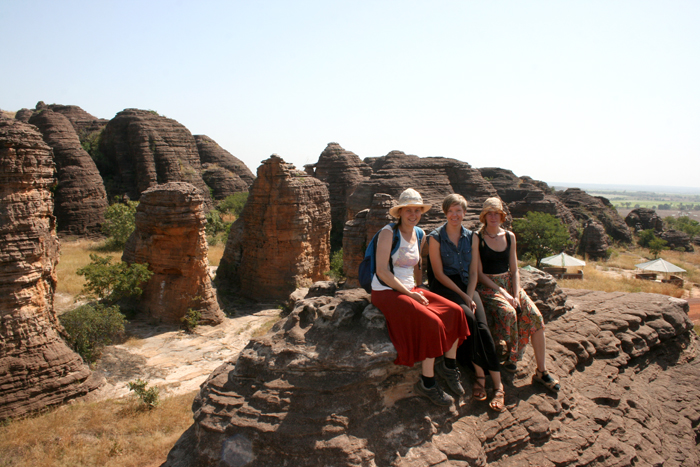
He was a real jerk, that guide, and ignorant as hell – but I’ll tell you more about that later. Basically the only good thing that he did, was to take this nice picture of the three of us on top of one of the rocks.
In my opinion, these rock formations looked too young to have been around since the time before Pangea. I might be wrong, of course, but to me, this looked like an excellent example of chemical weathering of soft sandstone with caps of harder sedimentary rock on top from rain and tropical heat. A kind of hoodoo, one could say. That’s my theory. [The photo below taken by Elli.]
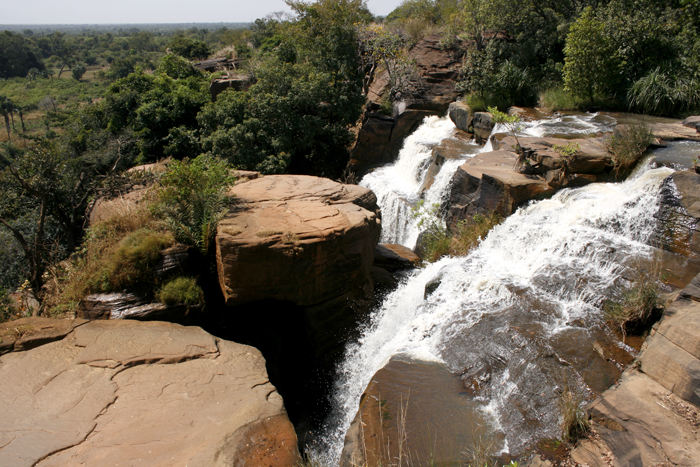
The second interesting landscape feature in the vicinity of Banfora were the Karfiguela Falls. They even made such a strong impression on the French that they named the entire region after them: Les Cascades.

Compared to water falls that I’ve seen in Bolivia, British Columbia and Oregon, heck, Victoria Falls in Zimbabwe, these were not anything special. But it made for a nice place to spend an afternoon.
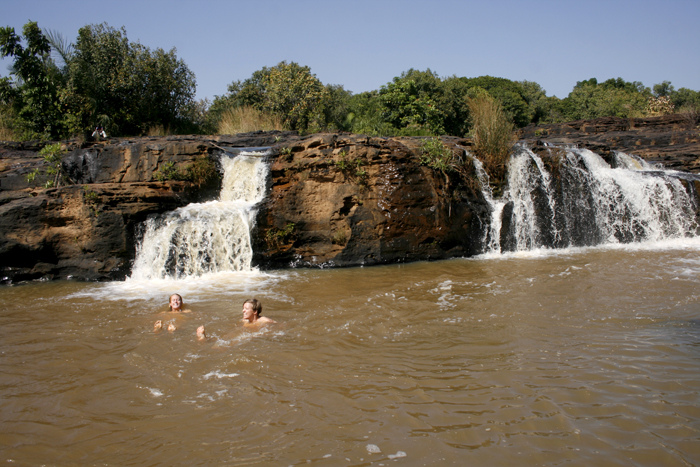
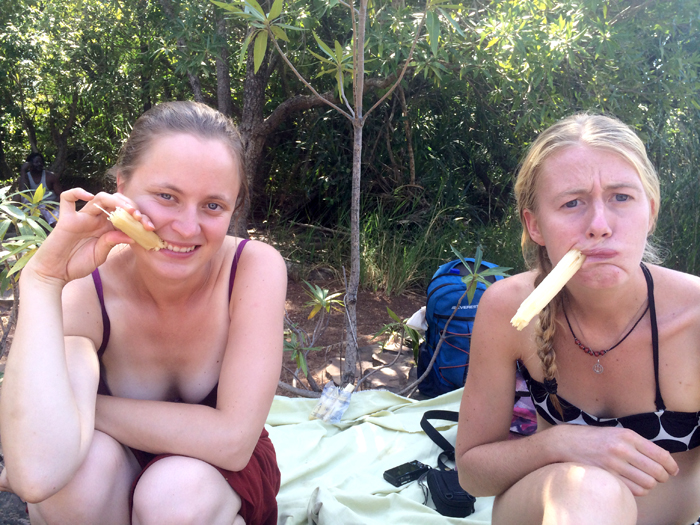
We found a pool that was deep enough to swim in. It was a hot day, and the water was amazingly cool. We ate pineapple and the guide gave us sugar cane to chew on. I lay down on the rock in the shade and drifted in and out of a light slumber, listening to the rushing water and Elli and Helena talking.
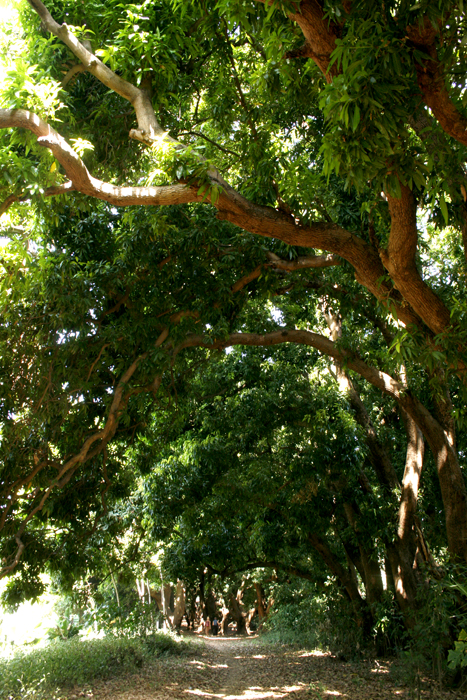
On the way back to the car in the early evening, we walked along this tree-lined path. Lennart, a Swedish man and one of Helena’s contacts in Burkina, had said that there are few positive things that one could say about the French and their actions during the colonial times in Burkina Faso. However, one good thing that they did was to plant trees. All along the major roads. Now, that’s one way to recognize the old French roads – the enormous trees lining them. Here, they were mangoes. Gigantic. The largest mongo trees I’ve ever seen. Possibly even a hundred years old. Oh, trees.
 Katja Malmborg