I did a lot of writing about the events that weren’t quite a military coup, but that had too much military involvement to only be a public uprising, back when there was a lot of action going on and Elli and I were put under house arrest for safety reasons. It had quite a toll on my mental stability, being locked up like that, and as soon as we were allowed to get out of our room, we plunged into fieldwork and there was no time to follow the more peaceful, but very significant developments that took place after the demonstrations.
Now things are quite settled here, after a couple of weeks of negotiations, so I thought it might be nice to give you a summary of what’s happened. To get some closure, in a sense.
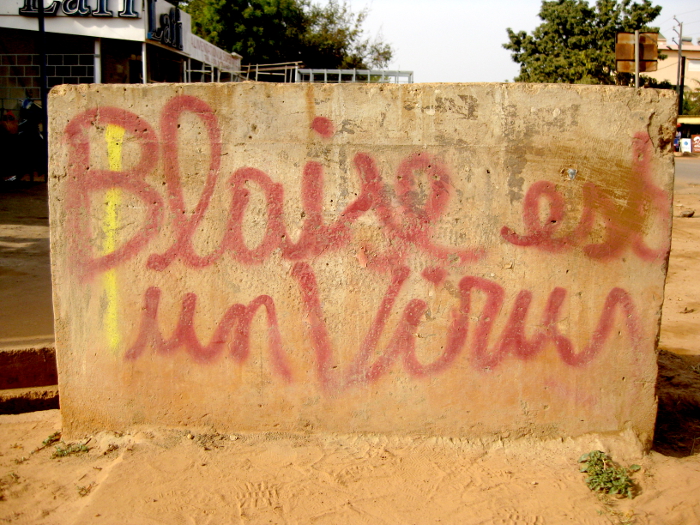
As I wrote, the military took power after former president Blaise Compaoré resigned and left the country. At first, it seemed like it might become problematic, since different officers declared themselves as heads of the country, but eventually everything settled on a man called Zida. According to the constitution, elections should be held a minimum of 90 days after the president resigned, but the military had declared a state of emergency and that the constitution didn’t apply anymore.
The presidents of Ghana, Côte d’Ivore and Nigeria came to the rescue and negotiations got started between the military and the opposition parties. The African Union set a dead-line of two weeks for electing a civil transition leader, but Zida said that that wouldn’t happen. This needed to take time, he said, and they wouldn’t stress things.
One thing that complicated matters was that all the most natural potential civil transition leaders are politically active, and will want to run for the presidency once the real elections are held. The transition leader cannot run for president, so, that ruled out most candidates.
However, a week or so ago, a transition plan was agreed upon, in which a one year transition period was settled. This in order to give the country and its politicians and people time to transition into a society where democratic elections can be held. In November 2015, the real president will be elected.
And on Sunday night, Michael Kafando was chosen as the transition leader of the country. Kafando is 72 years old and was the Burkinabe ambassador in the UN from the late 1990s to 2011. He has plenty of experience, and the people that I’ve spoken to seem to think he’s a good choice. A politician, but not too entwined in Compaorés net to be a new version of the president they just got rid of.
So, what could have turned really ugly at one point, ended up being a quite civil process after all, considering an African leader was ousted. Except for a couple of protesters, no one was killed, and a couple of buildings were burned in the capital, but now it actually looks like Burkina Faso has the potential to start turning into a democracy.
It is all quite exhilarating, really. Kind of like a late onset Arab spring in a small part of the Sahel. And I was here. Too busy working and with too low proficiency in French to completely follow all the developments in detail, but still. This was quite different from the disappointing elections we had in Sweden this year, I can say that at least.
 Katja Malmborg