I had read in the guidebook that the queues to the national art gallery Rijksmuseum in Amsterdam could be mental, like, waiting for hours. So I decided to do that first of all, get up early in the morning and be at the museum right when it opened.
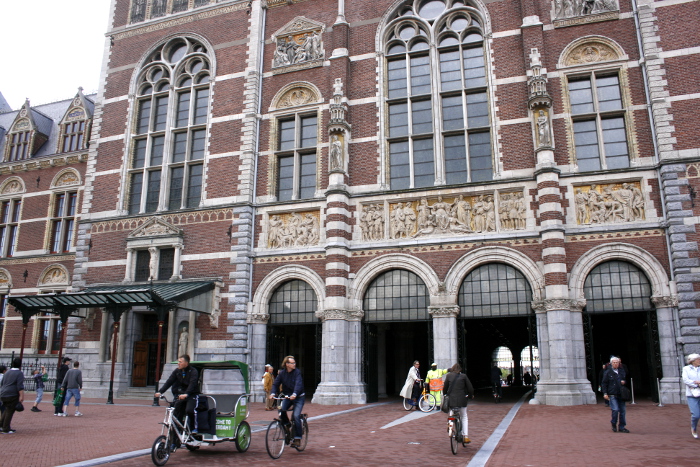
So I was. Nine o’clock. And there was no queue at all. Later on, at one when I was about to leave, the queues did at least exist, and the last hours I spent in the galleries were pretty crowded. But really, it wasn’t that bad at all, not the nightmare the guidebook had warned me about. The complete renovation of the museum, that they finished last year, must have made the throughput of visitors much more efficient too.
Well, to return to the actual museum, I was asked to leave my backpack in the wardrobe, and in the confusion of that I left my camera in the bag (I guess I thought I wouldn’t be allowed to take photos in the museum anyway). Well, turns out I was allowed, and now I only had my crappy iPhone 3 camera with me. I got so frustrated with myself. But I soon forgot the frustration, walking around among the medieval art. And really, not having the camera meant I actually had to look at the sculptures and the paintings, instead of just snapping photos of everything. Maybe I should travel like that more often. (It’s a constant debate I keep with myself – does all the photographing mean that I watch things instead of experience them? I can never make up my mind about that, and in the end photography and blogging is one of the ways I process the things I experience, so I just keep on carrying around my camera wherever I go.)
I just took a couple of shots of the really special pieces, so that I remember them. Rijksmuseum is a huge place, with so many pieces of art that it’s impossible to give a comprehensive description of the place. So I’ll just tell you about the things that made the strongest impression on me.
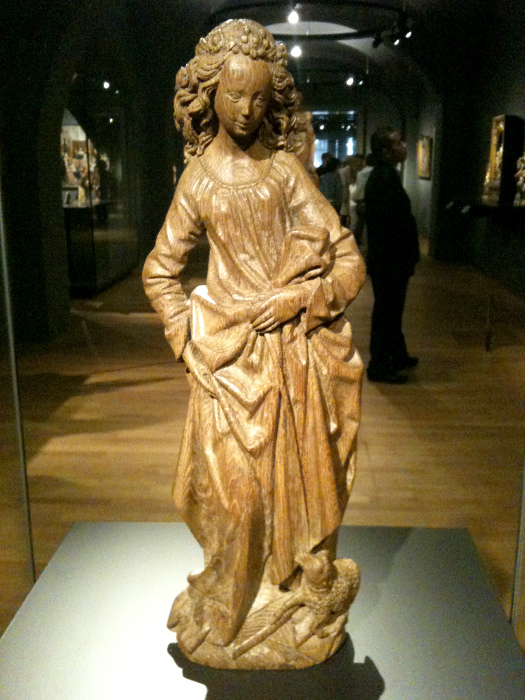
This little statue of Saint Agnes, made out of oak by Adriaen van Wesel in 1470-1480. So delicate, requiring so much detail. I couldn’t stop looking. And this was more or less the first thing that I came across in the gallery for medieval art, on the first floor right by the entrance. Still, I think it was my favorite piece in the whole museum.
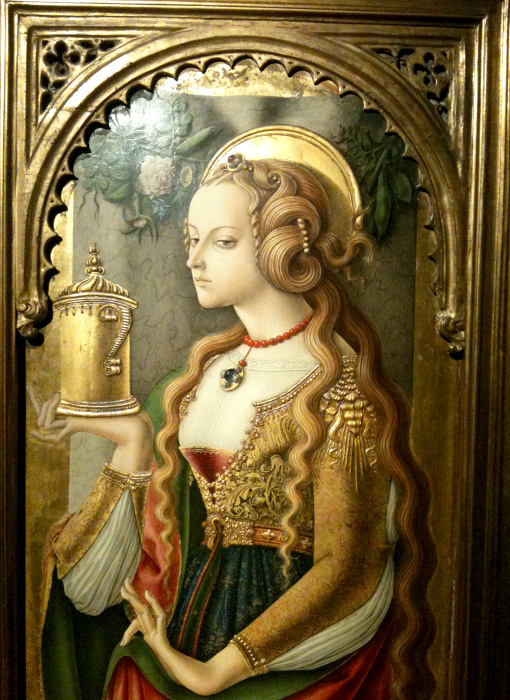
This panel of Mary Magdalen, painted for an altarpiece by Ascoli Piceno in 1480, also struck me. There is something with these medieval pieces of art that speak to me (when they are not depicting Jesus on the cross – those pieces are mostly just morbid). How delicate she is, and all the gold. In this version, Mary Magdalen is really a beautiful woman.
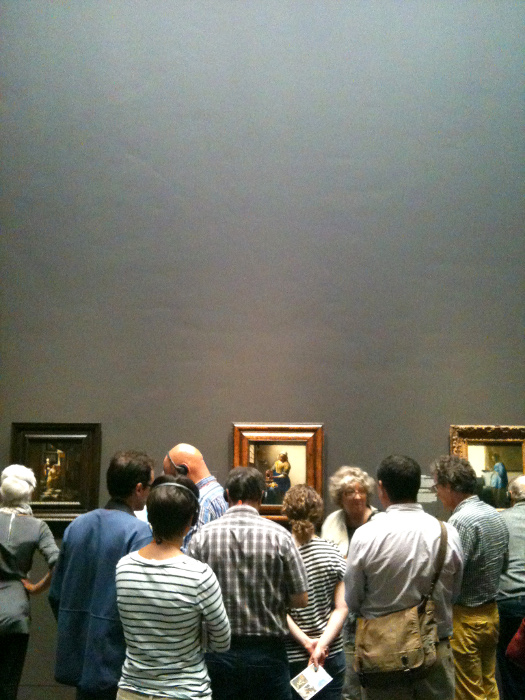
The crowd in front of the three Vermeer paintings in the Honor Gallery. It’s a huge hall, with Rembrandt’s Night Watch at one end on the place of highest honor, and the noise at once when you enter – it’s deafening. While most other parts of the museum were quite empty. It’s odd, how people always find ways to be in each others way. Of course the Rembrandts were cool, and the Vermeers even more so (in my oppinion), but all this waiting and shouldering, it just ruined the experience.

The Shephardess, by Paulus Moreelse (1630). The way he has captured a both shy and seductive expression in her face, and the voluptuousness of her attire – and that she actually is showing one of her nipples! I had no idea what to think!
These 17th century paintings create such a stark contrast to today’s ideals about the female body. Now, you’re supposed to be thin and fit but still have breasts. Back then, the women were painted leisurely lying on beds, with huge thighs and plump bellies. Maybe they weren’t active, but at least the ideal body was more attainable and also way better for your health.
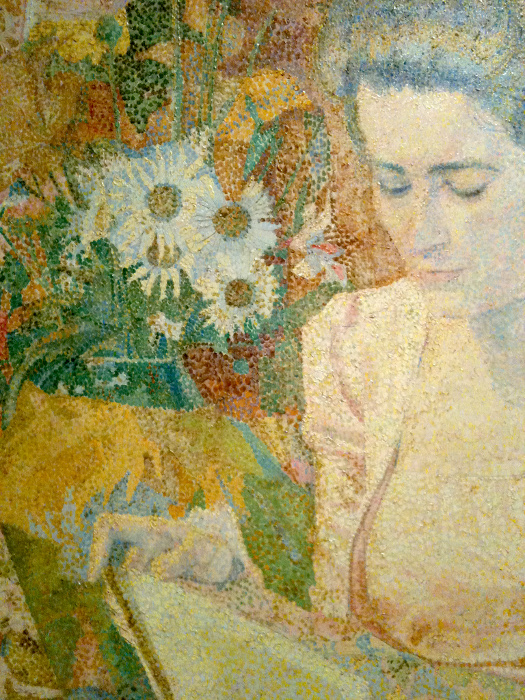
Part of the portrait of Marie Jeanette Lange, by Jan Toorop (1900). Lange chaired the Dutch Association for the Improvement of Women’s Clothing, an organization that promoted better and more comfortable clothing for women. Think about that! It’s so easy to forget, in this modern western world, how restricted women have been (and still are in some places). Just having to wear a corset! And long dresses with meters and meters of fabric around your legs all the time!
This portrait, of the first wave feminist, was one of the last pieces I saw at the Rijksmuseum, before going out into the Amsterdam sunshine. It made the perfect conclusion for my long journey through Dutch and European history of art on this 11th day of my trip through Europe. It’s an impressive collection that they have at the Rijksmuseum, and it is definitely worth a visit, if you’re at all interested in anything resembling art.
 Katja Malmborg