Great Britain had a big navy base at the Orkney islands during the second world war. At one point, this base got seriously attacked by the Germans, leading to the loss of a big war ship and hundreds of men. After that, Churchill wanted to make sure that the Germans wouldn’t be able to get in without being noticed again. Therefore, under the pretext of creating a greater accessibility to the southern Orkney islands, Churchill constructed huge barriers, cutting off the access between the calm water between the islands and the open Atlantic ocean on the other side. Since then, they’ve been called Churchill’s Barriers, and today the main road from north to south runs on these huge slabs of rocks and concrete.

The waters around these barriers are still full of the wrecks of German ships that met their end here during the end of the war. Some are off limits, but some are apparently popular for scubadiving. If you’re into that kind of thing.
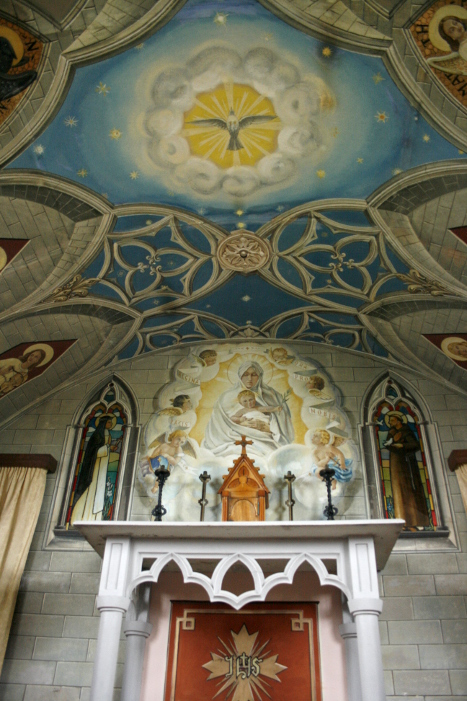
The barriers were built by Italian war prisoners that had been detained in several different camps on the Orkney islands. One of the things they left behind, except the barriers of course, was this tiny little Italian chapel with the pretty wall painting. It was small, and desolate, and kind of strange, but I liked the flying dove.

South Ronaldsay is the big, southernmost island of the Orkneys. It mainly consists of even more grass, sheep and cows. And this lonely telephone booth.
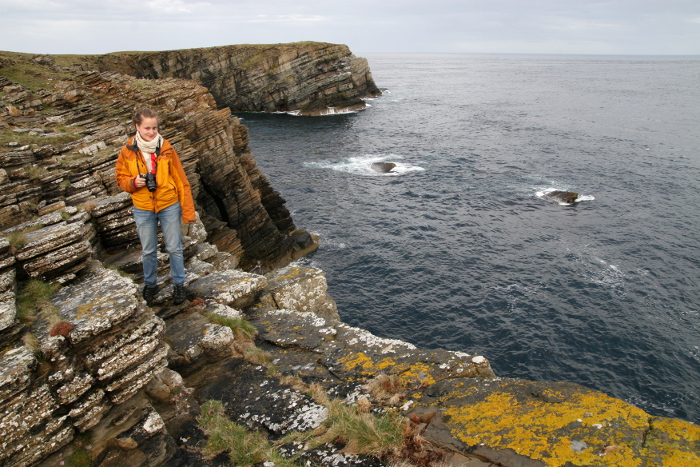
On the southern tip of South Ronaldsay, we could finally glimpse the sun through the heavy clouds. Which made all the difference: For the last time on this trip, we got to experience the extreme contrasts in these islands. The softly undulating hills, green and inhabited by sheep and cows, together with the dramatic cliffs, the raving sea and the never completely cloudfree sky. It really is one of those places.
(Picture, obviously, taken by dad.)
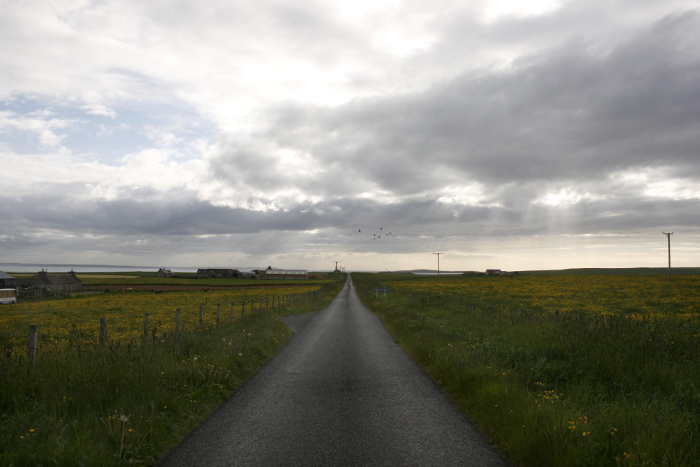
The road leading back to Kirkwall.
 Katja Malmborg