The one tourist attraction that Kirkwall has, is the old Norse cathedral. Its construction was begun in 1137 by the Norse settlers on Orkney, but it took about three hundred years to finish. It’s an impressive sight, though, completely dominating central Kirkwall.
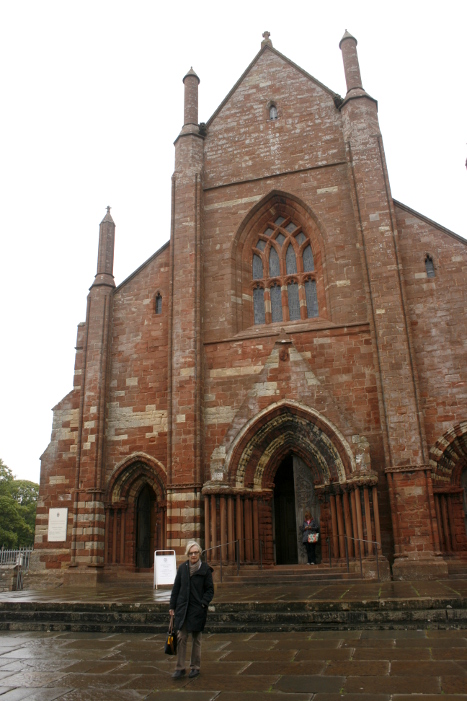

Everything being red, I don’t know, it created a feeling of warmth. I’ve been inside many cathedrals in my life, but this was special. Almost soulful, despite it being so big and bare.
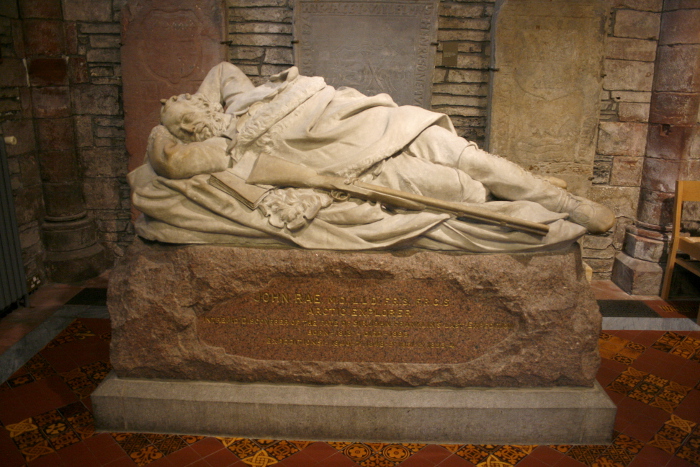
In the cathedral, there are several memorials. Among them, this caught my eye. It’s of the Arctic explorer John Rae. He was born on Orkney in 1813. Isn’t it a remarkable memorial monument? He looks so peaceful, in his explorer’s gear. Like he died in his sleep in a tent in northern Canada, and his body turned into stone in the icy wilderness.
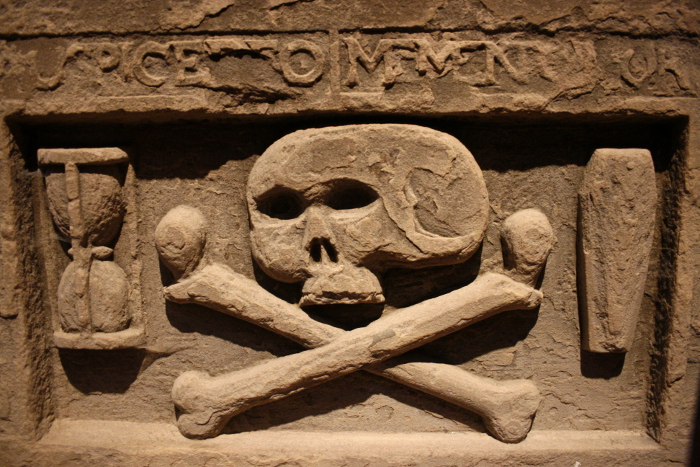
The walls of the cathedral was full of these skulls and bones, combined with the hourglass and something kind of reminicent of a coffin. Above, something unintelligble is written in latin, and then MEMENTO MORI. Remember that you will die. Isn’t that a wonderfully morbid thing to cover the walls of a church with?

The cathedral is built of red sandstone. This particular type of sandstone is probably rich in calcium carbonate, because it’s weathering like there’s no tomorrow. It creates some really cool patterns in the stone, but is sad on the cathedral. It will probably not last for as long as Skara Brae or the Ring of Brodgar, not with the amount of carbon dioxide that we’re releasing into the atmosphere. (Geochemistry, folks. Suffice to say that high levels of carbon dioxide creates more acidic rain, which leads to weathering of calcium carbonate rich stone. Everything is connected!)
 Katja Malmborg