23/7: The most famous dome in Sequoia National Park is called Moro Rock, and it is easy to climb.

Moro Rock from Generals Highway.
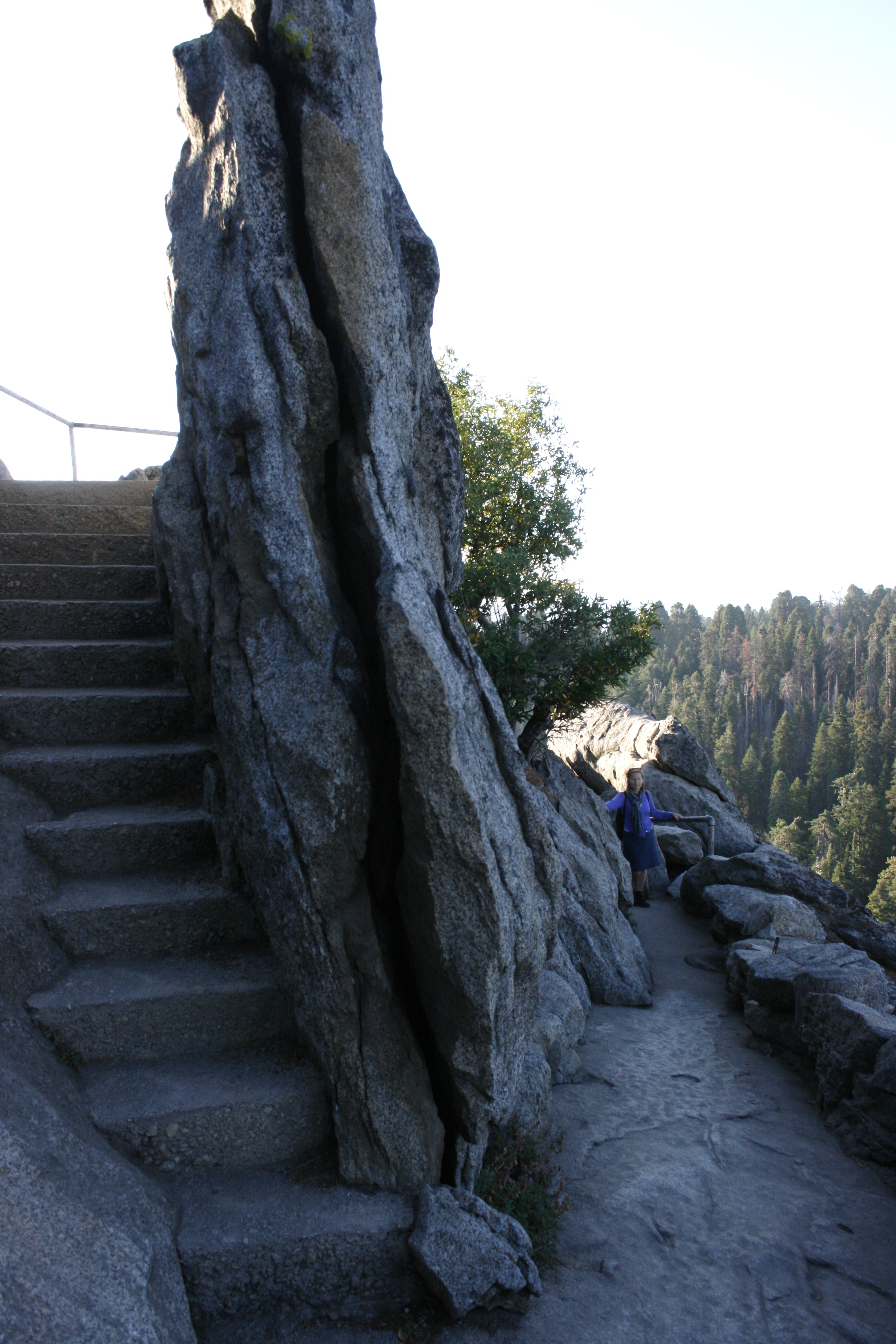
Moro Rock became a tourist attraction in the early 1900’s, and in 1930 a path up to the top was built. Just walking there, imagining the efforts it had taken to construct this narrow path in the hard granite dome, made me dizzy.
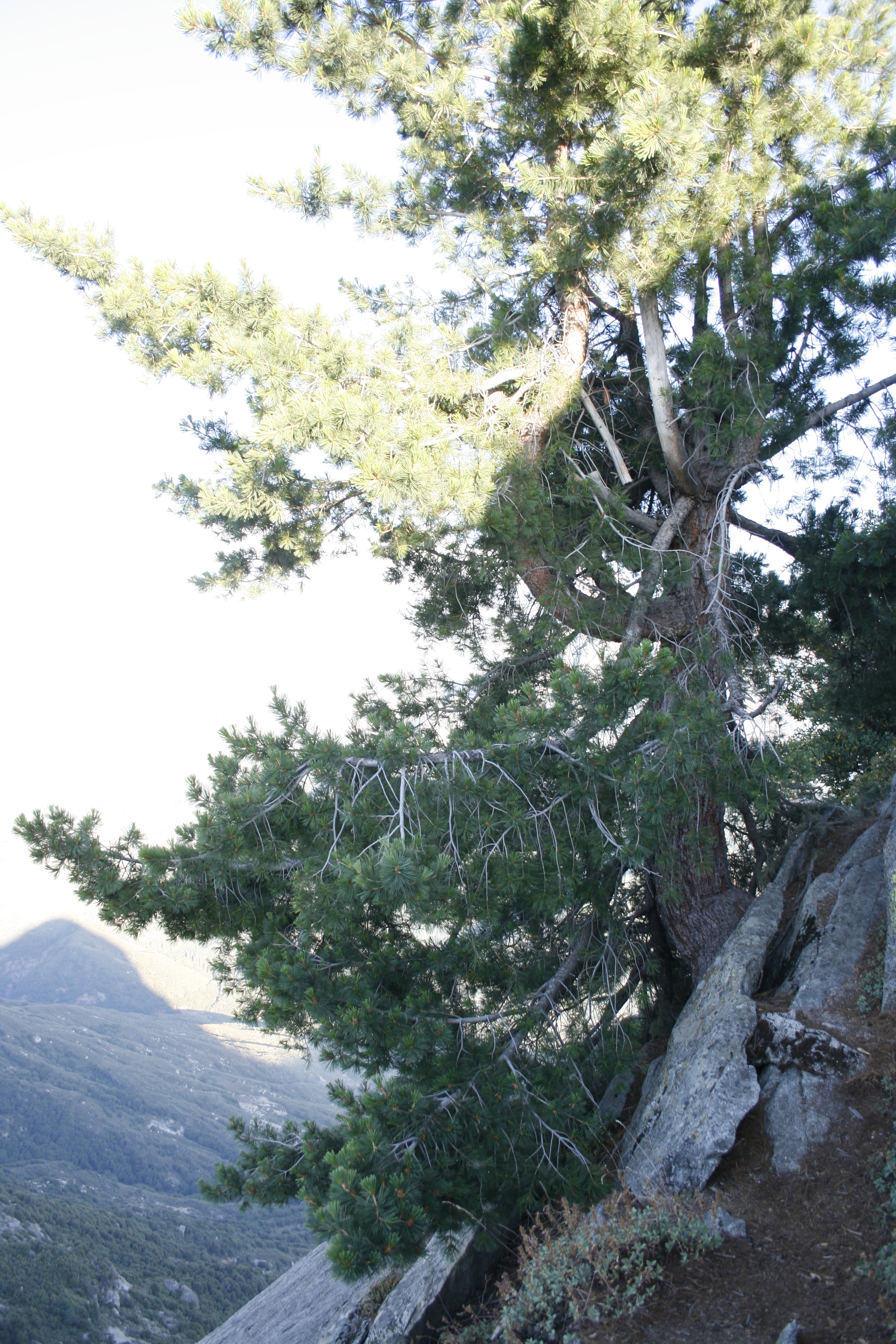
Crazy tree.

At the top.

The view. Magnificent. Mountains. Incredible.
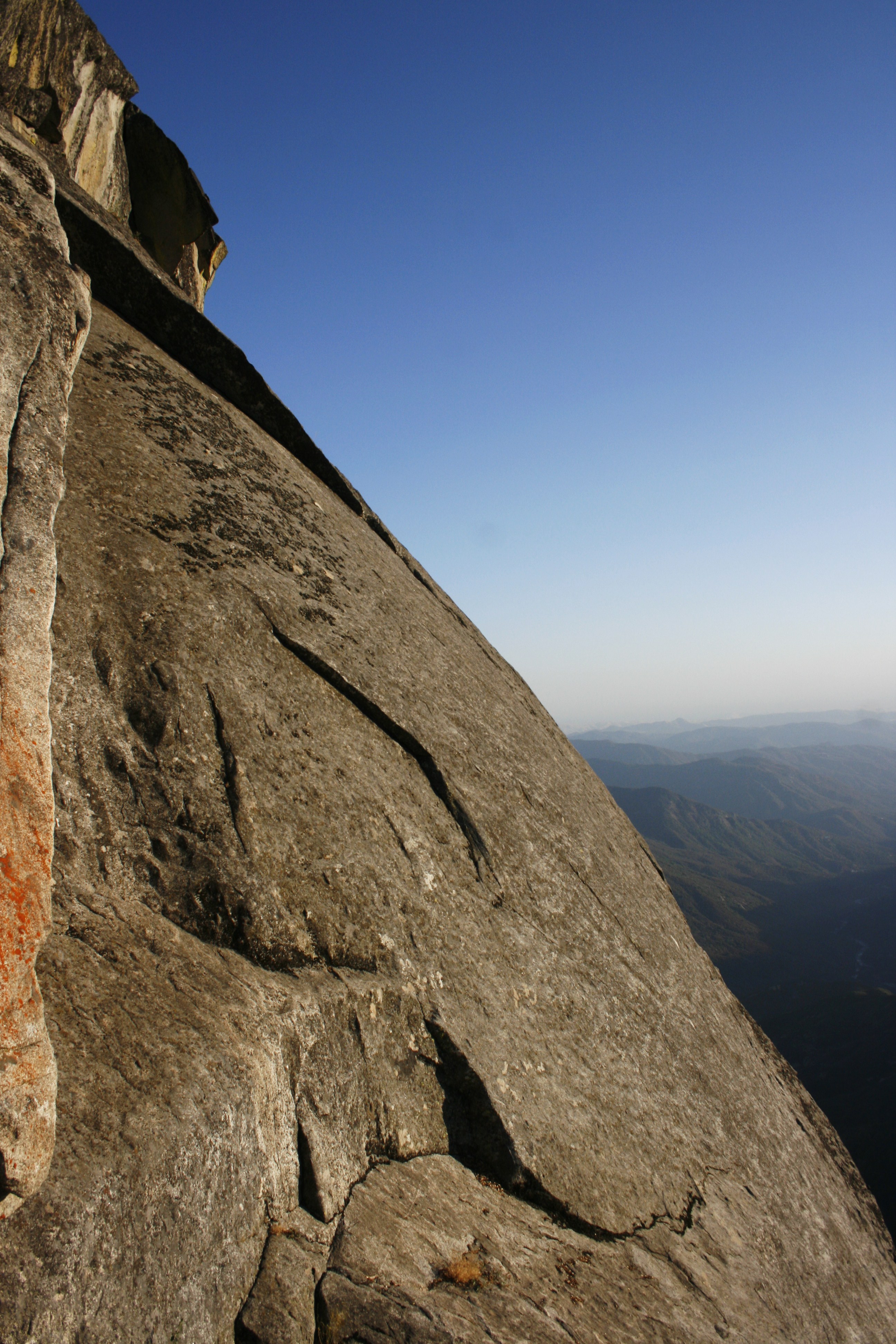
And, dear friends, of course there’s a geologic story behind these domes. You see, the bedrock on Earth varies immensely, both in age, composition, density and resistance. The granite domes, as the ones in the Sierra Nevada, were created long ago when a body of magma filled up a chamber underneath the Earth’s surface. After cooling down, this created a lens of very hard granite surrounded by another, less resistant kind of rock (for example, sedimetary limestone from old ocean floor). The pressure in this granite lens was extremely high, but due to the surrounding rock it was contained.
Then, as tectonic activities shifted the bedrock in the Earth’s crust, this part of softer rock and granite lens ended up on the surface of the Earth, for example in a mountain chain as in the Sierra Nevadas. The softer rock soon eroded away, to reveal the granite lens within. And when this granite, that had been under high pressure for millions and millions of years, suddenly was released, it started to bulge, flow, rise like a yeasty dough. And instead of weathering and eroding in small pieces, like many sedimentary rocks do, the bulging dome eroded in layers, like an onion.
And that is how the round dome peaks of the Sierra Nevada came to be. Ah, the excitements of geology.
 Katja Malmborg