At several hostels that we stayed at in California, they had signs urging us to use as little water as possible.
At the hostel in Moterrey, they had special coins that you fed into the shower, each coin worth one minute of water. When checking in, every person got four coins. It was not that we weren’t allowed to shower more, just that if we ran out, we had to go get the additional coins from the reception. This extra effort it took to get the long showers probably made at least a couple of people take shorter showers than usual. As for me, I’m not big on long showers. I just want to get them over and done with.
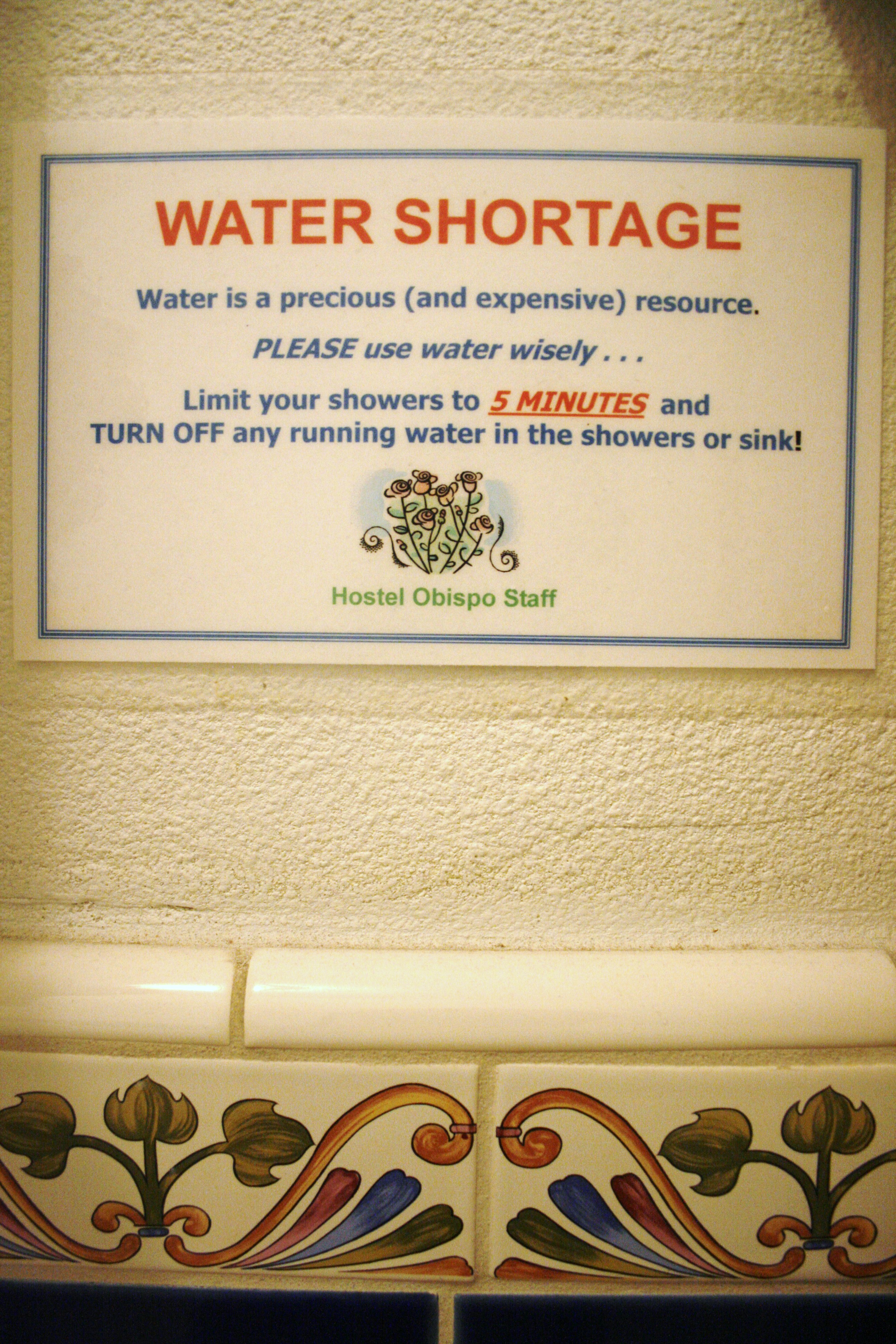
At the hostel in San Luis Obispo, they had signs too. And in the morning, the sink in the kitchen held two big tubs of water, one with soap in it and one without. All breakfast dishes were to be washed in them, instead of every single person washing their plate and cup under running water.
This made me happy, and it made me think about the research a couple of my classmates did in Namibia. While me and Elin were investigating the water availability in Kuisebmond, the poorest neighbourhood in Walvis Bay, Maja and Petrus were interviewing hotel owners and toursits in Swakopmund about their water shortage awareness. Their results weren’t very uplifting. Tourists are an exceptionally wasteful lot. But here, in California, at least a couple of hostels has tried to make the industry a bit more eco friendly. It warms my aspiring hyrdologist heart.
 Katja Malmborg