June and July: Yeah, so, my main task as a wwoofer at Duckworth Farm was working in the blueberry field. When I told people back home about this, they got a little confused. Is it really possible to grow blueberries? Don’t they just grow in the wild? Well, these weren’t our small, wild Scandinavian blueberries. These were the big American ones, that are whiteish inside and pop when you eat them. And if you compare, I would say that one wild blueberry and one American blueberry holds about as much flavour, but the second is at least three times as big as the first. Still, I learned to really like them. They were amazing, Lorri’s blueberries.
The blueberries were a pretty new thing on the farm. The small bushes, planted in long, drip irrigated rows in the big blueberry field, were only three years old and won’t be fully mature for atleast another five years. But then they will be so big that Lorri’ll have to prune them so that she won’t have to pick blueberries on ladders. Wouldn’t that be a sight, picking blueberries on ladders?
Being me, I of course asked a lot of questions, and Lorri was happy to answer. She had really worked hard to find the perfect crop for her farm. She had a slightly acid soil, and thanks to a very shallow artesian aquifer, she had a lot of water. But the acidity made cultivating things tricky, and so did the cold, misty micro climate in the valley. Well, finally she found the blueberries. You see, blueberries like it when it’s cold. Normally, they don’t like it as far south as California, but thanks to the very special climate conditions right here, combined with the acid soil, the blueberry bushes were as happy as they could ever be. Because, blueberries are not like most crops. Blueberries want it acid, and they want it cold and wet. Duckworth Farm was the perfect place for blueberries.
And that’s how it should be done. Instead of adding tons of chemicals and stuff to the soil and on the crops to make them grow, you should choose to grow crops in places where the natural conditions already make it a perfect place. That’s how we create sustainable agriculture. That kind of thinking is what the world so desperately needs. Listening to Lorri talking about soils and cultivars and using nature itself to get rid of pests was so inspiring. I wish the world had more farmers like her.
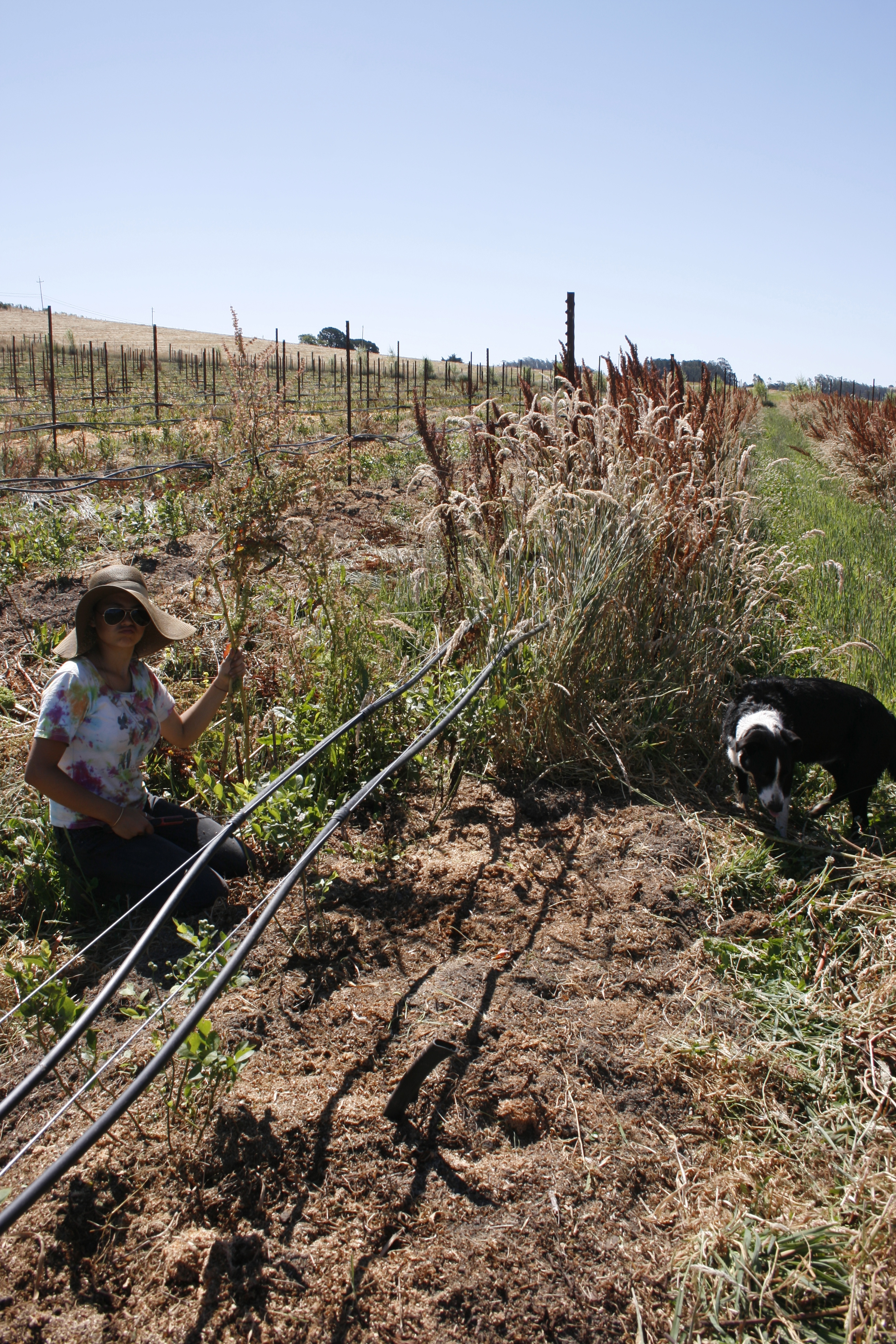
Most days in the field, we weeded. Lorri said that she had been told that she wouldn’t be able to grow organic blueberries for the first five years, because the weeds would kill her. And looking at those thick tufts of grass and thistles, it wasn’t hard to imagine how a less determined farmer than Lorri might yield to the powers of pesticides. But not her. Instead, she invented new ways of weeding. So, with huge pruning knives, we ruthlessly cut everything down. Here my fellow wwoofer Tallulah sits with the crazy-ass-grass that grew so thick and made us all sticky and itchy, together with Troubles, always around to help when one of the mouselike gophers put out is ugly head from its hole in the ground.
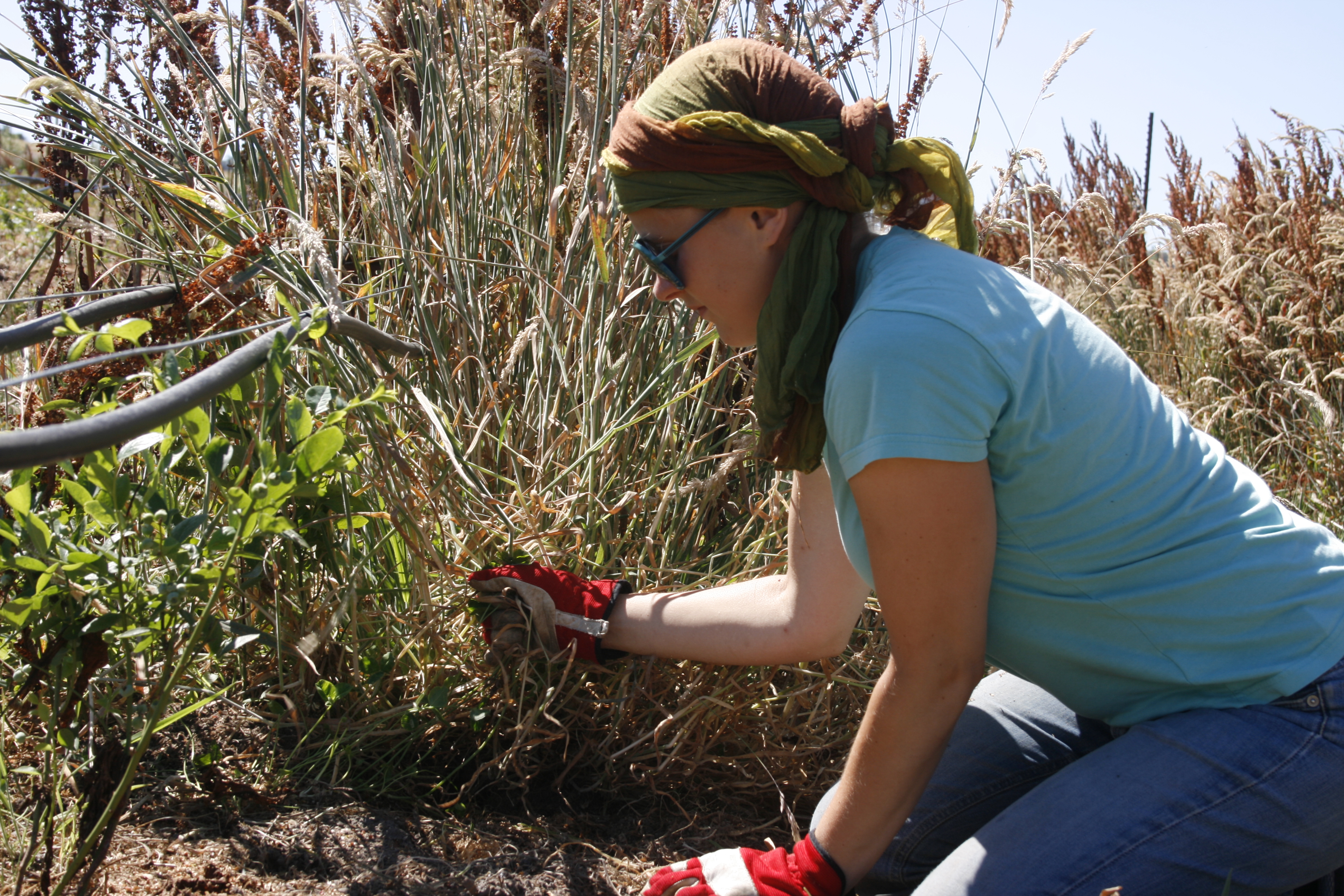
Me and the crazy-ass-grass. After the row was weeded, someone would take the tractor and cover the soil with wood shavings. In that way, the weed roots in the soil wouldn’t get any sun, and most likely die, or atleast not grow as fast as before. A good solution for the organic blueberry farmer.
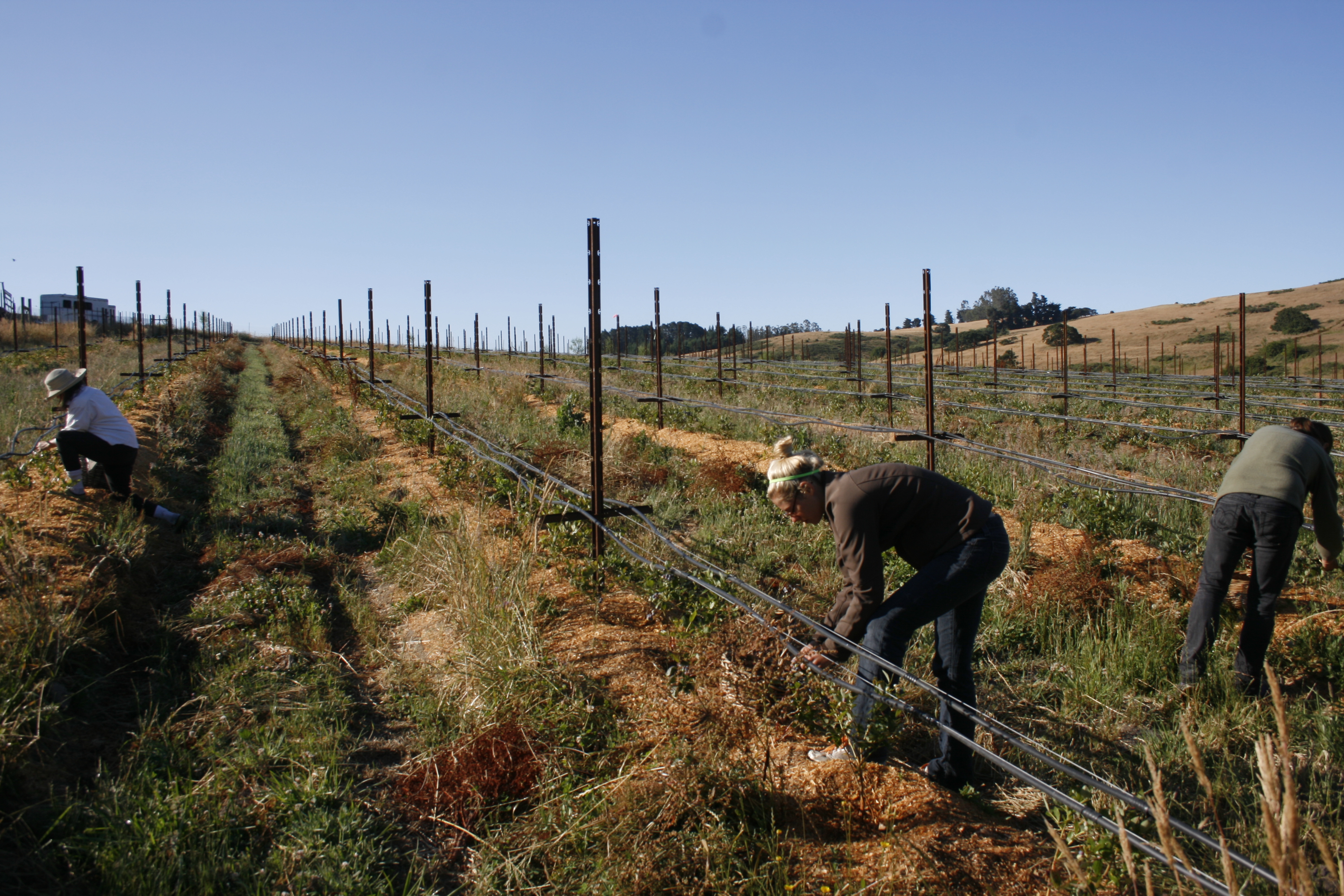
Every third day was picking day. As you see, these bushes were still pretty small, but that didn’t prevent them from bearing huge amounts of berries. And I turned out to be quite a natural at blueberry picking. In the end, I was even faster than Lorri. Well, I’ve never been any good at taking brakes. I always work until I collapse.
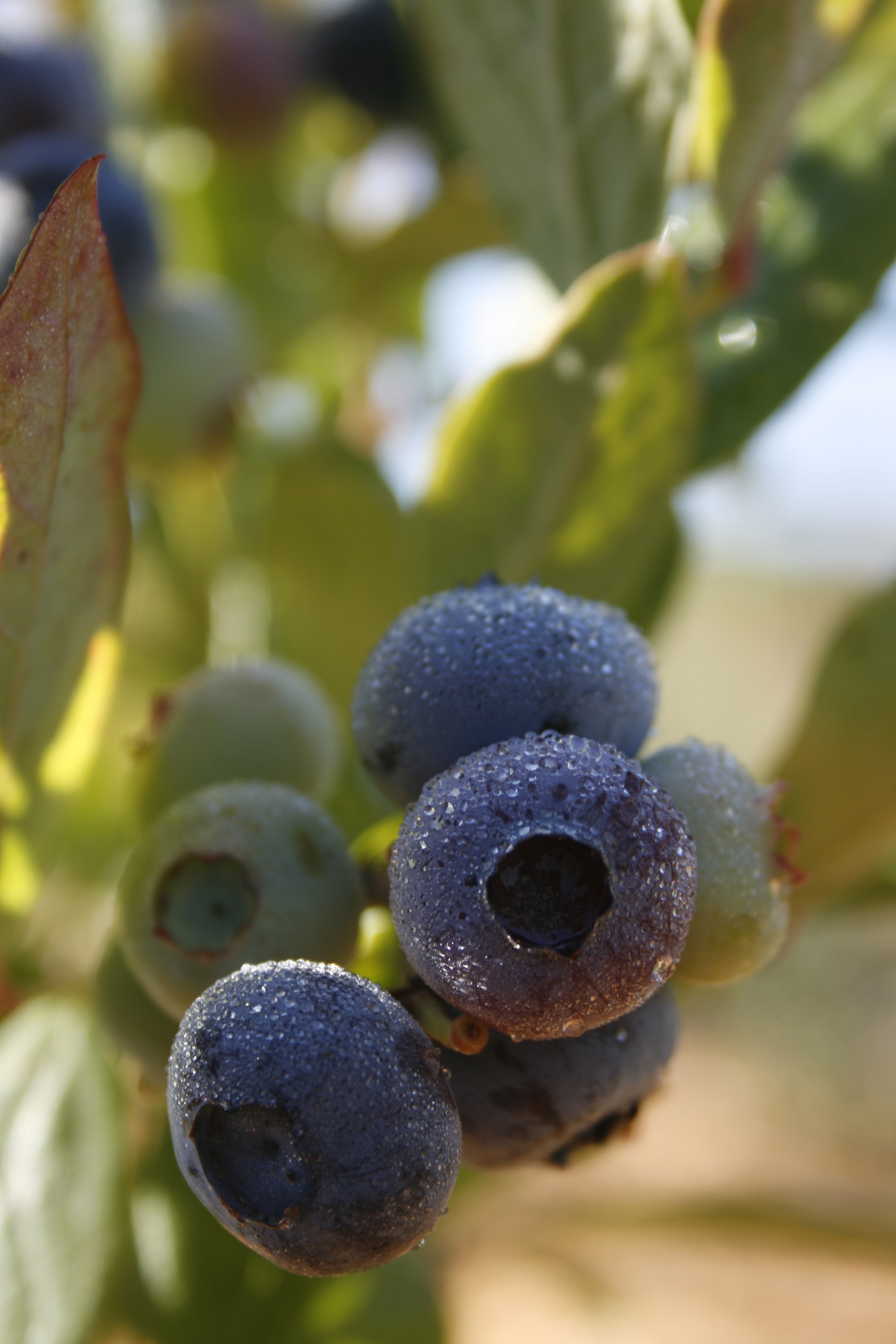
And they sure were beautiful, the blueberries, in the morning dew.
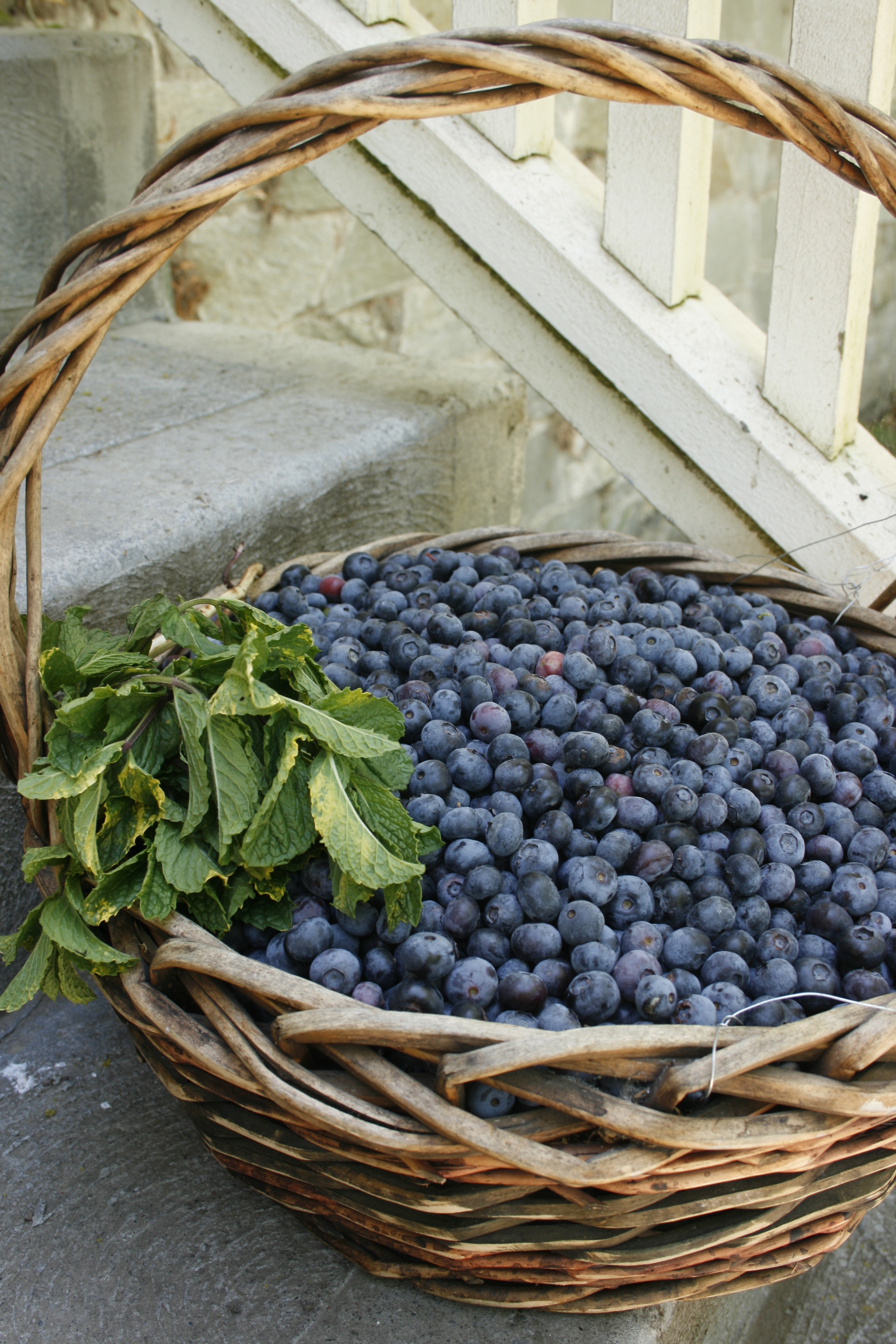
So, when the entire field was picked, we returned with our overfull baskets up to the house and it was time to start sorting.
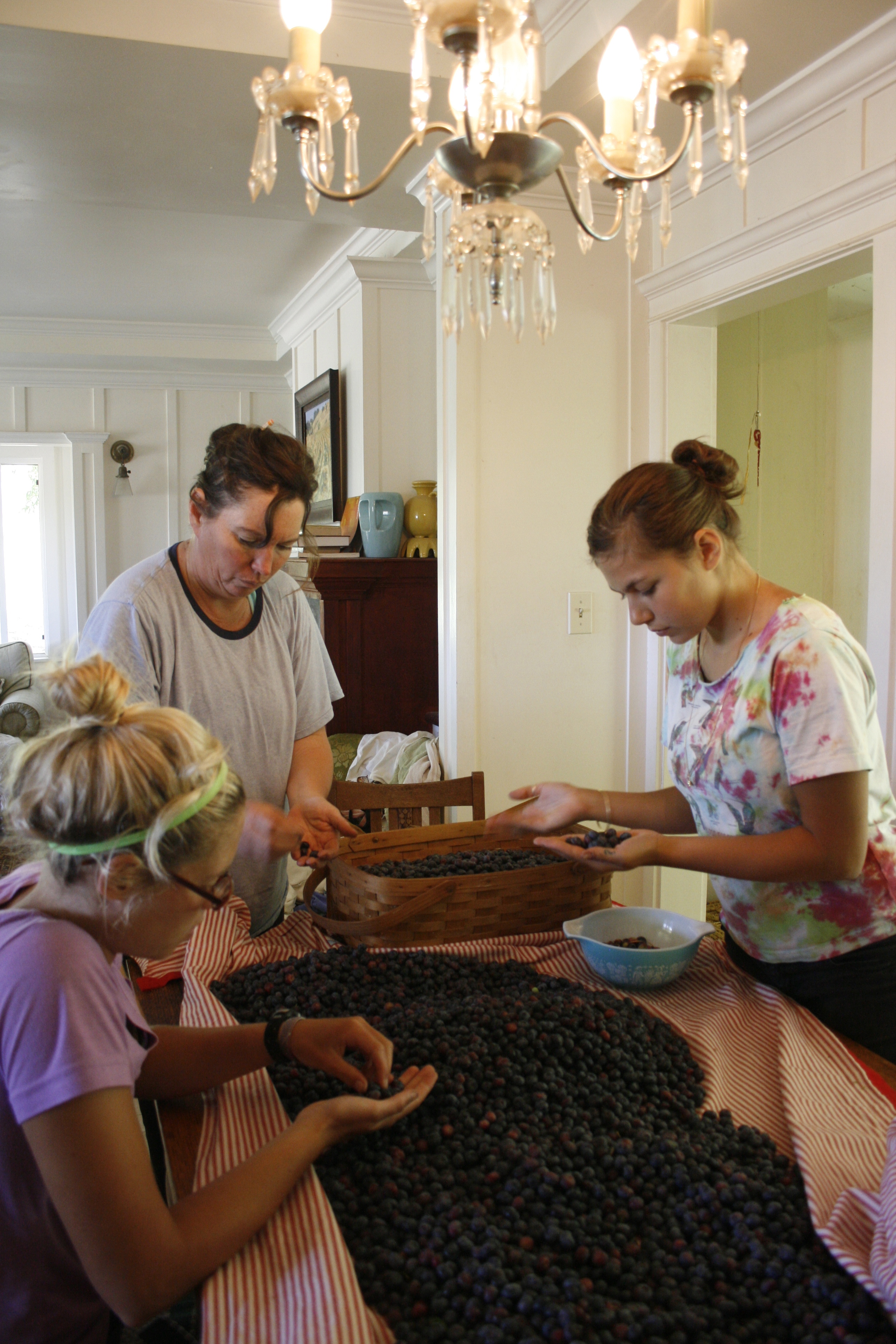
That mountain of blueberries, covering the entire kitchen table, was incredible. I’ve never seen that many blueberries in one place at the same time, and I’m pretty sure I never will see it again. Here, we picked out the not really ripe berries, the tart ones that we later would use in pies and biscuits, and the really big and beautiful ones that Lorri would put on top of the baskets of berries that she later would deliver to the culinary school and different bakeries. Because, being a successful farmer is not only about growing a high quality crop, it’s also about knowing how to present and sell.
Oh, I’ve learned so much about blueberries. I wish I had a piece of land here, back home, where I could put this new knowledge to good use. Well, that’ll have to wait a while. I have atleast two university degrees to earn first.
 Katja Malmborg