On Monday, I went to the tourist information center in Edmonton. There, I talked to a really nice guy who told me that if I wanted to see some typical Canadian suburban architecture, I should take a tour with the 151 bus. You see, before I left home, Elin gave me the mission to go somewhere unexpected, like a random suburb, to do a similar tour as the ones I did in Stockholm a couple of years ago (if you want to see the result of those excursions, check out the Att lära känna en stad page above). So, on Wednesday, I crossed the North Saskatchewan River and took the 151 bound north.
It is fascinating, how evidently different the city planning is here, compared to how most European cities look. I remember it from the introductory course in human geography, that in North America, the cities often consist of a city center with skyskrapers and office buildings. Then there are the apartment houses, usually quite run down, where the not so very rich live. Surrounding this are smaller residence areas and industries, and then finally the real all-American suburbs, with neat houses in rows and huge hubs with supermarkets and drive-through restaurants.
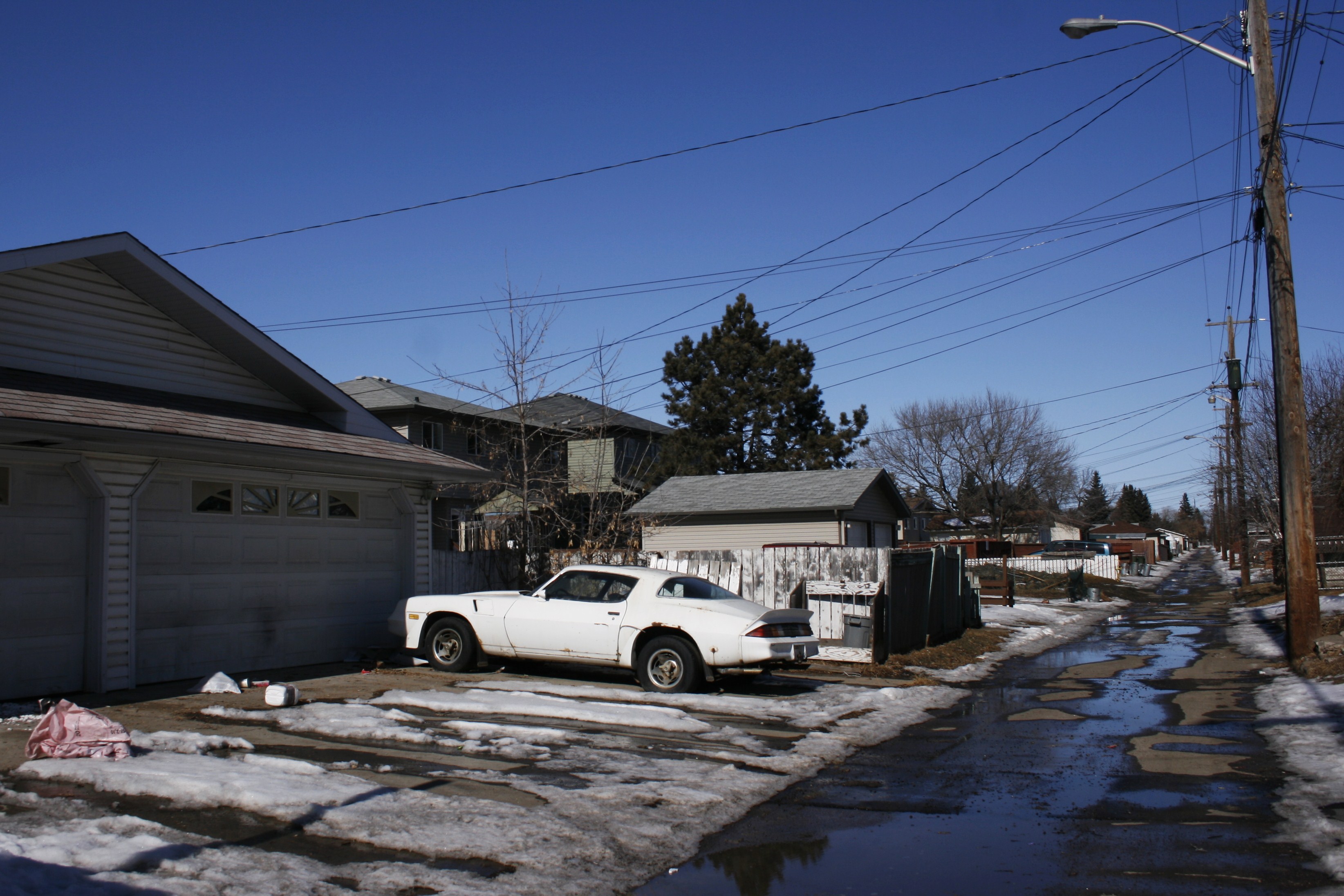
And this is exactly how it is in Edmonton too. The bus took me from the city center, past small industries and then continued on to an area with small, one family houses. I jumped off the bus here, to take a look around. The houses were all built differently, some quite run down, with the paint falling off, while others were really pretty. Some were made of brick, but most were made of wood, and they all had the tiniest piece of a garden in front. I met a cat, lying lazily on the pavement in the sun, but otherwise the area was quite deserted.


I followed the 151 route on foot, and eventually arrived at a huge supermarket hub, with food stores and gas stations and drive-through restaurants. I bought a Subway veggie sandwich for lunch (it’s amazing, they taste exactly the same as in Sweden. I guess that’s the whole point with these fast food chains – it’s the concept of familiarity) and continued on my mission.
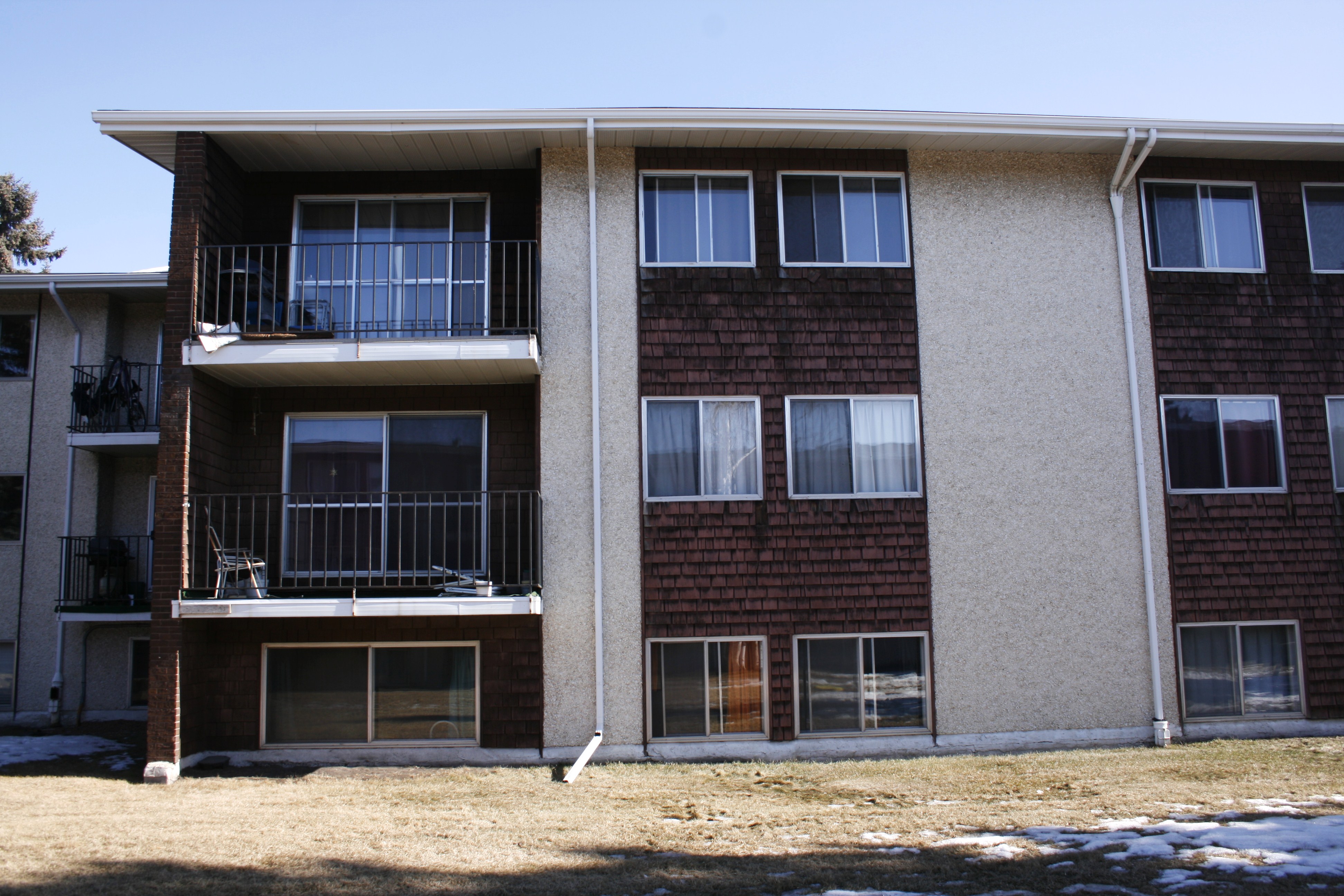
The next stop on the 151 was a newly built suburb. The map I had didn’t have the names of the residencial areas marked out, only the street names. And since the street names in Edmonton are all numbered, they don’t really trigger the imagination. I had been walking on 129,132 and 137 Avenue, from 117 to 127 Street, but here I finally reached a street with a proper name. Cumberland Road cut through the perfect grid system and encircled this neat, fresh, quiet neighbourhood. The houses were built out of wood, so new they seemed to be taken straight from a catalogue, all of them slightly different but still resembling each other so much in form and type that I could hardly tell them apart. Maybe it was only the freshness of the place, but I found the area so lacking in personality that it almost scared me. There were some cars driving through, but no people walking about and there was no trees at all. The houses only barely had space for a couple of potted plants on their front porch, otherwise there was only wide driveways up to wide garage doors. Some houses looked like an ordinary villa, fit for one family, while some were so huge (but still packed snugly inbetween it’s neighbours) they could have fit my entire Finnish family, with uncles and cousins and dogs and all. Still, I think this entire area was made up by single family homes and the residents were supposed to stay indoors, alternately take the car to their outdoor activities.


I think that this is the kind of place that is alluded to when American pop culture makes fun of conservative, close-minded Suburbia. It is so different from the suburbs we have in Stockholm, where different areas are separated by forests and outcrops of rock and parks. Of course, Edmonton is in the middle of the prairie where growing trees is quite a tricky business, but still, there was something off with the architecture and planning itself too. This was so obviously built not to inspire, but to show off and be effective. The houses were so big, but still the place felt cramped and it was so large – the houses just went on and on and on and really, I would have prefered to live in one of those small, rundown houses from the first part of my walk than in any of these impersonal giants, any day. Here, there was no room to breathe.
So I left Cumberland Road and continued east, through areas with smaller houses with more personality, bought a few Timbits (doughnutlike rolls that are sold at the Canadian equivalent of Starbuck’s, Tim Horton’s) and then ended up taking the bus at Castle Downs back to the University.

I had a really nice day. The sun was shining, and as long as I kept moving, the characteristic Edmontonian wind didn’t bother me. But it scared me a little, this kind of city planning, and I wonder what kind of people that these suburbs produce. Because, as the geographer I am, I’m convinced that our surroundings, the places where we spend our lives, affect the way we develop as human beings and make up an important part of our personalities. They can both open and limit our way of thinking. I’m afraid that this factory made architecture and large-scale city planning might close up our minds and make us less imaginative. Especially if the our neighbours also resemble us too much. I would never want to live in a place like that. I need space, and trees, and to be surprised.
 Katja Malmborg